
Review · BUDAPEST
Budapest All in One Small Group Walking Tour with Strudel Stop
Budapest reveals itself best when you connect its two halves, and this tour does that neatly. You start near the Hungarian State Opera House, ride the metro beneath Andrássy Avenue, walk through City Park, then cross back to central Pest before finishing above the Danube at Fisherman’s Bastion.
I like the way public transport is part of the experience, not just a way to fill gaps between sights. I also like the small maximum of 10 people, which gives guides such as Greg, Esther, Petra, Anna, and Luisa room to answer questions. The drawback is simple: this is a brisk half-day with about 6 kilometers of walking, stairs, and short stops, and it does not include interior visits to the churches or other buildings.
Key points to know
- You cover both Pest and Buda: The route links Heroes’ Square, City Park, the Danube, Chain Bridge, Buda Castle, Matthias Church, and Fisherman’s Bastion.
- The metro adds local flavor: Public transport tickets are included, and you ride beneath Andrássy Avenue to reach City Park.
- The strudel stop is a real break: You receive strudel plus coffee, tea, or mineral water at the downtown Strudel House.
- The group stays small: No more than 10 people makes it easier to hear the guide and ask questions.
- The tour is history-led: Guides explain Hungary’s national story, communist era, Ottoman period, monarchy, and present-day politics.
- The finish has a view: The tour ends in Buda Castle District at Matthias Church and Fisherman’s Bastion, not back at the starting point.
Why this tour works as a first look at Budapest
At $100.37 per person, this is not the cheapest way to walk around Budapest. You are paying for more than a guide beside you, though. The price includes public transport during the tour, one return ticket to downtown, a strudel and drink, and a carefully linked route across both sides of the city.
I see the strongest value in the amount of ground covered in three and a half to four hours. You do not spend the whole morning in one square. Instead, you get a first orientation to Budapest, learn how the metro works, see major landmarks, and finish with a clear sense of how Pest and Buda fit together.
The tour also works well early in your stay. Guides such as Greg and Esther are praised for practical suggestions, local context, and explaining how to use the city’s transport system. You can then return to the places that caught your interest, perhaps for a longer visit or an interior tour.
This is an overview rather than a specialist experience. If you want a detailed museum visit, extended time inside Matthias Church, or a full visit to the thermal baths, you will need to arrange those separately.
More Small-Group Walking Tours in Budapest:
- Amsterdam Anne Frank: Small-Group Walking Tour & Local Guide
★ 4.8 · 12,789 reviews - Boston: Freedom Trail History Small Group Walking Tour
★ 5.0 · 6,450 reviews - New Orleans Food Walking Tour of the French Quarter with Small-Group Option
★ 5.0 · 6,118 reviews
Starting beside the Opera House and Andrássy Avenue
Meet at Andrássy út 22 at 9:00 in the morning, beside the Hungarian State Opera House. The tour begins with a story about the Opera House, then moves along Andrássy Avenue toward the underground.
Andrássy Avenue is one of Budapest’s main boulevards. The short section here is not meant to be a full architectural walk. Its main purpose is to connect the Opera House with the metro and introduce one of the city’s grandest routes.
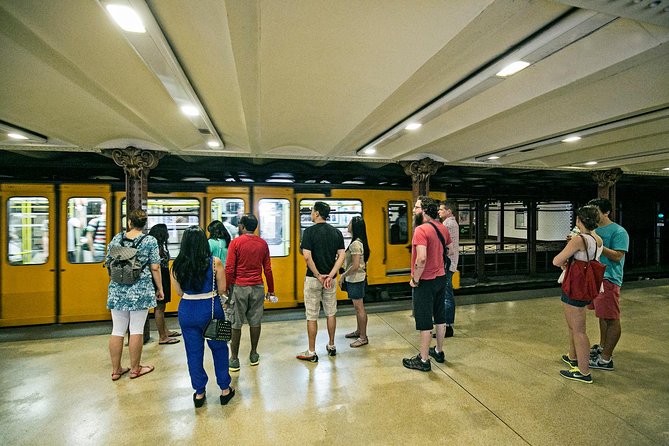
The metro ride matters because it saves your feet for the sights while showing you a practical part of daily Budapest. Your guide handles the public transport tickets included in the tour. You also receive one free single ticket for returning downtown after the tour, useful because the official finish is on the Buda side.
Heroes’ Square puts Hungary’s story in one frame
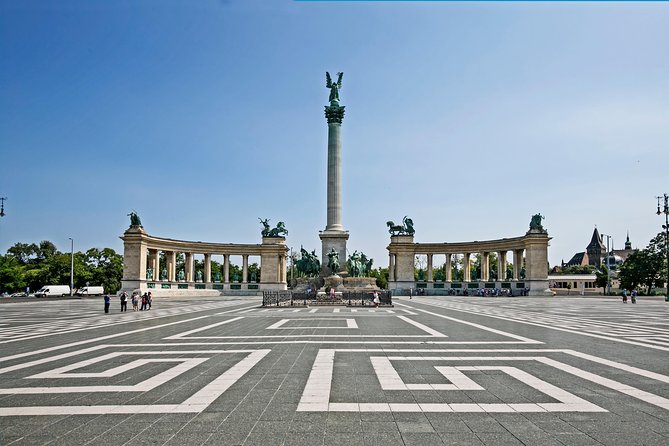
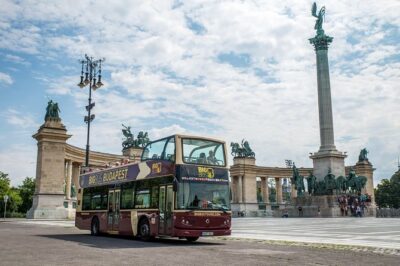
The metro brings you to Heroes’ Square, one of Budapest’s clearest civic spaces. Its central monument and colonnade display important Hungarian leaders, giving your guide a natural place to explain the country’s past.
Allow about 30 minutes here. That is enough time to take in the statues, hear the basic story behind them, and take photographs without turning the stop into a long lecture.
The square can feel like a lot to absorb at first. Names, rulers, symbols, and dates come quickly. This is where a good guide makes a difference. Greg is often singled out for bringing history to life with energy and humor, while Esther, Anna, and Petra are praised for clear explanations and a warm manner.
Do not expect to memorize every figure on the colonnade. The real value is learning the broad outline of Hungary’s national story before seeing places connected to it later in the day.
City Park and Vajdahunyad Castle add variety
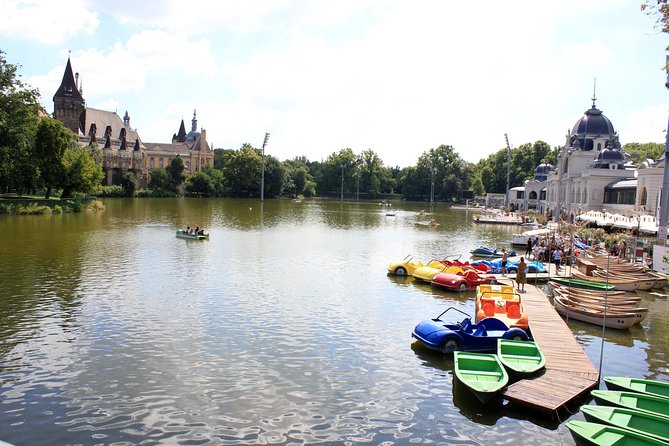
From Heroes’ Square, you walk into Városliget, or City Park, Budapest’s largest park. The listed stop is only about 10 minutes, but the park gives the route a change of pace after the formal monument.
You then enter the yard of Vajdahunyad Castle and hear about Hungarian architecture. The castle was built in 1896 for the Millennial Exhibition, marking 1,000 years since the Hungarian Conquest of the Carpathian Basin. Its design brings together references to several architectural periods, which makes the courtyard useful for understanding how Hungary presents its past.
The tour does not include a full interior visit. You are looking at the exterior spaces and listening to the story. That is enough for a first visit, especially because the day still has many stops ahead.
More Walking Tours in Budapest:
- Budapest: Buda Castle Walk with Saint Stephen’s Hall
★ 4.5 · 3,012 reviews - Big Bus Budapest Hop-On Hop-Off Bus and Walking Tour
★ 3.5 · 2,206 reviews - Budapest: Buda Castle District Walking Tour
★ 4.6 · 2,108 reviews - Budapest City Landmarks Walking Tour in 2 Hours
★ 5.0 · 2,048 reviews
Szechenyi Spa offers a glimpse of Budapest’s bath culture
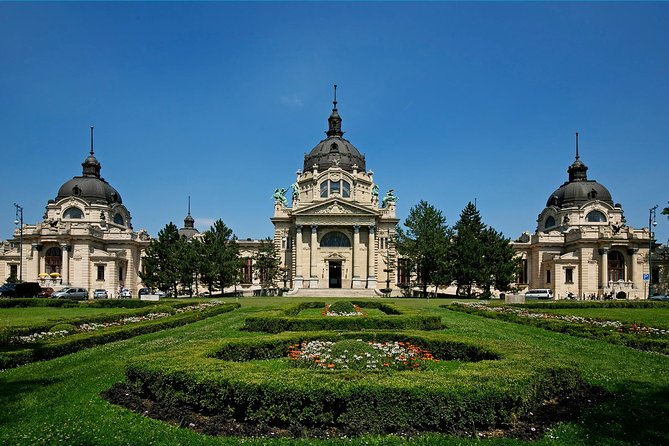
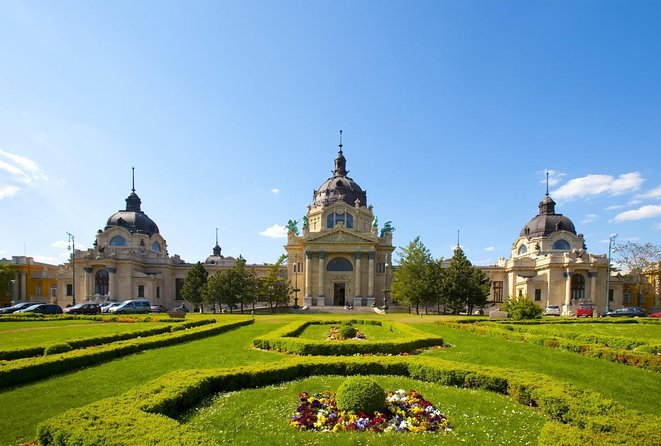
The next stop is Szechenyi Spa, one of Budapest’s best-known thermal bath complexes and described here as Europe’s largest thermal bath. You peek into the bath house and learn about local spa culture.
That wording matters. This is not a bathing session, and admission is not part of the tour. You will not have time to change, soak, or explore the complex at leisure. Instead, your guide explains why thermal bathing is such a central part of life in Budapest.
If you plan to visit Szechenyi later, this short introduction can help you decide how much time to set aside. If you already know you want a long bath visit, treat this stop as a preview rather than a substitute.
After City Park, you return toward the center by metro. The transport links make the tour feel efficient, but they also mean you should stay close to your guide at stations and crossings. No audio equipment or headphones are used, so being near the guide helps you catch every explanation.
St. Stephen’s Basilica and the downtown strudel break
Back in central Pest, you stop at St. Stephen’s Basilica. The guide tells the story of the church and points out its place in Budapest’s skyline. It is one of the city’s two tallest buildings, a useful fact when you later compare the central Pest skyline with the hills of Buda.
The church stop is exterior-focused. Interior visits are not included, so do not book this tour expecting time inside the basilica. The same applies to the other churches and buildings along the route.
The strudel break follows in a downtown café at the iconic Strudel House. You receive strudel and coffee, tea, or mineral water. The stop is more than a sweet reward. It gives you a place to sit, warm up or cool down, and rest your feet before the Danube and Buda section.
You may find different types of strudel available, including sweet and savory choices. The supplied details describe warm drinks and share plates of several varieties on some tours, but the exact selection can vary. One useful detail is that the shop has a setting where you may be able to watch strudel being made.
This pause is especially welcome on a cold day. It also breaks the tour into two manageable sections. One person described the route as a good balance of walking and transport, while another would have skipped the strudel on a return visit. That is a fair way to view it: the food is part of the experience, but the real value is the sit-down break and Hungarian café setting.
Liberty Square explains the difficult twentieth century
After the café, the route reaches Szabadság tér, or Liberty Square. You stop for about 10 minutes to see the Soviet Memorial and hear about Hungary during the communist period.
This is one of the more useful stops for putting modern Budapest into context. The square gives your guide a place to explain the Soviet era, political change, and how the past still appears in public spaces.
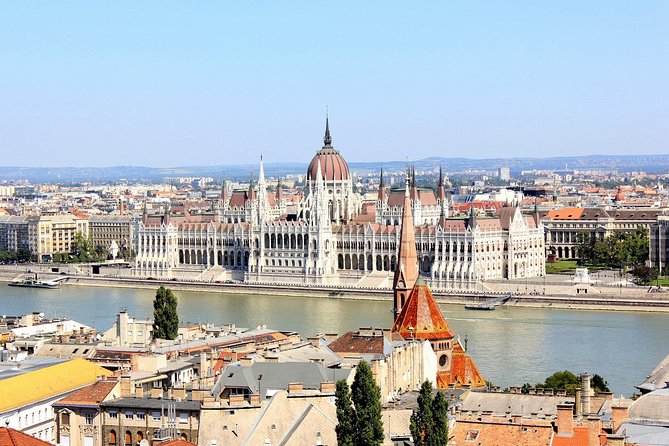
You also learn about the Hungarian Parliament and current politics in Hungary. The tour does not take you inside Parliament, and the stop is brief, but the conversation helps you read the city beyond its older monuments.
If you want the Shoes on the Danube memorial, note that it is not included in the stated route. One person specifically wished it had been added because it is near Parliament. You should visit it separately if it matters to you.
The Danube Promenade brings the city together
At the Danube, you have about 10 minutes to enjoy the riverbank views. This is the point where Budapest’s geography becomes clear. From the Pest side, you look toward Gellért Hill and the Citadel, then frame photographs of the Chain Bridge.
The river stop is short, so you will not have a long leisurely promenade. Still, it gives you the essential view: flat Pest in the foreground, hilly Buda across the water, and the bridges tying the city together.
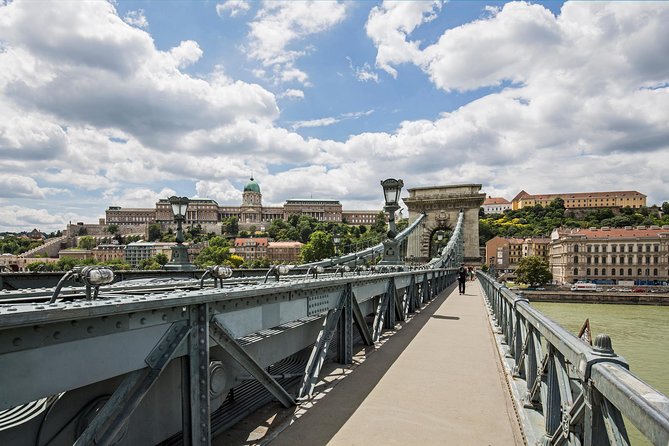
A brief walk brings you to Széchenyi Chain Bridge. The bridge stop lasts about five minutes, with the guide explaining its history. That may sound short, but it is enough to hear the main story and take photographs before continuing toward Buda.
The route does not cross the bridge as a sightseeing stop in the supplied details. Instead, the bridge serves as a visual and historical link before the final climb into the Buda Castle District.
Buda Castle District finishes the morning above the river
The final section is the most scenic and includes some of the route’s stairs and uphill walking. You reach Matthias Church, hear about its coronations, and learn how the Ottomans converted it into Buda’s main mosque.
Again, you do not enter the church. The explanation focuses on its role in Hungarian history and the changing powers that shaped Budapest. Five minutes is enough for an introduction, but not for a close look at the interior or a full architectural study.
You then walk through Buda Castle for about 15 minutes. This is a short orientation rather than a palace tour. The guide gives you the larger story while you take in the district’s streets and buildings.
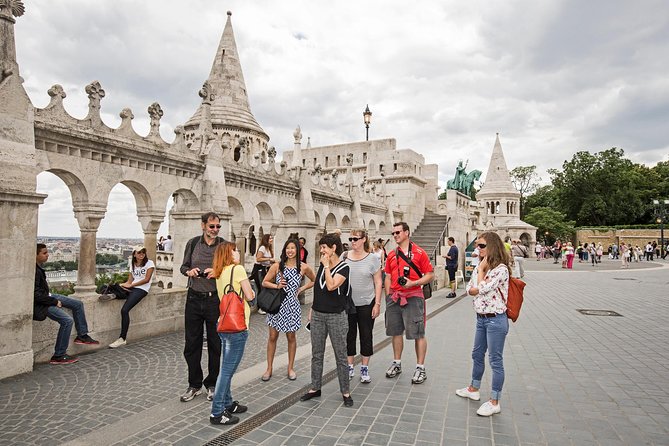
The tour ends at Fisherman’s Bastion, where the view opens over Budapest. Viewing from the arcades is free, while the upper terrace requires admission. The finish is a strong one because you have already seen the same city from street level, from the river, and now from above.
Keep in mind that the tour does not return to the Opera House. It concludes on the Buda side at Matthias Church and Fisherman’s Bastion. Use the complimentary return ticket if you want to head back toward central Pest.
The guides shape the experience
The tour is sold as a small-group activity with a maximum of 10 people. That is a useful limit on a route with several metro rides and crowded public spaces. You can usually hear the guide without standing in a large circle, and questions are easier to handle.
Guide quality is the most important variable in a history-heavy walking tour. Names that appear repeatedly in the supplied feedback include Greg, Esther, Petra, Anna, Andi, Luisa, Monika, and Bálint. Greg is praised for humor, local roots, energy, and strong historical explanations. Esther is described as organized, caring, and clear in English. Luisa is noted for giving detail without overwhelming people, while Andi is praised for patience and adapting to individual needs.
You should not expect an audio system. The tour uses no headphones or audio equipment, so stay close, especially in busy areas and on public transport. The small group helps, but it does not remove the need to listen carefully.
Walking effort, timing, and weather
The advertised duration is about three and a half to four hours, with roughly three hours of walking and short stops. The route covers around 6 kilometers, or 4 miles. Public transport reduces the distance between far-apart sights, but this is still a proper walking tour.
You need moderate physical fitness. Expect standing, city pavement, stairs, and some walking in the Buda Castle District. If you walk comfortably for several hours, the route should be manageable. If long periods on your feet are difficult, the pace and number of stops may feel demanding.
The tour operates in all weather. Dress for the forecast, and wear shoes that can handle a morning of walking. The strudel stop provides a sit-down pause, but it is not a substitute for bringing water or dressing sensibly.
Who should book this Budapest tour?
I would choose this tour if you are visiting Budapest for the first time and want a well-planned orientation. It is particularly useful if you want both Buda and Pest in one morning, prefer explanations over silent sightseeing, and like the idea of using public transport with a local guide.
It also suits people who want a gentle introduction to Hungarian politics and history without booking several separate tours. The mix of monuments, park space, cafés, transport, river views, and a castle district keeps the morning varied.
I would look elsewhere if you want long interior visits, a spa session, a detailed church tour, or a slow photographic walk. You should also think twice if 6 kilometers and several hours on your feet sound tiring.
The free cancellation policy allows you to cancel up to 24 hours before the start time for a full refund. Changes or cancellations made less than 24 hours before the 9:00 a.m. start are not accepted for a refund.
Should you book the $100.37 experience?
Book it if you want a strong first-day overview with a real local guide, included transport, and a pleasant food break. The combination of Heroes’ Square, City Park, the Danube, Chain Bridge, and Buda Castle District gives you a useful map of Budapest in one morning.
The price makes most sense when you value the guide’s explanations and the convenience of moving between distant sights. You are not paying for admissions, since interiors are excluded, but you are getting a focused route, a small group, transport tickets, and a strudel stop.
For a first visit, I would schedule it near the beginning of your stay. Listen for the guide’s restaurant and neighborhood suggestions, mark the sights you want to revisit, and use the finish at Fisherman’s Bastion to plan your next look at the city.
FAQ
Where does the tour start?
The tour starts at Budapest, Andrássy út 22, 1061 Hungary, near the Hungarian State Opera House.
What time does the tour begin?
The start time is 9:00 a.m.
Where does the tour finish?
The tour finishes on the Buda side at Matthias Church and Fisherman’s Bastion in the Buda Castle District.
How long does the tour last?
The experience lasts approximately three and a half to four hours.
How far do you walk?
The tour involves about 6 kilometers, or 4 miles, of walking, with short stops and public transport between some locations.
What is the maximum group size?
The activity has a maximum of 10 participants.
Is public transportation included?
Yes. Public transport tickets used during the tour are included, along with one complimentary single ticket for returning downtown.
Is the strudel included?
Yes. The price includes strudel and coffee, tea, or mineral water at the Strudel House.
Does the tour enter the churches or other buildings?
No. Interior visits to churches and buildings are not included.
Does the tour operate in bad weather?
Yes. The tour runs in all weather, so you should dress appropriately.
Is the tour offered in English?
Yes. The tour is offered in English and is led by an English-speaking guide.
Can you cancel for a full refund?
Yes. You can cancel at least 24 hours before the local start time for a full refund. Cancellations or changes made less than 24 hours before the start are not accepted for a refund.
New routes in Budapest
- Budapest: Street Art and Underground Movements Walking Tour★ 5.0 · 365 reviews
- Jewish Quarter of Budapest Walking Tour★ 4.7 · 369 reviews
- Budapest 3-Hour Walking Tour in Italian★ 4.6 · 217 reviews
- Budapest: Walking Tour to the Shoes Memorial and Parliament★ 4.7 · 151 reviews
- Budapest: Castle District Walking Tour★ 4.8 · 223 reviews
- Budapest: Jewish History Guided Walking Tour with Historian★ 4.8 · 205 reviews
- Budapest: Walking Tour and Photoshoot with Digital Photos★ 4.7 · 82 reviews
- Budapest: Inner City Walking Tour in German★ 5.0 · 76 reviews
Budapest Walking Tours, compared.
Big Bus Budapest Hop-On Hop-Off Bus and Walking Tour
Read our review →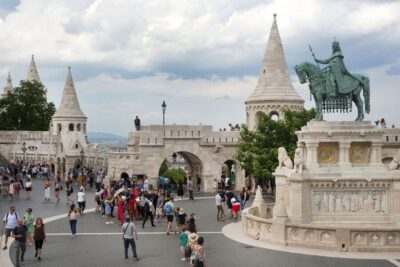
Budapest City Landmarks Walking Tour in 2 Hours
Read our review →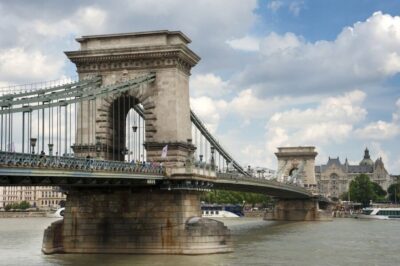
3-Hour Orientation Walking Tour of Buda and Pest
Read our review →
Budapest Historical Sightseeing – Free Walking Tour
Read our review →
Budapest Food Walking Tour: Eat, Sip & Explore Like a Local
Read our review →Browse the lists this tour appears in