
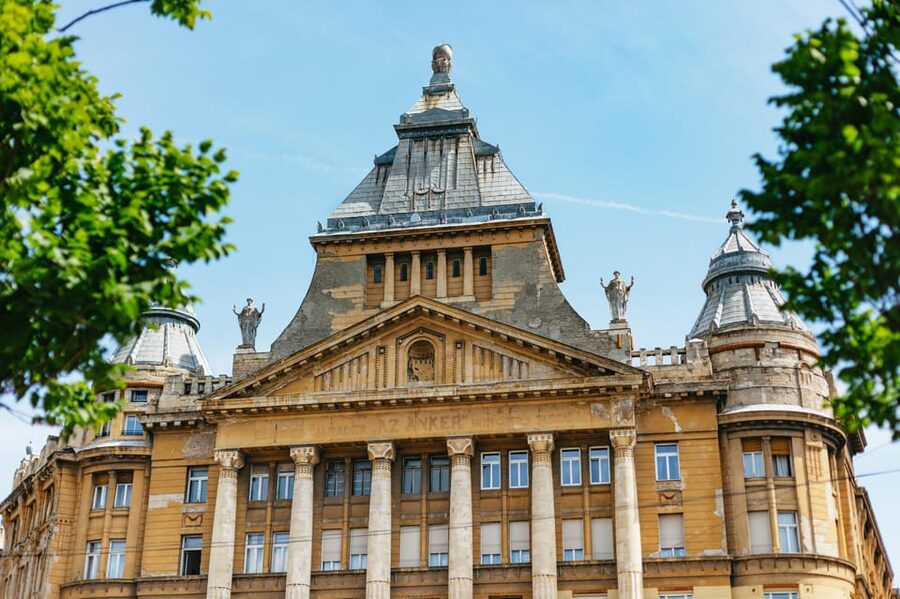
Review · BUDAPEST
Budapest: Jewish History Guided Walking Tour with Historian
Budapest’s Jewish Quarter is not just a sightseeing district. It is a place where religious life, wartime memory, nightlife, street art, and everyday commerce share the same few streets. This 2.5-hour walk with a historian gives you the background needed to understand what you are seeing, rather than leaving you to admire synagogue facades without context.
I like the small group, limited to 10 people, and the honest treatment of Hungary’s past, including the good, the bad, and the ugly. I also like the short café stop for flódni and coffee, a simple local touch that makes the tour feel connected to the neighborhood. The main drawback is clear: all three synagogues are viewed from the outside, so you will need a separate visit if you want to see their interiors.
Key points of the Budapest Jewish Quarter walk
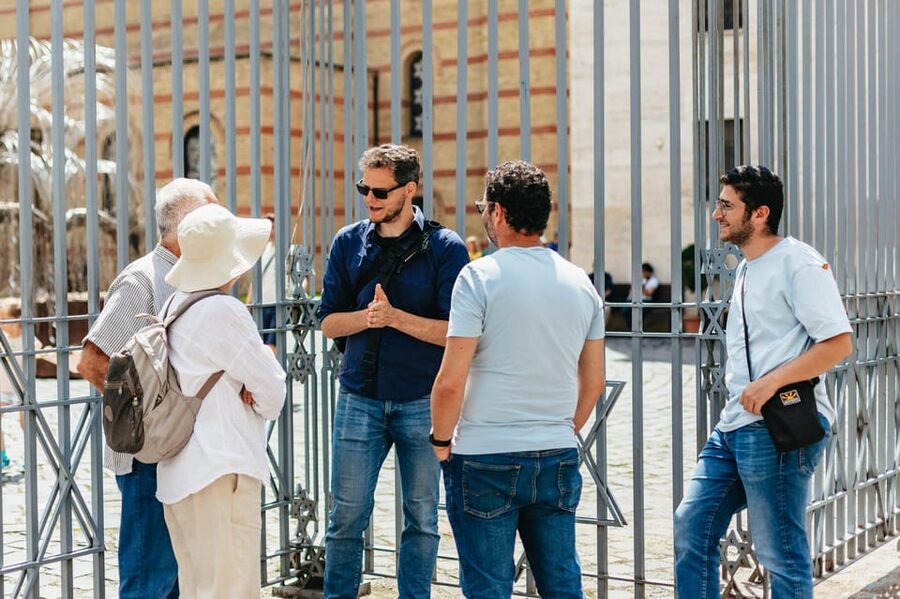
- Three important synagogues: See the Dohány Street, Rumbach Street, and Kazinczy Street synagogues from outside.
- A historian-led route: Learn how Jewish life in Budapest changed over more than 200 years.
- Wartime stories with real places: Visit memorials linked to Raoul Wallenberg and Carl Lutz.
- Former Ghetto streets: Walk through an area shaped by the winter of 1944 and 1945.
- Coffee and flódni included: Finish with a traditional Jewish-Hungarian cake in a local café.
- Small English-speaking group: The group size allows time for questions and keeps the guide easy to hear.
Starting beside Erzsébet Square
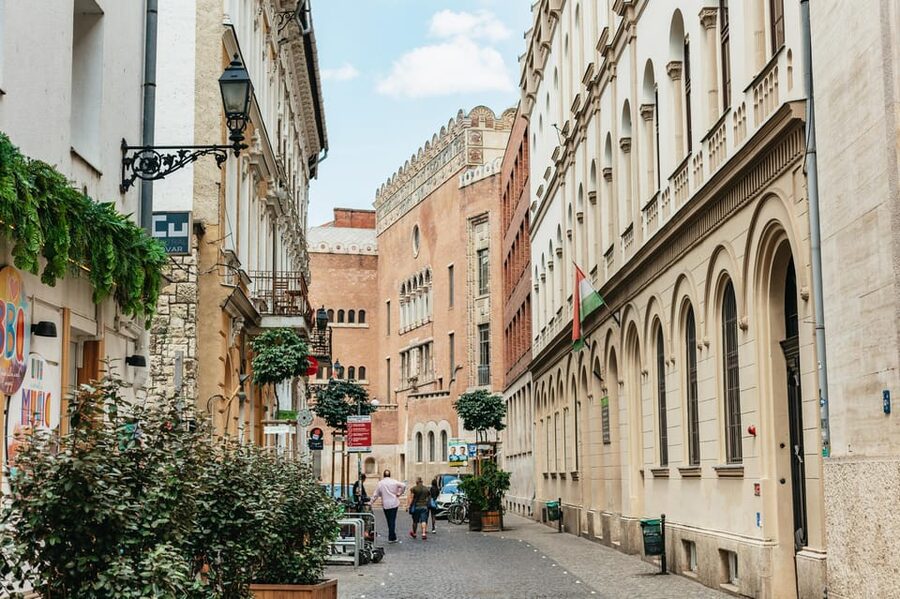
The meeting point is in front of the Kempinski Hotel Corvinus Budapest, facing the Ferris wheel on Erzsébet Square. This is a convenient central location and one of the easiest places in Budapest to reach by public transport.
Use Deák Ferenc tér, served by the M1, M2, and M3 metro lines. Several buses and trams also stop nearby. I suggest arriving a few minutes early because the square has several prominent buildings and attractions, and a guide holding a sign can be easier to spot than a person simply waiting near the hotel entrance.
From here, you walk toward the 7th District and Elizabeth Town. The route moves through streets that are now filled with cafés, shops, bars, restaurants, and street art, but the guide keeps pointing out the older layers beneath the modern city.
The walk lasts about 2 hours and 15 minutes, followed by roughly 15 minutes for coffee and cake. It is not a museum visit or a formal synagogue service. Think of it as a compact neighborhood tour with a strong historical focus.
More Jewish Heritage Walking Tours in Budapest:
- Jewish Quarter of Budapest Walking Tour
★ 4.7 · 369 reviews - Amsterdam Anne Frank: Small-Group Walking Tour & Local Guide
★ 4.8 · 12,789 reviews - Anne Frank’s Story – Guided Walking Tour through Amsterdam
★ 5.0 · 11,619 reviews
Why Budapest’s Jewish Quarter needs context
The 7th District has been home to Jewish communities for more than two centuries. A walk through it can seem confusing at first. A grand synagogue may sit close to a ruin pub, a kosher shop may share a street with a trendy bar, and a memorial may appear among ordinary apartment buildings.
That contrast is part of the point. The area is not preserved as a quiet historical quarter. It is a living part of Budapest, with an active Jewish community and a busy nightlife scene. The guide helps you connect the present streets with earlier periods of Jewish life, legal restrictions, migration, religious differences, and the pressures that shaped the community.
One especially useful part of the tour is the wider Hungarian background. Several people praised guides such as András, Noémi, Gábor, Andrea, and Maggie for explaining Hungarian history alongside Jewish history. That matters because the story cannot be separated from changing borders, politics, and social rules.
If you know little about Hungary, the guide may first explain where the country fit into European history and which territories it gained or lost. You may also hear about restrictions placed on Jewish people and the pressure some faced to convert. This opening helps make later stops easier to understand.
The three synagogue exteriors
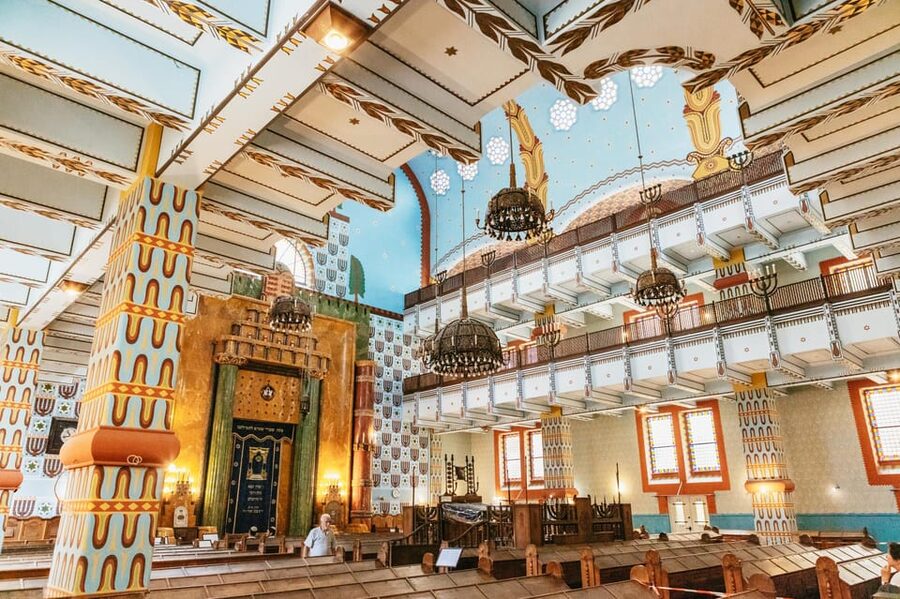
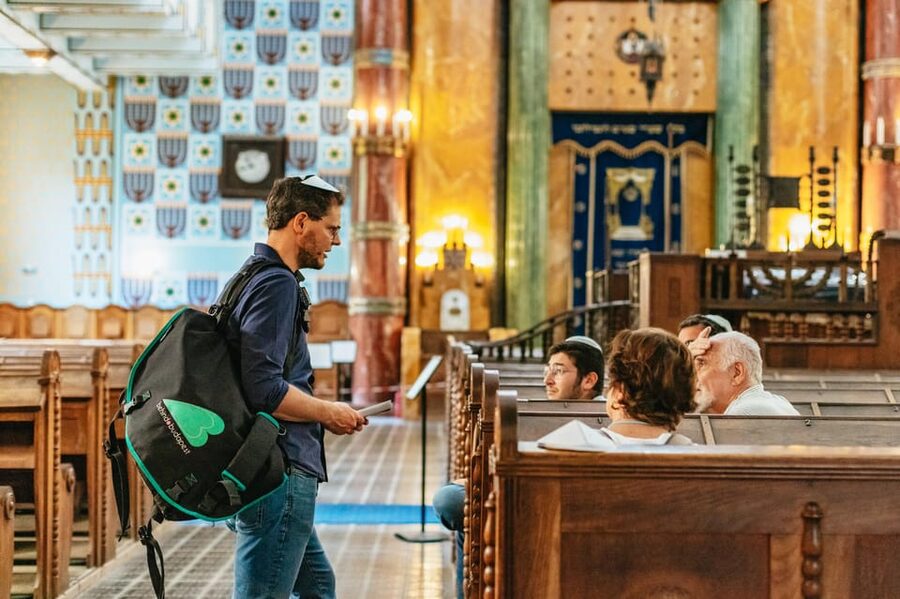
The route takes you past the three main synagogues in Budapest’s Jewish Quarter. Each belongs to a different branch of Jewish life, and simply seeing them together makes the religious and cultural variety of the neighborhood clearer.
Dohány Street Synagogue
The Dohány Street Synagogue is the largest and most imposing of the three. Its exterior is one of Budapest’s major sights, with a scale that reflects the size and importance of the Jewish community when it was built.
This is the synagogue most people recognize, but the tour does not treat it as a pretty facade alone. The guide explains its place in the district and its connection to the area’s wartime history. You learn why the building became such a central symbol of Budapest’s Jewish community.
You do not enter during this tour. That is important when comparing it with a synagogue admission visit, since the entrance fee is not included. If you want to see the interior and the memorial grounds, plan a separate visit and check opening arrangements independently.
More History Walking Tours in Budapest:
- Budapest Historical Sightseeing – Free Walking Tour
★ 5.0 · 1,302 reviews - BloodThirsty Hungary: Walking tour & Dark Historical Stories
★ 4.9 · 633 reviews - History and Hauntings of Salem Guided Walking Tour
★ 5.0 · 14,564 reviews - Lisbon: History, Stories and Lifestyle Walking Tour
★ 4.8 · 10,902 reviews
Rumbach Street Synagogue
The Rumbach Street Synagogue was built in 1872 by Viennese architect Otto Wagner. Its exterior gives you another view of the district’s religious divisions and architectural variety.
The guide explains the building while you are outside and places it within the story of the local community. One practical note: access arrangements can change, and an outside walking tour should not be treated as a guaranteed interior visit. The stated plan for this experience is exterior viewing only.
Kazinczy Street Orthodox Synagogue
The Kazinczy Street Orthodox Synagogue completes the trio. Seeing it alongside the other two buildings helps you understand that Budapest’s Jewish community was not one uniform group. Different religious traditions developed their own institutions, customs, and places of worship.
The value here is less about spending a long time at one building and more about seeing the connections among all three. In a short walk, you get a useful introduction to the district’s religious structure without spending the entire tour inside one site.
Walking through the former Ghetto
The route continues along streets that formed part of the former Jewish Ghetto. This is one of the most serious sections of the experience, and the guide does not soften the facts.
You see traces of the old Ghetto and hear how the area functioned during the winter of 1944 and 1945. One detail gives the scale of the event: the Ghetto existed for less than two months, yet its short existence left a lasting mark on Budapest and on the families who lived through it.
The tour also deals with Hungary’s role in the treatment of Jewish people during the Second World War. The best guides keep the story direct and specific. Gábor, Noémi, Maggie, and other guides have been praised for presenting difficult facts without glossing over uncomfortable parts of the past.
This is not light sightseeing. You may hear about persecution, forced movement, loss, and the political choices that made the period so dangerous. Still, the walking format helps. You are not only hearing dates in a room. You are standing on the streets where these events unfolded.
Raoul Wallenberg, Carl Lutz, and local courage
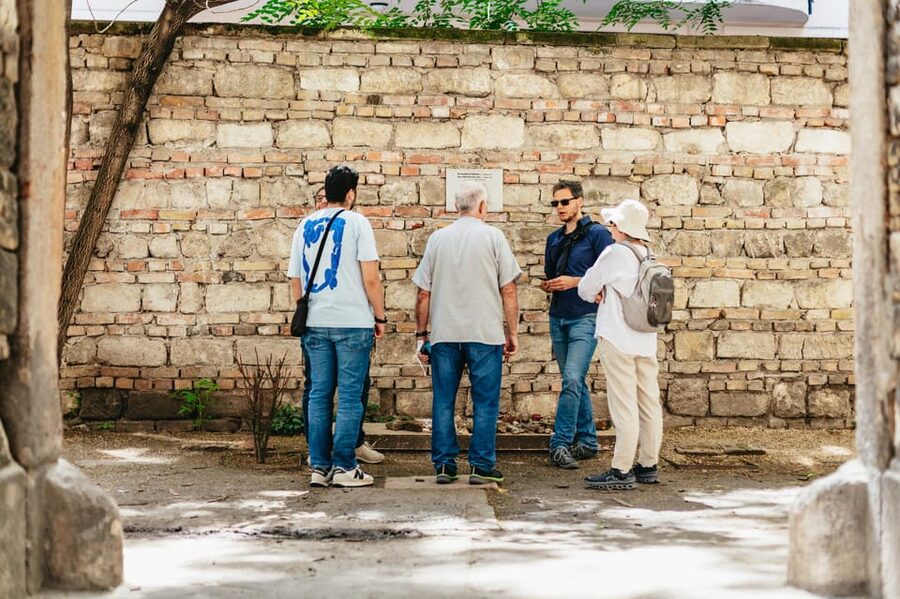
Two memorial stops focus on people who helped save Jewish lives during the winter of 1944 and 1945: Raoul Wallenberg and Carl Lutz. Both are connected with the title Righteous Among the Nations.
These stops add balance to the story. The tour does not present the period only as a list of victims and official decisions. It also examines individuals who took action at great personal risk and helped save tens of thousands of Jewish people.
The memorials give the guide a fixed point for explaining what happened. They also make clear that rescue was not an abstract idea. It depended on specific choices made by specific people, often in a city under extreme pressure.
This section is likely to stay with you because it links a large historical event to recognizable names and places. It also avoids turning the tour into a parade of famous figures. The wider focus remains the Jewish community and the life of the district.
Gozsdu Passage, street art, and modern Budapest
The walk passes through Gozsdu Passage, one of the area’s lively social corridors. Here the present-day character of the neighborhood becomes hard to miss.
The guide points out the relationship between the old Jewish Quarter, the current Jewish community, ruin pubs, restaurants, and nightlife. You will also see examples of Budapest’s street art. These works are not merely colorful backdrops. They form part of the district’s current identity and show how older streets have been reused by new generations.
I appreciate this modern section because it prevents the tour from becoming sealed in the past. The 7th District is not only a memorial zone. It is also a place where people eat, shop, meet, work, and go out at night.
You will hear local tips about ruin pubs and nightlife, though the tour is not a pub crawl. If you are staying in central Budapest, these suggestions can help you return later with a better sense of where you are and why the area feels so different after dark.
Coffee, flódni, and a small taste of local culture
The final 15 minutes are set aside for coffee or a soft drink and flódni in a local café. Flódni is a Jewish cake associated with Hungarian Jewish cooking. It usually combines layers and fillings, making it more substantial than a quick pastry with coffee.
This stop is included in the price, and it gives the group a chance to sit down after the walk. It also changes the tone at the end. After discussing persecution, wartime survival, and memorials, you have a quiet moment to ask questions and think over what you have seen.
Do not expect a full meal. The cake and drink are a modest refreshment, not a substitute for lunch. If you need more food, plan to eat before or after the tour.
What the guides do best
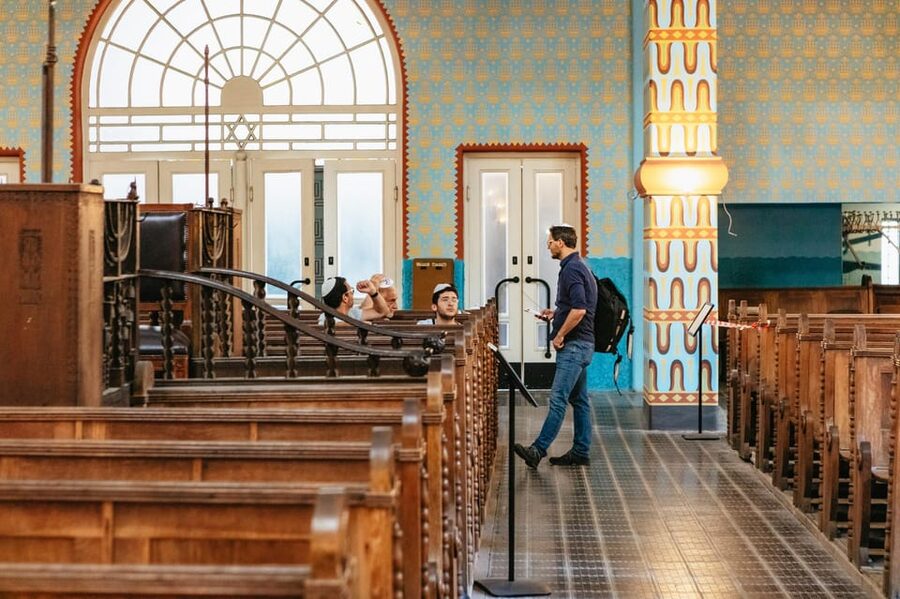
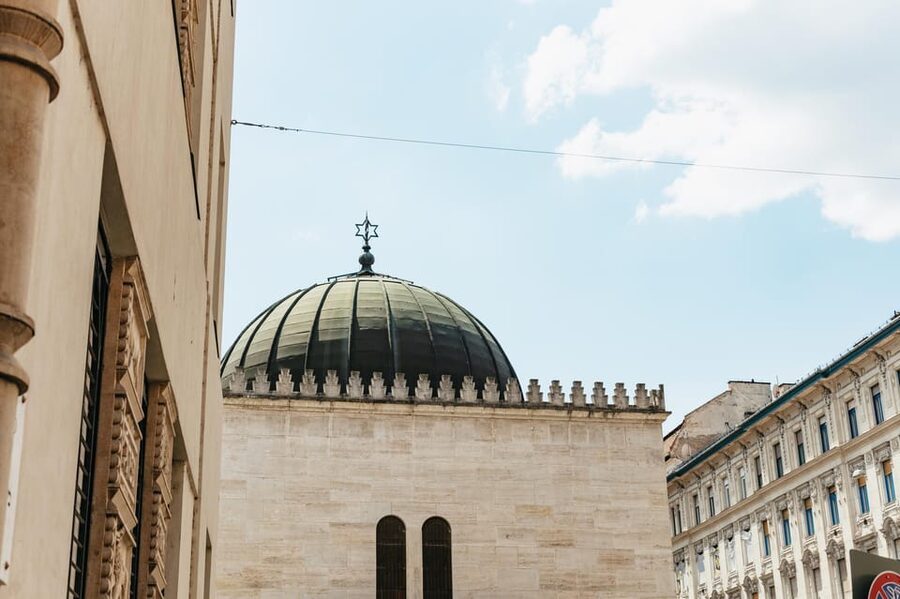
The guide makes or breaks a history walk, and this experience has a strong record in that area. Guides named Noémi, Gábor, András, Andrea, Barbara, Maggie, Daniel, Judit, Zsolt, and Gabriel have led tours for the provider.
The most praised quality is the ability to explain difficult material clearly while keeping the group engaged. Some guides use maps or a tablet to show how Hungary fit into wider European history. Others bring in family stories or local details. Several are described as warm, funny, passionate, and willing to answer questions about Budapest beyond the official subject.
That variety is worth keeping in mind. You cannot choose a specific guide from the information provided, so the exact tone may differ. The common thread is an English-speaking historian guide and a small group where questions are possible.
A group of up to 10 is a real advantage. You can hear the explanations more easily than in a large coach group, and the guide can adjust the pace. One guide was praised for making accommodations for individual needs, while another was appreciated for allowing time to explore certain places further.
There is one fair criticism to consider. A walking route with many historical subjects can sometimes feel less structured, especially if access to a synagogue is unclear or if the group asks many questions. If you prefer a tightly timed tour with a fixed script, this may feel a little flexible.
Walking conditions and practical planning
The tour runs in all weather, so dress for the forecast. Wear comfortable shoes, since the experience covers the Jewish Quarter on foot and includes about two and a quarter hours of sightseeing before the café stop.
Budapest’s weather can change, and the tour does not shift indoors simply because conditions are unpleasant. Bring suitable clothing and water, especially in warm weather. One person specifically noted that the walk was hot but informative, which is a reminder that summer conditions can affect your comfort.
The route is best suited to you if you enjoy walking at a steady city pace and can stand outside for extended periods. The guides can adjust the pace to the group, but this is still a walking tour rather than a seated lecture.
The tour is offered in English. Synagogue admission is not included, and the three synagogue visits are exterior only. Keep those details in mind when comparing the $63 price with a ticketed synagogue tour that includes interiors.
Is $63 a fair price?
At $63 per person, this is not the cheapest way to see the Jewish Quarter. You are paying for a historian-led walk, a small group, local interpretation, and coffee with flódni rather than simply following a map.
I think the price makes sense if you want the history explained properly. The strongest value comes from the guide’s ability to connect synagogue architecture, the former Ghetto, wartime memorials, religious divisions, and present-day Budapest in one route.
The value is weaker if your main goal is to enter the synagogues. Since admission is not included, you will need to budget separately for that. You might also prefer a shorter self-guided walk if you already know Hungarian and Jewish history well.
Free cancellation up to 24 hours before the start and the option to reserve now and pay later make the booking less risky. Still, the main decision is not the cancellation policy. It is whether you want a serious, guide-led history experience or simply a quick look at the district.
Who should book this walk?
I would recommend it to first-time visitors who want to understand Budapest beyond its grand buildings and thermal baths. It is also a good fit if you have Jewish family connections, are studying European history, or want to see how memory and ordinary city life meet in one neighborhood.
The tour suits curious adults and families with older children who can handle difficult wartime subjects. It is less suitable if you want a relaxed food tour, a synagogue interior visit, or an evening of nightlife.
I would schedule it early in your Budapest stay. The route gives you useful bearings for the 7th District, and the guide’s suggestions about ruin pubs, restaurants, shops, and street art can shape what you do later.
Should you book the Budapest Jewish History Walking Tour?
Book it if you want clear historical explanation, a small group, and a route that treats the Jewish Quarter as a living neighborhood rather than a row of photo stops. The memorials to Wallenberg and Carl Lutz, the former Ghetto streets, and the three synagogue exteriors create a strong two-and-a-half-hour introduction.
Skip it if you need interior synagogue access included or if you dislike walking in uncertain weather. For most visitors interested in Budapest’s past, the combination of serious history, modern street life, and flódni with coffee offers solid value at $63.
FAQ
How long does the Jewish history walking tour last?
The experience lasts 2.5 hours. About 2 hours and 15 minutes are devoted to the guided walk, followed by around 15 minutes for coffee and flódni.
Where does the tour meet?
Meet in front of the Kempinski Hotel Corvinus Budapest, facing the Ferris wheel on Erzsébet Square.
How do I reach the meeting point?
Take the M1, M2, or M3 metro to Deák Ferenc tér. Several buses and trams also serve the area.
Are synagogue entry tickets included?
No. The tour visits the Dohány Street, Rumbach Street, and Kazinczy Street synagogues from the outside only.
Is food included?
Yes. You receive a local Jewish cake called flódni and a coffee or soft drink at a local café.
What language is the tour conducted in?
The live tour guide speaks English.
Does the tour operate in bad weather?
Yes. The tour starts in all weather conditions, so dress appropriately for the forecast.
New routes in Budapest
- Budapest: Street Art and Underground Movements Walking Tour★ 5.0 · 365 reviews
- Jewish Quarter of Budapest Walking Tour★ 4.7 · 369 reviews
- Budapest 3-Hour Walking Tour in Italian★ 4.6 · 217 reviews
- Budapest: Walking Tour to the Shoes Memorial and Parliament★ 4.7 · 151 reviews
- Budapest: Castle District Walking Tour★ 4.8 · 223 reviews
- Budapest: Walking Tour and Photoshoot with Digital Photos★ 4.7 · 82 reviews
- Budapest: Inner City Walking Tour in German★ 5.0 · 76 reviews
- Budapest: Hungarian Cooking Class and Market Walk★ 5.0 · 91 reviews
Budapest Walking Tours, compared.
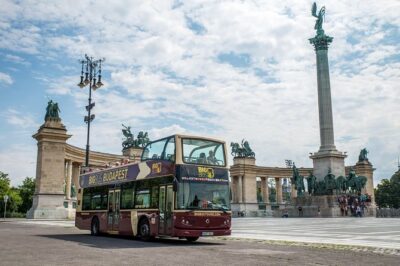
Big Bus Budapest Hop-On Hop-Off Bus and Walking Tour
Read our review →
Budapest City Landmarks Walking Tour in 2 Hours
Read our review →
3-Hour Orientation Walking Tour of Buda and Pest
Read our review →
Budapest Historical Sightseeing – Free Walking Tour
Read our review →
Budapest All in One Small Group Walking Tour with Strudel Stop
Read our review →Browse the lists this tour appears in