
Review · BOSTON
The Full Revolutionary Story Epic Small Group Boston Walking Tour
Boston’s Freedom Trail is easy to follow, but the Revolution itself was not. This tour tackles the story in chronological order, moving from Puritan Boston and early political tensions to the Boston Massacre, the Tea Party, Paul Revere’s ride, and the fighting at Lexington, Concord, and Bunker Hill.
I like two things right away: the small group, capped at 15, allows for a more personal lesson, and the route leaves the standard red-brick path often enough to show you modern Boston too. Guides Tyler, Mike, Chris, and Tom use maps, visual aids, character cards, and even Lego soldiers to make complicated events easier to grasp. The main drawback is simple: three to three and a half hours on foot is a serious walk, and bad weather can affect the tour.
Key points before you book
- The Revolution unfolds in order: You begin with the people and politics that shaped Boston, then follow the chain of events toward open conflict.
- The Freedom Trail is only the backbone: You also visit Post Office Square, the Financial District, the Greenway, the waterfront, and the North End.
- Guides teach, not reenact: Expect history, maps, props, humor, and discussion rather than costumes or staged scenes.
- The North End finish is useful: Lewis Wharf puts you near restaurants, public restrooms, the Aquarium station, and Boston’s famous Italian food.
- Plan for a long outdoor class: The route is suitable for all ages, but children must have an adult with them and the tour is not designed as a simplified kids program.
- The price buys time and context: At $55, you pay for a small-group walk that links places, people, and events instead of simply naming landmarks.
Why the chronological route makes Boston easier to understand
Many Boston walking tours follow the Freedom Trail from one end to the other. That is tidy, but history is rarely tidy. This experience rearranges the route so the places help explain the next event.
That choice matters. You first hear about the early settlers and the Puritan world, then move through Boston’s political and religious divisions. Later, you reach the flash points that pushed protest toward rebellion. By the time you arrive at the Old South Meeting House and Faneuil Hall, the Boston Tea Party and colonial resistance have a clear buildup.
I find this approach more useful than collecting isolated facts. You are not just told that Paul Revere lived here or that the Boston Massacre happened there. You get the people, pressure, and arguments that made those places important.
The guides also bring a classroom feel to the walk. Tyler has a master’s degree in American history and formerly worked as a curriculum coordinator. Mike is described as having advanced history degrees, and Chris is presented as a trained historian. The company also uses Tom as a guide. Your guide may vary, but the teaching style is central to the experience.
More Small-Group Walking Tours in the USA
- Boston: Freedom Trail History Small Group Walking Tour
★ 5.0 · 6,450 reviews - Boston: Freedom Trail History Small Group Walking Tour
★ 4.9 · 1,590 reviews - Boston: Full Revolution Story Epic Small Group Walking Tour
★ 4.9 · 132 reviews
City Hall Plaza begins with modern Boston
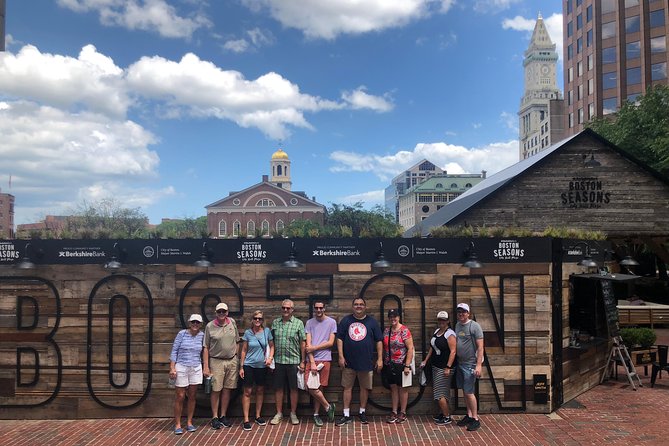
Meet at City Hall Plaza, a pedestrian area directly across from Faneuil Hall. The meeting point is between Five Iron Golf and City Hall, near the seasonal beer garden and the large BOSTON sign.
This is a smart opening. You can take a group photo with Faneuil Hall behind you, then begin by looking at Boston as it is now. The plaza also puts you in the middle of the city, with easy access to the Freedom Trail and nearby attractions.
Boston City Hall comes next, with a short discussion of its famously unusual architecture. It is not a colonial building, and that is the point. The tour does not treat Boston as a museum frozen in 1775. It keeps showing you how a working city grew around its old streets and landmarks.
That balance is one of the better features of the route. You learn about the Revolution without losing sight of the offices, shops, restaurants, transit, and public spaces that make up present-day Boston.
Burying grounds reveal the people behind the story
King’s Chapel Burying Ground provides the first historical stop. Here, the focus shifts to the people who settled Massachusetts Bay and the unusual religious world of the Puritans.
This is a useful corrective to the simple schoolbook version of colonial Boston. The early settlers were not merely background figures waiting for the Revolution to begin. Their beliefs, rules, conflicts, and social structure helped shape the city’s later political arguments.
The walk then passes Boston’s first Anglican church before reaching a spot known as Brimstone Corner. The stop connects religious preaching with public debate, including William Lloyd Garrison’s first public address against slavery in 1829. That is well after the Revolution, but it helps show how Boston’s meeting places continued to host arguments about rights and freedom.
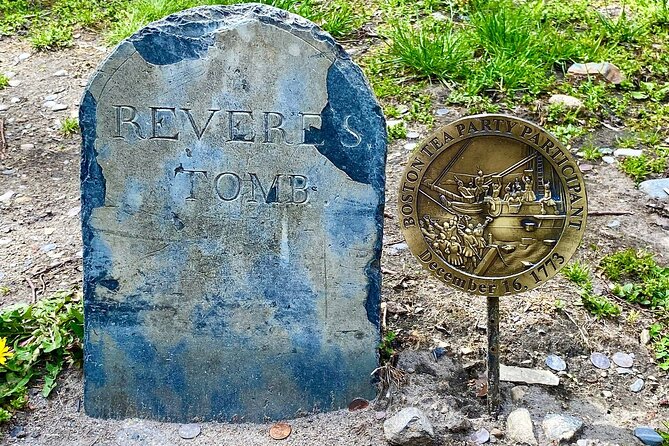
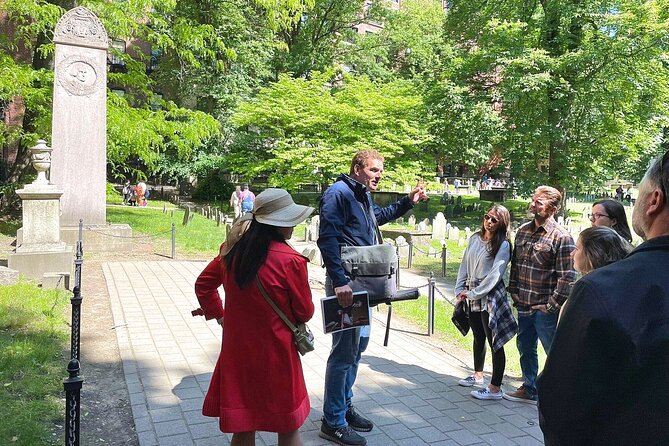
At Granary Burying Ground, you see the graves of Paul Revere, John Hancock, and Samuel Adams. The guide also explains who the Sons of Liberty were, which is more useful than simply pointing to famous names on headstones.
The cemetery is compact, and the visit lasts about 15 minutes. You will be standing outdoors, so sturdy shoes and weather-ready clothing matter from the start.
Old City Hall and the Franklin stop widen the story
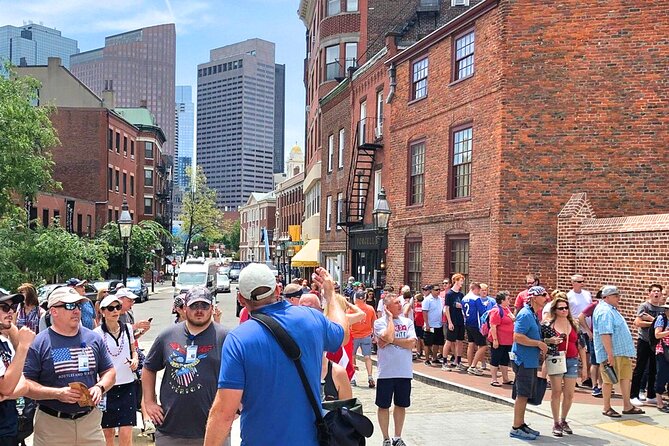
Old City Hall supplies a change of setting. Its architecture gives the guide a chance to discuss democracy, including the barriers and tensions that come with governing a divided society.
Then you reach the statue of Benjamin Franklin and learn about Boston’s first public school and its most famous pupil. Franklin’s role gives the tour a personal angle. He was not just a name from a textbook, but a figure connected to education, public life, and the changing ideas of colonial America.
These brief stops are valuable because they break up the march of major monuments. The route is not only about battles and declarations. It also considers schools, civic buildings, religious institutions, publishing, and the ordinary systems that held Boston together.
You may hear about the former publishing house connected with Ralph Waldo Emerson, Henry Wadsworth Longfellow, Nathaniel Hawthorne, and other American writers. That stop sits outside the Revolution’s main storyline, but it adds a literary layer to the city.
More Small-Group Walking Tours in Boston:
- Amsterdam Anne Frank: Small-Group Walking Tour & Local Guide
★ 4.8 · 12,789 reviews - New Orleans Food Walking Tour of the French Quarter with Small-Group Option
★ 5.0 · 6,118 reviews - Barcelona Tapas and Wine Experience Small-Group Walking Tour
★ 5.0 · 5,804 reviews - Reykjavík Small group Walking Tour – by CityWalk
★ 5.0 · 5,076 reviews
The Old State House puts the argument in one place
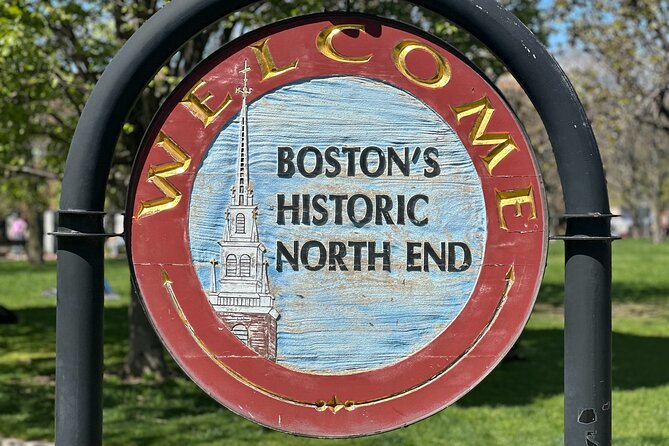
The Old State House is one of the tour’s main teaching points. It is described as the oldest public building in the country and was the center of Massachusetts politics during the fight between British authority and American rights.
Nearby, the Boston Massacre site brings those tensions into sharper focus. Soldiers, local citizens, loyalists, and patriot leaders all became part of a dangerous clash. The guide’s task here is to separate the event from the simplified version you may already know.
That is where a strong guide earns the fee. A plaque can tell you the date and names. A good explanation shows why the soldiers were there, how the crowd and officials viewed the incident, and how patriot leaders used it in the argument against British rule.
The tour spends about 10 minutes at both the Old State House and the Massacre site. That is enough time for a clear explanation, though anyone wanting a long museum-style treatment may wish to return later on their own.
Old South Meeting House and Faneuil Hall show protest becoming revolt
The Old South Meeting House is where the political story takes a major turn. The Boston Tea Party began with a meeting here, and the guide explains why this event pushed the colonies beyond ordinary protest.
Faneuil Hall follows as another major stop. Known as the Cradle of Liberty, it was a place where public debate could become organized resistance. The tour includes a built-in break for entrance into Faneuil Hall and Quincy Market, although the experience is still mainly outdoors.
Quincy Market is handled with a useful warning: tourist traps are common. You are in one of Boston’s busiest visitor areas, so do not confuse a famous address with the best meal in town. The guide’s North End recommendations later in the walk may be more helpful if you want Italian food, pizza, seafood, clam chowder, or cannoli.
The price of the tour includes access to Faneuil Hall and Quincy Market, but other museum entries are not included. That keeps the cost at $55, though you should budget separately if you want to enter other historic buildings.
The modern city appears at Post Office Square and the Greenway
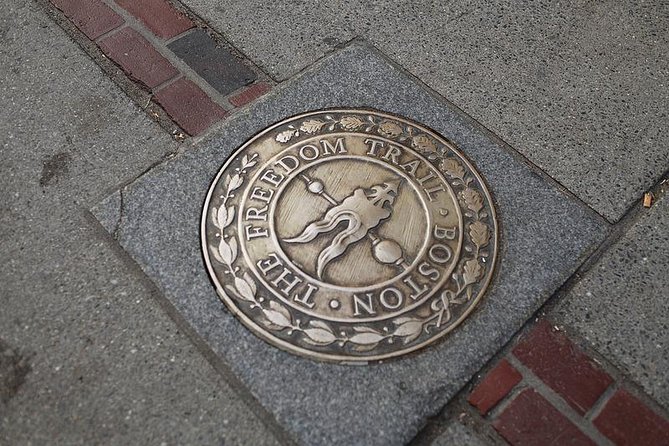
Post Office Square and the Financial District are not usually the first places people associate with the Revolution. That is exactly why they work here.
The guide explains how the historic core sits beneath a modern center for education, health care, and finance. You see Boston as a city that has kept changing, not a collection of preserved colonial scenes.
The Rose Fitzgerald Kennedy Greenway provides a garden break from the brick streets and office towers. It runs through the city as a long public park, giving you room to breathe before the route turns toward the North End.
These stops also help you understand the tour’s wider aim. It is not only a Freedom Trail checklist. It connects the old story to the streets you are actually walking through now.
The North End brings Paul Revere back to daily life

The Paul Revere House sits in North Square, one of Boston’s oldest and most charming residential areas. The house is a major landmark, but the setting adds a lot. You are surrounded by a neighborhood where history, homes, restaurants, and small public spaces remain close together.
The guide presents Revere as a real person rather than only the rider from the famous poem. That distinction matters. The tour aims to sort legend from fact and to show how Revere’s work, connections, and actions fit into the wider resistance movement.
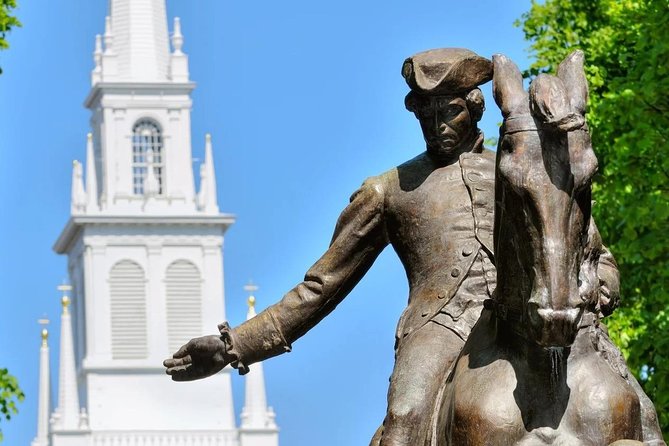
You then visit North Square Park, the Paul Revere statue, and the exterior of Old North Church. The church’s steeple leads into the story of the lantern signal, the midnight ride, and the events that brought the Revolution into open war.
This section is especially good for families and school-age children who already have some interest in the subject. The guides use visual aids and interactive explanations, and one guide used Lego soldiers to show the Battle of Bunker Hill. The style is lively, but it is still a serious history lesson rather than a children’s show.
Bunker Hill and the harbor give the story its final act
The Bunker Hill portion recreates the battle in narrative form. It was the largest battle of the American Revolution, and the guide explains the action with maps or models that make the positions easier to follow.
You do not get a full military museum visit as part of the $55 price. The tour is about understanding the battle in place and in sequence. You also see the second-oldest burial ground in Boston from outside, with views toward Charlestown and Boston Harbor from the terrace across the street.
The USS Constitution, known as Old Ironsides, is visible across the harbor. The guide explains its history and gives advice on how to visit it, but the ship is not part of the Revolution and is not entered on this walk.
The final stretch follows Boston Harbor and the Harborwalk. From the piers, wharfs, and waterfront parks, you get a different view of the city and end with the idea that British forces were finally driven out of Boston.
The walk finishes at Lewis Wharf in the North End. You are less than a five-minute walk from the Aquarium subway stop and less than 10 minutes from the original meeting point. Public restrooms, parking, bicycles, and restaurant choices are nearby.
Is $55 a fair price for three and a half hours?
I think the value is good if you want explanation rather than transportation or entry tickets. At $55 per person, you are paying for a small group, a long route, and a guide who spends real time linking events together.
The tour covers many official Freedom Trail locations, plus streets and public spaces that a simple trail walk might skip. It also provides a break and keeps the focus on the story instead of rushing from one landmark to another.
The value is weaker if you only want quick photographs. You may spend 10 to 15 minutes at a cemetery or political site while the guide explains names, motives, and context. That is useful for history fans, but it can feel long if your priority is shopping, dining, or museum interiors.
The average booking lead time is 49 days, so popular dates may fill well ahead. You receive confirmation at booking, and cancellation is free up to 24 hours before the start time. The experience requires good weather, and a poor-weather cancellation brings a choice of another date or a full refund.
What to wear and who should take it
Wear walking shoes. This is the clearest practical advice from the experience itself. You will cover a lot of ground, stand at outdoor sites, and spend time along the harbor where wind and rain can make the route feel harder.
The tour is suitable for all ages, but children must be accompanied by an adult. It is not a kids-only version of the story, so younger children may need help staying engaged during the more detailed political sections.
The maximum group size is 15. That is small enough for questions and a closer view of maps and props, while still large enough to have the feel of a public tour.
I would choose this walk early in a Boston visit. It gives you restaurant suggestions for the North End, points out places you may want to revisit, and helps the rest of your sightseeing fit together.
Should you book this Boston walking tour?
Book it if you want the American Revolution explained as a connected story, not a series of famous names. It is a strong choice for history fans, first-time Boston visitors, families with older children, and anyone who likes an animated teacher with visual aids and room for questions.
Skip it if a long walk sounds tiring, if you want lots of indoor museum time, or if your Boston schedule is built around short stops. Weather also matters because almost all of the experience takes place outside.
For most visitors who can manage the distance, $55 is a fair price for a three-hour-plus lesson that covers the Freedom Trail, the North End, modern Boston, and the harbor in one sweep. Bring comfortable shoes, dress for the forecast, and arrive ready to listen.
FAQ
How long does the tour last?
The tour lasts about three to three and a half hours.
How much does the tour cost?
The price is $55 per person.
Where does the tour begin?
It begins at City Hall Plaza, at 1 City Hall Square in Boston. The meeting area is between Five Iron Golf and City Hall, near the seasonal beer garden and the large BOSTON sign.
Where does the tour end?
It ends at Lewis Wharf in Boston’s North End, near restaurants, public restrooms, parking, bicycles, and public transportation.
How many people can join the tour?
The maximum group size is 15 travelers.
Is the tour offered in English?
Yes. The tour is offered in English and uses a mobile ticket.
Are museum admissions included?
Faneuil Hall and Quincy Market are included as part of the route. Other museum entry fees are not included.
Is the tour suitable for children?
The tour is appropriate for all ages, but children must be accompanied by an adult. It is not a simplified kids version of the history.
Can I cancel for a refund?
You can cancel for a full refund up to 24 hours before the experience begins. Poor weather or failure to meet the minimum number of participants may also result in a new date or a full refund.
New routes in Boston
- Cambridge, Massachusetts: MIT and Harvard Walking Tour★ 4.7 · 486 reviews
- Boston: Full Revolution Story Epic Small Group Walking Tour★ 4.9 · 132 reviews
- Boston: Salem by Boat – Witch Trials & Walking Tour★ 4.3 · 263 reviews
- Boston: 2-Hour Historic Walking Tour★ 4.7 · 88 reviews
- Boston: North End Pizza Walking Tour with 3 Slices & Cannoli★ 4.8 · 162 reviews
- Boston: Freedom Trail Guided Walking Tour in French★ 4.9 · 106 reviews
- Self Guided Classic Freedom Trail Location Aware (GPS) Walking Audio Tour★ 4.5 · 258 reviews
- Boston History Tour: Scenic Walk Through Time & Landmarks★ 5.0 · 627 reviews
Boston Walking Tours, compared.
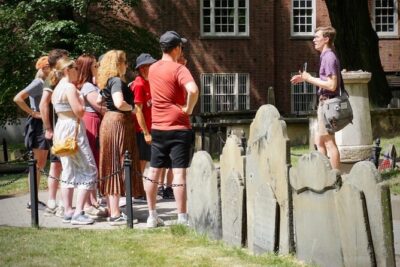
Freedom Trail History Small Group Walking Tour
Read our review →
Harvard University Campus Guided Walking Tour
Read our review →
Boston Freedom Trail Walking Tour with Costumed Guide
Read our review →
Boston North End Food Tour of 6+ Tastings, Cannoli, Lobster Roll
Read our review →

Boston Pizza Lovers Food and History Walking Food Tour
Read our review →
Boston History Tour: Scenic Walk Through Time & Landmarks
Read our review →
Cambridge, Massachusetts: MIT and Harvard Walking Tour
Read our review →Browse the lists this tour appears in