
Review · NORWAY
Walking Tour in Bergen of the Past and Present
Bergen’s past and present come together neatly on this two-hour walk. You begin at Bergenhus Fortress, follow the old royal quarter and Hanseatic wharf, then climb into wooden hillside streets where the talk turns to taxes, food, work, housing, and daily life in Norway.
I like the balance here: you get major sights such as Bryggen and Håkon’s Hall, but you also see quieter lanes that many visitors miss. I also like the local advice, especially the restaurant and coffee tips shared by guides including Jeff, Janine, Dane, Emma, Anaïs, Magda, and Erik. The main drawback is simple: the tour stays outdoors, so you do not enter Håkon’s Hall, St. Mary’s Church, or the Bryggen buildings.
Key points to know before you book
- A useful first look at Bergen: The route covers the fortress, Bryggen, St. Mary’s Church, Fjellsiden, Skostredet, and the Fish Market.
- History and everyday life share equal billing: The first hour focuses on kings, merchants, and political unions, while the second turns to modern Norway.
- Small groups keep the walk personal: The maximum group size is 16 people, and on some departures the guide may have only a handful of guests.
- Bryggen receives the most time: About 40 minutes are spent explaining the Hanseatic wharf and its trading system.
- Expect a climb: The route heads uphill toward Fjellsiden and includes cobbled streets, so moderate fitness and sensible shoes matter.
- The funicular is only pointed out: You do not ride it, saving time and 150 NOK while keeping the choice open for later.
Starting at Bergenhus Fortress
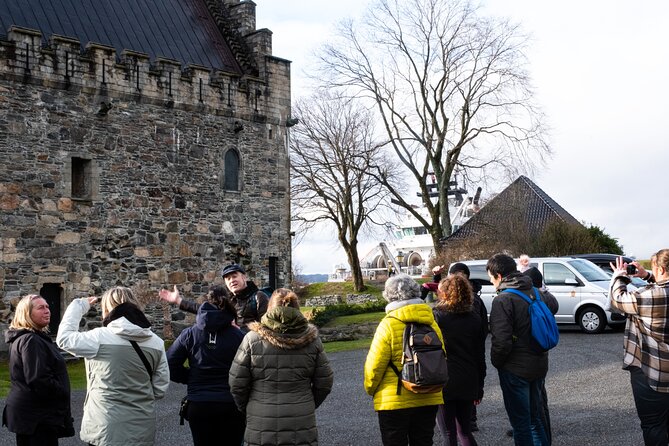
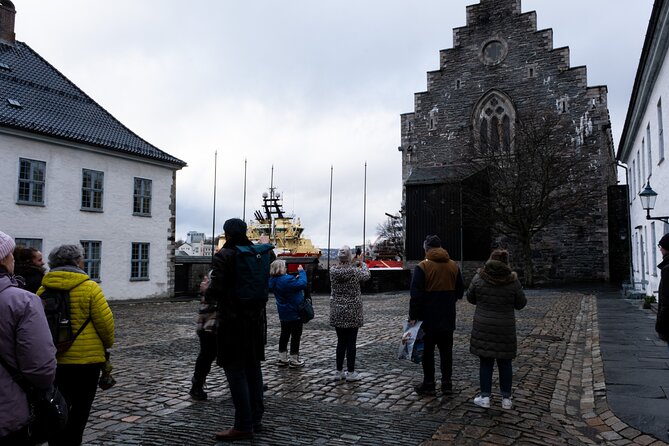
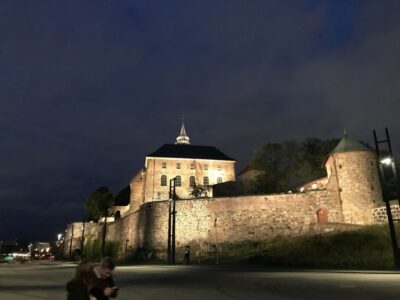
Meet at Bradbenken 1, near Bergenhus Fortress. This is a smart starting point because Bergen’s royal story begins here, when the city served as Norway’s capital and the palace occupied this part of town.
Your guide leads an outdoor walk around the fortress and explains its role before the route moves toward Håkon’s Hall. The setting gives the opening talk a clear sense of place. You are not hearing a list of dates in an ordinary street. You are standing where royal power once worked.
The fortress can occasionally close for a private event. If that happens, the route may need to adjust, so it is worth keeping a little flexibility in your schedule. The tour does not include entry to the fortress buildings or museum spaces.
More Walking Tours in Norway:
- Bergen: Past & Present Small Group Guided Walking Tour
★ 4.9 · 1,609 reviews - Oslo: Guided Walking Tour of Central Oslo with Local Guide
★ 4.7 · 936 reviews - Oslo: Best of Oslo Walking Tour
★ 4.5 · 458 reviews
Håkon’s Hall and Norway’s changing crown
Håkon’s Hall is the major surviving part of Bergen’s medieval palace. The guide uses it to explain Bergen’s period as an independent country, then places Norway’s later unions with Denmark and Sweden in context.
This is one of the better reasons to take the walk early in your stay. Norwegian history can seem scattered when you meet it one monument at a time. Here, the political story is tied to the buildings around you, and the guide can answer questions as they come up.
You will not go inside Håkon’s Hall. It is a separate museum with its own admission charge. That limitation is clear, but it matters if you hoped for an interior visit. Think of this portion as an outdoor introduction, not a museum tour.
Bryggen, where Bergen’s trade took shape
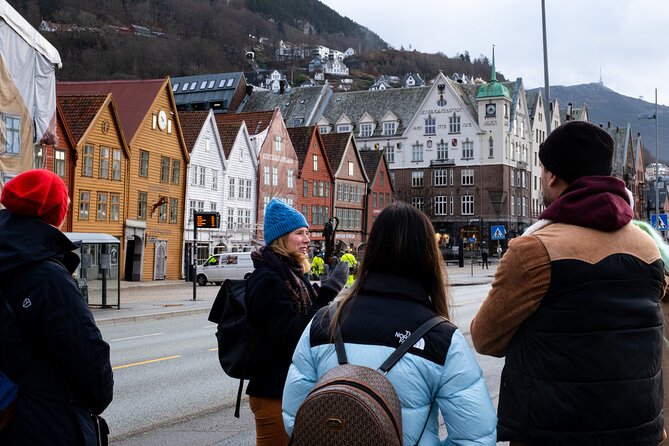
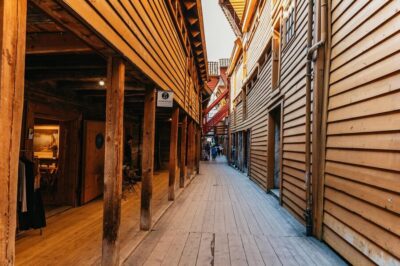
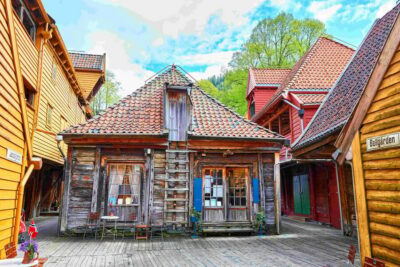
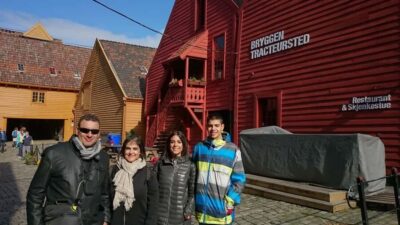
From the fortress, the walk heads to Bryggen, Bergen’s UNESCO World Heritage site. The narrow wooden passageways and colorful buildings are the visual center of the tour, but the guide gives you more than a photo stop.
Bryggen has been a trading area for about 1,000 years. Its later success came largely through the Hanseatic League, a network of German merchants who controlled much of the trade along northern Europe’s coast. You learn how the merchants organized their work, handled goods, and used the wharf.
The guide also explains how Bryggen functioned as a working place, not simply a pretty row of leaning wooden buildings. That distinction helps you read the site. Look past the colors and angles, and you begin to see a system of warehouses, merchants, labor, and trade.
The tour spends about 40 minutes here, which is enough time to ask questions without turning the whole experience into a Bryggen lecture. You do not enter the buildings. They now hold shops and small businesses rather than museums, so the guide keeps the discussion outside in the lanes and around the wharf.
If you want to explore Bryggen’s interiors afterward, plan a separate visit. This walk gives you the background and orientation, but it does not include admission to any building.
St. Mary’s Church and the edge of old Bergen
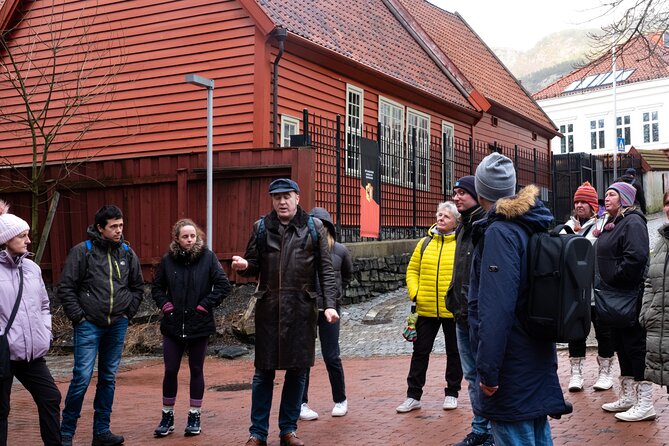
The route passes St. Mary’s Church, the oldest surviving building in Bergen. Built in the 12th century, it still functions as a church today.
The church adds another layer to the walk. Bergen’s story is not only royal and commercial. Religious buildings helped shape the city’s early center, and St. Mary’s location makes it easy to connect the church with the fortress and wharf nearby.
Entry is not included, and the tour does not go inside. You can treat the stop as a chance to see the exterior and hear its place in Bergen’s development. If you plan to visit on your own, check the separate admission arrangements rather than expecting the tour ticket to cover it.
Same streets, a different guide:
- Oslo: Historic Myths & Legends Evening Walking Tour
★ 4.8 · 408 reviews - Bergen: Sightseeing Walking Tour with Ferry Ride
★ 4.9 · 296 reviews - Taste of Oslo Walking Tour
★ 4.5 · 282 reviews - Oslo: Private Walking Tour with a Local
★ 4.5 · 263 reviews
Steinkjellerbakken and life on the hillside
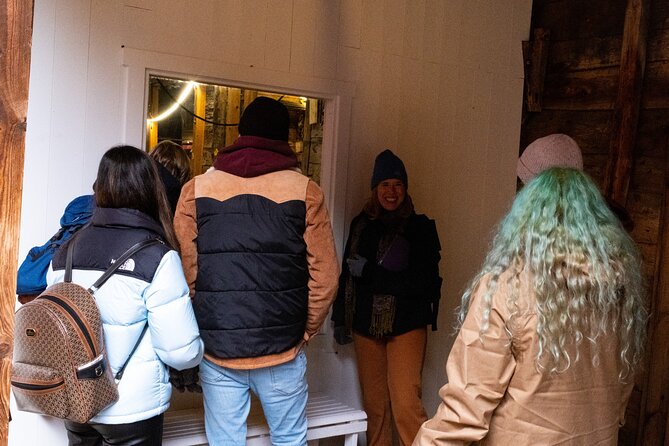
After the main historical sights, the route turns uphill toward Fjellsiden. The walk follows Steinkjellerbakken and enters a well-preserved area of wooden houses.
This is where the experience becomes more personal. Instead of focusing only on kings and merchants, the guide talks about how people live in Norway now. Topics may include what people eat, when they work, housing costs, and taxes. The exact route depends on the guide, so this part has a more local and flexible feel than a fixed monument-to-monument circuit.
I especially like this change of pace. You can see the city as a home rather than a display. The wooden houses and sloping lanes also give you a better sense of Bergen’s residential character.
The climb is not extreme, but it is real. Uneven cobblestones are part of the route, and you should expect a moderate level of walking fitness. Comfortable shoes are more useful here than polished sightseeing footwear.
The funicular station and Norway’s outdoor life
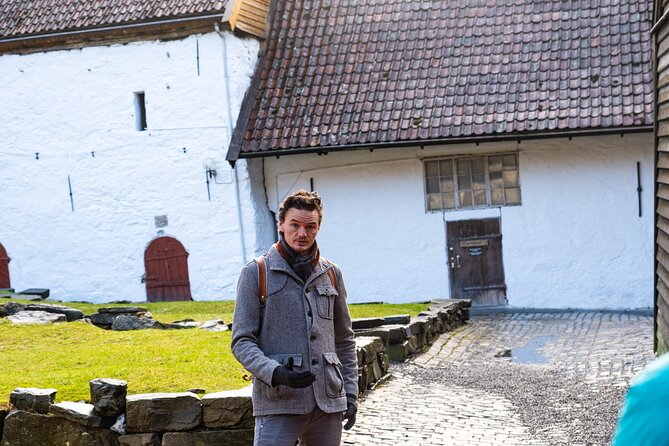
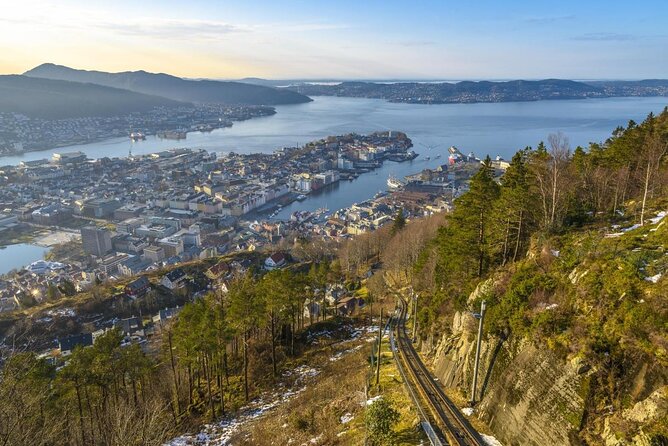
The walk passes the funicular station, but you do not ride it. The guide uses the stop to explain Norway’s hiking culture and the place outdoor life holds in Norwegian society.
This is a practical choice. Taking the funicular would add roughly an hour and 150 NOK to the outing, while skipping it leaves you free to ride later at your own pace. You might choose another time for the ascent, perhaps for a sunset, a hike, or simply a slower look at the view.
That flexibility is useful if you are staying in Bergen for more than a few hours. The tour gives you the location and the cultural context, then lets you decide how to use the funicular afterward.
Skostredet and Bergen’s food culture
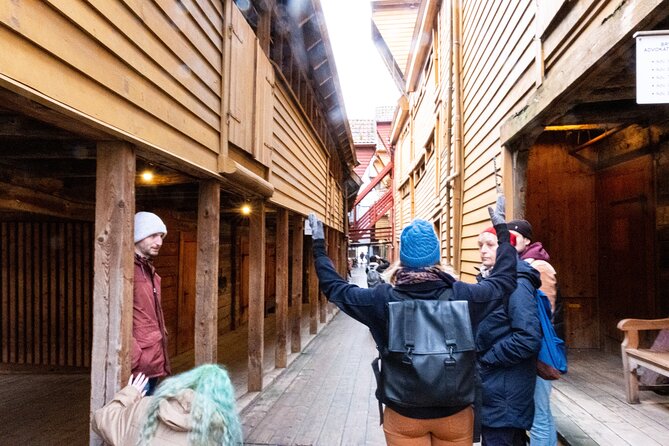
The final part of the walk shifts to modern Bergen. The route heads along Skostredet, a popular restaurant street in the old town center, while the guide discusses the city’s food culture.
Bergen is recognized as a UNESCO City of Gastronomy, and the tour connects that designation with practical choices. Guides have offered suggestions for coffee, dinner, local food, and shops, which can save you from choosing a meal at random after a long day of sightseeing.
Several guides receive especially warm praise for being conversational and willing to answer questions. Jeff is often singled out for clear explanations and useful restaurant advice. Janine, Dane, Emma, and Anaïs are also described as friendly, engaging, and good at mixing local life with history.
The route spends about 10 minutes around Skostredet, so this is not a food tasting tour. You will not be served a meal or given included samples. Instead, you get a short introduction and ideas for where to continue on your own.
Finishing at the Fish Market
The tour ends outside Bergen’s Fish Market and tourist office at Vågsallmenningen 2. This is a convenient finish because you are close to the central waterfront and can continue exploring without retracing the route.
The Fish Market is also a practical place to pause after the walk. You can ask your guide one last question, check the tourist office, or use the location as a starting point for lunch and further sightseeing. The finish works well for cruise passengers and first-time visitors who want to get oriented before making their own plans.
The final Fish Market stop takes about 10 minutes. It is not presented as a guided market tasting or a detailed indoor market visit, so keep your expectations focused on location and orientation.
What the guide adds to the experience
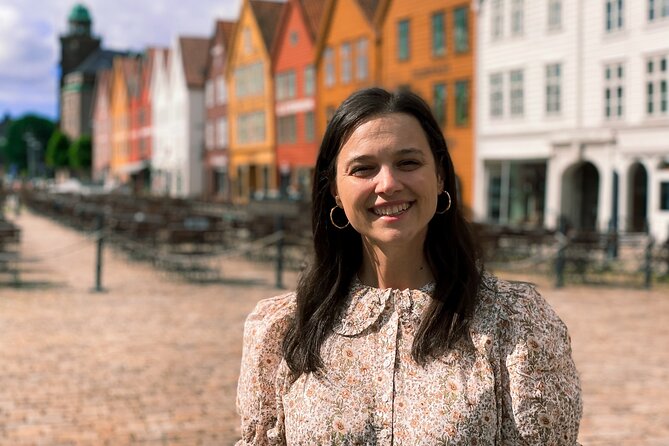
The quality of this walk depends heavily on the guide, and the format gives the guide room to shape the experience. Guides named in the supplied material include Jeff, Janine, Dane, Emma, Anaïs, Magda, Erik, Eriik, and Neil.
The strongest pattern is a mix of clear history, local stories, and open conversation. You are not simply marched from one famous building to the next. The guides explain why the places matter, then connect them to modern Bergen.
Some departures may feel almost private. One reported outing had a single participant, allowing the guide to give tailored advice about local attractions, restaurants, and bars. The maximum group size is 16, which still keeps the walk smaller than a large coach-style excursion.
English is the tour language. The guide’s ability to answer questions matters, especially during the modern-life section, where you may want to ask about Norwegian habits, prices, work, food, or housing.
Price, pace, and practical value
At $33.47 per person, this is a reasonable price for a two-hour introduction, especially if you use it at the beginning of your stay. You are paying for a local guide, a clear route through Bergen’s main historic areas, and advice that can shape the rest of your visit.
The value is strongest if you want context rather than entry tickets. The price includes the guided walk around Bergenhus Fortress and Bryggen, with no hidden fees for the outdoor tour. It does not include museum admission, church admission, food, funicular tickets, or entry to the historic buildings.
The pace should suit anyone who can walk for two hours and manage an uphill section. The route is not designed for people seeking a completely flat stroll. Cobblestones and wooden lanes are part of the setting, so choose shoes with good support.
The tour is offered in English and uses a mobile ticket. It runs near public transportation, and the start and finish are in central areas. Service animals are allowed. The experience requires good weather, and if poor weather or low bookings cause cancellation, you are offered another date or a full refund.
You can cancel for a full refund up to 24 hours before the start time. Changes or cancellations inside that window are not accepted for a refund.
Who should book this Bergen walk?
I would choose this tour if you are new to Bergen and want a clear introduction before exploring on your own. It also suits repeat visitors who want a more local angle, particularly the hillside streets and modern-life discussion.
It works well for solo visitors, couples, and small groups who like asking questions. The small maximum group size helps, and the guide may be able to adjust recommendations around your interests.
Cruise passengers can also make good use of it if the timing fits their shore visit. The central start, manageable duration, and finish near the tourist office make it easy to continue into the city afterward.
You may want another type of tour if your priority is going inside historic buildings, riding the funicular with a guide, or tasting food as part of the ticket. This experience is outdoor-focused and explanation-led.
Should you book Walking Tour in Bergen of the Past and Present?
Yes, if you want Bergen 101 with a local voice. The walk covers the sights you most need to understand, then moves beyond the postcard view into wooden residential lanes, hiking culture, taxes, food, and daily Norwegian life.
I would book it near the start of a Bergen stay, ideally before choosing restaurants or deciding when to visit the funicular. The 4.9 rating from 1,575 reviews and 99 percent recommendation rate fit the experience’s main strengths: strong guides, useful local advice, and a well-planned route.
Just remember what you are buying. This is not an indoor museum visit or a funicular ride. It is a compact, outdoor city lesson with a climb, historic landmarks, and practical advice you can use for the rest of your time in Bergen.
FAQ
How long does the Bergen walking tour last?
The tour lasts approximately two hours.
What language is the tour offered in?
The tour is offered in English.
Where does the tour start?
It starts at Bradbenken 1, 5003 Bergen, Norway, near Bergenhus Fortress.
Where does the tour finish?
It finishes at Vågsallmenningen 2, 5014 Bergen, Norway, close to the Bergen tourist office and the Fish Market.
Does the tour enter Håkon’s Hall or St. Mary’s Church?
No. The tour stays outdoors and does not include entry to Håkon’s Hall, St. Mary’s Church, or the Bryggen buildings.
Does the tour include a ride on the funicular?
No. The guide passes the funicular station and explains Norway’s hiking culture, but the tour does not include a funicular ride.
How large is the group?
The maximum group size is 16 people.
Can I cancel for a full refund?
Yes. You can cancel at least 24 hours before the experience start time for a full refund. If poor weather or an insufficient number of bookings causes the operator to cancel, you are offered another date or a full refund.
New routes in Norway
- 3 Hour Guided Food Walk Tour in Alesund, Norway★ 5.0 · 124 reviews
- Stavanger: Private Walking Tour with a Local★ 4.5 · 100 reviews
- Oslo: Private Walking Tour with a Local★ 4.5 · 263 reviews
- Oslo: Snowy Forest Torchlight Walk with Campfire★ 4.6 · 254 reviews
- Oslo: Private Walking Tour★ 4.8 · 87 reviews
- Oslo: Grünerløkka Food & Culture Walking Tour★ 4.5 · 204 reviews
- Oslo: Norwegian Food Tour & Hidden Gems City Walk★ 4.8 · 165 reviews
- Oslo: City Highlights Walking Tour★ 4.8 · 197 reviews
Norway Walking Tours, compared.
Bergen: Past & Present Small Group Guided Walking Tour
Read our review →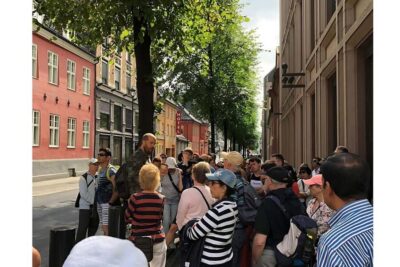
Guided Walking Tour of Central Oslo with Local Guide
Read our review →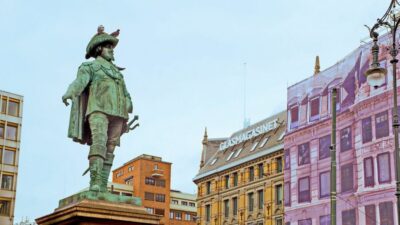
Bergen: Sightseeing Walking Tour with Ferry Ride
Read our review →

Browse the lists this tour appears in