
Review · TORONTO
Toronto: City Walking Tour
Toronto’s PATH network is the surprise star of this walking tour. This mostly underground passage links downtown towers, subway stations, hotels, shops, and places to eat, and a good guide can turn what feels like a confusing maze into a useful part of your Toronto map. You also get the city above ground, from the Entertainment District to Old Toronto and St. Lawrence Market.
I like the small groups, limited to 10, and the way the tour ends at the market around lunchtime. I also like the mix of practical tips and city stories, with guides such as Nick, Ken, Ram, Jason, Dave, and Neil using humor, photos, and personal knowledge rather than simply reciting facts. The main drawback is physical: you walk for three hours, and this tour is not suitable for wheelchair users or people with low fitness.
Key points to know before booking
- The PATH is the tour’s most useful lesson: Learn how Toronto’s underground and indoor walkway connects more than 70 office towers, six subway stations, seven hotels, hundreds of shops, and many places to eat.
- The route links new and old Toronto: You pass the CN Tower and Rogers Centre before reaching Brookfield Place and the older streets around St. Lawrence Market.
- You get a practical city orientation: Your guide explains where to go, how to find the Toronto Islands, and what to do after the tour.
- Small groups make a difference: With no more than 10 people, you can ask questions and talk with the guide throughout the walk.
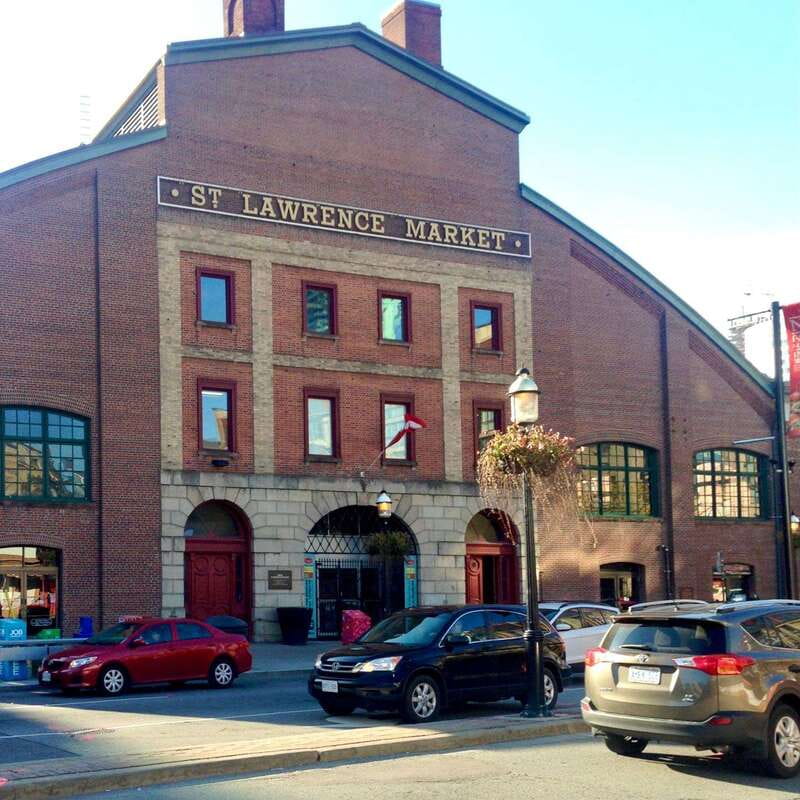
- St. Lawrence Market is a useful finish: You end near one of Toronto’s best-known food stops, with time to choose lunch or sample local specialties.
- Plan for steady walking: There are pauses, but this is an active walking tour with stairs, indoor passages, and city streets.
Why the PATH makes this more than a standard city walk
Many Toronto sightseeing tours focus on landmarks you can see from the street. This one teaches you how the city works below street level.
The PATH stretches for roughly 30 kilometers, or 20 miles, through downtown. You will not walk all of it, but you will enter and leave parts of the system and learn how it links the city center. This matters most in winter, during rain, or when you need to cross downtown without walking beside busy traffic.
The PATH is not a single tunnel with one obvious entrance. It is a network of connected walkways through office buildings, shopping areas, transit stops, and underground spaces. A local guide can show you the logic behind the colored signs and explain how the system fits together. That information can save you time later, especially if you are staying downtown or plan to use the subway.
The scale is impressive. The network connects more than 70 office towers, six subway stations, seven hotels, and hundreds of shops and food outlets. You will get a sense of why Toronto built such an extensive indoor route, even if you only see a small section of it.
One caution: the PATH can feel disorienting if you are expecting a historic passage or a single attraction. It is a working part of downtown, designed for commuters and office workers. Its value comes from learning to use it, not from treating it as a grand monument.
More Walking Tours in Canada:
- Quebec City Walking Tour
★ 5.0 · 4,716 reviews - Old Quebec City: Grand Walking Tour with Private Option
★ 4.8 · 2,609 reviews - Montreal Mile End Authentic Food Tour with 7 Delicacies Tastings
★ 5.0 · 2,598 reviews
Starting beneath Roy Thomson Hall
The meeting point is at the southwest corner of King Street West and Simcoe, beneath the small electronic billboard for Roy Thomson Hall. This puts you in Toronto’s Entertainment District, an area filled with theaters, restaurants, bars, nightclubs, and concert venues.
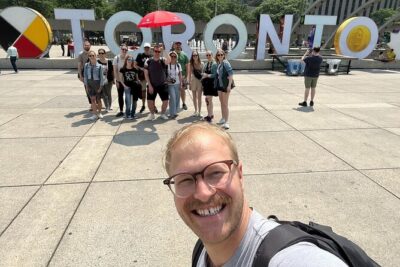
Arrive with comfortable shoes and a little time to identify the exact corner. The first moments are also a good chance to meet the guide and the rest of the group. Guides often have everyone introduce themselves, which helps create a more relaxed group during the walk.
The tour is conducted in English. Since the group is capped at 10, you should be able to hear the guide and ask questions without shouting across a crowd. That format suits you if you want conversation and local suggestions rather than a long speech delivered to dozens of people.
Guides vary by departure, but the strongest pattern is clear: Nick, Ken, Ram, Jason, Dave, Neil, and others bring an informal style. They use jokes, personal stories, and, in some cases, photo albums or flash cards showing how Toronto has changed. The approach is especially helpful if you want more than dates and building names.
From the Entertainment District to Toronto’s waterfront
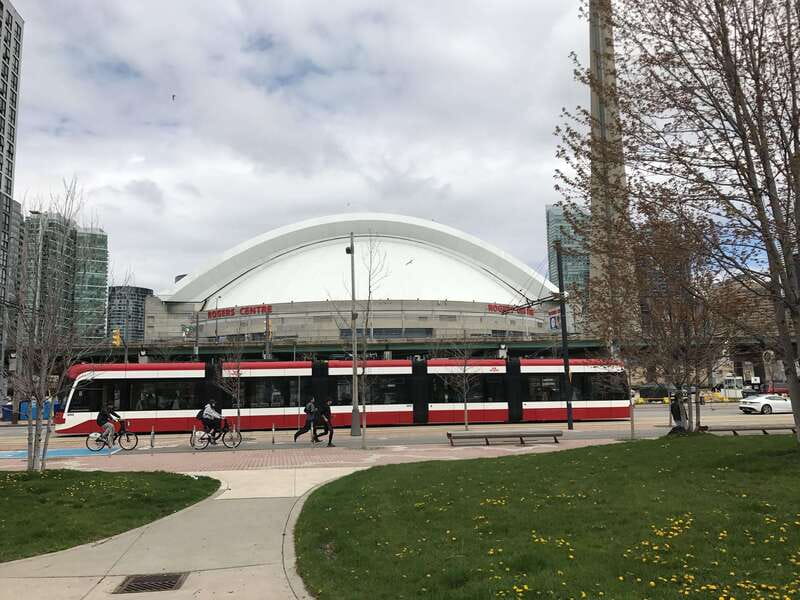
The first section moves through the Entertainment District toward the waterfront. You pass major city landmarks, including the CN Tower and Rogers Centre.
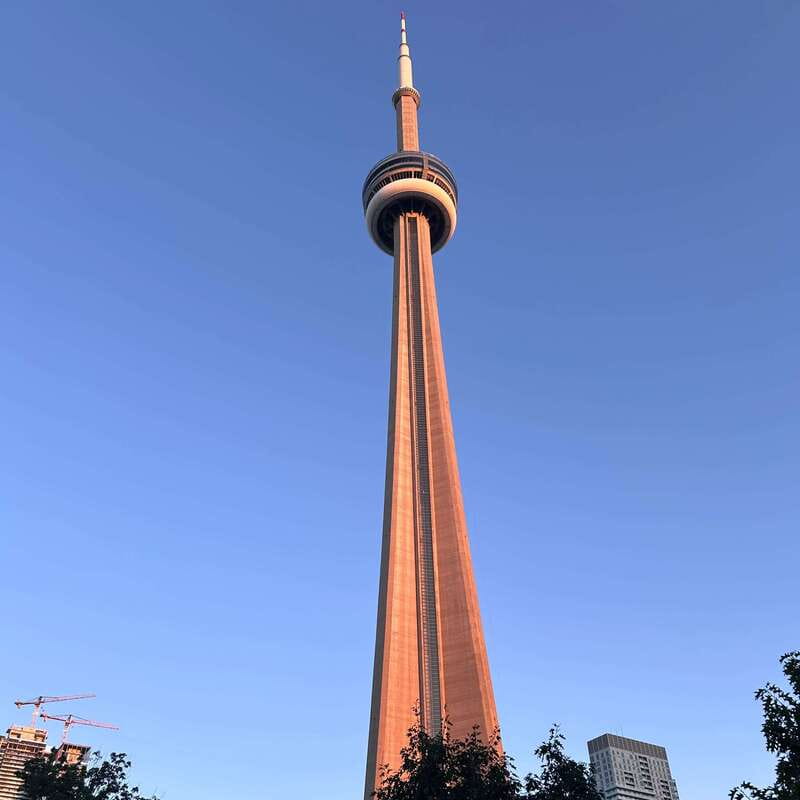
The CN Tower once held the title of the world’s tallest freestanding structure. The tour does not include entry, so you will see and discuss the tower from outside rather than ride to its observation levels. That is worth knowing if you want a full CN Tower visit, since you will need a separate ticket and more time.
Rogers Centre is another major stop. Locals often still call it the Skydome, and the guide explains some of the stories tied to its design and place in Toronto’s sports culture. Again, entry is not included. The value here is the context, not a stadium tour.
The route gives you a useful first look at how Toronto combines entertainment, sports, business, and public spaces in a compact downtown area. You also get photo opportunities around the major landmarks. A guide can help you notice details you might pass without understanding, such as how the buildings relate to the streets and waterfront.
The waterfront section includes a short break. That pause matters because the tour keeps moving for three hours. You can catch your breath, listen to the next part of the explanation, and reset before entering the PATH.
Entering Queen’s Quay Terminal and the indoor city
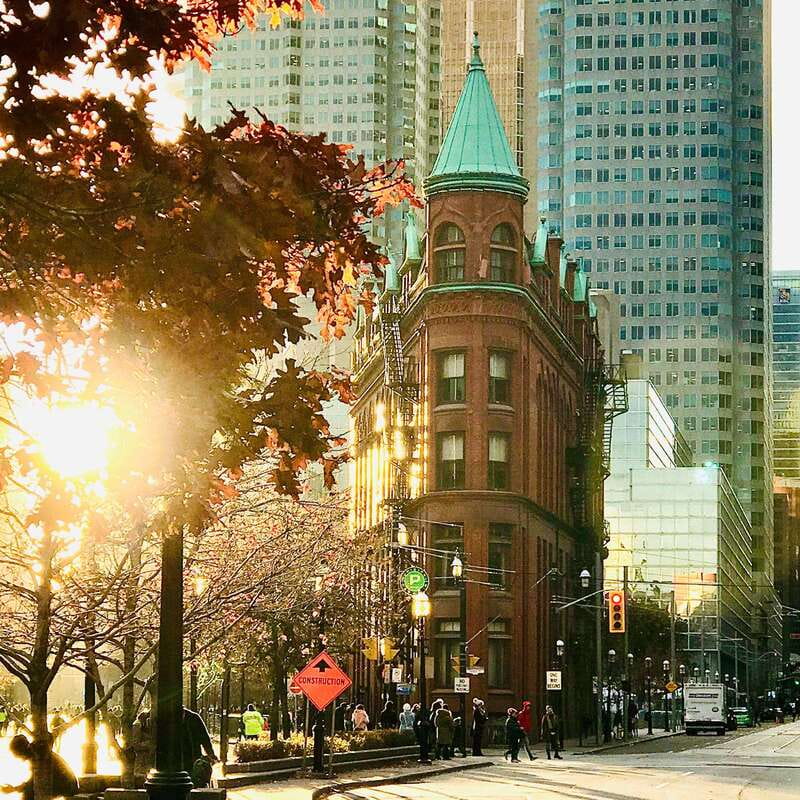
The tour includes entry to Queen’s Quay Terminal, followed by sections of the PATH. This transition is one of the most interesting parts of the route because Toronto changes character quickly.
Above ground, you get open streets, large buildings, traffic, and views toward the waterfront. Inside, the city becomes a series of corridors, food counters, shops, office entrances, and signs pointing in different directions. The guide’s job here is not just to point out a door. It is to explain how you can use this system on your own.
The PATH includes around 600 places to eat and more than 800 shops. Those numbers describe the scale, but they do not mean you will visit them all. Instead, you learn enough to recognize the network and find useful connections later.
If you are visiting Toronto in cold weather, this part of the tour may be especially valuable. You can walk between parts of downtown with less exposure to snow, wind, or rain. Still, do not assume the entire route is indoors or underground. The tour moves in and out of buildings and includes outdoor walking.
Same streets, a different guide:
- The Original Old Montréal Walking Tour by Guidatour
★ 4.5 · 2,217 reviews - Old Montreal Small-Group Walking Tour | Max 10 | by MTL Detours
★ 5.0 · 2,088 reviews - Gastown Historic Walking Food Tour
★ 5.0 · 1,863 reviews - Old Quebec Classique Walking Tour with Funicular
★ 5.0 · 1,317 reviews
Brookfield Place and Toronto’s modern architecture
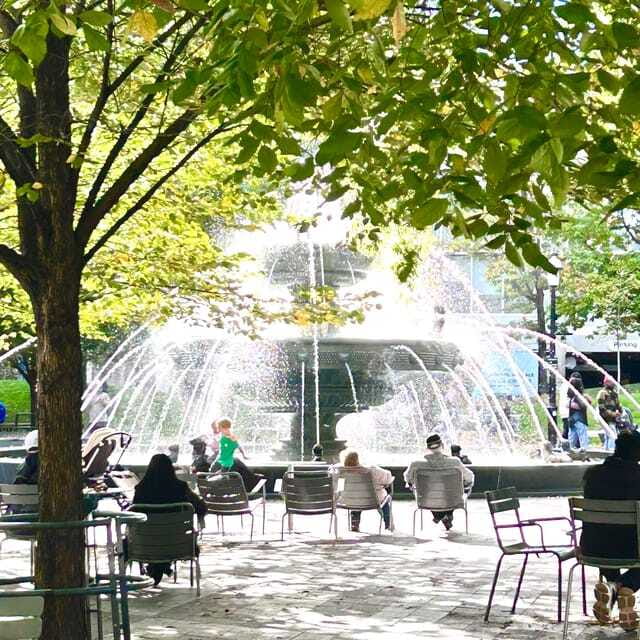
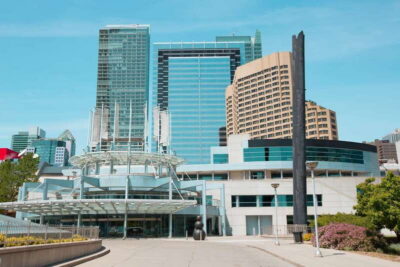
After using parts of the PATH, you enter Brookfield Place. The building is known for its dramatic interior design by Spanish architect Santiago Calatrava.
This is a good example of how the tour mixes practical navigation with architecture. You are not simply told that Brookfield Place is attractive. You see how a busy office complex can include a striking public interior and become part of the city’s sightseeing route.
The building also helps show Toronto’s range. The city is not only glass towers and modern infrastructure. Within the same half-day, you move from contemporary architecture to older commercial streets and market buildings.
If architecture is a major interest, this stop will likely be one of the most memorable. If your main goal is shopping or food, it functions more as a visual pause and orientation point. The guide’s explanation gives the building meaning without turning the walk into a formal architecture lecture.
Old Toronto brings a different pace
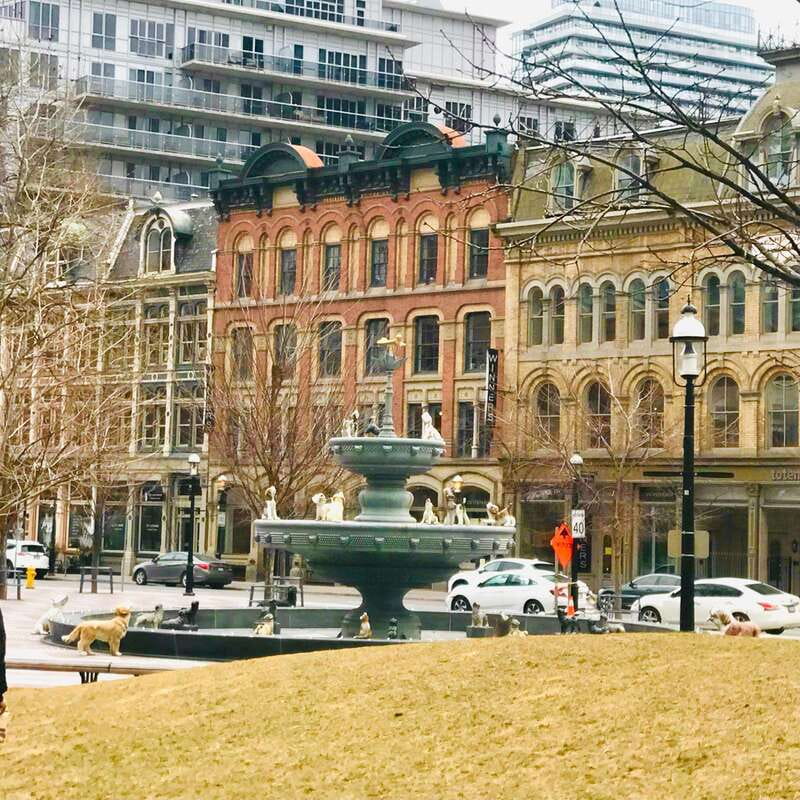
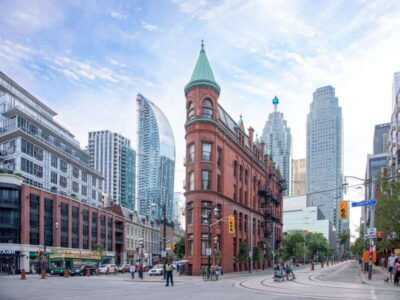
During the final third of the tour, the route moves into Old Toronto. This area has buildings connected to the city’s 19th-century growth and a noticeably different feel from the Entertainment District and office core.
Here, the tour slows down for stories about Toronto’s founders, development, and older buildings. Some guides use photographs to show the city before and after major changes. That visual comparison can help you understand why Toronto sometimes feels like several cities placed side by side.
Old Toronto is also useful for food planning. The area has restaurants and historic buildings, and it makes a good base for exploring after the tour. You might find that this section is less immediately dramatic than the CN Tower or PATH, but it gives the walk balance. Without it, you would leave with a picture of Toronto as only a modern business center.
The route does cover a fair amount of ground, but it is not designed as a race. Guides generally keep a steady pace and stop often to explain buildings or answer questions. Even so, you should be ready to walk continuously, sometimes indoors and sometimes on city sidewalks.
Ending at St. Lawrence Market

The tour ends at St. Lawrence Market, one of the best places in the city to continue on your own. Your guide points out popular food stalls and explains what you can find inside.
Ending here around lunchtime is a smart choice. Food and drinks are not included, but you can stay at the market and buy your own meal. You can also use the guide’s suggestions to decide what to sample rather than wandering through the stalls without a plan.
The market is more than a final landmark. It gives you a practical next step after the tour. You can eat, explore the surrounding Old Toronto streets, or use the location as a starting point for the rest of your day.
The guide also gives recommendations for other parts of Toronto, including how to reach the Toronto Islands and what to do there. Keep in mind that the tour does not take you to the islands. You receive advice on getting there and planning your visit, but the ferry or island experience is separate.
How much value do you get for $38?
At $38 per person, this is reasonably priced for a three-hour guided walking tour, especially with a maximum group size of 10. You are paying for a local guide, route planning, city interpretation, and practical advice that would take time to piece together alone.
The value is strongest if this is your first visit to Toronto. In one morning or afternoon, you learn the basic shape of downtown, see major landmarks, understand the PATH, and finish at a food market. You also get recommendations for the Toronto Islands and other things to do later.
The value is lower if you already know downtown Toronto well or only want entry to the CN Tower or Rogers Centre. Neither attraction is included, and this tour does not replace a stadium or tower visit.
You can reserve now and pay later, and cancellation is free up to 24 hours before the start for a full refund. Those terms help if your plans are still moving, but the more important booking decision is choosing a time that leaves room for lunch at St. Lawrence Market afterward.
Who will enjoy this Toronto walking tour?
I would choose this tour for a first-time visitor who wants to understand downtown quickly. It is also a good fit if you like asking questions, prefer small groups, and want a guide who can explain both famous landmarks and ordinary city systems.
The tour suits families with older children, provided an adult accompanies them. Several guides have been praised for speaking clearly and keeping younger members interested with stories, photos, and humor. Children still need to manage three hours of walking.
It is useful for visitors arriving in winter or during a rainy spell because the PATH becomes part of the sightseeing. Do not treat the indoor sections as a way to avoid all bad weather, though. You still walk outside between locations.
I would skip it if you have low fitness, use a wheelchair, or want a slow, seated tour. Pets are not allowed, and unaccompanied minors cannot join. Bring a camera, water, and shoes suited to steady city walking.
Should you book it?
Book this tour if you want a well-rounded introduction to downtown Toronto rather than a single attraction. The strongest reasons are the small group, the practical PATH lesson, the mix of modern and older neighborhoods, and the useful finish at St. Lawrence Market.
It is particularly good early in your stay. You can use the guide’s advice for the rest of your visit, return to the PATH when the weather turns, and plan a separate trip to the Toronto Islands or CN Tower.
Skip it if you mainly want paid entry to major attractions, or if three hours on foot sounds tiring. For most first-time visitors with a reasonable fitness level, $38 buys a clear sense of how Toronto fits together and where to go next.
FAQ
How long does the Toronto city walking tour last?
The tour lasts three hours. It includes outdoor walking, sections of the PATH, several stops, and a short break near the waterfront.
Where does the tour begin?
The meeting point is at the southwest corner of King Street West and Simcoe, beneath the small electronic billboard for Roy Thomson Hall.
Where does the tour end?
The tour ends at St. Lawrence Market, where the guide points out popular foods and places to eat.
Is the CN Tower included?
No. The tour passes the CN Tower and explains its importance, but entry to the tower is not included.
Does the tour visit the Toronto Islands?
No. The guide explains how to get to the Toronto Islands and what to do there, but the islands are not part of the walking route.
Is the tour suitable for wheelchair users?
No. The tour is not suitable for wheelchair users or people with low fitness. Children must be accompanied by an adult, and pets are not allowed.
New routes in Canada
- Toronto: Private Walking Tour with a Local★ 4.7 · 150 reviews
- Toronto: Dark History Nighttime Walking Tour★ 4.7 · 273 reviews
- Toronto: 2-Hour Downtown Walking Tour★ 4.4 · 101 reviews
- Toronto: Distillery District Historic Walking Tour★ 4.8 · 267 reviews
- Quebec City: Christmas Magic Walking Tour in Old Quebec★ 4.7 · 146 reviews
- Quebec City: Old Quebec Classic Walking Tour with Funicular★ 4.9 · 695 reviews
- Ottawa: Private Walking Tour with a Local★ 4.5 · 80 reviews
- Ottawa: Walking Tour in the Heart of the Capital★ 5.0 · 122 reviews
Toronto Walking Tours, compared.

Show me the City! A Small Group Walking Tour of Toronto
Read our review →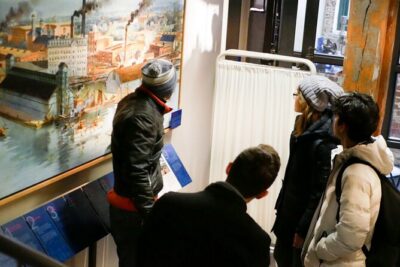
Old Town Toronto Highlights 3 Hour Walking Tour | Gratuity-Based
Read our review →

Browse the lists this tour appears in