
Review · TORONTO
Toronto: City Highlights Walking Tour | 3-Hour
Toronto’s downtown makes much more sense once you connect its grand public buildings, old commercial streets, underground walkways, theaters, and railway landmarks. This three-hour walk does that well, taking you from Berczy Park to Union Station through a useful slice of central Toronto.
I like the way the tour mixes major sights with details you could easily miss alone, especially the PATH system and Adelaide Courtyard. I also like the practical ending: your guide can point you toward food, nightlife, entertainment, and further sightseeing. The catch is the distance. You’ll walk about 7 kilometers, and the $5 booking price may come with a suggested voluntary donation of about $30 per person.
Key points at a glance
- The route covers 7 kilometers: Wear comfortable shoes, because this is a real city walk rather than a short landmark stroll.
- You see Toronto from several angles: The route links historic Old Toronto, grand civic buildings, modern public squares, theater streets, and Union Station.
- The PATH is part of the lesson: Your guide helps you make sense of Toronto’s underground network, which can be confusing on your own.
- Guides shape the experience: Dwight, Maria, Alex, Zak, Chloee, and others have been praised for clear explanations, humor, good pacing, and useful advice.
- The price is unusually low: The listed cost is $5, while a voluntary donation of around $30 has been suggested on some departures.
- It works best early in your stay: You leave with a map in your head and ideas for what to do next.
Starting at Berczy Park, where Toronto gets its personality
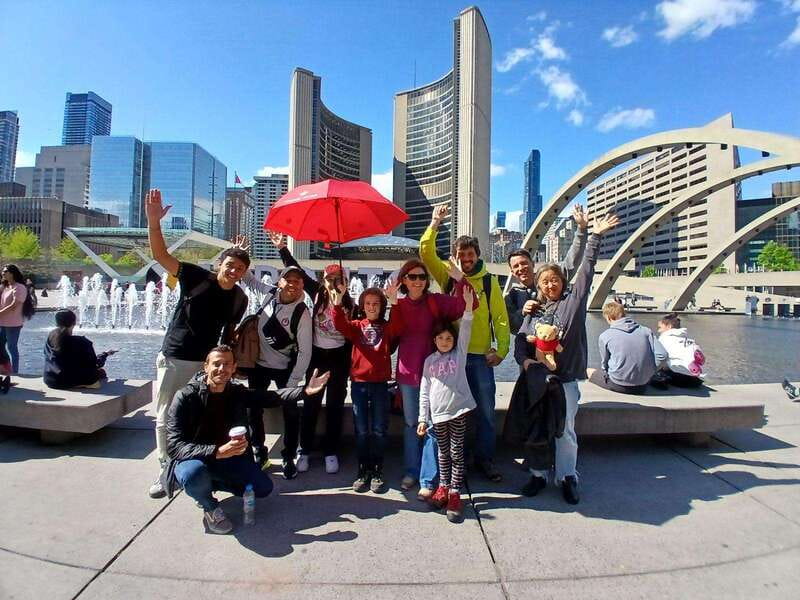
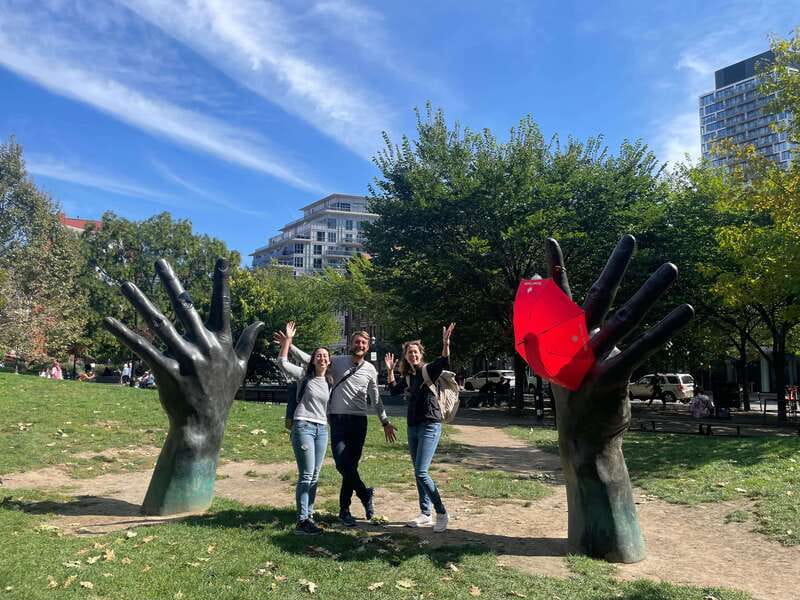
Meet your guide near the Dog Fountain in Berczy Park. Look for the red umbrella, an important detail in a large downtown area where several groups may be gathering.
Berczy Park is a smart starting point. It gives you an immediate sense of Toronto’s mix of public art, older buildings, and lively downtown streets. From here, your guide begins putting the city into context rather than simply pointing at buildings and naming them.
That approach matters in Toronto. The center can feel like a collection of disconnected districts at first: old brick commercial blocks, tall office towers, civic squares, entertainment venues, and the underground PATH. A good guide ties those pieces together.
Guides named Dwight, Maria, Alex, Zak, Chloee, Joel, Maya, and others have led departures. The strongest pattern in the feedback is not one particular script but the guides’ delivery. You can expect clear explanations, personal enthusiasm, time for photographs, and answers to questions. Alex was especially praised for using visual aids and adjusting the walking pace, while Zak received strong marks for city tips and an easy conversational style.
More City Highlights Walking Tours in Canada
- Calgary City Highlights 3 Hour Walking Tour | Gratuity-Based
★ 4.5 · 378 reviews - Gratuity-Based Vancouver City Highlights 3 Hour Walking Tour
★ 4.5 · 320 reviews - Old Town Toronto Highlights 3 Hour Walking Tour | Gratuity-Based
★ 4.5 · 290 reviews
The Gooderham Building and Adelaide Courtyard
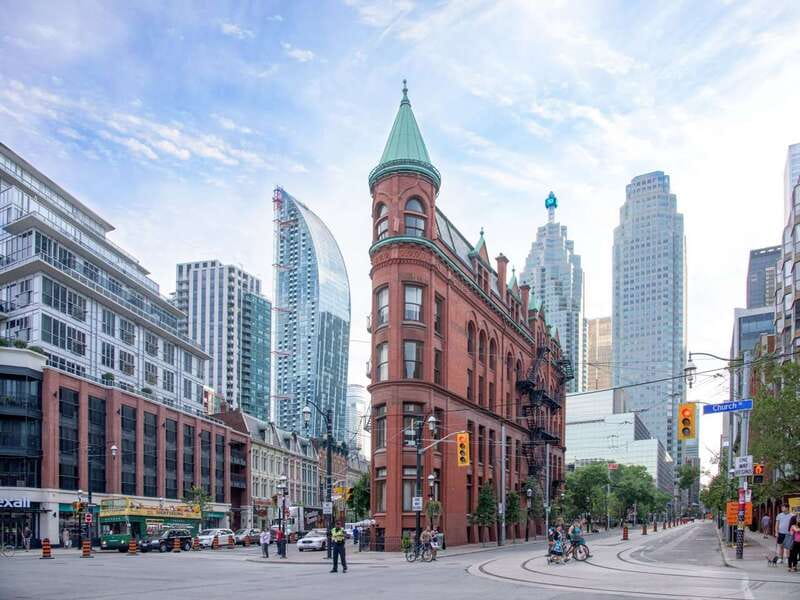
The Gooderham Building is one of Toronto’s most recognizable pieces of old architecture. Its narrow, wedge-shaped form gives it an unusual presence among the larger downtown blocks, and it is an obvious early photo stop.
You get about 10 minutes here, enough to take pictures and hear why the building matters. The stop is short, so do not expect a long architectural lecture. Its value is in seeing a famous Toronto view with someone who can draw your attention to features you might otherwise walk past.
The route then moves to Adelaide Courtyard for roughly 20 minutes of guided sightseeing. This is the sort of stop that gives the walk some variety. Instead of spending the whole morning on broad avenues and famous facades, you get a closer look at a quieter urban space.
I like this part of the route because it helps you notice how Toronto’s center changes from block to block. It also gives your guide room to explain the city’s development through buildings, courtyards, and public spaces rather than only through dates.
Old Toronto, with stories behind the facades
The Old Toronto section lasts around 30 minutes and is one of the main history portions of the walk. Your guide discusses the city’s early development, the people and communities that shaped it, and the changes that turned it into a large, multicultural Canadian city.
The exact stops can vary with the guide and conditions, so think of this as a guided district walk rather than a museum visit. You’ll see older streets and buildings while hearing how the center has changed over time.
This is where the guide makes the biggest difference. Without context, you may notice an attractive facade or a historic-looking street but have no idea why it matters. A well-prepared guide turns those passing details into part of a larger story.
The pace is generally steady. Several people specifically praised guides for keeping the group moving without rushing, while still allowing time for photos and questions. That balance is useful on a three-hour route, though anyone with limited stamina should take the 7-kilometer distance seriously.
Learning the PATH without getting lost
The PATH is one of the tour’s most useful features. Toronto’s underground pedestrian network links office buildings, shops, food courts, transit points, and other parts of the downtown core. It is practical, but it can be confusing, especially on a first visit.
You spend about 20 minutes seeing part of the PATH with your guide. Do not expect to cover the entire system in that time. Instead, you get an introduction to how it works and why Toronto developed such an extensive underground route.
I consider this a real value point. The PATH is easy to misunderstand if you only see signs from street level, and it can save you time or shelter you from poor weather during the rest of your stay. Your guide may also give you useful orientation tips for reaching other downtown locations.
The underground section also breaks up the walk. Three hours outdoors can feel long, particularly in cold, wet, or very hot weather. Still, the tour remains a walking experience, not a sheltered indoor tour, so dress for the forecast.
Same streets, a different guide:
- Quebec City Walking Tour
★ 5.0 · 4,716 reviews - Old Quebec City: Grand Walking Tour with Private Option
★ 4.8 · 2,609 reviews - Montreal Mile End Authentic Food Tour with 7 Delicacies Tastings
★ 5.0 · 2,598 reviews - The Original Old Montréal Walking Tour by Guidatour
★ 4.5 · 2,217 reviews
Old City Hall and Nathan Phillips Square
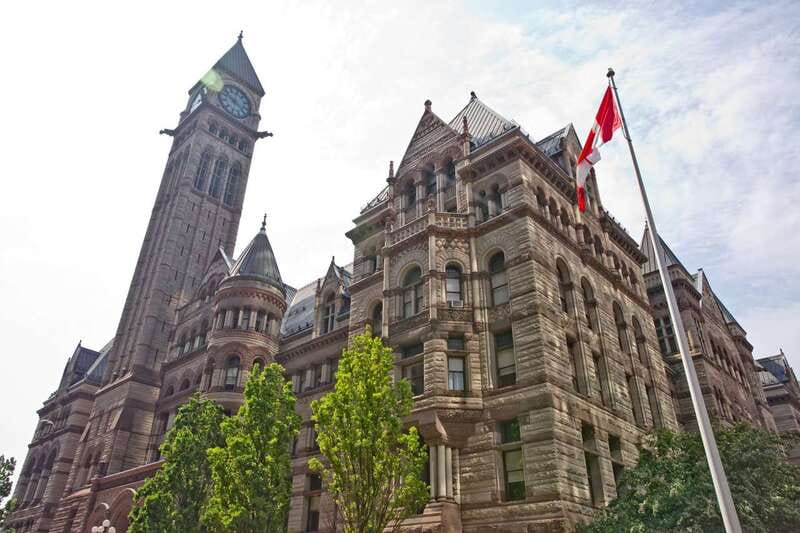
Toronto Old City Hall gets a 10-minute sightseeing stop. Its large civic design gives you another strong photo opportunity and shifts the focus from commercial Toronto to government and public life.
After that, the route reaches Nathan Phillips Square for about 15 minutes of break time. This is a useful pause in the middle of the walk. You can catch your breath, take photographs, and look across one of the city’s best-known civic spaces.
The break is not a meal stop, and food and drinks are not included. Plan to bring water, especially during warmer months. Since the group continues afterward, this is a chance to rest briefly rather than a long free period.
Nathan Phillips Square also helps you understand Toronto’s scale. You get a broad public setting after the tighter streets and older blocks earlier in the route. Your guide can connect the square and city hall to Toronto’s modern identity while still keeping the visit moving.
David Pecaut Square and Toronto’s public spaces
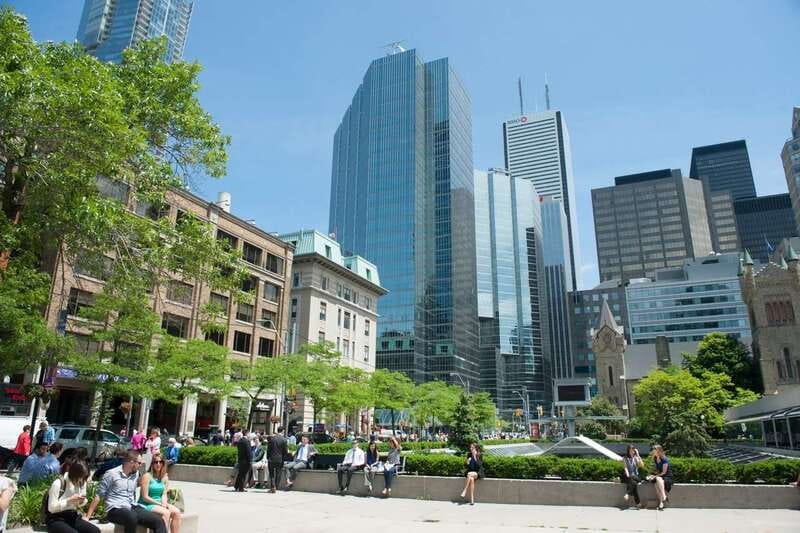
The walk continues to David Pecaut Square for about 20 minutes. This section helps show another side of downtown, with large civic and cultural spaces used for events and city life.
The route is not limited to the standard postcard views. That is one reason it works well as an orientation walk. You see the places that define Toronto’s center, but you also pass through areas that may not be obvious choices if you are planning from a map.
Your guide’s commentary is especially useful here. Several guides have been praised for pointing out details on buildings, monuments, churches, sculptures, and public spaces that are easy to ignore when walking alone. That kind of explanation is often more valuable than adding another major attraction to the schedule.
John Street and the city’s cultural side
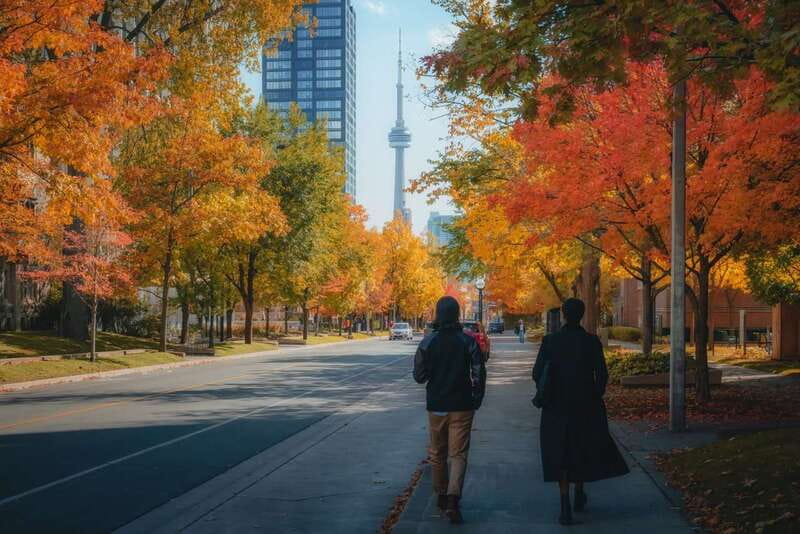
John Street receives about 20 minutes of guided sightseeing. By this point, the walk has moved from early Toronto and civic buildings toward the cultural heart of downtown.
The stop offers another chance to hear about the people, places, and changes that shaped the city. It also gives you a useful sense of how close Toronto’s districts are to one another. You can move from historic streets to public squares and cultural venues within a short walk, but the connections are not always obvious without local guidance.
The route is best for someone who wants an overview rather than a specialist tour. You will not spend an hour on one building or a single historical period. Instead, you collect enough context to decide where you want to return later.
Campbell House Museum and the final stretch
Campbell House Museum is scheduled for about 20 minutes of guided sightseeing, with scenic views along the way. The museum adds a more intimate historical stop after the larger civic buildings and public squares.
Because the itinerary allows only a short visit, this is not a full museum experience. The benefit is seeing how a historic house fits into the changing downtown area and learning more about Toronto’s earlier character.
The final portion includes a photo stop and guided walk before the tour ends at Union Station. The exact unnamed stop is not specified, so do not book this expecting a guaranteed particular attraction at that point. The route’s main promise is the overall downtown introduction, not a tightly timed list of admission-based visits.
Finishing at Union Station is practical. It places you near major transit connections and gives you a useful launching point for the rest of your day. By then, you should have a clearer sense of where central Toronto’s districts sit in relation to one another.
What the $5 price really means
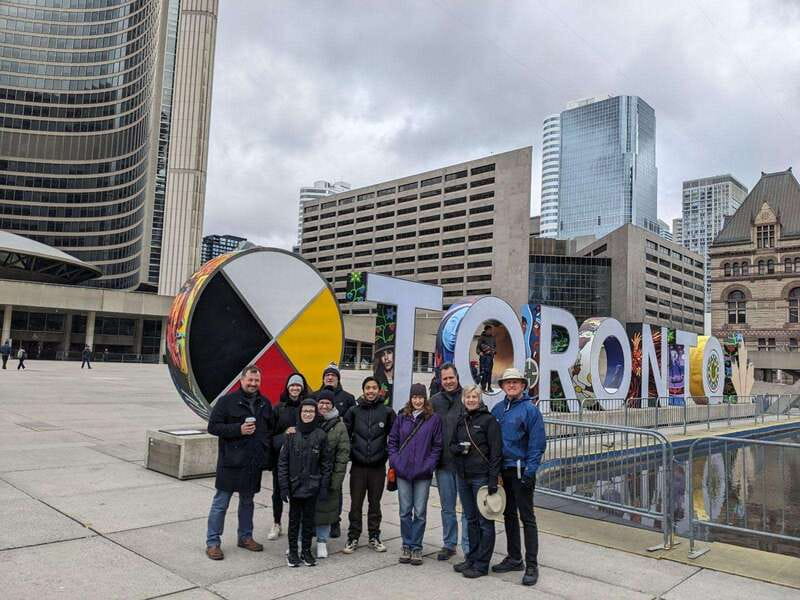
At $5 per person, this is hard to beat for a three-hour guided introduction. You are paying very little for a local guide, a structured route, city background, PATH orientation, and practical suggestions for the rest of your visit.
There is an important detail to understand. One departure was described as technically a free tour with a suggested donation of $30 per person, completely voluntary. The advertised booking price here is $5, but you may be encouraged to tip or donate more at the end. That is common with tip-based city walks, yet it can surprise people who expect the $5 price to be the full social expectation.
I suggest deciding in advance what the tour is worth to you. If your guide gives you a strong three-hour introduction and useful advice, you may feel a larger tip is fair. If you prefer a fixed-price tour with no donation discussion, this format may feel less comfortable.
The booking terms are flexible: you can cancel up to 24 hours before the start for a full refund, and you can reserve now and pay later. Those details are useful when your Toronto plans are still changing.
Who will enjoy this walk most
I would choose this tour early in a Toronto visit, especially if you have only a few days. The route gives you enough background to make better choices later, and the guides offer recommendations for food, entertainment, nightlife, neighborhoods, viewpoints, and other attractions.
It suits you if you:
- Want a broad first look at central Toronto
- Prefer walking to riding on a bus
- Enjoy local stories and city history
- Want help understanding the PATH
- Like asking questions and getting personal recommendations
- Are comfortable walking about 7 kilometers
- Want to keep sightseeing costs low
It is less suitable if you want extensive time inside museums, a small specialist group, or a short route with frequent seating. It also may not work well for anyone carrying large luggage, since large bags are not allowed, or for people who find long urban walks difficult.
The tour is offered in English and Spanish. Smoking, alcohol, drugs, party groups, and large luggage are not allowed.
How to get more from the three hours
Wear shoes you can comfortably walk in for several hours. The route includes streets, public spaces, and the PATH, and the guide keeps moving between stops.
Arrive near the Dog Fountain with enough time to find the red umbrella. The meeting point is specific, but Berczy Park is still a public downtown space where several groups may gather.
Keep your phone or camera ready at the Gooderham Building, Old City Hall, Nathan Phillips Square, and along the route to Union Station. The walk includes many photo opportunities, and some of the best details may be architectural features your guide points out rather than a single famous view.
Use the break at Nathan Phillips Square wisely. Bring water, and do not count on food being included. You can ask the guide for suggestions for lunch, coffee, evening entertainment, or a later visit to another part of the city.
Finally, ask questions. The best value here comes from the conversation. Guides such as Dwight, Maria, Alex, Zak, and Chloee have been praised for answering questions, sharing local suggestions, and keeping the tone friendly and engaging.
Should you book the Toronto City Highlights Walking Tour?
I would book it if you want an affordable, useful first look at downtown Toronto and you are happy to walk a fair distance. The strongest parts are the mix of old and modern city sights, the PATH orientation, the steady pace, and the practical advice at the end.
Go in with realistic expectations. This is not a full museum tour, a food tour, or a leisurely stroll. It covers a lot of ground in three hours, and the voluntary donation custom may mean the final cost is higher than the $5 booking price.
For a first morning or afternoon in Toronto, though, it offers strong value. You get the city’s main downtown framework, stories that make ordinary streets more interesting, and a guide who can help you plan the rest of your stay.
FAQ
How long is the Toronto City Highlights Walking Tour?
The tour lasts three hours.
How far will I walk?
You will walk about 7 kilometers, or 4.5 miles.
Where does the tour begin?
It begins at Berczy Park. Find the Toonie Tours guide holding a red umbrella near the Dog Fountain.
Where does the tour finish?
The tour finishes at Union Station Toronto.
What languages are available?
The live guide is available in English and Spanish.
Is the PATH included?
Yes. The route includes about 20 minutes of sightseeing in Toronto’s PATH system with the guide.
Are food and drinks included?
No. Food and drinks are not included.
Can I cancel the booking?
Yes. You can cancel up to 24 hours in advance for a full refund. You can also reserve now and pay later.
More Three-Hour Walks in Canada
- Prague: 3-Hour Walking Tour of Old Town & Prague Castle
★ 4.7 · 5,696 reviews - Eat Like a Local: Venice 3-Hour Small-Group Food Tasting Tour
★ 5.0 · 3,137 reviews - Experience Porto’s Charm: 3-Hour Guided Walking Tour
★ 5.0 · 2,432 reviews - Valletta: 3-Hour Walking Tour
★ 4.7 · 2,219 reviews
New routes in Canada
- Toronto: Private Walking Tour with a Local★ 4.7 · 150 reviews
- Toronto: Dark History Nighttime Walking Tour★ 4.7 · 273 reviews
- Toronto: City Walking Tour★ 4.9 · 185 reviews
- Toronto: 2-Hour Downtown Walking Tour★ 4.4 · 101 reviews
- Toronto: Distillery District Historic Walking Tour★ 4.8 · 267 reviews
- Quebec City: Old Quebec Classic Walking Tour with Funicular★ 4.9 · 695 reviews
- Quebec City: Christmas Magic Walking Tour in Old Quebec★ 4.7 · 146 reviews
- Ottawa: Private Walking Tour with a Local★ 4.5 · 80 reviews
Toronto Walking Tours, compared.

Show me the City! A Small Group Walking Tour of Toronto
Read our review →
Old Town Toronto Highlights 3 Hour Walking Tour | Gratuity-Based
Read our review →

Browse the lists this tour appears in