

Review · TBILISI
Tbilisi: Guided Walking Tour of Historic City
Old Tbilisi is a city of sharp contrasts: a mosque, synagogue, and churches close together; ancient bathhouses beneath modern glass and steel; and narrow lanes opening onto wide river views. This three-hour walking tour gives you a useful first look at that mix, with stops at the Five Religions Connecting Square, Metekhi Church, Abanotubani, and the Bridge of Peace.
I like the small group of up to 10 people, which leaves room for questions and photos. I also like the practical side: guides such as Sally and Nick share advice on Georgian food, wine, shopping, and tourist scams, not just dates and names. The main drawback is the route itself. Expect stairs, uneven paving, and a fair amount of walking, so comfortable shoes matter.
Key points at a glance
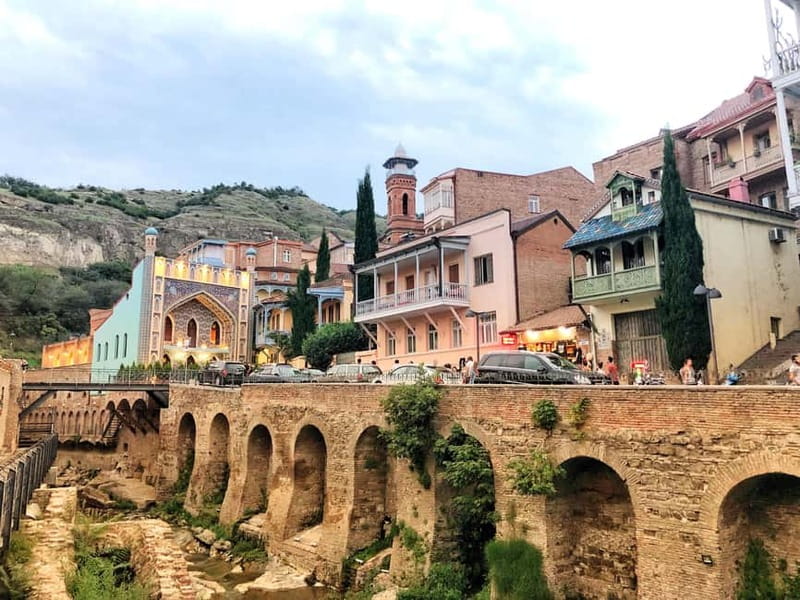
- Five religions in one old quarter: See how churches, a mosque, and a synagogue sit close together in the historic center.
- A useful first-day tour: The route covers major sights and helps you get your bearings before exploring alone.
- Sulfur baths and waterfall views: Abanotubani and Leghvtakhevi Waterfall add local atmosphere beyond the standard monuments.
- Guides with local advice: Sally and Nick are praised for clear explanations, food suggestions, and honest tips about the city.
- Strong value at $14: Three hours with a local guide is a low-cost way to put Tbilisi’s sights into context.
- Walking shoes are essential: Stairs and rough surfaces can make parts of the route tiring for anyone with limited mobility.
Why this walk is a smart introduction to Tbilisi
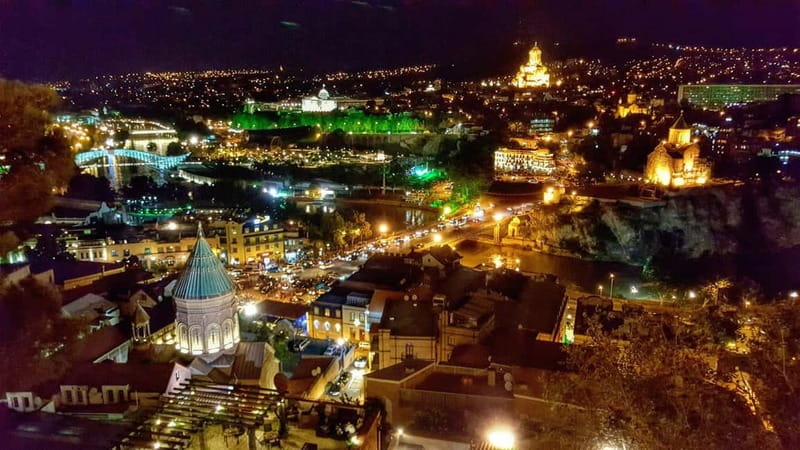
Tbilisi can feel confusing at first. The old town spreads across hills and ravines, while the Mtkvari River cuts through the city and divides several important sights. A guided walk helps you connect places that might otherwise feel like separate photo stops.
The route is also useful because it does not focus on only one period. You hear about the city’s early foundations, its role on Silk Road trade routes, its religious communities, Georgia’s traditions of hospitality, and parts of its modern political story. That range gives you a better sense of Tbilisi as a living capital rather than an outdoor museum.
At $14 per person, the value is clear if you want context. You are not paying for transport, entry tickets, or a long day of sightseeing. You are paying for three hours of walking, explanation, local orientation, and the chance to ask questions in a small group.
The tour is offered in English and Russian. Sally receives especially strong praise for her energy, humor, patience, and practical recommendations, while Nick is noted for explaining the background of each place in a clear way. Guide assignment may vary, so book this for the format and route rather than for a guaranteed individual guide unless you confirm that in advance.
More History Walking Tours in the world:
- History and Hauntings of Salem Guided Walking Tour
★ 5.0 · 14,564 reviews - Lisbon: History, Stories and Lifestyle Walking Tour
★ 4.8 · 10,902 reviews - Boston: Freedom Trail History Small Group Walking Tour
★ 5.0 · 6,450 reviews
From Rustaveli Avenue to Meidan Bazaar
The meeting point is in front of the Magti Office at 20 Shota Rustaveli Avenue. Arrive about 10 minutes early. From there, the walk heads toward Old Tbilisi and the Meidan area.
Meidan Bazaar recalls the commercial life of the old city. This was once part of a busy trading district linked to routes crossing the Caucasus. Today, the area is a good place to begin thinking about Tbilisi as a meeting point between cultures and trading worlds.
Your guide explains the setting while leaving time for photos. That balance matters. You are not pushed from one stop to the next, but the three-hour schedule still means the tour cannot linger everywhere.
The old market area is also a practical orientation point. You can return later to browse, eat, or continue walking on your own. Pay attention to streets and landmarks here, because Old Tbilisi’s lanes can feel similar once you leave the main route.
Jan Shardeni Street and the city’s social side

Jan Shardeni Street brings you into one of the better-known lanes of the old center. The route then reaches the Tamada Sculpture, a small statue with a large cultural meaning.
A tamada is the toastmaster at a Georgian feast. The role is more than raising a glass. A tamada guides the table through formal toasts, stories, feelings, and good wishes. This stop gives your guide a natural opening to explain Georgia’s food and wine culture.
I especially like this part for visitors who want more than architectural facts. The sculpture connects the street scene to Georgian hospitality, a subject that comes up again in the food and wine suggestions offered during the walk. Guides may point you toward places to try khinkali, Georgian wine, and other local specialties after the tour.
There are also stories about Devil Street, a lane tied to local legends. The value here is not proving every tale as fact. It is hearing how old neighborhoods preserve their character through stories passed from one generation to the next.
The Bridge of Peace, Rike Park, and Europe Square
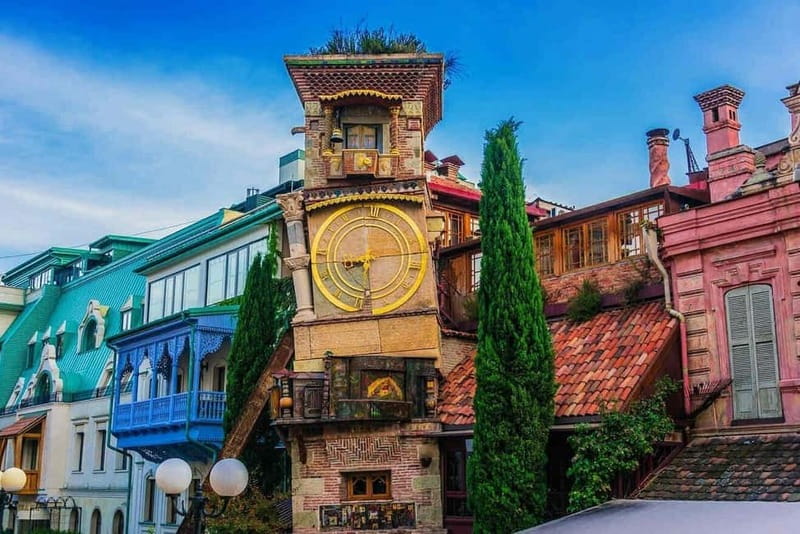
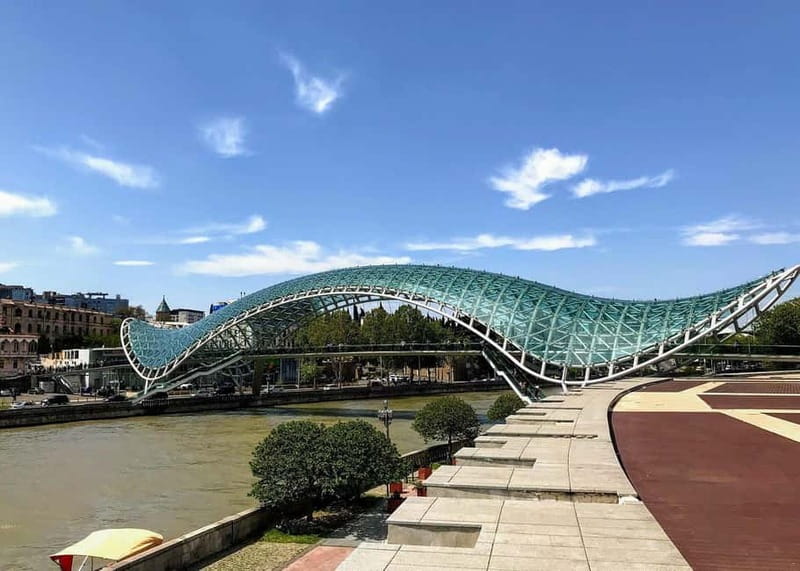
The Bridge of Peace is one of the clearest visual changes in Tbilisi. Its modern glass-and-steel form crosses the Mtkvari River beside the older streets and traditional buildings.
You will hear different views about the bridge, and that is part of its interest. Some people like its bold design. Others find it too modern beside the old quarter. A good guide can help you see why it became such a recognizable part of the city without asking you to admire it uncritically.
The walk continues through Rike Park and Europe Square. These open spaces offer a break from the narrow lanes and give you broader views toward the river, Metekhi, and the hillside city. They are useful photo stops, but they also help you understand Tbilisi’s layout.
The Berlin Wall Stone adds a modern political note. It is a small monument, but its meaning is easy to grasp: freedom, division, and the changes that reshaped Europe. This is one of the quieter stops, yet it gives the tour a wider frame than medieval buildings alone.
More Guided Walks in the world:
- Magical London: Harry Potter Guided Walking Tour
★ 4.7 · 22,044 reviews - Amsterdam Anne Frank: Small-Group Walking Tour & Local Guide
★ 4.8 · 12,789 reviews - Edinburgh: Harry Potter Magical Guided Walking Tour
★ 4.8 · 11,944 reviews - Edinburgh Castle: Guided Walking Tour with Entry Ticket
★ 4.7 · 11,699 reviews
Metekhi Church and King Vakhtang Gorgasali
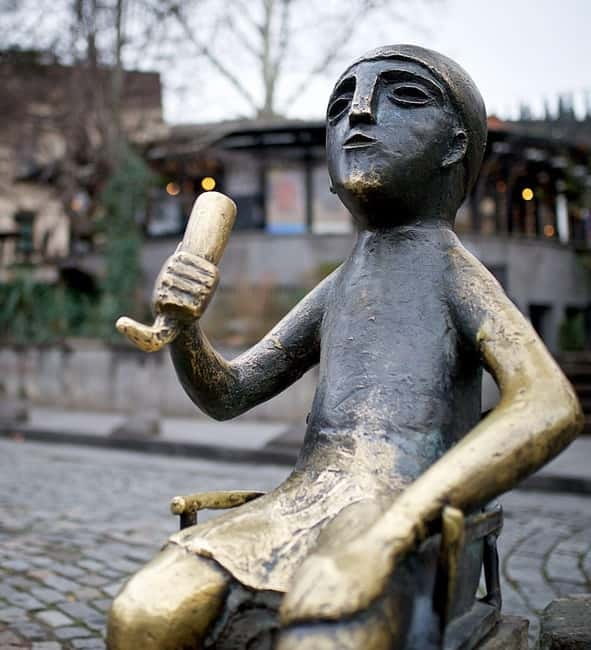
Metekhi St. Virgin Church is one of the major historic stops. The church sits above the Mtkvari River, giving you a strong viewpoint over the water and surrounding parts of Tbilisi.
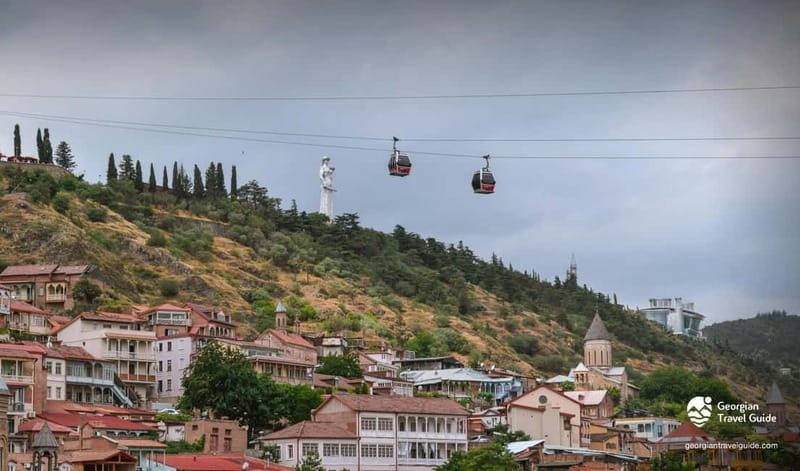
Nearby is the statue of King Vakhtang Gorgasali, the ruler traditionally linked with the city’s founding. The location brings together legend, religion, and geography. From here, you can see why this high position mattered for a settlement built around a river crossing and steep hills.
Your guide explains the site’s role in the city’s story and answers questions about Georgia’s past. The tour does not appear to include a formal interior visit at every church, so dress respectfully and listen for the guide’s instructions if you want to enter.
This stop may involve uneven ground or stairs. The scenery is worth the effort, but anyone with limited mobility should ask before booking how much of the full route can be completed comfortably.
Abanotubani and Tbilisi’s sulfur baths
Abanotubani is the most atmospheric part of the walk. The district is known for its low domed roofs, brick bathhouses, and sulfur springs. The warm water helped shape the city’s early identity and gave Tbilisi its name, commonly connected with the Georgian word for warm.
You will see the bathhouse domes from street level and hear how these baths became part of local life. The tour is a visit and explanation, not a bathing session, so bring water rather than expecting time to use the baths.
This is a good place to ask practical questions about returning later. If you want to book a bath separately, use the guide’s local advice, but confirm costs and arrangements on your own. Optional wine tasting or lunch may also be arranged in advance, though these are additions rather than part of the basic $14 price.
Samghebro Street and the quieter corners

After Abanotubani, the route turns toward Samghebro Street. This section is appealing because it feels less like a checklist of headline sights. The walls, doorways, and lanes carry smaller stories, and your guide can point out details you might walk past alone.
The tour finishes at 1 Samghebro Street, near the historic Armenian Church. This closing stop returns to one of the main themes of the walk: Tbilisi has long been shaped by several religious and cultural communities.
The Armenian Church is a quiet final stop after the busier riverfront and bath district. It gives the tour a calm ending and reinforces the idea that the old city cannot be understood through one tradition alone.
How much walking and how hard is it?
The tour lasts three hours and runs as a walking route, with regular pauses for explanation, photos, and questions. Several people appreciate the relaxed pace, and the route is not presented as a race between monuments.
Still, relaxed does not mean effortless. Old Tbilisi includes slopes, stairs, cobbled or uneven surfaces, and narrow passages. Bring water and wear shoes with good grip. Summer heat can make the route feel harder, while rain may make stone surfaces slick.
The activity is marked as wheelchair accessible, but the same information warns about stairs and uneven paths and says the full route is not recommended for people with limited mobility. Treat that as an important qualification. Contact the provider before booking if you need a step-free route or regular assistance.
Families can do well on this walk if children enjoy stories and frequent changes of scene. One guide kept two boys, aged 11 and 13, engaged with humor and local stories. The small group size also makes it easier to pause for questions than on a large coach tour.
The guides and the value of local advice
The strongest part of this experience is the guide. Sally is repeatedly praised for her warmth, energy, humor, and ability to explain both Georgian history and present-day life. She is also described as patient with questions and generous with suggestions about food, wine, shopping, and other places to visit in Georgia.
Nick is praised for making history clear and interesting, even for people who had already seen many of the sights on their own. That is an important point. The tour is not only for first-time visitors who have never heard of Metekhi or Abanotubani. It can add meaning to places you have already passed.
The advice is one of the best reasons to schedule this early in your stay. You can ask where to eat, how to spend the rest of your time, and which activities may suit your interests. A few direct recommendations can save you from spending every meal near the most tourist-heavy streets.
The guides also discuss common tourist scams and places to avoid. That kind of practical warning is more useful than another list of dates, especially if Tbilisi is your first stop in Georgia.
One small limitation is that the amount of information can feel heavy. The route covers many sites and several periods of Georgian history, so take notes on your phone if a restaurant or museum recommendation sounds useful. One guide has also been praised for answering questions openly, but the quality of any tour will depend partly on the guide assigned that day.
Price, group size, and booking details
At $14, this is a strong low-cost introduction to the historic center. A private guide would normally cost more, while a self-guided walk costs nothing but gives you no local explanation or advice. The small group, limited to 10 participants, offers a sensible middle ground.
The minimum group size is two people. The tour includes the local guide, the Old Tbilisi walk, landmark visits, historical background, stories, and recommendations. It does not list meals, wine tasting, bath entry, or transport as part of the standard price.
You can cancel up to 24 hours ahead for a full refund, and the reserve-now, pay-later option is useful if your plans are still changing. The tour runs in rain or shine, so check the forecast and dress accordingly.
Book an optional wine tasting or lunch ahead of time if you want to add it. Do not assume it is included in the advertised price.
Who should book this Tbilisi walk?
I would choose this tour for a first morning or afternoon in Tbilisi. It covers enough ground to orient you, but it leaves plenty of time afterward to revisit the bath district, explore the old lanes, or follow the guide’s food suggestions.
It suits you best if you enjoy:
- History explained through stories rather than a formal lecture
- Religious and cultural landmarks
- Local food and wine advice
- Small groups and time for questions
- A useful overview before independent sightseeing
You may prefer a shorter or more focused visit if you dislike hills, stairs, or long periods on foot. It is also not the right choice if you want to spend a long time inside each church or museum, since the route is designed to cover many outdoor sights in three hours.
Should you book it?
Yes, if you want an inexpensive and well-rounded introduction to Old Tbilisi. The best reasons to book are the compact route, small group, practical local advice, and guides such as Sally and Nick who make the city’s past easier to follow.
I would book it near the start of your stay, arrive early, bring water, and wear proper walking shoes. If mobility is a concern, ask about the exact route before paying. For most visitors who want to understand what they are seeing, this walk offers a lot for $14.
FAQ
How long does the Tbilisi walking tour last?
The tour lasts three hours.
Where does the tour start?
It starts in front of the Magti Office at 20 Shota Rustaveli Avenue.
Where does the tour finish?
The tour finishes at 1 Samghebro Street.
What languages are available?
The tour is conducted in English or Russian. Other languages may be available on request with advance notice.
What landmarks are included?
The route includes Meidan Bazaar, Jan Shardeni Street, the Tamada Sculpture, Bridge of Peace, Rike Park, Europe Square, Metekhi St. Virgin Church, Abanotubani, Bridge of Love, Leghvtakhevi Waterfall, and the historic Armenian Church. It also covers the Five Religions Connecting Square, the Berlin Wall Stone, and other Old Tbilisi sights.
How many people are in the group?
The group is limited to 10 participants, with a minimum of two people required for the tour to run.
Is the tour wheelchair accessible?
The activity is listed as wheelchair accessible, but parts of the route include stairs and uneven surfaces. Anyone with limited mobility should contact the provider before booking to discuss the route.
What should I bring?
Bring water and wear comfortable walking shoes. Dress suitably for the weather because the tour operates in rain or shine.
Can I add wine tasting or lunch?
Optional wine tasting or lunch can be arranged if you contact the provider in advance. These additions are not listed as part of the standard tour price.
New routes in the world
- Baltimore Walking Foodie Tour in Fells Point★ 5.0 · 182 reviews
- Baku Walking Tour (Old City)★ 5.0 · 127 reviews
- Baku Oil Heritage & Old Town Walking Tour★ 5.0 · 232 reviews
- The Madam’s Curse Walking Ghost Tour★ 4.5 · 103 reviews
- Austin Small Group Morning Walk★ 5.0 · 412 reviews
- Austin Haunted Pub Crawl Walking Tour★ 4.5 · 232 reviews
- Austin Downtown Private Walking Food Tour With Secret Food Tours★ 5.0 · 71 reviews
- Austin Murder Walk★ 5.0 · 310 reviews
Tbilisi Walking Tours, compared.

Tbilisi Walking Tour Including Cable Car and Traditional Bakery
Read our review →

Tbilisi:Evening Walking & Talking Tour with Wine & Boat Ride
Read our review →
Tbilisi: Old Town Walking Tour – Must-See Attractions
Read our review →
Old Tbilisi Highlights Walking Tour with Wine & 10 Tastings
Read our review →Browse the lists this tour appears in