
Review · STRASBOURG
Strasbourg: Historic Center Walking Tour
Strasbourg makes a fine first city walk because its story is written across its squares, cathedral, waterways, and old lanes. This private tour links the grand Place de la République and Place Kléber with Place Saint-Étienne, Place Broglie, La Petite France, and Notre Dame Cathedral. I like the personal route and the chance to ask about exactly what interests you.
I also like the practical advice built into the walk. Guides such as Jean-Pierre, Andrea, Marius, and Nahama have helped visitors choose restaurants, later sights, rose gardens, and better ways to understand the city. The main drawback is time: two hours gives you a strong orientation, but not a slow visit inside every major sight.
Key points to know before booking
- Private and customizable: You walk only with your own group, with the route adjusted to your interests.
- A useful first-day introduction: The tour connects Strasbourg’s main squares, cathedral, and Petite France in one compact outing.
- Local advice matters: Guides can suggest food, later visits, and places that suit your interests.
- Several experienced guides: Jean-Pierre, Andrea, Marius, Nahama, Amelie, Stef, Marjorie, Kevin, and others lead tours in English, French, Spanish, or Italian.
- Good value at $34: The price is reasonable for a private two-hour tour, especially for couples or small groups.
- Easy to fit into a trip: You can cancel up to 24 hours before the start and reserve without paying immediately.
Why a private walk works well in Strasbourg
I like Strasbourg best when I can move between its grand public spaces and smaller streets without treating the city as a checklist. A private guide makes that easier. You can ask why a square looks the way it does, how Strasbourg’s past shaped its buildings, or where to eat Alsatian food later that day.
The tour is designed for this kind of exchange. It is not simply a fixed speech delivered to a large crowd. You can tell your guide that you care most about architecture, local food, European politics, photography, gardens, or medieval streets. The route can then give more attention to those interests.
That flexibility has real value at the beginning of a stay. One guide, Jean-Pierre, begins with about 10 minutes of background on Strasbourg’s timeline. That short overview can help you place the later sights in context instead of hearing disconnected facts at every stop.
You also get advice you can use after the tour. Andrea has suggested places to eat and other sights to visit, while Nahama has adjusted her approach to match personal interests. One guide even suggested rose gardens after noticing a visitor’s interest in flowers. Those small observations are the sort of thing a standard group tour often misses.
More History Walking Tours in France
- Paris: Dark History and Ghostly Guided Walking Tour
★ 4.7 · 1,000 reviews - Vieux Lyon Cultural & Historical Walking Guided Tour (English)
★ 5.0 · 942 reviews - Strasbourg: Guided Historical Neighborhoods Walking Tour
★ 4.9 · 275 reviews
Starting at 7 Rue des Frères
The listed meeting point is 7 Rue des Frères, and the walk returns there at the end. From that starting point, your guide takes you through central Strasbourg and introduces the city through a sequence of important squares and monuments.
The exact balance can vary because the experience is private and customizable. You should tell the guide at the start if you want more time for photographs, more architectural detail, restaurant suggestions, or a quicker overview of many places.
The route covers a fair amount in two hours, so comfortable shoes are sensible. The experience is primarily a walking tour, with public transport included except when you select an option that says otherwise. Food and drinks are not included, so plan to eat before or after the walk rather than expecting a café stop as part of the price.
Notre Dame Cathedral: the major visual payoff
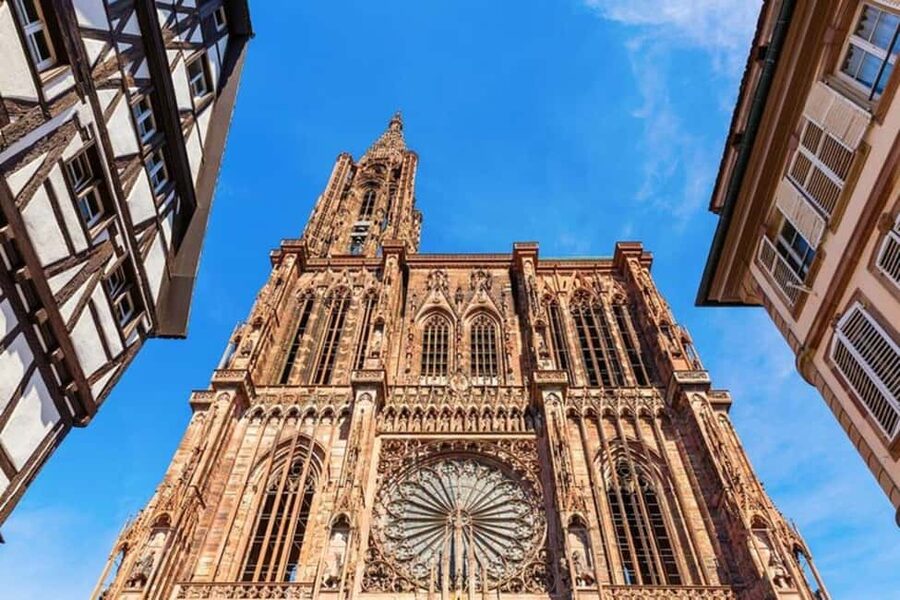
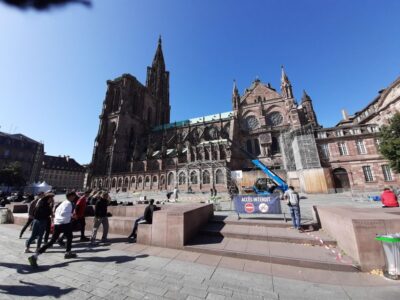
Strasbourg’s Notre Dame Cathedral is the tour’s biggest landmark. Its scale and detailed stonework make it an obvious focal point, but a guide helps you understand more than its appearance.
Your guide provides a guided visit and explains the cathedral’s place in Strasbourg’s story. The supplied route lists the cathedral as the second stop, while the general description presents it as the tour’s final high point. That suggests the precise order may change with the guide and your meeting arrangements. If the cathedral is your priority, say so at the beginning.
The cathedral portion is especially useful for first-time visitors who might otherwise spend their time looking up without knowing what deserves attention. You can ask about the building’s design, its historical role, and details that are easy to miss while walking alone.
Do not expect a long, specialist architectural lecture in a two-hour city orientation. The aim is to connect the cathedral to the rest of Strasbourg. You will still need a separate visit if you want to spend a great deal of time examining the interior or seeing every feature at a slow pace.
Place Saint-Étienne and the city’s quieter side
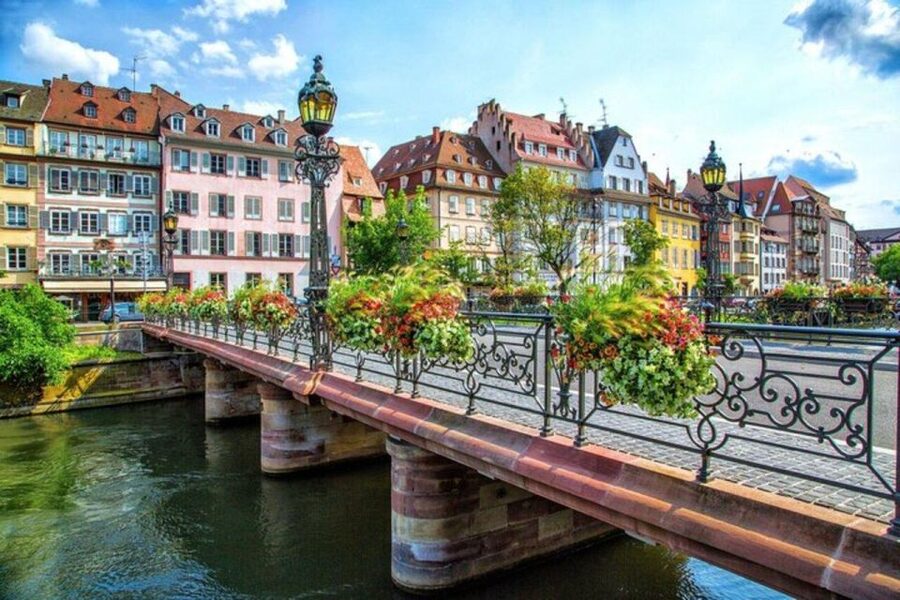
Place Saint-Étienne gives the walk a useful change of pace. Compared with the major central squares, it can feel like a more local stop within the old city. Here, the guide can show you how Strasbourg’s streets and public spaces fit together rather than rushing from one famous monument to another.
This is one of the benefits of a private walk: you can ask the guide to slow down when a place interests you. A fixed group tour may need to keep moving, while your own guide can spend a little longer explaining a building, a street, or a detail that catches your eye.
The stop also helps keep the tour from becoming only a parade of famous names. You see both the sights most people want and parts of the center that you might not find on your own.
More Old Town Walking Tours in France:
- Lyon: Private Walking Tour of “Traboules” in the Old Town
★ 5.0 · 866 reviews - Nice Old Town and Castle Hill: Guided Cultural Walking Tour
★ 4.8 · 790 reviews - Nice: Food and Wine Old Town Guided Walking Tour
★ 4.9 · 411 reviews - Nice: Old Town Treasures Walking Tour
★ 4.6 · 388 reviews
Place Broglie and the formal city
Place Broglie adds another layer to Strasbourg. Its broad layout and formal character contrast with the close lanes of the old center and Petite France. Your guide explains the square and its place in the city, giving you a clearer sense of how Strasbourg grew beyond its oldest streets.
This is a good point to ask about the city’s changing identity. Strasbourg has an international feel, and one visitor described the tour as especially enjoyable because of that mix of cultures. Your guide can help connect the buildings and public spaces with the city you see today.
Place Broglie may appeal most to people interested in urban design, public life, and the way a city’s grand spaces are used. If you prefer only narrow medieval lanes, it may be less immediately charming than Petite France, but it gives the tour needed variety.
Place Kléber and the center of modern Strasbourg
Place Kléber is Strasbourg’s main square and one of the easiest places to understand the city’s present-day energy. It is a central meeting point, and during the Christmas season it is known for its large decorated tree.
The guide explains the square’s significance and helps you see how it relates to the surrounding streets. At other times of year, the square still works as an important orientation point, even without the Christmas display.
I would not plan the whole tour around the seasonal tree. Its appeal depends on when you visit, and the tour operates year-round. The more lasting value is learning how Place Kléber connects the cathedral area, shopping streets, and other parts of central Strasbourg.
This is also a useful place to ask for suggestions for the rest of your day. Several guides have offered food ideas and nearby places to visit, and getting that advice before you wander off can save you from choosing a restaurant at random.
Place de la République and Strasbourg’s public history
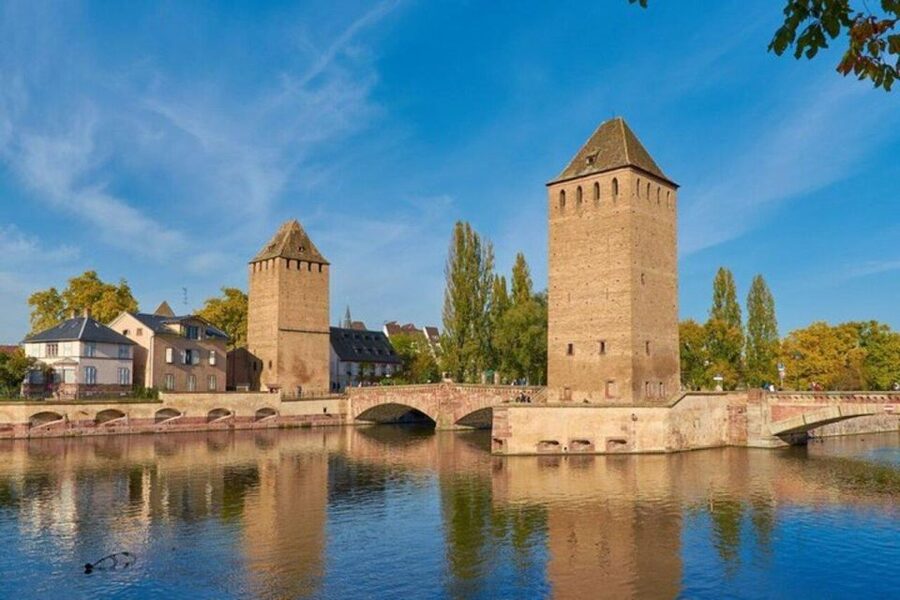
Place de la République is described as the opening point for the city’s story. Its grand scale gives your guide room to explain the historical forces that shaped Strasbourg and the wider region.
The square is particularly useful for a short timeline. Jean-Pierre’s opening overview is a smart way to begin because Strasbourg can otherwise seem like a collection of beautiful but unrelated buildings. A few clear dates and transitions help you understand why the city has such a distinct French and European character.
The itinerary also lists Place de la République as a guided stop, so it receives more than a passing glance. If you want context before seeing the cathedral and old neighborhoods, this is the place to listen closely.
La Petite France: lanes, canals, and old Strasbourg
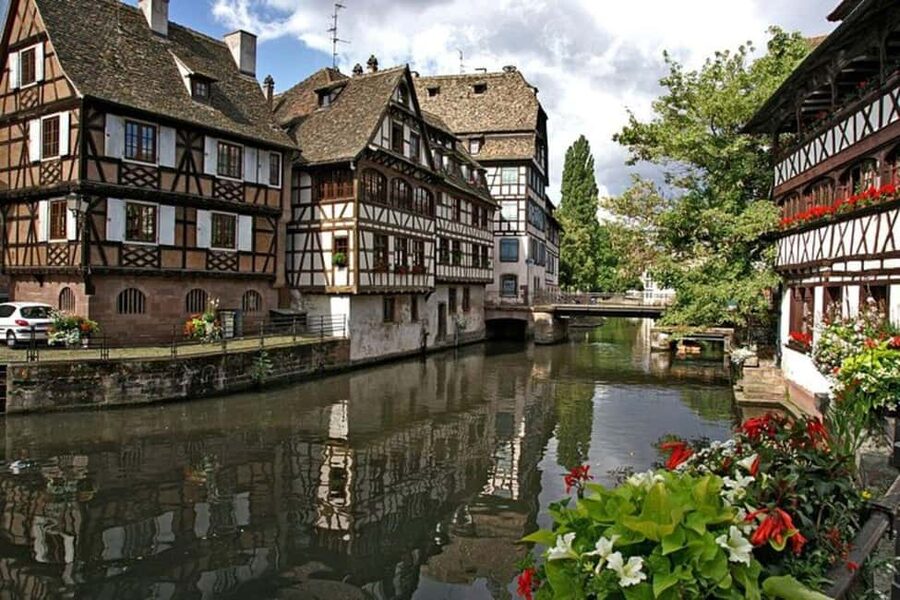
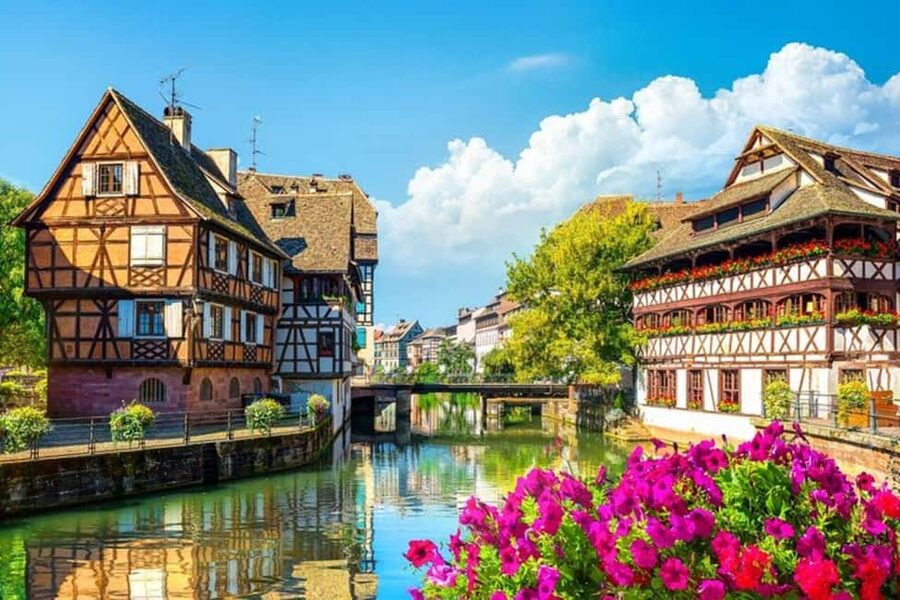
La Petite France is likely to be the most immediately photogenic part of the walk. Its narrow streets, older buildings, and waterside setting show a different side of Strasbourg from the formal squares.
Your guide explains how the neighborhood developed and how its role changed over time. That context matters because the area can otherwise seem like a perfectly preserved picture postcard. The stories give the streets a human scale and help you notice how the buildings fit together.
This is also the part of the tour where wandering pays off. Let the guide point out lanes and corners that you might pass without noticing. One visitor specifically valued the walks through streets and alleyways, and that is where a local guide can add the most.
The limitation is simple: two hours passes quickly in Petite France. If you love photography or want to linger by the water, you may want to return later on your own. The tour gives you a good first look and helps you decide where to spend more time.
What the guides add to the walk
The strongest feature here is the range of guiding styles rather than one single scripted personality. Andrea is described as warm, engaging, and particularly good at bringing historical dates and buildings to life. Marius is noted for a pleasant sense of humor and enthusiasm. Jean-Pierre provides a clear city timeline and practical suggestions.
Nahama has been flexible and helpful, including taking photographs for a group. Amelie brings the perspective of a lifelong resident and can speak about local culture, food, and Alsatian dishes. Kevin has been described as friendly and informal, making the walk feel like time spent with a well-informed local acquaintance.
The guides lead in English, French, Spanish, or Italian. Since the experience is private, you can ask questions without worrying about slowing down a large group. That is especially helpful if your group includes people with different interests or levels of background knowledge.
Guide quality can naturally vary from person to person, as it does on any tour with multiple hosts. The strong pattern here is that the experience depends heavily on conversation, so you should make your interests clear early rather than waiting for the guide to guess.
Is $34 good value for two hours?
At $34 per person, the price is fair for a private walking tour, particularly if two or more people share the experience. You are paying for a local guide’s time, a route adjusted to your group, and advice that can shape the rest of your visit.
The value is strongest if this is your first visit to Strasbourg. A good orientation can help you avoid spending the next two days circling the same central streets. You can learn which places deserve a return visit, where to look for food, and how the main squares connect.
The value is less clear if you already know the center very well or prefer exploring without a guide. The tour does not include food, drinks, or entry to a separate paid attraction. It is a city introduction, not a full-day sightseeing package.
At two hours, the price also makes sense for people with limited time. It gives you a focused start without taking up an entire morning or afternoon.
Who should book this Strasbourg tour?
I would recommend it to first-time visitors, couples, families, and small groups who want a private introduction rather than a large scheduled walk. It is also a good choice if you care about local food, architecture, photography, or planning the rest of your stay.
Families may appreciate the flexible pace and the chance to ask questions without holding up strangers. People who use wheelchairs can also consider it because the activity is listed as wheelchair accessible, though you should still discuss any route needs with the provider when booking.
This tour suits you less if you want a highly specialized cathedral tour, a long food tasting, or several hours inside museums. None of those is included. The two-hour format is about orientation, conversation, and seeing the city’s major pieces fit together.
You can cancel up to 24 hours before the start for a full refund, and the reserve-now, pay-later option keeps your plans flexible. Those terms are useful when your Strasbourg schedule depends on trains, weather, or a larger European itinerary.
My recommendation
I would book this for the first day or morning of a Strasbourg stay. The combination of Place de la République, Place Broglie, Place Kléber, Place Saint-Étienne, La Petite France, and Notre Dame Cathedral gives you a solid map of the center in a short time.
The best reason to choose it is not simply the list of sights. It is the chance to shape the walk around your group and leave with practical ideas for what to do next. Ask for the city timeline, tell your guide your interests, and reserve a little time afterward to revisit the places that caught your attention.
If you want a private, flexible introduction at a reasonable price, this is a strong choice. If you want long interior visits or a meal-based experience, choose something more specialized instead.
FAQ
How long does the Strasbourg walking tour last?
The tour lasts two hours. Starting times depend on availability.
How much does the tour cost?
The price is $34 per person.
Is the tour private?
Yes. The experience is private and exclusive, with no one else added to your group. A private group option is available.
Which places are included?
The route includes Notre Dame Cathedral, Place Saint-Étienne, Place Broglie, Place Kléber, and Place de la République. The wider tour also includes the picturesque streets of La Petite France.
Which languages are available?
You can take the tour in English, French, Spanish, or Italian.
Is the tour wheelchair accessible?
Yes, the activity is listed as wheelchair accessible. Walking and public transport are included unless you select an option that says otherwise. Food and drinks are not included.
New routes in France
- The Official Emily in Paris Locations Walking Tour★ 4.9 · 383 reviews
- Strasbourg: Private Walking Tour of the Historical Center★ 4.2 · 107 reviews
- Strasbourg: Guided Walking Tour★ 4.7 · 127 reviews
- Strasbourg : European District Walking Tour★ 5.0 · 95 reviews
- Paris: Montmartre Food Tasting Walking Tour with Secret Dish★ 4.8 · 107 reviews
- Paris: Emily Inspired Walking Tour★ 4.9 · 312 reviews
- Saint-Germain: Gourmet Chocolate & Pastry Walking Food Tour★ 4.8 · 495 reviews
- Saint-Émilion: Vineyard Walking Tour and Tasting★ 5.0 · 404 reviews
Strasbourg Walking Tours, compared.

Browse the lists this tour appears in