
Review · STRASBOURG
Strasbourg : European District Walking Tour
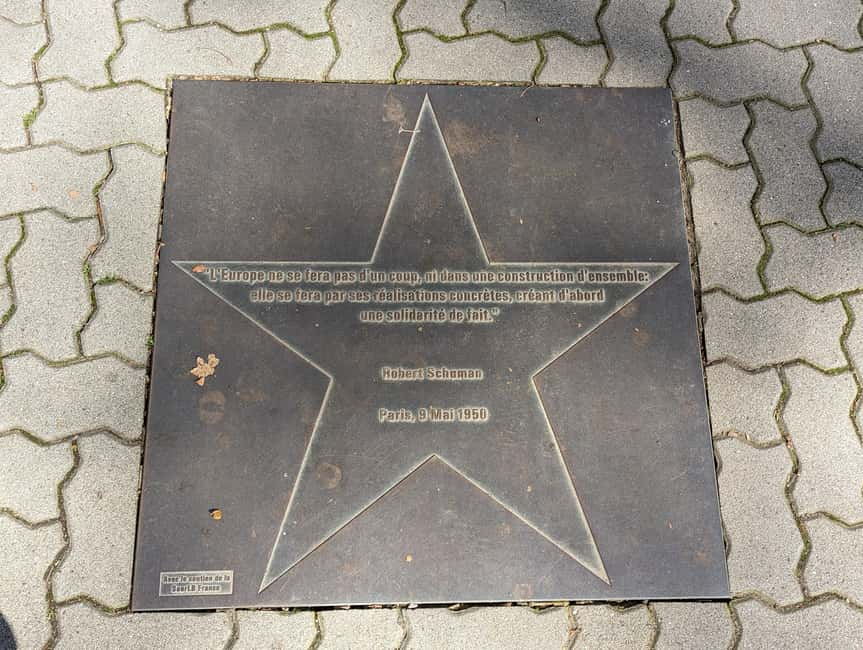
Strasbourg’s European District gives you a different side of the city: modern institutions, bike paths, the Ill river, and the places where Europe’s political future is debated. The 90-minute walk links this newer part of Strasbourg with striking Art Nouveau houses near the Orangerie district.
I like the small group, limited to six people, and the chance to ask questions without shouting over a crowd. I also like the practical route, which explains the Council of Europe, European Court of Human Rights, and Parliament in the places where they operate. The main consideration is simple: you do not enter the Parliament, and the tour is not suitable for people with mobility impairments.
Key points to know before you go
- Small groups of up to six: You get a more personal walk and easier access to the guide for questions.
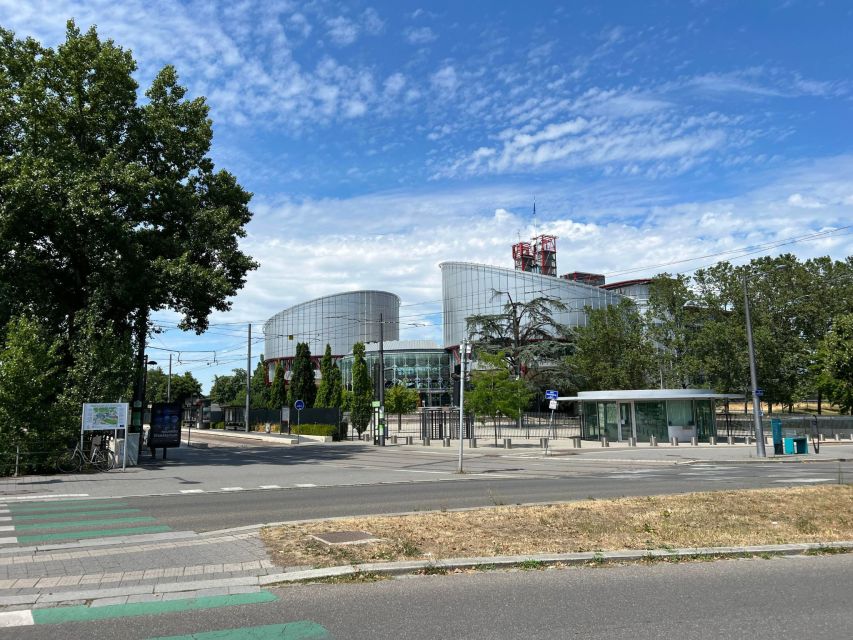
- Three major European institutions: Learn what the Council of Europe, European Court of Human Rights, and European Parliament each do.
- Nicolas and Remy are among the guides: Nicolas is praised for clear English, historical insight, humor, and useful restaurant tips. Remy is described as friendly and patient with questions.
- Art Nouveau and modern Strasbourg in one route: The walk pairs unusual homes near the Orangerie with the fast-growing Wacken district.
- Parliament visit is outside only: The guide finishes near the Parliament entrance, where you can visit independently. Entry is free.
- Rain or shine: Bring an ID or passport, and wear shoes suited to a city walk.
From Franco-German rivalry to European cooperation
The tour begins at the Agora, Conseil de l’Europe building, placing you right in the middle of Strasbourg’s European story. This is not just a stroll past impressive offices. The guide uses the city’s difficult past, especially the long struggle between France and Germany, to explain why Strasbourg became such a fitting home for European institutions.
That context matters. You will hear how a city once caught between two national powers became a symbol of cooperation and shared political work. The walk is especially useful if you want more than a quick photograph of a European building. It gives you a framework for understanding why these institutions exist and how they differ.
I would pay close attention to the guide’s explanations of the Council of Europe and the European Court of Human Rights. Their names can sound interchangeable, but they are not the same institution. The tour is designed to explain their specific roles as you see the buildings from outside.
The format helps here. With no more than six people, you can stop to ask a question when a term or institution is unclear. Nicolas, one of the guides, has been praised for combining serious explanations with funny anecdotes, a useful balance for a subject that can quickly become dry.
More Walking Tours in France:
- Authentic Parisian Gourmet Food Tour with 10 Local Dishes & Wines
★ 5.0 · 4,754 reviews - Paris Top Sights Half Day Walking Tour with a Fun Guide
★ 5.0 · 2,893 reviews - Montmartre Hidden Gems and Scenic Highlights Walking Tour
★ 5.0 · 2,684 reviews
The Council of Europe and European Court of Human Rights
The opening portion takes place at the foot of the European Council area, beginning at the Agora, Conseil de l’Europe. You will learn about the Council of Europe and the European Court of Human Rights, including the particular purpose of each institution.
This part is best for anyone who wants political background without signing up for a long lecture. The guide gives you the broad picture while tying it to the buildings around you. You are not simply memorizing names. You are learning how Strasbourg’s European quarter fits into the wider project of cooperation after generations of conflict.
The visit is exterior-focused, so do not expect security checks, interior chambers, or access to working offices. That is a limitation, but it also keeps the tour moving. In 90 minutes, you get a compact introduction rather than an exhaustive institutional visit.
If you are traveling with a teenager, this section may work better than you expect. Nicolas has been praised for keeping a teenage son interested, helped by anecdotes and a conversational approach. The subject still requires attention, but the small group and live questions make it less formal than a classroom lesson.
Art Nouveau houses near the Orangerie district
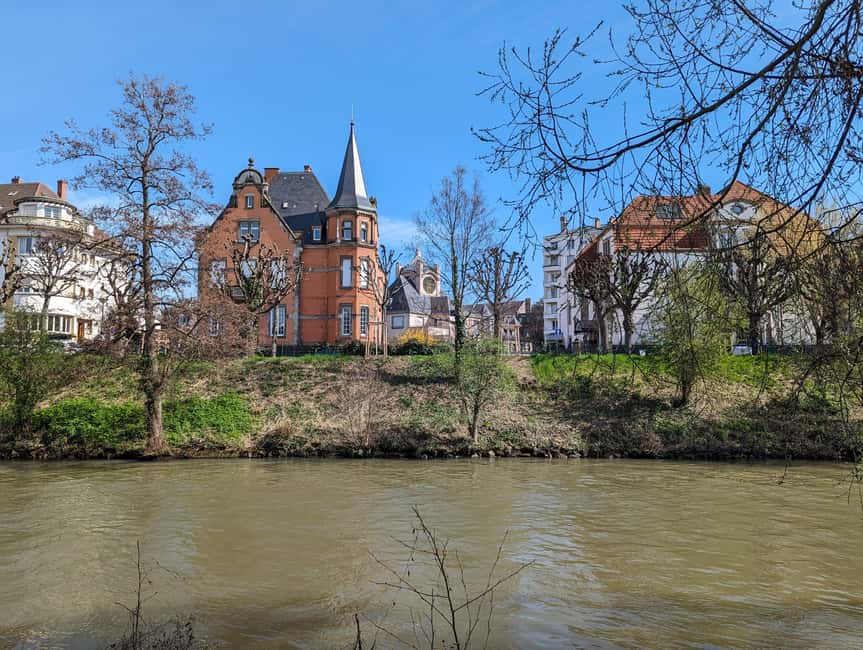
Near the European District, the route turns toward some well-known Art Nouveau houses around the Orangerie area. This change of subject is one of the walk’s best features. Strasbourg’s European institutions can feel official and monumental, while these homes bring the tour back to the city’s streets and domestic architecture.
The houses are described as unusual and famous, which makes this portion less predictable than a standard institutional tour. You get a look at how the city’s architectural character extends beyond its best-known historic center.
I like this contrast. One moment, you are considering international law and European cooperation. Soon after, you are looking at decorative houses and the details of a residential district. It gives the walk a more human scale and prevents the route from becoming a parade of office buildings.
The information provided does not specify which houses you will see or how long the group pauses at each one. Treat this as an architectural highlight within the larger route, not as a dedicated Art Nouveau house tour. If this style is your main interest, you may want to ask the guide for extra suggestions during the walk.
Along the Ill toward the modern Wacken district
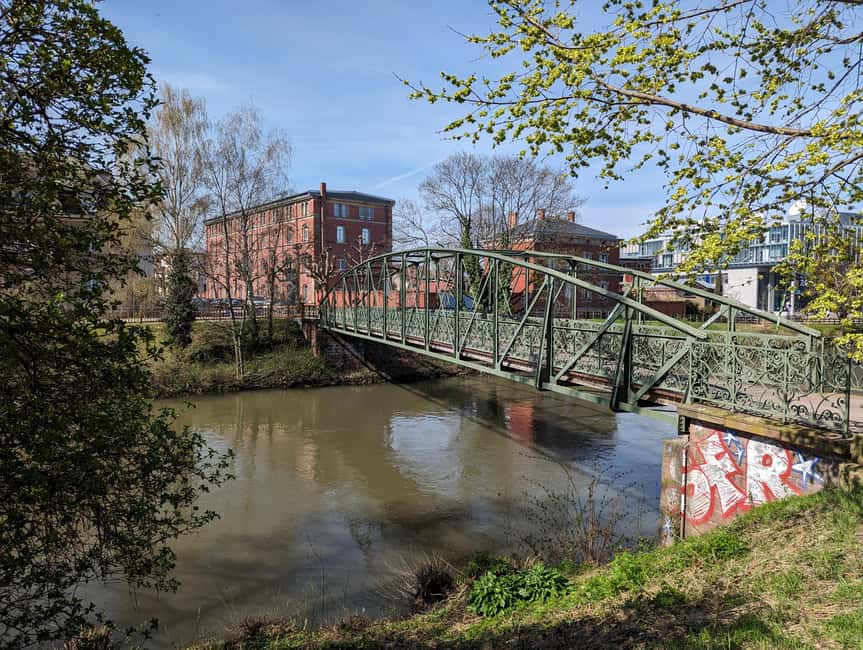
The route continues toward the Ill river and the Wacken district, a fast-growing part of Strasbourg with new buildings and bike paths. This is where you see the city changing in front of you.
Wacken offers a useful contrast to the nearby institutions. Instead of older streets and decorated façades, you get a modern district shaped by new construction, cycling routes, and the river. The tour helps you read Strasbourg as a living city, not only as a preserved historic destination.
The river also gives the walk a pleasant outdoor rhythm. You are not moving from one enclosed exhibit to another. You are walking beside the Ill, seeing how public buildings, transport routes, open space, and new development fit together.
That setting can also be the tour’s main practical weakness. The experience takes place outdoors and runs rain or shine. Check the forecast, wear comfortable shoes, and bring rain protection when needed. The tour is specifically not suitable for people with mobility impairments, so anyone concerned about walking conditions should take that seriously before booking.
Same streets, a different guide:
- Montmartre Hill French Gourmet Food and Wine Tasting Walking Tour
★ 5.0 · 2,588 reviews - Paris: Montmartre Highlights Walking Tour with a Local Guide
★ 4.9 · 2,318 reviews - Paris Île de la Cité and Notre-Dame Walking Tour With Crypt
★ 5.0 · 2,272 reviews - Paris: Montmartre Cheese, Wine & Pastry Guided Walking Tour
★ 4.8 · 2,255 reviews
Understanding the European Parliament from outside
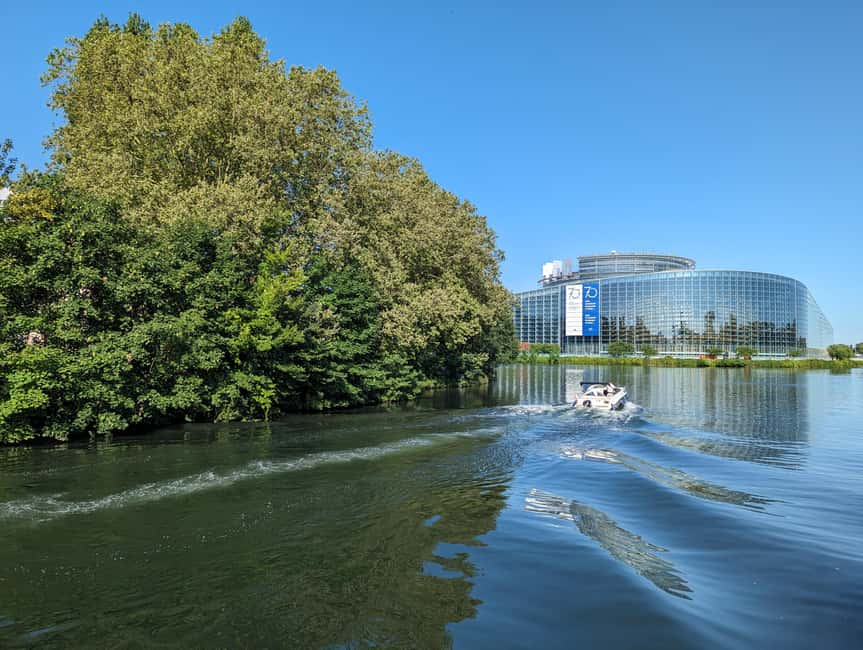
The final major stop is the European Parliament. This is where deputies from each country vote on European laws, and the guide explains how the institution works while you view it from outside.
The distinction between this tour and a Parliament visit is important. You will not enter the building with the group, and the activity price does not include an interior visit. The guide drops you near the Parliament entrance, where you can visit independently. Entry is free, according to the activity information.
This arrangement can work well if you want a short introduction followed by your own visit. The guided walk gives you background first, so the building may mean more when you see it on your own. One practical tip is to plan enough time after the tour if entering Parliament is important to you. The walking experience itself lasts 90 minutes, but an independent visit is separate.
Do not book this tour expecting a security-controlled Parliament tour or guaranteed access inside. Book it for the explanation, exterior views, and the chance to finish close to the entrance.
Why the six-person limit matters
A group of up to six is a strong feature for this particular subject. European institutions involve unfamiliar names and complicated responsibilities. In a large group, it is easy to fall behind or decide not to interrupt. Here, you have a better chance to ask the guide to explain a point in simpler terms.
The small format also suits the architectural sections. You can pause for photographs without creating a traffic jam, and the guide can adapt the amount of detail to the group’s interests. The experience includes photo opportunities, but it is not presented as a formal photography tour.
The guides add another personal layer. Nicolas has been described as friendly, entertaining, and especially strong at explaining the events that shaped the European Union. He has also offered restaurant advice after the walk, which can be handy if you are still deciding where to eat in Strasbourg.
Remy has also been praised for a friendly style and for taking time with questions. Guide assignments can vary, so you should not assume a particular person will lead your departure. Still, the consistently positive descriptions of both Nicolas and Remy point to a tour that depends heavily on a personable, conversational guide.
Is $35 a fair price for 90 minutes?
At $35 per person, this is not the cheapest way to spend an hour and a half in Strasbourg, but the value depends on what you want from the visit. You are paying for a live explanation of three major European institutions, a small group capped at six, an architectural side trip, and local advice for the rest of your stay.
The price makes more sense if you are curious about European politics or want to understand why Strasbourg matters beyond its old town. A self-guided walk can show you the buildings, but it will not necessarily explain the difference between the institutions or connect them to Franco-German relations.
The value is weaker if you mainly want to enter the Parliament. There is no Parliament admission included, and the guided tour stays outside. Since Parliament entry is free for an independent visit, you may prefer to visit the building on your own and spend the $35 on a different guided experience.
For a couple, family, or small group that likes asking questions, the limited group size helps justify the cost. For someone who wants only photographs and no political background, it may feel like more information than necessary.
Who should book this Strasbourg walk?
I would recommend it to first-time visitors who want a clear introduction to Strasbourg’s role in Europe. It is also a good fit for people interested in modern history, international institutions, architecture, or the changing Wacken district.
Families with older children and teenagers may appreciate the short duration and mix of subjects. The route is serious without being entirely formal, and the guide’s anecdotes can make the political material easier to follow.
It is less suitable for anyone who needs a fully accessible route, dislikes outdoor walking in uncertain weather, or expects an interior Parliament tour. It is also not the right choice if your main goal is Strasbourg’s medieval center, since this experience focuses on the European District, Orangerie area, Ill river, and Wacken.
Bring a passport or ID card. Explosive substances, weapons, and sharp objects are not allowed. The tour runs in English or French, so choose a departure that matches the language you want.
My take: book it for context, not entry
Book this tour if you want to understand the institutions behind Strasbourg’s European identity and enjoy seeing a modern district alongside Art Nouveau homes. The small group, practical explanations, and guides such as Nicolas and Remy make the format feel personal rather than ceremonial.
Skip it if you only want to go inside the European Parliament or if walking outdoors is difficult for you. For everyone else, $35 buys a focused introduction to a part of Strasbourg many people see only from a tram window or passing bus. Add an independent Parliament visit afterward if you want to see inside.
FAQ
Where does the tour meet?
The meeting point is the Agora, Conseil de l’Europe building. The guide wears a black T-shirt with an orange Bretzel&Fun logo.
How long does the tour last?
The walking tour lasts 90 minutes.
What languages are available?
The tour is available in English and French.
How large is the group?
The group is limited to six participants.
Does the tour enter the European Parliament?
No. The Parliament visit is outside only. The guide finishes near the entrance, and you can visit independently afterward.
Is entry to the Parliament included?
No. Parliament entry is not included in the tour, though the provided information says you can visit independently and enter for free.
Which European institutions are covered?
The tour explains the Council of Europe, the European Court of Human Rights, and the European Parliament.
What should I bring?
Bring a passport or ID card.
Does the tour run in bad weather?
Yes. The tour takes place rain or shine.
Can people with mobility impairments join?
The tour is not suitable for people with mobility impairments.
Can I cancel for a refund?
You can cancel up to 24 hours in advance for a full refund. Reserve-now, pay-later booking is also available.
New routes in France
- The Official Emily in Paris Locations Walking Tour★ 4.9 · 383 reviews
- Strasbourg: Historic Center Walking Tour★ 4.7 · 88 reviews
- Strasbourg: Private Walking Tour of the Historical Center★ 4.2 · 107 reviews
- Strasbourg: Guided Walking Tour★ 4.7 · 127 reviews
- Paris: Montmartre Food Tasting Walking Tour with Secret Dish★ 4.8 · 107 reviews
- Paris: Emily Inspired Walking Tour★ 4.9 · 312 reviews
- Saint-Germain: Gourmet Chocolate & Pastry Walking Food Tour★ 4.8 · 495 reviews
- Saint-Émilion: Vineyard Walking Tour and Tasting★ 5.0 · 404 reviews
Strasbourg Walking Tours, compared.


Browse the lists this tour appears in