
Review · NEW YORK CITY
SoHo, Little Italy, and Chinatown 2-Hour Guided Walk
New York changes quickly on this walk. In about two hours, you move from SoHo’s polished cast-iron buildings to Little Italy’s Italian restaurants and shrines, then into Chinatown’s narrow streets and crime-filled past. The neighborhoods sit close together, but each has a different story about immigration, ambition, violence, and survival.
I like the way the tour uses real street corners instead of treating the city as a backdrop. I also like the mix of architecture, true crime, food, and pop culture. Guides such as Angela, Steve, George, and Felipe have been praised for making the material lively and easy to follow. The main drawback is pace: forty minutes per neighborhood gives you a strong introduction, but not enough time for long food stops, shopping, or detailed visits inside attractions.
Key points to know before you book
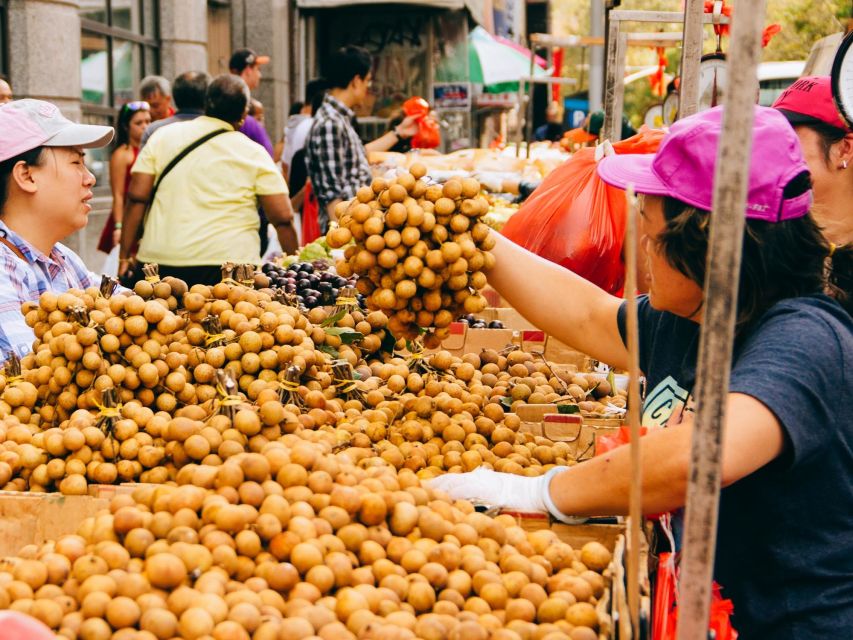
- Three neighborhoods in two hours: The route covers SoHo, Little Italy, and Chinatown, with about 40 minutes in each area.
- Stories tied to exact addresses: See the Manhattan Well Murder site, the Ravenite Club, Umberto’s, Doyers Street, and Columbus Park.
- Architecture is part of the tour: SoHo’s cast-iron district and the E.V. Haughwout Building give the opening section real visual appeal.
- Food advice, not a food tour: You may have time to buy an Italian or Chinese snack, but food costs are not included.
- Guide quality matters: The strongest praise focuses on guides who are funny, clear, energetic, and open to questions.
- A city walk with some uneven demands: Comfortable shoes and weather-ready clothing are important, and the tour is not suitable for people with mobility impairments.
Three neighborhoods, one compact New York story
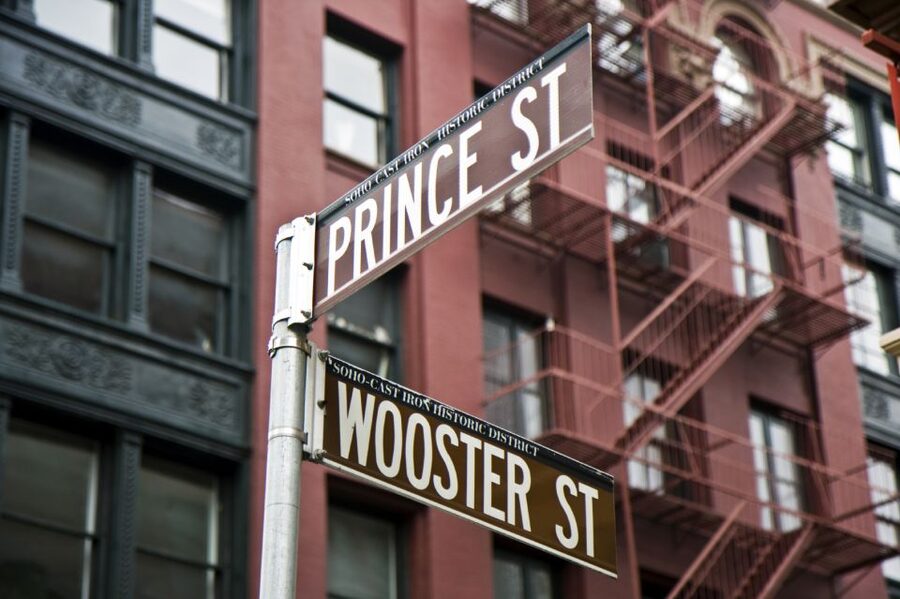
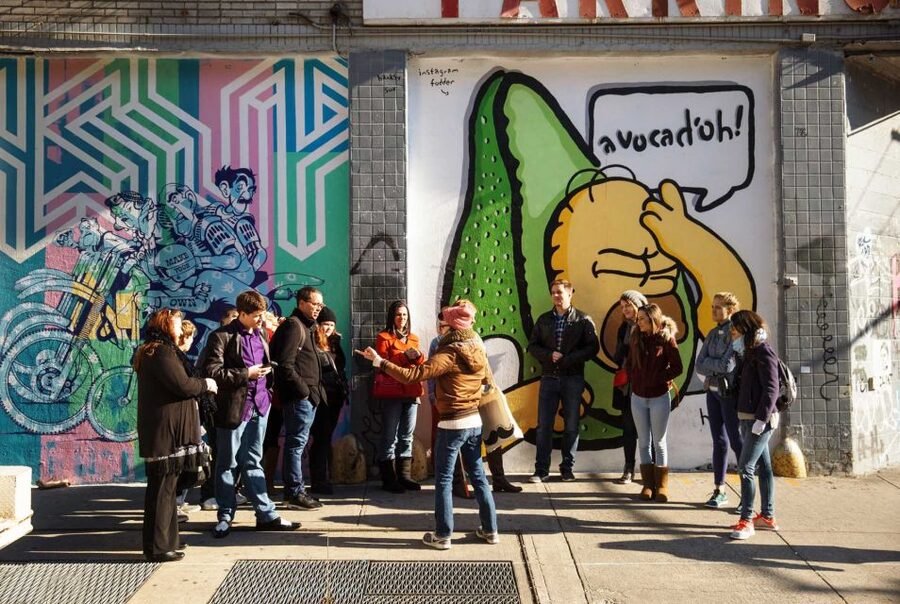
The tour begins at Spring Street Park, though the exact meeting point can depend on the option you book. From there, you spend roughly 40 minutes in SoHo, 40 minutes in Little Italy, and 40 minutes in Chinatown. The walk ends at Columbus Park.
That structure works well for a first look at Lower Manhattan. You get enough time to understand how the districts developed without giving up half a day. I would not use this as your only visit to any of the three neighborhoods, though. It is an orientation walk, not a full day of museums, restaurants, and independent exploring.
The best part is the contrast. SoHo is about architecture, fashion, artists, and expensive homes. Little Italy brings in churches, food traditions, organized crime, and the lives of Italian immigrants. Chinatown adds another migration story, along with gang violence, crowded streets, and one of Manhattan’s most unusual public spaces.
More Two-Hour Walks in New York City:
- Ghosts of Greenwich Village: 2-Hour Private Walking Tour
★ 5.0 · 178 reviews - Berlin’s Best: 2 Hour Walking Tour Third Reich and the Cold War
★ 5.0 · 5,486 reviews - Budapest City Landmarks Walking Tour in 2 Hours
★ 5.0 · 2,048 reviews
SoHo begins with cast iron and changing fortunes
SoHo’s famous iron facades are the opening act. The old industrial buildings have tall windows, decorative columns, and a uniform look that makes this part of Manhattan feel unlike the blocks around it. The guide uses Spring Street, Greene Street, and nearby corners to explain how the area changed over time.
The Cast Iron District is more than a pretty collection of buildings. The metal fronts were practical and helped create the wide windows and repeated patterns that now attract photographers, fashion brands, and high-end residences. Your guide also points out how the neighborhood’s old commercial character gave way to galleries, boutiques, and very expensive apartments.
One particularly useful stop is the E.V. Haughwout Building. It is associated with the first safety elevator, a small fact with a big effect on New York. Once elevators made upper floors easier and safer to reach, buildings could grow taller and city real estate began to change. This is the sort of detail that helps you see architecture as part of daily life, not just decoration.
The tour also visits Greene and Spring streets, identified as the site of the Manhattan Well Murder, described here as New York City’s first recorded murder case. The story adds a darker edge to streets that now look polished and fashionable. You may also hear about Spring Street and other nearby addresses through a mix of local history and crime stories.
At 421 Broome Street, the guide discusses the death of Heath Ledger in Mary-Kate Olsen’s apartment. This is a pop-culture stop rather than a major architectural sight, but it shows how the tour connects the old neighborhood to its more recent public life. You might also be encouraged to watch for celebrities in SoHo. Treat that as a possibility, not a promised feature.
The SoHo section is best for you if you enjoy looking up. The buildings are the main attraction, and a guide can help you notice details you would likely pass without understanding. The limitation is that the walk does not provide a long shopping break, so save your browsing for after the tour.
Little Italy brings food, faith, and organized crime
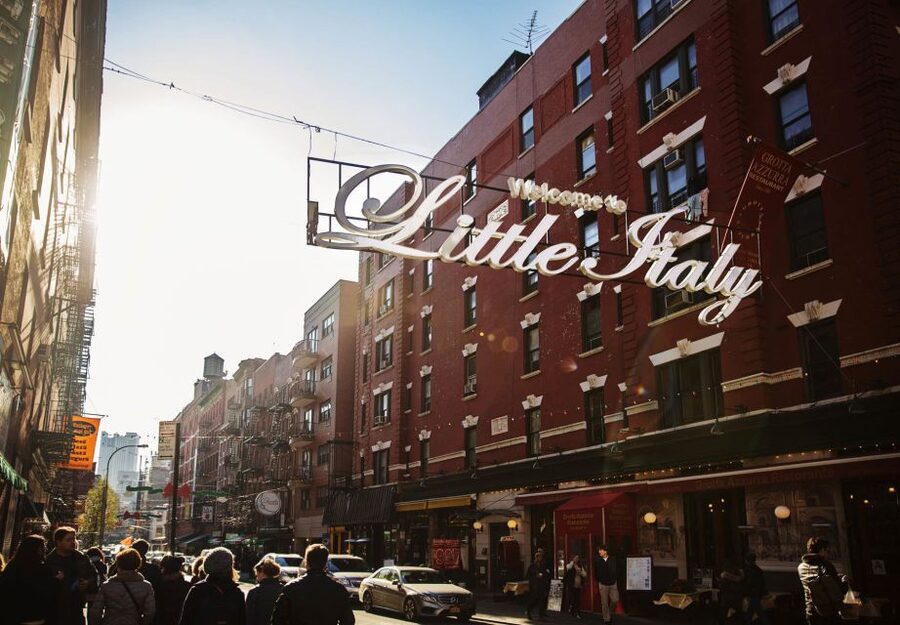
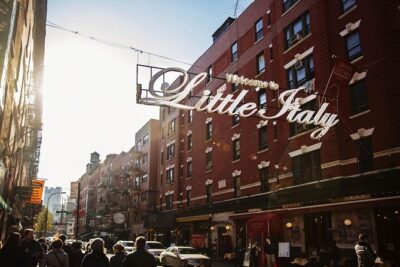
Little Italy follows as a sharper change of mood. Mulberry Street is the center of the neighborhood, and the guide explains how Italian immigrants shaped the area, built communities, and faced hard conditions. The stories focus on people and pressure, not just red-sauce restaurants and souvenir signs.
Old Saint Patrick’s is an important stop. The church helps place Italian New York within a wider Catholic and immigrant story. Nearby, the Italian American Museum is connected to the site of the Triangle Shirtwaist Factory fire, one of the city’s most painful labor disasters. The stop gives the tour a serious social history component and reminds you that immigrant neighborhoods were also places of work, risk, and political change.
The tour also includes Alleva Dairy, known for making cheese for a hundred years. This is a good example of how food traditions survive through local businesses. You may have a chance to buy something during the walk, but food is not included in the $39 price, so carry money or a card if you want to sample something.
The guide may point out Umberto’s, the site of the mob hit on Joe Gallo. This is one of the tour’s more memorable crime stops because it links a familiar restaurant setting with New York’s organized crime past. The Ravenite Club offers another strong connection. The former club is tied to John Gotti and the public image of the Mafia in New York.
These stories can easily become cheap gangster theater, but the best guides keep them connected to the neighborhood around them. Angela, Steve, and George have been praised for combining humor with clear explanations, while other guides have used personal local experience to make the streets easier to understand. You should expect a lively presentation, but also some serious material.
The Church of San Gennaro adds a different kind of drama. The guide explains the tradition surrounding the liquefaction of the saint’s blood, a ceremony that has long mattered to the local Italian community. It is a useful stop because it shows how religion, ritual, and neighborhood identity overlap.
A short pause in Little Italy can be one of the most practical parts of the walk. Several people have used this time to get food suggestions or buy a quick bite before continuing to Chinatown. Do not expect a full restaurant meal within the two-hour schedule. You are getting recommendations and a chance to taste something on your own, not a guided food itinerary.
Chinatown shifts the story again
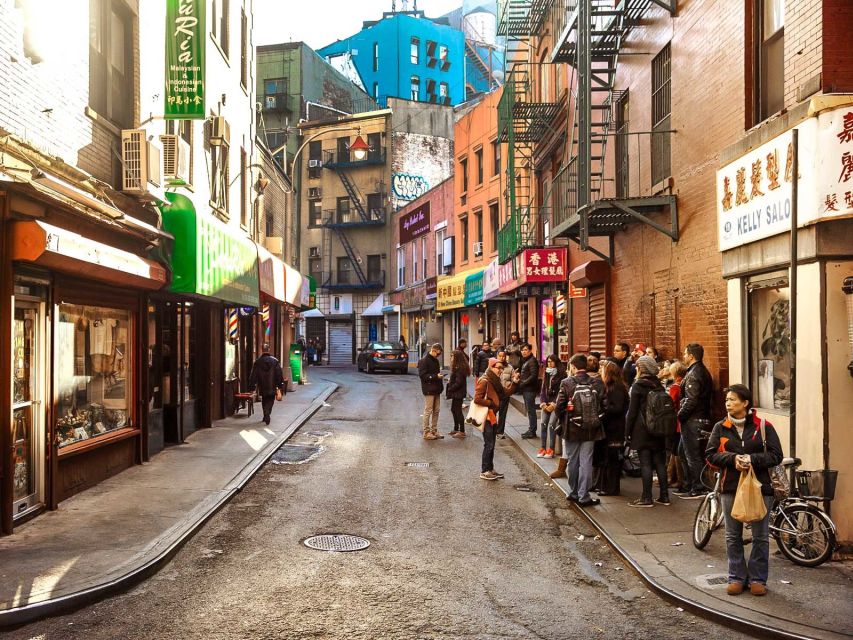
The final section leads into Chinatown and ends at Columbus Park. Here, the focus moves to Chinese immigration, neighborhood growth, gang conflict, and the difficult history behind some of the district’s most famous streets.
Doyers Street, known as the Bloody Angle, is one of the strongest stops. Its sharp bend made it difficult to see what was ahead, and the guide explains how the street became associated with violent conflict between rival groups. The narrow shape makes the story easier to picture than it would be in a classroom.
The tour also discusses an old opium den. This subject needs context, since Chinatown’s history is often reduced to lurid stories about crime and vice. A good guide can place the tale within the broader story of immigrant life, discrimination, work, and crowded housing. Pay attention to how the guide connects the dramatic details to the people who built the neighborhood.
Columbus Park is the endpoint and one of the most recognizable public spaces in this part of Manhattan. It is also associated with Gangs of New York, which gives the final stop a film connection. The park offers a natural place to finish, gather your bearings, and continue exploring Chinatown on your own.
The Chinatown section can feel short because there is so much to see nearby. If you want a long meal, market browsing, or a closer look at temples and shops, plan extra time after the tour. The walk gives you a useful starting map, but it does not try to cover every block.
More Guided Walks in New York City:
- NYC Greenwich Village Italian Food Guided Walking Tour
★ 5.0 · 627 reviews - NYC Professional Photoshoot and Walking Tour with Private Guide
★ 5.0 · 608 reviews - New York City: Greenwich Village Guided Walking Tour
★ 4.8 · 300 reviews - New York City: Superheroes of NYC Guided Walking Tour
★ 4.5 · 271 reviews
The guide makes or breaks the two hours
This is a guide-led experience, and the guide’s style matters more than the simple route. The strongest guides use humor, local anecdotes, and pop-culture references without losing the historical thread. Several guides have been praised for being approachable and willing to answer questions, which is especially useful when a group includes both first-time visitors and people who already know Manhattan.
Angela is often described as energetic, funny, and generous with historical detail. Steve brings local knowledge and personal stories, including the perspective of someone who has lived in the area for decades. George has been praised for his humor and clear explanations, while Felipe is known for mixing food suggestions, true crime, and neighborhood history into an easy-paced walk.
You cannot choose a particular guide unless the booking system allows it, so think of these names as examples of the kind of presentation you may receive, not a guarantee. The overall rating is 4.6 from 566 reviews, which supports the idea that guide quality is a major strength of this experience.
The pace also seems friendly to people who are not serious walkers. One family described the walk as comfortable and accessible in pace, while another guide adjusted for intense heat by seeking shade. Still, you should wear comfortable shoes and dress for the weather. The tour is not suitable for people with mobility impairments, and the exact conditions of city sidewalks can make a short walk more tiring than the distance suggests.
Is $39 a fair price?
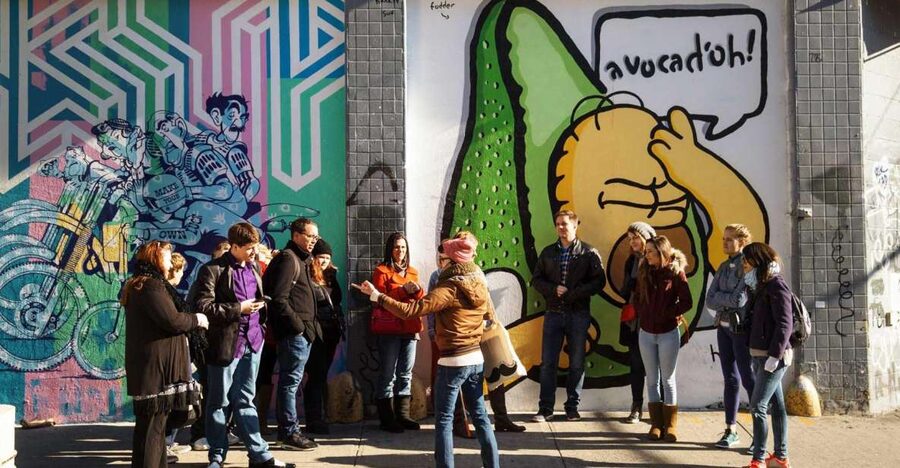
At $39 per person, I consider this good value if you want context rather than a simple stroll. You are paying for two hours with an English-speaking guide, a planned route through three major neighborhoods, and stories tied to specific buildings and street corners.
The value is strongest on a first New York visit. Without a guide, you can easily walk through SoHo, Little Italy, and Chinatown while seeing attractive buildings and busy streets but missing why they matter. The tour gives you a framework that can improve the rest of your time in Lower Manhattan.
The price is less appealing if you mainly want food. Meals and tastings are not included, and the schedule leaves limited time for sitting down. You may get recommendations for pizza, cannoli, cheese, or Chinese food, but plan to pay separately and eat after the walk if you want a proper meal.
The booking terms are useful for a city trip that may change. You can cancel up to 24 hours before the tour for a full refund, and you can reserve now and pay later. The activity lasts two hours, with starting times depending on availability.
How to get more from the walk
Arrive ready to listen and look up. In SoHo, the buildings are easy to miss if you spend the whole time watching traffic or checking a map. In Little Italy and Chinatown, listen for the link between food, religion, immigration, and crime rather than treating each stop as a separate anecdote.
I would book this early in your New York stay. The end point at Columbus Park leaves you well placed to continue through Chinatown, find a meal, or revisit one of the places that caught your attention. You will also get restaurant and food suggestions while the information is still useful.
If you want to eat during the tour, keep it simple. A snack break may be possible, but the route is moving and the walk is only two hours. Save a full lunch or dinner for afterward.
This is also a good choice for a family group with older children or teenagers who respond better to stories about murders, gang conflicts, celebrities, and famous buildings than to a formal lecture. Some content is dark, so very young children may not enjoy every stop.
Should you book it?
Book this walk if you want a compact introduction to three very different neighborhoods and prefer stories tied to real places. It is especially useful for first-time visitors, history fans, architecture lovers, and anyone who likes a bit of true crime with their city sightseeing.
Skip it if you want a dedicated food tour, long time inside museums, or a relaxed photography walk. You will move steadily and cover plenty of ground.
For most visitors, $39 is a sensible price for the local perspective and the amount of ground covered. The tour will not explain every corner of SoHo, Little Italy, and Chinatown, but it will help you understand what you are seeing and give you a better plan for exploring the area afterward.
FAQ
How long does the walking tour last?
The tour lasts two hours.
Which neighborhoods does the tour visit?
It visits SoHo, Little Italy, and Chinatown, with about 40 minutes of guided touring in each neighborhood.
Where does the tour begin?
The listed starting location is Spring Street Park, but the meeting point may vary depending on the option booked.
Where does the tour end?
The tour has a listed drop-off point at Columbus Park.
Is food included in the tour price?
No. Food costs are not included, although you may have opportunities to buy ethnic food or receive food recommendations during the walk.
What language is the tour conducted in?
The tour is conducted in English with a live English-speaking guide.
Is the tour suitable for people with mobility impairments?
No. The experience is listed as unsuitable for people with mobility impairments. You should also bring comfortable shoes and clothing suited to the weather.
New routes in New York City
- New York City: Superheroes of NYC Guided Walking Tour★ 4.5 · 271 reviews
- West Harlem: Gospel Church Service and Sunday Walking Tour★ 4.3 · 411 reviews
- New York City: Food Walking Tour of Chinatown & Little Italy★ 4.8 · 195 reviews
- NYC: Brooklyn Graffiti & Street Art Walking Tour in Bushwick★ 4.8 · 492 reviews
- NYC: Brooklyn Bridge and Dumbo Guided Walking Tour★ 4.5 · 186 reviews
- NYC: Walking Tour with Local Guide and 30+ Top NYC Sights★ 4.5 · 248 reviews
- NYC: History of Slavery & Underground Railroad Walking Tour★ 4.7 · 87 reviews
- New York City’s Hell’s Kitchen: Walking Food Tour★ 4.8 · 200 reviews
New York City Walking Tours, compared.
SoHo, Little Italy, and Chinatown Walking Tour in New York
Read our review →
Secrets of Grand Central Station Walking Tour New York City
Read our review →
Greenwich Village Walking and Food Tasting Tour
Read our review →
Artistic, Alternative Greenwich Village Walking Tour
Read our review →
True Crime NYC: Mafia Walk w/Ret. NYPD Detective and Local Food
Read our review →
NYC Greenwich Village Italian Food Guided Walking Tour
Read our review →Browse the lists this tour appears in