
Review · BARCELONA
Barcelona: Jewish Quarter 2-Hour Walking Tour
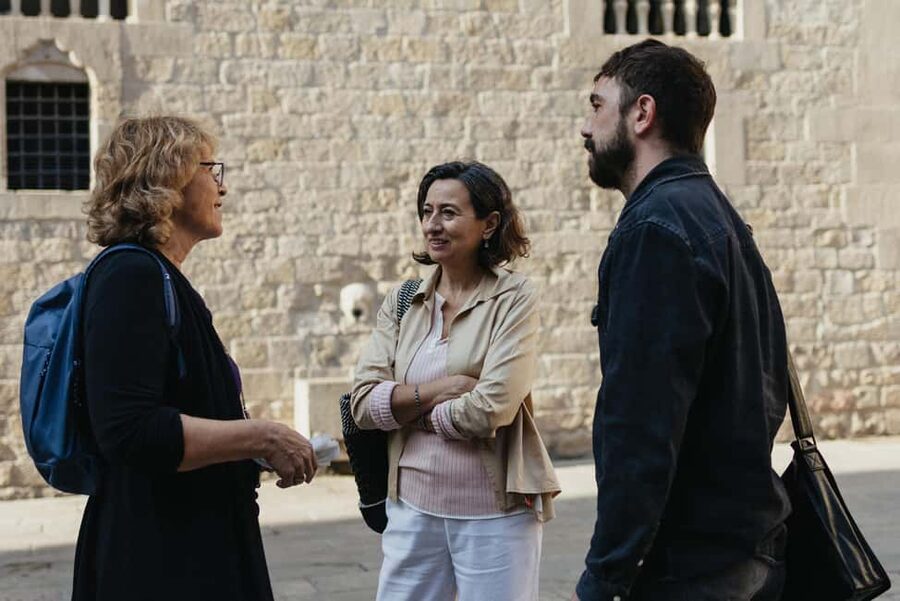
Barcelona’s Jewish Quarter is easy to miss. Its lanes now look like part of the Gothic Quarter, yet they hold the remains of a community that helped shape the city for centuries. This walk takes you from the Sinagoga Mayor Barcelona, often presented as Spain’s oldest synagogue, to the ruins of the Old Synagogue and the site of a medieval mikve.
I like the small groups of six or fewer, which make it easier to ask questions and hear your guide in tight lanes. I also like the way the tour connects physical traces, such as Roman walls and old synagogue sites, with the story of Barcelona’s Jewish community. The main drawback is that the two-hour route moves quickly, and the entrance fee to the Synagogue Museum is not included.
Key points to know before you book
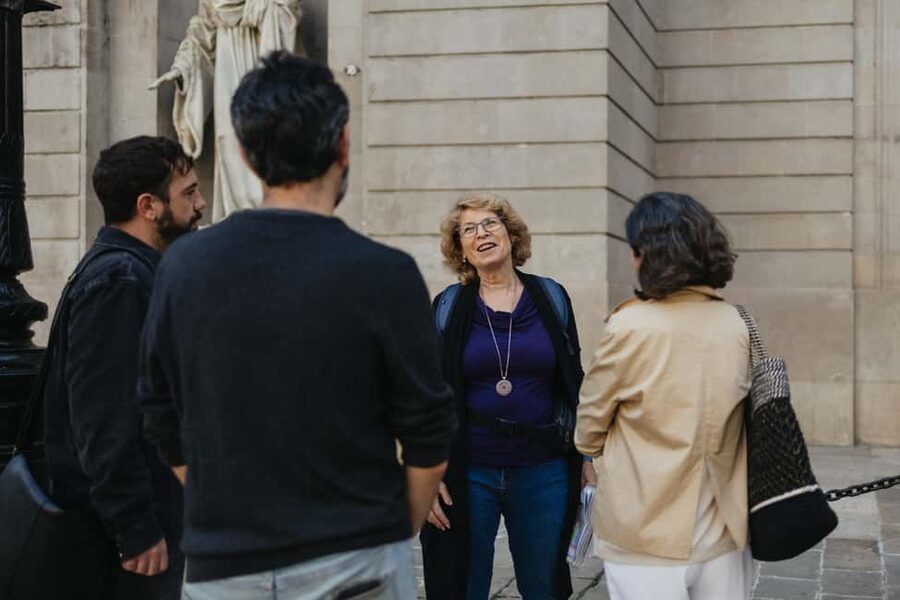
- Sinagoga Mayor Barcelona: Visit one of Europe’s oldest synagogues and the best-known Jewish site on the route.
- Four synagogue locations: See how several former places of worship fit into the modern city center.
- Medieval mikve site: Learn about the Jewish ritual bath and the remains of this unusual medieval feature.
- Small English-speaking groups: The group is limited to six, giving you room for questions and conversation.
- History tied to real streets: Walk narrow Gothic Quarter lanes, Roman walls, and the ruins of a house once owned by a Jewish alchemist.
- A focused two-hour visit: A useful choice if you want a Jewish-history introduction without giving up half a day.
Why this walk matters in Barcelona’s Gothic Quarter
I find this tour most useful because it changes the way you see the Gothic Quarter. Without a guide, the area can feel like a maze of old stone lanes, handsome buildings, and busy photo stops. With the Jewish story in view, those same lanes become evidence of a community that lived, worked, worshiped, and took part in the political and spiritual life of Barcelona.
The tour explains that Jewish people began arriving in Spain as early as the third century, following the destruction of the Second Temple in Jerusalem in 70 CE. The community in Barcelona grew over the centuries and became increasingly important to the city.
That long time span matters. This is not simply a tour about a vanished synagogue. You are learning how a community developed over many generations, how it lived alongside its neighbors, and how the violence of 1391 brought a brutal end to Jewish life in medieval Barcelona.
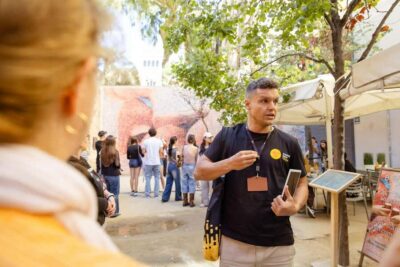
Your guide supplies the links between the places. The stones alone cannot explain what happened here. The tour’s value comes from hearing the political, religious, and social background while standing in the streets where those events unfolded.
More Jewish Heritage Walking Tours in Barcelona:
- Amsterdam Anne Frank: Small-Group Walking Tour & Local Guide
★ 4.8 · 12,789 reviews - Anne Frank’s Story – Guided Walking Tour through Amsterdam
★ 5.0 · 11,619 reviews - Prague: Jewish Quarter Walking Tour with Admission Tickets
★ 4.7 · 3,729 reviews
Plaça Sant Jaume is a practical starting point
The meeting point is Plaça Sant Jaume, next to the Alcampo store. This is a central place in the Gothic Quarter, and the tour ends at the same point, so you do not need to arrange a ride back across the city.
The start and finish make this easy to fit into a day of sightseeing. You can schedule it before visiting other parts of the old city, or use it as a focused history stop between other plans. Since the tour lasts two hours, check the available starting times when booking rather than assuming a fixed departure.
The group size matters here. A maximum of six people is small enough for a personal exchange with the guide. You will not be relying on a distant voice in a large crowd, and you can raise questions about family history, Barcelona, or Jewish customs as the walk develops.
Several guides lead this experience, including Edu, Ella, Lilach, and Alan. The strongest praise centers on clear explanations, a friendly manner, careful pacing, and a willingness to adjust the discussion to the group. Edu is especially noted for confirming the meeting details beforehand, speaking clearly, and adapting his pace to the people on the walk.
Sinagoga Mayor Barcelona, the tour’s main landmark
The first major draw is Sinagoga Mayor Barcelona. It is presented as the oldest synagogue in Spain and one of the oldest in Europe. The building gives the tour a solid physical anchor, because you are not only hearing about medieval Jewish life, you are standing inside one of its surviving spaces.
The synagogue is located in the old Jewish Quarter, close to the Roman walls. Its position helps explain why the district is so compact and why the route moves through such narrow lanes. The old city has changed around these buildings, but the layout still offers clues about the former community.
Your guide explains the synagogue’s place in Barcelona’s Jewish story and sets it against the wider development of the city. This is where the tour shifts from general background to a direct encounter with the past.
The entrance fee to the Synagogue Museum is not included in the tour price. That is important when you compare the total cost with other city walks. Check the current admission arrangement before you go, since the tour information specifies the museum fee as an extra cost.
The old synagogue has also been closed at times. If seeing the interior is central to your plans, ask about current access before booking or at the start of the tour. Even with a closure, the surrounding Jewish Quarter and the guide’s explanation remain part of the walk, but the experience is less complete without entry.
Four synagogue sites hidden in plain sight
A particularly useful part of the route is the look at four synagogue locations in central Barcelona. You may not see four complete religious buildings. Instead, the guide points out places tied to former synagogues and explains how the Jewish Quarter occupied this part of the city.
I like this approach because it prevents the history from being reduced to one preserved monument. The community used a network of places, and the tour gives you a sense of that wider presence.
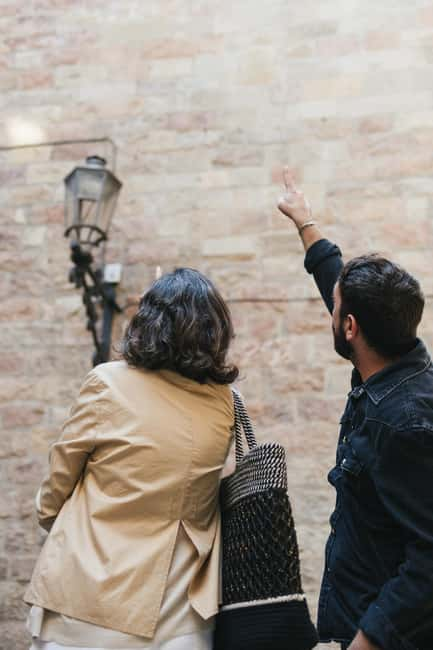
The surviving evidence can be subtle. Some signs are barely visible, and modern Barcelona has grown over and around the medieval district. That makes a guide essential. You are learning to read fragments, street patterns, old walls, and surviving architectural details rather than expecting a museum display at every stop.
The route also shows how little of a former community can remain visible after centuries of change. That can be moving, but it may also feel frustrating if you prefer fully restored sites with clear labels and extensive exhibits. This walk asks you to pay attention and use your imagination.
More Two-Hour Walks in Barcelona:
- Barcelona 2-Hour Gothic Walking Tour
★ 4.7 · 317 reviews - Berlin’s Best: 2 Hour Walking Tour Third Reich and the Cold War
★ 5.0 · 5,486 reviews - Budapest City Landmarks Walking Tour in 2 Hours
★ 5.0 · 2,048 reviews - Leipzig: 2-Hour Guided Walking Tour in German
★ 4.8 · 1,612 reviews
The medieval mikve and the alchemist’s house
The site of the medieval mikve is one of the tour’s more distinctive stops. A mikve is a ritual bath, and this one offers a direct connection to Jewish religious practice in medieval Barcelona.
The stop is valuable because it adds daily and spiritual life to the political story. You are not only hearing when the community arrived or when it was attacked. You are learning about a place connected to religious observance and the routines of the people who lived here.
The tour also includes the ruins of a house owned by a Jewish alchemist. The remains provide a different kind of connection. Here, the guide can talk about work, learning, and the role Jewish residents played in Barcelona’s development.
I find these smaller sites more revealing than a single grand monument. They suggest how people lived and worked in the neighborhood. The ruins are not presented as a polished attraction, so you should expect fragments rather than a fully reconstructed home.
The Old Synagogue and the end of medieval Jewish Barcelona
The route continues to the ruins of the Old Synagogue, associated with Shlomo Ben Adret. This stop brings the focus back to worship and community leadership, while also showing how much has been lost.
The guide explains that Jewish life in Barcelona continued for centuries in relative peace before the violence of 1391. That attack brought a dramatic end to the Jewish community’s presence in Spain. The contrast between the community’s long development and its sudden destruction gives the tour much of its emotional force.
You will also explore the small Jewish Quarter around the Roman walls. This is where the history feels most connected to the city’s physical shape. The lanes are narrow, the route is urban rather than open, and the old walls help you understand the district’s boundaries.
Do not expect a large, intact medieval Jewish neighborhood. Much of the evidence is partial, and the modern city is all around you. The reward is a more careful look at Barcelona, not a staged reconstruction.
Guides who make the two hours work
This tour depends heavily on the guide. The subject is complex, and the visible remains are limited, so a flat presentation would leave you with little more than a list of dates and sites.
The guides named in the experience include Edu, Ella, Lilach, and Alan. Their approach varies, but the qualities you want are clear: strong command of the history, an easy way of explaining it, and enough flexibility to follow questions.
Edu is described as personable and attentive, with a natural way of combining information and conversation. He has also adjusted the pace for families with teenagers and for older participants with walking difficulties. Ella is praised for thorough explanations and an engaging manner. Lilach is noted for making the subject approachable and answering questions directly. Alan has used maps, photos, and reconstructions to help explain earlier periods.
Those details matter because you may need visual help to understand a district that has changed so much. Maps and old images can make the difference between simply hearing about lost buildings and understanding where they once stood.
The pace also appears adaptable. If you walk slowly or need rest stops, tell the guide at the beginning. The route is only two hours, but old city lanes can be uneven or tiring, and the tour involves standing and walking throughout.
What the $76 price gets you
At $76 per person, this is not the cheapest way to see the Gothic Quarter. You are paying for a specialized subject, a live English-speaking guide, a very small group, and a focused route through sites that are easy to overlook.
I consider the price reasonable if Jewish history is a major part of your interest in Barcelona. A small group makes a real difference here because you can ask about names, customs, family connections, and the meaning of particular sites. The guide’s interpretation is the main product, not transportation or a large package of admissions.
The value is weaker if you want a broad introduction to Barcelona. This tour does not cover the city’s major art museums, Gaudí sites, or general Gothic Quarter highlights in detail. It concentrates on Jewish heritage.
Hotel pickup costs an additional €30, while the walking tour itself is included. Since the meeting point is central and the tour returns there, most people can skip pickup and save that extra charge.
The Synagogue Museum entrance is also extra. Add that cost to your plans if you want the full visit. You should also confirm whether the Old Synagogue is open on your date, since access has not always been available.
Who will enjoy this tour most
I would choose this walk if you have a personal or academic interest in Jewish history, medieval Spain, religious communities, or the history of Barcelona. It is also a strong choice if you want to see the Gothic Quarter through a less familiar lens.
Families can make good use of it, especially with older children and teenagers who enjoy stories tied to real places. The small group allows the guide to adjust explanations and answer questions rather than giving a fixed speech.
It can also help if you are researching family history. One person on the tour found that the visit filled gaps in their understanding of their family background. The tour cannot establish a family connection on its own, but it can provide useful historical context.
Older visitors and people with walking concerns should mention that before setting out. The tour is listed as wheelchair accessible, and guides have adjusted the pace and included rests for people who needed them. Still, it remains a walking tour through old city lanes, so ask about your specific needs before booking.
You may want to skip it if you have only a short time in Barcelona and want a broad first look at the city. In that case, a general city tour may cover more ground. This experience rewards concentration on one subject.
Practical details for a smoother visit
Wear comfortable shoes and expect to walk through narrow medieval streets. The tour ends where it begins, at Plaça Sant Jaume, which makes the logistics simple.
The guide language is English. The group is limited to six participants, though a group of six can also function as a private-feeling tour if everyone knows one another.
The activity lasts two hours. Check the available start times because departures vary. Free cancellation is available up to 24 hours before the tour for a full refund, and you can reserve now and pay later.
Rain does not necessarily stop the experience. One guide took care with participant safety during wet weather, but you should still dress for conditions and be prepared for outdoor walking.
A 4.8 rating from 333 ratings reflects especially strong approval of the guides’ explanations, friendly manner, pace, and ability to answer questions. For me, that is the most important measure here. The physical remains are limited, so the quality of the person leading the walk shapes your experience.
Should you book the Jewish Quarter walk?
Book it if you want a focused look at Jewish Barcelona and prefer a personal guide to a large group. The visit to Sinagoga Mayor Barcelona, the mikve site, four synagogue locations, the alchemist’s house, and the Old Synagogue ruins gives you a clear two-hour route with real historical purpose.
Before paying, check two things: the extra Synagogue Museum admission and the current opening status of the Old Synagogue. If those details suit your plans, the $76 price is fair for a small, specialized walk led by guides such as Edu, Ella, Lilach, or Alan.
Skip it if you want a general sightseeing tour or dislike interpreting partial ruins. For everyone else, this is one of the better ways to see the Gothic Quarter as a former Jewish neighborhood, not just a pretty collection of old streets.
FAQ
How long does the Barcelona Jewish Quarter tour last?
The walking tour lasts two hours.
Where does the tour begin?
It begins at Plaça Sant Jaume, next to the Alcampo store.
Where does the tour end?
The tour ends back at the meeting point in Plaça Sant Jaume.
What language is the tour conducted in?
The live tour guide speaks English.
How many people can join the group?
The group is limited to six participants.
Is the tour wheelchair accessible?
Yes, the activity is listed as wheelchair accessible.
Is admission to the Synagogue Museum included?
No. The Synagogue Museum entrance fee is not included.
Is hotel pickup included?
No. Hotel pickup is available for an additional €30.
Does the tour visit Sinagoga Mayor Barcelona?
Yes. The route includes a visit to Sinagoga Mayor Barcelona, presented as Spain’s oldest synagogue.
Can I cancel for a full refund?
Yes. You can cancel up to 24 hours in advance for a full refund.
New routes in Barcelona
- Barcelona: “The Shadow of the Wind” Literary Walking Tour★ 4.5 · 176 reviews
- Picasso Museum and Walking Tour Plus Wine Tasting Upgrade★ 4.3 · 111 reviews
- From Barcelona: Montserrat Walking and Horseback Riding Tour★ 4.8 · 81 reviews
- Barcelona: Walking tour with Montjuic Castle & Cable Car★ 4.7 · 832 reviews
- Barcelona: Gothic Quarter Walking Tour w/ Montjuïc Cable Car★ 4.4 · 90 reviews
- Barcelona: Ramblas, Old Town & Gaudí Houses Walking Tour★ 4.9 · 239 reviews
- Barcelona Walk Like a Local: El Born & Gothic 15+ Sights★ 4.9 · 88 reviews
- Barcelona: Hidden Gems Walking Tour Including 10+ Sights★ 4.9 · 121 reviews
Barcelona Walking Tours, compared.
Barcelona Tapas and Wine Experience Small-Group Walking Tour
Read our review →
Tapas Walking Tour with Food, Wine, and History
Read our review →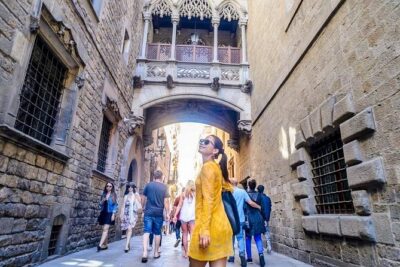
Barcelona Helicopter, Sailboat & Old Town Private Walking Tour
Read our review →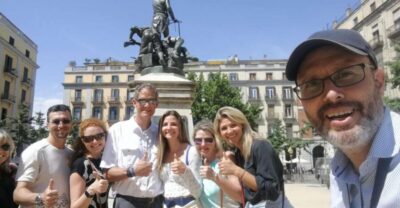

Helicopter Flight, Boat Ride, and Walking Tour
Read our review →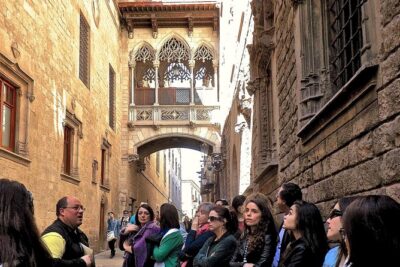
Barcelona Old Town & Gothic Quarter Small Group Tour
Read our review →
Barcelona Food Tour: Tapas, Paella, Sangria & 8+ Local Tastings
Read our review →Browse the lists this tour appears in