
Review · MUSEUMS
Siena Walking Tour with Cathedral and Crypt & Museum Option
Siena’s real story is not only in its famous cathedral. It lives in the 17 contrade, or neighborhood districts, whose old rivalries still fuel the Palio horse race. This tour connects those local traditions with the city’s grandest sights, beginning at Piazza San Domenico and ending at the Duomo.
I like the way the route mixes quiet medieval lanes with big views of Piazza del Campo and Torre del Mangia. I also like the reserved cathedral entry, since it lets you spend your limited time looking at Duccio, Pisano, Pinturicchio, and the Piccolomini Library instead of waiting in line.
The main consideration is the walking. Siena is hilly, and one part of the route includes steep streets. The cathedral also has strict clothing rules, so bring a scarf and avoid shorts, short skirts, sleeveless shirts, sandals, and flip-flops.
Key points at a glance
- The Palio makes sense here: Your guide explains how Siena’s contrade shape daily life, local pride, and the famous horse race.
- The route begins at San Domenico: Meet under the large tree by the Basilica of San Domenico, where your guide holds the activity provider’s sign.
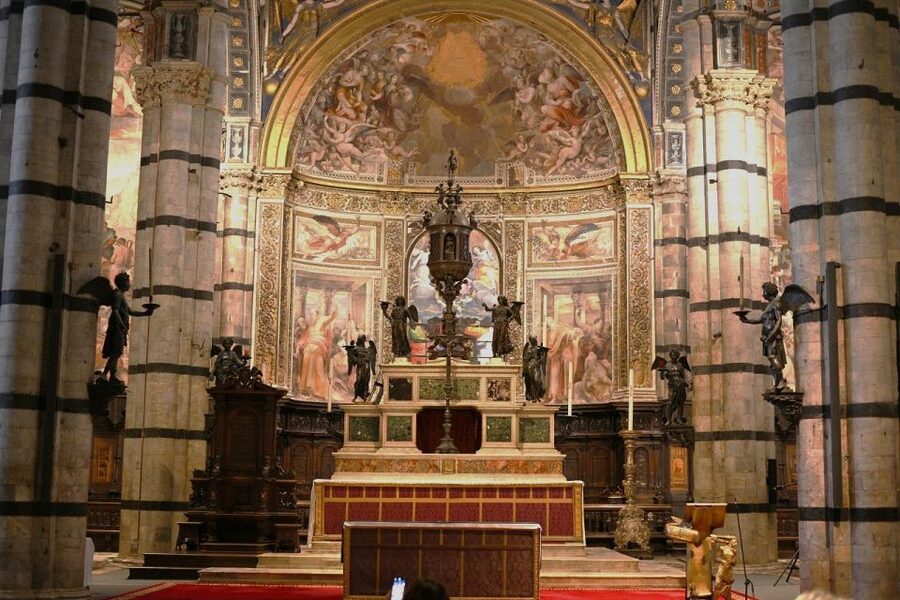
- The cathedral is the centerpiece: The two-hour tour includes reserved priority entry and the Piccolomini Library.
- The three-hour option adds real value: The OPA SI Pass includes the Crypt, Opera Museum, Baptistery, cathedral complex, and New Cathedral panorama.
- Small groups improve the experience: The format allows questions and personal attention, with private tours also available.
- Plan for hills and church rules: This is not a good match for anyone who struggles with steep walking, and the clothing requirements are enforced.
Why this Siena walk works so well
Siena can feel confusing at first. Its streets twist, climb, and split into lanes that seem designed more for medieval horses than modern maps. A guided walk gives you a useful frame for the city before you tackle the cathedral on your own.
The route is especially good for a first visit. You move from the Basilica of San Domenico through the old center, hear how the city developed, learn about its neighborhood system, and then reach the main square and cathedral with a clearer sense of place.
The guide’s role matters here. The best guides on this experience, including names such as Flo, Dace, Anna, Idania, Elia, Mare, Sabrina, and Susanna, have been praised for making the history easy to follow and connecting art with local life. Guide assignments can change, but the strongest part of the experience is the human explanation, not simply the list of buildings.
At $95.16 per person, this is not the cheapest way to see Siena. The price makes more sense if you value a small group, reserved cathedral entry, and a guide who can explain the Palio and contrade rather than just point out monuments. The three-hour version is the better buy if you would otherwise pay separately to see the Crypt, museum, Baptistery, and Facciatone.
More Museum Stops in Italy:
- Florence: Walking Tour with David, Duomo & Uffizi Gallery
★ 4.7 · 414 reviews - Florence: City Walking Tour and Uffizi Gallery Visit
★ 4.8 · 110 reviews - Florence: Fashion History Guided Walking Tour & Museum Visit
★ 4.2 · 72 reviews
Starting beneath the tree at San Domenico
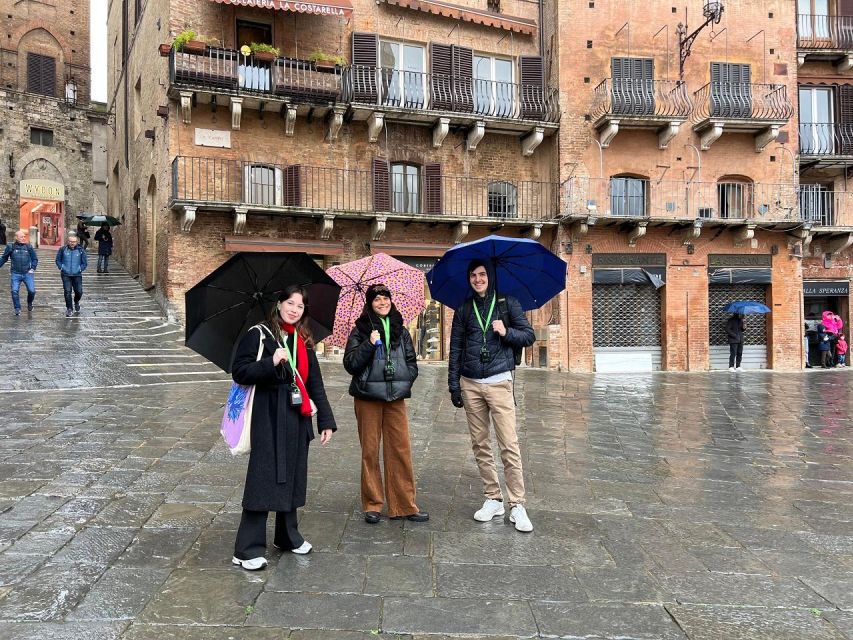
The meeting point is under the big tree by the Basilica of San Domenico in Piazza San Domenico. Arrive five to ten minutes early, since joining after the tour begins is not possible.
This is a practical starting point. The basilica area gives you an immediate sense of Siena’s scale and setting before the group moves into the narrower streets. Your guide carries a sign with the activity provider’s logo, which should make the meeting easier to spot.
The exact group size is not stated, but the activity is sold as a small-group or private tour. That matters in Siena, where a large group can clog a narrow lane and make it harder to hear. A small group also gives you a better chance to ask about the contrade, local food, or places you notice along the way.
The walk proceeds at a relaxed pace, but relaxed does not mean flat. Siena rises and falls, and one direct comment from the experience is worth taking seriously: be ready for steep hills.
San Domenico and the old neighborhoods
The first part of the walk introduces Siena through its streets and districts rather than through a long museum lecture. You hear about the Old Ghetto and the Tower District, along with the way Siena’s neighborhoods developed their own customs and identities.
This is where the tour earns its keep. The contrade are not just colorful names for a map. They are neighborhood communities with their own symbols and traditions, and they are central to understanding why the Palio matters so much.
You also get chances to see Siena from higher points, with views toward the Duomo and Torre del Mangia. These pauses help you orient yourself. Siena’s center is compact, but its lanes can make the city feel larger and less orderly than it really is.
Your guide may also point out local sweets such as ricciarelli and panforte. The food references are useful because they tie the walk to everyday Siena rather than keeping it only at the level of medieval dates and church art.
Piazza del Campo and the Palio story
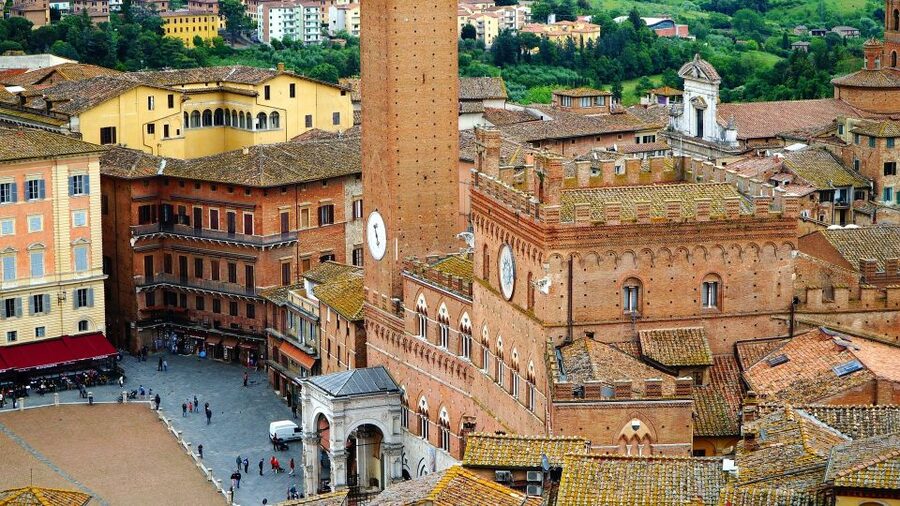
The walk continues to Piazza del Campo, Siena’s great shell-shaped public square. This is the city’s civic heart, and the square’s size and curve make more sense once your guide explains how public life and the Palio meet here.
The Palio is a horse race, but reducing it to a sporting event misses the point. The tour explains the rivalry between the contrade and the pride that surrounds the race. You get cultural context that would be hard to pick up from a quick photograph or a short guidebook paragraph.
Piazza del Campo is also a good place to pause and take in the skyline. Torre del Mangia rises above the square, while the cathedral appears from other angles as the route continues. The changing views are part of the pleasure of walking Siena.
At Fonte Gaia, your guide points out the ornate fountain and its reliefs with biblical scenes. It is a short stop, but the details give you something specific to look for rather than treating the square as one large photo opportunity.
More Walking Tours in Italy:
- Venice: Doge’s Palace and St Mark’s Basilica Walking Tour
★ 4.4 · 6,291 reviews - Milan: Guided Walking Tour & Last Supper Visit with Ticket
★ 4.7 · 5,409 reviews - Naples: Street Food Walking Tour with Local Guide
★ 4.9 · 4,976 reviews - Florence: Highlights Walking Tour with Expert Guide
★ 4.6 · 4,662 reviews
Torre del Mangia and the city’s medieval power
The route includes Torre del Mangia as a walking stop, not a tower-climbing visit. That distinction matters if you are hoping to go inside the tower or reach its top. The supplied details describe views toward the tower and a stop beside it, but they do not include an ascent.
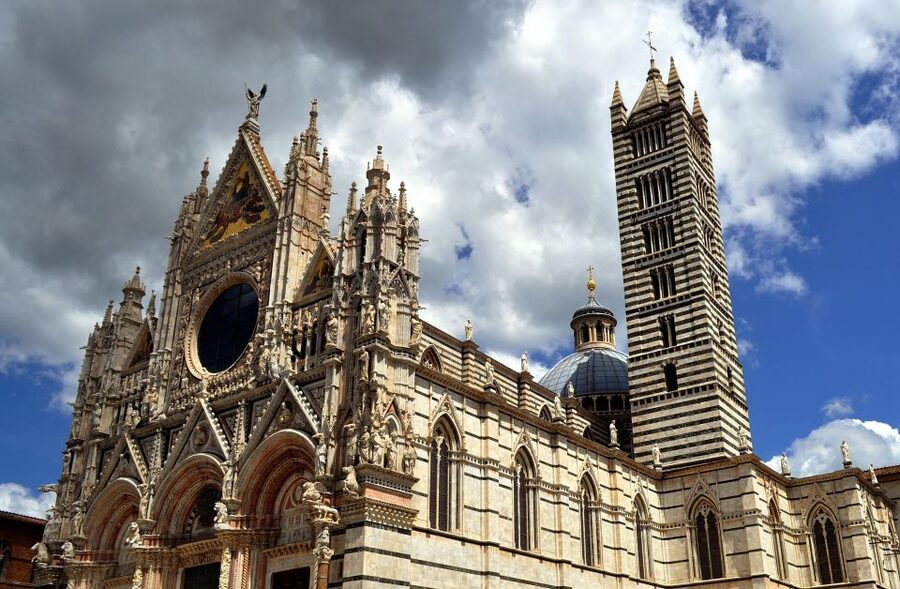
The tower helps explain Siena’s old civic ambition. Along with the cathedral, it forms one of the defining vertical markers of the city. Your guide places these buildings within the story of Siena’s 14th-century government and the city’s effort to express its power through architecture.
This section is also a reminder to keep your attention on the route underfoot. Siena’s stone streets and hills are manageable for many people, but the walk is not designed for someone who needs a level path or frequent transport between stops.
Entering Siena Cathedral with reserved access
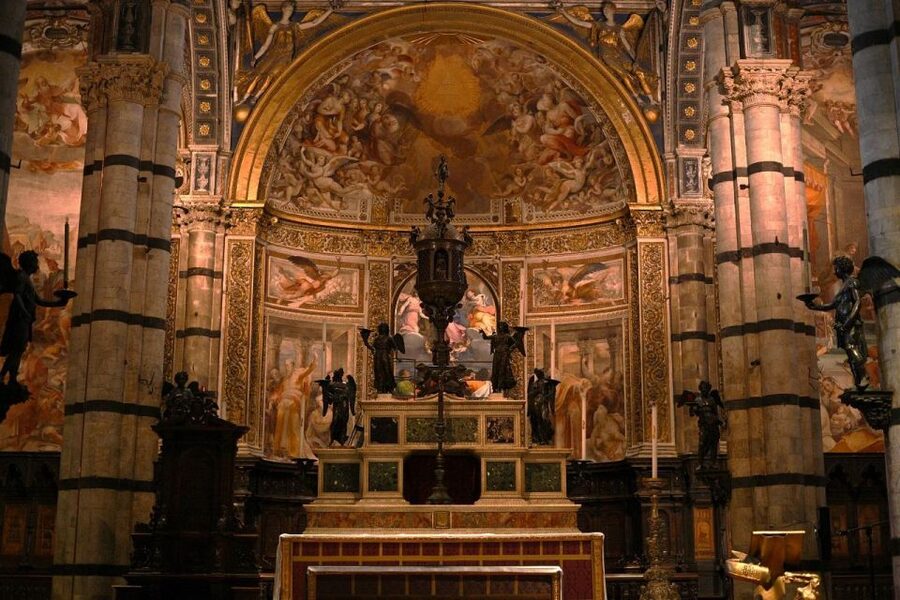
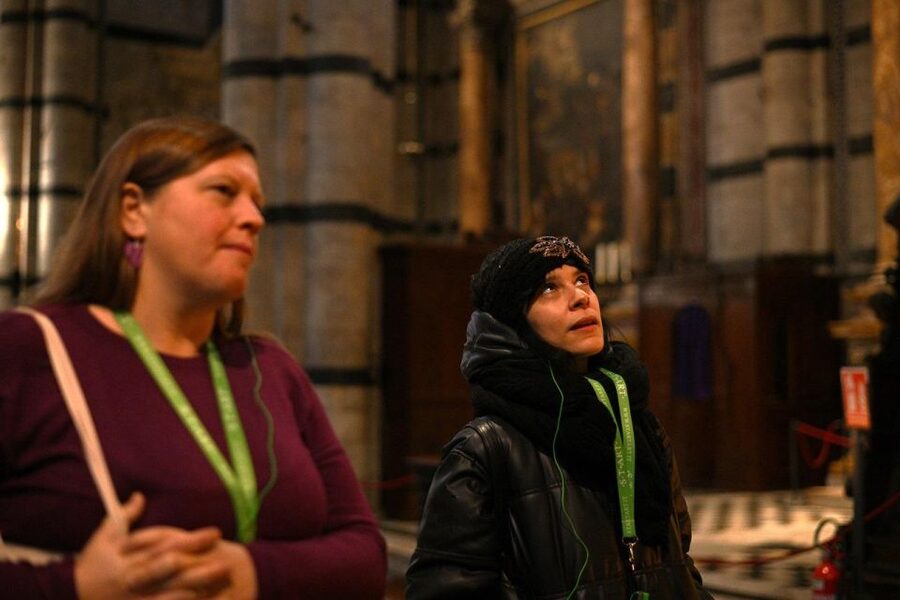
The cathedral is the tour’s major interior visit. With pre-booked priority tickets, you use a separate entrance and avoid the standard queue, which can save valuable time during busy periods.
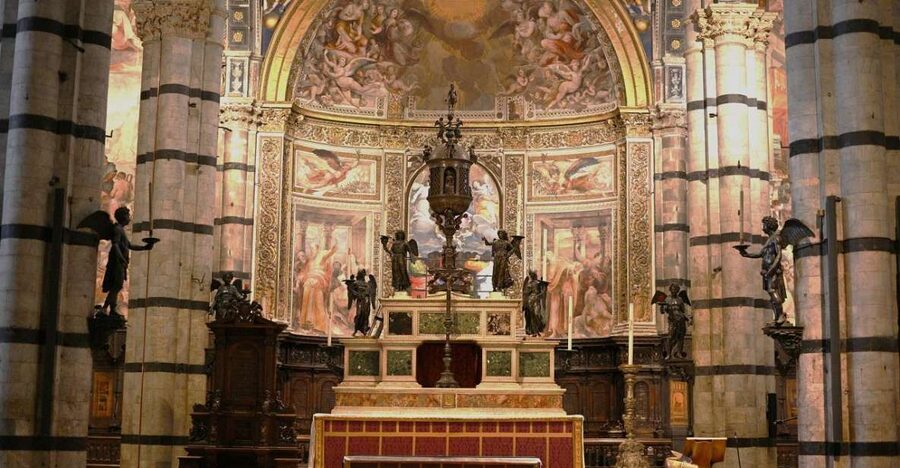
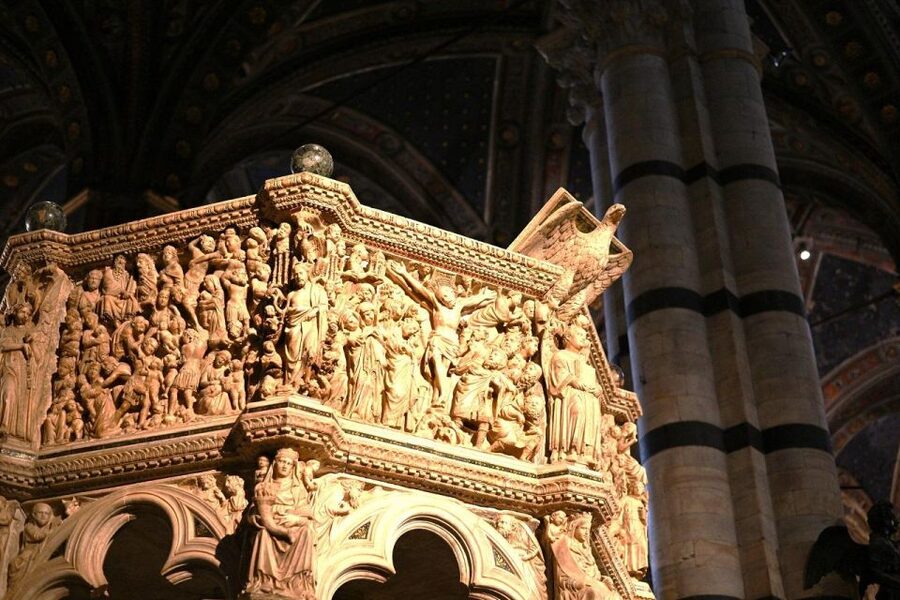
Inside, the decoration is not subtle. The cathedral brings together work by major Tuscan artists, including Duccio, Pisano, and Pinturicchio. Your guide helps you sort out what you are seeing and why the building matters, rather than leaving you to scan a vast interior without a plan.
The Piccolomini Library is one of the most rewarding stops. Its painted surfaces and Renaissance decoration give you a concentrated burst of color and detail. The ten-minute guided portion listed for the library is short, but a good explanation can make the visit much more meaningful.
The cathedral is also an operating church. It can close to visitors without warning for a liturgical reason, including a funeral for a cardinal. That is a real risk, not a minor footnote, so keep a little flexibility in your Siena schedule.
The famous marble floor needs special planning. It is completely uncovered from June 27 through July 31 and from August 18 through October 16. At other times of year, parts of the floor are covered, so your view of one of the cathedral’s signature features may be limited.
The three-hour OPA SI Pass option
The two-hour tour gives you the city walk and cathedral entry. The three-hour option adds the OPA SI Pass, and I consider it the stronger choice for anyone who wants more than a quick look inside the Duomo.
The pass covers the cathedral and Piccolomini Library, the Crypt, the Opera Museum, the panorama from the New Cathedral facade, and the Baptistery. These are not filler stops. Together, they explain the cathedral complex as an unfinished medieval and Renaissance project, not just a single church.
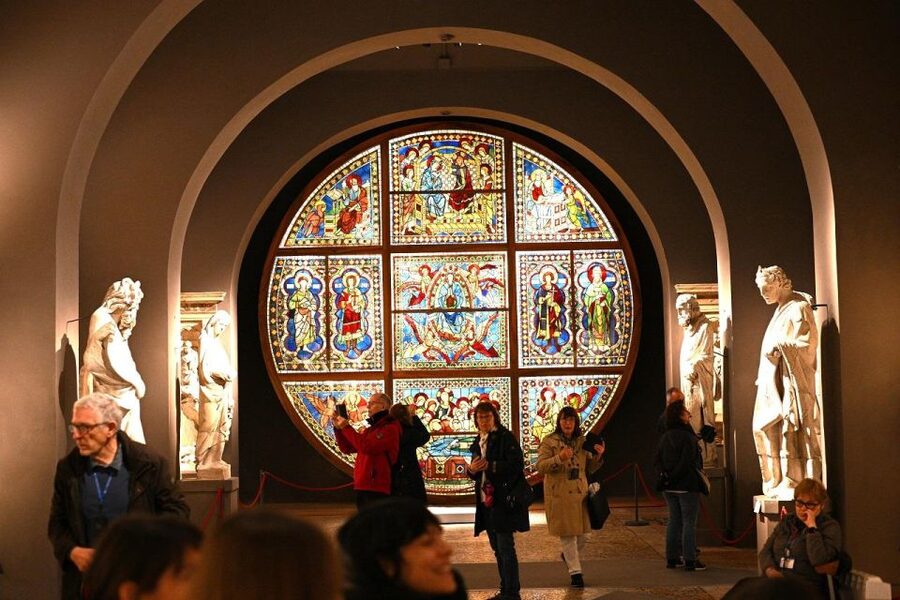
The Crypt is especially worthwhile because of its old frescoes. The museum adds sculptures and stained-glass windows, giving you a chance to see works that cannot all be appreciated from the cathedral interior.
Your guide also explains the ambitious plan for the Duomo Nuovo, or New Cathedral. The project was meant to expand Siena’s cathedral into something even grander, but the work was never completed. That unfinished ambition is why the Facciatone exists.
After the guided portion, you can climb the Facciatone at your own pace. The reward is a broad view over Siena and the surrounding countryside. This is a strong final moment, but remember that the climb is another reason the tour is not suitable for people with mobility limits.
What the guide adds to the art and history
The experience has earned its strong 4.9 rating from 380 reviews, and the most consistent praise centers on the guides. The useful quality is not simply knowing dates. It is the ability to explain Siena clearly, answer questions, and connect art, neighborhood life, and local customs.
Several guides have been singled out for an engaging style, good humor, and a strong personal connection to Siena. One guide was described as having lived in the area for 14 years and as giving practical restaurant and gelato suggestions. Another was praised for being a native of Siena and explaining the city’s district structure with unusual feeling.
That sort of local perspective can change the walk. You are not only looking at a fountain or a painted wall. You are learning why the city organizes itself around contrade and why the Palio remains more than a summer spectacle.
The available languages are English, German, and French. Private groups are also offered, which may suit families or friends who want more control over the pace and questions.
Clothing, comfort, and practical limits
Dress for a church visit, not just a summer walk. Bring a scarf, and do not wear shorts, short skirts, sleeveless shirts, sandals, or flip-flops. Large bags, luggage, and baby strollers are not allowed.
The supplied information gives conflicting accessibility details: one section says the activity is wheelchair accessible, while another says it is not suitable for wheelchair users or people with mobility impairments. Because the route includes hills, steps, and the Facciatone climb, contact the provider before booking if accessibility is important to you.
Transportation is not included. You meet in the historic center and walk from there, so arrange your own way to Piazza San Domenico.
The tour is listed as two to three hours, with starting times depending on availability. Allow extra time afterward if you choose the extended pass and want to linger at the museum, Baptistery, or Facciatone.
Free cancellation is available up to 24 hours before the start, and you can reserve now and pay later. The meeting information says the activity ends back at the meeting point, while the route description finishes at the Duomo, so confirm the exact end point when you book if your next reservation is tightly timed.
Two hours or three hours?
Choose the two-hour option if you want a clear introduction to Siena, the Palio, Piazza del Campo, and the cathedral without filling your whole morning or afternoon. It works well for a short stop or for anyone who prefers a lighter walking schedule.
Choose the three-hour option if art and architecture are a major reason for your visit. The Crypt, Opera Museum, Baptistery, and Facciatone add enough substance to justify the extra hour and the higher price.
I would also choose three hours if Siena is your main destination rather than a quick stop between Tuscan towns. The extended visit gives you time to understand the cathedral complex instead of seeing only the most famous room.
Should you book this Siena tour?
Book it if you want Siena to make sense, not simply look pretty. The best reasons are the guide’s explanation of the contrade and Palio, the relaxed route through the old center, and reserved access to the cathedral.
I would choose the three-hour OPA SI version for most first-time visitors who can handle the hills. It offers the fuller cathedral experience and ends with one of the city’s best views.
Skip it if you need a flat route, want to explore entirely on your own, or have only a very short window and cannot risk a church closure. Also check the clothing rules and accessibility details before paying.
For a small group interested in Siena’s art, customs, and local identity, this is a well-focused way to spend two or three hours. The cathedral is impressive, but the explanation of the neighborhoods and the Palio is what gives the walk its lasting value.
FAQ
How long does the Siena walking tour last?
The tour lasts two or three hours, depending on the option you book. Starting times vary, so check availability for your date.
Where does the tour meet?
Meet under the big tree by the Basilica of San Domenico in Piazza San Domenico. Your guide will hold a sign with the activity provider’s logo.
What does the two-hour option include?
The two-hour option includes the guided Siena walk and pre-booked priority access to the cathedral, including the Piccolomini Library.
What does the three-hour option include?
The three-hour option includes the OPA SI Pass for the cathedral complex, Piccolomini Library, Crypt, Opera Museum, panorama from the New Cathedral facade, and Baptistery.
Is the cathedral entrance skip-the-line?
Yes. The tour includes pre-booked priority tickets and access through a separate entrance.
Which languages are available?
The live tour is available in English, German, and French.
What should I wear to the cathedral?
Bring a scarf. Shorts, short skirts, sleeveless shirts, sandals, and flip-flops are not allowed.
Can the cathedral close unexpectedly?
Yes. Siena Cathedral is an operating church and may close to visitors without warning for liturgical reasons.
New routes in Italy
- Private St. Francis Basilica of Assisi and City Walking Tour★ 5.0 · 114 reviews
- Assisi Private Walking Tour including St. Francis Basilica★ 5.0 · 124 reviews
- Milan: City Highlights Walking Tour with The Last Supper★ 4.9 · 195 reviews
- Florence: Heart of Florence Guided Walking Tour★ 4.0 · 81 reviews
- Milan: Private or Shared Essential Walking Tour★ 4.7 · 84 reviews
- Taormina: Shared or Private Food & Wine Walking Tour★ 4.6 · 167 reviews
- Syracuse: Ortigia Private Walking Tour★ 4.8 · 181 reviews
- Syracuse: Ortigia and Neapolis Guided Walking Tour★ 4.7 · 205 reviews
Museums, compared.
Acropolis monuments & Parthenon Walking Tour with Optional Acropolis Museum
Read our review →
Frida Kahlo VIP [Museum Tickets Included] Walk, Markets & Churros
Read our review →
Sydney Cricket Ground (SCG) and Museum Walking Tour
Read our review →
Bogotá City Tour with Monserrate, Gold and Botero Museums
Read our review →
Guided Walking Tour and Chocolate Museum Ticket
Read our review →
The Acropolis, Athens Walking City Tour and Acropolis Museum
Read our review →
Walking Tour with David, Duomo & Uffizi Gallery
Read our review →
Louvre Museum Entry Ticket and Garden Walking Tour
Read our review →Browse the lists this tour appears in