
Review · SALEM
Salem: 1692 Witchcraft Trials Walk
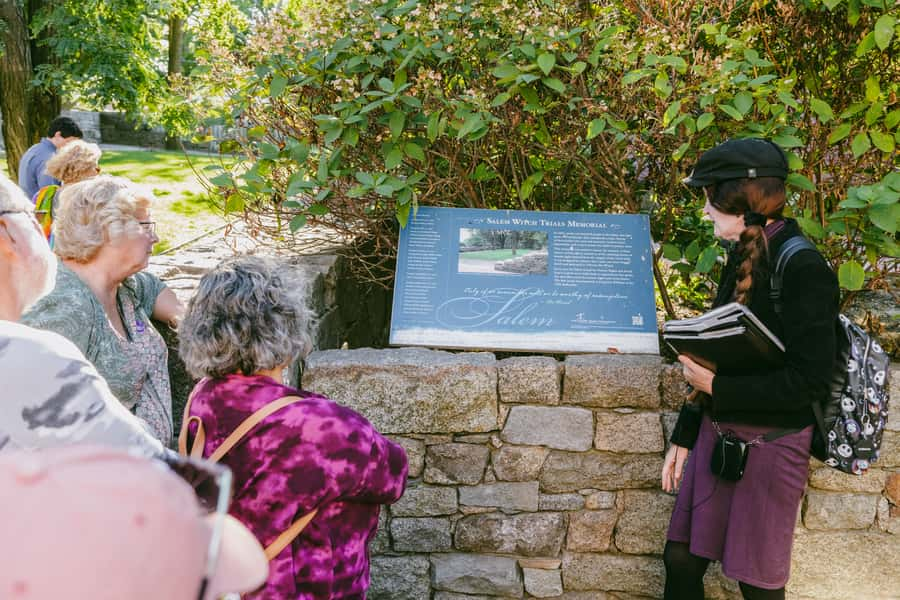
The Salem witch trials were not a spooky tale invented for tourists. They were a real civic disaster in which 20 people were executed and five more died in jail. This 1.5-hour walk shows how two girls’ frightening fits grew into a frantic campaign against the Devil, with neighbors accusing neighbors.
I like the personal scale of the tour, especially the stops tied to judges, accused people, and former jails. I also like the guides’ mix of facts, humor, and questions that keep the walk moving. The main drawback is simple: some important sites are no longer visible, and the tour ends where it starts rather than at a useful midpoint.
Key points at a glance
- Twenty executions and five jail deaths: Learn the human cost behind Salem’s famous name.
- Eight to ten stops: The route links former jails, the courthouse, homes, and sites connected with the accused.
- A little over one mile: The walk is fairly flat and manageable, but comfortable shoes still matter.
- Strong guide-led storytelling: Guides such as Christine, Bob, Mark, James, and Stache have led engaging versions of the tour.
- History rather than haunted theatrics: The focus is fear, politics, family rivalry, and legal failure.
- Good value at $25: A short city walk gives you a useful framework for seeing Salem’s other historic sites.
Starting at Central Street
Meet at 8 Central Street, at the large brick building on the corner of Essex and Central Streets. Look for the purple signs. This is a central starting point, so you can make the tour your first serious stop in Salem and use what you learn to make sense of the rest of the city.
The walk lasts 1.5 hours and covers a little over a mile. That is enough time to visit several locations without turning the outing into a tiring march. The route has eight to ten stops, so you will usually pause often rather than listen to one long lecture while walking.
I would arrive a few minutes early. The meeting point can be easy to spot once you know to look for the purple signs, but Salem has plenty of distractions, especially during busy periods. You want to begin settled, with water, suitable clothing, and shoes that can handle a full hour and a half on pavement.
The tour operates rain or shine. That is useful for planning, but it also means you should take the weather seriously. A rainy Salem walk can still be worthwhile, yet a hooded rain jacket is far more practical than an umbrella when you are trying to stay close to a guide and listen.
More Walking Tours in the USA:
- History and Hauntings of Salem Guided Walking Tour
★ 5.0 · 14,564 reviews - New Orleans Premier Ghost, Voodoo and Vampire Walking Tour
★ 4.5 · 12,856 reviews - Little Havana Food and Walking Tour in Miami
★ 5.0 · 8,882 reviews
How fear spread through Salem
The central question is not simply who was accused. It is how a small community moved from concern about two girls having fits to a frantic effort to identify and remove the Devil’s supposed followers.
The guide sets the trials inside the pressure of the time. Fear, political turmoil, and family rivalries all helped drive the crisis. That context matters because the accusations did not happen in isolation. Neighbor turned against neighbor, and family members could find themselves on opposite sides of the panic.
You will hear how testimony and suspicion fed one another. Once accusations began, the search for evidence became tangled with personal conflict and public fear. The walk gives you a way to see the trials as a breakdown in judgment, not as a collection of strange ghost stories.
That approach is one of the tour’s biggest strengths. Salem has no shortage of witch-themed attractions, but this walk focuses on people and decisions. The names of the accused, the judges, and those who held power give the story a human shape.
Former jails and the cost of accusation
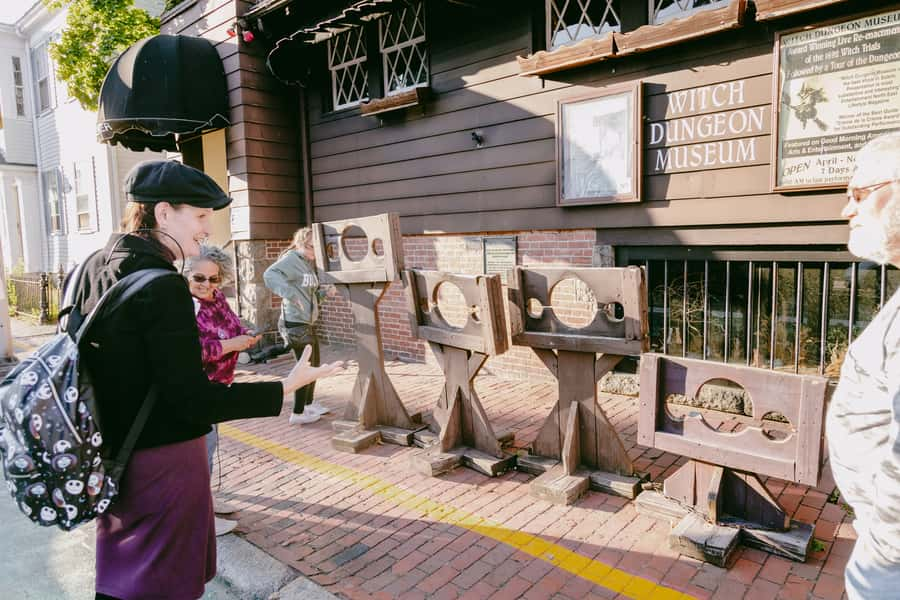
Stops linked to the jails show where suspected witches were held. The buildings and settings have changed over time, so do not expect every location to look exactly as it did in 1692. The value comes from understanding what happened there and what imprisonment meant before modern legal protections.
Five people died in jail. That detail can be easy to overlook beside the more famous executions, but it gives the story a sharper edge. Confinement was not a minor pause before trial. For some accused people, jail itself became fatal.
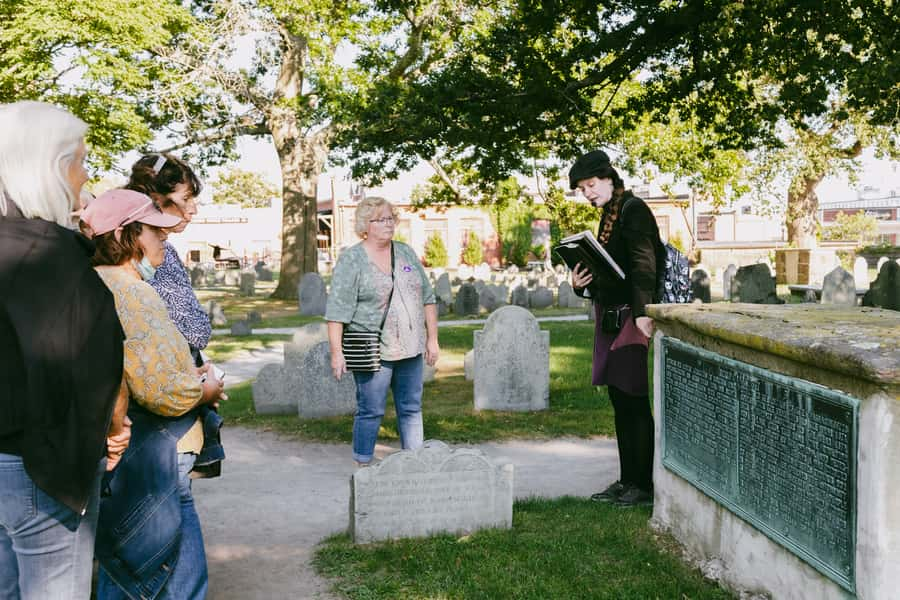
The guide connects these places with individual stories rather than treating the jail as a generic haunted stop. You will hear about the accused as people caught in a legal and social crisis. That personal focus is important, particularly for younger visitors or anyone trying to understand the human cost beyond a list of dates.
The tour does not promise access inside historic buildings. Much of the experience takes place outdoors, with the guide explaining what stood at each site and why it mattered. If you prefer physical ruins or preserved interiors, you may find parts of the route less visually dramatic than expected.
The courthouse and the machinery of panic
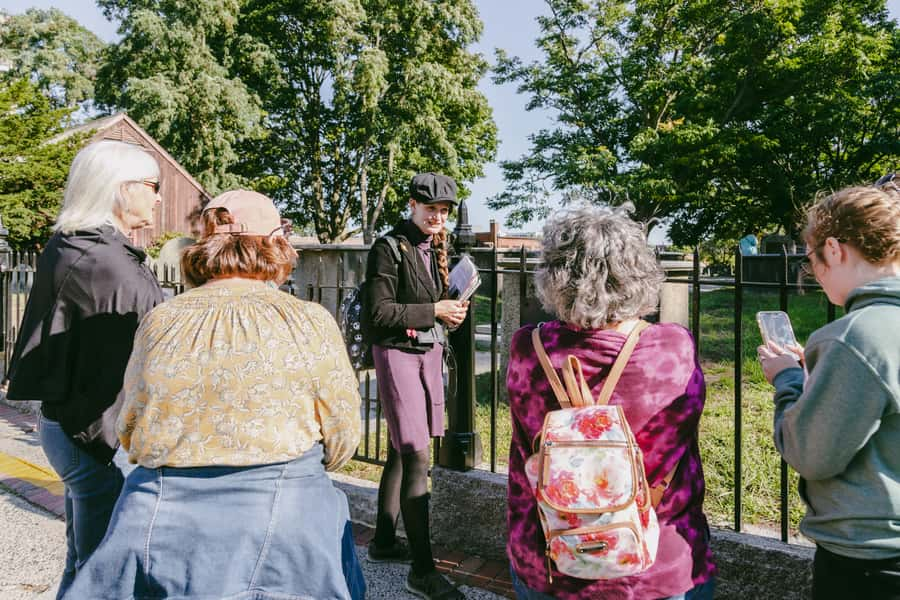
The courthouse stop helps explain how accusations gained official force. This was not only a wave of private gossip. The claims entered a court system, and public authority gave them weight.
Here, the guide explores the role of the judges and the decisions that shaped the trials. The walk also points out homes and places connected with those who presided over the proceedings. Seeing where influential figures lived helps you connect public events with the ordinary streets of Salem.
I find this part especially useful because it shows how close everything was. Salem’s historic center is walkable, and the same compact setting that makes sightseeing easy also helps explain how quickly news, fear, and accusation could spread through the community.
The guide may use character voices or a bit of theatrical presentation at times. That can make the material easier to remember, though the style will vary by guide. James, for example, has been described as presenting information in character, while other guides have used humor, questions, and direct conversation with the group.
Same streets, a different guide:
- Chicago: Gangsters and Ghosts Walking Tour
★ 5.0 · 7,155 reviews - Boston: Freedom Trail History Small Group Walking Tour
★ 5.0 · 6,450 reviews - Historic Charleston Guided Sightseeing Walking Tour
★ 5.0 · 6,216 reviews - New Orleans Food Walking Tour of the French Quarter with Small-Group Option
★ 5.0 · 6,118 reviews
Homes of the judges and the accused
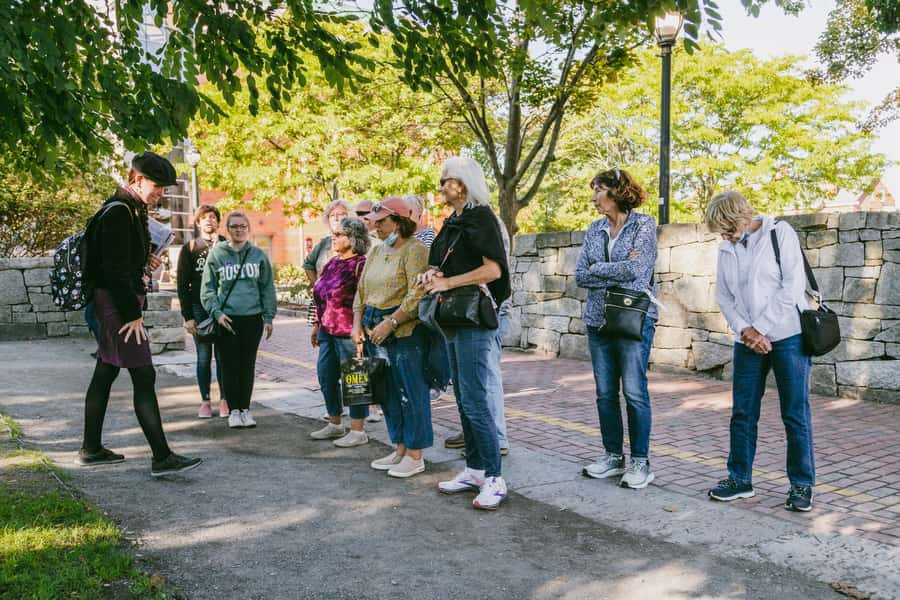
The homes connected with the judges and accused people give the walk its most personal stops. A house is not just a point on a map here. It can represent authority, suspicion, family tension, or the loss of an ordinary life.
The tour examines personal stories instead of presenting the accused as faceless names. You will learn how individual people became caught in the accusations and how the crisis affected families and neighbors. That makes the walk more affecting than a simple timeline.
Some stops may be marked by surviving buildings, while others are connected to a site whose original appearance has changed. The guide’s explanation does the heavy lifting. Several stops are about location and memory rather than a dramatic structure you can enter.
This is also where the tour’s interactive style can help. Guides have asked questions, encouraged group participation, and answered detailed follow-up questions. Christine, in particular, has led tours with a lively, highly interactive approach. If you are visiting with a child working on a school project, a guide can help turn the walk into a useful lesson rather than a passive history talk.
What the guides add
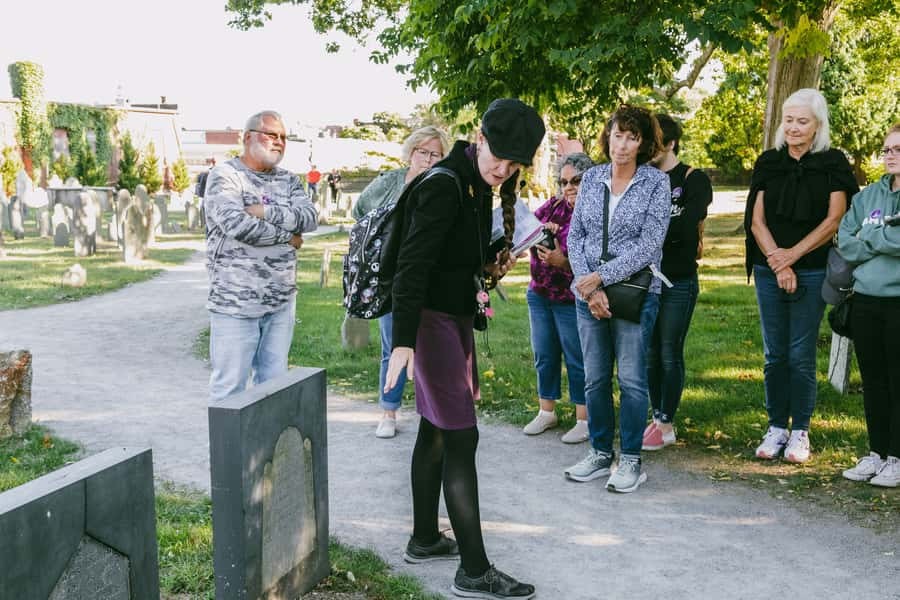
The quality of a walking tour depends heavily on the person holding the microphone, and this experience has had several guides praised for clear delivery, warmth, and energy. Christine, Bob, Mark, James, and Stache are among the names associated with different tours.
You should not assume you will receive a particular guide unless the booking system specifically says so. Still, the range of guide styles is worth noting. Bob has been described as a local with family ties to the area. Mark has been praised for being friendly and informative. James has used character presentation. Stache has been noted for courtesy and strong command of the subject.
The common thread is an effort to keep the tour lively without losing the facts. Guides have used humor, invited participation, and maintained a pace that works for a mixed-age group. One guide even offered to answer follow-up questions for a student after the walk, which tells you this can work well for school-age history projects.
Large groups use an amplifier. That is helpful near street noise or when the group spreads out at a stop. In a small group, you should have an easier time hearing every detail, and you can ask more questions without holding up a crowd.
A few practical limits remain. A passionate guide may occasionally be a little theatrical or awkward, and the experience is not a scripted museum presentation. That variety is part of the trade-off with a live walk. You get a human guide who can respond to questions, but the delivery may differ from one departure to another.
Walking comfort and access
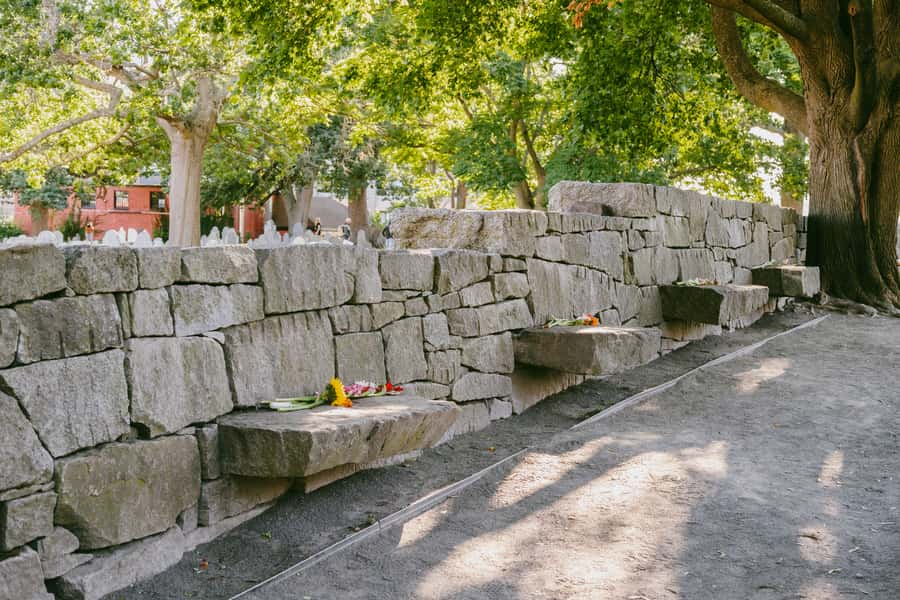
The route is wheelchair accessible and fairly flat. That makes this a more approachable way to see Salem’s trial-related sites than a tour involving steep streets or difficult terrain.
Even so, accessible does not mean effortless. The route covers a little over a mile, and you will stop and start several times. Bring comfortable shoes, dress for the forecast, and remember that outdoor conditions can affect your comfort. Since the tour runs in rain or shine, a waterproof layer can make a real difference.
Smoking, video recording, and audio recording are not allowed. You can take notes mentally or on paper, but the rules favor listening to the guide and keeping the group focused.
The walk suits adults, older children, families, and history-minded visitors. The subject includes imprisonment, executions, fear, and accusations, so parents should decide if the material fits their children. The conversational style can help younger visitors stay involved, but the topic is not light.
Is $25 a fair price?
At $25 per person, this is a reasonable price for a 1.5-hour guided walk in a compact historic city. You are paying for a live guide, a planned route, and the effort of connecting scattered locations into one clear story.
The best value comes if you use the tour as an introduction to Salem. After the walk, you will have a better sense of which places matter and why the witch trials became such a central part of the city’s identity. You can then visit other attractions with more context instead of treating every witch-themed sign as an isolated story.
The value is lower if you expect entry into every historic building or a long list of preserved interiors. This is an outdoor orientation and storytelling tour. Some sites are explained from the street, and some physical evidence has disappeared.
The booking terms also make planning easier. You can reserve now and pay later, and cancellation is free up to 24 hours in advance for a full refund. Discount categories with valid identification include veterans, police, firefighters, teachers, EMTs, nurses, and Salem residents. Students, seniors, and military visitors pay the same listed price unless another discount applies.
Best time to take the walk
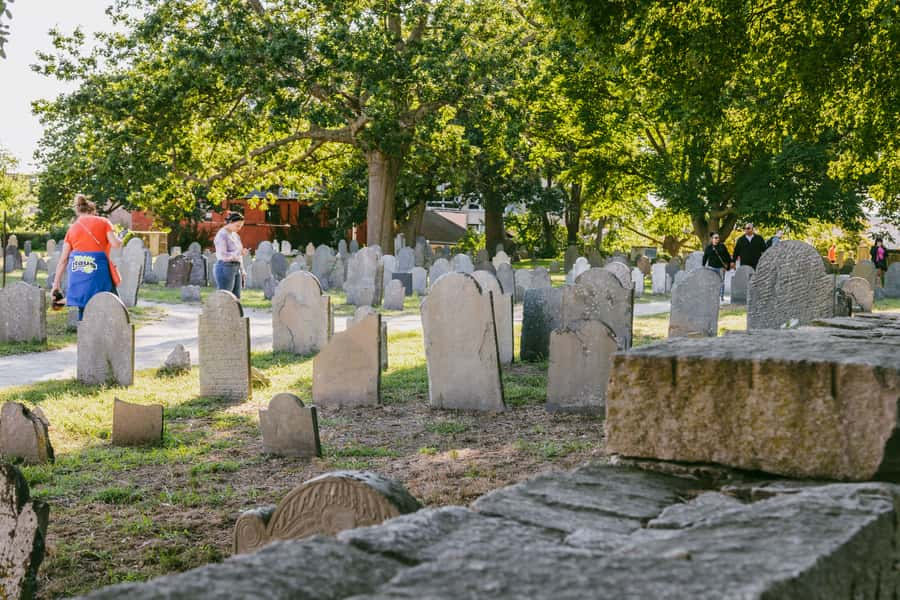
The available starting times vary, so check the schedule when you book. I would choose a time that leaves room afterward to explore Salem on foot. Since the tour ends back at 8 Central Street, you can plan dinner, shopping, or another attraction from the same central area.
Taking it early in your visit makes the most sense if you want historical orientation. Taking it later can work if you have already seen Salem and want the places you passed to make more sense.
Give yourself a little breathing room before and after the 1.5-hour duration. The official walking time does not include finding the meeting point, arriving early, or lingering afterward with questions. The route moves at a comfortable pace, but it is still a guided group activity rather than a private stroll.
Who should book this Salem walk?
I would recommend it to you if you want the witch trials explained through real people, official decisions, and local streets. It is especially useful for first-time visitors, families with older children, and anyone who wants a historical base before exploring Salem’s other attractions.
You will get the most from it if you enjoy stories with political and family context. The tour is less suitable if your priority is supernatural entertainment, theatrical scares, or access to grand interiors.
Book it if you want a focused introduction at a fair price, can manage a little over a mile of walking, and do not mind touring outdoors in changing weather. Skip it if you need a fully indoor activity or expect every original site to survive intact.
For most history-minded visitors, I would make this one of the first activities in Salem. The combination of eight to ten stops, personal stories, and a clear explanation of how the panic grew gives you a useful key to the city. Just bring good shoes and keep your expectations grounded: the strongest sights here are the stories, not spooky ruins.
FAQ
How long is the Salem witch trials walking tour?
The tour lasts 1.5 hours and covers a little over one mile.
Where does the tour begin?
Meet at 8 Central Street, at the large brick building on the corner of Essex and Central Streets. Look for the purple signs.
Where does the tour end?
The walk ends back at the meeting point on Central Street.
How many stops are included?
The route includes eight to ten stops connected with the witch trials, including former jails, the courthouse, and homes linked to judges and accused people.
Is the tour wheelchair accessible?
Yes. The route is wheelchair accessible and fairly flat.
Does the tour operate in bad weather?
Yes. Tours operate rain or shine, so bring weather-appropriate clothing.
What language is the tour in?
The live tour is conducted in English.
New routes in the USA
- Baltimore Walking Foodie Tour in Fells Point★ 5.0 · 182 reviews
- The Madam’s Curse Walking Ghost Tour★ 4.5 · 103 reviews
- Austin Small Group Morning Walk★ 5.0 · 412 reviews
- Austin Haunted Pub Crawl Walking Tour★ 4.5 · 232 reviews
- Austin Downtown Private Walking Food Tour With Secret Food Tours★ 5.0 · 71 reviews
- Austin Murder Walk★ 5.0 · 310 reviews
- The Ghosts of Austin Walking Tour★ 4.5 · 72 reviews
- Martin Luther King Jr. History Walking Tour★ 5.0 · 687 reviews
Salem Walking Tours, compared.

History and Hauntings of Salem Guided Walking Tour
Read our review →

Mysteries and Murders of Salem Guided Night-Time Walking Tour
Read our review →
Salem: Ghosts, Witches, & Warlocks Guided Walking Tour
Read our review →
Salem, MA: Hocus Pocus Movie Guided Walking Tour
Read our review →Browse the lists this tour appears in