Review · NETHERLANDS
Rotterdam: Highlights, Gems, Architecture & History Walk
Rotterdam makes sense once you understand its great rupture: a centuries-old port city was badly damaged in World War II, then rebuilt as a modern experiment. This walk connects those pieces while taking you from the old harbor districts to the Cube Houses, Markthal, and the city’s bold skyline. Architecture is the main attraction, but the story behind each building gives the walk its purpose.
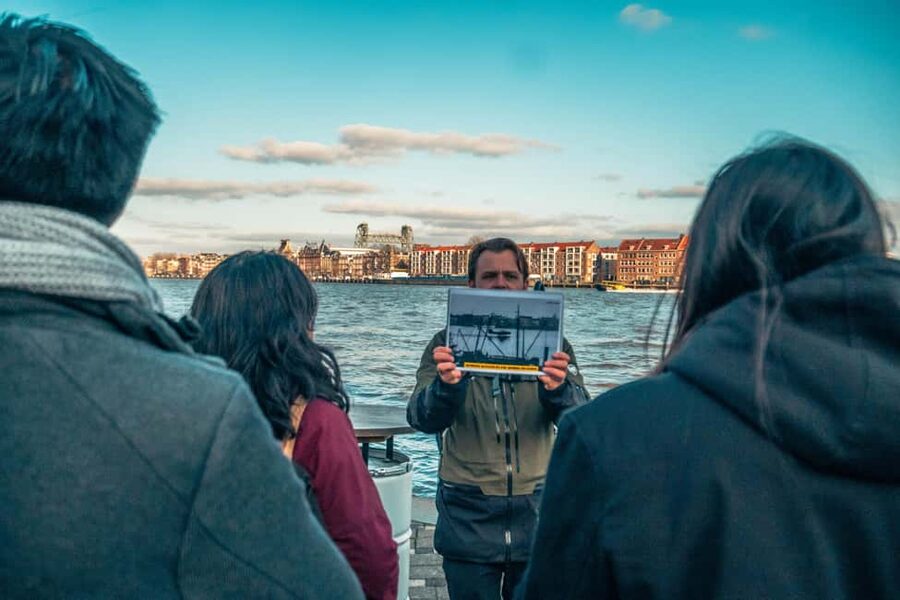
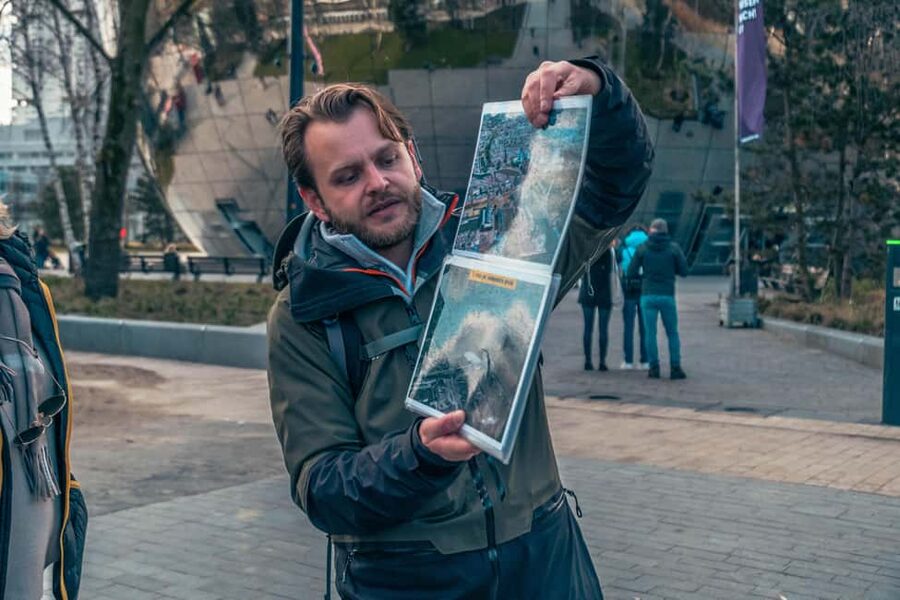
I like the way local guide Yoreh uses large photo sheets to show what Rotterdam looked like before the bombing, what exists now, and what may come next. I also like the practical finish inside Markthal, with suggestions for food and good places to return for photographs. The main caution is physical: expect about 11,000 steps and 5 kilometers, with periods of standing and a steady pace.
Key points to know before booking
- A local view of Rotterdam: Yoreh grew up in the city and brings personal stories, local quirks, and practical advice to the route.
- Old, present, and future architecture: Photos and maps help explain how Rotterdam changed and where its planners hope to take it next.
- A strong WWII focus: The walk explains the bombing, invasion, destruction, and difficult rebuilding that shaped modern Rotterdam.
- Major sights in one route: You pass Depot Boijmans Van Beuningen, Erasmus Bridge, Leuvehaven, the Maritime District, Oude Haven, Cube Houses, and Markthal.
- Small-group format: The guide can answer questions and may adjust the conversation to your interests.
- Plan for a real walk: Good shoes matter, and the tour is not a slow stop-and-start stroll.
Rotterdam’s identity begins with rebuilding
Rotterdam is not the kind of Dutch city that reveals itself through one perfect medieval square. Its character comes from contrast. You see old harbor traces beside sharp new towers, traditional Dutch snacks beside ambitious food halls, and reminders of wartime loss beside buildings that seem designed to challenge gravity.
This tour gives you the framework to read those contrasts. Rather than pointing at a striking building and moving on, the guide explains why it is there, what came before it, and how it fits into the city’s plans. That approach is especially useful if you arrive expecting Amsterdam-style canals and historic streets.
The city began in the 13th century near the Rotte River. It grew from a modest trading settlement into one of Europe’s major ports. That rise is part of the story, but the crucial chapter is World War II, when much of central Rotterdam was destroyed.
The rebuilding that followed was not simply an effort to replace lost buildings. Rotterdam chose a new direction. Wide spaces, modern transport routes, large-scale architecture, and experimental housing helped create the city you see today. The walk explains that choice without pretending every result is beautiful or easy to understand.
More City Highlights Walking Tours in the Netherlands
- Amsterdam: Cultural Highlights Walking Tour
★ 4.9 · 2,629 reviews - Amsterdam Highlights Walking Tour: Small Group Experience
★ 5.0 · 1,132 reviews - Amsterdam: Historical Highlights Walking Tour with Tasting
★ 4.6 · 381 reviews
What the two-hour and three-hour routes mean
The shorter option works as a city orientation. You will see key areas, hear the basic story, and finish with a clearer sense of where to spend the rest of your time. It suits a first afternoon in Rotterdam, a short stay, or anyone who wants an overview without committing to a longer walk.
The three-hour version gives the guide more time to explain the city’s past and its future plans. You get fuller stories, more context at the stops, and more time in the central districts. Several people who took the longer route found that the time passed quickly, but you should still treat it as an active outing rather than a casual introduction.
The route covers about 5 kilometers. The pace is described as steady, partly because the walk has many stops and still needs to reach Markthal on time. You can take photographs, but you may need to keep moving between explanations.
Yoreh is the main guide associated with the experience, and Elmer also leads some departures. Both are described as Dutch guides from Rotterdam. Yoreh uses A3 photo sheets, maps, and other visual material. This is a real advantage when discussing streets that no longer exist or future buildings that are still on paper.
From Depot Boijmans to Rotterdam’s cultural side
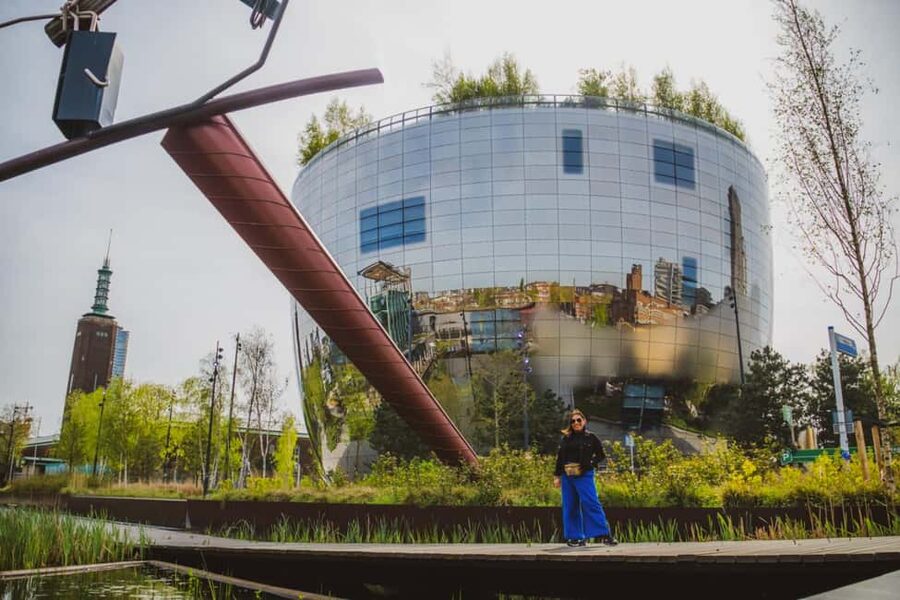
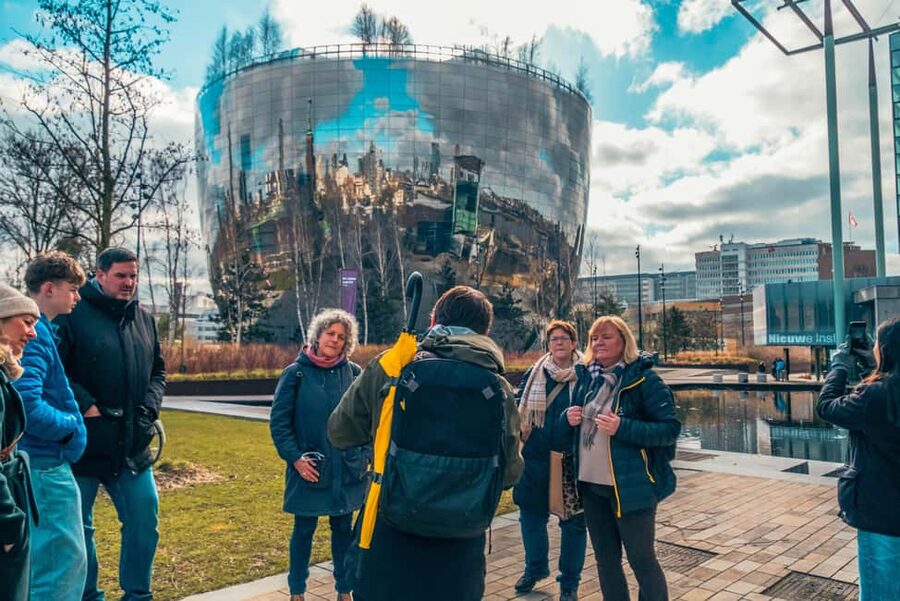
The walk passes Depot Boijmans Van Beuningen, the striking art storage building near the Museum Quarter. The mirrored exterior is one of Rotterdam’s most recognizable recent additions, and the stop helps set up the tour’s interest in architecture that does more than serve a practical function.
You do not enter the depot as part of the walk, so think of this as an architectural and neighborhood introduction rather than a museum visit. If you want to see the inside, plan that separately.
The Museum Quarter gives the route a different feel from the harbor districts later in the walk. Here, art, public space, and new construction show how Rotterdam has invested in culture as part of its modern identity. The guide also points out lesser-known corners and photo locations, which can be useful if you have only a day in the city.
Veerhaven and the city’s older harbor character
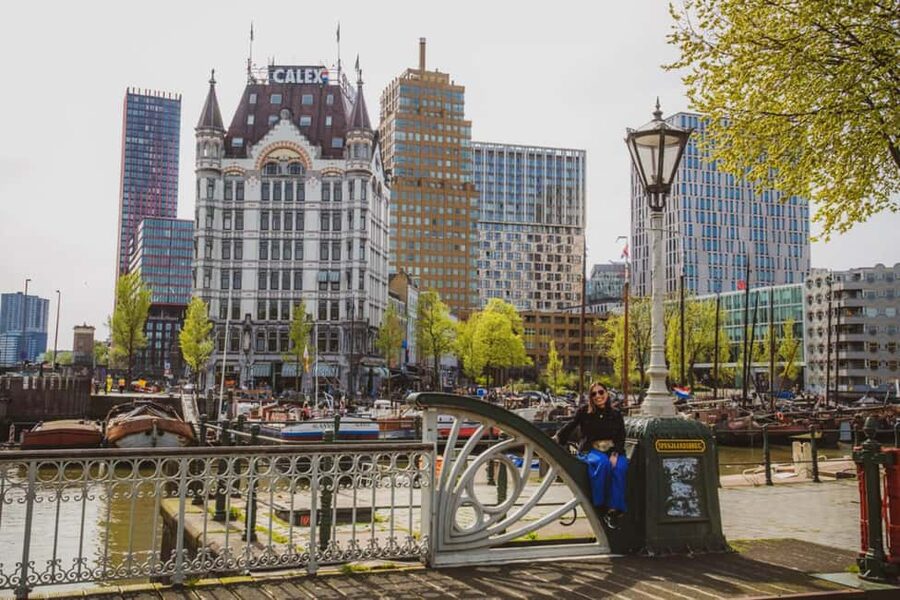
Veerhaven offers a change of pace. The waterfront and surrounding streets help you see traces of Rotterdam’s earlier port life, before the city’s center became known mainly for postwar architecture.
The stop is passed rather than treated as a long visit, so do not expect a sit-down harbor tour. Its value lies in comparison. After seeing modern Rotterdam, you get a glimpse of a more traditional urban setting and a sense of how close the city’s old and new worlds are.
The guide’s personal connection matters here. Stories about growing up in Rotterdam and seeing the city change add detail that a building plaque cannot provide. Yoreh is also willing to answer questions and talk about both the attractive and less successful parts of the city.
More History Walking Tours in the Netherlands
- Amsterdam: Haunted History and Ghost Walking Tour
★ 4.5 · 488 reviews - Amsterdam History Walking Tour
★ 5.0 · 281 reviews - Amsterdam: Highlights & History Walking Tour
★ 4.8 · 266 reviews - Anne Frank and Amsterdam Jewish History Walking Tour
★ 5.0 · 259 reviews
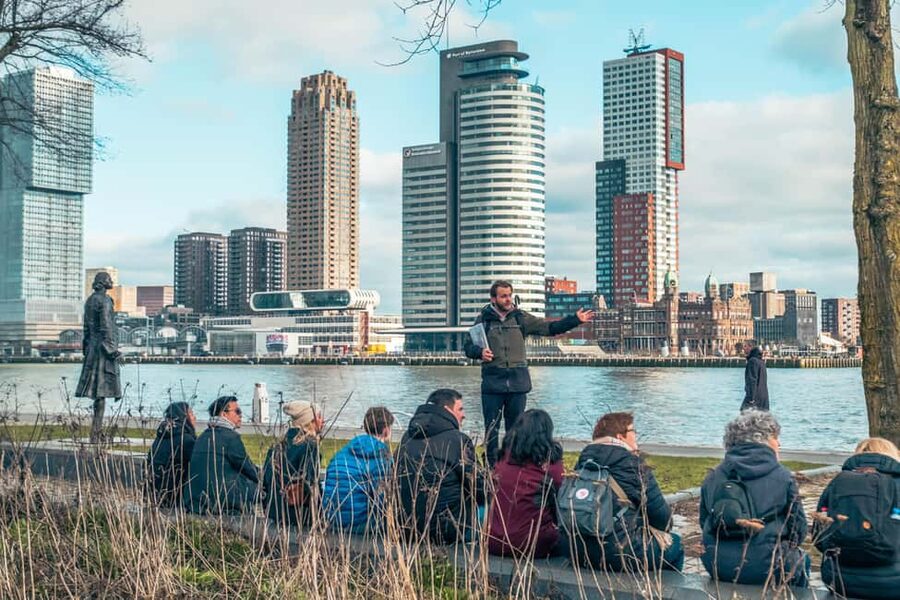
Erasmus Bridge and skyline views
The Erasmus Bridge is one of the tour’s headline sights. Its sweeping design has made it a symbol of Rotterdam, and the bridge gives you a clear view of the city’s modern ambition.
The route passes the bridge rather than crossing it as a dedicated bridge excursion. You should still have opportunities for photographs and skyline views, and the guide offers advice on where to frame the city. If taking pictures is a priority, tell the guide early so you can make the most of the available stops.
This part of the walk is also a good reminder that Rotterdam’s architecture is not just about isolated landmarks. The bridge, towers, water, and open spaces work together to create the city’s image. The guide explains those links using photographs and background material instead of relying on quick facts.
Leuvehaven and the Maritime District

Leuvehaven brings the port story into sharper focus. The area connects Rotterdam’s identity as a working harbor with its current role as a place for public space, museums, offices, and housing.
The Maritime District continues that theme. It is an area where the old harbor structure and new construction sit close together. You can expect explanations about shipping, trade, urban planning, and how Rotterdam has reused waterfront space.
The tour does not treat maritime history as a separate subject from architecture. That is one of its better features. A building’s shape, location, and purpose make more sense once you understand the port economy that powered the city.
There are also places to pause or sit at selected points. Still, most of the time you will be standing while listening, so comfortable shoes and sensible clothing are important.
Oude Haven and the Cube Houses
Oude Haven is one of the most photogenic parts of the route. The historic harbor setting leads naturally toward the Cube Houses, where Rotterdam’s modern design becomes much more playful.
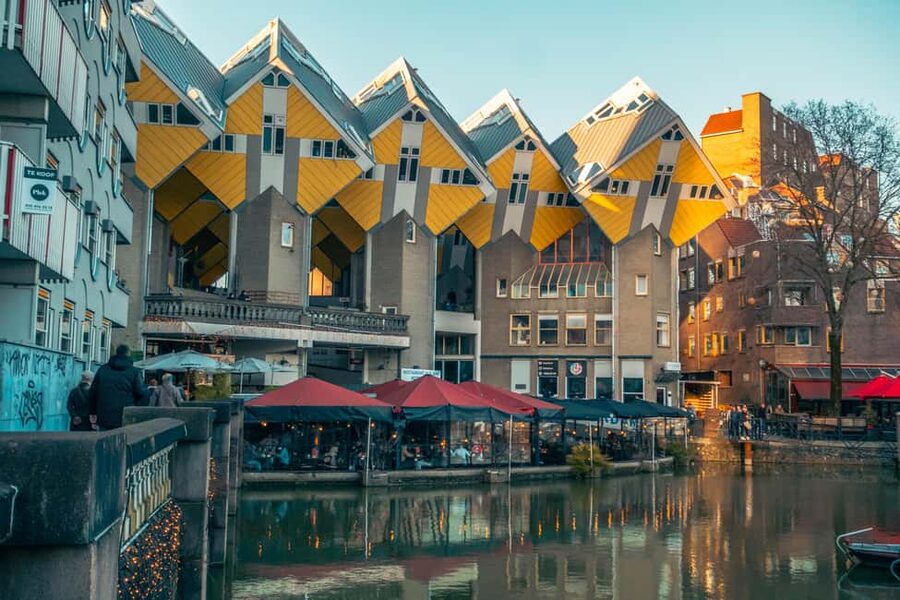
The Cube Houses are tilted, bright, and easy to misunderstand if you see them without context. The guide explains the ideas behind the design and how this unusual housing project fits into the city’s postwar push for experimentation.
You walk through the Cube Houses area at Overblaak. Entering one of the cubes is not part of the guided walk, but a model cube can be visited afterward, about a one-minute walk away. That distinction matters if you specifically want to see the interior. The tour gives you the setting and explanation, while the inside visit is an optional follow-up.
The Overblaak area can be busy, and the unusual angles make it a popular place for photographs. The guide’s advice on viewpoints is useful here, especially if you want more than the standard straight-on picture.
Markthal is the practical finale
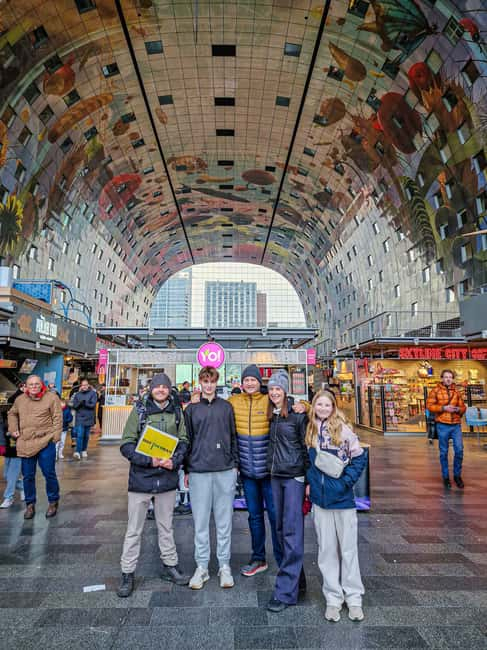
The walk finishes at Markthal, which is both a landmark and a useful place to end. The huge arched building is known for its colorful interior artwork, often compared to a modern Sistine Chapel. You will visit the hall, but the tour is not a full food tasting experience.
Instead, the guide suggests places to eat inside Markthal and helps you decide what to explore next. That is a smart ending after several hours on foot. You can get lunch, coffee, or a snack without needing to find your way across town.
A Dutch treat is provided halfway through the walk. The exact snack can vary, but the experience includes a typical Dutch sweet such as a stroopwafel, and some departures have included an oliebol. It is a small touch, yet useful when you are walking several kilometers.
Markthal also gives you a good chance to continue independently. You can return to the Cube Houses, explore more of the market, or use the guide’s food and museum suggestions to shape the rest of your stay.
The WWII story is handled as a central theme
Many city walks mention World War II briefly. This one gives the bombing and rebuilding of Rotterdam a much larger role.
You hear how the German invasion and bombing changed the city and affected its people. The guide uses historical images to show the contrast between the prewar center and the rebuilt city. That visual comparison makes the scale of the loss easier to grasp.
The tone is not only about destruction. The important question is what Rotterdam chose to do afterward. Rebuilding created opportunities for wider streets, experimental structures, and a new city plan. It also meant that much of the old center was gone, leaving a city with a very different visual character from other Dutch destinations.
If you want only cheerful sightseeing, this section may feel serious. I see that as a strength. You understand the city better when its difficult past is not reduced to a footnote.
Why the guide’s visual material helps
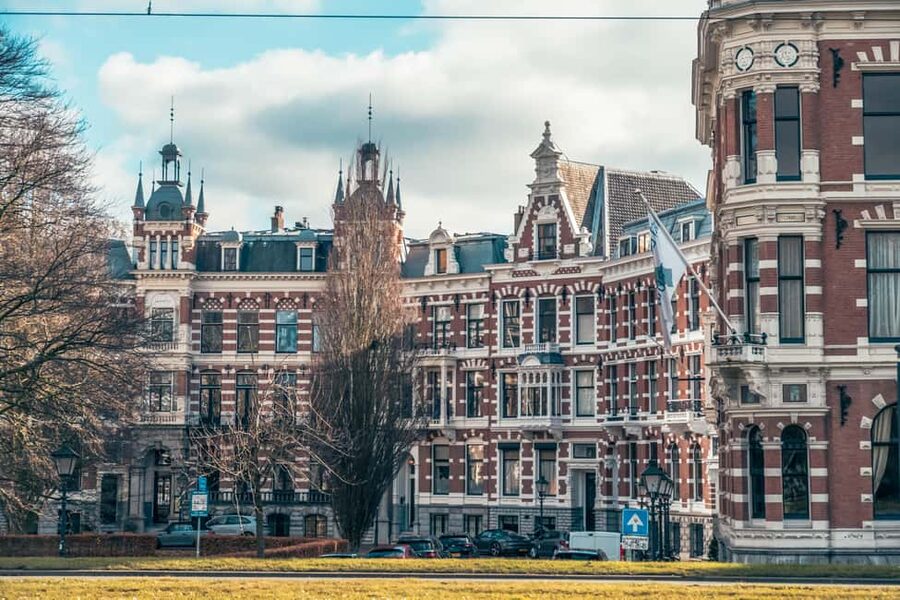
Rotterdam’s architecture can be confusing because much of it looks new, even when it is several decades old. A guide can name a building, but photographs of the earlier city show why it matters.
Yoreh’s visual aids include large photographs, maps, and references to current and planned developments. You might see what stood in an area before the war, what replaced it, and what the city hopes to build next.
That approach also supports different interests. Architecture fans get design and planning. History-minded visitors get a clearer timeline. Families can use the pictures to keep younger walkers involved, and several families found that children stayed interested through the full three hours.
The storytelling is energetic, with humor and personal anecdotes. Yoreh also speaks fluent English, and the tour is offered in Dutch or English.
Pace, comfort, and accessibility
This is a walking tour with real physical demands. You may walk stairs and spend long periods standing. Seating is available at selected locations, and there is a restroom break halfway through.
The route is wheelchair accessible, and stairs or steps can be avoided. An accessible restroom is also available. Even so, the overall distance and standing time may be tiring for anyone with back, hip, or foot problems. The activity is not recommended for highly pregnant participants.
The route can change slightly during city events or extreme weather. The tour may also run a little shorter or longer than planned. Bring weather-appropriate clothing and shoes with reliable support.
A small group makes the pace easier to manage than a large coach tour. The guide can answer questions, take photographs for you, and adapt some explanations to your interests. Solo participants may still be accepted, including during quieter periods, but the meeting point depends on the option you book.
Is $48 a fair price?
At $48 per person, this is not the cheapest way to see Rotterdam. It is also not just a basic landmark walk.
You are paying for a two or three-hour route, a local guide, visual material, a small-group setting, a Dutch snack, and practical suggestions for the rest of your visit. The value is strongest if you want the city explained rather than simply photographed.
A self-guided walk can cover the same general districts for less money. But you would need to research the bombing, port history, architecture, and future plans yourself. You would also miss the guide’s local stories, photo advice, and real-time answers.
I think the price is reasonable for a first day in Rotterdam, especially if you have limited time. The tour can prevent you from spending the rest of your visit seeing disconnected buildings without understanding how they fit together.
Who should book this walk?
I would choose this tour if you are visiting Rotterdam for the first time and want a broad orientation. It is also a strong fit for architecture fans, people interested in WWII history, families with older children, and anyone who likes getting restaurant and museum suggestions from a local.
The three-hour option suits curious visitors who want context and do not mind walking. The two-hour option is better if you want a useful overview with less time on your feet.
I would look elsewhere if you want museum interiors, a slow photo walk, a food tasting tour, or a route with very little standing. This experience is broad, active, and story-led.
FAQ
Where does the Rotterdam walking tour begin?
The meeting point depends on the option you book. The listed starting location is connected with the Vaimoo shared-bike station on Melkkoppad, but you should check your confirmed meeting details.
Where does the tour finish?
The tour finishes inside Rotterdam’s Markthal, also called Market Hall.
How long does the walk take?
You can choose a two-hour or three-hour tour. The longer route offers more detailed stories and reaches further into the city’s history, architecture, and future plans.
How far do you walk?
The tour covers about 5 kilometers and approximately 11,000 steps.
Is the tour offered in English?
Yes. The live tour is available in English or Dutch.
Is the route wheelchair accessible?
Yes. The route is wheelchair accessible, and stairs or steps can be avoided. An accessible restroom is available.
Are there restroom and sitting breaks?
Yes. There is a restroom break around the halfway point, and seating is available at selected locations when conditions allow.
Is food included?
A typical Dutch snack, such as a stroopwafel, is provided during the walk. The guide also gives suggestions for food inside Markthal, but a full meal is not included.
Can I cancel or pay later?
You can cancel up to 24 hours in advance for a full refund. Reserve-now, pay-later booking is available, subject to the booking terms.
Should you book it?
Book this walk if you want Rotterdam to make sense. The strongest parts are the WWII explanation, the clear connection between old harbor districts and new architecture, and Yoreh’s use of visual material to show how the city changed.
Choose the three-hour option if you have the energy and want the fullest picture. Pick two hours if you mainly need orientation. Either way, wear good shoes, keep some room in your schedule after Markthal, and arrive ready to see Rotterdam as a city shaped by loss, invention, and constant change.
New routes in the Netherlands
- Small Group Walking Tour in Amsterdam with Friendly and Fun Guide★ 5.0 · 281 reviews
- Humans of Amsterdam: Cultural Walking Tour incl. meeting 2 locals★ 5.0 · 320 reviews
- Private Tour: Amsterdam City Walking Tour and Canal Cruise★ 4.5 · 142 reviews
- Amsterdam: Private Introduction Walking Tour (TOP RATED)★ 5.0 · 223 reviews
- Amsterdam: Anne Frank and World War II Walking Tour (TOP RATED)★ 4.5 · 72 reviews
- Anne Frank and Jewish Quarter Amsterdam Private Walking Tour★ 5.0 · 684 reviews
- Secrets of Amsterdam Walking Tour plus Dutch Sweets Tasting★ 5.0 · 111 reviews
- Amsterdam Private Historical Walking Tour★ 5.0 · 75 reviews
Netherlands Walking Tours, compared.

Amsterdam Anne Frank: Small-Group Walking Tour & Local Guide
Read our review →
Absolutely Amsterdam – the Essential Introductory Walking Tour
Read our review →
Anne Frank Guided Walking Tour in DE/EN/IT/ES
Read our review →

Anne Frank Walking Tour Amsterdam Including Jewish Cultural Quarter
Read our review →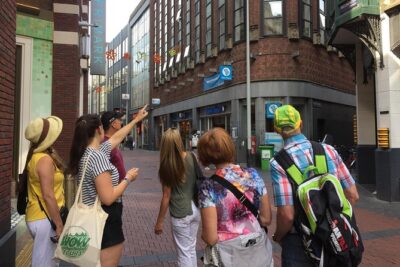
Amsterdam Highlights Walking Tour: Small Group Experience
Read our review →