
Review · AMSTERDAM
Amsterdam History Walking Tour
Amsterdam’s story unfolds in a compact two-hour walk, from the city’s early beginnings near Dam Square to the crooked canal houses beside the Amstel. I like the way this tour mixes major sights with less obvious corners, especially Oude Nieuwstraat, known here as the other Red Light District, and the old prison story at Kalverpassage.
I also like the small group limit of 10 people, which should make it easier to hear the guide and ask questions. Samuel is praised for his clear storytelling, humor, and ability to explain both Dutch culture and history. The main thing to consider is that this is an outside walking tour: entry to the Anne Frank House and Amsterdam Gallery is not included, and poor weather can affect the schedule.
Key points at a glance

- A compact route through central Amsterdam: Ten stops connect the city’s founding, canals, Golden Age, social freedoms, and architecture.
- Samuel may be your guide: He is described as welcoming, energetic, and especially good at answering questions.
- Small-group format: The maximum group size is 10 people, a useful advantage on narrow streets and busy squares.
- No attraction admissions included: The Anne Frank House and Amsterdam Gallery are viewed from the route, but tickets are separate.
- A strong value at $6.05: The low price covers the tour and fees, while tips are not included.
- A finish beside the Dancing Houses: The route ends at one of Amsterdam’s most photographed canal views.
Starting at Kattengat with Amsterdam’s first chapter
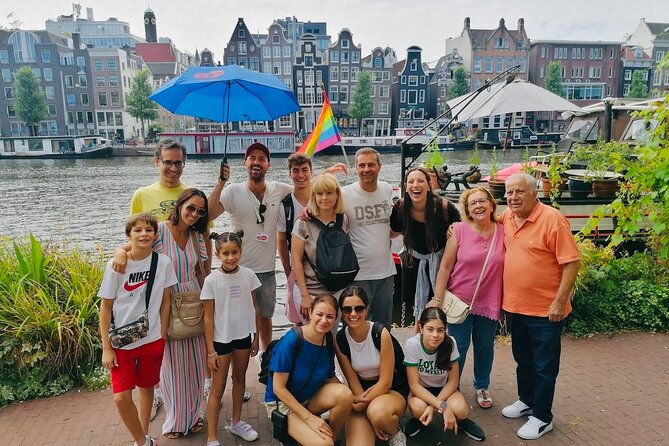
The tour begins at the New Church on Dam Square, then moves to Kattengat for an introduction to Amsterdam’s founding and its first years. This is a sensible opening because you get the basic map of the city before the walk becomes a string of landmarks.
At this point, pay attention to how the guide explains Amsterdam as a place that grew from water, trade, and practical engineering. You are not simply looking at old buildings. You are learning why this particular city developed where it did and how its early identity shaped the streets around you.
The first stop lasts about 10 minutes, with no admission charge. Since the walk starts near the New Church and Dam Square, arrive with your mobile ticket ready and allow enough time to find the meeting point. The supplied address is listed as The New Church, De Dam, 1012 NP Amsterdam.
More History Walking Tours in Amsterdam
- Amsterdam: Haunted History and Ghost Walking Tour
★ 4.5 · 488 reviews - Amsterdam: Highlights & History Walking Tour
★ 4.8 · 266 reviews - Anne Frank and Amsterdam Jewish History Walking Tour
★ 5.0 · 259 reviews
Oude Nieuwstraat and the city’s lesser-known red-light story
From Kattengat, the route continues to Oude Nieuwstraat. The street is presented as one of Amsterdam’s more beautiful and less familiar lanes, with a connection to what is called the other Red Light District.
This stop gives the tour a useful change of pace. Amsterdam’s red-light history is often reduced to a few famous windows and neon signs, but a walking guide can put the subject into the setting of the old city. You can expect about 10 minutes here, with the story focused on the street and its place in Amsterdam’s social history.
I like this stop for another reason: it helps you look beyond the postcard version of Amsterdam. The city’s identity includes commerce, religion, private life, and changing public attitudes. A good guide can connect those subjects without turning the discussion into a simple list of scandalous facts. Samuel’s strength, according to the available feedback, is his ability to keep the tone lively while taking questions on many topics.
Leliegracht and the Dutch Golden Age
The next stop is Leliegracht, one of the canal settings used to explain the Dutch Golden Age. This was the period when Amsterdam became a major world power through trade, shipping, finance, and business.
You will spend around 10 minutes here. That may sound brief, but the canal itself gives the guide a useful visual setting. As you walk, look at the relationship between water, houses, and commerce. The canal belt is not just a pretty backdrop. It reflects the city’s growth and the wealth created during its strongest trading period.
This is also where a guide can help you understand the difference between seeing Amsterdam and reading it. Crooked facades, narrow plots, and long canal houses make more sense once you connect them to land prices, trade, and urban growth. The tour does not promise an interior visit or a museum stop, so its value here comes from explanation rather than admission.
Anne Frank House from the outside
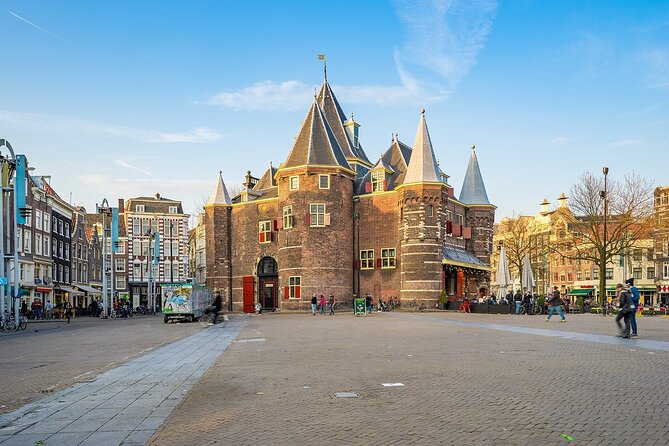
The route then reaches the Anne Frank House, one of Amsterdam’s best-known places. The stop lasts about 10 minutes, and admission is not included.
That distinction matters. This walking tour does not replace a visit inside the Anne Frank House, and you should not treat the stop as an entry reservation. Instead, the guide places the building within the wider history of Amsterdam and the Second World War. The outside view gives you a point of reference, while the guide supplies context.
If you want to visit the museum, you need a separate ticket. The tour information does not include admission arrangements, so handle that independently before or after the walk. Even without entering, the stop can be meaningful because the guide can connect the building to the surrounding city and its wartime past.
The 10-minute limit also keeps expectations in check. This is an overview, not an extended discussion or museum visit. I see that as reasonable in a tour covering ten locations, but it means you should plan a separate visit if Anne Frank House is one of your main priorities.
More History Walking Tours in the Netherlands
- Amsterdam: Ghost Walking Tour and Dark History
★ 4.8 · 118 reviews - Amsterdam: Iconic Canals & Historic Sights Walking Tour
★ 4.5 · 90 reviews - Amsterdam: Anna Frank and World War II History Walking Tour
★ 4.8 · 86 reviews - Amsterdam Private Historical Walking Tour
★ 5.0 · 75 reviews
Dam Square, the heart of the route
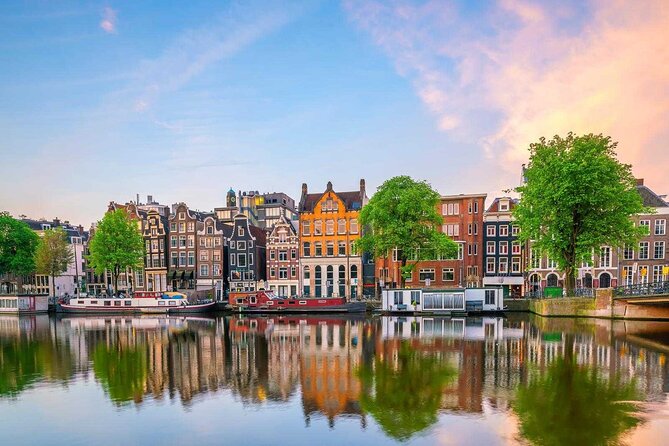
Dam Square is the next major stop. It is described as the central square and heart of Amsterdam, and the tour uses it to pull together the city’s political, civic, and public story.
Because the walk begins near the New Church, you may encounter Dam Square early and then return to its history as the route develops. This kind of repeated location can help you get oriented. Instead of treating the square as a single photo stop, you can see it as a place where different parts of Amsterdam meet.
The stop is free and lasts around 10 minutes. You will not need an attraction ticket for the square itself. The main practical issue is noise and foot traffic. A group of up to 10 is helpful here, but you still need to stay close to the guide and keep an ear out for directions.
Amsterdam Gallery and the story behind the plates

The walk heads south to Amsterdam Gallery, where the guide explains the origin of the decorative plates seen on many facades. Admission is not included.
This is one of the more specific subjects on the route, and it should appeal if you like details that change the way you read a city. Amsterdam’s buildings can seem decorative at first glance, but small signs, plaques, and facade details often carry clues about past owners, trades, or customs. The stop invites you to look upward and examine the buildings instead of simply photographing them.
Because the tour does not include entry, treat this as an exterior explanation unless the guide says otherwise. The supplied information does not identify an included indoor visit, so do not budget time or money for one as part of the experience.
Spui and Amsterdam’s reputation for freedom
From there, you walk through central streets to Spui. This square is linked to the freedoms for which Amsterdam is known, including the social and religious ideas that shaped the city’s reputation.
This is a useful part of the route because it can prevent a shallow view of Amsterdam as only canals, bicycles, and nightlife. The city’s public image grew from policies, conflicts, compromises, and changing ideas about personal life. Spui provides a place to discuss those themes in the middle of the historic center.
The guide’s style matters most here. Samuel is described as open to questions and comfortable moving between historical and cultural subjects. If that is the kind of tour leader you want, this stop should feel more like a conversation than a memorized speech. Still, the walk has a fixed schedule, so ask your questions while the group is gathered rather than expecting a long pause at every location.
Kalverpassage and Amsterdam’s prison history

Kalverpassage brings a darker subject into the walk. The route enters an old prison setting and explores the light and dark sides of the Dutch prison system and organized crime.
This stop broadens the tour beyond royal buildings and famous canals. Amsterdam’s past includes lawbreaking, punishment, and the difficult balance between tolerance and control. The prison setting gives that discussion a physical anchor, even if the stop itself is fairly short.
The information describes admission here as free, so no ticket is needed. You can expect about 10 minutes. The wording does not promise a full prison tour or an extended indoor visit, so keep your expectations modest. The value is in the guide’s interpretation and the contrast with the city’s more polished public image.
Bloemenmarkt, tulip fever, and marijuana
At Bloemenmarkt, the discussion turns to two subjects closely linked with Amsterdam’s modern reputation: tulips and marijuana. The guide covers tulip fever, the period when tulip bulbs became objects of intense speculation, along with the city’s famous cannabis culture.
This is a lively pairing because it connects commerce, fashion, risk, and changing social rules. Tulip fever is not simply a flower story. It shows how desire and speculation can shape markets and public imagination. The marijuana discussion adds a more recent cultural layer, giving you a chance to consider how Amsterdam’s approach to certain activities differs from that of many other places.
Bloemenmarkt is a famous stop, so expect a busy setting. The walking tour does not include purchases, tastings, or a separate attraction ticket. You are there for the explanation and the view. Keep personal shopping separate from the group schedule unless the guide allows time.
The Dancing Houses and Amsterdam’s crooked architecture
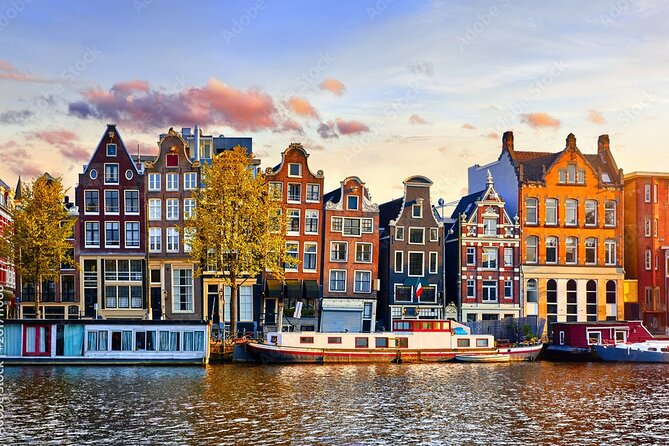
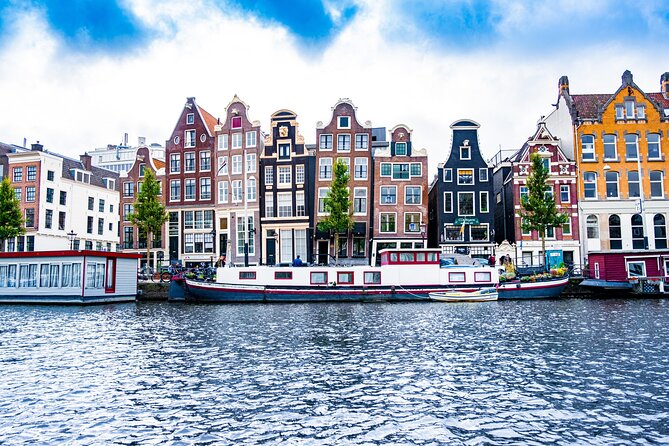
The final stop is the Dancing Houses on Amstel 102II, 1017 AD Amsterdam. These sloping buildings provide the route’s closing image and a natural place to explain Amsterdam’s distinctive architecture.
The guide discusses why the houses lean and why the country’s old buildings can look so picturesque. This is more useful than simply calling them crooked. Once you understand that Amsterdam’s narrow historic houses and structural changes can affect their appearance, the view becomes a bit more legible.
The tour ends here, in front of one of the city’s most photographed scenes. That is a practical finish because you can continue exploring from the Amstel or use the location as a clear reference point. The tour does not return to the New Church, so plan your next move from the end point rather than assuming a loop.
Why the $6.05 price offers strong value
At $6.05 per person, this is an inexpensive way to get an organized introduction to central Amsterdam. The price includes all fees and taxes, while a tip is not included.
The value depends on what you want. If you need museum entry, a long stop at the Anne Frank House, or a specialized architectural tour, this will not cover everything. But if you want a guided orientation before exploring alone, the price is appealing. You get roughly two hours, ten planned stops, and a route that links major sights with less obvious subjects.
A tip should be budgeted separately if you feel the guide has earned one. Since the listed cost is low, the customary tip may become a meaningful part of the guide’s compensation. The experience is also offered in English and uses a mobile ticket, which keeps the basic arrangement simple.
Small groups, timing, and practical limits
The maximum group size is 10 people. That is one of the strongest practical features because Amsterdam’s historic streets can be narrow, and a small group is easier to keep together. You should also have more room to ask questions than you would on a large coach-style tour.
The stated duration is approximately two hours. Ten stops are each allocated about 10 minutes, which accounts for most of that time before walking between locations. Expect a steady introduction rather than a slow, detailed examination of each site.
The activity is near public transportation, and most people can participate. Service animals are allowed. No special mobility information beyond that is provided, so if you have specific access needs, confirm them before booking rather than assuming every street or stop will suit you.
The tour requires good weather and a minimum number of participants. If bad weather cancels it, you are offered another date or a full refund. The same applies if the minimum group size is not reached. You can cancel for a full refund up to 24 hours before the start time. Changes or cancellations made less than 24 hours ahead are not accepted for a refund.
Who will get the most from this walk
I would choose this tour for a first visit to Amsterdam, especially if you want the city’s main historical themes in one short outing. It suits people who like stories about culture, architecture, religion, crime, public freedom, and daily life rather than a route focused only on famous buildings.
It also fits a short stay. The route gives you a useful map of central Amsterdam and leaves you with several places to revisit independently. The small group and English presentation make it a practical choice for visitors who want questions answered along the way.
You may want something else if you dislike walking, need extensive time at individual sites, or mainly want museum access. The Anne Frank House and Amsterdam Gallery are not included, and the stop at each attraction is brief. This is an orientation walk with historical interpretation, not a series of interior visits.
Should you book the Amsterdam History Walking Tour?
Book it if you want a low-cost, compact introduction to Amsterdam that goes beyond the usual canal photographs. The route covers the city’s beginnings, Golden Age, wartime memory, social freedoms, prison history, tulip speculation, marijuana culture, and crooked architecture in one manageable walk.
The strongest reasons to choose it are the $6.05 price, the 10-person limit, and the guide style associated with Samuel: friendly, energetic, clear, and willing to answer questions. Just remember that tips and attraction admissions are separate, the route depends on good weather, and two hours only allows a brief look at each stop.
If you want a first layer of understanding before exploring Amsterdam on your own, this is a sensible booking. If you want a full Anne Frank House visit or detailed time inside historic buildings, pair it with separate admissions rather than expecting this walk to provide them.
FAQ
How long does the Amsterdam History Walking Tour last?
The tour lasts approximately two hours.
How much does the tour cost?
The listed price is $6.05 per person. All fees and taxes are included.
Is the tour offered in English?
Yes. The tour is offered in English.
Where does the tour begin?
It begins at the New Church on Dam Square, 1012 NP Amsterdam, Netherlands.
Where does the tour end?
The tour ends at the Dancing Houses on Amstel 102II, 1017 AD Amsterdam, Netherlands.
Is the Anne Frank House admission included?
No. Admission to the Anne Frank House is not included.
Is Amsterdam Gallery admission included?
No. Admission to Amsterdam Gallery is not included.
How many people can join the tour?
The maximum group size is 10 people.
Is a tip included in the price?
No. A tip is not included.
Can I cancel for a full refund?
Yes. You can cancel at least 24 hours before the start time for a full refund. Cancellations made less than 24 hours before the start time are not refunded.
New routes in Amsterdam
- Small Group Walking Tour in Amsterdam with Friendly and Fun Guide★ 5.0 · 281 reviews
- Humans of Amsterdam: Cultural Walking Tour incl. meeting 2 locals★ 5.0 · 320 reviews
- Private Tour: Amsterdam City Walking Tour and Canal Cruise★ 4.5 · 142 reviews
- Amsterdam: Private Introduction Walking Tour (TOP RATED)★ 5.0 · 223 reviews
- Amsterdam: Anne Frank and World War II Walking Tour (TOP RATED)★ 4.5 · 72 reviews
- Anne Frank and Jewish Quarter Amsterdam Private Walking Tour★ 5.0 · 684 reviews
- Secrets of Amsterdam Walking Tour plus Dutch Sweets Tasting★ 5.0 · 111 reviews
- Amsterdam Private Historical Walking Tour★ 5.0 · 75 reviews
Amsterdam Walking Tours, compared.

Amsterdam Anne Frank: Small-Group Walking Tour & Local Guide
Read our review →
Absolutely Amsterdam – the Essential Introductory Walking Tour
Read our review →
Anne Frank Guided Walking Tour in DE/EN/IT/ES
Read our review →

Anne Frank Walking Tour Amsterdam Including Jewish Cultural Quarter
Read our review →
Amsterdam Highlights Walking Tour: Small Group Experience
Read our review →
Anne Frank’s Last Walk & See Anne Frank House in Virtual Reality
Read our review →Browse the lists this tour appears in