
Review · 2-HOUR EXPERIENCES
Riga: 2-Hour History of Art Nouveau Walking Tour
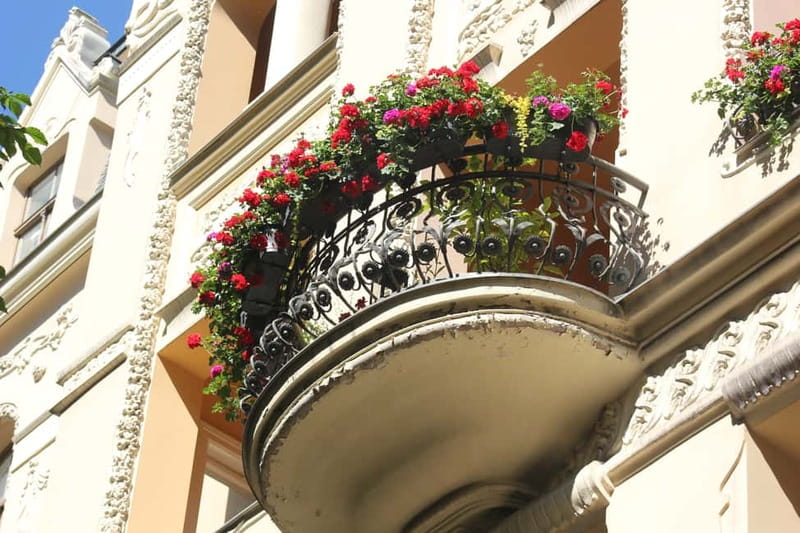
Riga’s Art Nouveau district is one of Europe’s great city walks, but its best details sit high above street level. This two-hour tour helps you read the faces, masks, curves, and national romantic touches on the buildings instead of simply photographing them.
I like the route from Town Hall Square to Alberta Street, since it gives you a useful introduction to central Riga before reaching the city’s celebrated Art Nouveau quarter. I also like the focus on Mikhail Eisenstein, a gifted and controversial architect whose highly decorative buildings make the tour feel like more than a general sightseeing walk.
The main consideration is pace and audience. Two hours is enough for a strong introduction, but not for every important building in Riga. Children over six pay the full adult price, and one family found younger children losing interest near the end.
Key points at a glance
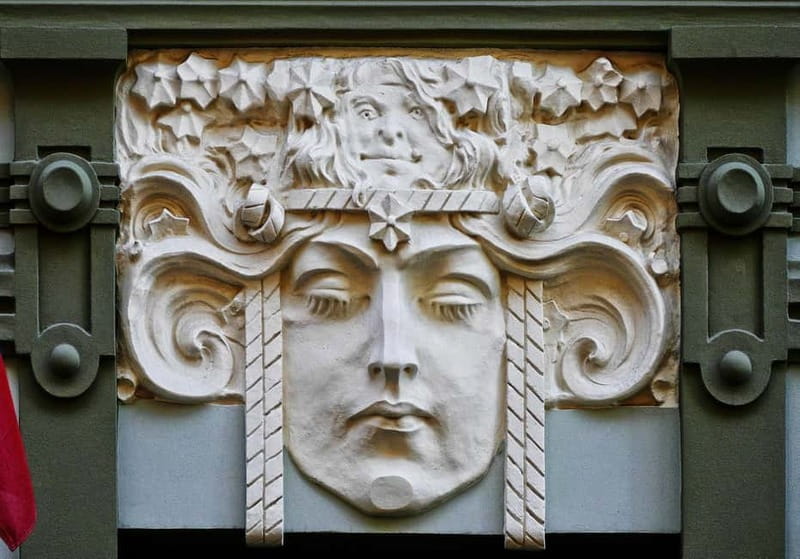
- Mikhail Eisenstein’s Riga: Learn about the architect behind some of the city’s most theatrical façades and his life in an important port of the Russian Empire.
- A walk from the Old Town: Begin at the House of the Black Heads, then cross central Riga on foot toward the Art Nouveau district.
- Alberta Street focus: See one of Riga’s best-known streets for Art Nouveau architecture and study its ornament from street level.
- More than decoration: Compare highly ornate façades with quieter national romantic designs built around Art Nouveau ideas of beauty and function.
- Small-group feel when numbers are low: A group can be under 10 people, though the minimum required to run the tour is three.
- Useful local guidance: Guides such as Tatiana, Gunta, Caspars, Liga, and Nelli have been praised for clear explanations, patience, and practical recommendations.
Why Riga is such a good city for Art Nouveau
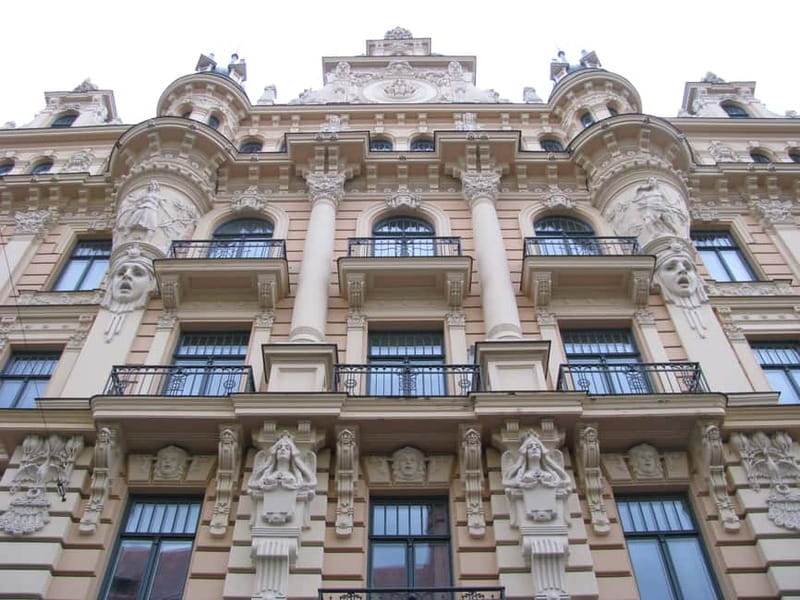
Riga gives you an unusual chance to see Art Nouveau not as a single style, but as a collection of competing ideas. Some buildings are loaded with sculpted faces, geometric patterns, and theatrical decoration. Others take a more restrained approach, using local materials and national romantic themes.
That variety makes this walk worthwhile. If you simply stroll through the district on your own, you can admire the façades, but you may miss the argument taking place between them. Why is one building so ornate while the next feels almost severe? What does a mythical figure on a façade represent? How did Latvian, German, Russian, and Jewish architects leave different marks on the same city?
The guide’s job is to connect those details to Riga’s past. The tour presents Art Nouveau as an early twentieth-century idea about modern life, not just a decorative shell. Buildings were meant to be attractive and useful. During the walk, you can decide for yourself how well each design meets that goal.
That question gives the experience a little more bite than a standard architecture tour. You are not only looking at pretty buildings. You are considering how their decoration, layout, and cultural references fit together.
More History Walking Tours in the world:
- History and Hauntings of Salem Guided Walking Tour
★ 5.0 · 14,564 reviews - Lisbon: History, Stories and Lifestyle Walking Tour
★ 4.8 · 10,902 reviews - Boston: Freedom Trail History Small Group Walking Tour
★ 5.0 · 6,450 reviews
Starting at the House of the Black Heads
The meeting point is the Smile Line office inside the House of the Black Heads at Town Hall Square, 7. This puts you in the center of Riga, in a part of the city already filled with major historic buildings.
The route begins in the Old Town before heading toward the Art Nouveau quarter. That is a smart setup. You do not begin with a sudden burst of façades and architectural terms. Instead, you get your bearings in central Riga and then walk into a different part of the city with a clearer sense of place.
The House of the Black Heads is also an easy landmark to locate. Check the exact starting time when booking, and arrive with comfortable shoes. The tour lasts two hours and is entirely on foot.
There are no entry tickets included because the focus is on the streets and exterior architecture. You should not expect an indoor museum visit or a building-by-building interior tour. The value is in having a guide point out details you could easily overlook from the pavement.
Walking from the Old Town to the Art Nouveau district
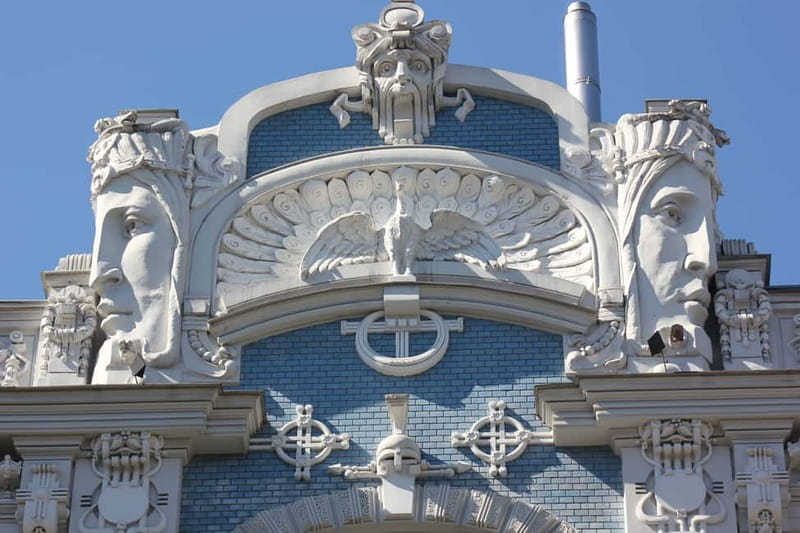
The walk between the Old Town and the Art Nouveau area gives the tour a useful sense of progression. Riga’s architecture changes as you move through the city, and the guide can place the Art Nouveau buildings in a broader urban setting.
You will hear about Riga when it was a major port city in the Russian Empire. That context matters because the city’s architecture reflects contact between different communities and traditions. Latvian, German, Russian, and Jewish architects all contributed to Riga’s built character.
The tour does not treat those architects as one blended group. Their backgrounds and design choices helped shape different expressions of Art Nouveau. You may see buildings that favor international decoration, alongside façades that bring in national romantic ideas and local identity.
This part of the walk is also where a local guide can save you time. Riga is easy to explore on foot, but the most interesting clues are often small: a figure above a doorway, a repeated plant form, an unusual window frame, or a pattern that signals a particular design approach.
Several guides have led this experience, including Tatiana, Gunta, Caspars, Liga, and Nelli. The strongest praise has centered on their clear explanations, friendly manner, and willingness to answer questions. Tatiana, in particular, has been described as engaging and patient, while Caspars was praised for being well organized and attentive to architectural detail.
Alberta Street and the great façade lesson
Alberta Street is the main event. It is one of the best-known places in Riga to examine Art Nouveau buildings close together, making it easier to compare styles without spending half the day crossing town.
Here, look up. The most important details are often several floors above your head. A guide can direct your attention to the parts that give each façade its personality, from ornamental figures to lines, shapes, and decorative motifs.
Mikhail Eisenstein is central to the story. He is presented as both talented and controversial, which makes him more interesting than a simple list of successful local architects. You will learn about his work and about his life in Riga during a period when the city was a major commercial and cultural center.
Eisenstein’s buildings are especially useful for understanding the decorative side of Art Nouveau. Their façades can feel theatrical and intellectual at the same time. They invite photographs, but the guide adds the explanation that turns a striking image into an architectural lesson.
Do not expect every building on Alberta Street to look alike. That is part of the pleasure. Some designs are highly decorated, while others use a quieter visual language. The comparison helps you see that Art Nouveau was not one fixed formula.
The tour also discusses national romanticism. This branch of the style brings national identity into architecture, creating designs that feel less like imported fashion and more connected to place. You will not just be shown where the buildings are. You will be shown how to tell one approach from another.
More Two-Hour Walks in the world:
- Berlin’s Best: 2 Hour Walking Tour Third Reich and the Cold War
★ 5.0 · 5,486 reviews - Budapest City Landmarks Walking Tour in 2 Hours
★ 5.0 · 2,048 reviews - Leipzig: 2-Hour Guided Walking Tour in German
★ 4.8 · 1,612 reviews - Lucca: 2-Hour City Center Walking Tour
★ 4.7 · 1,314 reviews
From decoration to function
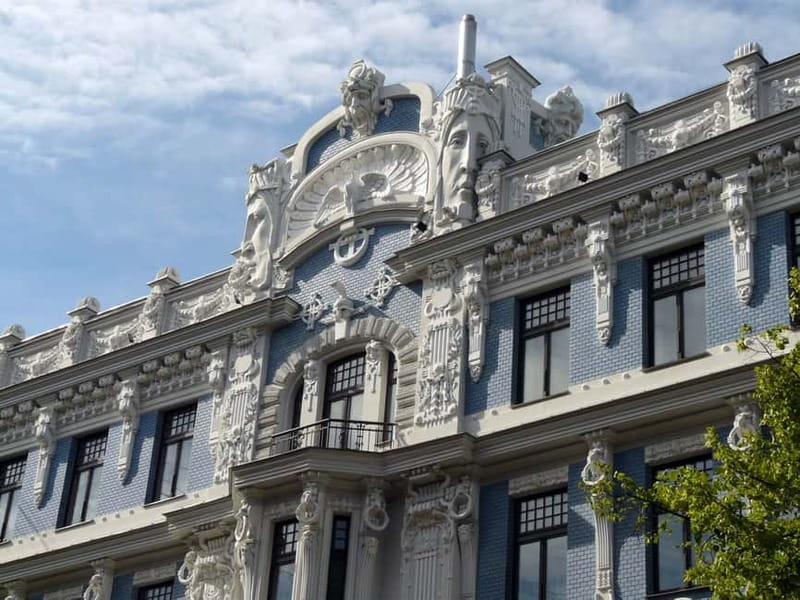
The central idea of the experience is that Art Nouveau buildings were intended to be beautiful and functional. That sounds obvious today, but the façades make the tension clear.
A building can be covered in decoration yet still have practical purposes behind its windows, entrances, and structure. On the other hand, a design can be visually impressive while raising questions about how its dramatic exterior serves the people inside.
This gives you a useful way to look at the district after the tour ends. Rather than asking only if you like a building, you can ask what its design is doing. Does the ornament frame the windows? Does it emphasize the entrance? Does it express status, identity, or modernity? Does the decoration help the building work, or simply make it memorable?
That is where the guide adds the most value. Several people have praised the ability of the guides to explain the buildings in a way that changes how they look at architecture. You may leave seeing façades less as background scenery and more as deliberate public statements.
The guides and the small-group experience
The tour is offered in English and German. Other languages, including Swedish, Norwegian, Polish, Spanish, Portuguese, French, Italian, and Japanese, may be available on request. You should arrange that before relying on a language not listed as standard.
The group requires at least three participants to run. If too few people book, you can receive a full refund or choose to upgrade to a private tour. When the group does operate, it may be quite small. One group had fewer than 10 people, which made it easier to ask questions and stay close to the guide.
That smaller format suits this subject. Architecture tours work best when you can pause in front of a façade without blocking a large crowd. It also gives the guide more room to answer questions about particular buildings or architectural terms.
The guide may use an audio system. One person specifically valued being able to hear the explanation while walking and looking at the buildings. That can be useful in central Riga, where street noise or a spread-out group might otherwise make it hard to catch every sentence.
The quality of the experience will still depend on the guide assigned that day. The different guides named in the feedback have all been praised for strong subject knowledge, clear English, and a personable style. You cannot choose a particular guide from the information available, but the repeated strength of the guide comments is a good sign.
Is two hours enough?
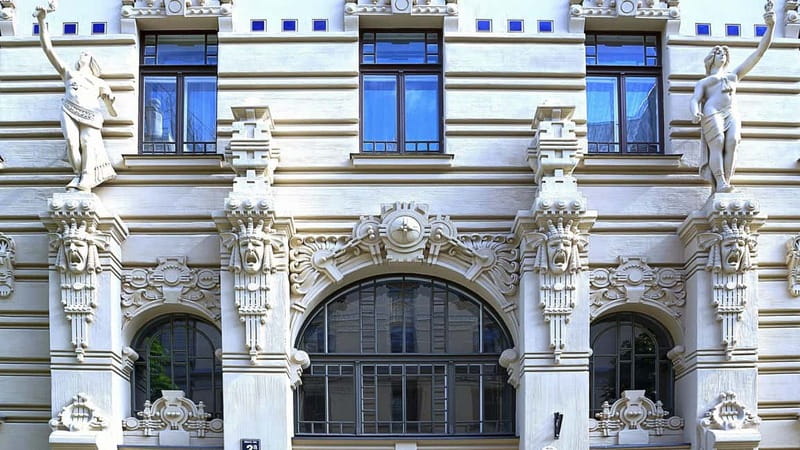
Two hours is a sensible length for a first look. It is long enough to move from the Old Town to the Art Nouveau district, cover major examples, and explain the main styles without turning the outing into a full-day architecture seminar.
The limitation is simple: Riga has more Art Nouveau buildings than you can cover in one short walk. If you already have a strong interest in architecture, you may want to continue exploring after the tour. The experience works best as a foundation, helping you know what to notice when you return to the district independently.
The easy walking pace is another plus. One person specifically described the tour as relaxed, and the route is suitable for those who prefer steady sightseeing rather than a rushed march. Still, you should wear comfortable shoes. This is a walking tour with no transport break.
The activity is wheelchair accessible, though route changes can sometimes occur. If you have specific mobility needs, confirm the current route before booking, especially since city streets and access conditions can change.
Who will enjoy this tour most?
This is a strong choice if you like architecture, city history, photography, or guided walks that explain what you are seeing. It is also useful if you are visiting Riga for the first time and want a safe, structured way to reach the Art Nouveau district from the city center.
Solo visitors can benefit from the group setting. One solo participant appreciated having a local guide rather than exploring an unfamiliar city alone. The route gives you company and direction without requiring a full private tour.
The experience also suits couples and small groups who want more than a quick photo stop. If your idea of a good city walk includes stories, cultural context, and time to inspect façades, two hours is well spent.
Families should think about the age of the children. Children under six can join free, but older children pay the full price. The subject may appeal to teenagers who enjoy design or history, but younger children could find two hours of looking upward and listening a little long.
You should also know what this is not. It is not an interior tour, a general food walk, or a broad survey of every major Riga sight. It is a focused architectural walk with history attached.
Is $39 a fair price?
At $39 per person, the tour costs more than wandering Alberta Street with a guidebook or map. The question is what you want from your time in Riga.
The price is fair if you value interpretation. You are paying for two hours with a local guide who can explain the architects, cultural background, and design ideas behind the façades. The route also saves you from researching the district before you arrive.
The value is stronger when the group stays small. A compact group makes it easier to hear the guide, ask questions, and stop at the best viewing points. The tour does not include entry tickets, but that is less important here because the main attraction is the architecture visible from the street.
If you are mainly interested in taking photographs and do not want historical explanation, you may prefer to explore independently. If you want to understand why Riga’s buildings look the way they do, the fee buys a useful layer of meaning.
The high overall rating and repeated praise for the guides support the price, but I would still book it early in your Riga stay. That way, the architectural vocabulary and local recommendations can improve the rest of your sightseeing.
Practical details before you book
Book with comfortable walking shoes and allow enough time to reach the Smile Line office inside the House of the Black Heads. The meeting point is at Town Hall Square, 7.
The tour is available in English and German. Other languages can be requested, but they are not guaranteed as regular departures. Check availability for the starting time that suits your schedule.
You can cancel up to 24 hours before the tour for a full refund. You can also reserve now and pay later, which helps if your Riga plans are still changing.
The tour requires at least three participants. If that minimum is not reached, the activity may be cancelled with a full refund, or you can choose a private-tour upgrade.
Route changes are possible. The tour is wheelchair accessible, but you should confirm any current route details if accessibility is essential to your plans.
Should you book the Riga Art Nouveau walk?
Book it if you want to understand Riga’s famous façades rather than simply see them. The combination of Old Town streets, Alberta Street, Mikhail Eisenstein, national romanticism, and several architectural traditions gives you a clear introduction in two hours.
I would especially recommend it early in your visit. The guide’s explanations can change how you look at the rest of Riga, and the local tips may help with your next café or shop stop.
Skip it only if you prefer to explore at your own pace, have little interest in architecture, or are traveling with young children who may tire of a long walking explanation. For most adults, couples, solo visitors, and older children, $39 is a reasonable price for a focused walk led by a strong local guide.
FAQ
Where does the tour meet?
Meet your guide at the Smile Line office inside the House of the Black Heads, Town Hall Square, 7, in central Riga.
How long does the tour last?
The walking tour lasts two hours.
What language is the tour offered in?
Regular tour languages are English and German. Swedish, Norwegian, Polish, Spanish, Portuguese, French, Italian, and Japanese may be available upon request.
Is the tour wheelchair accessible?
Yes, the activity is listed as wheelchair accessible. Some routes may change, so confirm the current route if you have specific access requirements.
Are children allowed to join?
Yes. Children under six can join excursions for free. Children over six are charged the full price.
Is the tour private?
No. It is a group tour with a minimum of three participants. If too few people book, you may receive a full refund or choose to upgrade to a private tour.
Can I cancel for a refund?
Yes. You can cancel up to 24 hours in advance for a full refund. You can also reserve now and pay later.
New routes in the world
- Baltimore Walking Foodie Tour in Fells Point★ 5.0 · 182 reviews
- Baku Oil Heritage & Old Town Walking Tour★ 5.0 · 232 reviews
- Baku Walking Tour (Old City)★ 5.0 · 127 reviews
- The Madam’s Curse Walking Ghost Tour★ 4.5 · 103 reviews
- Austin Small Group Morning Walk★ 5.0 · 412 reviews
- Austin Haunted Pub Crawl Walking Tour★ 4.5 · 232 reviews
- Austin Downtown Private Walking Food Tour With Secret Food Tours★ 5.0 · 71 reviews
- Austin Murder Walk★ 5.0 · 310 reviews
2-Hour Experiences, compared.
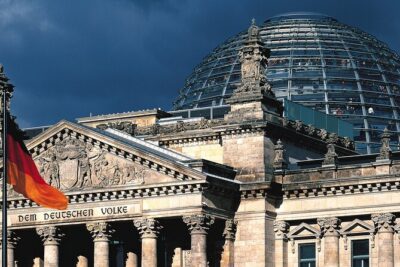
Berlin’s Best: 2 Hour Walking Tour Third Reich and the Cold War
Read our review →
Budapest City Landmarks Walking Tour in 2 Hours
Read our review →
Leipzig: 2-Hour Guided Walking Tour in German
Read our review →
Kyoto Gion: 2-Hour Geisha Culture & History Walking Tour
Read our review →
Browse the lists this tour appears in