
Review · PHILADELPHIA
Philadelphia: Revolutionary Walk Through Historic Old City
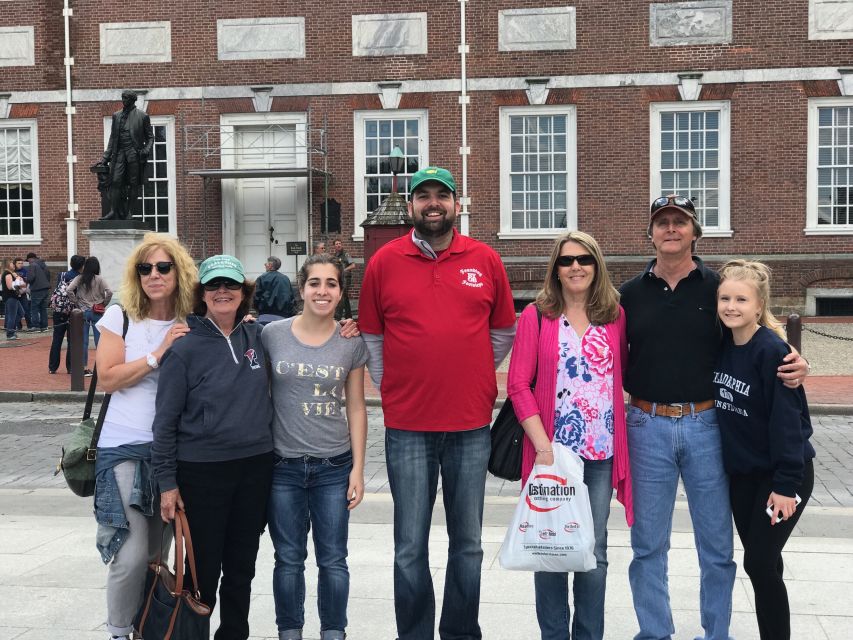
Philadelphia’s Old City packs America’s founding story into a few walkable blocks, and this 90-minute tour gives you a brisk route through the main sights. You begin at the Betsy Ross House, then follow the story toward Independence Hall, the Liberty Bell, Benjamin Franklin’s neighborhood, and Elfreth’s Alley.
I like the way the tour combines clear historical context with jokes and personal stories. Guides such as Seamus, Jay, Greg, and Casey have been praised for making the subject work for teenagers, children, and adults alike. I also like the compact format: it gives a first-time visitor a useful sense of the district without taking up half a day.
The tradeoff is important: this is mainly an outdoor walking tour. You see the historic buildings and hear their stories, but paid entry to sites is not included, and Independence Hall tickets are separate. The route can also feel rushed if you want time for photographs or questions at every stop.
Key points
- A fast route through Old City: See the Betsy Ross House, Independence Hall, the Liberty Bell, Elfreth’s Alley, Christ Church, Carpenter’s Hall, and Franklin’s post office.
- Guides with a comic touch: The tour is led in English by local guides with backgrounds that include teaching and stand-up comedy.
- Good for first-time visitors: The route helps you understand how the major sights fit together geographically and historically.
- Outdoor sightseeing first: You generally view the landmarks from outside, with separate admission needed for interior visits.
- Strong family appeal: Guides have kept children as young as nine and teenagers interested during the 90-minute walk.
- Useful at $35: The price is fair if you want orientation, storytelling, and a planned route rather than wandering alone.
Starting at the Betsy Ross House

The tour begins at the Betsy Ross House, linked to the story that the first United States flag was created there. The wording matters: the house is associated with that tradition, rather than offering a simple, fully settled fact. A good guide can use this opening to show you how American history often mixes documented events, local tradition, and later storytelling.
This is a smart place to begin because it puts you immediately into the character of Old City. Instead of starting with a broad lecture, you start with a person, a house, and a familiar national symbol. From there, the guide builds outward to the Revolutionary period and the people who shaped Philadelphia.
You should expect to pause outside and listen rather than automatically enter the house. Admission to additional attractions is not included, so decide in advance if you want to return later for an interior visit. This distinction has caught some people by surprise, especially those expecting a ticketed tour of every building.
More History Walking Tours in the USA
- History and Hauntings of Salem Guided Walking Tour
★ 5.0 · 14,564 reviews - Boston: Freedom Trail History Small Group Walking Tour
★ 5.0 · 6,450 reviews - Historic Charleston Guided Sightseeing Walking Tour
★ 5.0 · 6,216 reviews
Following Franklin through colonial Philadelphia
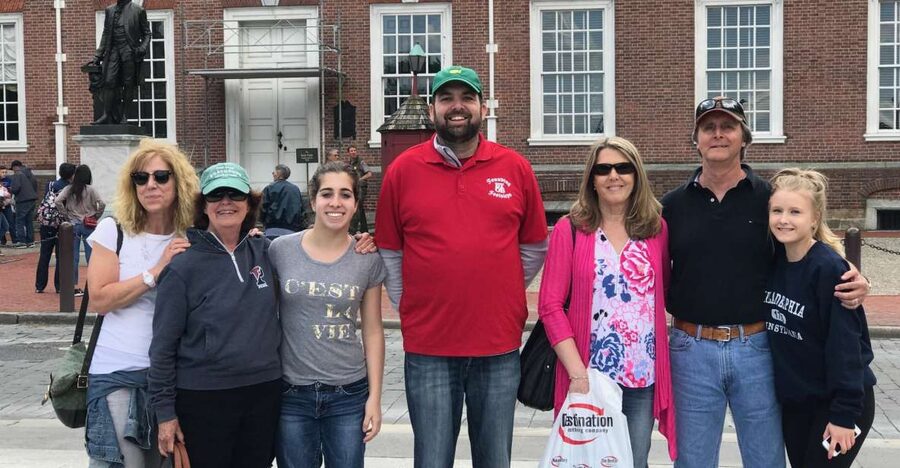
Benjamin Franklin gives the walk a useful thread. Philadelphia’s founding story can become a long list of names and dates, but Franklin connects printing, civic life, science, politics, and everyday city life. The route includes the B. Free Franklin Post Office, a particularly fitting stop for a man associated with printing and public communication.
The post office helps move the story beyond military battles and famous speeches. You get a sense of how a city functioned during the period when political ideas were being circulated, debated, and put into practice. Guides have also included extra Franklin stories, which can be especially helpful if you want more than a basic account of the Revolution.
The exact emphasis depends on the guide. Seamus has led many departures, while Jay, Greg, Tim, Casey, Ryan, and others have also guided the walk. Their styles vary, but the repeated strength of this experience is the mix of facts, side stories, and humor. Seamus is often described as warm and easy to follow, while Jay has been praised for combining classroom-style explanation with comic timing.
Independence Hall and the birth of the nation
Independence Hall is the tour’s major historical anchor. This is where the Declaration of Independence and the United States Constitution were debated and adopted. The building is not just another old structure on a sightseeing list. It is the place where the tour’s larger story comes together: arguments over government, rights, authority, and the future shape of the country.
Your guide explains the importance of the site from the outside, but you should not assume that this walk includes an interior tour. Independence Hall tickets are not included, and separate admission arrangements are needed if you want to go inside.
That limitation can be a benefit if you are planning efficiently. You can use the walking tour to understand the building and its role, then schedule an interior visit afterward. It can also be a drawback if your Philadelphia visit is short and you hoped to enter every major landmark during the 90 minutes.
I would treat this stop as orientation rather than a substitute for a full Independence Hall visit. The guide gives you context and helps you see why the building matters. You then decide if the interior tour deserves a separate block of time.
The Liberty Bell and the power of a symbol

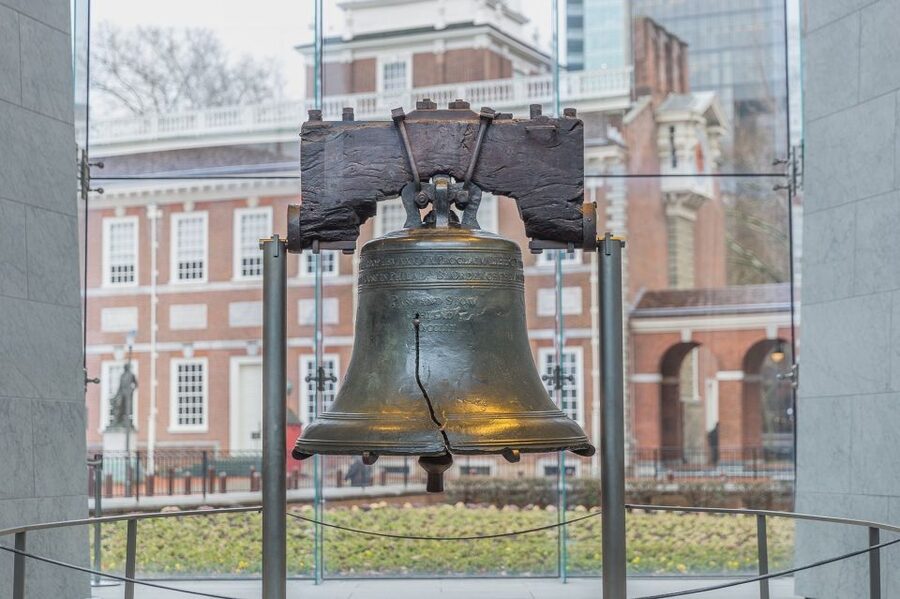
The Liberty Bell is another essential stop. Its cracked surface and association with American independence make it one of the country’s best-known symbols. The tour places it within the larger Old City route, so you are not considering the bell in isolation. You are seeing how it relates to Independence Hall and the surrounding civic district.
Again, plan on an outdoor explanation rather than guaranteed entry into a paid attraction. The activity information lists admission to additional sites as extra, and the route is designed to cover many landmarks within a limited time. If seeing the bell up close inside its viewing area is a priority, allow separate time and check the current arrangements.
The guide’s role here is most useful when the stop becomes more than a photograph. A good explanation can connect the bell to the language of independence, public memory, and the way Philadelphia presents its past. The comic approach also helps keep the stop from becoming a dry recital of dates.
More Old Town Walking Tours in the USA:
- Philadelphia Old City Historic Walking Tour with 10+ Top Sites
★ 5.0 · 2,020 reviews - The Original 8pm Ghost Tour of Old Town Albuquerque – since 2001
★ 5.0 · 873 reviews - San Diego: Old Town Tequila and Tacos Walking Food Tour
★ 4.8 · 71 reviews - Underground Vaults Walking Tour in Edinburgh Old Town
★ 4.5 · 8,506 reviews
Elfreth’s Alley, the walk’s most atmospheric stop
Elfreth’s Alley is likely to be one of the most memorable parts of the route. It is a narrow historic lane lined with old homes, and it gives you a stronger visual sense of early Philadelphia than a large civic building can provide.
Several guides have made this stop a favorite, and it is easy to understand why. You can see the scale of everyday urban life, not just the grand rooms where famous men made political decisions. The alley gives the tour texture and helps balance the national story with the physical details of an old neighborhood.
This is also one of the places where the 90-minute schedule can feel tight. You may want to stop for photographs, look closely at the buildings, or ask about life on the street. The guide needs to keep moving if the group is to reach all the planned landmarks, so save extra exploration for after the walk.
Christ Church and the people behind the politics
Christ Church adds a religious and social layer to the tour. Philadelphia’s founding story was not only about declarations and constitutions. It also involved communities, beliefs, institutions, and arguments about how public life should work.
The tour uses places such as Christ Church to give the founding period more context. You hear about the people connected to the city and the setting in which they lived and worshiped. The guide may also point out architectural details and explain why the building belongs in the Old City story.
The same entry rule applies here: seeing the church on the walk does not mean interior admission is included. If you want to go inside, check the separate visitor arrangements rather than relying on the walking tour alone.
Carpenter’s Hall and the wider road to revolution
Carpenter’s Hall helps expand the story beyond the Declaration and Constitution. It is tied to the political meetings and debates that helped shape colonial resistance and the move toward independence. In a short tour, this kind of stop is valuable because it shows that the Revolution developed through many gatherings and arguments, not one sudden event.
The guide’s storytelling matters most here. A bare list of meetings may not stay with you, but a story about who gathered, what they were trying to decide, and how uncertain the outcome was can make the location meaningful.
This is also where a former teacher’s approach can help. Guides have been praised for adding context before giving the key fact, so you can understand the problem people faced instead of simply memorizing the answer.
Why the comic style works for families
The tour’s guide style is a major part of its appeal. The lead guide is described as a former teacher and stand-up comedian, and that combination shows in the way the walk is presented. The goal is not to turn the Revolution into a comedy show. It is to make dense material easier to follow.
That works particularly well for families. Parents have taken children around nine years old, teenagers, and young adults, with strong results. One family said a 16-year-old considered the tour the favorite part of a Philadelphia visit. Another found that children remembered enough to repeat the stories later.
You should still expect a real history tour, not a children’s activity. The route covers serious subjects and moves at an adult pace. The humor simply gives the facts some breathing room.
The group setting can affect how easy it is to hear. One person specifically suggested a microphone because Old City can be noisy. If you have difficulty hearing, stay near the guide and tell them at the start. A smaller group may be easier, but group size is not specified and can vary.
What 90 minutes feels like on foot
Ninety minutes is a useful length for this route. It is long enough to cover the core Old City sights but short enough to fit before lunch, dinner, a museum visit, or a separate Independence Hall booking.
The pace is active. You will be standing, walking on city streets, and stopping repeatedly to listen. Comfortable shoes are the one listed item to bring, and that advice is worth following. Philadelphia’s historic district invites slow wandering, but this tour is designed to keep a schedule.
The compact timing has two sides:
- You cover a surprising number of landmarks in one outing.
- You may not have enough time to enter buildings, linger at each stop, or explore every side street.
Guides have handled difficult conditions with good humor, including a sudden heavy rain and very hot weather. Still, bring weather-appropriate clothing and water when needed. The tour does not include food or drinks.
Is $35 a fair price?
At $35 per person, this is a reasonable buy if you value a planned route and lively explanation. You are paying for a live guide who connects the stops, answers questions, and saves you the work of researching how the landmarks relate to one another.
The price is less attractive if you mainly want entry to historic sites. Food, drinks, paid attractions, and Independence Hall tickets are all extra. A visitor focused on interiors should think of this as the first part of a two-step plan: take the walk for orientation, then pay separately for the buildings that matter most to you.
The value is strongest for a first visit, a one-day Philadelphia stop, or a family group that might lose interest while reading plaques alone. The route also helps you avoid missing smaller places such as Franklin’s post office and Carpenter’s Hall.
Who should book this Old City walk?
I would recommend it to first-time visitors, families, history fans who enjoy storytelling, and anyone with limited time. It is especially useful as an opening activity because it gives you a map of the district and helps you choose what deserves a longer visit afterward.
It also suits visitors who like history presented with personality. The guides have been praised for being friendly, funny, clear, and attentive to mixed-age groups. Seamus has received particular praise, but the experience has also been led successfully by Jay, Greg, Tim, Casey, Ryan, and others.
I would hesitate if you dislike group walking tours, need long periods indoors, or expect admission to every landmark. You may also find the pace quick if you want extensive photography or detailed architectural study.
The activity has a 4.8 rating from 208 reviews, and the most consistent strengths are the guides, the amount covered in 90 minutes, and the ability to make history work for both adults and children. Free cancellation is available up to 24 hours before the start, and you can reserve now and pay later, which helps if your Philadelphia plans are still shifting.
My recommendation for booking
Book this tour if you want a lively introduction to Philadelphia’s Revolutionary-era center and understand that it is an outdoor walk, not an all-access museum visit. At $35, it offers solid value for the route, the local stories, and the guide’s ability to keep the past moving.
For the best use of your time, take the walk early in your stay, note which interiors interest you, and return to those sites afterward. That plan turns the tour’s main limitation, its quick outdoor format, into a useful advantage.
FAQ
How long is the Philadelphia Revolutionary Walk?
The tour lasts 90 minutes.
What language is the tour conducted in?
The live tour is conducted in English.
Where does the tour begin?
It begins at the Betsy Ross House in Philadelphia’s Old City district.
Does the tour go inside Independence Hall?
Independence Hall tickets are not included. The tour presents the landmark as part of the walking route, but you need separate admission arrangements for an interior visit.
Are admission fees included for the other historic sites?
No. Paid admission to additional sites and attractions is not included.
Which landmarks are covered?
The route includes the Betsy Ross House, Independence Hall, the Liberty Bell, Elfreth’s Alley, Christ Church, the B. Free Franklin Post Office, and Carpenter’s Hall.
Is food or drink included?
No. Food and drinks are not included.
What should I bring?
Bring comfortable shoes for the 90-minute city walk.
Can I cancel the booking?
Yes. You can cancel up to 24 hours in advance for a full refund. You can also reserve now and pay later.
New routes in the USA
- Baltimore Walking Foodie Tour in Fells Point★ 5.0 · 182 reviews
- The Madam’s Curse Walking Ghost Tour★ 4.5 · 103 reviews
- Austin Small Group Morning Walk★ 5.0 · 412 reviews
- Austin Haunted Pub Crawl Walking Tour★ 4.5 · 232 reviews
- Austin Downtown Private Walking Food Tour With Secret Food Tours★ 5.0 · 71 reviews
- Austin Murder Walk★ 5.0 · 310 reviews
- The Ghosts of Austin Walking Tour★ 4.5 · 72 reviews
- Martin Luther King Jr. History Walking Tour★ 5.0 · 687 reviews
Philadelphia Walking Tours, compared.

Philadelphia Old City Historic Walking Tour with 10+ Top Sites
Read our review →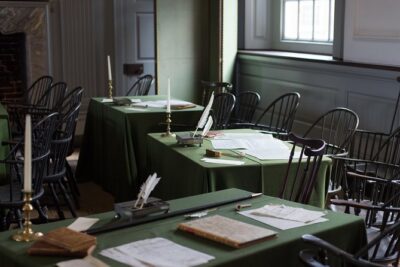
The Constitutional Walking Tour of Philadelphia
Read our review →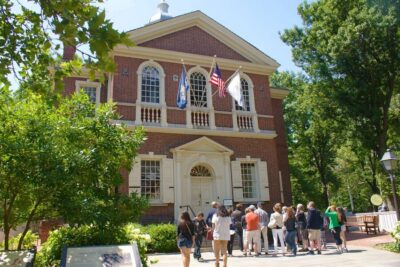
Browse the lists this tour appears in