
Review · USA
Austin: Morning History Walking Tour of Downtown Austin
Austin’s best history lesson may be the one that keeps moving. This 90-minute downtown walk connects music venues, old hotels, political landmarks, railroad history, and the famous bat bridge without trapping you in a lecture hall. You get a useful first look at central Austin, with plenty of stories along the way.
I like the local recommendations, especially since guides such as Tyler, Audrey, William, and Jake have been praised for giving practical ideas about restaurants, attractions, coffee, and music. I also like the stop inside The Driskill Hotel, where you see one of Austin’s grandest interiors rather than simply passing it on the sidewalk.
The main drawback is pace. The route covers a lot in 90 minutes, so some stops are brief. One outing ran to about an hour and 45 minutes, while another participant wished the tour were longer. If you want full visits to venues, parks, or museums, this is not that kind of tour.
Key points to know before booking
- 20% off breakfast at Jo’s Coffee: Show proof of your tour purchase on the morning of the walk.
- A broad downtown route: See 2nd Street, the Warehouse District, Guytown, Congress Avenue, Sixth Street, the Capitol area, and the Driskill Hotel.
- A story-led walk: The Angelina Eberly story, Austin’s first railroad depot, and the bat bridge give the route more character than a simple landmark checklist.
- Useful city advice: Guides share ideas for coffee shops, restaurants, live music, and further sightseeing.
- Easy morning orientation: The tour is a good first activity if you want to understand downtown before exploring on your own.
- Rain or shine: Wear comfortable shoes and be prepared to walk outdoors in changing weather.
Why this morning walk works as an Austin introduction
Austin can feel scattered at first. Its downtown has state government, old commercial buildings, live music, hotels, bars, restaurants, public art, and newer construction all packed into a relatively walkable area. This tour gives you a basic map in your head before you start making your own plans.
I like the way the route uses contrasts. You move from music culture on Sixth Street to the formality of the Texas Capitol, then into the ornate Driskill Hotel. The walk also brings in places that explain how Austin grew, including the old railroad depot and early telephone history.
The guides add the human element. Tyler has been especially good at explaining how Austin and Texas developed, while Audrey has offered a strong local view of the city. William has used archive photos and personal recommendations, and Jake has been praised for drawing the whole group into the conversation. Guide assignments vary, but the tour is designed around a live English-speaking storyteller rather than an audio recording.
This is not a deep architectural survey or a political history seminar. It is a quick, friendly introduction that mixes facts with stories. That balance suits you if you want context without spending half a day in one place.
More History Walking Tours in the USA
- History and Hauntings of Salem Guided Walking Tour
★ 5.0 · 14,564 reviews - Boston: Freedom Trail History Small Group Walking Tour
★ 5.0 · 6,450 reviews - Historic Charleston Guided Sightseeing Walking Tour
★ 5.0 · 6,216 reviews
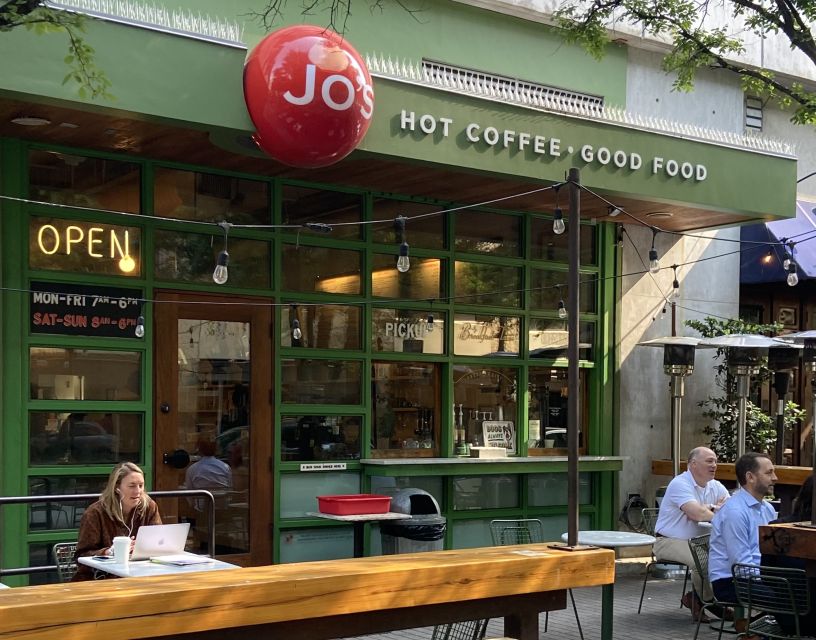
Jo’s Coffee and the practical start
The meeting point is in front of Jo’s Coffee at 242 West 2nd Street. Look for a guide wearing a Walking Tours of Austin cap and shirt, along with an A-frame sign marked Morning Walk Austin. Restrooms are available at Jo’s, which is useful before setting off.
There is also a small but worthwhile morning perk. Show proof of your tour purchase on the day of the walk and you receive 20% off your breakfast order at Jo’s Coffee. Food and drinks are not included in the tour price, so plan to pay for your own order.
I would arrive early enough to use the restroom, collect your coffee or breakfast, and find the guide without rushing. The discount is most useful if you already planned to eat at Jo’s. It should not be the sole reason to book, but it makes the meeting point more convenient.
The walk takes place rain or shine. Austin mornings can be pleasant, but conditions can change, so bring water and wear shoes that feel good on pavement. You may also want money for a treat or drink during the route.
The 2nd Street District and Warehouse District

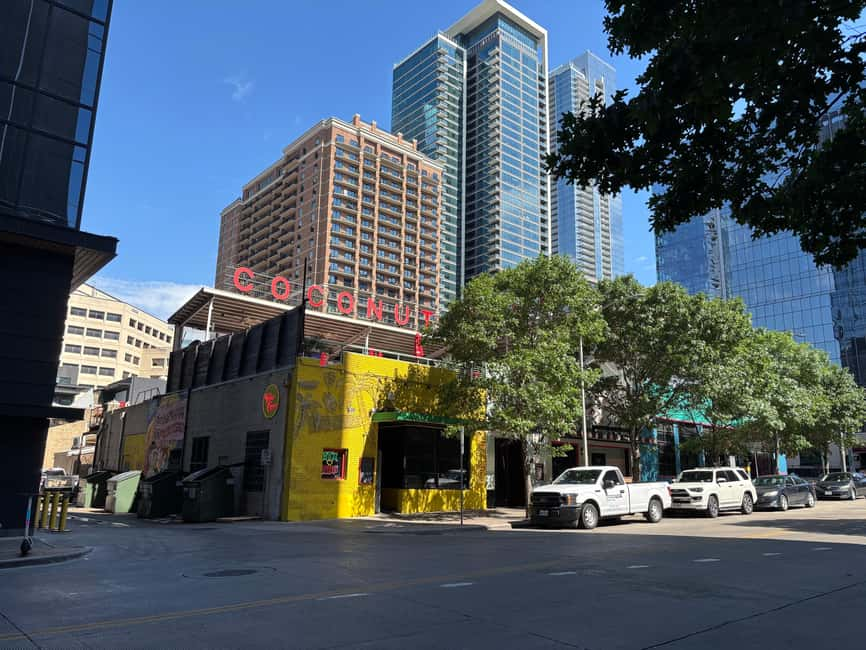
The first section moves through the 2nd Street District, also called the Warehouse District, on the west side of Congress Avenue. This area helps explain Austin’s shift from older commercial buildings toward restaurants, entertainment, offices, and modern city life.
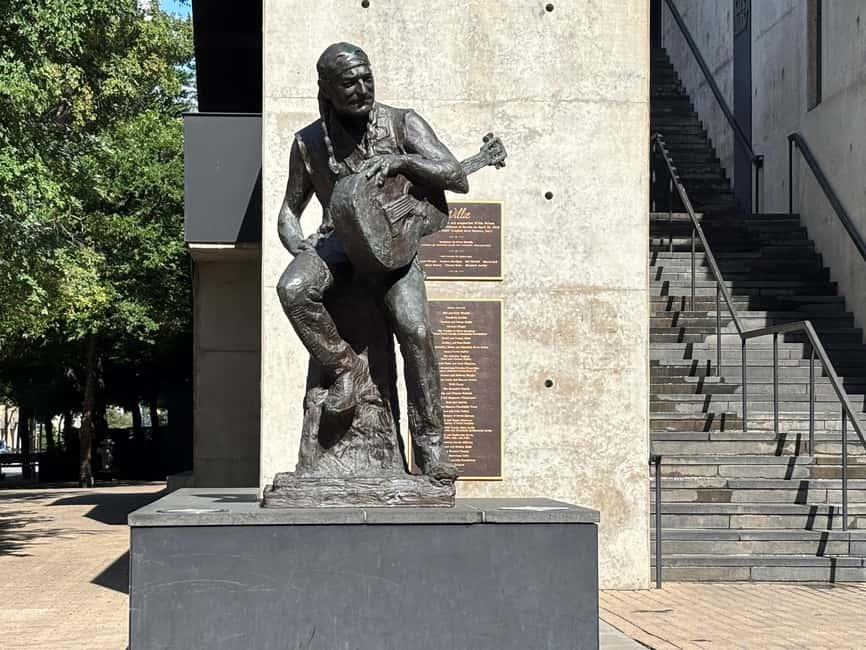
One early point of interest is the Moody Theater, connected with Austin’s music identity and the statue of Willie Nelson. You do not simply hear that Austin has live music. You begin to see the places and symbols that support that reputation.
The route is useful here because a guide can point out what deserves your attention and what may not be worth your limited holiday time. The information is not only about dates and buildings. You can ask about places to eat, where to find coffee, and how to plan an evening around music.
The tradeoff is that this is a walking orientation, not an interior tour of every place you pass. You see the outside of many locations and hear why they matter. If a specific venue is your main goal, make a note of it and return later.
Guytown and Austin’s first railroad depot
From the Warehouse District, the group continues through Guytown toward Austin’s first railroad depot, dating to about 1871. The building was formerly associated with the Spaghetti Warehouse, giving this stop an everyday connection that helps the city’s early transport story feel less remote.
Railroads mattered enormously to growing Texas towns. A depot was not just a place for trains. It connected people, goods, business, and news with the wider region. On this walk, the depot becomes a way to understand Austin as a developing city rather than only as the modern music capital you see today.
This is one of the route’s stronger historical stops because it links a physical building with the city’s growth. It also gives the tour more range than a walk limited to famous bars and government buildings.
Do not expect a long interior visit here. The value is in the guide’s explanation and the chance to connect the building with Austin’s earlier urban life.
Same streets, a different guide:
- New Orleans Premier Ghost, Voodoo and Vampire Walking Tour
★ 4.5 · 12,856 reviews - Little Havana Food and Walking Tour in Miami
★ 5.0 · 8,882 reviews - Chicago: Gangsters and Ghosts Walking Tour
★ 5.0 · 7,155 reviews - New Orleans Food Walking Tour of the French Quarter with Small-Group Option
★ 5.0 · 6,118 reviews
Congress Avenue and the story of Angelina Eberly
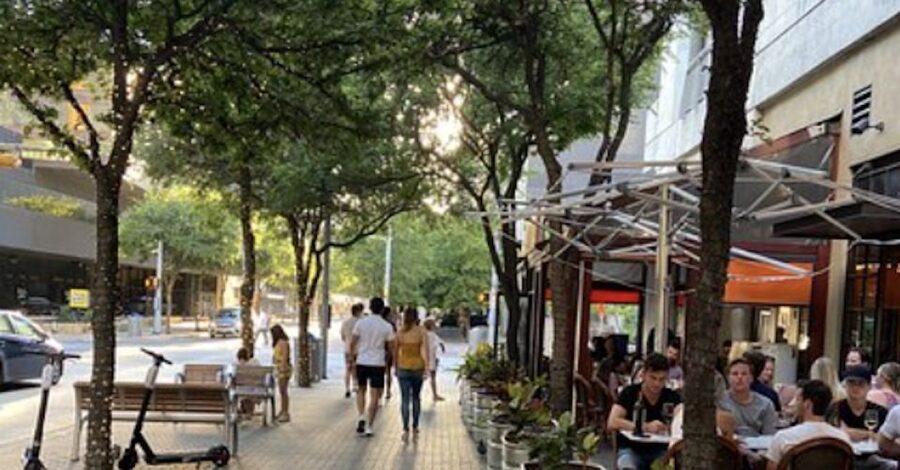
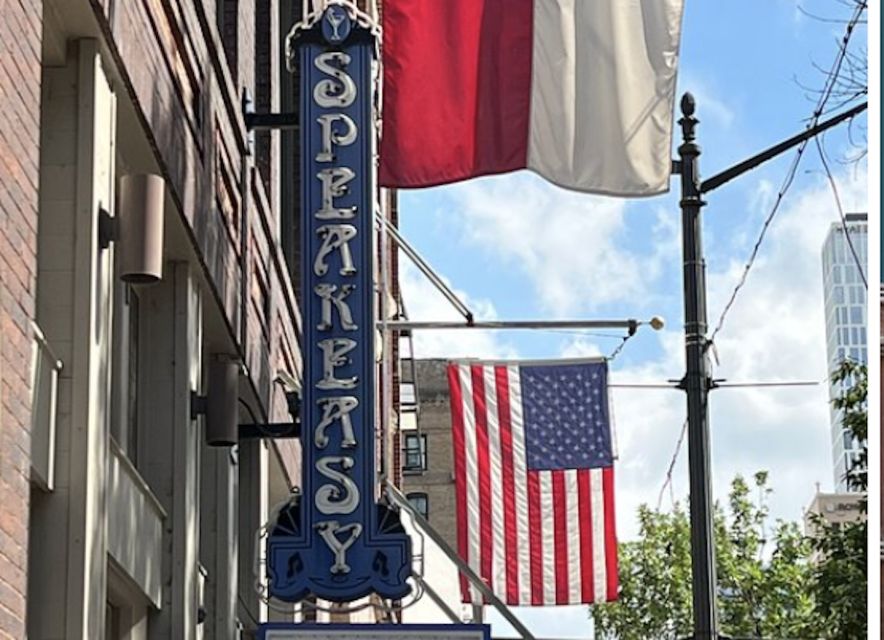
The walk reaches Congress Avenue and passes a speakeasy tavern housed in a former Southwestern Telephone and Telegraph Company building from about 1886. This is a good example of Austin’s habit of layering new uses over old structures.
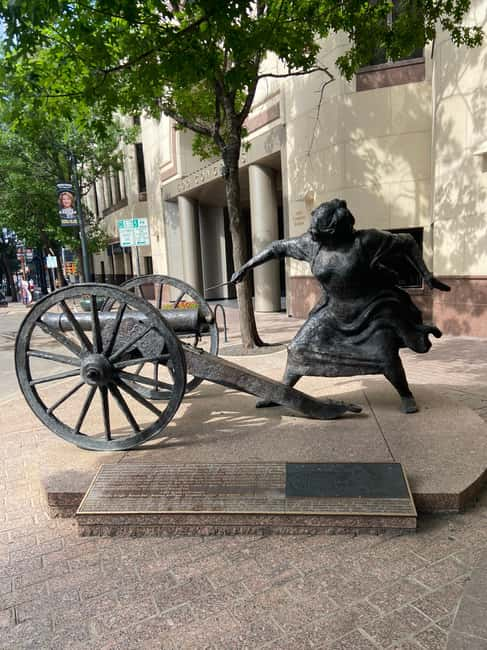
Heading north on Congress, you cross Sixth Street and come to the Angelina Eberly statue. This is one of the most memorable story stops on the route. The guide explains how Eberly helped save Austin in 1842, giving you a story about civic action, conflict, and the city’s early survival.
I like this part because it gives a person a central role in Austin’s past. You are not just looking at a date carved into stone. You are hearing about a decisive moment and the actions of someone who is easy to overlook if you only follow the most famous landmarks.
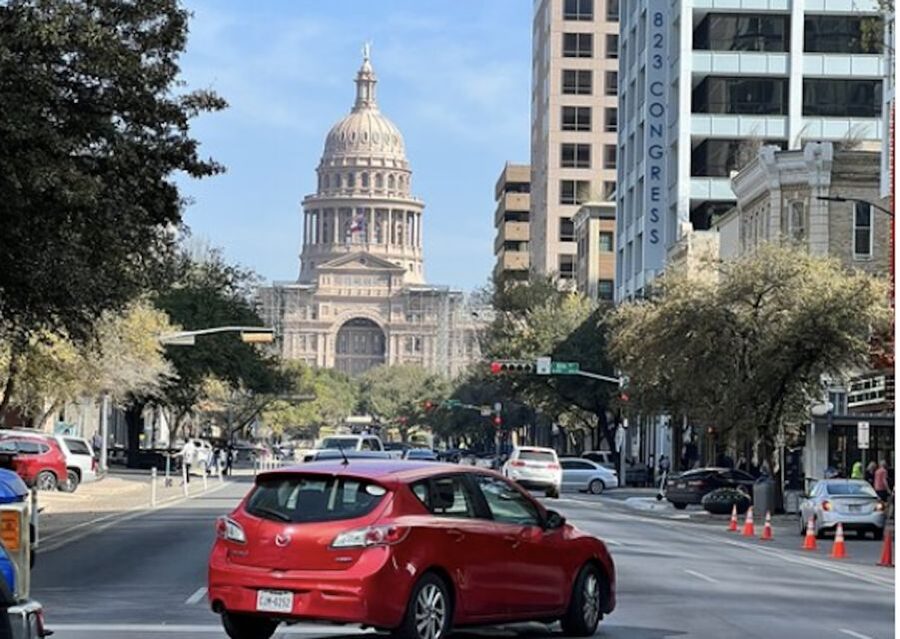
From the statue, you get a view toward the state Capitol, only about two blocks away. That visual connection matters. The walk shows how downtown spaces fit together instead of treating each sight as an isolated stop.
The Texas Capitol from Congress Avenue
The Capitol is one of the route’s major visual moments. You discuss its history and look toward the building from Congress Avenue, gaining a sense of its scale and importance without spending the tour inside the Capitol.
This is a practical stop for first-time visitors. You can learn why the building matters, get a good orientation to its location, and decide if you want to return for a separate visit. The tour does not promise an in-depth Capitol tour, so keep your expectations in the right place.
The Capitol section also changes the mood of the walk. Sixth Street brings nightlife, music, and entertainment. The Capitol brings government and public power. Putting those two settings close together helps explain Austin’s unusual mix of politics and popular culture.
If your main reason for booking is to tour the Capitol interior, choose a dedicated Capitol visit instead. If you want the Capitol included in a larger downtown story, this stop fits well.
Inside The Driskill Hotel, built in 1885
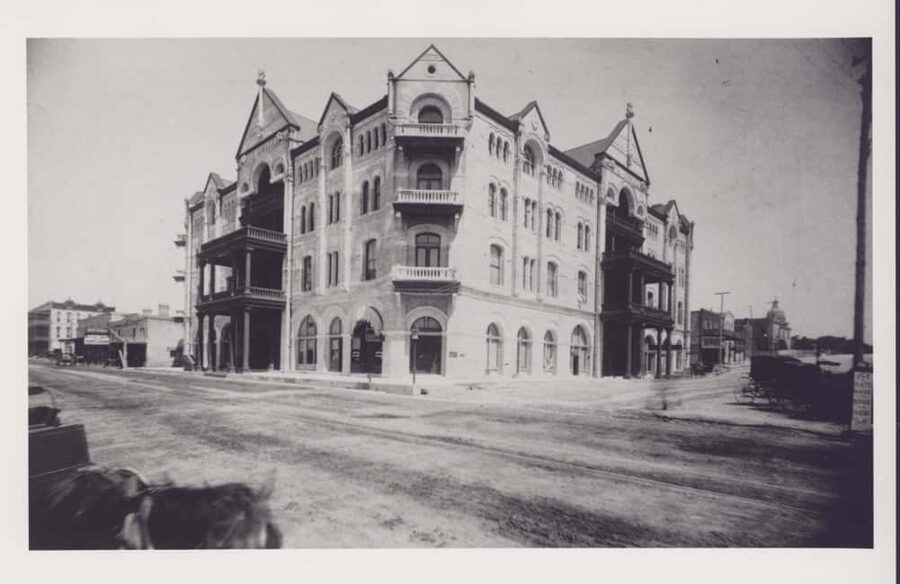
The Driskill Hotel is the tour’s clearest interior stop. Built in 1885, it offers a look at one of Texas’s best-known historic hotels, including its lobby and Driskill Bar and Lounge.
This visit adds variety. Much of the tour takes place on sidewalks, so stepping into an ornate hotel gives you a few minutes of indoor architecture and atmosphere. The guide points out details and places the hotel within Austin’s development.
I also like the fact that entry to the Driskill is included. At $32 per person, an included interior stop helps the price feel more reasonable than a walk that only points from outside. You are paying for the guide’s time, the route, and access to this part of the hotel rather than simply following a map.
The visit is still short. You will not have time to linger over every decorative feature or settle in for a drink at the bar. Think of it as a focused look at an important Austin building.
Sixth Street, music venues, and Voodoo Donuts
After the Driskill, the route heads east along Sixth Street. This is where Austin’s music reputation becomes most obvious. You pass music venues and get a look at the corridor that changes character between daytime and nighttime.
Morning is a useful time to see Sixth Street. You can observe the buildings and venue fronts without dealing with the late-night crowds that define the area after dark. The guide can also help you understand which parts of the street are relevant to your evening plans.
Voodoo Donuts is another recognizable stop along the way. Food and drinks are not included, but you can bring money if you want to purchase something during the tour. Since the walk is short, do not count on a long food stop. Treat any purchase as optional rather than part of the planned experience.
One past participant felt the walk could use more concrete destinations such as venues and parks. That is a fair point. You pass several places of interest, but the route is mainly about stories and orientation. If you want to enter music venues or spend time in a park, you will need to return independently.
San Jacinto, Vince Young’s Steakhouse, and the return south
The route continues down San Jacinto, where newer and older buildings appear together. It then turns at Vince Young’s Steakhouse and heads back toward Congress Avenue.
This portion is less about one major attraction and more about seeing downtown as a changing district. Older buildings sit near newer ones, and the guide can explain what you are looking at while keeping the group moving.
That approach makes the walk efficient, but it also means you should not expect every block to receive equal attention. The route has a lot to cover in a short time. If your interest is architecture, ask questions as you go, because the guide can often add context to the buildings you pass.
The walk then continues toward the Pearl House Hotel and back to 2nd Street. By this point, you have crossed several downtown districts and should have a much clearer sense of how Congress, Sixth Street, the Capitol, and the Warehouse District relate to one another.
Austin’s bat bridge as the final stop
Near the end, the route returns to 2nd Street with Austin’s famous bat bridge in view. The guide talks about the bat phenomenon, one of the city’s most unusual and widely recognized natural attractions.
This is a fitting finish because it shifts the subject from buildings and civic history to Austin’s distinctive everyday culture. The bat bridge is also useful for planning. If you want to see the bats at the proper time, you can ask the guide for more information and arrange a separate visit.
The tour does not turn the bat stop into a full evening bat-watching outing. You discuss the phenomenon and see the area during a morning walk. That distinction matters. Book this for orientation and background, not for the actual bat emergence.
Guide style and the value of local advice
The strongest part of this experience is the guide. Several guides have received praise for clear storytelling, friendly energy, and practical answers. Tyler has been described as especially good at explaining Austin’s development and offering further recommendations. Audrey has brought a local perspective, while William has used visual aids and shared lists of places with interested participants.
Jake has also been praised for making people feel included, and one guide who grew up in Austin added personal stories. Those details point to the tour’s intended style: less formal script, more conversation.
That does not mean every guide will deliver the same experience. The guide you receive depends on the date, and the walk can change slightly according to group questions and interests. That flexibility is a plus if you like conversation, but it means the experience may feel less tightly timed than a standard lecture.
The walk is in English. It is also wheelchair accessible according to the activity details, though the route remains an outdoor city walk with ordinary pavement and street crossings.
Is $32 a fair price?
At $32, the tour sits in a reasonable range for a guided downtown orientation. You receive a live guide, 90 minutes of walking, entry to the Driskill Hotel, and a useful route through several central districts. The Jo’s Coffee discount adds a small extra benefit if you plan to eat there.
The value depends on what you want. If you would otherwise wander downtown without context, the guide can save time and help you avoid spending your evening in places that do not match your interests. The restaurant, coffee, and music suggestions may also help you make better choices over the rest of your stay.
The price is less compelling if you want long visits inside landmarks, a Capitol interior tour, or a detailed architectural study. Much of the route is viewed from the street, and food is not included.
I would see it as a first-morning investment. Use the walk to learn the layout, collect ideas, and mark places for later. The 20% breakfast discount is pleasant, but the real value is getting a local framework for downtown.
Who should book this Austin walking tour?
Book it if you are visiting Austin for the first time and want a compact introduction before making your own plans. It works especially well for people who enjoy history in short stories, want recommendations for food and music, and prefer seeing a city on foot.
It is also a good fit for solo visitors and small groups who like asking questions. One participant had a private-feeling experience because they were the only person on the walk, though group size is not specified and you should not count on that.
Families and older visitors may appreciate the manageable length, but you still need to be comfortable walking outdoors. The route is wheelchair accessible, and restrooms are available at the starting point.
Skip it if you have already explored downtown carefully or want a single-subject tour. It will not replace a dedicated Capitol visit, a bat-watching outing, or an evening spent inside music venues.
FAQ
How long is the Austin Morning History Walking Tour?
The listed duration is 90 minutes. One reported outing lasted about an hour and 45 minutes, so allow some flexibility in your schedule.
What is the tour price?
The price is $32 per person.
Where does the tour meet?
Meet in front of Jo’s Coffee at 242 West 2nd Street in downtown Austin. Look for a guide wearing a Walking Tours of Austin cap and shirt, with an A-frame Morning Walk Austin sign.
Is the Jo’s Coffee discount included?
You receive 20% off your breakfast order at Jo’s Coffee by showing proof of your Morning Walk purchase on the day of the tour.
Is breakfast included in the tour price?
No. Food and drinks are not included. You can use the Jo’s Coffee discount and should bring money if you want a drink or treat during the walk.
What language is the tour conducted in?
The tour is conducted in English with a live guide.
Is the walk wheelchair accessible?
Yes. The activity is listed as wheelchair accessible.
Does the tour visit the Texas Capitol?
The route includes a discussion of the Capitol and a view of the building from Congress Avenue. The tour information does not promise an interior Capitol visit.
Do you enter the Driskill Hotel?
Yes. Entry to the Driskill Hotel is included, with a visit to the lobby and Driskill Bar and Lounge.
What happens if it rains?
The tour runs rain or shine. Dress for outdoor walking and bring money if you want to buy a drink or treat.
Can you cancel the tour for a refund?
You can cancel up to 24 hours in advance for a full refund. Reserve now and pay later is also available.
Should you book it?
I would book this tour near the start of an Austin visit, especially if you have only a few days and want to get your bearings fast. The route covers a lot, the Driskill interior breaks up the sidewalk walking, and the guides add the kind of restaurant, coffee, and music advice that can shape the rest of your stay.
Just keep the limits in mind. This is a lively overview, not a series of long landmark visits. At $32, it is good value for a first look at downtown, a handful of memorable stories, and a local voice to help you decide what to explore next.
New routes in the USA
- Baltimore Walking Foodie Tour in Fells Point★ 5.0 · 182 reviews
- The Madam’s Curse Walking Ghost Tour★ 4.5 · 103 reviews
- Austin Small Group Morning Walk★ 5.0 · 412 reviews
- Austin Haunted Pub Crawl Walking Tour★ 4.5 · 232 reviews
- Austin Downtown Private Walking Food Tour With Secret Food Tours★ 5.0 · 71 reviews
- Austin Murder Walk★ 5.0 · 310 reviews
- The Ghosts of Austin Walking Tour★ 4.5 · 72 reviews
- Martin Luther King Jr. History Walking Tour★ 5.0 · 687 reviews
USA Walking Tours, compared.
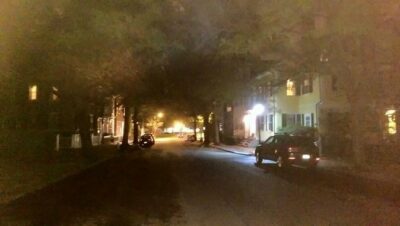
History and Hauntings of Salem Guided Walking Tour
Read our review →
New Orleans Premier Ghost, Voodoo and Vampire Walking Tour
Read our review →
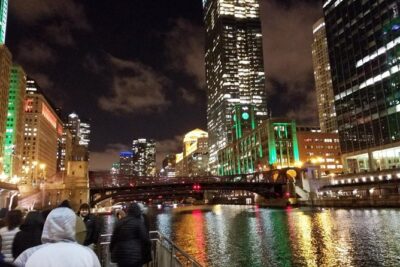
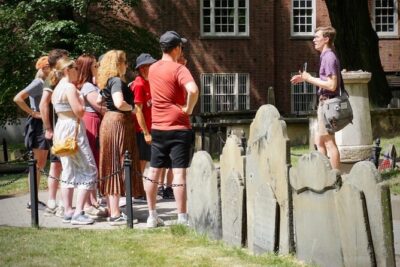
Freedom Trail History Small Group Walking Tour
Read our review →
Historic Charleston Guided Sightseeing Walking Tour
Read our review →
New Orleans Food Walking Tour of the French Quarter with Small-Group Option
Read our review →
St. Louis Cemetery No. 1 Official Walking Tour
Read our review →Browse the lists this tour appears in