
Review · MILAN
Milan by Night 2-Hour Walking Tour
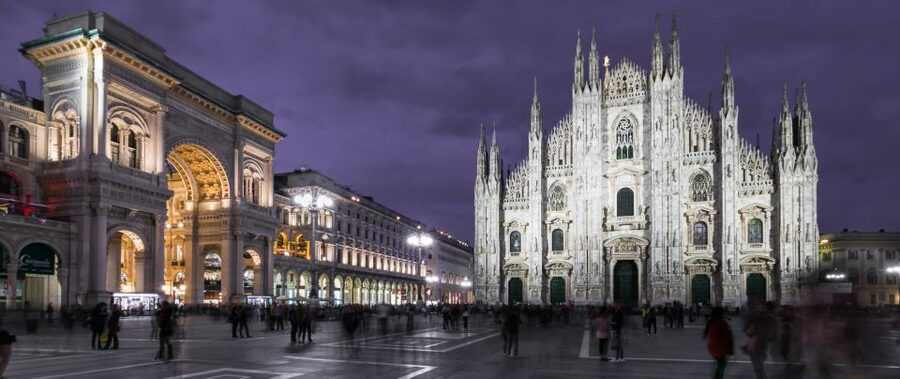
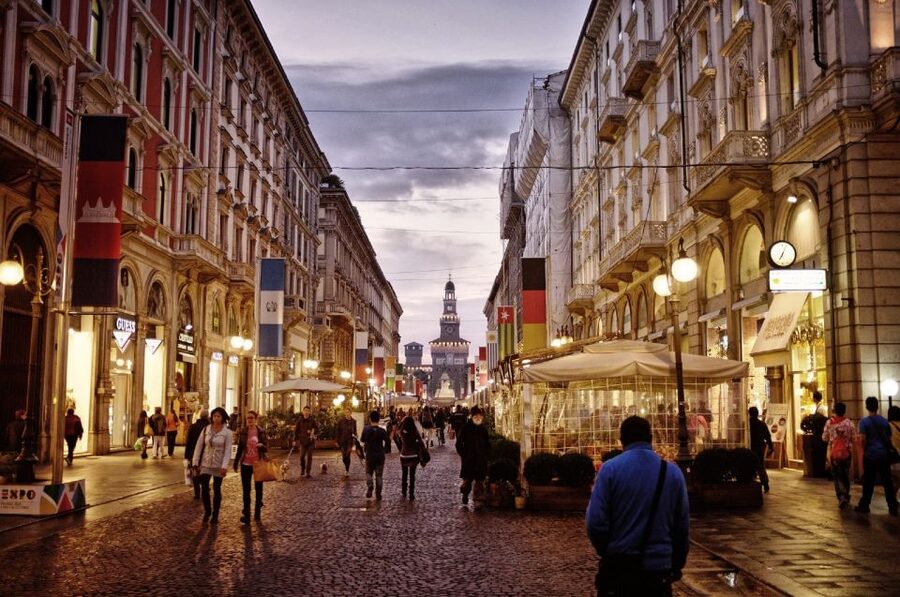
Milan’s grand center changes character after sunset. This two-hour walk links Sforza Castle, La Scala, the Galleria, and the Duomo, while adding stories of noble families, city intrigues, and phantoms that are easy to miss in daylight. I like the evening light for photographs and the route’s mix of famous sights and less obvious corners.
I also like the small-group feel reported on many departures. Some groups have had only two to four people, which made it easy to ask questions and get tips about food and shopping. The main drawback is that this is a history-led walk, so it may feel a little dry if you prefer a fast-moving tour with few dates and names. Rain can also make listening and walking less comfortable.
Key points at a glance
- Castle-to-Duomo route: Start under the Filarete clock tower at Sforza Castle and finish in front of Milan Cathedral.
- Nighttime views: Illuminated buildings give you a different angle on Milan and make strong photo subjects.
- Stories beyond the monuments: Hear about noble families, city intrigues, phantoms, architecture, and lesser-known places.
- Guides with personality: Nina, Cristina, Stefano, Laura, Giovanni, and others have been praised for clear explanations and local recommendations.
- A manageable two hours: You cover a useful section of central Milan without giving up a whole evening.
- Bring sensible shoes: The route involves a moderate amount of walking, and late arrivals are not accepted.
Why Milan after dark works so well
Milan can feel formal and imposing in daylight. At night, the stone facades, arcades, courtyards, and open squares take on a different mood. Lighting draws your eye to details that can get lost among daytime crowds and traffic.
I like this tour because it treats the city center as more than a parade of famous buildings. You still see the major sights, but the guide adds stories about the families who shaped Milan, political twists, old town halls, and tales of spirits after dark. The result is a useful introduction for a first visit, with enough extra detail to interest you if you already know the Duomo and La Scala.
The tour is conducted in English, Italian, or French. Guide quality appears to be one of its strongest features. Nina is repeatedly praised for her answers and her warm manner. Cristina has been singled out for enthusiasm and clear explanations. Stefano is known for delivering a huge amount of information about Milan’s names, dates, places, and turning points. Laura, Giovanni, Giorgio, Simone, and others have also been praised for making the walk friendly and personal.
That variety matters. A walking tour is only as good as the person leading it, and the strongest experiences here seem to come from guides who connect the buildings to the people and events behind them.
More Night Walking Tours in Italy:
- Rome: Paranormal Night Walking Tour & Secret Backstreets
★ 4.9 · 1,921 reviews - Rome: Small-Group Guided Day or Night Walking Tour
★ 4.8 · 1,009 reviews - Rome by Night Walking Tour – Legends & Criminal Stories
★ 4.5 · 1,003 reviews
Meeting Sforza Castle under the Filarete clock
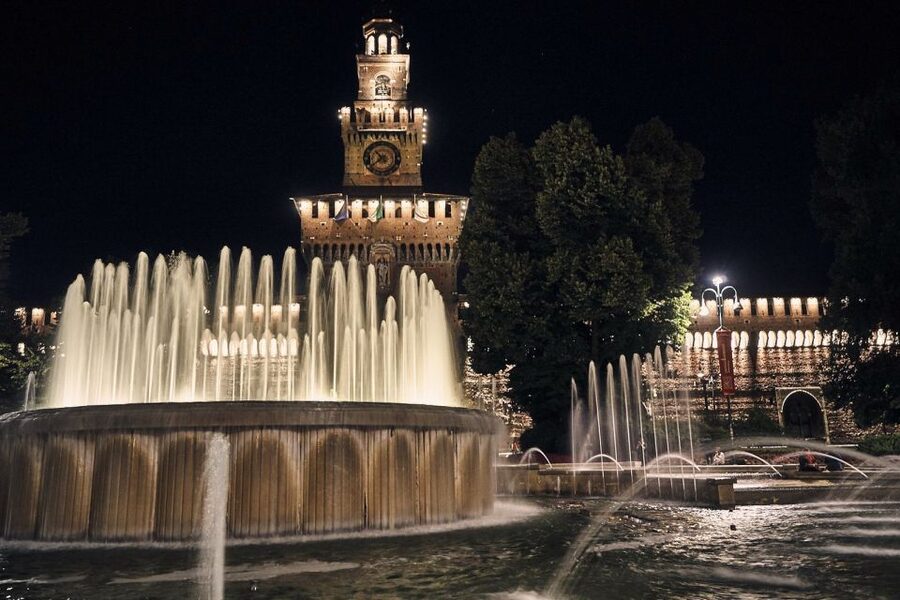
Your starting point is Piazza Castello, in front of Sforza Castle, under the Filarete clock tower. The meeting place is outside the castle courtyards, not inside them. Look for a guide carrying a Hidden Experiences flag or sign.
This detail matters because the castle complex is large enough to cause confusion, especially after sunset. I would arrive early and stand in the piazza near the clock tower rather than wandering into the courtyards. Late arrivals are not accepted, so allow time to find the exact spot.
Sforza Castle gives the walk a strong opening. Its courtyards and walls provide an immediate sense of Milan’s power struggles and noble past. You are not simply looking at an old fortress. The guide uses the setting to introduce the city’s ruling families and the stories of ambition, rivalry, and intrigue that shape the rest of the evening.
The tour does not function as a full castle interior visit. Its focus is the historical center by night, so you should book it for outdoor storytelling and city views rather than museum rooms or an extended examination of the castle.
From castle courtyards toward La Scala
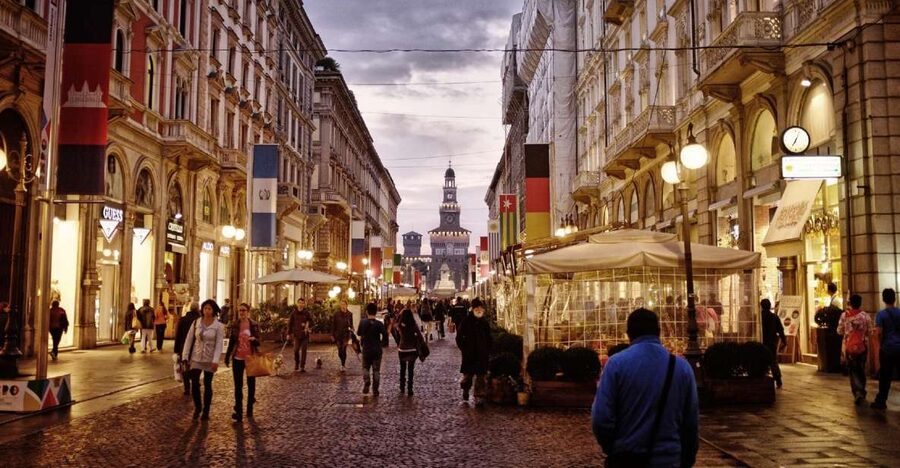
From Sforza Castle, the route moves toward La Scala, Milan’s famous opera house. This section helps connect the city’s military and political past with its cultural life.
The guide may point out places that do not make the standard postcard list. That is one of the tour’s useful features. The walk includes lesser-known spots in the center, and the explanations give you a better sense of how different parts of Milan fit together.
The stories are not limited to dates. The tour description points to noble families, secretive dealings, and phantoms that are said to walk the city after dark. Treat these tales as atmospheric additions rather than a formal ghost tour. The main subject remains Milan’s history and architecture, but the darker stories give the evening some humor and suspense.
This is also where guide style makes a difference. A strong guide can turn a facade or courtyard into a story about people and choices. If you enjoy asking questions, the smaller departures are especially appealing. Past groups of two, three, or four had more room to stop, ask for clarification, and request extra suggestions.
La Scala and Milan’s public life
La Scala is a natural landmark on an evening route. Its presence brings opera, public life, and Milan’s reputation as a cultural center into the walk.
You should not expect an opera performance or an inside tour as part of this activity. The value here is the explanation around the building and its place in the city. The guide helps you read the surrounding streets and understand why this part of central Milan matters.
I appreciate this kind of stop because it breaks up a long run of monuments. You are not hearing one uninterrupted lecture about fortifications and rulers. The route shifts from castle courtyards to a major performance venue, then continues through Milan’s elegant central spaces.
Some participants have found the tour a little dry because of its historical focus. That is a fair caution. If you want only quick facts and photo stops, the amount of detail may test your attention. If you enjoy architecture, family histories, city politics, or unusual local stories, the same detail will be the main reason to book.
More Two-Hour Walks in Italy:
- Lucca: 2-Hour City Center Walking Tour
★ 4.7 · 1,314 reviews - Genoa: 2-Hour Guided Walking Tour of the Historical Center
★ 4.2 · 605 reviews - Florence: Dan Brown’s Inferno 2-Hour Walking Tour
★ 4.5 · 187 reviews - Pisa: 2-Hour Walking Tour
★ 4.8 · 147 reviews
The Galleria and the changing city center
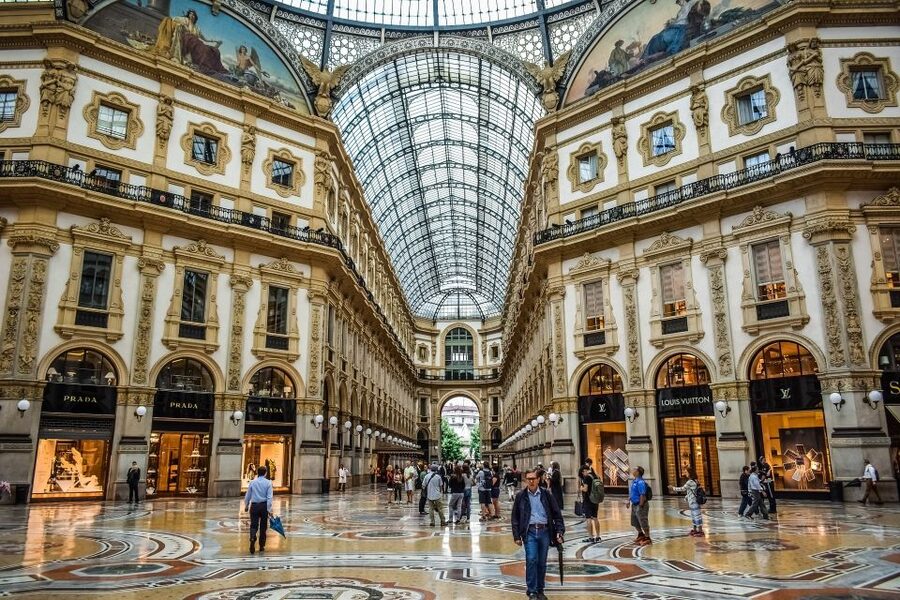
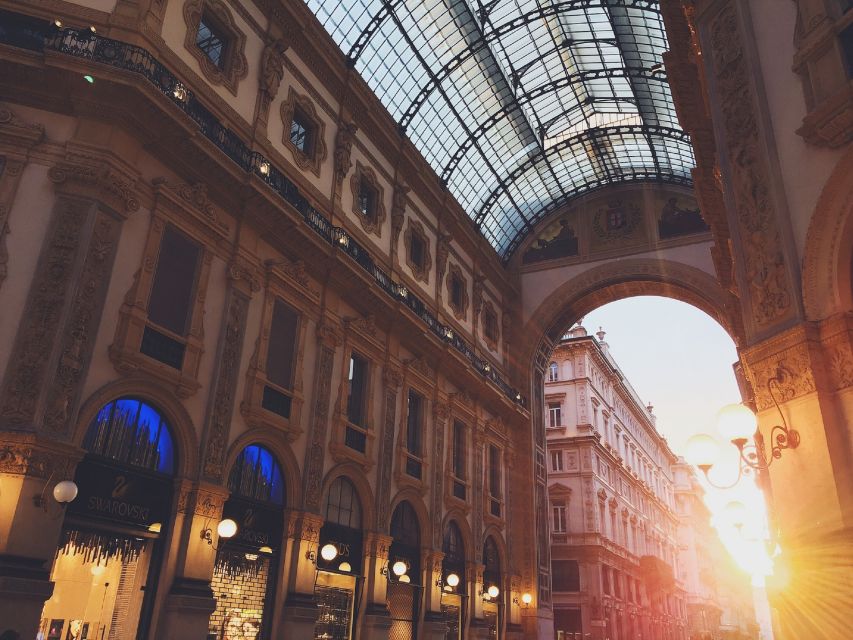
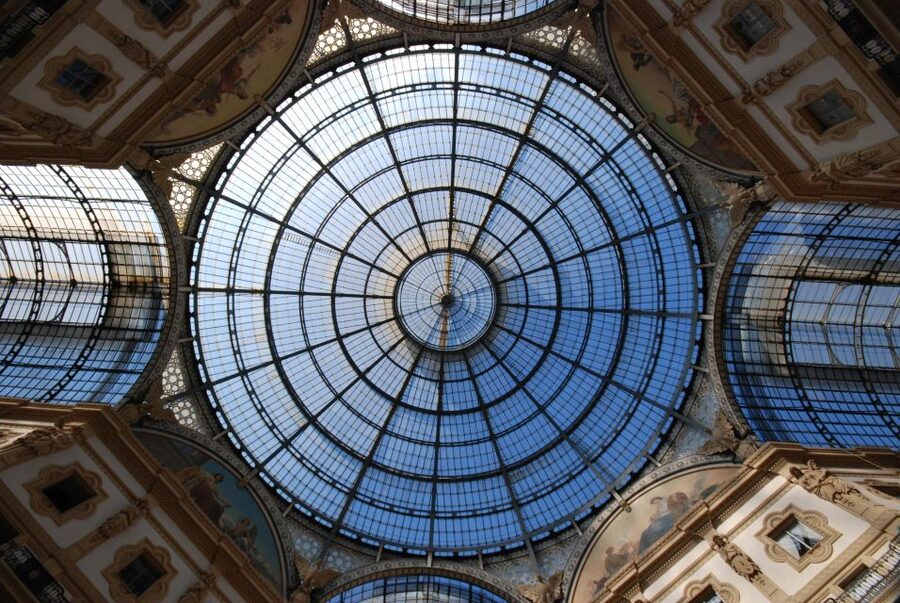
The walk continues past the impressive Galleria Vittorio Emanuele II. This covered arcade is one of the most recognizable places in Milan, and evening lighting gives its architecture a polished, theatrical feel.
The Galleria is also a good place to notice how the tour balances major sights with smaller discoveries. You get the landmarks you came to see, but the guide does not stop at a quick name and photograph. The larger story includes old and new public squares, former and current town-hall sites, and the way Milan’s center has changed over time.
One guide, Stefano, has been praised for covering the old and new squares, the Duomo, the castle, town-hall sites, and other stops with remarkable energy. That gives you an idea of the range possible within two hours. The exact emphasis can depend on the guide and the group, but the route is designed to cover a good stretch of central Milan.
Bring a phone or camera if evening photographs matter to you. The tour specifically focuses on Milan’s night views, and the illuminated buildings are among its clearest advantages. You may not get a long photography session at every stop, since the group needs to keep moving, but there should be repeated chances to frame the main monuments.
Finishing in front of the Duomo
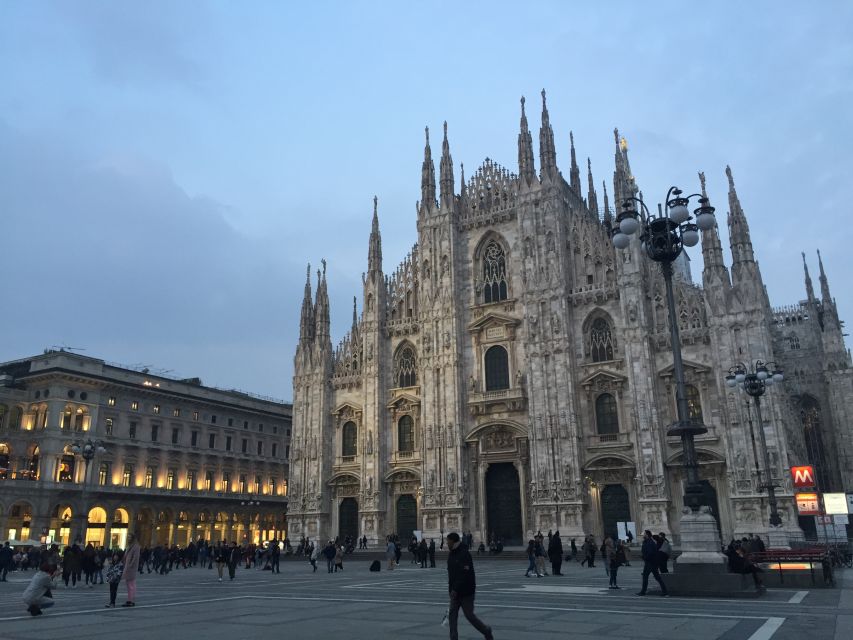
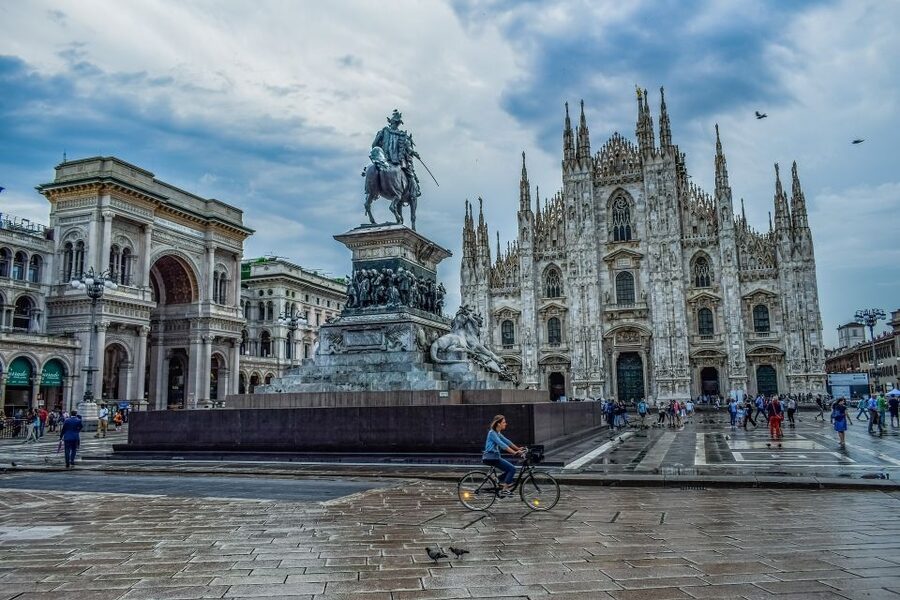
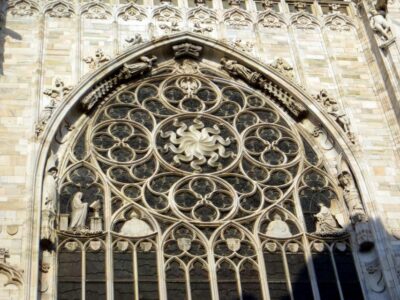
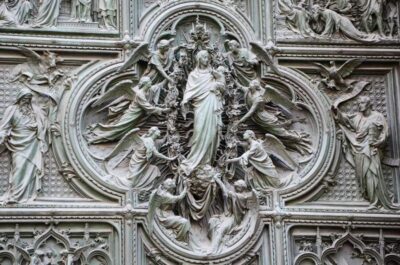
The final major stop is Duomo Square, in front of Milan Cathedral. Ending here makes practical sense. The square is one of the city’s essential sights, and seeing the cathedral lit at night gives you a strong closing image.
The tour does not include entry to the cathedral, food, or drinks. You finish with an outdoor view and the guide’s final stories, not an interior visit. If you want to climb the roof or explore the cathedral inside, plan that separately.
I like finishing at the Duomo because it gives you a clear sense of the route you have covered. You begin at a castle and end at Milan’s great cathedral, passing through opera, shopping arcades, squares, and side streets along the way. It is a compact way to get your bearings during a short stay.
The ending also works well on a first evening. You can use the walk to decide which places deserve a return visit in daylight. Several guides have offered tips about food and shopping, and that sort of advice is most useful when you still have time left in Milan.
What the guides add
The strongest feature here is the human one. The guide is not simply pointing at a building and reciting its name. The better departures connect architecture with family power, civic change, local customs, and stories that make the city easier to remember.
Nina has led several highly praised walks and is described as especially good at answering questions in depth. Cristina is noted for her passion, humor, and ability to make the city’s story clear. Stefano has a particularly large store of dates, names, and statistics, which suits visitors who want a serious historical introduction.
Other guides have made a mark in different ways. Laura has been praised for comparing Milan with other Italian cities and for offering food and shopping advice. Giovanni has led relaxed walks with useful recommendations. Simone has helped repeat visitors find places they had not seen before. This is important: the tour can still offer something new if you have already spent time around the Duomo.
You should also speak up if you cannot hear. One participant found a guide’s voice too quiet, and another had trouble hearing above surrounding noise. Groups larger than 10 receive headphones, but smaller groups do not automatically have them. If the street is noisy, politely ask the guide to repeat or move closer.
Group size, pace, and comfort
The advertised duration is two hours, with a moderate amount of walking. This is not an exhausting full-day outing, but you should expect to remain on your feet for most of it. Comfortable shoes are essential.
Small groups are common enough to be a real attraction, though you should not assume every departure will become a private tour. Some bookings have ended up with only two people because others did not arrive. That creates plenty of time for questions and personal recommendations, but it is simply a possibility rather than a promise.
The pace is generally relaxed. That suits visitors who want to listen and look around rather than rush from one landmark to the next. It may feel slow if you have limited patience for historical explanation or want to cover every central street in a single evening.
The tour is not suggested for wheelchair users or people with back problems. The route involves moderate walking, and the information specifically identifies back problems as a concern. If mobility or stamina is an issue, ask for more details before booking.
Weather can change the experience. Rain has made some departures less comfortable, with umbrellas making it harder for everyone to hear and reach certain areas. The tour is outdoors, so check the forecast and dress for the evening. A raincoat may be easier than holding an umbrella while trying to listen.
Is $52 a fair price?
At $52 per person, this is not the cheapest way to see Milan’s center. You can walk from the castle to the Duomo on your own for free. The price pays for the guide’s preparation, the stories, the route planning, and the chance to ask questions as you go.
The value is strongest if you are visiting Milan for the first time, have only a short stay, or want context that you would not get from simply walking between monuments. A guide can point out the old and new squares, explain the role of noble families, and add smaller places to your mental map.
The value is less clear if you already know Milan well, dislike history, or prefer to explore at your own pace. You are also paying for a two-hour outdoor activity, not entry tickets or refreshments. Hotel pickup and drop-off are not included, though they are available for an additional fee.
Free cancellation up to 24 hours before the start gives you some useful flexibility. You can also reserve now and pay later, which helps if you are still arranging a Milan itinerary.
Who should book this evening walk?
I would choose this tour for a first night in Milan, especially if you want a gentle orientation rather than a packed schedule. It is also a good fit for couples, families with older children, and visitors who enjoy stories about buildings, rulers, city changes, and unusual local tales.
The tour can suit repeat visitors too. One repeat Milan visitor found new places with a guide, and several people finished with restaurant, shopping, or sightseeing suggestions. The best match is someone who wants to understand what they are seeing, not simply collect photographs.
I would think twice if you have back problems, need a fully accessible route, or strongly dislike walking outdoors at night. I would also avoid booking it as your only Duomo experience if your main goal is cathedral interior access or rooftop views.
Should you book Milan by Night?
Book it if you want a well-paced introduction to central Milan, strong evening photographs, and a guide who can explain the people and stories behind the monuments. The route from Sforza Castle to the Duomo gives you a useful two-hour slice of the city, and the guides have earned especially strong praise for their clear, personal explanations.
Skip it if you want a self-guided stroll, a food tour, or a cathedral visit with included entry. For most first-time visitors who like history and do not mind moderate walking, $52 is a reasonable price for a focused evening orientation. Arrive early, wear good shoes, and meet the guide under the Filarete clock tower, not inside the castle courtyards.
FAQ
How long is the Milan by Night walking tour?
The tour lasts two hours.
Where does the tour meet?
Meet at Piazza Castello, under the Filarete clock tower in front of Sforza Castle. The meeting point is outside the courtyards.
How do I identify the guide?
Look for a guide holding a Hidden Experiences flag or sign.
Which languages are available?
The tour is available in English, Italian, and French.
Does the tour include food or drinks?
No. Food and drinks are not included.
Does the tour include hotel pickup and drop-off?
No. Hotel pickup and drop-off are not included, but they are available for an additional fee.
Are headphones provided?
Headphones are provided for groups larger than 10 participants.
Is the tour suitable for wheelchair users or people with back problems?
The tour is not suggested for wheelchair users or people with back problems. A moderate amount of walking is involved, so comfortable shoes are recommended.
New routes in Italy
- Private St. Francis Basilica of Assisi and City Walking Tour★ 5.0 · 114 reviews
- Assisi Private Walking Tour including St. Francis Basilica★ 5.0 · 124 reviews
- Milan: City Highlights Walking Tour with The Last Supper★ 4.9 · 195 reviews
- Florence: Heart of Florence Guided Walking Tour★ 4.0 · 81 reviews
- Milan: Private or Shared Essential Walking Tour★ 4.7 · 84 reviews
- Taormina: Shared or Private Food & Wine Walking Tour★ 4.6 · 167 reviews
- Syracuse: Ortigia Private Walking Tour★ 4.8 · 181 reviews
- Syracuse: Ortigia and Neapolis Guided Walking Tour★ 4.7 · 205 reviews
Milan Walking Tours, compared.
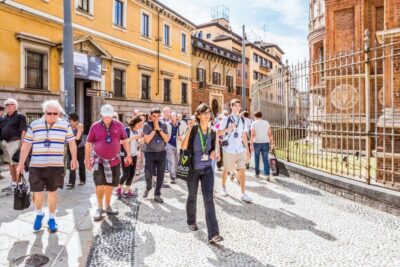
Guided Walking Tour & Last Supper Visit with Ticket
Read our review →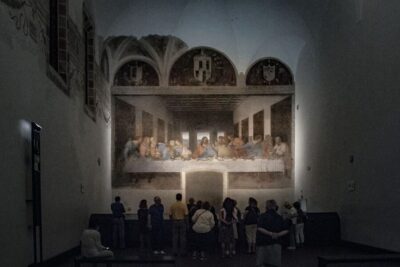
Guided Walking Tour with Last Supper Skip-the-Line
Read our review →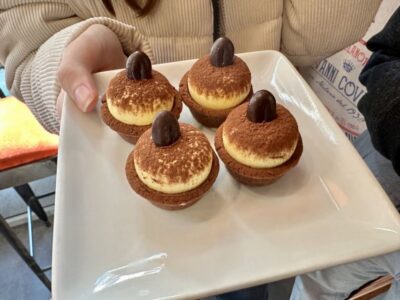
Guided Street Food Walking Tour with Food Tasting
Read our review →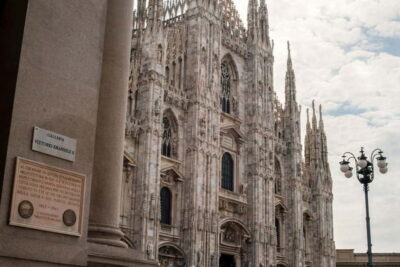
Best of City Walking Tour with Last Supper Tickets
Read our review →
Browse the lists this tour appears in