
Review · ITALY
Milan: Da Vinci’s Last Supper and Guided Walking Tour
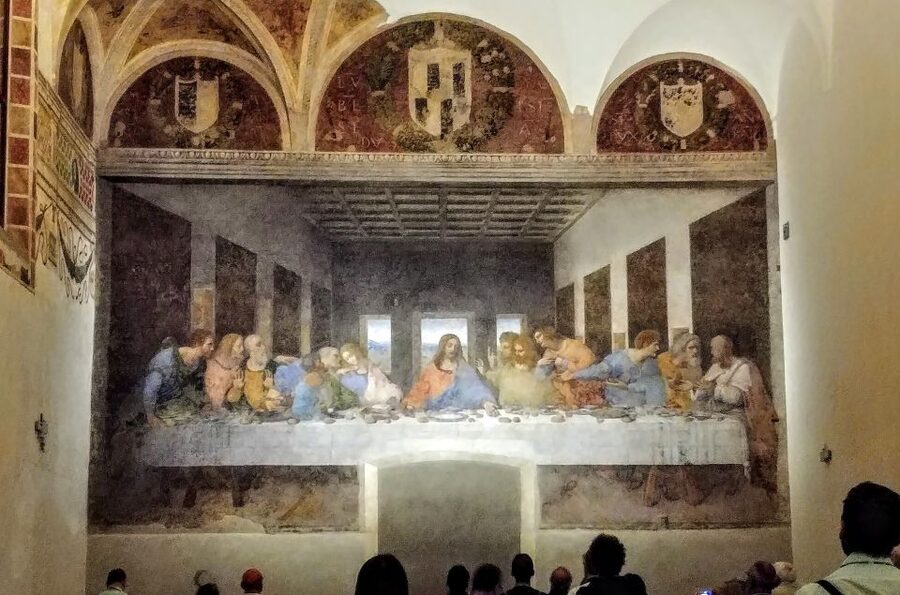
Leonardo’s Last Supper is the star here, and for good reason. You get a timed visit inside Santa Maria delle Grazie, then continue through Milan’s historic center with a local guide who connects Leonardo’s work to the city around you. The 15-minute viewing limit feels brief, but it protects the fragile mural and keeps the experience moving.
I like the efficient route and the quality of the guiding. You see Sforza Castle, La Scala, the Galleria Vittorio Emanuele II, and the Duomo exterior without spending time figuring out Milan’s layout. Guides including Sylvia, Simon, David, Jose, and Eddie have been singled out for clear explanations, humor, and a good sense of pace. The main caution is that the tour is a brisk three-hour walk, and the Duomo interior is not included.
Key points at a glance
- Leonardo’s mural comes first: Enter Santa Maria delle Grazie with a timed ticket and view The Last Supper for up to 15 minutes.
- A useful Milan overview: The route links Sforza Castle, La Scala, the Galleria, and Piazza Duomo in one continuous walk.
- Guiding is the main value: English-speaking guides explain art, architecture, politics, and Milanese history through stories rather than a string of dry dates.
- The Duomo is exterior-only: You can study its marble façade, statues, and spires, but long lines prevent an interior visit.
- Plan for a fast pace: Comfortable shoes, water, and a little stamina will make the afternoon much easier.
- Bring official identification: Your passport, ID card, or driving license is required to enter The Last Supper.
Why The Last Supper makes this tour worth considering
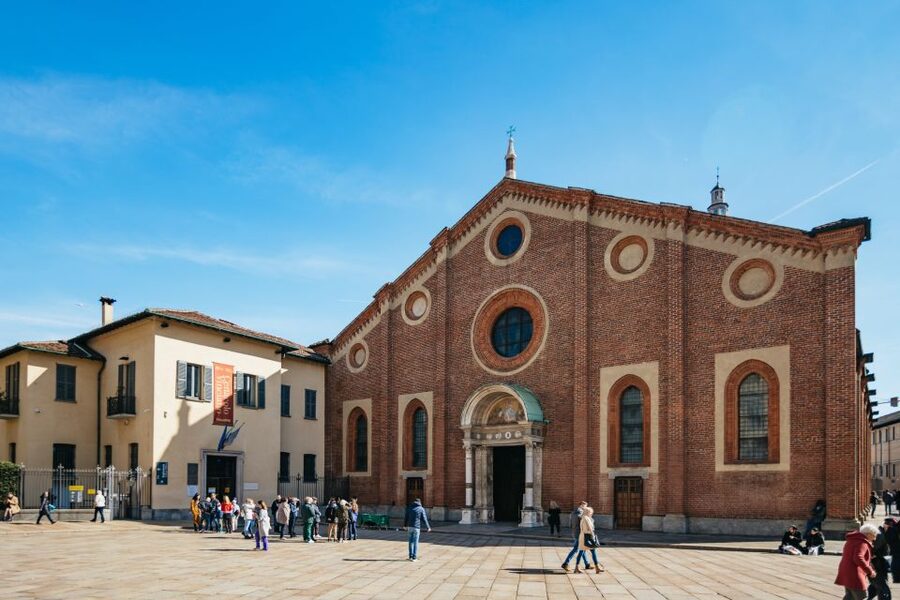
Milan has plenty of famous sights, but Leonardo da Vinci’s The Last Supper is the one that requires the most planning. Tickets are limited, viewing times are controlled, and the mural is protected with strict entry rules. A guided booking removes much of the fuss and gives you an art lesson at the moment you need it.
You meet in Santa Maria delle Grazie Square, in front of the church entrance for Leonardo’s Last Supper. This matters: the meeting point is not the Duomo, and you should allow enough time to find the church. A few people have found the meeting point less obvious than expected, so look carefully for the guide and keep the activity provider’s contact information available if you are running late.
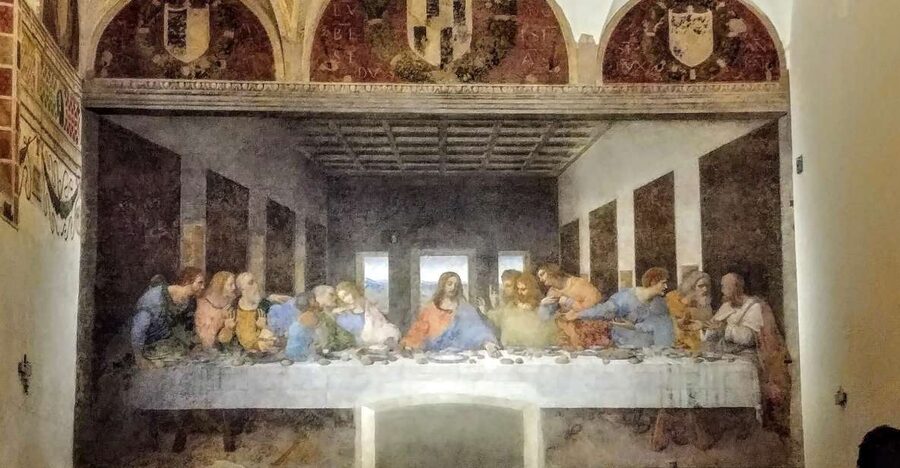
Once inside, you pass into the room where Leonardo painted his famous scene. The actual viewing lasts no more than 15 minutes. That may sound short for such a celebrated work, but it is enough time to look carefully if you know what to notice. The guide’s explanation helps you use those minutes well, pointing out the arrangement of the apostles, Leonardo’s choices, and the painting’s place in Milan.
This is not a museum visit where you can linger for an hour. It is a controlled encounter with one painting. You cannot wander in and out at your own pace, and you need your passport, national ID card, or driving license for entry. Large bags and luggage are not allowed, so keep your belongings light.
The mural is the strongest reason to book this experience. If you tried to arrange the visit at the last minute, the limited availability could become a problem. At $70 per person, you are paying not only for access but also for the guide, the route planning, the headsets, and the time saved.
More Guided Walks in Italy:
- Milan: Guided Walking Tour & Last Supper Visit with Ticket
★ 4.7 · 5,409 reviews - Naples: Street Food Walking Tour with Local Guide
★ 4.9 · 4,976 reviews - Florence: Highlights Walking Tour with Expert Guide
★ 4.6 · 4,662 reviews
Santa Maria delle Grazie and Leonardo’s 15 minutes
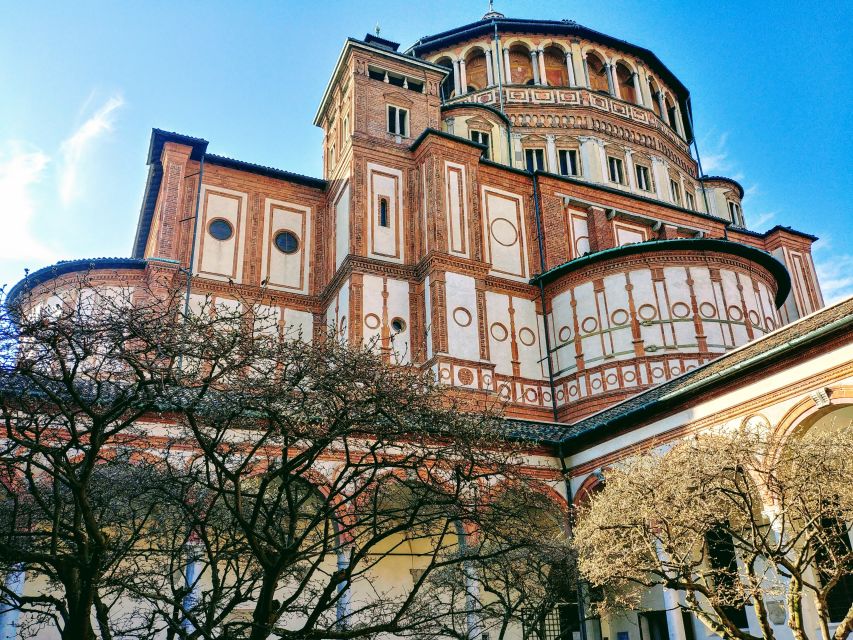
The church of Santa Maria delle Grazie gives the tour a fitting beginning. Leonardo’s mural is not presented as an isolated gallery object. It is part of a historic religious complex, and the guide helps explain how the painting fits into Milan’s artistic and political story.
The viewing time is short, so I recommend arriving ready to focus. Do not spend the first few minutes taking hurried photographs or trying to understand every detail alone. Listen to the guide first, then use the remaining time to look at the scene with a clearer eye.
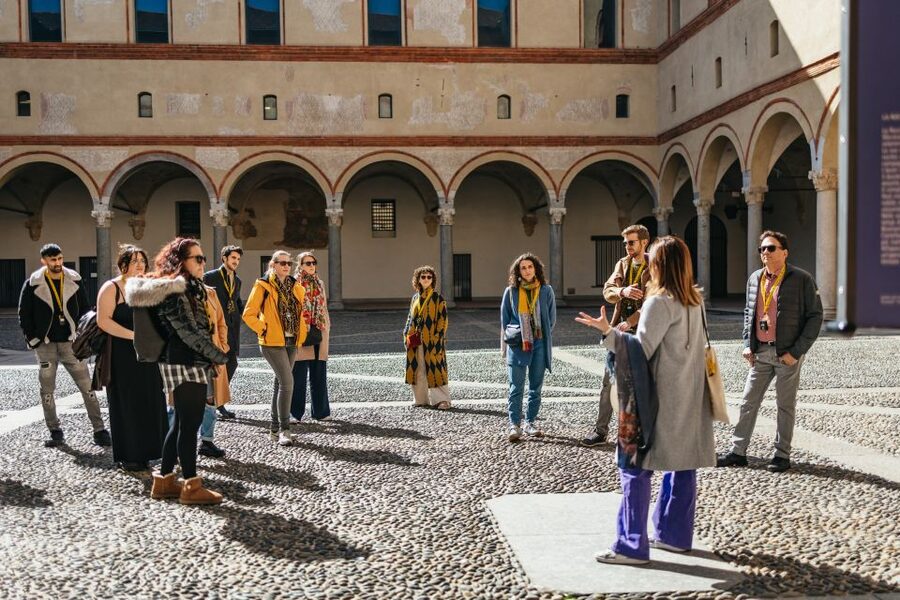
The supplied headsets help you hear without crowding around the guide. That is useful in busy streets and open squares later in the walk. One practical complaint has been that the earpieces can feel uncomfortable, so you might prefer to bring your own compatible earphones if the system allows it. The key benefit is clear: you do not have to stand shoulder to shoulder with the guide to follow the explanation.
Your guide may be someone such as Sylvia, Simon, David, Jose, or another member of the English-speaking team. The strongest guides on this route are not simply reciting facts. They explain how to look at art, add small stories about Leonardo and Milan, and answer questions without losing control of the schedule.
Sforza Castle and Milan’s political center
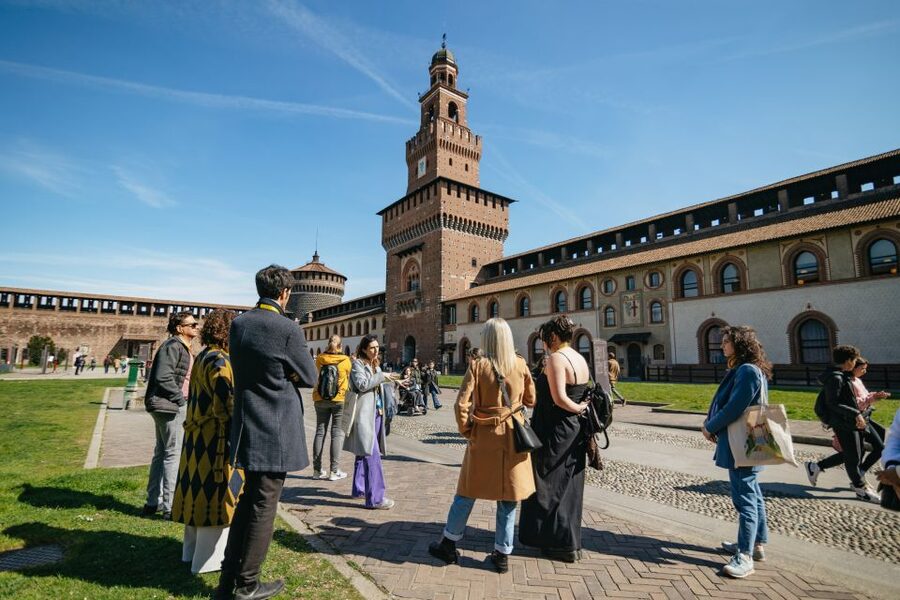
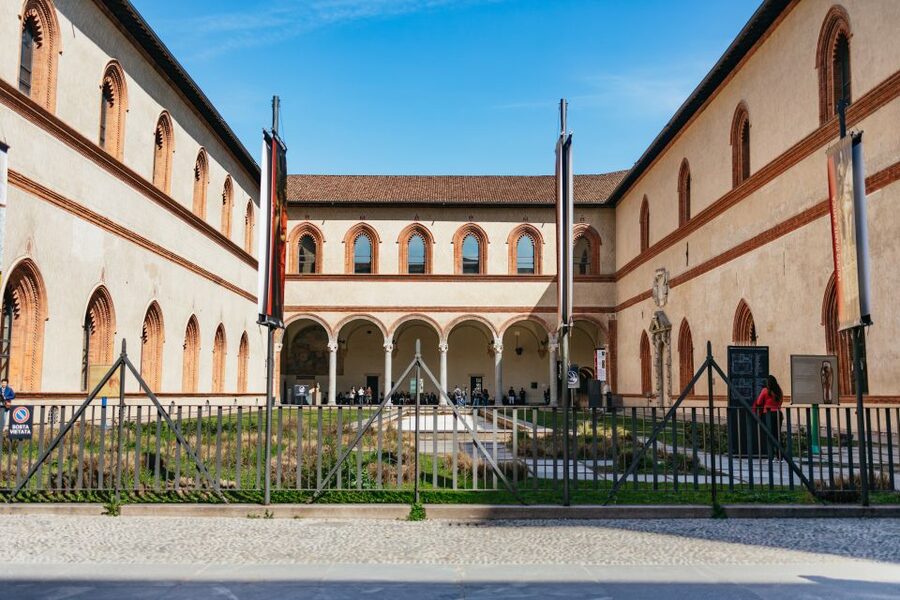
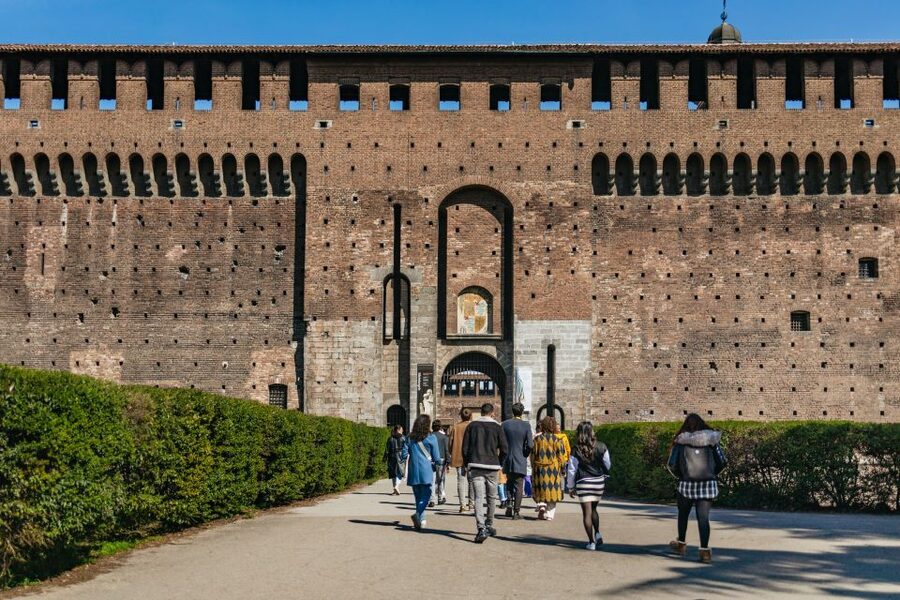
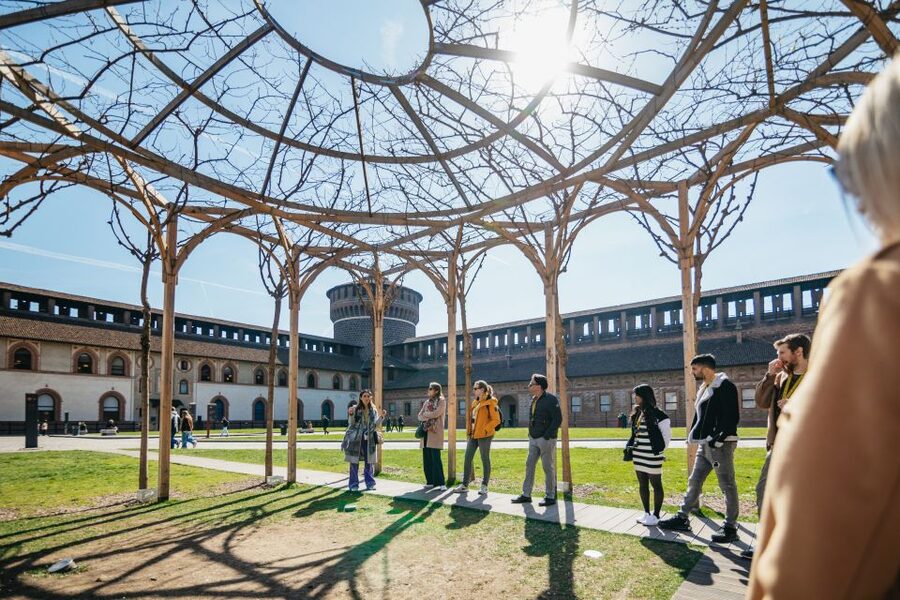
After the mural, the walking portion continues toward Sforza Castle. This large 15th-century fortress marks a former center of Milanese power, and it gives the tour a different mood from Santa Maria delle Grazie. You move from Renaissance art to walls, courtyards, rulers, and the political story of the city.
The castle is especially useful for understanding Milan as more than a shopping and fashion capital. Its presence helps explain the influence of the ruling families who shaped the city. Your guide fills in the background while you walk, so you get context without committing to a separate castle visit.
The route does not promise a full indoor exploration of Sforza Castle. Think of this section as a guided look at the historic complex and its place in Milan. That keeps the tour moving, but anyone wanting museums and detailed castle interiors will need extra time on another day.
The walk between stops is where the guide’s personality matters most. Several guides on this experience have been praised for humor, patience, and enthusiasm. Simon, for example, is noted for bringing the city’s buildings and paintings to life, while other guides have been appreciated for adjusting the pace and adding shade or drink breaks during hot weather.
La Scala, Piazza della Scala, and Leonardo in the city
From the castle, you continue toward Piazza della Scala, home of the famous Teatro alla Scala. The theater is closely tied to names such as Toscanini, Puccini, Verdi, and Maria Callas. Even if opera is not your main interest, the square gives you a compact look at Milan’s cultural importance.
The stop also includes views of the monument to Leonardo and Palazzo Marino. This is a nice change of scale. Instead of looking at Leonardo only as the painter of one sacred mural, you see how his image has become part of the city’s public identity.
I particularly like this part of the walk because it links art to daily city life. The route is not only a parade of famous façades. It shows how Milan’s political buildings, theaters, monuments, and public squares sit beside one another.
The pace can be brisk. One guide kept the group moving and finished on time, which is useful if you have a train, dinner reservation, or evening plan. It also means you should not expect long pauses at every monument. Ask questions when you can, and save detailed exploration for the sights you want to revisit later.
More Walking Tours in Italy:
- Venice: Doge’s Palace and St Mark’s Basilica Walking Tour
★ 4.4 · 6,291 reviews - Venice: San Marco to Rialto Walk & Spritz Like a Local
★ 4.2 · 3,651 reviews - Uffizi & Accademia Timed Entry: Small Group Duomo Walking Tour
★ 4.5 · 3,630 reviews - Venice Walking Tour and Gondola Ride
★ 3.5 · 3,630 reviews
The Galleria Vittorio Emanuele II and Piazza Duomo
The Galleria Vittorio Emanuele II is one of Milan’s most elegant public passages. Its 19th-century glass roof, ornate decoration, and polished shops make the walk to the Duomo feel like an attraction in its own right.
This is not just a shopping shortcut. The Galleria shows the city’s taste for grand urban design, and it provides a useful transition from La Scala to Piazza Duomo. You move from opera house to covered arcade, then emerge in front of Milan’s great cathedral.
The Galleria can be busy, and the group needs to stay together. Keep an eye on the guide rather than assuming the next stop is obvious. The headsets are helpful here, especially when surrounding noise makes a normal conversation difficult.
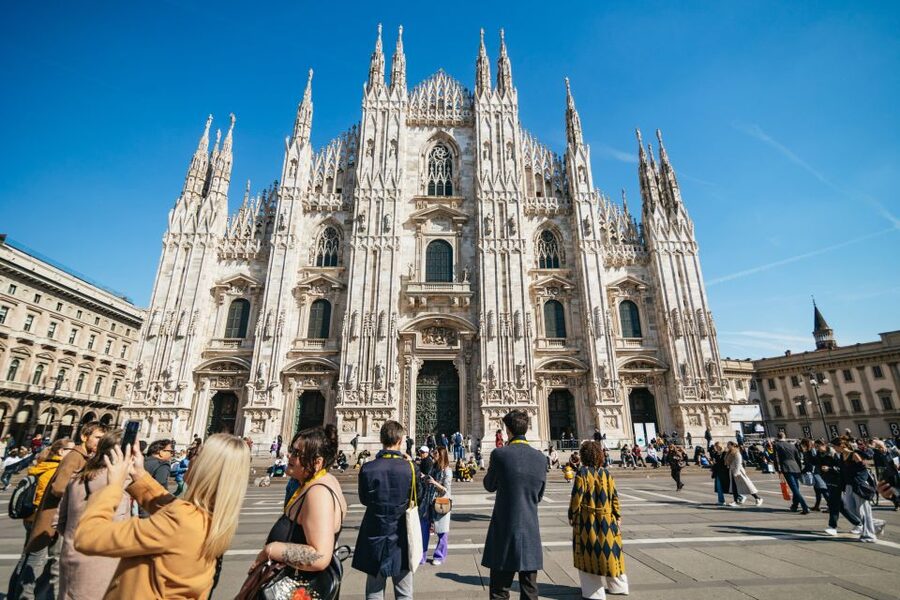
At Piazza Duomo, the route reaches its grand finish. The cathedral’s façade is covered with marble detail, statues, and spires. It is one of those buildings that can overwhelm you at first glance, and a guide helps direct your attention to features you might otherwise miss.
This tour only visits the Duomo from outside. You do not enter the cathedral or go up to the terraces. That limitation is important. The exterior visit works well if you want a first look at Milan’s signature monument, but it will not satisfy you if the cathedral interior is your main goal.
Long lines are the reason the schedule does not include an interior visit. If you want to go inside, plan a separate booking and allow extra time. Do not assume that the $70 tour price covers Duomo admission.
Is $70 a fair price for three hours?
The value depends on how you normally travel. If you are comfortable booking The Last Supper, finding Santa Maria delle Grazie, planning a route across central Milan, and researching the background yourself, you may find the price high. One practical criticism is that the ticket itself is only one part of the experience, while the combined booking costs much more than admission alone.
I see the price differently for a first visit or a short stay. The tour takes care of one of Milan’s hardest reservations and combines it with four major city sights. You also get a licensed English-speaking guide, headsets, and a carefully timed route. That saves time and decision-making, which can be valuable during a one-day stop.
The strongest part of the price is the human explanation. A plain entry ticket shows you The Last Supper, but it does not necessarily help you understand what you are seeing. A good guide turns 15 minutes in front of the mural into a focused art experience, then adds useful background at the castle, theater, arcade, and cathedral.
You should still set realistic expectations. This is not a private tour, and three hours does not allow a detailed visit inside every monument. You pay for an efficient overview and a protected Last Supper visit, not an all-day Milan history course.
Timing, energy, and the best way to prepare
Three hours on foot can feel easy in cool weather and demanding in summer. Hot days have been handled well when guides added shade and water breaks, but you should still carry water and wear comfortable shoes. The route has two natural chances to pause, though the tour is designed to keep moving.
Some departures begin late in the day. That can be pleasant because the Duomo area may look especially attractive as daylight fades, but it can also follow a full day of sightseeing. If you are already tired, the final stretch may feel longer than expected. A morning departure is likely the better choice for anyone who wants energy for the whole route, while an evening start may suit someone arriving in Milan after lunch.
Arrive at the meeting point early. Bring your passport or other accepted photo ID, and do not bring luggage or a large bag. Infants under one year old go free, but the walking demands still matter when planning for very young children.
The activity is wheelchair accessible, though you should consider the pace and the length of the walk when deciding if it fits your needs. If you have mobility concerns, contact the provider before booking so you can confirm how the route will work for your group.
Who should book this Milan walking tour?
I would choose this tour if you have only one day in Milan, want to see The Last Supper, and prefer a guide to handle the city’s history and route. It is also a strong first activity because it gives you a useful map of the center: castle, theater, arcade, and cathedral.
It suits people who enjoy stories about art and architecture but do not want a long classroom-style lecture. The best guides add humor and small local details, while still explaining the important facts. Guides such as Eddie, Sylvia, Simon, and David have been praised for making the material clear and engaging.
I would hesitate if you want to spend substantial time inside the Duomo or Sforza Castle. I would also think twice if you dislike group walks, timed museum visits, or a brisk schedule. The Last Supper viewing is controlled, and the final cathedral stop is exterior-only.
The experience has earned a 4.8 rating from 683 bookings, and the pattern is clear: the guide makes the biggest difference. A strong guide can turn a basic city walk into a memorable lesson in Milanese art and power. The occasional drawbacks are practical rather than dramatic: a vague meeting point, slightly uncomfortable earpieces, and tired legs late in the day.
Should you book it?
Book this tour if The Last Supper is a priority and you want a quick, well-organized introduction to Milan. At $70, it is most useful when your time is short and you value a clear route, an English-speaking guide, and help with a difficult-to-arrange timed entry.
Skip it if you mainly want to explore the Duomo interior, browse at your own pace, or spend hours inside Sforza Castle. In that case, arrange The Last Supper separately and build a slower day around the monuments.
For most first-time visitors with limited time, I would book it. Bring ID, wear good shoes, arrive early at Santa Maria delle Grazie, and treat the Duomo as an exterior highlight rather than an included cathedral visit.
FAQ
How long does the Milan Last Supper and walking tour last?
The tour lasts three hours.
What language is the tour conducted in?
The live tour is conducted in English by a licensed local guide.
Where does the tour meet?
You meet in front of the entrance to Leonardo’s Last Supper at Santa Maria delle Grazie Square.
Is skip-the-line entry to The Last Supper included?
Yes. The activity includes a skip-the-line ticket to The Last Supper.
How long can I view The Last Supper?
Viewing time is limited to a maximum of 15 minutes to help protect the mural.
Do I need identification for The Last Supper?
Yes. You must bring a passport, ID card, or driving license to enter.
Does the tour enter Milan Duomo?
No. The tour views the Duomo from outside. Entrance to the cathedral is not included.
What other Milan sights are on the walking route?
The route includes Sforza Castle, Piazza della Scala and La Scala, the monument to Leonardo, Palazzo Marino, the Galleria Vittorio Emanuele II, and Piazza Duomo.
Are headsets provided?
Yes. Headsets are provided so you can hear the guide clearly.
Can I cancel the booking?
You can cancel up to 24 hours in advance for a full refund. The reserve-now-and-pay-later option is also available.
New routes in Italy
- Private St. Francis Basilica of Assisi and City Walking Tour★ 5.0 · 114 reviews
- Assisi Private Walking Tour including St. Francis Basilica★ 5.0 · 124 reviews
- Milan: City Highlights Walking Tour with The Last Supper★ 4.9 · 195 reviews
- Florence: Heart of Florence Guided Walking Tour★ 4.0 · 81 reviews
- Milan: Private or Shared Essential Walking Tour★ 4.7 · 84 reviews
- Taormina: Shared or Private Food & Wine Walking Tour★ 4.6 · 167 reviews
- Syracuse: Ortigia Private Walking Tour★ 4.8 · 181 reviews
- Syracuse: Ortigia and Neapolis Guided Walking Tour★ 4.7 · 205 reviews
Italy Walking Tours, compared.
Doge’s Palace and St Mark’s Basilica Walking Tour
Read our review →
Guided Walking Tour & Last Supper Visit with Ticket
Read our review →
San Marco to Rialto Walk & Spritz Like a Local
Read our review →
Uffizi & Accademia Timed Entry: Small Group Duomo Walking Tour
Read our review →
Browse the lists this tour appears in