
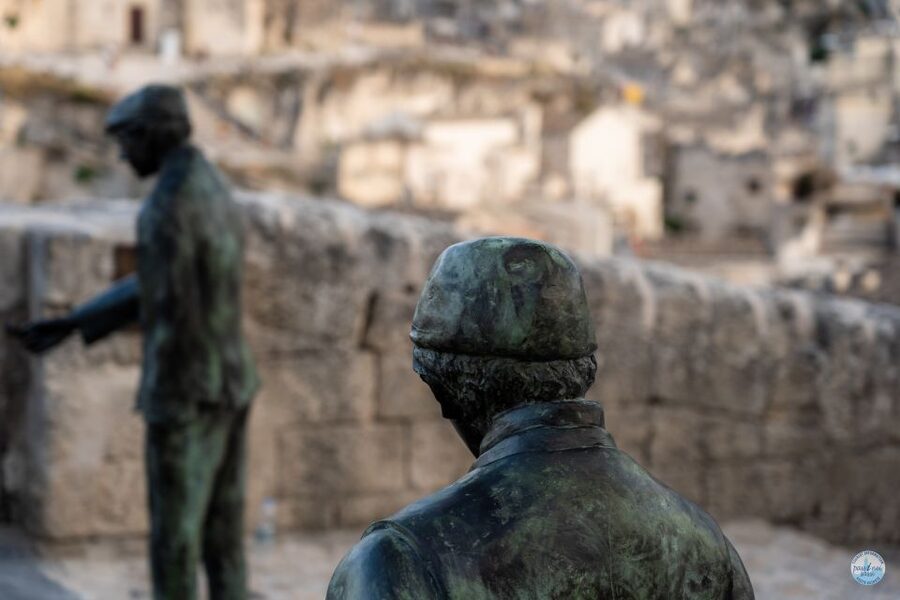
Review · ITALY
Matera Walking Tour with Casa Grotta & Rock Church Entry
Matera makes the most sense when you see it from inside the caves. This two-hour walk leads you from the polished historic center into the Sassi, where homes, churches, alleys, and communal spaces were carved into soft rock. The best part is the shift in scale: one minute you are looking across the rooftops, and the next you are standing inside a dark chapel covered with old frescoes.
I like the licensed local guides, who explain how people actually lived here rather than treating Matera as a pretty photo stop. I also like that the fee includes the Casa Grotta, peasant museum, and two rock churches. The drawback is the terrain: steps, uneven paving, and heat can make this a demanding walk, and the advertised two hours may stretch longer in hot weather or when the guide adds rest stops.
Key points at a glance
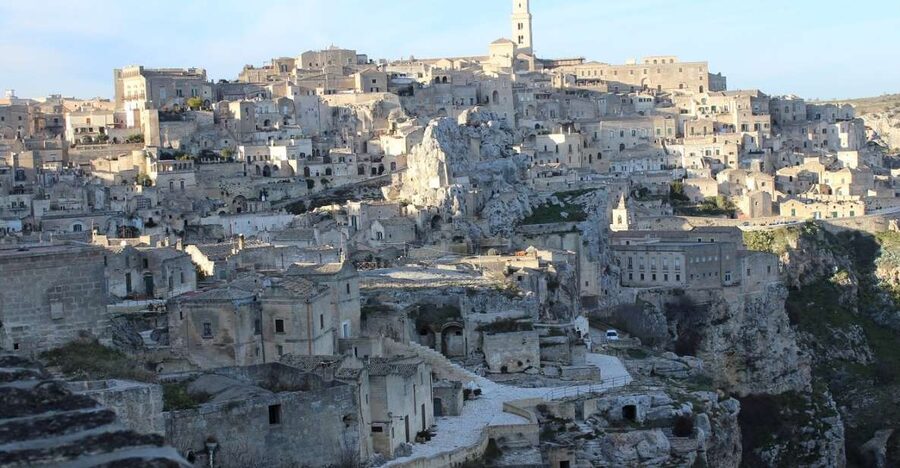
- See three sides of old Matera: The route links the historic center, Civita, Sasso Barisano, and Sasso Caveoso.
- Enter real underground spaces: A furnished Casa Grotta and the Museum of Peasant Civilization show how families lived before the Sassi were emptied in the 1950s.
- Visit two rock churches: Santa Maria de Idris and San Giovanni in Monterrone are included in the price.
- Get local context: Guides such as Lorenza, Patrizia, Anna, and Annalisa explain Matera through family stories, architecture, and daily life.
- Expect a physical walk: Comfortable shoes are essential, and this tour is not suitable for people with mobility impairments.
- Good value at $35: Admission tickets and a regional guide are included, with no separate entry fees to sort out.
Starting near Via Don Minzoni and Piazza Vittorio Veneto
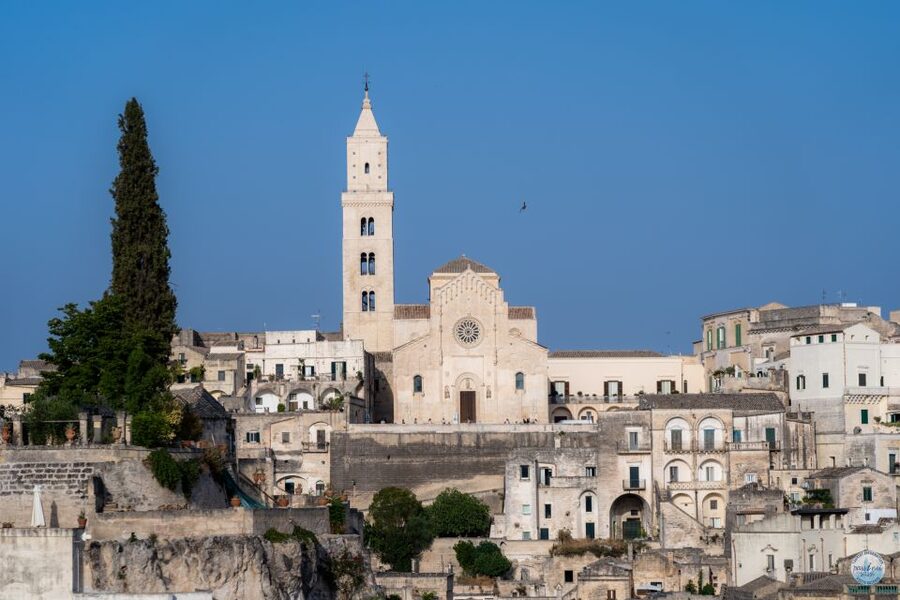
You meet at the Passi nei Sassi office on Via Don Giovanni Minzoni 13, although the exact meeting point can vary with the option you book. From there, the group makes a short walk to Piazza Vittorio Veneto, where the formal tour begins.
This opening helps you get your bearings before the route drops into the old quarters. Matera can feel confusing at first. Streets bend, stairways replace roads, and one alley may lead to a view that looks entirely different from the last one. Starting in the central square gives you a clear reference point.
From Piazza Vittorio Veneto, you move through the historic center among churches, noble buildings, and small corners shaped by centuries of use. This part is useful because it shows that Matera is not only a cave settlement. It is also a working Italian city with an urban center above and around the Sassi.
Your guide sets the story in place here. Guides speak Italian, English, Spanish, French, and German. An optional audio guide is available in Spanish. English-language guides named in past departures include Lorenza Borrelli, Patrizia, Anna, Annalisa, Vita, Maria, Andrea, and Guido, though your guide will depend on the date and language you select.
More Walking Tours in Italy:
- Venice: Doge’s Palace and St Mark’s Basilica Walking Tour
★ 4.4 · 6,291 reviews - Milan: Guided Walking Tour & Last Supper Visit with Ticket
★ 4.7 · 5,409 reviews - Naples: Street Food Walking Tour with Local Guide
★ 4.9 · 4,976 reviews
From Civita to the wide view over Sasso Barisano
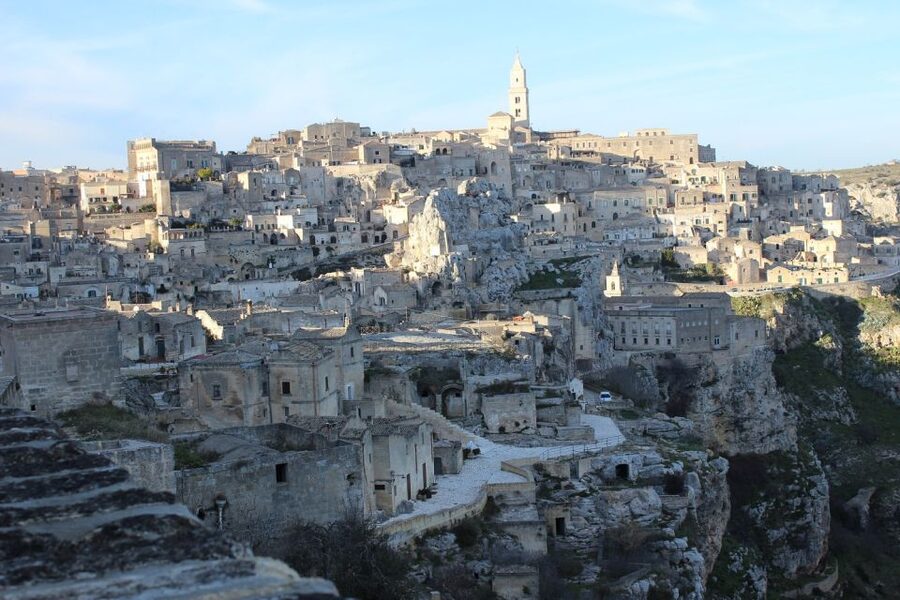
The route continues toward Civita, the old medieval core on the high ground between the two main Sassi districts. From this point, you look over Sasso Barisano, a broad sweep of stone dwellings, small churches, terraces, and narrow lanes.
This is where a guide earns the price of admission. You can photograph the view on your own, but it is harder to understand how the city is arranged without someone pointing out the divisions between built structures and excavated rooms. Your guide also helps you read the relationship between churches, homes, cisterns, courtyards, and shared passageways.
I find this section especially useful early in a Matera visit. Once you understand the shape of the city, you can return later and explore without feeling lost. One guide may point out an easier route or a restaurant, while another may focus more on architectural details, family stories, or the city’s past. The exact emphasis changes with the person leading your walk.
The views are excellent, but do not expect a long photo session at every stop. This is a moving tour, and the group needs to stay together. Still, the guide usually pauses at useful overlooks and speaks from places where you can see the point being discussed.
Sasso Caveoso and the shared vicinati
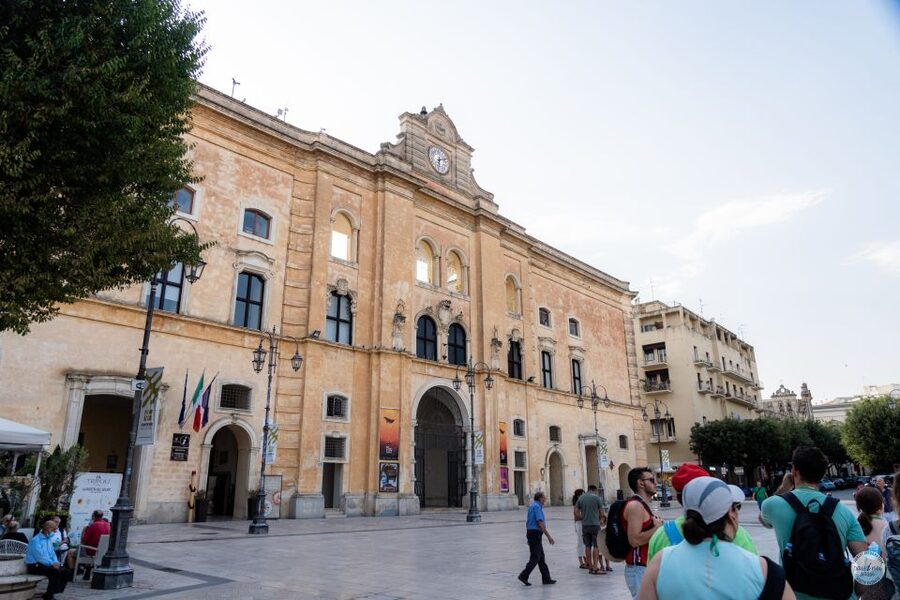
Sasso Caveoso is the more immediately dramatic part of the route. Here, rock homes and stone facades cling to the slopes, and the alleys feel more like passages through a carved hillside than ordinary streets.
You learn about the vicinati, shared neighborhood spaces where several families lived around a common courtyard or passage. This is an important part of the story because it changes the way you see the Sassi. These were not isolated caves scattered at random. They formed close communities, with daily life organized around shared areas, water, work, and family ties.
The tour also reaches the barbarian cemetery, an archaeological site with a spare, mysterious feel. It is not a large museum stop, so the guide’s explanation matters. You gain a sense of the long use of this area and the layers of human activity beneath the modern city.
Expect plenty of steps and uneven surfaces. Several people found the pace manageable, but some also needed good physical condition, especially in summer. The guides have adjusted routes, added shade stops, and chosen easier ways back up when heat or stairs became a problem. That helps, but it does not turn the walk into an easy stroll.
Inside Santa Maria de Idris and San Giovanni in Monterrone
The Monterrone rock is one of the tour’s strongest stops. Cut into this imposing outcrop are Santa Maria de Idris and San Giovanni in Monterrone, two of Matera’s important rock-hewn churches.
The interiors offer a sharp contrast to the open views outside. You enter spaces shaped directly from the rock, with a quiet, enclosed feel and traces of religious art. The frescoes and unusual construction make these churches more than quick photo stops. They show how worship, art, and daily life adapted to the terrain.
Admission to both churches is included. That matters at busy times, when entry lines can become confusing. One guide helped the group manage a crowded Saturday entrance, which is exactly the sort of small practical assistance you want in a place where the route and queues are not always obvious.
Santa Maria de Idris is often the visual high point because of its position on the rock and the views around it. San Giovanni in Monterrone adds another layer to the visit, letting you compare two sacred spaces within the same formation. You should not expect a large church interior or a long formal museum presentation. These are compact, atmospheric places, and the guide’s explanation fills in what the bare stone cannot show.
Same streets, a different guide:
- Florence: Highlights Walking Tour with Expert Guide
★ 4.6 · 4,662 reviews - Venice: San Marco to Rialto Walk & Spritz Like a Local
★ 4.2 · 3,651 reviews - Venice Walking Tour and Gondola Ride
★ 3.5 · 3,630 reviews - Uffizi & Accademia Timed Entry: Small Group Duomo Walking Tour
★ 4.5 · 3,630 reviews
The Casa Grotta and the Museum of Peasant Civilization
The Casa Grotta gives the Sassi story a human scale. Instead of only seeing a cave from the outside, you enter a furnished dwelling arranged with original objects. The space helps you picture family life before the Sassi were abandoned in the 1950s.
The house is not presented as a romantic fantasy. Its value is in showing how limited space served many purposes. Your guide explains the practical side of cave living, including the way families shared rooms and organized everyday work.
The short Casa Grotta visit is listed at about 15 minutes, but it carries more weight than its length suggests. After looking across the Sassi from above, you finally see the inside of one home. That change helps you understand why Matera’s past can feel both inventive and very hard.
The nearby Museum of Peasant Civilization adds objects and domestic detail to the story. The museum is included along with the churches, so the $35 price covers more than a guided walk through public streets. Together, the house and museum show the working side of Matera: food preparation, household routines, tools, and shared living.
This is also where the tour avoids one common mistake. Matera can be reduced to a beautiful film set, but the cave dwellings were homes for real families. The guide brings the focus back to people, not just stone.
What the two-hour format really gives you
Two hours is enough for a strong introduction, not enough for every corner of Matera. You get the main historic center, the high Civita viewpoint, Sasso Barisano, Sasso Caveoso, the churches, the cave house, and the peasant museum. That is a lot of ground.
Some departures have taken closer to two and a half or three hours, particularly in intense heat, rain, or when the guide adds stops. This can be helpful if you need shade, water, or time to catch up with the group. It can also affect the rest of your day, so leave some room after the scheduled finish.
The pace has generally been described as steady rather than rushed. Guides have stopped for shade, rests, drinks, and bathroom breaks when conditions required it. In cooler weather, you may move more efficiently. At midday in July or August, the same route can feel much harder.
There is no food or drink included, and you should not count on a refreshment stop. Bring water, especially during warm months. Comfortable shoes are not optional. Sandals with poor grip and smooth soles are a bad match for the stone steps.
Why the guide matters in Matera
Matera is one of those places where a local guide changes what you see. Without context, a cave may look like an unusual room, a church may look like a dark hollow in the rock, and a narrow lane may seem designed only for photographs.
A good guide connects those pieces. Lorenza, who has been described as a native of Matera, has offered family connections to the cave dwellings and explained the city in a way that links history with personal memory. Patrizia has been praised for choosing a logical route and adjusting it for different walking abilities. Annalisa has used shade stops and a clear pace in hot weather. Anna has been noted for her pride in the city and strong English.
Those details matter because the Sassi story covers architecture, poverty, religion, public health, family life, and the city’s later renewal. You want someone who can explain the uncomfortable parts without turning the visit into a lecture.
Guides also answer the practical questions that come up during the walk. Where does the old quarter begin? Why are the homes arranged this way? How did residents get water? What should you see after the tour? Several guides have suggested restaurants and additional sights at the end, which is useful if you are staying in Matera.
Price, group size, and who will get the most from it
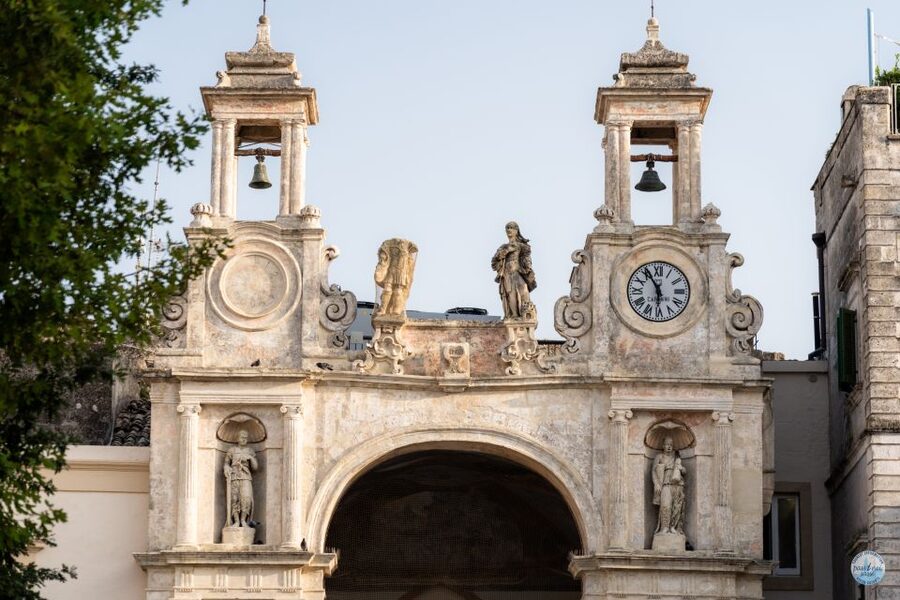
At $35 per person, this is good value if you plan to visit the paid sites anyway. The fee includes the regional guide, Santa Maria de Idris, San Giovanni in Monterrone, the Museum of Peasant Civilization, and the Casa Grotta visit. Buying entry separately would reduce the value of a self-guided walk, while the guide adds the structure and explanations.
Group size can vary. One departure handled 15 people well, while another had only two participants and felt like a walk with a well-informed local friend. You should be prepared for a shared group rather than a private tour, but the guides appear used to keeping people together and adjusting their pace.
This tour suits you best if:
- You are visiting Matera for the first time.
- You want the main Sassi areas in a short window.
- You prefer history and daily life to photo stops alone.
- You want paid church and museum entry handled as part of the experience.
- You can manage steps, slopes, and uneven paving.
It is less suitable if you have major mobility limitations, use a baby stroller, baby carriage, or electric wheelchair, or want a slow, private architectural study. The route is not designed for those needs, and those items are not allowed.
The tour operates in light rain. Heavy rain can make the stone surfaces slippery, and one wet-weather departure stayed indoors as much as possible while still covering the main sections. A light waterproof layer and shoes with a firm sole make sense.
Should you book the Matera Sassi walk?
I would book this as an opening experience in Matera, especially if you have only a day or two. The route gives you the city’s basic shape, the most important cave districts, two rock churches, a cave home, and a museum. Afterward, you can return to the places that caught your attention instead of spending your first hours trying to decode the alleys.
Book an early or later departure in summer if you can. Midday heat has made the walk tiring for some people, even when the guide added shade and rest stops. Also remember that the end point is Piazza Giovanni Pascoli, not the starting office on Via Don Minzoni.
At $35, the combination of admissions and local interpretation is hard to beat for a first look. You should skip it only if uneven ground is a serious problem or you already know Matera well and want to explore independently at a slower pace.
FAQ
Where does the Matera walking tour start?
The listed meeting point is Passi nei Sassi at Via Don Giovanni Minzoni 13. The exact meeting point may vary according to the option booked, so check your booking details.
Where does the tour finish?
The planned finish is Piazza Giovanni Pascoli.
How long does the tour last?
The scheduled duration is two hours. In hot weather, rain, or when extra rest stops are needed, some departures have lasted longer.
What is included in the price?
The price includes an authorized regional guide and admission to Santa Maria de Idris, San Giovanni in Monterrone, and the Museum of Peasant Civilization. The Casa Grotta visit is also part of the route.
Which languages are available?
Guided tours are available in Spanish, Italian, German, English, and French. An optional audio guide is available in Spanish.
What should I bring?
Bring comfortable shoes. Water is also a sensible choice because food and drinks are not provided, and the route can be warm and physically demanding.
Is the tour suitable for people with mobility impairments?
No. The tour is not suitable for people with mobility impairments. Baby strollers, baby carriages, and electric wheelchairs are not allowed.
New routes in Italy
- Private St. Francis Basilica of Assisi and City Walking Tour★ 5.0 · 114 reviews
- Assisi Private Walking Tour including St. Francis Basilica★ 5.0 · 124 reviews
- Milan: City Highlights Walking Tour with The Last Supper★ 4.9 · 195 reviews
- Florence: Heart of Florence Guided Walking Tour★ 4.0 · 81 reviews
- Milan: Private or Shared Essential Walking Tour★ 4.7 · 84 reviews
- Taormina: Shared or Private Food & Wine Walking Tour★ 4.6 · 167 reviews
- Syracuse: Ortigia Private Walking Tour★ 4.8 · 181 reviews
- Syracuse: Ortigia and Neapolis Guided Walking Tour★ 4.7 · 205 reviews
Italy Walking Tours, compared.
Doge’s Palace and St Mark’s Basilica Walking Tour
Read our review →
Guided Walking Tour & Last Supper Visit with Ticket
Read our review →
San Marco to Rialto Walk & Spritz Like a Local
Read our review →
Uffizi & Accademia Timed Entry: Small Group Duomo Walking Tour
Read our review →
Browse the lists this tour appears in