
Review · ITALY
Matera: Classic Guided Walking Tour
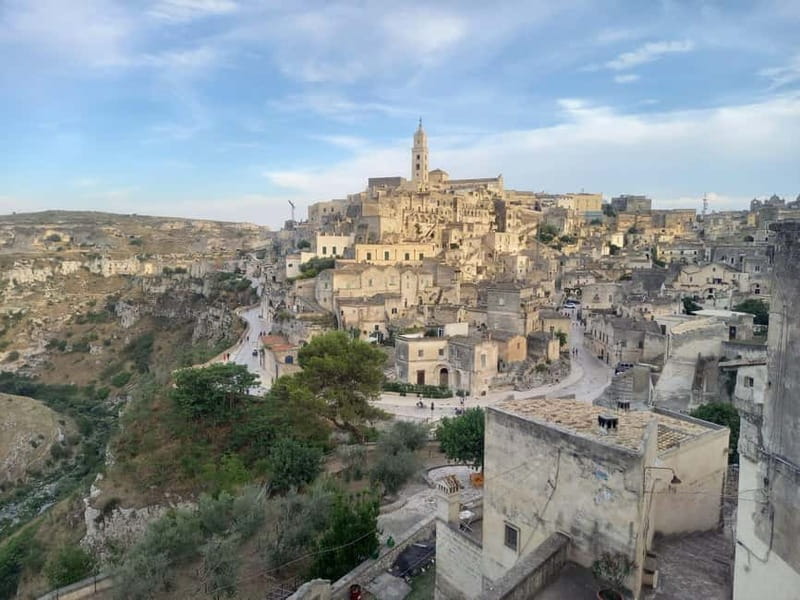
Matera’s most memorable sights are not all above ground. This two-hour walk takes you from Via del Corso into the Sassi, where homes, churches, oil mills, cellars, and cisterns were cut directly into the rock. The tour’s best feature is its access to several underground rooms that are easy to miss on a simple stroll.
I like the way the price includes entrances to the 13th-century rock church and the old oil mill, rather than charging you extra at each stop. I also like the focus on everyday life: olive pressing, wine storage, monastic worship, and the practical use of the stone around Matera. The main drawback is the Italian-only guiding, along with stairs and uneven walking that make this a poor fit for anyone with limited mobility or respiratory trouble.
Key points before you book
- Three important underground visits: See a frescoed rock church, an oil mill, and a three-level cellar.
- A low-cost way to get oriented: At $14, the tour offers a useful introduction to the Sassi without taking up half a day.
- Italian-language guide: The tour is led live in Italian, with no other language listed.
- Two hours on foot: Expect stairways, sloping routes, and regular walking through old neighborhoods.
- Entrance fees included: The listed carved-rock sites are covered in the price.
- Plan for practical clothing: Wear comfortable shoes and clothes, and leave strollers at home.
Starting on Via del Corso
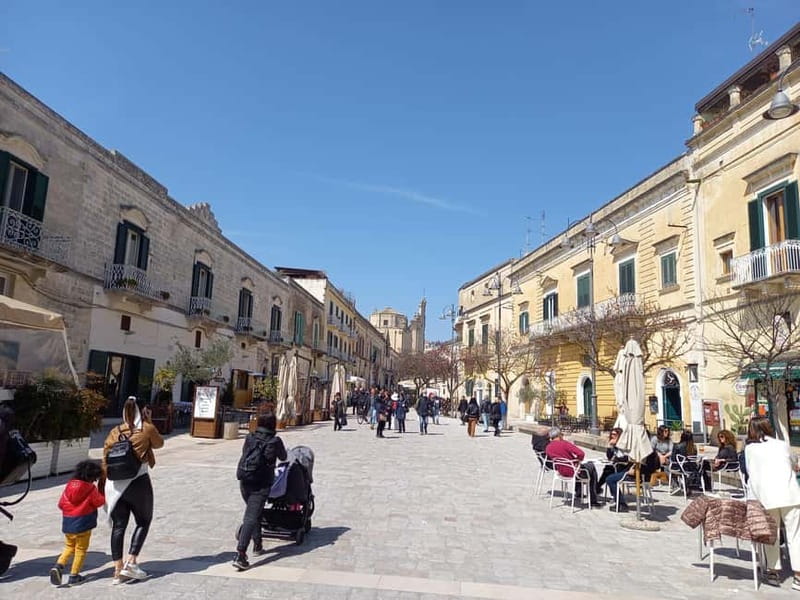
The tour begins in Matera’s historic center, at the entrance of the BPER Bank on Via del Corso. Arrive about 10 minutes early. This is a sensible meeting point because the walk starts among the center’s baroque churches, noble palaces, and small squares before moving toward the Sassi.
That opening matters. Matera is easier to understand when you see the change from the formal upper town to the rock-cut districts below. You begin with conventional city buildings, then gradually move into neighborhoods shaped by caves, stairs, and natural stone.
The guide sets the context as you walk. Expect stories about daily routines and old local customs, not just a list of dates. The strongest praise for this experience centers on the guide’s passion and expertise, so the quality of the narration is an important part of what you are paying for.
Because the guide speaks Italian, you should have enough Italian to follow a live explanation if you want the full benefit. The supplied information does not list an English-language option, so do not assume one is available.
More Guided Walks in Italy:
- Milan: Guided Walking Tour & Last Supper Visit with Ticket
★ 4.7 · 5,409 reviews - Naples: Street Food Walking Tour with Local Guide
★ 4.9 · 4,976 reviews - Florence: Highlights Walking Tour with Expert Guide
★ 4.6 · 4,662 reviews
Entering the Sassi of Matera
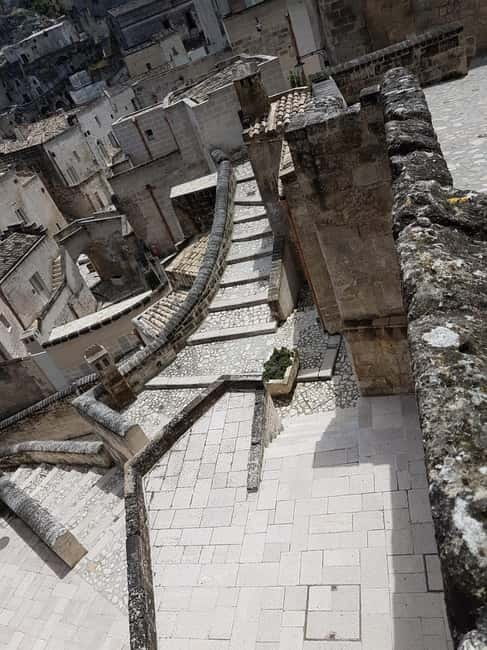
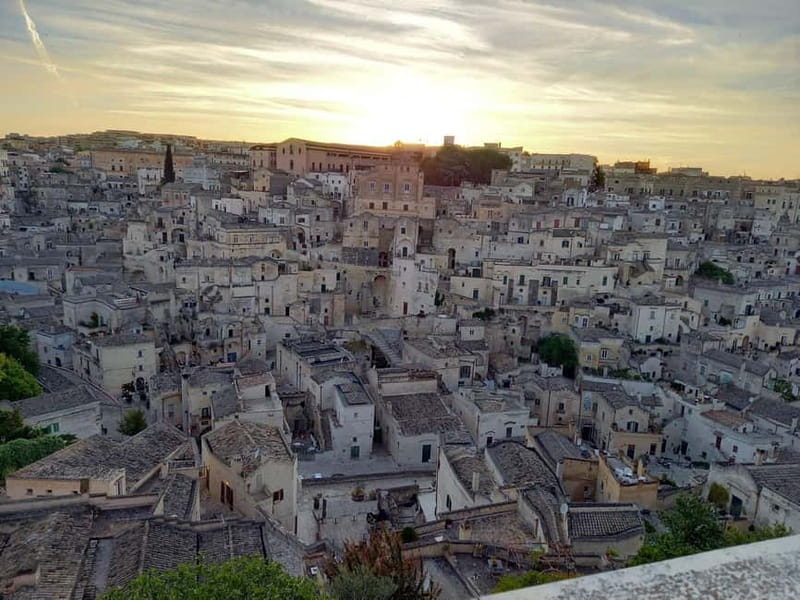
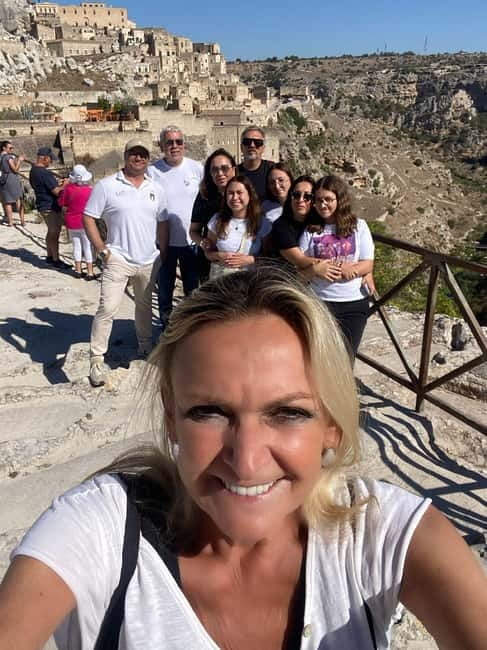
The Sassi are the heart of the walk. These ancient districts are carved into the rock, with lanes and stairways leading between homes, worship spaces, storage rooms, and viewpoints. Your route includes photo stops and scenic views, giving you time to look across the unusual arrangement of stone dwellings and ravines.
This is not a flat city-center stroll. Matera’s charm comes partly from its vertical layout, so you will be going up and down steps. Comfortable shoes are essential. Loose or highly polished soles will make the route less pleasant, especially where the stone is worn.
I would treat the first half of the walk as an orientation session. You are learning how the Sassi fit together, how people used the rock, and why so many rooms sit below street level. The guide’s explanations can turn what looks like a maze of stone into a working neighborhood with a clear purpose.
The route also includes a food tasting in the tour description. The supplied details do not identify the food or explain how much is served, so think of it as a small part of the walk rather than the main reason to book.
The 13th-century rock church
The rock church is the most atmospheric stop. It was carved into the stone rather than built by adding blocks, an approach sometimes described as negative architecture. The distinction is useful: instead of entering a freestanding church, you step into a space created by removing rock.
Inside, you can see frescoes described as valuable and luminous. Their presence gives the church a strong visual focus, but the setting matters just as much. The rough stone walls show how worship and shelter were combined in Matera’s cave environment.
The church also opens a window onto the city’s monastic past. Matera once had more than 150 rock-cut places of worship, making these churches a major part of its identity. You do not need to know every religious detail to appreciate the contrast between the plain carved exterior and the decorated interior.
The included entrance is a real advantage at this price. You are not only passing a church from outside. You are going in, seeing the frescoes, and hearing the guide explain why this kind of space developed here.
Remember that rock interiors can feel enclosed. The activity is specifically not recommended for people with respiratory issues, and that warning is worth taking seriously. If enclosed spaces make you uncomfortable, the church and underground rooms may not be the right match.
Seeing how an underground oil mill worked
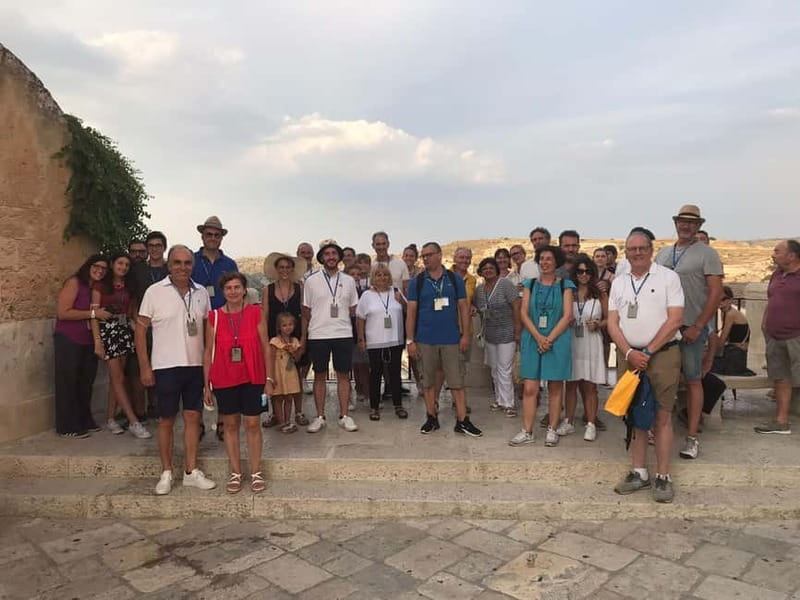
The old oil mill gives the tour a practical edge. Here, you can see the stone millstone used to press olives and the dolii, large containers used to preserve oil.
This stop helps explain how the Sassi functioned as more than a collection of old caves. The rooms were workplaces, storage areas, and homes. A mill cut into the rock made use of a stable interior environment while keeping food production close to the community.
The millstone is the sort of object that makes an old trade easier to picture. Rather than hearing only that olive oil was produced, you can look at the equipment used for pressing. The dolii add another useful detail, showing how the finished oil was stored.
For me, this is one of the tour’s strongest inclusions because it connects the stone setting with ordinary labor. Churches may explain spiritual life, but the oil mill explains how people earned a living and preserved a basic food product.
The route information says the mill is underground, so expect another enclosed stop and more uneven surfaces. The tour is not suitable for people with motion sickness, and anyone sensitive to tight or irregular spaces should consider that before booking.
More Walking Tours in Italy:
- Venice: Doge’s Palace and St Mark’s Basilica Walking Tour
★ 4.4 · 6,291 reviews - Venice: San Marco to Rialto Walk & Spritz Like a Local
★ 4.2 · 3,651 reviews - Uffizi & Accademia Timed Entry: Small Group Duomo Walking Tour
★ 4.5 · 3,630 reviews - Venice Walking Tour and Gondola Ride
★ 3.5 · 3,630 reviews
Walking through the three-level cellar
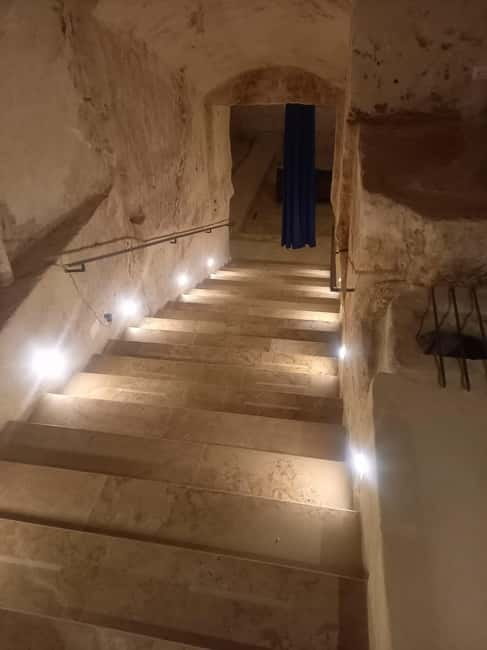
The historic cellar is excavated on three levels. You can see original stone tanks once used for pressing olives, along with underground rooms where wine was stored at a constant temperature.
This is a compact but useful lesson in old storage methods. Before modern climate control, the rock itself helped keep temperatures steady. The cellar shows how local people used the physical qualities of Matera to protect food and drink.
The three-level design also adds variety to the visit. You are not seeing one open chamber, but a connected series of rooms with different uses. The stone tanks link the cellar to olive production, while the lower rooms point to wine storage.
I would pay attention to the guide here. The objects are easy to look at quickly, but the explanation is what connects them to daily life. The best version of this stop is not simply a photo of an old tank. It is an understanding of why it was cut into the rock and how the space worked.
Again, expect stairs and enclosed rooms. Baby strollers and baby carriages are not allowed, and the tour is not designed for people with mobility impairments. Families with very young children should consider whether everyone can manage the route comfortably.
What $14 gets you
At $14 per person, this is priced as an affordable introduction rather than a long, specialist tour. The value comes from combining a live guide with several entrance fees. If you visited the church, oil mill, and cellar on your own, you might spend time working out what each place was and how the pieces fit together.
The tour also avoids one common problem with low-cost walks: paying a small amount for a guide, then finding that the main interiors cost extra. Here, the stated price includes entry to the carved-rock sites.
Two hours is enough to get a clear first look without using your whole day. That makes this a good choice if you are arriving in Matera, want basic orientation, or have another activity planned later. The tradeoff is that the schedule is fairly tight. You should not expect long pauses at every viewpoint or a slow, detailed study of each fresco.
The group format keeps the price down. It also means the pace and questions will be shared with other people. If you want a private guide, a slower visit, or a tour in a language other than Italian, this may not meet your needs.
Practical details that affect the walk
The booking information allows cancellation up to 24 hours before the start for a full refund, and you can reserve now and pay later. Those options are useful if your Matera schedule is still changing.
The duration is two hours, but starting times vary. Check the available time before booking, especially if you are coordinating trains, meals, or another timed visit.
The stated route begins at Via del Corso and lists Via San Biagio 15 as the finish. The meeting instructions also say the activity ends back at the meeting point. Because those details do not match perfectly, confirm the exact end point when you book or ask the guide at the start.
Wear shoes you can trust on stairs and old stone. Comfortable clothes are also recommended. Bring only what you need, since strollers are not allowed and the route passes through narrow or underground spaces.
The tour is not suitable for people with mobility impairments, respiratory issues, or motion sickness. That is not a minor footnote. The Sassi route has steps, changing levels, and enclosed areas, so choose another way to see Matera if those conditions could make the walk difficult.
Who will get the most from this tour
This tour suits you if you want a short, inexpensive introduction to Matera with several interior visits included. It is especially useful for first-time visitors who want the basic shape of the Sassi before exploring farther on their own.
You will get the most from it if you enjoy places where architecture tells the story of daily life. The rock church, oil mill, and cellar cover worship, food production, and storage in one compact route.
It also suits visitors who prefer a guide to wandering without context. The Sassi can be visually striking but confusing at first. A guide can explain why the spaces look the way they do and point out details you might otherwise pass.
I would skip it if you need an English-language tour, a flat route, or a quiet private visit. The Italian-only format and physical demands are clear limits. The tour is also not the right pick if you want a full-day exploration of Matera, since two hours gives you an introduction rather than an exhaustive visit.
Should you book the Classic Guided Walking Tour?
Book it if you want to see the Sassi’s most important types of carved spaces at a low price. For $14, the combination of a live Italian guide, a frescoed rock church, an underground oil mill, and a three-level cellar offers solid value.
Before reserving, make sure you can manage stairs and enclosed rooms, and confirm that Italian suits you. If those points work, this is a practical first walk through Matera, with enough substance to make the city’s stone neighborhoods more than a pretty backdrop.
FAQ
How long does the Matera Classic Guided Walking Tour last?
The tour lasts two hours. Starting times vary, so check availability for the date you want.
How much does the tour cost?
The listed price is $14 per person.
Where does the tour begin?
Meet at the entrance of the BPER Bank on Via del Corso in Matera. Arrive 10 minutes before the scheduled start.
Where does the tour end?
The route information lists Via San Biagio 15 as the finish. The meeting instructions also say the activity ends back at the meeting point, so confirm the exact end location when booking.
What language is the live tour guide?
The live guide conducts the tour in Italian.
What sites are included in the tour?
The tour includes entrance to a 13th-century rock church with frescoes, an ancient underground oil mill, and a historic cellar excavated on three levels. The tour description also refers to a cistern.
What should I wear or bring?
Wear comfortable shoes and comfortable clothes. The route includes walking and stairways through the Sassi.
Is the tour suitable for people with mobility or respiratory issues?
No. The activity is not suitable for people with mobility impairments, respiratory issues, or motion sickness. Baby strollers and baby carriages are also not allowed.
New routes in Italy
- Private St. Francis Basilica of Assisi and City Walking Tour★ 5.0 · 114 reviews
- Assisi Private Walking Tour including St. Francis Basilica★ 5.0 · 124 reviews
- Milan: City Highlights Walking Tour with The Last Supper★ 4.9 · 195 reviews
- Florence: Heart of Florence Guided Walking Tour★ 4.0 · 81 reviews
- Milan: Private or Shared Essential Walking Tour★ 4.7 · 84 reviews
- Taormina: Shared or Private Food & Wine Walking Tour★ 4.6 · 167 reviews
- Syracuse: Ortigia Private Walking Tour★ 4.8 · 181 reviews
- Syracuse: Ortigia and Neapolis Guided Walking Tour★ 4.7 · 205 reviews
Italy Walking Tours, compared.
Doge’s Palace and St Mark’s Basilica Walking Tour
Read our review →
Guided Walking Tour & Last Supper Visit with Ticket
Read our review →
San Marco to Rialto Walk & Spritz Like a Local
Read our review →
Uffizi & Accademia Timed Entry: Small Group Duomo Walking Tour
Read our review →
Browse the lists this tour appears in