
Review · MARRAKECH
Marrakech: Saadian Tombs & Bahia Palace, Medina Guided Tour
Marrakech’s best introduction is on foot, and this four-hour tour takes you from the city’s famous square into royal tombs, palace courtyards, the old Jewish quarter, and craft-filled souks. The guide is the key: Abdul, Ahmed, Rashid, Abdellah, and others are praised for explaining history, Islam, architecture, and daily Moroccan life in an easy, friendly way.
I like the route for two reasons. It brings together the city’s essential sights in one morning, and it gives you a useful first look at the Medina before you explore alone. I also like that guides often allow time for questions, photographs, rest stops, and small changes to the route. The main catch is cost and crowding: the $18 price does not include the Bahia Palace and Saadian Tombs, which add 200 MAD per person, and the tombs can have a long wait for their most ornate chamber.
Key points at a glance
- Two major monuments cost extra: Budget 100 MAD for Bahia Palace and 100 MAD for the Saadian Tombs, paid in cash.
- The route covers the city’s historic core: You visit Koutoubia Mosque, Bab Agnaou, the Kasbah, the Saadian Tombs, Mellah, Bahia Palace, and the souks.
- Choose your style of tour: Shared group and private walking options are available, with private van pickup offered only on the selected hotel pickup option.
- The guides add the most value: Abdul, Abdu, Rashid, Ahmed, Mohammed, and others are praised for humor, clear explanations, and patience.
- Expect real Medina walking: Narrow lanes, uneven paving, crowds, heat, and busy souks make comfortable shoes and water essential.
- The tour works well early in your stay: It helps you understand the city’s layout, customs, and major landmarks before setting out alone.
A useful first walk through Marrakech
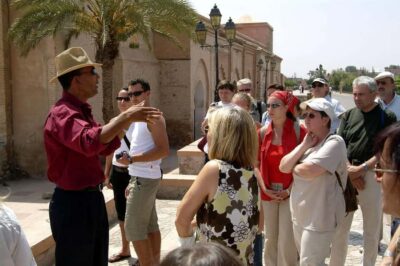
I see this tour as a four-hour orientation with real historical substance. You meet in front of Café de France on Jemaa el-Fnaa Square unless you have selected a private tour with hotel pickup, then set off through the old city with a licensed local guide.
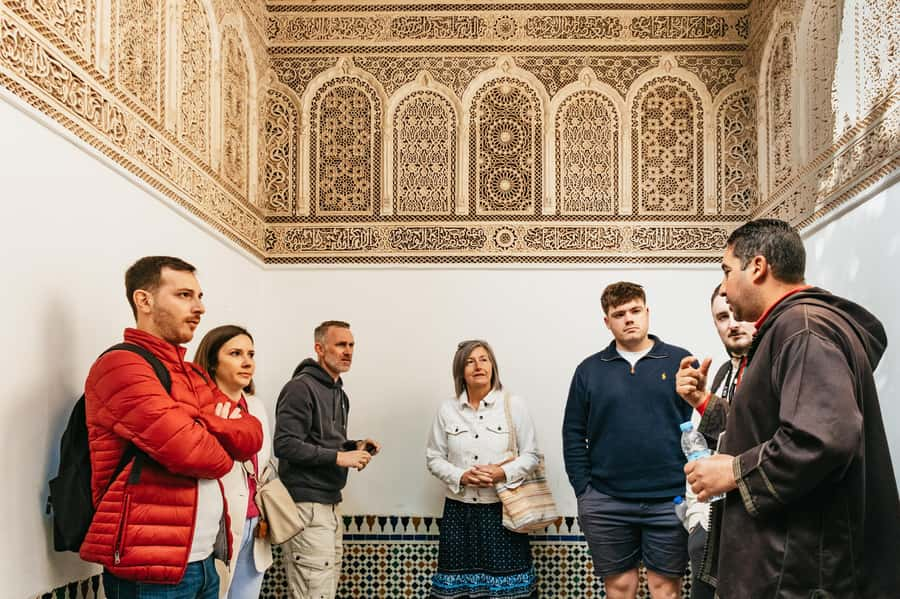
The shared option keeps the price low and can make the walk more social. The private option gives you more room to ask questions and adjust the pace. Several guides, including Abdul and Abdu, are praised for not rushing people and for giving extra explanations when a group shows interest in a particular building or custom.
The tour is advertised as four hours, though actual timing can vary. One group spent more than three hours walking, while another tour stretched longer because of late arrivals and a stop at a herbal shop. That sort of variation is normal in the Medina. If you have a firm lunch booking, allow some breathing room rather than planning it immediately after the scheduled finish.
More Castle and Palace Walking Tours in Morocco:
- Edinburgh Castle: Guided Walking Tour with Entry Ticket
★ 4.7 · 11,699 reviews - Venice: Doge’s Palace and St Mark’s Basilica Walking Tour
★ 4.4 · 6,291 reviews - Prague: 3-Hour Walking Tour of Old Town & Prague Castle
★ 4.7 · 5,696 reviews
Starting at Jemaa el-Fnaa and Koutoubia Mosque
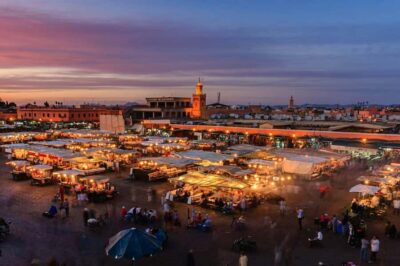
Jemaa el-Fnaa is the natural starting point. Café de France is easy to identify, but the square itself can be crowded and confusing, so arrive early and confirm the meeting instructions. If you booked pickup, the driver contacts you on WhatsApp about ten minutes before the start and takes you to meet the walking guide.
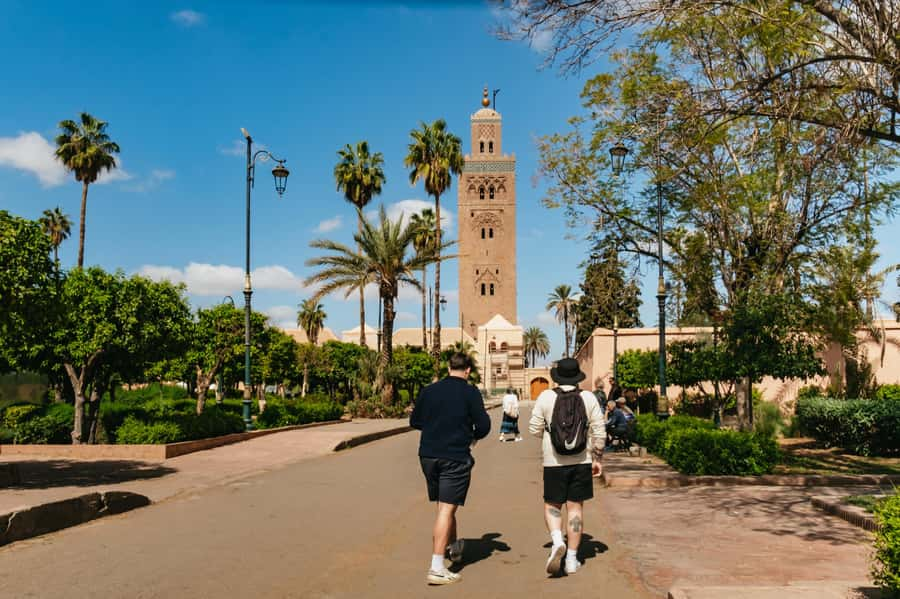
From the square, the route heads toward Koutoubia Mosque. Its minaret is the tallest in Morocco and one of Marrakech’s clearest landmarks. You cannot tour the mosque interior as a non-Muslim visitor, but the exterior gives your guide plenty to explain, from its proportions and decoration to its role in the city.
This is a good place to ask about Moroccan architecture and religious practice. Abdul has been particularly praised for making those subjects approachable, while other guides have explained how the city’s buildings, symbols, and plants connect to local culture. The stop lasts about 30 minutes, enough for photographs and a proper introduction without turning into a long lecture.
Bab Agnaou and the Kasbah
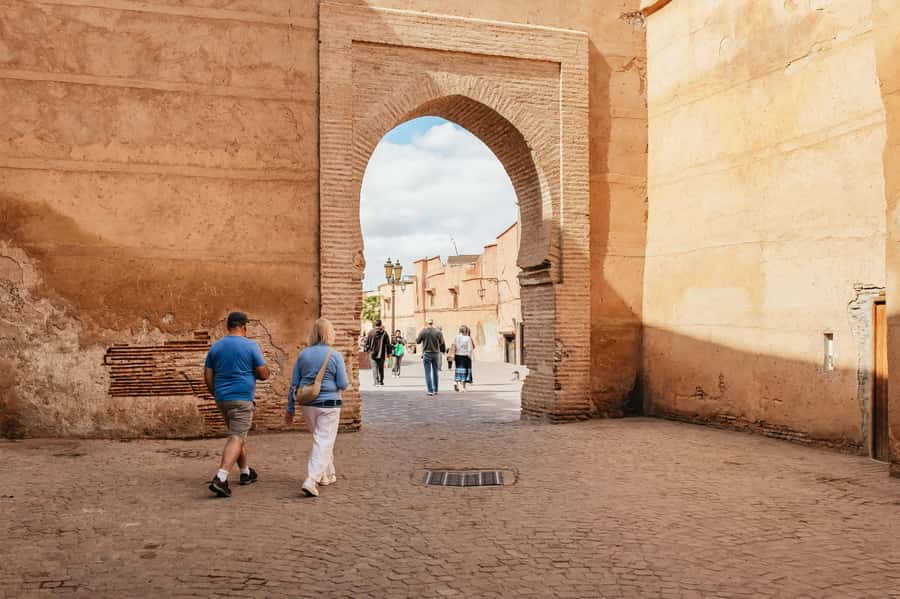
The next stop is Bab Agnaou, one of the historic gates leading into the Kasbah. It is a short visit, about ten minutes, but the gate gives you a sense of how Marrakech was organized and protected. Your guide can point out its carved stonework and explain how this part of the city connected royal and religious sites.
The Kasbah stop lasts around 20 minutes. The route here is less about checking off a monument and more about understanding the old city as a working place. You walk through lanes where residents still live, shop, and move about their daily business.
This is also where the pace of the tour becomes clear. You are not being driven from one sight to the next. You are walking through narrow passages, pausing for explanations, and learning how to read the Medina. That makes the tour useful for first-time visitors who want confidence before exploring on their own.
The Saadian Tombs and the golden chamber queue
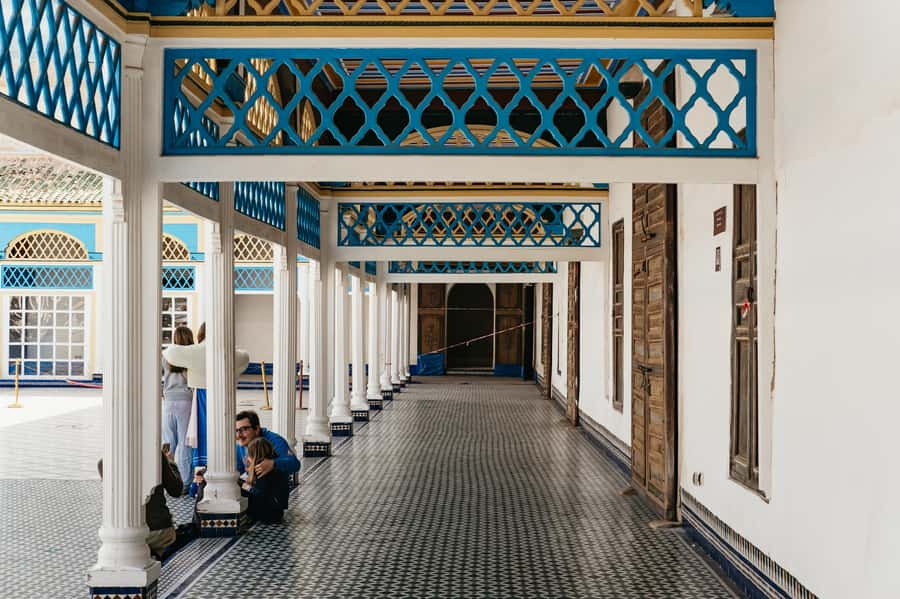
The Saadian Tombs are one of the tour’s most important stops. They were sealed for centuries and rediscovered in 1917, and their Hispano-Moorish decoration frames the burial place of a 16th-century royal family.
Allow about 40 minutes here, including the guided explanation and free time for photographs. The ornate carvings and tilework are the main draw, but the site is compact. Its fame can create a serious bottleneck, especially around the most elaborate chamber, often described as the golden room.
This is the tour’s biggest practical issue. A long queue can eat up much of your visit. One group faced a wait of about 45 minutes and chose not to enter, while the guide still explained the site and gave the group the choice rather than forcing everyone to stand in line. Another option is to return later on your own if you have time.
The extra 100 MAD entrance fee is not included in the tour. Bring cash in Moroccan dirhams. If the line is short, the tombs are well worth seeing. If the queue is long, you need to decide how much you value the interior compared with the rest of the walk.
More Old Town Walking Tours in Morocco:
- Marrakech: Colorful Medina Souks Guided Walking Tour
★ 4.7 · 2,470 reviews - Explore Fes: Unforgettable Guided Walking Tour of the Medina
★ 4.7 · 1,339 reviews - Marrakech: Medina by Night Walking Tour with Moroccan Tea
★ 4.6 · 586 reviews - Fez: Guided Walking Tour of the Historic Medina
★ 5.0 · 359 reviews
The Mellah and Marrakech’s layered past
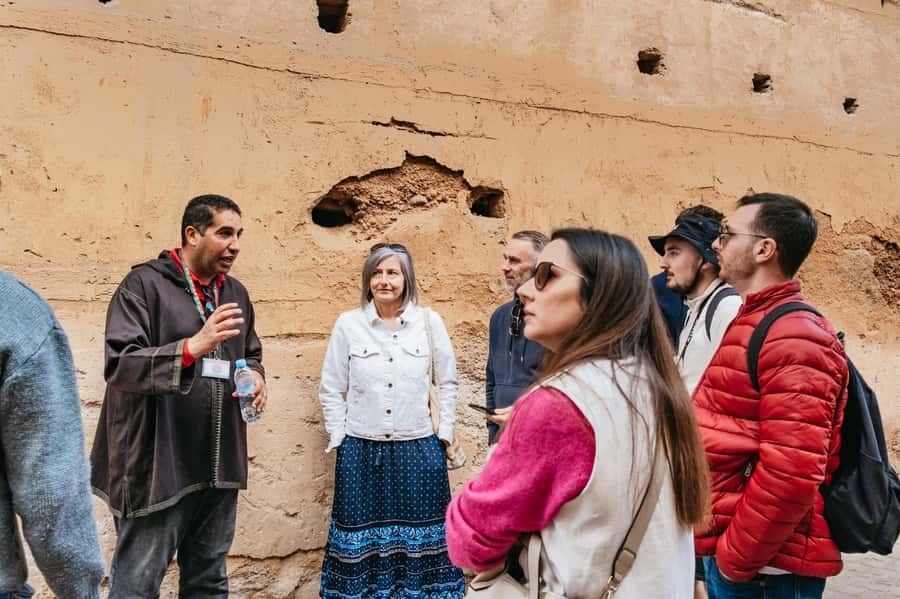
The route continues through Mellah, the former Jewish quarter. This is a brief stop of around ten minutes, but it adds useful context to the city’s past and its mix of cultural influences.
A guide can make this short walk more meaningful by explaining how different communities shaped Marrakech. The tour is not simply a parade of grand buildings. It connects royal power, religion, trade, neighborhood life, and craftsmanship.
Because the stop is short, do not expect a full history of Mellah. Think of it as a piece of the larger story, placed between the Saadian Tombs and Bahia Palace. The value depends heavily on how your guide explains what you are seeing.
Bahia Palace’s painted ceilings and gardens
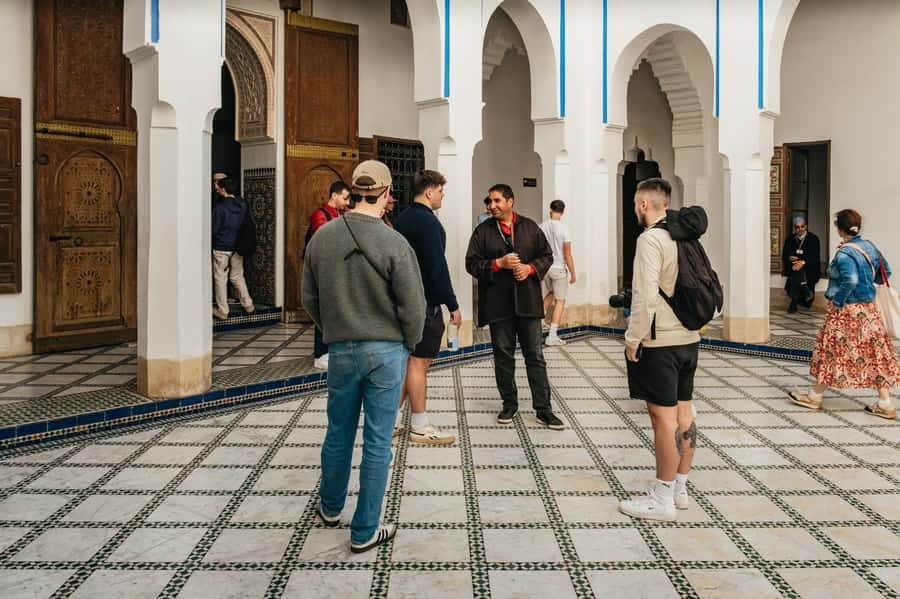
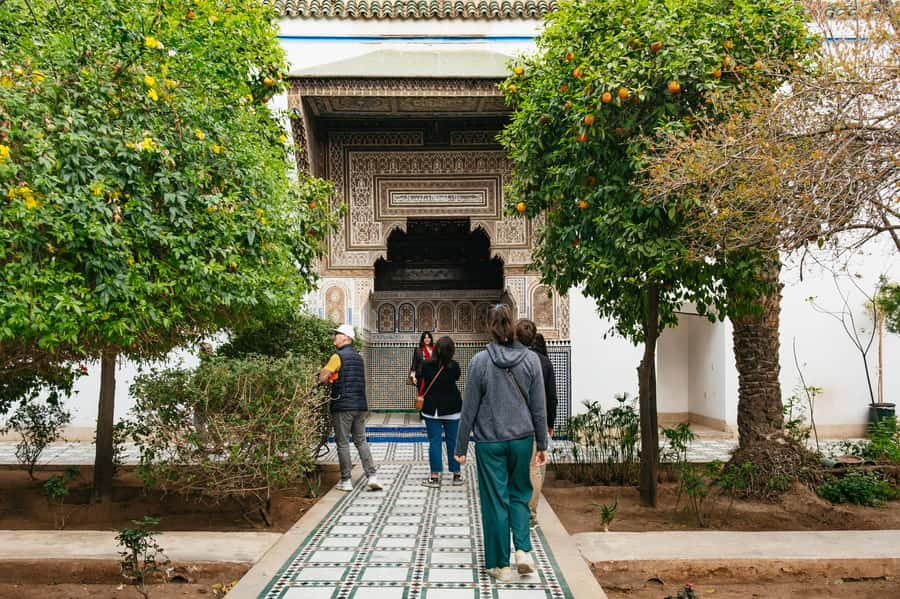
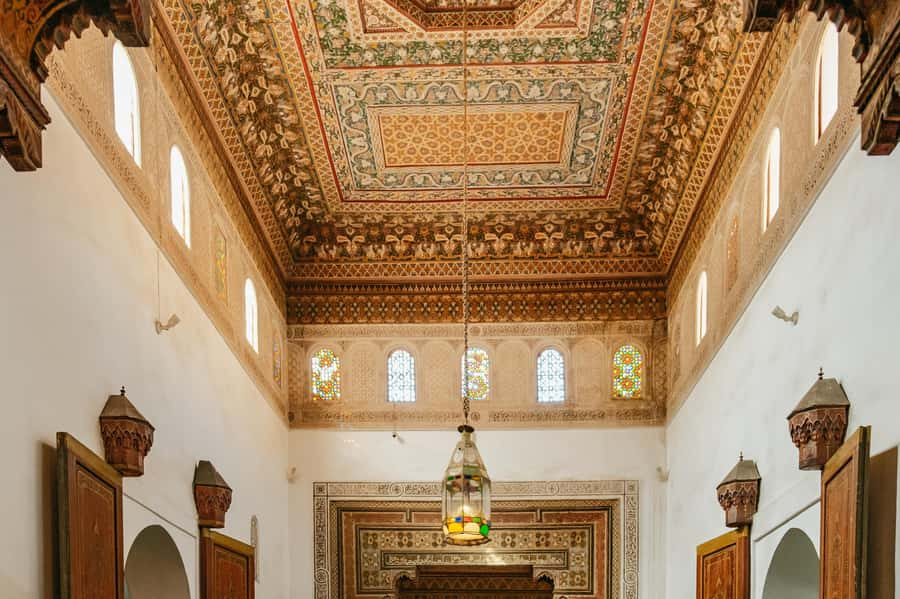
Bahia Palace receives the longest formal stop, about one hour. Built in the 19th century as a royal residence, it was intended to be one of the finest palaces of its time.
The appeal is visual but also architectural. You move through rooms with painted ceilings, elaborate stucco patterns, tiled surfaces, and courtyards opening onto gardens. Fruit trees and carefully arranged planting soften the palace’s formal design.
This is where a guide earns the fee. Without context, Bahia can feel like a series of beautiful rooms. With a good explanation, you start to notice the repeated patterns, the craftsmanship, the relationship between private rooms and open courtyards, and the scale of the residence.
Admission costs another 100 MAD per adult, paid in cash. The palace can be crowded, especially later in the day. A morning tour gives you a better chance of moving through the rooms with less pressure, though conditions change from day to day.
The palace is also a strong choice for photographers. Your guide usually gives you time to take pictures rather than hurrying straight through. Just remember that the group’s pace still matters on a shared tour.
Souks, workshops, and shopping without pressure
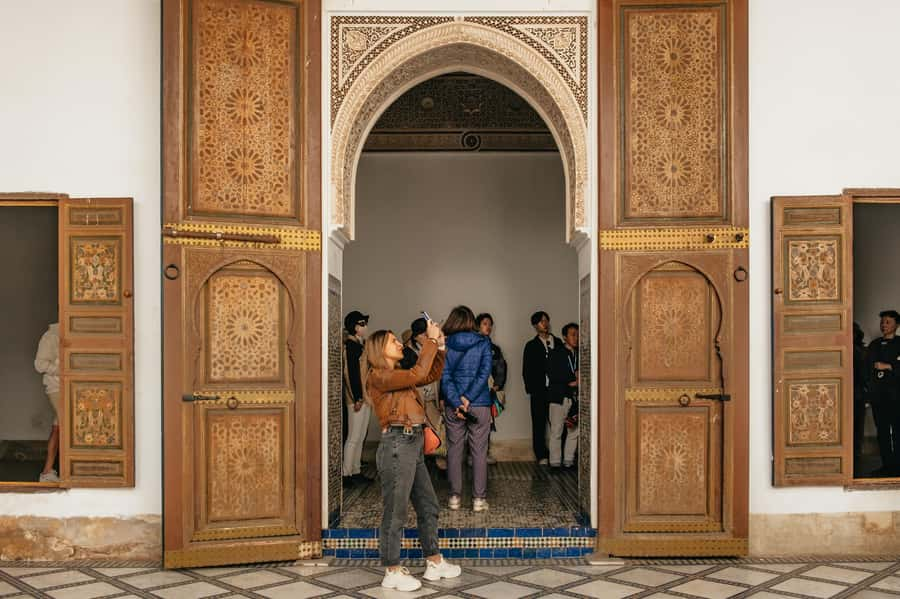
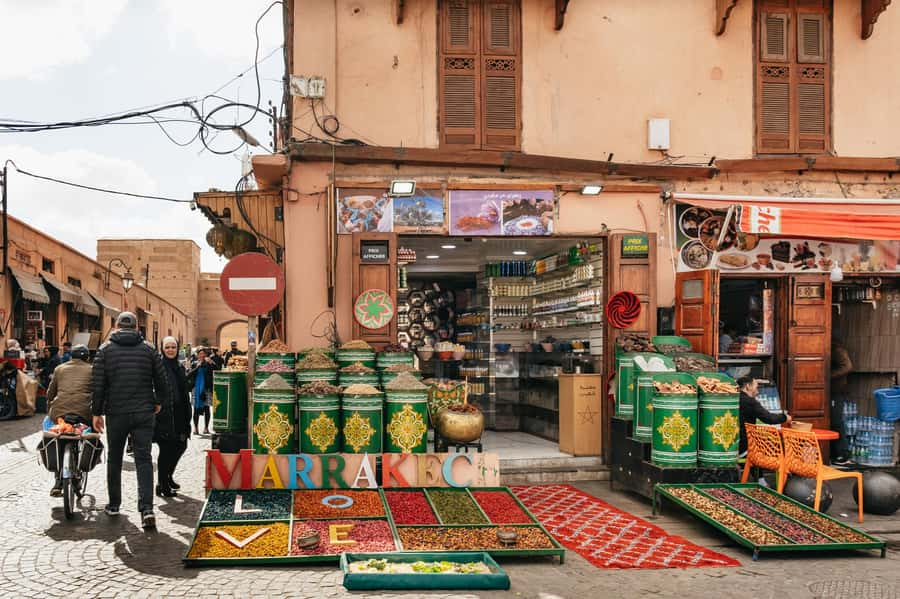
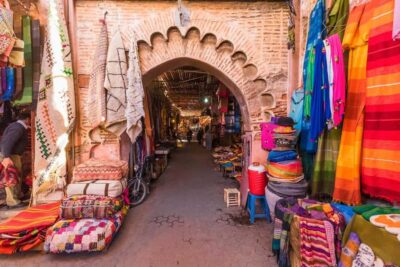
The final part of the walk leads into the souks. This is where you see tinsmiths, dyers, herbalists, and other artisans working around the narrow lanes. The atmosphere is noisy, colorful, and sometimes confusing, but that is part of the experience.
I like having a guide here because the souks are not laid out like a simple shopping street. A local guide can help you understand what you are seeing and point out stalls that suit your interests. The focus is not supposed to be nonstop shopping, though a herbal or spice stop may be included.
One tour included about 40 minutes in a herbal treatment shop, where the guide explained herbs and spices before visitors were given the chance to buy products. The stop was informative, but you should know that these visits can include a sales opportunity. There was no reported pressure to purchase, and you can simply listen, browse, or decline.
If you prefer a tour focused on architecture and history rather than shopping, say so early. Guides such as Abdu have adjusted the emphasis toward culture and monuments when that was what the group wanted. That flexibility is useful, particularly on a private tour.
Finishing back at Jemaa el-Fnaa
The walk ends back at Jemaa el-Fnaa, where the city gathers for storytellers, musicians, and performers. This makes sense as a finish because you return to the place where the tour began with a clearer understanding of the lanes around it.
The square changes character during the day, and your guide may offer suggestions about what to see next. The official drop-off points include Marrakech and Café de France, depending on the option booked.
A nice benefit of ending here is independence. After four hours, you should have a better sense of how to find the main landmarks, how the Medina connects, and how to approach the souks without feeling completely lost.
What the $18 price really covers
At $18 per person, the tour is good value if you want a guide to connect the major sights. The price covers the licensed local guide, the walking route, guided sightseeing, and skip-the-line access to selected monuments.
The headline price is not the final sightseeing cost. Add 100 MAD for the Bahia Palace and 100 MAD for the Saadian Tombs, both paid in cash. At roughly 200 MAD extra per person, the total remains reasonable for a four-hour guided introduction, but you should budget for it before booking.
The skip-the-line benefit also needs a little care. It applies to selected monuments, not every delay inside the sites. The Saadian Tombs can still have a queue for the most sought-after chamber, and the palace may feel crowded at busy times.
Shared tours offer the best price. Private tours make more sense for families, couples, or small groups who want to ask many questions, walk slowly, or shape the balance between monuments and souks. Hotel or riad pickup is included only with the private tour with hotel pickup by van. A shared tour or private walking tour without pickup meets at Café de France.
Pace, heat, and accessibility
This is a genuine walking tour through the historic Medina. Wear shoes with good grip, carry water, and bring sunglasses. The route includes narrow alleys, uneven surfaces, busy market lanes, and stops where you may stand for a while.
The activity is listed as wheelchair accessible, but the practical notes are more cautious. The Medina’s narrow lanes and uneven paths may not suit wheelchair users or people with limited mobility. If that applies to you, ask before booking and consider the private option, where the pace may be easier to discuss.
Children are welcome but must stay with an adult. Families have managed the tour with young children and even a double buggy, though that does not mean every lane will be easy. Heat is another concern. Summer and afternoon walks can be demanding, so a morning start, a full breakfast, and regular water breaks are sensible.
The tour runs in rain or sunshine. Dress for the season and do not count on weather canceling the walk for you.
The guides make the difference
The strongest part of this experience is the guiding. Abdul is repeatedly praised for humor, patience, language skills, and his ability to explain Moroccan culture without making the walk feel like a classroom. Abdu is also noted for adapting the route and answering questions in detail.
Other named guides include Ahmed, Rashid, Mohammed, Abdellah, Bader, Mo, Rachid, Izmael, Shafiq, and Abduljalil. The common thread is a friendly, informative style. Guides have helped with practical matters such as finding a money exchange, choosing where to spend time, and understanding local customs.
No tour can guarantee a particular guide unless the booking specifically says so. Still, the strong pattern is encouraging. I would choose this tour mainly for the chance to have a local person explain the city as you walk, not simply to gain entry to two monuments.
Should you book this Marrakech walking tour?
Book it if you want a structured first look at the Medina, especially early in your stay. It suits first-time visitors, history fans, families able to manage several hours on foot, and anyone who wants help making sense of Marrakech’s architecture, religion, royal past, and markets.
The private option is worth considering if you want a slower pace or have specific interests. Choose the shared option if price matters and you enjoy meeting other people. Bring at least 200 MAD per person for monument tickets, plus cash for small purchases.
Skip it if you dislike walking on uneven ground, cannot manage heat and crowds, or prefer to explore at your own speed. Also think twice if standing in a queue at the Saadian Tombs would frustrate you. For most visitors, though, the combination of Koutoubia, the royal tombs, Bahia Palace, Mellah, and the souks makes this a practical and fairly priced introduction to Marrakech.
FAQ
How long does the Marrakech walking tour last?
The scheduled duration is four hours. Actual timing can vary because of group arrivals, queues, questions, rest stops, and optional stops along the route.
What places does the tour visit?
The route includes Koutoubia Mosque, Bab Agnaou, the Kasbah, the Saadian Tombs, Mellah, Bahia Palace, the Medina souks, and Jemaa el-Fnaa Square.
Are entrance fees included in the $18 price?
No. Bahia Palace costs 100 MAD per adult, and the Saadian Tombs cost 100 MAD per adult. Both fees are paid in cash on-site.
Where does the tour meet?
For a shared group tour or a private walking tour without pickup, the meeting point is in front of Café de France on Jemaa el-Fnaa Square. The exact arrangement can differ by booking option.
Is hotel or riad pickup available?
Pickup is included only when you select the private tour with hotel pickup by van. It is available from hotels and riads in Marrakech.
What languages are available for the guide?
Guides are available in Arabic, English, French, German, Spanish, and Italian.
New routes in Morocco
- Marrakech: Souk by Night Medina Guided Walking Tour.★ 4.3 · 166 reviews
- Marrakech: Monuments, Souks and Medina Guided Walking Tour★ 4.8 · 208 reviews
- Marrakech: Authentic Moroccan Food Walking Tour & Dinner★ 4.8 · 261 reviews
- Marrakech: Uncover Hidden Gems on a Half-Day Walking Tour★ 4.2 · 92 reviews
- Marrakech 3-Hour Walking Tour★ 4.3 · 120 reviews
- Marrakech: Customized Guided Walking Tour★ 4.3 · 82 reviews
- Marrakech: 3-Hour Monuments, Souks & Old Medina Walking Tour★ 4.7 · 133 reviews
- Marrakech Guided Souks Tour with a Local Insider★ 4.6 · 109 reviews
Marrakech Walking Tours, compared.
Ben Youssef, Secret Garden, & Souks Walking Tour
Read our review →


3-Hour Monuments, Souks & Old Medina Walking Tour
Read our review →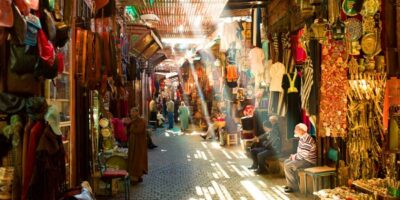
Marrakech Guided Souks Tour with a Local Insider
Read our review →Browse the lists this tour appears in