
Review · KRAKOW
Krakow: Jewish Ghetto Guided Walking Tour
Krakow’s former Jewish Ghetto is easy to mistake for an ordinary city district. This one-hour walk helps you read the streets differently, linking preserved buildings and wall fragments to the people who were confined here. I like the Ghetto Heroes Square memorial, with its empty metal chairs, and the personal story of Tadeusz Pankiewicz at Under the Eagle Pharmacy.
I also like the tour’s short, focused format and its low $15 price. Guides such as Elena and Renata have been praised for clear explanations and for speaking at an easy-to-follow pace. The main consideration is that one hour goes quickly, and entrance to attractions is not included.
Key points to know before you book
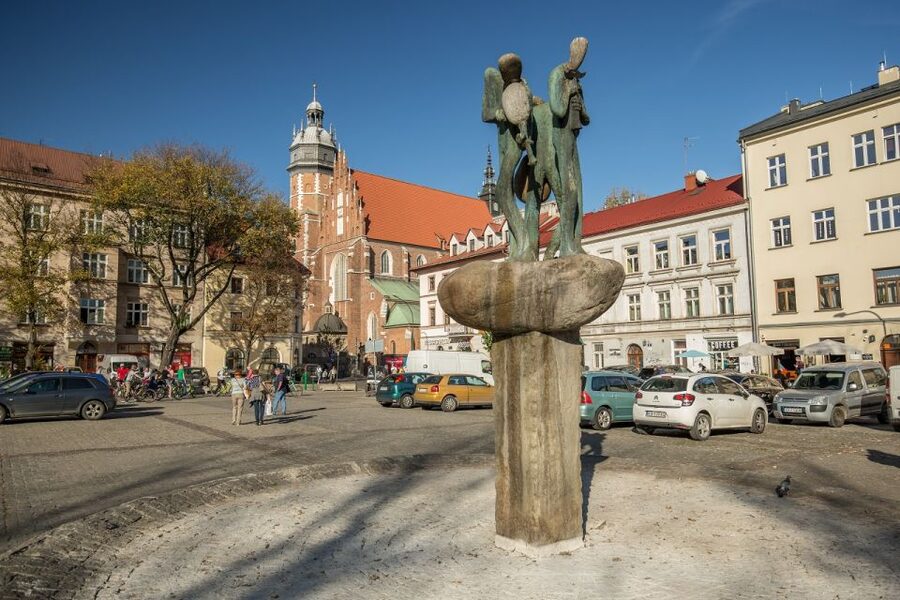
- The Ghetto Wall fragments make history physical: You can see surviving sections of the barrier that confined Krakow’s Jewish population.
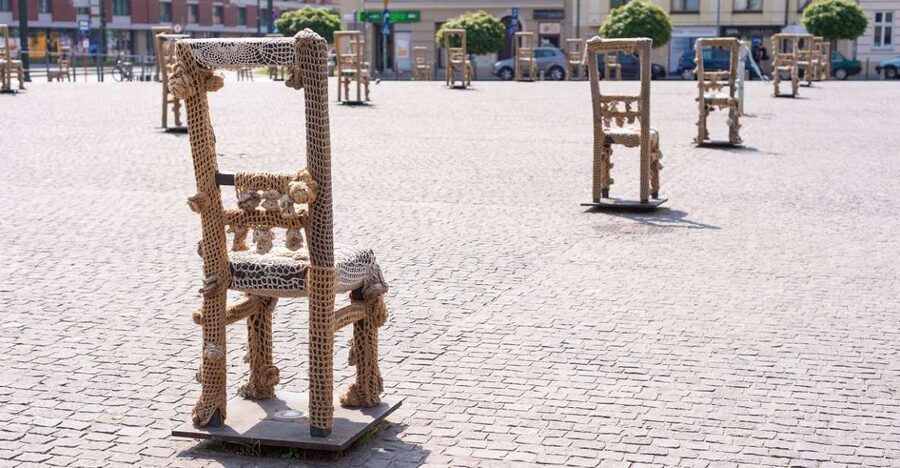
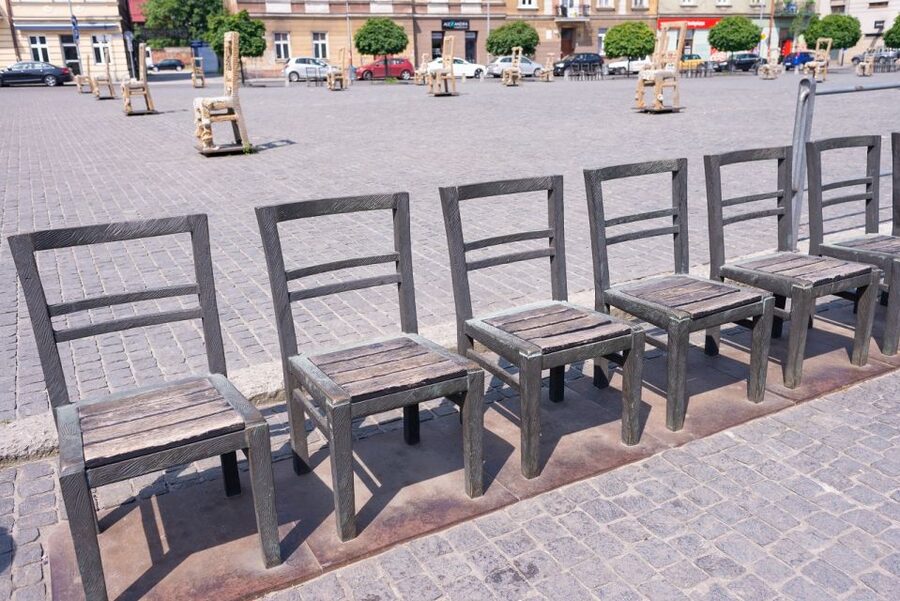
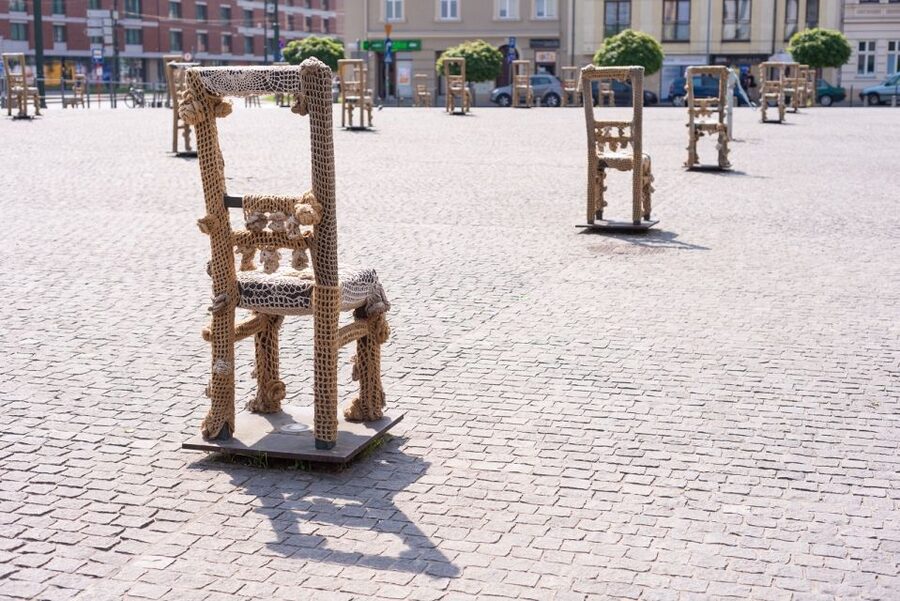
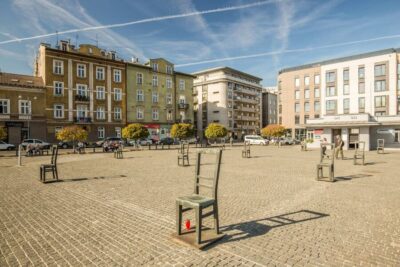
- Ghetto Heroes Square is the emotional center: Empty metal chairs mark the square where deportations took place.
- Under the Eagle Pharmacy brings moral choices into focus: Learn how Tadeusz Pankiewicz and his staff helped people inside the ghetto.
- The route begins at Schindler’s Factory: This gives you context about Nazi occupation, industry, and forced labor before the walk moves into Podgórze.
- The $15 fee pays for interpretation, not admissions: You receive a licensed guide and a walking tour, but attraction entry costs extra.
- Arrive early and dress for the weather: Meet 10 minutes ahead of time, wear suitable shoes, and expect the walk to run in rain or other weather.
Why this short walk matters in Podgórze
Krakow’s wartime story is not confined to a single museum room. In Podgórze, ordinary streets became part of a system of forced movement, labor, hunger, fear, and survival. That is why I find a guided walk useful here. Without context, you may see a pharmacy, a square, a wall fragment, and a row of buildings. With a guide, those same places connect into a human story.
The tour focuses on the former Nazi Jewish Ghetto and the people who lived under its rules. It does not promise every detail of Krakow during World War II. Instead, it gives you a compact route through several important locations and explains how daily life changed after the occupation.
The tone is serious, as it should be. This is not a sightseeing stroll with a few dramatic anecdotes added for effect. The value comes from pausing at real places and considering what happened there. I especially like that the route deals with both oppression and individual choices. You learn about deportations and confinement, but also about people who offered help when helping others carried great risk.
More Jewish Heritage Walking Tours in Poland
- Krakow: Kazimierz Jewish Quarter Walking Tour
★ 4.8 · 571 reviews - Krakow: Jewish Ghetto Walking Tour
★ 4.6 · 349 reviews - Krakow: Jewish Quarter Guided Walking Tour
★ 4.8 · 119 reviews
Starting at Schindler’s Factory
The meeting point is in front of the main entrance to Schindler’s Factory Museum, on the right-hand side. Look for the guide holding an excursions.city sign. Arriving 10 minutes early matters because latecomers cannot join after the group leaves, and the ticket cannot be refunded.
Beginning here gives the walk a useful frame. The district’s industrial setting helps explain how work, occupation, and forced labor became tied together. The guide introduces the Nazi occupation and the way this part of Krakow was transformed during the war.
You should think of this opening as a briefing for the streets ahead. The tour does not simply point out old buildings. It explains why this district mattered and how policies imposed from above affected ordinary routines below. You may come away with a clearer sense of how a neighborhood was reshaped into a controlled space.
The museum itself is not included in the walking tour. You are meeting outside, not taking an included museum visit. If you want to visit Schindler’s Factory separately, plan that as another activity and check its admission arrangements on its own.
Seeing the former Ghetto Wall
The surviving fragments of the Ghetto Wall are among the most useful stops because they give you something concrete to look at. A written account can describe confinement, but a piece of the wall shows the physical boundary that separated Jewish residents from the rest of the city.
Your guide explains what these walls meant in practice. They were not just construction features. They marked a forced division and helped control where people could live and move. The fragments are modest, but that is part of their force. You are not looking at a grand monument built long after the war. You are seeing a remnant of the barrier itself.
This stop also shows why a walking guide adds value. The wall fragment alone cannot explain who was confined behind it, how the area changed, or what daily survival involved. A good explanation turns a small piece of masonry into a point of contact with the past.
Do not expect a long visit at the wall. The tour lasts only an hour, so the guide has to keep the route moving. If you prefer lengthy time at each site, you may find the pace brisk. If you want a clear introduction before exploring further on your own, the timing works well.
Reading the empty chairs at Ghetto Heroes Square
Ghetto Heroes Square was the former center of the Krakow Ghetto and a place linked with deportations. Today, its memorial of empty metal chairs gives the square a stark visual language. The chairs suggest absence, loss, and the belongings left behind when people were forced from their homes.
This is likely to be the most affecting stop for many people. The memorial is simple, but it changes how you see the open space around it. Instead of passing through a normal city square, you are asked to think about the people who were gathered, moved, and separated from their homes.
I appreciate that the guide can explain the square without turning it into a theatrical performance. The best approach here is calm and specific. You need the historical setting, but you also need a little quiet to take in what the chairs represent.
The square is also a practical place to understand the scale of the former ghetto. Your guide connects the site with the surrounding streets and buildings, helping you picture how public space and private life were shaped by occupation. Since the tour is guided in a selected language, check that your chosen language is available when you book.
More Jewish Heritage Walking Tours in Krakow:
- Jewish Krakow Walking Tour in English
★ 4.8 · 102 reviews - Krakow: 2h Kazimierz (Jewish Quarter) Walking Tour
★ 4.5 · 75 reviews - Amsterdam Anne Frank: Small-Group Walking Tour & Local Guide
★ 4.8 · 12,789 reviews - Anne Frank’s Story – Guided Walking Tour through Amsterdam
★ 5.0 · 11,619 reviews
Under the Eagle Pharmacy and the choices people made
Across the square is the historic Under the Eagle Pharmacy. The pharmacy is closely linked with Tadeusz Pankiewicz and his staff, who provided important assistance to people living in the ghetto.
This part of the walk adds a different kind of history. The Ghetto Wall and Heroes Square show the machinery of control and deportation. The pharmacy introduces people who tried to help within that system. Your guide focuses on courage, compassion, and the moral choices made under pressure.
You should not assume that the short walking tour includes admission to the pharmacy. Entrance fees are not part of the $15 booking. The guide can explain the site from the outside, while a separate paid visit may be needed if you want to go inside.
That distinction matters when you compare this tour with a longer museum visit. The walk gives you the setting and the story. It does not provide a full indoor examination of every attraction. For many people, that is enough for a first visit, especially if time or budget is limited.
Preserved streets and the daily struggle to survive
Between the main stops, the route uses preserved wartime streets and buildings. These are not just filler between monuments. They help you understand that the ghetto was made up of homes, workplaces, pharmacies, public spaces, and routes people had to use every day.
The guide discusses daily life and survival, not only major events. That focus is important because large historical terms can hide the experience of individuals. A person still had to find food, care for family, work under forced conditions, and respond to rules that could change the shape of each day.
You may find that these quieter sections require more attention than the memorial sites. There may be no single object to photograph or dramatic viewpoint. Instead, the guide asks you to imagine how ordinary buildings became scenes of fear, control, courage, and loss.
That is also where the tour’s limitations show. One hour cannot explain every street or family story in depth. It offers a framework. You will get more from it if you listen closely and note the places you may want to revisit at your own pace.
Guide quality and language choices
The human guide is the main reason to book this experience rather than simply follow a map. The strongest praise has focused on clear speaking, patience, and the ability to answer questions. Elena was described as friendly and effective at helping people understand what the ghetto was really like. Renata was praised for clear explanations and willingness to help.
Those comments point to a practical strength: the tour depends on communication, and the guides appear to understand that sensitive history needs to be explained plainly. A guide who speaks too quickly can make a short tour feel rushed. A guide who welcomes questions can make the hour more useful.
Tours are offered in English, German, Italian, French, and Spanish. Check the available starting time and language before confirming. The guide is licensed, and the price includes the guided walk through the former ghetto.
Group size is not specified, so you should not book this expecting a private tour or a guaranteed small group. The experience is best for someone comfortable listening while walking with others. If you want a private pace and extensive discussion, a private guide may suit you better.
Is $15 good value?
At $15 per person, this is a strong value for a focused introduction to Podgórze’s wartime history. You receive a licensed guide, a planned route, and explanations at several important sites. The price is especially reasonable if you have only an hour and want more than a self-guided walk can provide.
The low cost does not mean the tour covers everything. Attraction admission is excluded, and the route is short. You are paying mainly for interpretation and structure, not a full museum program.
I would treat it as a foundation. It can help you decide which places deserve more of your time later. If you already know the history well, the walk may feel basic. If you are new to Krakow’s wartime past, the context can make the city much easier to understand.
Practical advice for the one-hour route
Wear shoes suited to walking on city streets. The tour takes place in all weather, and rain or cold can affect your comfort. Check the forecast before leaving and dress accordingly.
Arrive at least 10 minutes early at the main entrance to Schindler’s Factory, on the right-hand side. Find the excursions.city sign before the scheduled start. Once the group leaves, late arrivals cannot join and the ticket is not refundable.
The route is short, but the subject is heavy. Give yourself a little time afterward if you want to sit quietly or continue exploring. You may prefer not to schedule another rushed attraction immediately after the walk.
The booking terms are flexible: you can cancel up to 24 hours ahead for a full refund, and you can reserve now and pay later. That is useful if your Krakow plans are still shifting.
Who should book this Krakow walk?
I recommend it to first-time visitors who want a clear introduction to the former Jewish Ghetto without committing to a long museum visit. It also suits anyone who prefers places explained in context rather than visited as isolated photo stops.
The tour is a good match for history-minded adults, couples, families with older children, and people who want a serious but manageable activity. The one-hour length makes it easy to fit around other plans.
You may want something else if you need detailed archival history, a long indoor visit, or a private conversation about specific families and events. In that case, use this walk as an orientation, then add separate museum visits and allow more time.
Should you book it?
Book this tour if you want the former Jewish Ghetto to make sense as a real neighborhood shaped by occupation, forced labor, deportation, and survival. The Ghetto Wall, empty chairs at Heroes Square, and Under the Eagle Pharmacy give the hour a clear emotional and historical arc.
Skip it if you are looking for included museum entry or a long, highly detailed tour. For $15, though, the balance is hard to fault. You get a licensed guide, important locations, several human stories, and a practical way to see Podgórze with greater care.
FAQ
How long does the Jewish Ghetto walking tour last?
The tour lasts one hour.
How much does the tour cost?
The listed price is $15 per person.
Where does the tour meet?
Meet in front of the main entrance to Schindler’s Factory Museum, on the right-hand side. The guide will hold an excursions.city sign.
How early should I arrive?
Arrive 10 minutes before the scheduled start. Latecomers cannot join after the group has departed, and their tickets cannot be refunded.
What languages are available?
The live guide is available in English, German, Italian, French, and Spanish.
Are attraction entrance fees included?
No. The price includes the professional licensed guide and the walking tour, but entrance fees to attractions are not included.
Can I cancel for a refund?
Yes. You can cancel up to 24 hours in advance for a full refund.
Does the tour run in bad weather?
Yes. The tour takes place as planned in all weather conditions. Check the forecast, dress appropriately, and wear suitable footwear.
New routes in Krakow
- Krakow: Jewish Quarter Guided Walking Tour★ 4.8 · 119 reviews
- Krakow: Old Town Guided Walking Tour★ 4.6 · 94 reviews
- Kraków: Old Town & Wawel Castle Walking Tour in English★ 4.8 · 532 reviews
- Krakow: Old Town Highlights Walking Tour★ 4.5 · 173 reviews
- Krakow: 2h Kazimierz (Jewish Quarter) Walking Tour★ 4.5 · 75 reviews
- Krakow: Old Town Highlights Private Walking Tour★ 4.9 · 79 reviews
- Krakow: Street Food Walking Tour★ 4.8 · 285 reviews
- Krakow: Legends and Tales of Old Town Walking Tour★ 4.8 · 227 reviews
Krakow Walking Tours, compared.

Browse the lists this tour appears in