

Review · POLAND
Warsaw: Jewish History Guided Walking Tour in English
Warsaw’s Jewish past is not confined to a museum. It is under your feet, in a surviving synagogue, a former ghetto boundary, and streets where the wartime city was split apart. This 150-minute walking tour gives you a clear route through that story, linking centuries of Jewish life with the destruction of the Second World War and the community rebuilding today.
I like the strong historical arc, from Jewish participation in Polish uprisings to the creative life of the interwar years and the Holocaust. I also like the guides’ human approach. Andrzej, Jacek, Luke, Aga, Anna, and others have been praised for answering questions, adding personal or local context, and using photos and maps when the original buildings are gone.
The main drawback is simple: you are outside for the full two and a half hours. In cold weather, the route can be hard going, and the tour does not promise entry into Nożyk Synagogue. It is also a general walking tour, so a private format may suit you better if you want a slower, more personal visit.
Key points at a glance
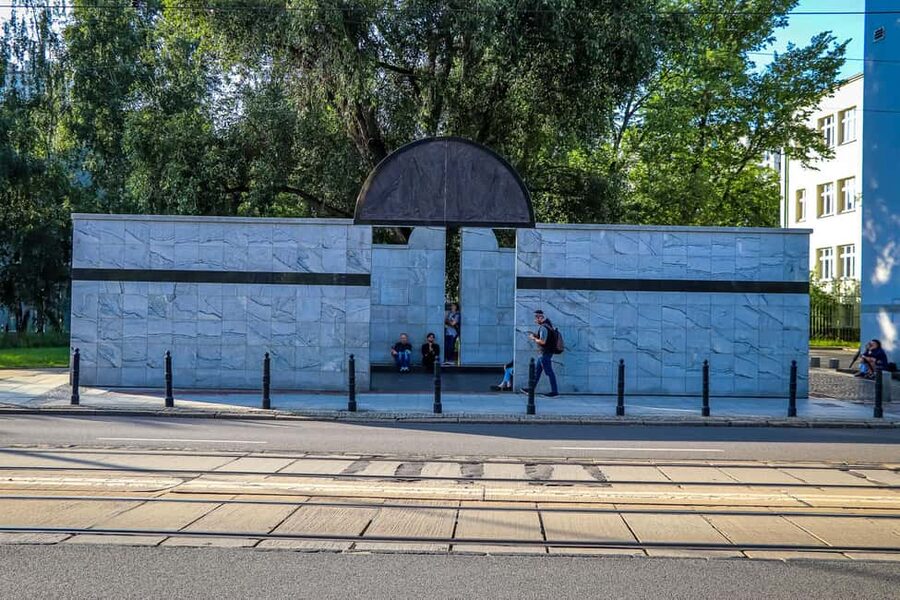
- Nożyk Synagogue: See the only surviving pre-war synagogue in Warsaw, a rare link to the city’s Jewish past.
- Chłodna Street bridge: Learn how a wooden footbridge once joined two separated parts of the Warsaw Ghetto.
- Waliców Street: Follow a former ghetto border and connect wartime persecution with the later Warsaw Uprising.
- Jewish Warsaw before 1939: Hear about writers, actors, artists, journalists, religious life, and Jewish involvement in Polish political struggles.
- A serious subject handled with care: Guides use clear explanations, humor when appropriate, photos, and room for questions.
- Good value at $26: You get a local English-speaking guide and 150 minutes of walking, with no extra transport cost built into the tour.
Why this walk matters before you reach the ghetto sites
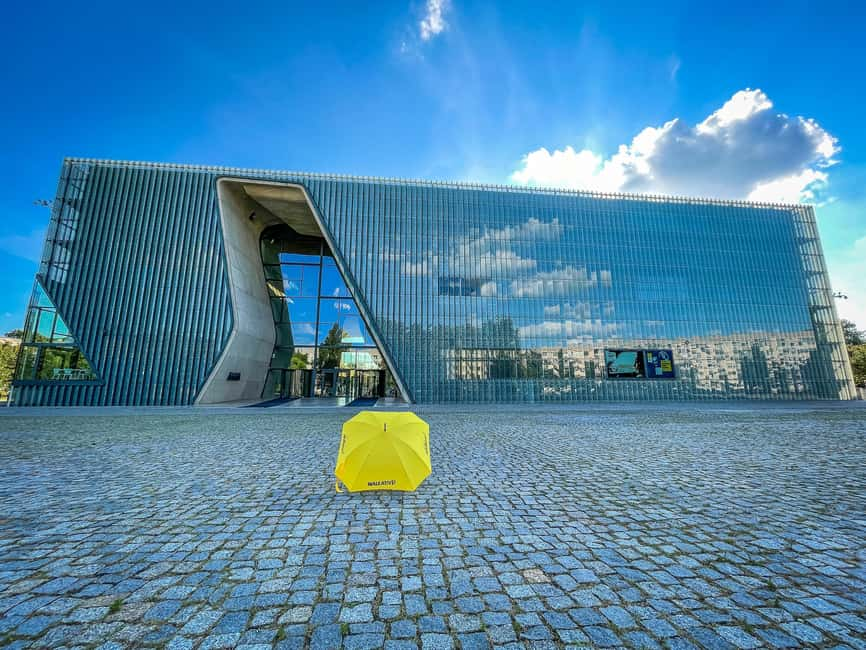
Before the war, Warsaw was home to one of the largest Jewish populations in the world. The city was also a major center of Jewish culture, politics, religion, publishing, theater, and journalism. If you begin with only the Holocaust, you see the ending of a community without understanding what was destroyed.
That is the best reason to choose this tour. It does not treat Jewish Warsaw as a story that begins with Nazi persecution. Your guide explains how Jewish residents took part in the city’s wider life for centuries, including struggles against occupying powers and Polish uprisings in the 19th century.
The interwar period receives special attention. Hundreds of Jewish artists, writers, actors, and journalists worked in Warsaw, creating a cultural world that was at once Polish, Jewish, Yiddish-speaking, secular, religious, local, and international. This context gives the later wartime story its proper scale.
You will also hear about the Jewish community today. That matters because Warsaw’s Jewish story did not end in 1945. The modern community is young, varied, and forward-looking, even as it carries the memory of what happened.
More Jewish Heritage Walking Tours in Poland
- Krakow: Kazimierz Jewish Quarter Walking Tour
★ 4.8 · 571 reviews - Warsaw: Warsaw Ghetto Private Walking Tour with Hotel Pickup
★ 4.9 · 369 reviews - Krakow: Jewish Ghetto Walking Tour
★ 4.6 · 349 reviews
Start at Grzybowski Square beside All Saints Church
The meeting point is next to All Saints Church at Grzybowski Square. Look for the yellow umbrella, which makes the group easier to spot in a busy central area.
Grzybowski Square is a useful place to begin because it sits within the former Jewish district and near several important wartime locations. You should arrive ready to walk, with comfortable shoes and clothing suited to the forecast. There is no hotel pickup, so you make your own way to the square.
The tour is conducted in English by a live local guide. Names that appear among the guides include Andrzej, Jacek, Luke, Aga, Agnieszka, Anna, Tomasz, Christopher, and Yatzic. The individual style will vary, but the strongest pattern is a guide who explains difficult material plainly, invites questions, and keeps the group moving at a sensible pace.
This is a general walking tour rather than a private booking. The amount you pay covers the reservation and guide payment. If you want a smaller private tour, you can contact the provider after booking to discuss arranging one.
Nożyk Synagogue, Warsaw’s surviving pre-war link
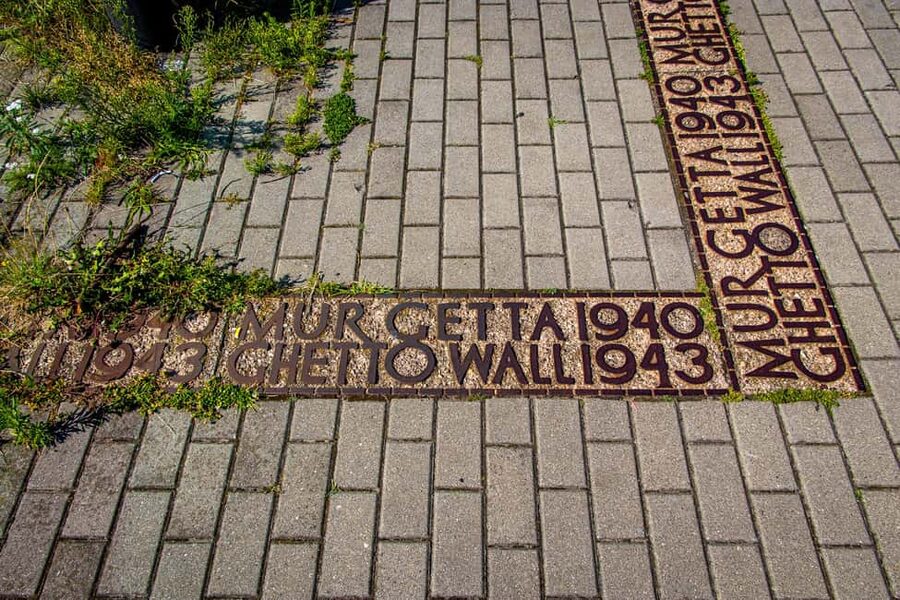
Nożyk Synagogue is the clearest physical connection to Jewish Warsaw before the war. It is the only surviving pre-war synagogue in the city, making it an important stop even for people who already know the basic history.
The tour includes seeing Nożyk Synagogue, but entry is not promised as part of the experience. One guide received praise for showing the building and supplying clear historical context, while another participant specifically wished the group could go inside. If entering the synagogue is essential to you, check the arrangements before booking rather than assuming the walking tour includes an interior visit.
Even from the outside, the stop helps you understand what was lost. The synagogue is not presented as an isolated monument. It forms part of a wider discussion about religious life, Jewish neighborhoods, and the place of Jewish institutions in everyday Warsaw.
This is also a good point to ask questions. Guides have been praised for staying after the official end to continue conversations, so do not hesitate to raise a family-history question or ask for clarification when the subject becomes complicated.
Chłodna Street and the ghetto bridge
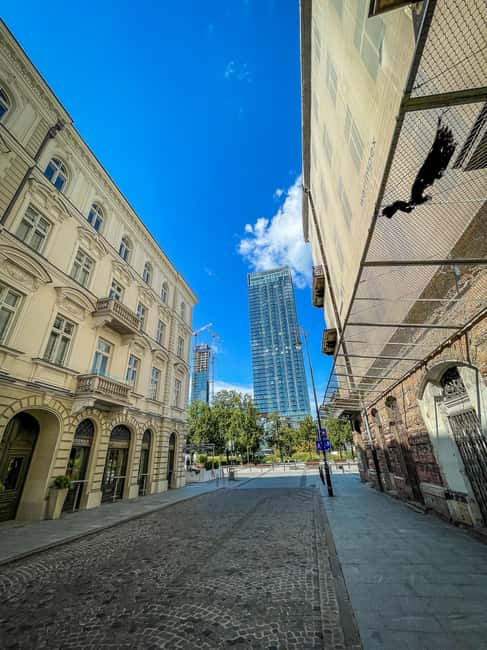
The stop on Chłodna Street explains one of the most striking physical problems inside the Warsaw Ghetto. The ghetto was divided into sections, and a wooden footbridge once crossed the street to connect them.
The bridge became a powerful image of wartime separation. Below it, ordinary city traffic continued while Jewish residents were confined above and around the street. Standing at the site, you are not looking at a preserved structure. You are using the street itself, along with the guide’s explanation and possibly photographs or maps, to reconstruct what disappeared.
That distinction is important. Much of this walk takes place where buildings, walls, and structures no longer survive. A good guide must help you read an ordinary modern street as a historical site without pretending that the past is still physically intact.
Guides such as Luke and Christopher have been praised for making this kind of explanation accessible. Christopher also used his broad knowledge of Warsaw to connect individual sites with the city’s larger wartime story. If you prefer history told through places rather than a museum display, this is one of the tour’s strongest moments.
Same streets, a different guide:
- Warsaw: Old Town Highlights Walking Tour in English
★ 4.7 · 1,516 reviews - Old Town Krakow & Wawel Castle Walking Tour
★ 5.0 · 1,508 reviews - Creepy Krakow: 2-Hour City Walking Tour
★ 4.7 · 1,131 reviews - Gdańsk City Sights & History Guided Walking Tour in English
★ 4.8 · 876 reviews
Waliców Street, the border, and the Warsaw Uprising
Waliców Street once formed part of the ghetto border. The stop brings the discussion back to the boundaries imposed on Jewish residents and to the changing shape of wartime Warsaw.
Your guide also connects Waliców Street with the Warsaw Uprising. This helps separate two events that are often confused. The Jewish Ghetto Uprising and the 1944 Warsaw Uprising were different uprisings, involving different groups and circumstances, though both belong to the city’s story of resistance against German occupation.
The value here is not simply seeing another old street. It is understanding how Warsaw became a city of walls, borders, ruins, resistance, and forced movement. The guide’s job is to place each location in the correct timeline and explain how Jewish resistance and Polish resistance fit into the broader history.
The tour may use photographs to show what the area looked like during the war. One participant specifically appreciated photos and maps because so little of the original setting remains. You should expect the stop to depend more on spoken explanation than on surviving architecture.
A difficult subject, handled with room for questions
This is an emotional tour, and the subject matter includes persecution, deportation, death, and the Holocaust. A strong guide needs more than dates. The best guides described for this activity use a calm tone, explain facts directly, and allow time for questions and reflection.
That does not mean the presentation is solemn every second. Guides have been praised for using gentle humor and local anecdotes to keep the group engaged during long walks. The humor is not there to make light of the Holocaust. It helps keep the explanation human and prevents two and a half hours from becoming a wall of names and numbers.
Some guides ask the group before discussing especially harsh details. That is a considerate approach, particularly when people arrive with different levels of preparation. You should still choose this tour knowing that painful material is central to it.
The group format can affect the experience. In a large group, one participant found it hard to hear when the guide walked ahead before finishing a sentence. Stay close, speak up if you cannot hear, and position yourself near the guide when possible.
What the guides do especially well
The strongest feature of this experience is the quality of its English-speaking guides. The names vary by departure, but the praised qualities are consistent: clear English, strong command of Warsaw’s history, openness to questions, and an ability to keep the group involved.
Aga and Agnieszka were praised for factual, careful explanations and obvious passion. Jacek was noted for his perfect English, steady pace, and willingness to answer questions. Luke combined family experience and humor with a direct account of difficult events.
Christopher received especially strong praise for connecting many parts of Warsaw, including places not always obvious during a standard route. Yatzic was described as funny, clear, and able to keep the walking stretches interesting. Anna used photographs to make the wartime setting easier to picture.
You cannot select a guide by name from the information provided, so book this for the route and subject rather than one particular person. Still, the range of strong guide feedback suggests that the experience does not depend on a single personality.
Pace, weather, and physical comfort
The walk lasts 150 minutes and remains outdoors for the entire two and a half hours. The pace has been described as comfortable, but you should still expect regular walking and standing.
Weather matters more than it might on an indoor museum visit. A February departure took place in freezing conditions, and another cold-weather participant wished for a café break. No café stop is listed as part of the tour, so bring warm layers, gloves, and suitable shoes in winter.
Summer may be easier physically, but you still need clothing for an extended walk. The route is not presented as a transport-assisted tour, and there is no hotel transfer. If you have trouble standing or walking for long periods, ask the provider about a private arrangement before booking.
The tour is long enough to build a proper story but short enough to fit into a day of sightseeing. Some people wished it continued longer because the subject is so broad. For most visitors, 150 minutes gives you a serious introduction without taking the entire day.
Is $26 a fair price?
At $26 per person, this is good value if you want historical interpretation rather than a quick look at monuments. The fee includes a local guide and the walking tour, so you are paying mainly for the explanations, route planning, and ability to ask questions.
The value is strongest for first-time visitors to Warsaw or anyone who knows the Holocaust only in broad terms. The guide adds the missing stages: centuries of Jewish life, interwar culture, the geography of the ghetto, wartime resistance, and the present-day community.
It may be less suitable if you want a private, highly specialized genealogy tour or guaranteed synagogue entry. The general group format can be less flexible, and the route cannot preserve buildings that no longer exist.
The reserve-now-and-pay-later option also helps if your Warsaw plans are still changing. Free cancellation is available up to 24 hours before the tour for a full refund, according to the booking conditions.
Who should book this Warsaw walk?
I would choose this tour if you want:
- A clear first introduction to Jewish Warsaw
- A guide who can explain places that now look ordinary
- A balance of pre-war culture, Holocaust history, resistance, and modern Jewish life
- An English-language walk with plenty of room for questions
- A reasonably priced alternative to booking a private guide
You might choose something else if you need an indoor experience, cannot manage two and a half hours outside, or specifically want a detailed visit inside Nożyk Synagogue. You should also consider a private format if your group has family connections to Warsaw and needs extra time for personal questions.
Should you book it?
Yes, if you want to understand what Warsaw lost, not just see where the ghetto once stood. The most useful feature is the way the walk begins with a living Jewish community and a flourishing interwar culture, then shows how persecution destroyed that world and how Jewish life continues today.
Book it early in your stay so the history gives later sightseeing more meaning. Wear proper clothing, stay close enough to hear the guide, and arrive at Grzybowski Square looking for the yellow umbrella. At $26, this is a thoughtful, well-priced way to meet Warsaw through its Jewish past and present.
FAQ
Where does the Jewish history walking tour meet?
Meet next to All Saints Church at Grzybowski Square in Warsaw. Look for a yellow umbrella.
How long does the tour last?
The tour lasts 150 minutes, or two and a half hours.
What language is the tour conducted in?
The tour is conducted in English by a live guide.
What places are included on the route?
The route includes Nożyk Synagogue, the site of the former bridge on Chłodna Street, and Waliców Street, which was once part of the ghetto border.
Is hotel pickup included?
No. Hotel pickup and drop-off are not included.
Does the tour include entry to Nożyk Synagogue?
The activity includes seeing Nożyk Synagogue, but entry inside is not listed as included.
Is this a private tour?
No. The tour joins a general walking tour. You can contact the provider after booking if you want help arranging a smaller private tour.
Can I cancel for a refund?
Yes. You can cancel up to 24 hours in advance for a full refund. You can also reserve now and pay later.
More History Walking Tours in Poland
- History and Hauntings of Salem Guided Walking Tour
★ 5.0 · 14,564 reviews - Lisbon: History, Stories and Lifestyle Walking Tour
★ 4.8 · 10,902 reviews - Boston: Freedom Trail History Small Group Walking Tour
★ 5.0 · 6,450 reviews - Historic Charleston Guided Sightseeing Walking Tour
★ 5.0 · 6,216 reviews
New routes in Poland
- Krakow: Jewish Quarter Guided Walking Tour★ 4.8 · 119 reviews
- Szczecin: Old Town Highlights Private Walking Tour★ 4.7 · 76 reviews
- Old Town Poznan: Guided Walking Tour in English★ 4.6 · 78 reviews
- Krakow: Old Town Guided Walking Tour★ 4.6 · 94 reviews
- Kraków: Old Town & Wawel Castle Walking Tour in English★ 4.8 · 532 reviews
- Krakow: Old Town Highlights Walking Tour★ 4.5 · 173 reviews
- Krakow: 2h Kazimierz (Jewish Quarter) Walking Tour★ 4.5 · 75 reviews
- Krakow: Old Town Highlights Private Walking Tour★ 4.9 · 79 reviews
Poland Walking Tours, compared.
Gdańsk City Sights & History Guided Walking Tour in English
Read our review →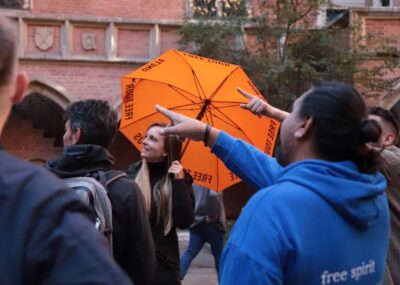
Browse the lists this tour appears in