
Review · POLAND
Gdańsk City Sights & History Guided Walking Tour in English
Gdańsk’s rebuilt Old Town tells a surprisingly complicated story. On this 150-minute walking tour, you follow the route once used by Polish kings, then connect grand merchant houses and Gothic brickwork with the city’s wartime destruction, postwar rebuilding, and long fight for independence. Guides such as Tufi, Sandra, Kate, and Filip have earned praise for clear English, humor, and a real feel for the city.
I like two things especially: the history is tied to the streets in front of you, rather than delivered as a string of dates, and the tour gives you a useful first look at both the famous center and the harbor. I also like the practical touches, such as warming breaks in bad weather, restaurant suggestions, and careful timing at St. Mary’s clock. The main drawback is that this is a general walking tour, so the group can sometimes be large and the amount of information may feel heavy.
Key points to know before you go
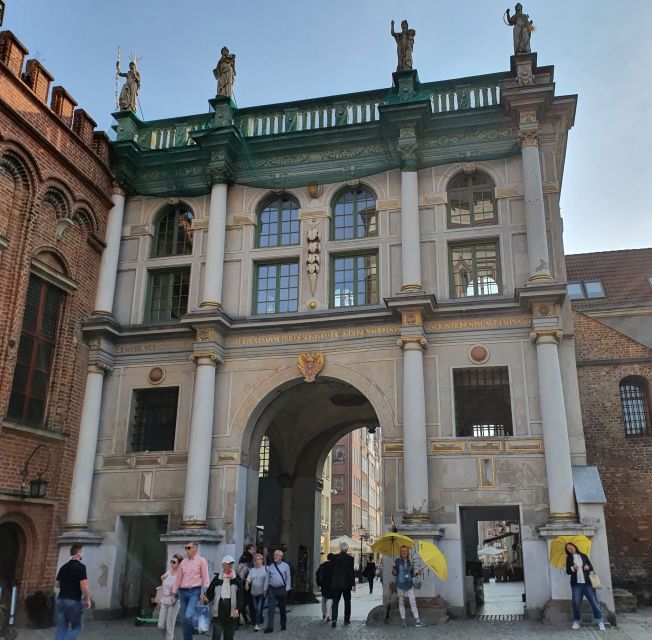
- Golden Gate starting point: Look for the yellow umbrella at Złota Brama.
- A full 2.5-hour introduction: The walk covers royal Gdańsk, the harbor, WWII, communism, and Solidarity.
- Major sights included: Long Market, Neptune Fountain, St. Mary’s Basilica, canals, rivers, and Żuraw Crane.
- Strong guide-dependent experience: Tufi, Sandra, Kate, Filip, Marcin, Paul, and others are praised for humor, clear English, and lively storytelling.
- Rain or shine: Wear proper clothing, especially in winter, when cold and wind can make the open-air walk demanding.
- Good value at $26: You get a live English guide, but the tour joins a general group rather than offering a private experience.
Why Gdańsk makes such a good walking tour city
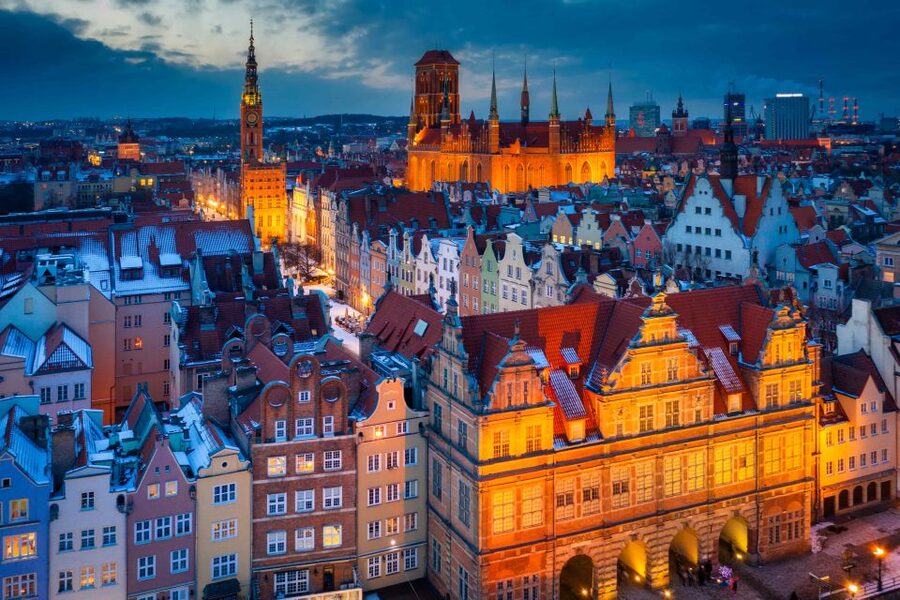
Gdańsk is easy to admire and easy to misunderstand. Its colorful façades and polished streets suggest a tidy medieval trading town, but the city’s identity has shifted between Polish, German, Dutch, and broader Baltic influences. A good guide helps you see past the pretty frontage.
This walk is built around that contrast. You see wealthy merchant architecture, then hear how war reduced much of the city to ruins. You hear about Polish kings using the route, then about the city’s push for self-rule, the beginning of WWII, and the Solidarity movement that helped weaken communism across the Eastern Bloc.
I like this structure because the tour is not just an Old Town photo walk. You get a basic timeline for understanding Gdańsk before you visit museums or explore on your own. If this is your first day in the city, the route can help you decide where to return later.
The meeting point is the Golden Gate, or Złota Brama. Look for the yellow umbrella. One useful caution: the gate has more than one side, and one person found the meeting instructions unclear. Arrive a little early and check both sides rather than waiting across the street.
More History Walking Tours in Poland:
- Warsaw: Jewish History Guided Walking Tour in English
★ 4.7 · 324 reviews - History and Hauntings of Salem Guided Walking Tour
★ 5.0 · 14,564 reviews - Lisbon: History, Stories and Lifestyle Walking Tour
★ 4.8 · 10,902 reviews
From Golden Gate to the merchant townhouses
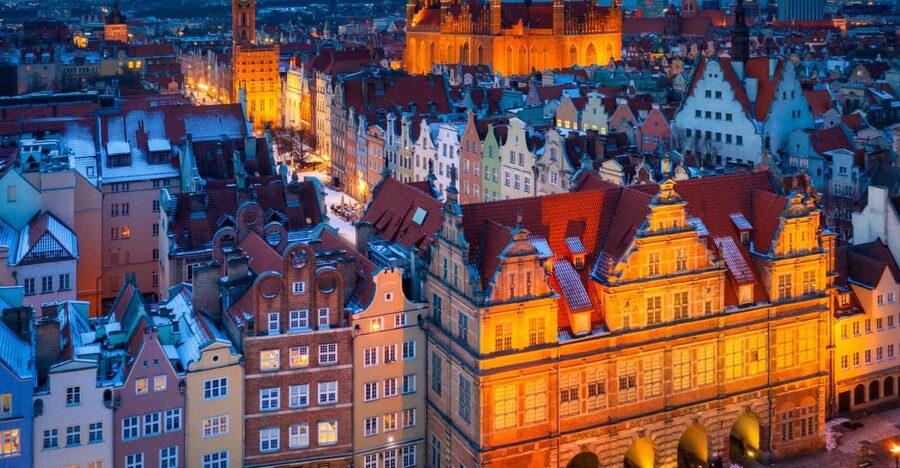
The Golden Gate introduces the city’s formal side. From here, the tour moves into the historic center along the route associated with Polish royal visits. The guide explains how this ceremonial path connected the city’s public buildings, wealthy residences, and commercial heart.
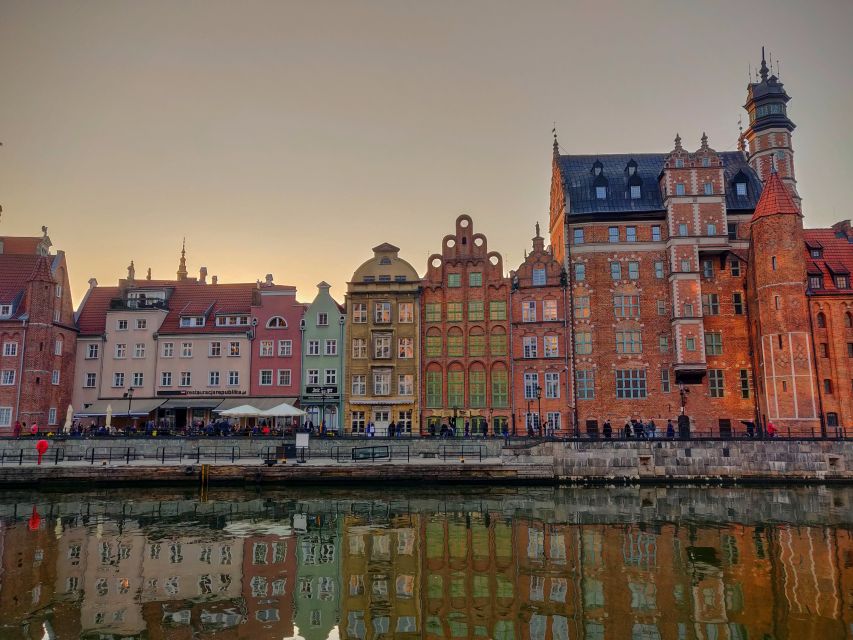
The merchant houses are among the most photogenic parts of the walk. Their narrow façades, varied colors, and decorative details can make Gdańsk look untouched. The important story, though, is that many were destroyed during WWII and later rebuilt with great care.
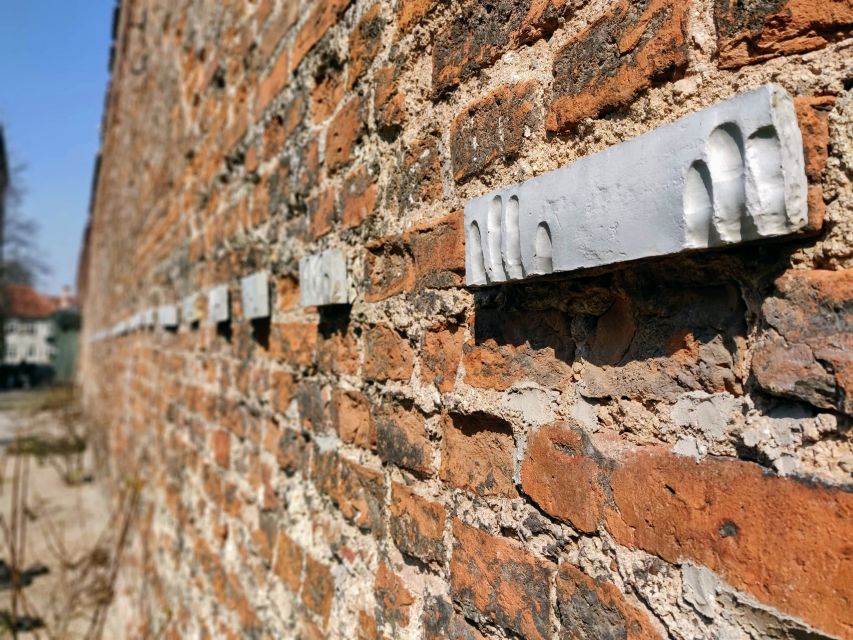
That rebuilding adds a layer of caution to the beauty. You are not simply looking at original medieval streets. You are looking at a city that made a determined choice to restore its historic appearance after enormous damage. Your guide can point out how Gdańsk presents its past through architecture, even when the buildings themselves are postwar reconstructions.
The city’s wealth came from trade around the Baltic Sea. Merchants handled goods moving through the port, and Gdańsk became one of the region’s most prosperous cities. The Polish, German, and Dutch influences help explain why the architecture and local culture do not fit neatly into one national box.
Long Market and Neptune Fountain
Long Market is the tour’s grand central scene. The street opens into a long, elegant urban space lined with ornate houses. It is the kind of place where a guide’s commentary adds real value, since the details above street level are easy to miss when you are busy taking photos.
The Neptune Fountain is the obvious landmark. It is also a useful point for understanding Gdańsk’s connection to the sea and its civic pride. Your guide places the fountain within the story of merchants, kings, and the city’s changing political loyalties.
This part of the route can be busy, and a large group may have trouble gathering close to every sight. One group member specifically found a bigger group cumbersome at some stops. I would not let that stop me booking, but I would stay close to the guide and move promptly when the group shifts position.
The tour is not built around long interior visits. That keeps the route moving, but it also means you should plan separate time for places you want to explore inside. The value here is the overview and the connections between the sights.
St. Mary’s Basilica and the famous clock
St. Mary’s Basilica is one of the walk’s strongest stops. Its brick Gothic construction gives it a different character from the stone cathedrals many people associate with northern Europe. The building is described as the largest brick Gothic church in the world, and its scale is difficult to appreciate from a quick photograph.
The guide explains why brick mattered in this part of Europe and places the basilica within Gdańsk’s religious and civic story. You will have time to look, take pictures, and absorb the exterior rather than simply passing by.
Timing can add a memorable detail. Guides have arranged the route so groups can see the figurines move on the church clock, and one guide timed the stop for noon. That is a small touch, but it shows the difference between a rigid checklist and a guide who is paying attention to the day.
Do not expect every tour to have exactly the same timing. The pace depends on the group, the guide, and the starting hour. Still, if the clock is important to you, ask at the beginning if the route is likely to reach St. Mary’s near the right time.
More City Highlights Walking Tours in Poland:
- Warsaw: Old Town Highlights Walking Tour in English
★ 4.7 · 1,516 reviews - Krakow: Old Town Highlights Walking Tour
★ 4.5 · 173 reviews - Krakow: Old Town Highlights Private Walking Tour
★ 4.9 · 79 reviews - Szczecin: Old Town Highlights Private Walking Tour
★ 4.7 · 76 reviews
Żuraw Crane and Gdańsk’s working harbor
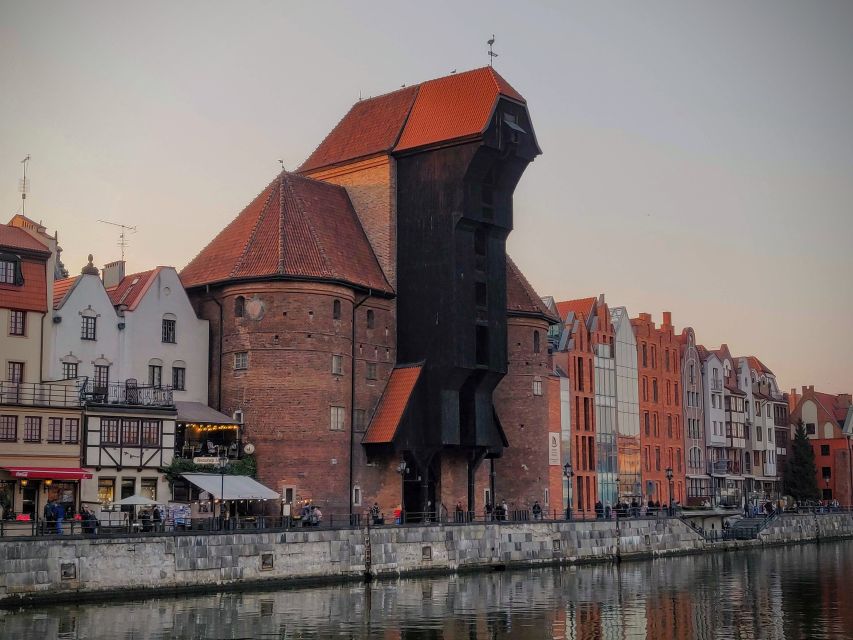
The walk continues toward the water and Żuraw, the medieval treadwheel crane. It is one of the city’s most recognizable structures and a fine reminder that Gdańsk was a working port before it became a sightseeing destination.
The crane is described as the largest of its kind in the world and functions as a symbol of the city. Its wooden lifting mechanism depended on human power inside a giant wheel. The guide uses the structure to explain how ships, cargo, and trade shaped daily life.
I like this stop because it changes the mood of the tour. The royal route and Long Market show Gdańsk’s ceremonial face. The crane shows its practical side. You also see rivers and canals along the way, which makes the city’s relationship with water clearer than it would be from the main square alone.
Again, the tour is primarily an outdoor orientation. If you want a museum-style explanation of the crane’s machinery or port history, you may need a separate visit. This walk gives you the context first.
WWII, the postwar rebuilding, and Solidarity
The most serious part of the tour concerns the 20th century. Gdańsk is closely tied to the beginning of WWII, and the guide explains how the conflict started in and around the city. That story is not treated as a detached military episode. It is connected to Gdańsk’s contested identity and the pressure between German and Polish claims.
You also hear how wartime destruction changed the Old Town you are seeing. The rebuilt merchant houses and restored streets make more sense once you understand what was lost. I find this historical link more useful than simply hearing that a building is old.
The tour then moves toward the Solidarity movement and the fall of communism in the Eastern Bloc. This is one of Gdańsk’s most important modern stories, and the guide presents the city as a place that kept pushing for greater independence and self-determination.
Several guides are praised for making difficult subjects understandable without turning the walk into a lecture. Tufi is described as especially strong at explaining battles and the city’s struggles, while Kate is praised for presenting centuries of history with clarity and humor. The guide matters here, since the same facts can feel either alive or exhausting depending on how they are told.
One point to consider is the amount of material. A few comments suggest that the tour can feel information-heavy, especially when the guide covers many centuries in a short time. I would bring a phone or small notebook if you like recording names and dates, but do not expect to remember everything. The real goal is to leave with a clear framework.
Winter weather, breaks, and walking comfort
This tour runs in all weather. That matters in Gdańsk, where winter conditions can be bitter. Several winter groups walked in freezing temperatures, snow, strong wind, or wind chill around minus eight Celsius. The guides kept the commentary going, but the conditions were still demanding.
Wear weather-appropriate clothing, solid shoes, and enough layers for standing outdoors. The route is wheelchair accessible, but outdoor surfaces, crowds, and winter weather can still affect comfort. If mobility is a major concern, it is sensible to ask the supplier about the specific conditions on the day.
The guides sometimes include a coffee, bathroom, or warming break. One winter group stopped for mulled wine or coffee, and another was brought indoors for part of the explanation before returning to the sights. These pauses are especially welcome in cold weather, though you should not treat them as a guaranteed feature at a particular café.
Summer has its own issue: sun, crowds, and a busy central route. The tour takes 150 minutes, so plan for sustained walking and standing in any season.
The guide makes or breaks the experience
This is a guide-led history walk, so the individual guide has a large effect on your day. The strongest names associated with the tour include Tufi, Sandra, Kate, Filip, Marcin, Paul, Katie, Zosia, Isabella, and Sophia.
The qualities that come through most often are clear English, humor, enthusiasm, and an ability to answer questions. Sandra is praised for placing Gdańsk’s past in a wider context and for adjusting the pace to the weather. Filip and Tufi are noted for strong storytelling and an obvious attachment to the city. Kate is singled out for making difficult historical material easy to follow.
You may also receive practical advice for the rest of your stay. Guides have suggested restaurants for different budgets and tastes, recommended additional sights, and provided a map with ideas for further exploration. That is useful because the tour ends with an orientation, not a complete visit to every major attraction.
The main limitation is group size. This is a general walking tour, and the amount you pay covers the reservation fee and guide’s payment. If you want a smaller private tour, you can contact the supplier after booking to ask about arranging one. A private option should suit families, photographers, or anyone who wants more time for questions.
Is $26 a fair price?
At $26 per person, I consider this good value for a first visit to Gdańsk. You receive 150 minutes with a live English-speaking guide and cover the city’s main historic route, major landmarks, harbor setting, WWII background, and Solidarity story.
The price is especially fair if you use the walk as a planning tool. You can mark places to revisit, ask about food, and learn which museums or churches deserve more of your time. A self-guided walk costs less, but it takes more preparation and will not answer questions as you go.
The price does not include hotel pickup or drop-off. You must reach the Golden Gate yourself, and the tour takes place rain or shine. It is also not a private tour, so you trade some personal attention for a lower cost.
You can reserve now and pay later, and cancellation is free up to 24 hours in advance. Those terms help if your schedule is still changing.
Who should book this Gdańsk walk?
I would book this tour if you are visiting Gdańsk for the first time, especially if you want more than architecture. It suits curious adults, older children who can manage a 2.5-hour walk, and anyone who wants the city’s Polish, German, Dutch, wartime, and communist-era connections explained in one sitting.
It is also a good choice for a short stay. The route covers enough ground to help you use the rest of your time wisely, and the guides often add restaurant and sightseeing suggestions.
I would think twice if you dislike group tours, prefer silent museum visits, or find long outdoor walks difficult. You may also want a private arrangement if a large group would frustrate you. And in winter, do not book without proper cold-weather clothing.
Should you book it?
Yes, if you want a lively introduction to Gdańsk at a sensible price. The best reason to book is not simply the list of landmarks. It is the way the walk joins rebuilt façades, port trade, royal ceremony, WWII, and Solidarity into one understandable story.
Book it near the start of your stay, arrive early at the Golden Gate, look for the yellow umbrella, and stay close to the guide in crowded areas. If possible, ask about the clock timing at St. Mary’s and bring enough clothing for a full outdoor walk. For most first-time visitors, this is a practical and worthwhile way to get your bearings fast.
FAQ
Where does the Gdańsk walking tour meet?
The meeting point is the Golden Gate, known locally as Złota Brama. Look for a yellow umbrella.
How long does the tour last?
The walking tour lasts 150 minutes, or 2.5 hours.
What language is the tour conducted in?
The tour is conducted in English with a live guide.
What major sights are included?
The route includes Long Market, Neptune Fountain, St. Mary’s Basilica, Żuraw Crane, rivers and canals, the merchant townhouses, and the Golden Gate area.
Does the tour explain WWII and Solidarity?
Yes. The guide discusses how WWII began in Gdańsk, the wartime destruction and rebuilding of the city, and how the Solidarity movement helped bring about the fall of communism in the Eastern Bloc.
Is the tour wheelchair accessible?
Yes, the activity is listed as wheelchair accessible.
Does the tour run in bad weather?
Yes. The tour takes place rain or shine, so bring weather-appropriate clothing.
Is this a private tour?
No. It joins a general walking tour. If you want a smaller private tour, you can contact the supplier after booking to ask about arranging one.
New routes in Poland
- Krakow: Jewish Quarter Guided Walking Tour★ 4.8 · 119 reviews
- Szczecin: Old Town Highlights Private Walking Tour★ 4.7 · 76 reviews
- Old Town Poznan: Guided Walking Tour in English★ 4.6 · 78 reviews
- Krakow: Old Town Guided Walking Tour★ 4.6 · 94 reviews
- Kraków: Old Town & Wawel Castle Walking Tour in English★ 4.8 · 532 reviews
- Krakow: Old Town Highlights Walking Tour★ 4.5 · 173 reviews
- Krakow: 2h Kazimierz (Jewish Quarter) Walking Tour★ 4.5 · 75 reviews
- Krakow: Old Town Highlights Private Walking Tour★ 4.9 · 79 reviews
Poland Walking Tours, compared.
Warsaw Ghetto Private Walking Tour with Hotel Pickup
Read our review →Browse the lists this tour appears in