
Review · ITALY
Siena: 3h Private City Walking Tour with Optional Cathedral
Siena makes the most sense when you understand its Contrade, the city’s historic neighborhood societies, and the Palio horse race that still shapes local life. This private walking tour connects those traditions with the grand squares, churches, and medieval streets you might otherwise pass without context.
I like the small private format, which lets your guide adjust the pace and explain what interests you. I also like the route’s strong finish at the Cathedral, especially if you add the optional guided visit. The main catch is cost: at $164.26 per person, it is a serious outlay for three hours, and the Cathedral ticket is extra.
Key points to know
- Palio and Contrade stories: Learn how Siena’s neighborhood culture still influences the city.
- Private three-hour route: Walk with your own group rather than following a large crowd.
- Major central sights: See Piazza del Campo, Palazzo Pubblico, Palazzo Tolomei, Palazzo Salimbeni, and Banchi di Sopra.
- San Catherine focus: Visit San Domenico and the Sanctuary of Saint Catherine of Siena.
- Optional Cathedral visit: Go inside the Duomo with a guided add-on, but pay the entrance fee separately.
- Useful practical details: Meet under the large tree in front of Basilica di San Domenico, wear comfortable shoes, and cover your knees and shoulders inside churches.
Why Siena works best with local stories
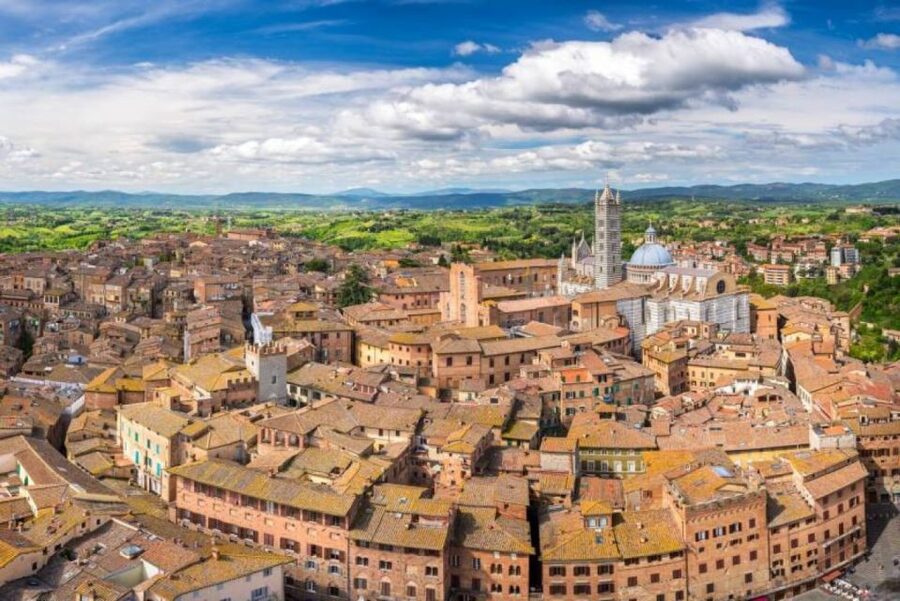
Siena is easy to admire and surprisingly easy to misunderstand. The shell-shaped Piazza del Campo, striped Cathedral, and narrow lanes make an immediate impression, but the city’s identity lies in details that are less obvious.
A private guide can explain why certain neighborhoods matter, how the Contrade function, and why the Palio is much more than a summer horse race. Guides such as Mare and Ludovica have been praised for explaining these traditions with warmth and clarity. That local angle gives the walk more purpose than a simple checklist of photogenic buildings.
The tour is also useful if you have only part of a day in Siena. Three hours is long enough to cover the main historic center without turning the outing into an endurance test. You get frequent stops for photos and short walks between major sights rather than one long lecture.
Still, you should be realistic about the price. A private tour costs much more than joining a standard group walk or exploring with a guidebook. The value depends on how much you want personal attention, the ability to ask questions, and a clearer understanding of Siena’s traditions.
More Private Walking Tours in Italy
- Private 3 hrs Venice Tour: St Mark’s, Walking tour & Boat tour
★ 4.0 · 3,372 reviews - Private Best of Venice Walking Tour with St Mark’s Basilica
★ 4.0 · 1,063 reviews - Venice: Private Walking Tour with a Local
★ 4.6 · 761 reviews
Starting at San Domenico and Via Camporegio
The meeting point is in front of Basilica Cateriniana San Domenico, under the big tree. This is a practical starting place because the basilica is both a major landmark and an important part of Siena’s story.
Inside San Domenico, you can learn about Saint Catherine of Siena and see the relics associated with her. Catherine is one of the city’s most important figures, and her connection to the church gives the opening stop real weight. Your guide can place her life within Siena’s religious and civic story instead of leaving you with only a name and a statue.
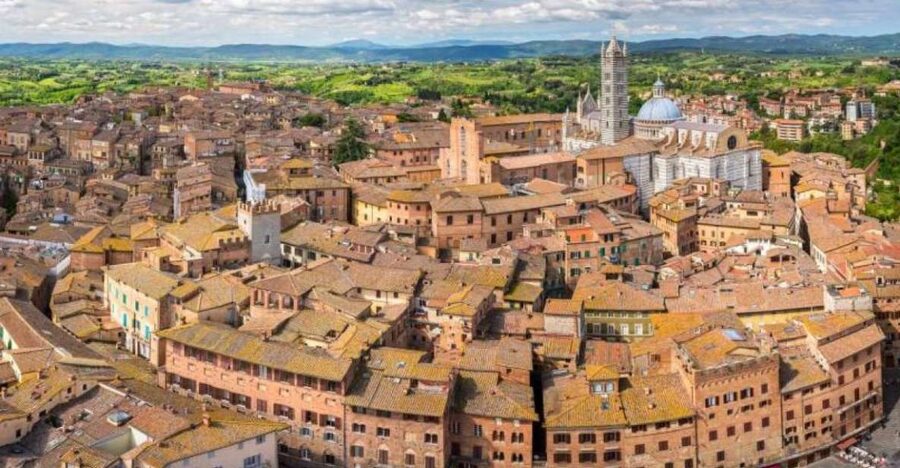
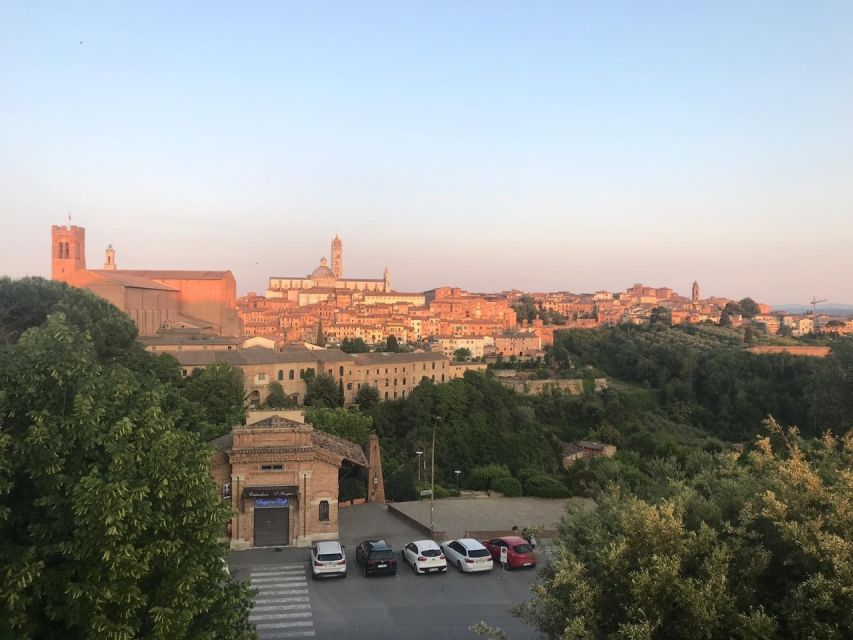
The next stop is Via Camporegio, used mainly for a photo stop. This area offers a different view of Siena’s form, with the church and surrounding buildings helping you see how the city rises and folds across its hilltop setting. Bring your camera, but listen for the explanation too. The view is more useful once you understand what you are looking at.
The route includes slopes, old paving, and uneven walking surfaces. Comfortable shoes are not a minor suggestion here. If you use a wheelchair, the tour is listed as wheelchair accessible, but it is sensible to discuss the route and any specific mobility needs when booking.
Palazzo Tolomei and the old Banchi di Sopra
From San Domenico, the walk continues through the historic center toward Palazzo Tolomei. This stop helps show how Siena’s wealth and power were expressed through private palaces as well as public buildings.
You then reach Banchi di Sopra, one of the city’s important historic streets. It is not simply a passage from one monument to another. The street connects Siena’s commercial and civic center, and your guide can explain how the urban layout developed during the Middle Ages.
Palazzo Salimbeni appears along the way. Its grand façade makes it one of the more recognizable buildings on this part of the route. Seeing Palazzo Tolomei and Palazzo Salimbeni together gives you a better sense of Siena’s old banking families and the competition between powerful local households.
This section is a good example of why a guide adds value. Without explanation, you may register attractive stonework and move on. With context, the buildings reveal how business, politics, and family influence shaped the city.
Piazza del Campo and Palazzo Pubblico
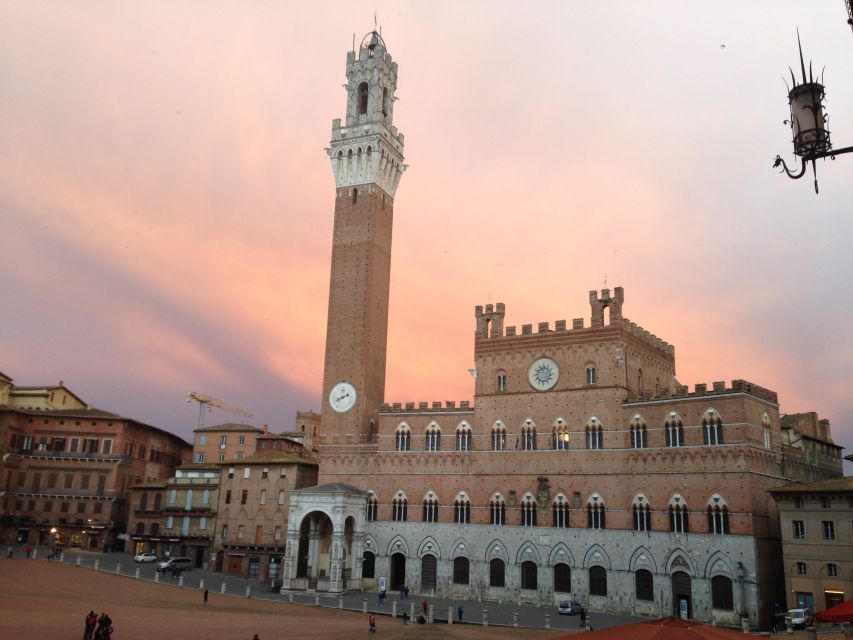
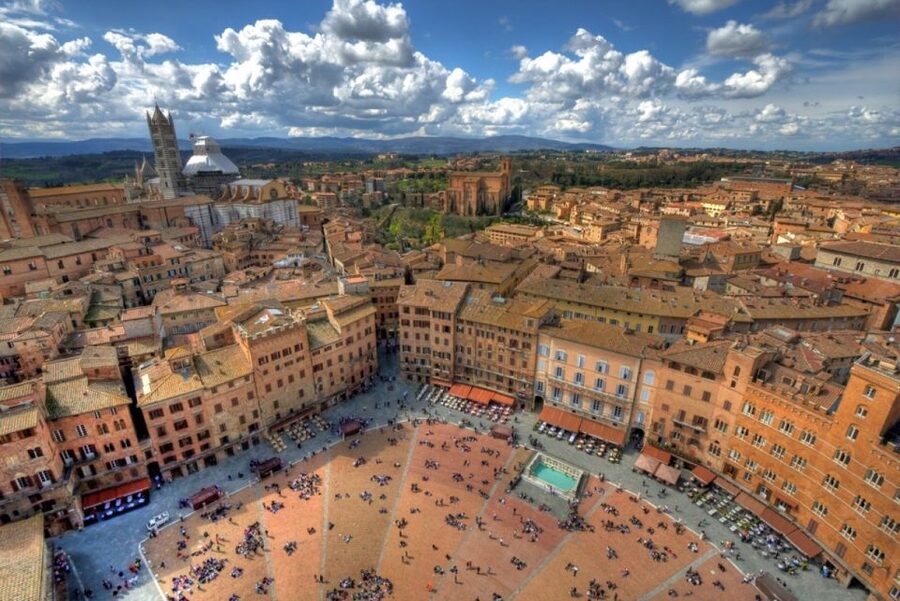
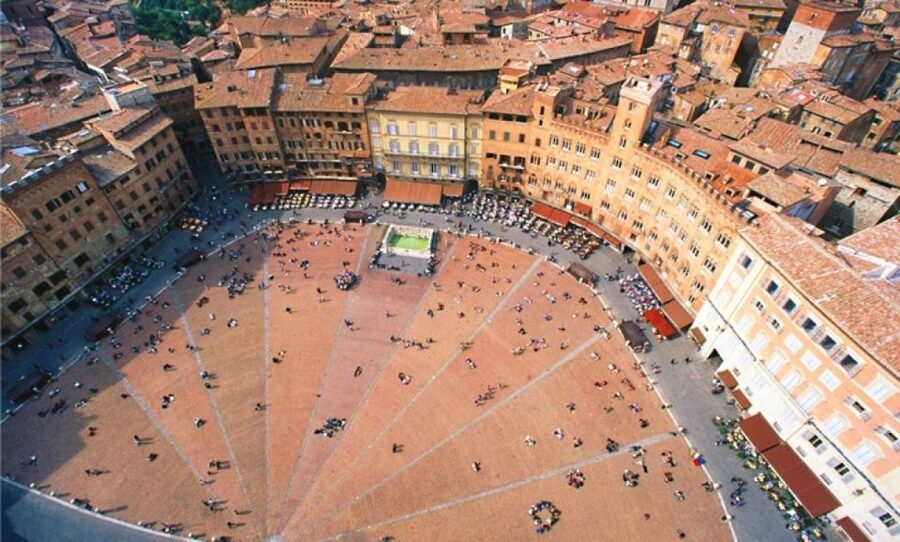
Piazza del Campo is the emotional center of the walk. Its broad, sloping surface and curved brick paving make it unlike the standard rectangular squares found in many Italian cities.
The square is also where the Palio takes place. The race is held around the perimeter of Piazza del Campo, and the Contrade give it a fierce local meaning. Your guide can explain how neighborhood loyalty affects flags, ceremonies, rivalries, and daily identity. Several guides on this tour have been praised for making the Palio and Contrade understandable without drowning the group in detail.
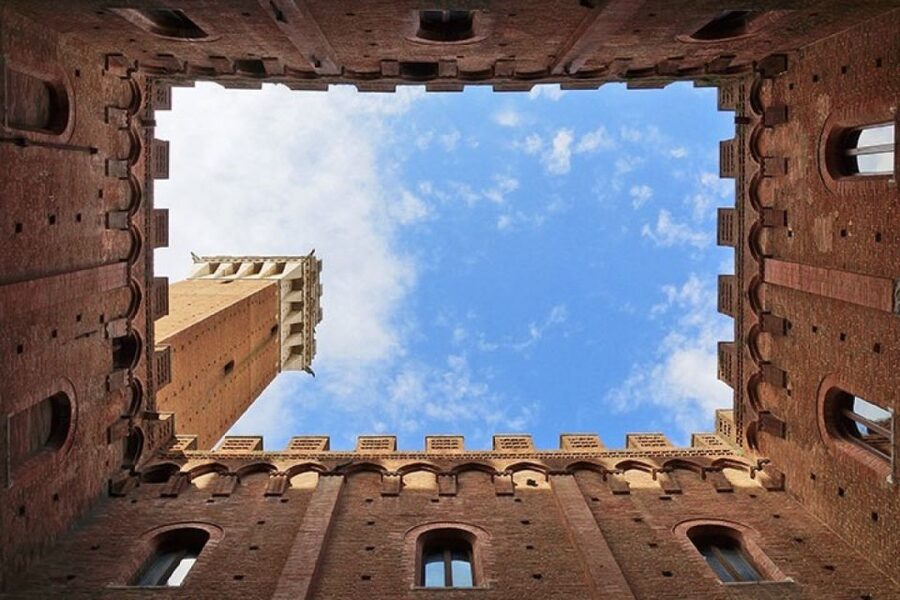
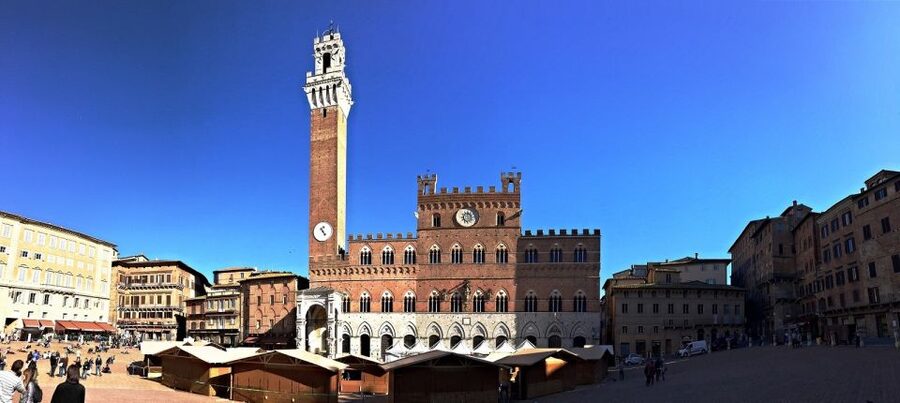
You will have time for photos and a proper look at the square. That matters because Piazza del Campo changes as you move across it. From one side, the Palazzo Pubblico dominates. From another, the Torre del Mangia pulls your eye upward. The slope also becomes clearer when you see the square in person.
Palazzo Pubblico is the civic heart of Siena. The tour includes a visit and photo stop, although museum admission is not included. The guide can explain the building’s public role and point out why it matters to the city’s political story.
If you want to enter museums or climb any tower, check the arrangements separately. This experience is primarily a walking tour, not a full museum package. That keeps the route moving, but it means you should not expect every interior to be included.
Same streets, a different guide:
- Venice: Doge’s Palace and St Mark’s Basilica Walking Tour
★ 4.4 · 6,291 reviews - Milan: Guided Walking Tour & Last Supper Visit with Ticket
★ 4.7 · 5,409 reviews - Naples: Street Food Walking Tour with Local Guide
★ 4.9 · 4,976 reviews - Florence: Highlights Walking Tour with Expert Guide
★ 4.6 · 4,662 reviews
Saint Catherine’s home and the city’s spiritual side
The route continues to the Sanctuary of Saint Catherine of Siena, where Catherine once lived with her family. This stop adds a more personal layer to the story introduced at San Domenico.
Siena can sometimes feel dominated by palaces and grand public spaces. The sanctuary helps balance that with a look at domestic and religious life. You get a stronger sense of the person behind the saint’s name and why Catherine remains so closely linked with the city.
The stop also helps connect Siena’s religious landmarks into a single story. San Domenico, the sanctuary, the Baptistery, and the Cathedral are not isolated attractions. Together, they show how faith, public life, art, and local identity were woven into the city’s daily structure.
Church clothing rules apply throughout the tour. Your knees and shoulders must be covered to enter the churches, so plan your outfit before leaving your hotel. The tour runs in all weather, and the route is outdoors for much of its length, so bring suitable clothing for rain, heat, or cooler conditions.
Ending at the Baptistery and Siena Cathedral
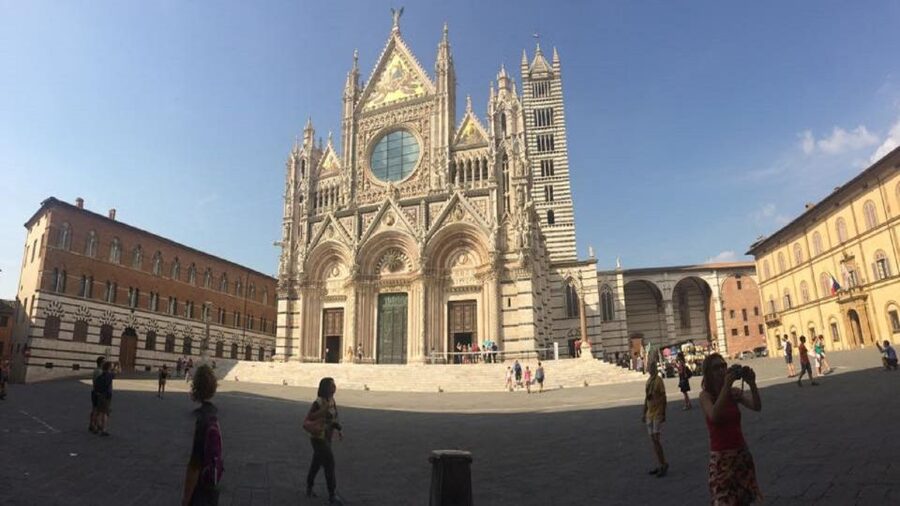
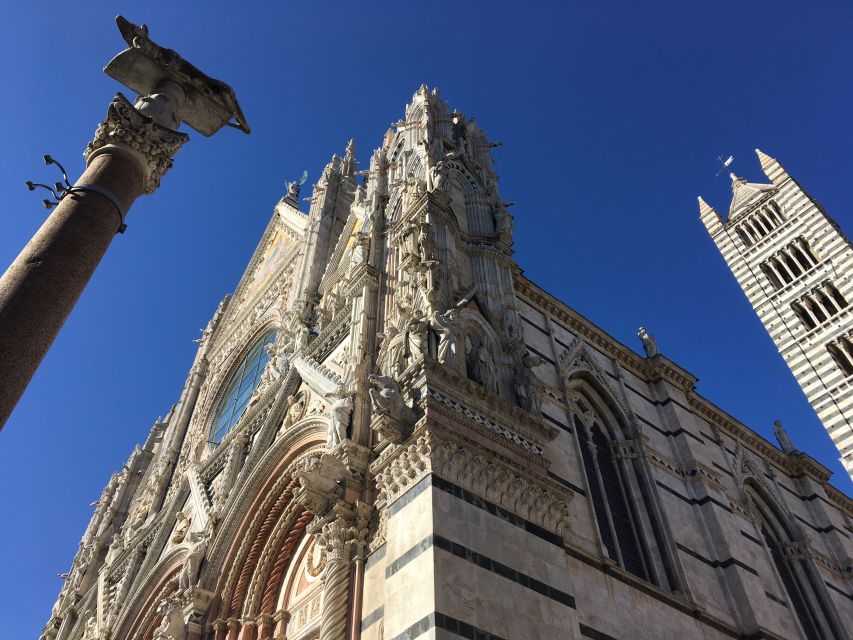
The final part of the route brings you past the Baptistery and into Piazza del Duomo. The Cathedral is one of Siena’s visual highlights, with its striped exterior and detailed decoration.
You can stop for photographs and hear about the building before deciding whether to add the optional guided Cathedral visit. If you choose it, the interior is the strongest reason to book the add-on. The marble work is unusually detailed, and the building contains works by major Italian artists.
The Cathedral visit can also help you understand Siena’s ambition. The exterior is impressive, but the interior shows how much money, skill, and civic pride went into the project. Guides can point out specific artistic details that are easy to miss when you enter alone.
The Cathedral entrance fee is not included and must be paid on site. That is important when comparing the two booking options. The optional guided portion may improve the experience, but it does not cover every admission cost. A Contrada Museum donation starts at €5 per person if that museum is included or selected during the route.
The published stop sequence finishes in Piazza del Duomo, while the meeting information also describes the activity as ending back at the meeting point. Confirm the exact ending arrangement when you book, especially if you have a timed Cathedral entry, lunch reservation, or train to catch.
What the private format changes
The private format is the clearest advantage of this experience. You can ask why a building matters, request more detail about the Palio, or move on when a subject is less interesting to you. That is very different from standing at the edge of a large group while trying to hear every word.
The strongest guide style here appears to combine city history with local flavor. Mare has been praised for creating a friendly, personal exchange while explaining Saint Catherine, the Palio, and the Cathedral. Ludovica has been especially effective at making the Contrade and Palio understandable through enthusiasm for her home city.
Several guides have also been praised for speaking clearly and adjusting to what the group wants to see. That flexibility is useful in Siena, where a three-hour route can feel full if every stop receives equal attention.
There is one small risk: a good guide can give you a lot to absorb. If you prefer only a few facts and plenty of free wandering, tell your guide early. The private setting makes it easier to ask for a lighter pace or focus on art, architecture, religion, or local customs.
Is $164.26 per person a fair price?
At $164.26 per person, this is not a budget activity. The price makes the most sense for couples, families, or small groups who would otherwise pay for several seats on a shared tour and want a guide focused only on them.
You are paying for three hours of private attention, not simply entry to monuments. The guide, route planning, local interpretation, and chance to ask questions are the main value. The tour also covers many of Siena’s essential sights in one outing, which can save time if your stay is short.
The price is harder to justify if you plan to spend several days in Siena and enjoy reading independently. You can visit Piazza del Campo, Banchi di Sopra, and the Cathedral area on your own. The difference is that you may miss the connections between the buildings and the living traditions behind them.
Remember to add the Cathedral entrance fee if you want the optional interior visit. Museum fees are also separate, and the Contrada Museum asks for a donation starting at €5 per person. I would budget for those extras before deciding.
Who should book this Siena walking tour?
I would recommend it to first-time visitors who want a clear introduction to Siena in half a day. It is especially useful if the Palio, Contrade, Saint Catherine, and medieval architecture all interest you.
Families may appreciate the private setup because the guide can adjust explanations and walking speed. Couples and small groups who dislike large guided outings will also get more from this format.
It suits visitors who want a local guide but do not need private transportation. The entire experience is on foot, and the central sights are connected by historic streets and squares.
I would be less likely to recommend it to someone focused only on entering museums. Museum admissions are not included, and the route gives priority to outdoor landmarks and guided interpretation. In that case, a dedicated Cathedral or museum visit may be a better use of your budget.
Book the Cathedral add-on if art and architecture are high on your list. If your main goal is understanding Siena’s neighborhoods and Palio culture, the walking portion already provides the tour’s central value.
Should you book it?
Book this tour if you want Siena explained as a living city, not just photographed as a pretty Tuscan stop. The combination of Piazza del Campo, San Domenico, Saint Catherine, the old palaces, and the Cathedral area gives you a strong first look in three hours.
The private guide is the reason to pay the premium. You get room for questions, a more personal pace, and local context about the Contrade and Palio. Just plan for church clothing rules, comfortable shoes, all-weather conditions, and separate Cathedral or museum costs.
If you value personal attention and have limited time, I think the price can be justified. If you prefer exploring slowly on your own, spend the money on Cathedral admission and a good guidebook instead.
FAQ
How long is the Siena walking tour?
The tour lasts three hours. Starting times vary, so you need to check availability for the date you want.
Where does the tour begin?
Meet your guide in front of Basilica Cateriniana San Domenico, under the large tree.
Where does the tour finish?
The route information places the final stop in Piazza del Duomo. The meeting details also describe the activity as ending back at the meeting point, so confirm the exact ending location when booking.
Is the Siena Cathedral visit included?
The Cathedral visit is optional. The Cathedral entrance fee is not included and must be paid on site.
Which languages are available?
The live guide service is available in English, Italian, and Spanish.
Is this a private tour?
Yes. The activity is offered for a private group.
Is the tour wheelchair accessible?
The activity is listed as wheelchair accessible.
What should I wear?
Wear comfortable shoes for the three-hour walk. Your knees and shoulders must be covered to enter the churches.
Does the tour run in bad weather?
Yes. The tour runs in all weather conditions, so dress appropriately for the forecast.
Are museum fees included?
No. Museum entrance fees are not included. A Contrada Museum donation starts at €5 per person.
Can I cancel the tour?
You can cancel up to 24 hours in advance for a full refund. A reserve-now, pay-later option is also available.
More Three-Hour Walks in Italy
- Eat Like a Local: Venice 3-Hour Small-Group Food Tasting Tour
★ 5.0 · 3,137 reviews - Prague: 3-Hour Walking Tour of Old Town & Prague Castle
★ 4.7 · 5,696 reviews - Experience Porto’s Charm: 3-Hour Guided Walking Tour
★ 5.0 · 2,432 reviews - Valletta: 3-Hour Walking Tour
★ 4.7 · 2,219 reviews
New routes in Italy
- Private St. Francis Basilica of Assisi and City Walking Tour★ 5.0 · 114 reviews
- Assisi Private Walking Tour including St. Francis Basilica★ 5.0 · 124 reviews
- Milan: City Highlights Walking Tour with The Last Supper★ 4.9 · 195 reviews
- Florence: Heart of Florence Guided Walking Tour★ 4.0 · 81 reviews
- Milan: Private or Shared Essential Walking Tour★ 4.7 · 84 reviews
- Taormina: Shared or Private Food & Wine Walking Tour★ 4.6 · 167 reviews
- Syracuse: Ortigia Private Walking Tour★ 4.8 · 181 reviews
- Syracuse: Ortigia and Neapolis Guided Walking Tour★ 4.7 · 205 reviews
Italy Walking Tours, compared.
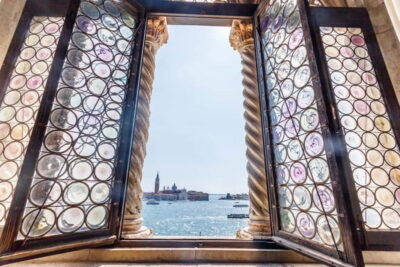
Doge’s Palace and St Mark’s Basilica Walking Tour
Read our review →
Guided Walking Tour & Last Supper Visit with Ticket
Read our review →
San Marco to Rialto Walk & Spritz Like a Local
Read our review →
Uffizi & Accademia Timed Entry: Small Group Duomo Walking Tour
Read our review →
Browse the lists this tour appears in