
Review · VIETNAM
Hoi An Ancient Town – Walking Tour with Local Guide
Hoi An’s old town is easy to wander through, but much harder to understand without someone explaining what you’re seeing. This tour brings together the main sights, from Ba Mu Temple gate to the Japanese Covered Bridge, while local guides such as Trung and Duy add stories about architecture, customs, and daily life. I like the small groups of no more than 10 and the thoughtful route, which includes indoor stops when the heat or rain gets tiresome.
I also like the included tea, dessert, or herbal drink, plus the useful advice on restaurants, cafés, tailors, and later activities. The main consideration is the extra 120,000 VND entrance ticket, payable in cash, and the advertised 150-minute walk may feel brisk if you want long visits at every site.
Key points
- Small groups of up to 10: Easier to hear the guide, ask questions, and stay together in crowded lanes.
- A broad old-town route: Covers Ba Mu Temple gate, assembly halls, the Japanese Covered Bridge, heritage houses, museums, and Hoi An Market.
- Strong local guiding: Guides including Trung, Duy, Tom, Tin, and others are praised for clear English, humor, and cultural insight.
- Indoor breaks built into the walk: Useful in Hoi An’s heat, rain, and crowded festival periods.
- A practical first-day tour: You get your bearings and a list of places to eat, drink coffee, shop, and order tailoring.
- Budget-friendly pricing: At $14, the tour offers a lot of orientation, though the heritage ticket costs extra.
Why a guided walk helps in Hoi An

Hoi An’s old town can look simple at first: yellow walls, wooden doors, lanterns, shopfronts, and narrow lanes. The real pleasure comes when you understand why the buildings look this way and how the town grew as a trading port.
A guide gives you that missing layer. You’ll hear about the people, customs, architecture, and changing life of Hoi An rather than simply collecting photographs. Several guides on this experience, especially Trung and Duy, are described as friendly, funny, and easy to understand. That matters in a small group, where a dry lecture can make two and a half hours feel long.
I would take this tour early in your Hoi An stay. You’ll learn where the old town begins, how the main sights fit together, and which streets you may want to revisit at your own pace. It also helps you avoid the common first-day mistake of wandering without a plan and missing the heritage buildings tucked behind busy shopfronts.
The small-group limit is one of the strongest features. With no more than 10 people, you can normally stay close to the guide and ask about details that interest you. In crowded periods, including Tet, keeping a group together takes real attention. The guiding team has been praised for making sure nobody gets left behind and for adjusting the route when the streets become especially busy.
More History Walking Tours in Vietnam:
- Hoi An: Ancient Town Guided Walking Tour
★ 4.9 · 766 reviews - Hue Imperial Ancient City Walking Tour
★ 4.8 · 308 reviews - Hanoi: Cho Gioi Vietnam War History Walking Tour
★ 5.0 · 102 reviews
Starting at 95 Phan Chu Trinh Street
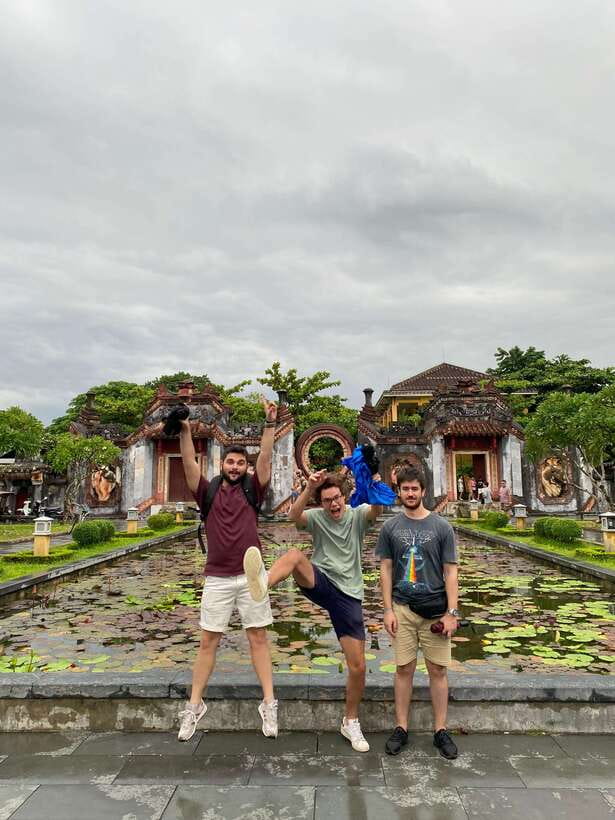
The meeting point is at 95 Phan Chu Trinh Street, in front of a tailor shop on the corner of the intersection. There is no hotel pickup or drop-off, so you need to make your own way there.
I like this starting point because it puts you near the old town without beginning in the middle of the most crowded lanes. Arrive ready to walk, with comfortable clothes and shoes. The tour lasts about 150 minutes, although the route description also refers to a three-hour visit, so allow some flexibility rather than scheduling a tight appointment immediately afterward.
The town requires an entrance ticket costing 120,000 VND per person. Bring cash. This fee is not part of the $14 tour price, and you should budget for it before you arrive. The experience provides access through a separate entrance, which can make the start more orderly.
Ba Mu Temple gate and the old-town approach
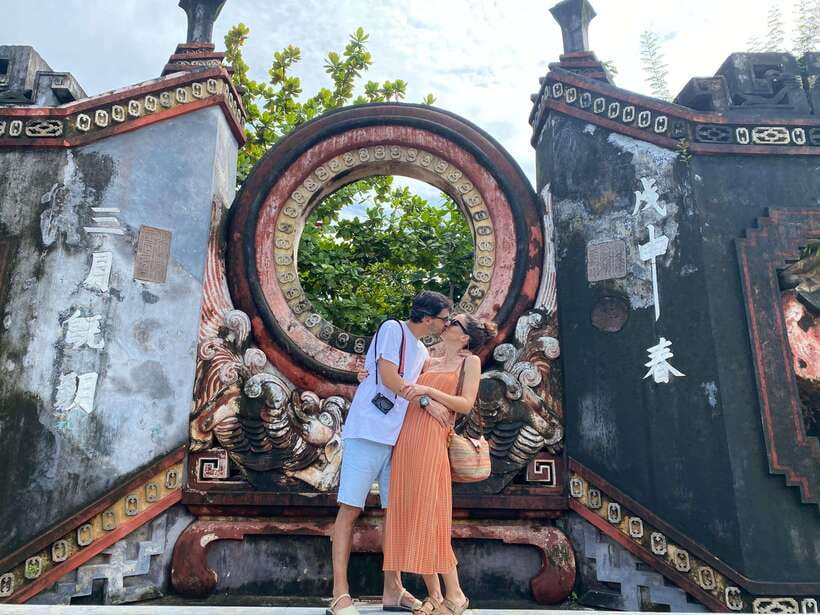
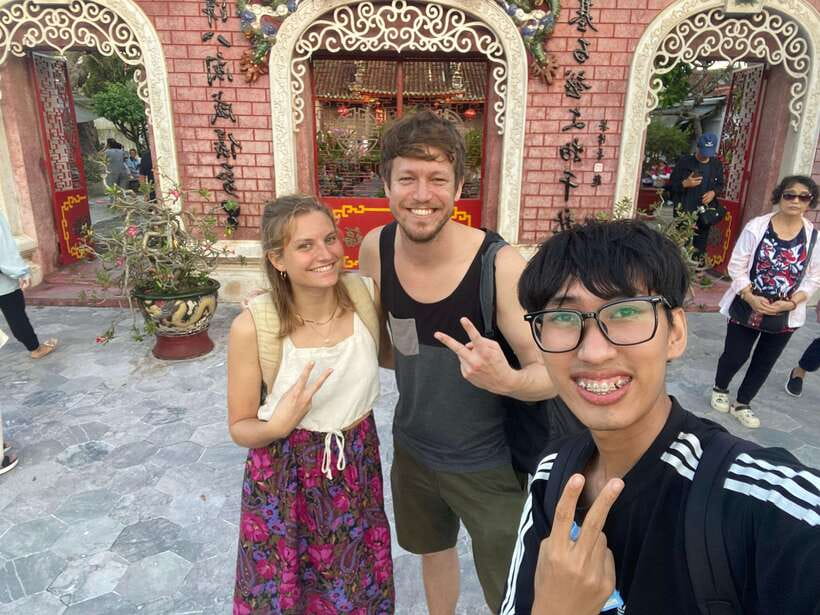
Ba Mu Temple gate is an atmospheric opening stop. Its ornate form gives you an immediate sense of Hoi An’s visual character, and it is a useful place to begin discussing local religious traditions and architecture.
This is also a good photo stop, though you should remember that the gate is only one part of the old town’s story. The guide’s explanation is what gives it purpose. Instead of seeing a decorative entrance and moving on, you can begin to notice how temples, homes, markets, and trading buildings sit together.
The route includes quieter lanes and photo spots as well as the obvious sights. That balance is important. Hoi An’s main streets can be crowded with shops and pedestrians, while a short turn into a side lane often reveals a calmer view of the old buildings.
Assembly halls and the Chinese trading communities

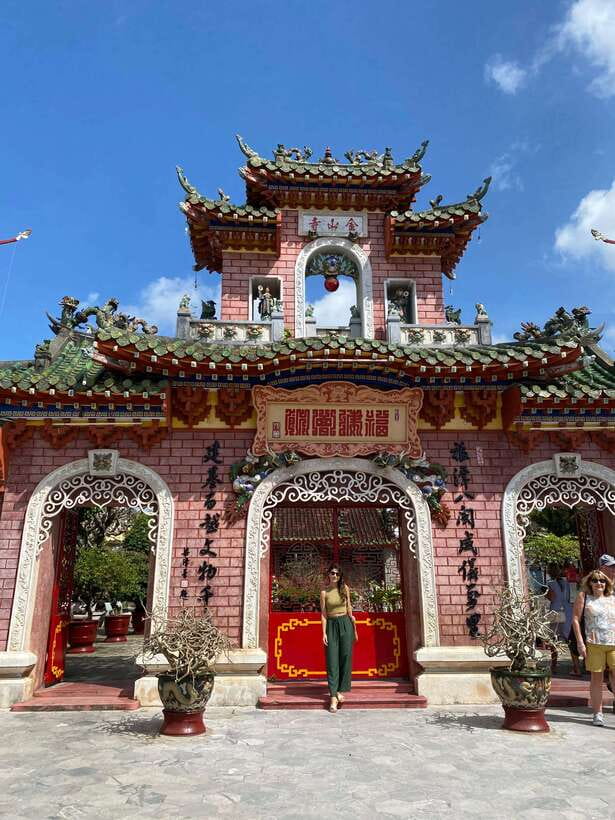
The tour visits an assembly hall identified in the program as the Fujian or Cantonese Assembly Hall in Hoi An. These halls reflect the town’s long connection with Chinese trading communities and provide some of the clearest examples of decorative religious and communal architecture in the old town.
Expect painted details, carved elements, and a setting that feels different from a typical Vietnamese home. Your guide can explain how these buildings served people from particular communities and how trade shaped Hoi An’s identity.
This is one place where a local guide adds real value. Without context, an assembly hall can become another beautiful building on a busy sightseeing list. With an explanation of who used it and why, you begin to see Hoi An as a meeting point of cultures rather than simply a photogenic historic district.
More Guided Walks in Vietnam:
- Hanoi: Michelin Guide Street Food Walking Tour
★ 4.8 · 961 reviews - Ho Chi Minh City: Walking Tour with Local Guide
★ 4.8 · 363 reviews - Ho Chi Minh: City Highlights Guided Walking Tour
★ 4.9 · 188 reviews - Hoi An/Da Nang: Private Photoshoot & Guided Walking Tour
★ 5.0 · 160 reviews
The Japanese Covered Bridge
The Japanese Covered Bridge is Hoi An’s best-known landmark, and the tour includes it for good reason. Its compact form, covered passage, and connection to Japanese influence make it one of the town’s most recognizable structures.
You’ll likely have time to take photographs and hear about its place in the old town. Crowds can gather here, especially during busy periods, so the guide’s job is partly practical: keeping the group close and making sure you can see the important details without losing everyone in the flow of foot traffic.
This stop can feel familiar from photographs, but it is more rewarding when paired with the assembly hall and heritage houses. Together, they show how several outside influences became part of Hoi An’s built character.
Kazik Park and a pause from the lanes
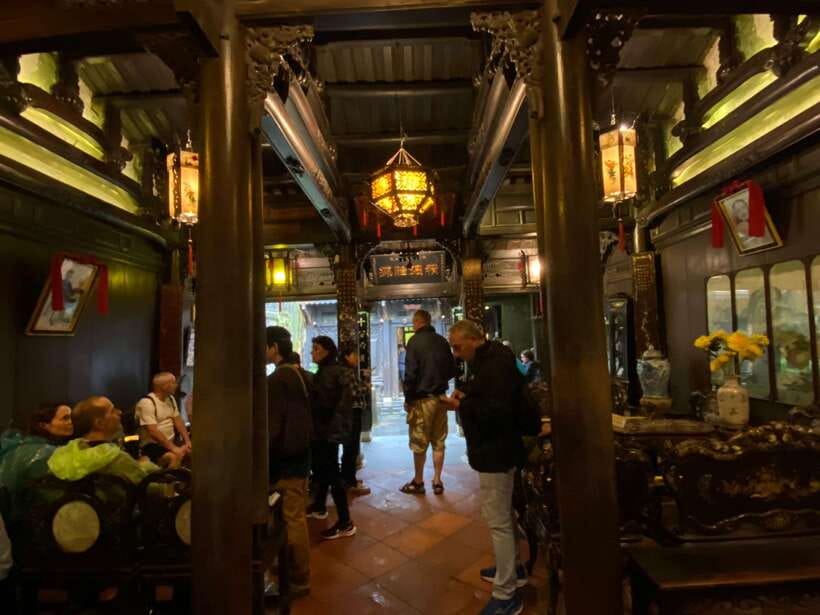
Kazik Park offers a change of pace between the more formal heritage stops. The tour uses it as part of the old-town route and as another place to discuss Hoi An’s architecture and public spaces.
The walk includes indoor break stops, which I consider a practical advantage rather than a minor extra. Central Vietnam can be hot, humid, or wet, and a nonstop walk through narrow streets is not pleasant for everyone. Having places to pause makes the route easier for older participants and anyone who prefers a measured pace.
Several recent descriptions of the experience praise the comfortable walking speed. That does not mean the tour is effortless, but it should not feel like a forced march. You still need to be comfortable on your feet for around two and a half hours.
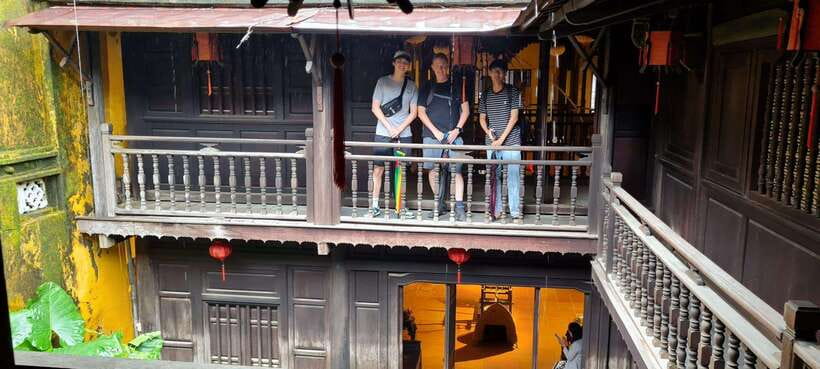
Tan Ky Heritage House
Tan Ky Heritage House gives you a closer look at domestic architecture and the way old homes functioned. The visit helps move the tour beyond temples and public monuments.
Look for the relationship between the narrow street frontage and the deeper interior layout. The house is valuable because it lets you consider how merchants lived and worked in a town shaped by trade. A guide can point out details that would be easy to pass without noticing.
This is also one of the places where the entrance fee becomes easier to justify. You are not only walking past old façades. You are entering heritage properties and learning how the spaces relate to Hoi An’s past.
Traditional art and folk culture
The itinerary includes Hoi An Traditional Art Performance House and the Museum of Folk Culture. These stops broaden the tour beyond architecture.
The performance house connects the old town with local artistic traditions, while the folk museum provides a setting for learning about everyday culture. The exact balance of time at each stop can depend on the group and conditions, so I would not expect a full performance program or a long museum visit. Think of them as compact introductions that help you understand the town as a living community.
This variety is one reason the tour works well for first-time visitors. You are not spending the full walk looking at buildings. You get history, culture, local customs, and practical orientation in one outing.
Hoi An Market and the end of the route
Hoi An Market is a useful final sightseeing stop because it brings you back to daily life. After the temples, halls, and old homes, the market shows the town as a place where people shop, eat, and work rather than only a preserved historic center.
The market can be crowded and lively, so stay close to the guide. This is a good place to ask questions about local food or note dishes you want to try later. The tour does not include a full meal, but the guide offers recommendations for local restaurants and other places to eat.
The ending also includes a traditional drink, tea, or local dessert. Several recent sessions have finished with a refreshing herbal drink from Mot. The exact treat can vary, but the idea is the same: a short, pleasant rest after the walk and a chance to ask for personal advice.
The guide is the main value

At $14 per person, this is inexpensive for a guided introduction to Hoi An, especially with a small group and visits to several heritage sites. You should add the 120,000 VND cash entrance ticket, but the total still compares well with paying separately for a private guide or trying to piece together the same route alone.
The quality depends heavily on the guide assigned to your group. Names appearing in recent sessions include Trung, Duy, Tom, Tin, Trang, and Yui. The strongest descriptions focus on clear English, humor, local knowledge, thoughtful pacing, and a willingness to answer questions.
Trung is especially praised for keeping groups together in crowded streets, taking photographs, and sending extra recommendations after the tour. Duy is described as funny, patient, and able to explain Vietnamese history clearly. Tom is noted for including everyone and making the walk relaxed. These details suggest a friendly guiding style rather than a formal lecture.
That said, guides can differ in personality, and you may not receive the same person mentioned in a particular description. The tour’s consistent strengths are the route, group size, and local perspective. If you want a private itinerary built around your own interests, this is not that kind of experience.
What the walk is like in difficult weather or crowds
Hoi An’s old town can be uncomfortable during heat, rain, or festival traffic. The tour does not eliminate those conditions, but indoor breaks and a manageable pace make them easier to handle.
One recent session took place during Tet, when the old town was especially crowded. The guide adjusted the route and kept the group close. Another session continued in wet weather, with the guide maintaining a comfortable pace. Those are useful signs for anyone visiting outside perfect conditions.
Still, bring sensible clothing and prepare to walk outdoors. The activity recommends comfortable clothes. Baby strollers are not allowed, and the tour is not suitable for babies under one year. Children beyond that age are not otherwise excluded in the provided information, but every participant should be able to manage the walking format.
Best for first-time visitors and short stays
I would choose this tour if you have one day in Hoi An, are visiting Vietnam for the first time, or want cultural context before exploring independently. It is also a good fit if you enjoy asking questions and prefer a human explanation over an audio guide.
It works particularly well before a later cultural show, since the background about Hoi An and Vietnamese traditions can make a performance easier to follow. After the walk, you can use the restaurant, café, tailor, and activity suggestions to shape the rest of your stay.
You may want something else if you dislike group tours, have limited walking ability, or want to spend most of your time shopping and eating. The tour covers a lot, so individual stops are introductions rather than long, quiet visits. It also does not include transport or a meal.
Booking is flexible: you can cancel up to 24 hours before the activity for a full refund, and the reserve-now, pay-later option lets you hold a place without paying immediately. Starting times depend on availability.
Should you book this Hoi An walking tour?
I would book it early in a Hoi An visit. The route gives you the essential old-town sights, the group stays small, and the local guide adds the cultural explanations that are easy to miss on your own. At $14, it is strong value even after adding the required heritage ticket.
Book it especially if you want a friendly guide such as Trung, Duy, or Tom to help you get your bearings and make practical plans for the rest of your stay. Skip it if you prefer complete independence or need a stroller-friendly activity. For most first-time visitors, this is a sensible, affordable way to start Hoi An.
FAQ
How long does the Hoi An walking tour last?
The activity is advertised as lasting 150 minutes. The route description also refers to a three-hour visit, so allow extra time around the scheduled start and finish.
What sights are included?
The route includes Ba Mu Temple gate, the Fujian or Cantonese Assembly Hall, the Japanese Covered Bridge, Kazik Park, Tan Ky Heritage House, Hoi An Traditional Art Performance House, the Museum of Folk Culture, and Hoi An Market.
Is the entrance ticket included in the price?
No. You need to pay 120,000 VND per person for the Hoi An Ancient Town heritage ticket. Payment is required in cash.
Where does the tour meet?
The meeting point is 95 Phan Chu Trinh Street in Hoi An, in front of a tailor shop located on the corner of the intersection.
How large is the group?
The tour is limited to 10 participants and includes an English-speaking local guide.
What is included at the end of the tour?
The experience includes a traditional dessert or local tea. Some sessions finish with a refreshing herbal drink from Mot. The tour also includes recommendations for local food, cafés, tailor shops, and other activities in Hoi An.
New routes in Vietnam
- Ho Chi Minh City: Super Niche Walking Street Food Tour★ 5.0 · 438 reviews
- Hanoi: Street Food Walking Tour & Water Puppet Show★ 4.8 · 205 reviews
- Saigon: Private Backstreets Walking Food Tour★ 4.9 · 83 reviews
- Ninh Binh Sunset Tour And Visit Hoa Lu Walking Town At Night★ 4.4 · 94 reviews
- Hue Imperial Ancient City Walking Tour★ 4.8 · 308 reviews
- Hue Imperial City Walking Tour: Citadel & Forbidden City★ 4.8 · 245 reviews
- Hoi An/Da Nang: Private Photoshoot & Guided Walking Tour★ 5.0 · 160 reviews
- Hoi An: Ancient Town Guided Walking Tour★ 4.9 · 766 reviews
Vietnam Walking Tours, compared.

Ho Chi Minh City Street Food Tour & Sightseeing By Motorbike
Read our review →
Private Street Food Evening Walking Tour in Ho Chi Minh City
Read our review →
[HOT] Hanoi Old Quarter Walking Street Food – Small Group Tour
Read our review →

Private Hanoi Street Food Walking Tour With Real Foodie
Read our review →
Hue Customizable Tour with Imperial Citadel & Forbidden City
Read our review →Browse the lists this tour appears in