
Review · VIETNAM
Hue Imperial Ancient City Walking Tour
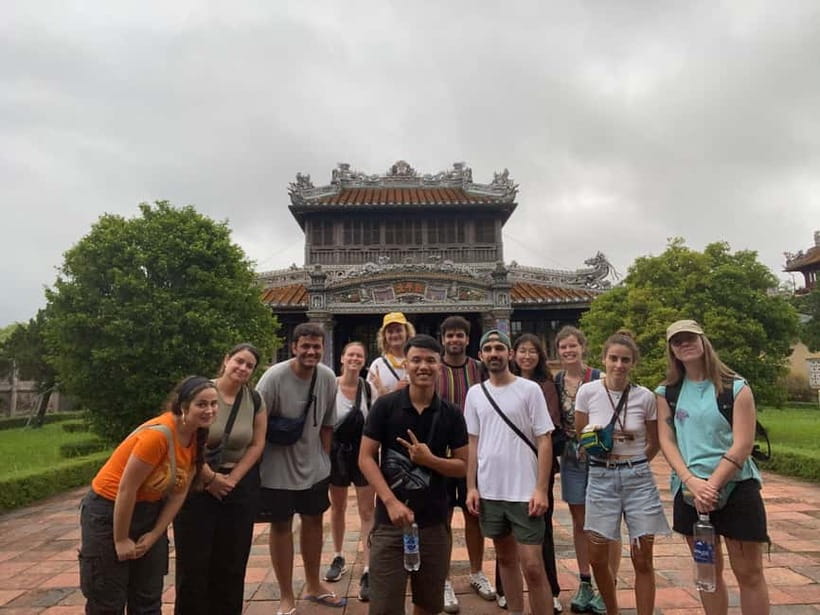
Hue’s Imperial City makes far more sense when someone explains what each gate, hall, and courtyard was built to do. This walking tour follows the Nguyen Dynasty through the Meridian Gate, Thai Hoa Palace, Dien Tho Palace, and the Forbidden City, with local stories that connect royal life to modern Vietnam.
I especially like the small group limit of 10 and the use of old photographs to show how the citadel looked in different periods. I also like the guide’s mix of palace history, French colonial rule, wartime damage, family customs, and practical Hue food tips.
The main point to check is the price structure. The advertised cost is just $2 per person, but the experience is described as tip-based, and several participants advise bringing cash. The ticket to enter the Imperial City is not listed among the inclusions, so confirm that before you arrive.
Key points at a glance
- Meridian Gate begins the story: Learn how the main entrance controlled access to the royal compound.
- Thai Hoa Palace puts ceremony first: See where official court life centered on the emperor.
- Dien Tho Palace adds the women’s court: Understand the queen mother’s place within the royal household.
- The Forbidden City needs context: Ruins and restored structures become easier to read with a guide.
- Linh Nguyen is the main name to know: His English, historical detail, humor, and use of visual aids receive repeated praise.
- Bring water, sunscreen, shoes, and cash: The site is large, exposed, and the tip-based format makes cash useful.
Why a guide helps inside Hue Imperial City
Hue Imperial City is not a single building. It is a broad royal complex with gates, courtyards, palaces, gardens, ceremonial spaces, and the emperor’s private zone. Without context, you can admire the red walls and decorated roofs but miss how the whole place worked.
I like this tour because it gives you a framework before the details blur together. The guide explains how the imperial city was planned, how the Nguyen emperors used its spaces, and how royal rules shaped daily life. That matters in Hue, where a beautiful doorway can also tell you who was allowed through it and why.
The tour is led in English. Linh Nguyen is the provider named for the experience, and many dates are led by Linh. Other feedback names Thanh and Thang, so the guide may vary. Linh is particularly praised for clear English, strong presentation, humor, personal observations about Vietnam, and the ability to answer questions without making the tour feel like a lecture.
The small-group format helps. Ten people is large enough for an international mix but small enough for questions and conversation. The booking rule is stricter for larger parties: groups over six people are not accepted, even if they book separately. If you are traveling with a larger party, contact the provider about a custom arrangement rather than trying to split the reservation.
More History Walking Tours in Vietnam:
- Hoi An: Ancient Town Guided Walking Tour
★ 4.9 · 766 reviews - Hoi An Ancient Town – Walking Tour with Local Guide
★ 4.9 · 385 reviews - Hanoi: Cho Gioi Vietnam War History Walking Tour
★ 5.0 · 102 reviews
Meeting at the ticket office
The starting point is the Hue Imperial City ticket office, in front of the Imperial City entrance. The stated meeting times are 9:00 AM and 3:00 PM, though you should wait for confirmation of the exact time by WhatsApp or Vietnamese phone number.
That message is useful for a simple reason: the ticket booth and the full Imperial City entrance area can feel confusing when you are trying to find a guide at the appointed hour. Give the provider a valid contact number, and watch for the confirmation.
The tour is a walking experience, so wear shoes you can use comfortably for roughly two and a half hours or longer. Bring water and sunscreen. Hue can be hot, and parts of a palace complex offer limited shade.
One detail deserves careful attention. The published duration is 150 minutes, but the itinerary also describes a guided visit of 3.25 hours. The actual pace can depend on the group, questions, and time spent at each location. Ask for clarification if you need to catch a train, flight, or another booked activity.
Meridian Gate: the royal entrance
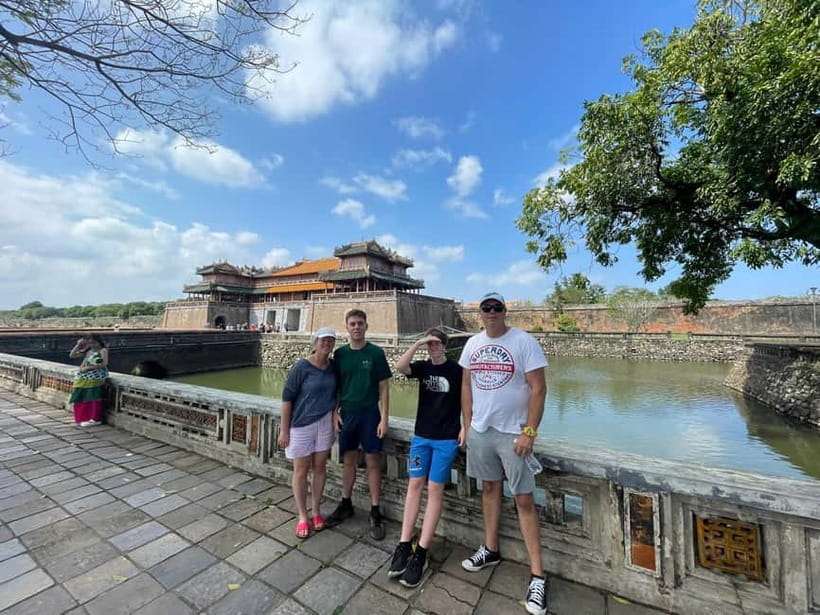
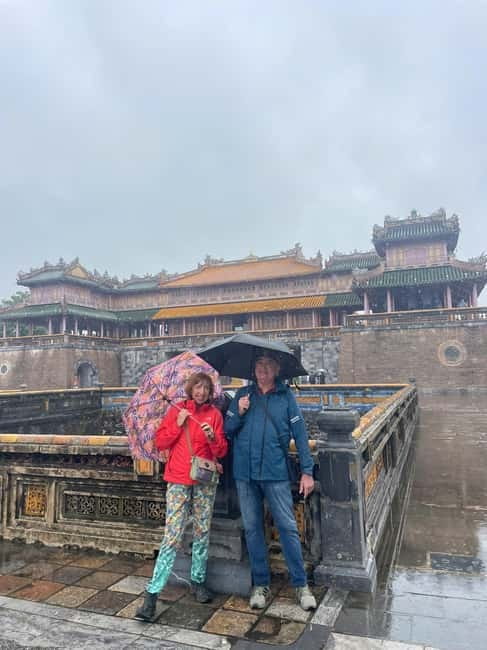
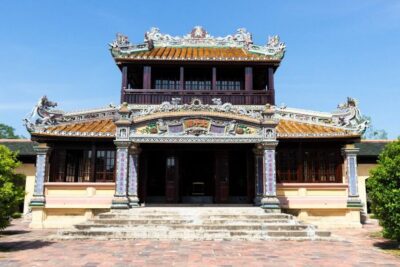
Meridian Gate, known in Vietnamese as Ngo Mon, is the natural place to begin because it introduces the status system of the court. This was the main entrance to the Imperial City, and its scale gives you an immediate sense that you are entering a controlled royal world rather than an ordinary neighborhood.
Your guide points out architectural features and explains how the gate related to imperial authority. This is where the wider Nguyen Dynasty story begins, from the establishment of the dynasty in 1802 to the final emperor and the political changes that followed.
I find this kind of introduction especially useful for first-time visitors. The site is large, and a guide can help you distinguish the ceremonial route from the more private areas. Linh is also known for using photographs to show how buildings changed over time, which gives the surviving walls more meaning.
You will want photographs here, but do not let the first stop turn into a long photo session. The value of the visit comes from moving through the complex and seeing how the spaces relate to one another.
Thai Hoa Palace and the theater of power
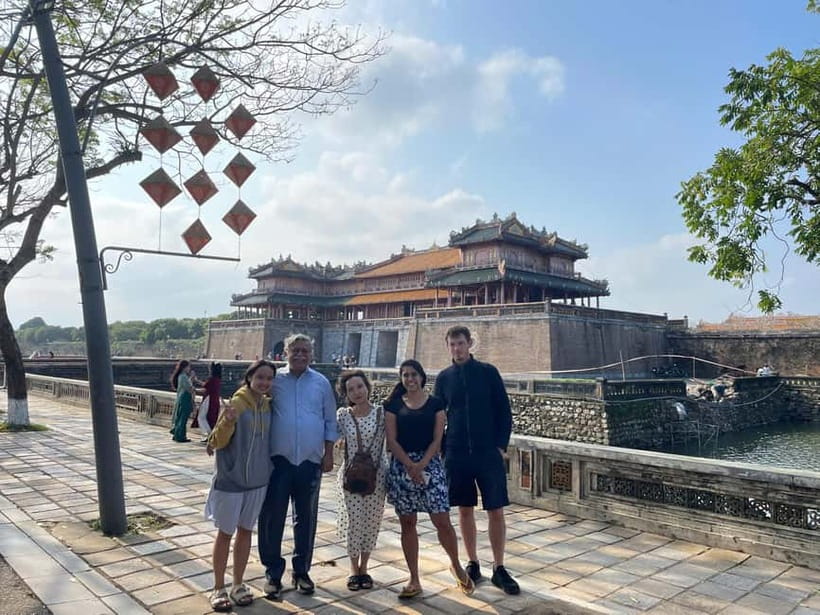
Thai Hoa Palace is the ceremonial main hall, and it is one of the most important stops on the route. This is where the formal side of imperial life comes into focus: court ceremony, royal appearances, official audiences, and the visual language of authority.
A guide can explain details that are easy to overlook, including the role of the building within the wider layout and the difference between a ceremonial hall and a private residence. The palace is not simply an attractive structure. It was part of a system designed to put the emperor at the center of political and ritual life.
This is also a good place to ask questions. Several accounts describe Linh as patient, interactive, and willing to explain points from Vietnamese history beyond the walls of the citadel. His approach appears to connect the Nguyen period with French Indochina, the struggle for independence, and the effect of war on Hue.
The drawback is that a guided explanation may not leave you unlimited time for close inspection. The tour does include time to explore some parts independently and take photographs, but you should listen for instructions about what will be covered later and what you can see during the break. One person found those boundaries a little unclear, so do not hesitate to ask.
More Walking Tours in Vietnam:
- Ho Chi Minh City Street Food Tour & Sightseeing By Motorbike
★ 5.0 · 9,413 reviews - Private Street Food Evening Walking Tour in Ho Chi Minh City
★ 5.0 · 3,175 reviews - [HOT] Hanoi Old Quarter Walking Street Food – Small Group Tour
★ 5.0 · 2,163 reviews - Super Niche Walking Street Food Tour in Ho Chi Minh City
★ 5.0 · 1,636 reviews
Dien Tho Palace and the queen mother’s world
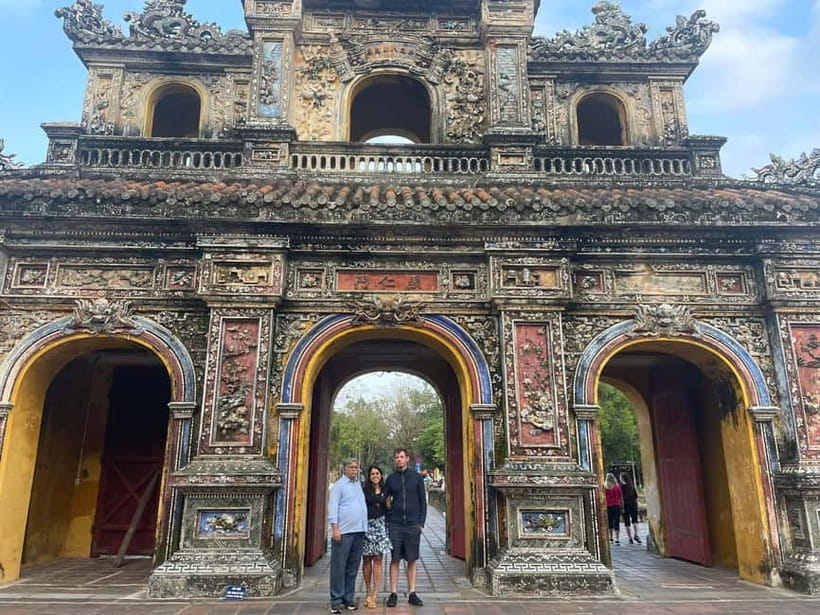
Dien Tho Palace adds an important perspective because it shifts attention away from the emperor alone. It was the residence of the queen mother, and the stop helps explain the role of senior women within the royal household.
This is one of the places where a good guide can turn architecture into social history. You learn not only about buildings, but also about family pressure, custom, rank, and the way royal life was organized. Linh has been praised for discussing Vietnamese family expectations and his own perspective as a Vietnamese man, giving the past a more personal connection to present-day life.
The stop also helps balance the tour. If you only visit ceremonial halls, Hue can seem like a sequence of official spaces. Dien Tho Palace points toward the household behind the public court, including the people and relationships that made the palace function.
Keep your expectations realistic. The tour covers several major places in a limited time, so it will not provide a room-by-room study of every palace building. If you want to linger over details or take extensive photographs, plan to remain in the complex after the guided portion.
The Forbidden City and the private court
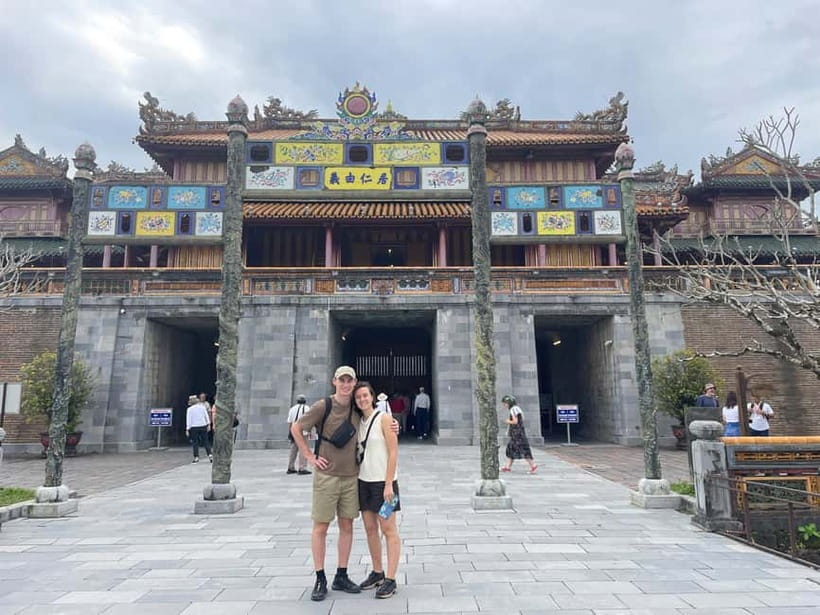
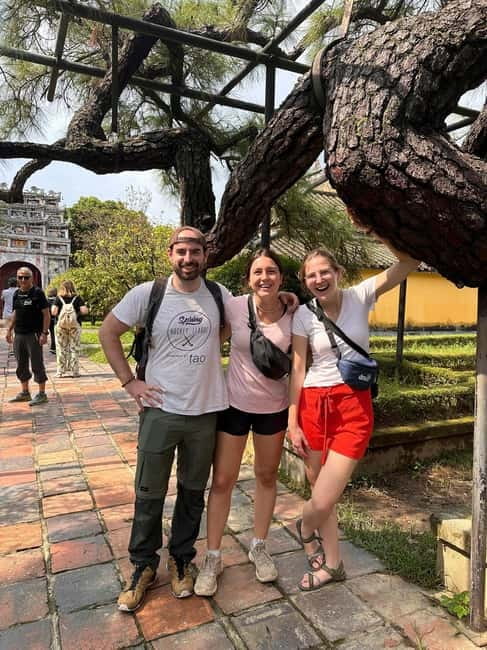
The Forbidden City was the emperor’s private area, and it is one of the most compelling parts of the visit. This was the center of the royal household, yet the surviving site has been affected by time and war. A guide helps you read both what remains and what has been lost.
Here, the tour moves beyond dates and names. You hear about the emperors, the royal family, the final years of the Nguyen Dynasty, French rule, and the wars that altered Hue. Guides also use older photographs to show how the citadel looked during different periods. That visual comparison is valuable because the present-day ruins do not always reveal the original scale or arrangement.
The Forbidden City is also where the tour’s balance between national history and local experience works best. You are not only learning about palace construction. You are considering how power operated, how royal customs shaped ordinary lives around the court, and how modern Vietnam remembers this period.
The site is large enough that even a well-paced visit can feel full. One participant stayed after the tour until sunset because there was still so much to see. I would treat the guided walk as an introduction that gives you the tools to explore more on your own, rather than as a final word on every corner of the complex.
History beyond the palace walls
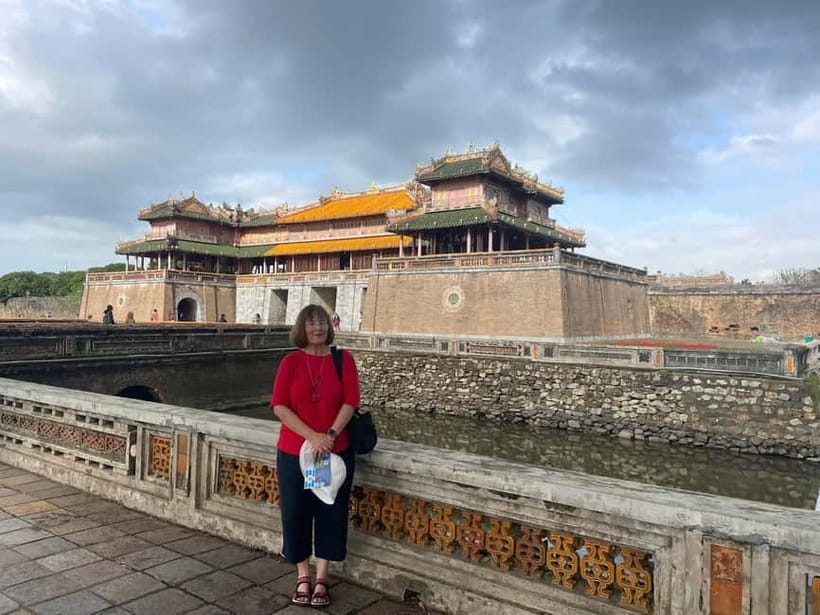
One of the strongest features of this walk is its wider historical frame. The guides do not limit the conversation to the Nguyen emperors. They also discuss French colonial rule, the road to Vietnamese independence, and the impact of the American War on Hue and the citadel.
That context matters because the Imperial City is not preserved in a vacuum. The buildings carry several layers of Vietnamese history, including royal rule, colonial change, conflict, restoration, and modern tourism. Linh’s personal observations about changes in Vietnam over the past 15 years add a present-day voice without replacing the historical material.
The tour can also become a useful introduction to Hue beyond the citadel. At the end, guides have recommended local dishes such as bun bo Hue, as well as tombs and other places to visit. Those suggestions are a practical bonus, especially if this is your first time in the city.
I appreciate that the experience leaves room for questions about culture, not just architecture. You can ask about traditions, family life, language, and the people of Hue. That makes the tour feel more connected to the city outside the walls.
Pace, group size, and what the $2 price really means
The listed price of $2 per person is extraordinary value if you want historical interpretation rather than a silent walk around the site. It is far less than most conventional guided activities, and the repeated praise focuses on the amount of information, the guide’s English, and the time given to questions.
Still, read the price carefully. The experience is presented as tip-based, and tips are officially at your discretion. Many participants say to bring cash and indicate that a tip is expected in practice. The $2 should not be treated as the complete cost of the experience.
The entrance ticket is also not shown under included items. Since the walking tour includes a visit inside the Imperial City, confirm whether you need to purchase admission separately. Bring enough cash for the entry ticket and tip, rather than assuming the booking price covers both.
The group cap of 10 is a real advantage. A small group makes it easier to hear the guide, ask questions, and stay together inside a busy historic complex. It also keeps the experience more personal than a large coach group.
The tour is wheelchair accessible according to the activity information. Even so, the site is extensive and walking-focused, so you should confirm the exact route and surfaces if you have specific mobility needs.
Who should book this Hue walking tour?
I would choose this tour if you want the Imperial City explained rather than simply photographed. It suits first-time visitors, solo travelers, couples, families, and small groups who enjoy stories, questions, and a local guide’s point of view.
It is especially useful if you are unsure how to organize the citadel on your own. The major gates, halls, queen mother’s residence, and private court can be hard to connect without a plan. A guide gives you a route and a historical sequence, then leaves you better prepared to return to the areas you liked.
It also suits history-minded visitors who want more than royal architecture. The discussion of French Indochina, independence, war damage, family customs, and modern Vietnam gives the site a broader meaning.
I would hesitate only if you want complete freedom from the start, dislike listening to historical explanations, or have a tight schedule that cannot absorb uncertainty between the listed 150 minutes and the longer itinerary description. In those cases, an independent visit may feel easier.
Should you book it?
Yes, if you want a low-cost, small-group introduction to Hue Imperial City and are comfortable with a tip-based format. The strongest reasons are the guide’s English, the detailed explanations, the use of historical photographs, and the chance to ask about Vietnamese culture as well as palace design.
Try to book early because the group is limited to 10 people. Before setting out, confirm the meeting time, check the entrance-ticket arrangement, bring cash, water, sunscreen, and comfortable shoes. If Linh is leading your date, you can expect a lively guide with strong historical detail and plenty of personal connection. If another guide leads, the core route and English-language format remain the same, but the style may differ.
FAQ
How long does the Hue Imperial Ancient City Walking Tour last?
The activity is listed as 150 minutes. The itinerary also describes a guided visit lasting 3.25 hours, so confirm the expected length if you have another booking afterward.
Where does the tour begin?
You meet in front of the Hue Imperial City ticket booth, at the Imperial City ticket office.
What time does the tour start?
The stated start times are 9:00 AM and 3:00 PM. The provider will contact you to confirm the designated time.
What places are included on the route?
The tour visits Hue Historic Citadel and highlights Meridian Gate, Thai Hoa Palace, Dien Tho Palace, and the Forbidden City.
Is the tour conducted in English?
Yes. The activity includes a live English-speaking guide.
How many people can join the tour?
The group is limited to 10 participants. Bookings for groups larger than six people, including children, are not accepted, even when made separately.
Is the Imperial City entrance ticket included?
The listed inclusions are the walking tour and local guide. An entrance ticket is not listed, so confirm whether you need to pay separately before arriving.
What should I bring?
Bring sunscreen, water, comfortable walking shoes, and cash for any applicable entrance ticket and the tip-based format.
Can I cancel the booking?
You can cancel up to 24 hours in advance for a full refund. The reserve-now, pay-later option is also available.
New routes in Vietnam
- Ho Chi Minh City: Super Niche Walking Street Food Tour★ 5.0 · 438 reviews
- Hanoi: Street Food Walking Tour & Water Puppet Show★ 4.8 · 205 reviews
- Saigon: Private Backstreets Walking Food Tour★ 4.9 · 83 reviews
- Ninh Binh Sunset Tour And Visit Hoa Lu Walking Town At Night★ 4.4 · 94 reviews
- Hue Imperial City Walking Tour: Citadel & Forbidden City★ 4.8 · 245 reviews
- Hoi An/Da Nang: Private Photoshoot & Guided Walking Tour★ 5.0 · 160 reviews
- Hoi An Ancient Town – Walking Tour with Local Guide★ 4.9 · 385 reviews
- Hoi An: Ancient Town Guided Walking Tour★ 4.9 · 766 reviews
Vietnam Walking Tours, compared.

Ho Chi Minh City Street Food Tour & Sightseeing By Motorbike
Read our review →
Private Street Food Evening Walking Tour in Ho Chi Minh City
Read our review →
[HOT] Hanoi Old Quarter Walking Street Food – Small Group Tour
Read our review →
Private Hanoi Street Food Walking Tour With Real Foodie
Read our review →
Hue Customizable Tour with Imperial Citadel & Forbidden City
Read our review →Browse the lists this tour appears in