
Review · HANOI
Hanoi: Cho Gioi Vietnam War History Walking Tour
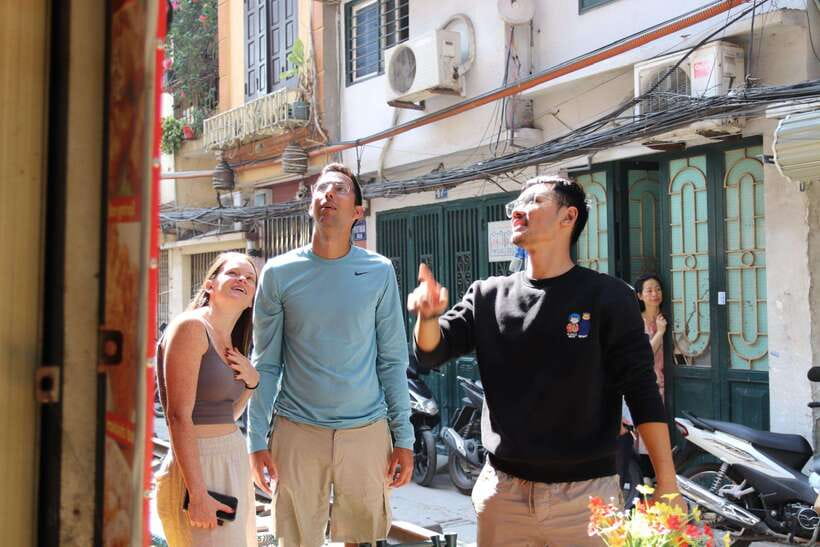
Hanoi’s wartime story is easier to understand when you leave the grand monuments behind. This three-hour walk moves through the Cho Gioi area, Nguyen Cong Tru Market, communist-era neighborhoods, the Kham Thien B52 memorial, and Train Street, using everyday places to explain how division, war, and planned economics shaped local lives.
I like the small-scale, conversational format. Guides such as Kien and Dung explain history through local stories rather than delivering a stiff lecture. I also like the route’s unusual mix of market streets, housing, a memorial, and coffee near the railway, which gives you a feel for present-day Hanoi as well as its past.
The main consideration is that this is not a museum-heavy war tour. You may see fewer formal military displays than expected, and much of the experience depends on listening, asking questions, and observing ordinary streets. Bring good shoes, breathable clothing, and rain protection.
Key points at a glance
- Cho Gioi and Nguyen Cong Tru Market: Begin in an area most sightseeing routes skip, with local stories about trade and daily life.
- Kham Thien B52 memorial: Visit a memorial connected with the December bombing of Hanoi and the human cost of war.
- North and South perspectives: Learn how division affected people on both sides of Vietnam, including life under the planned economy.
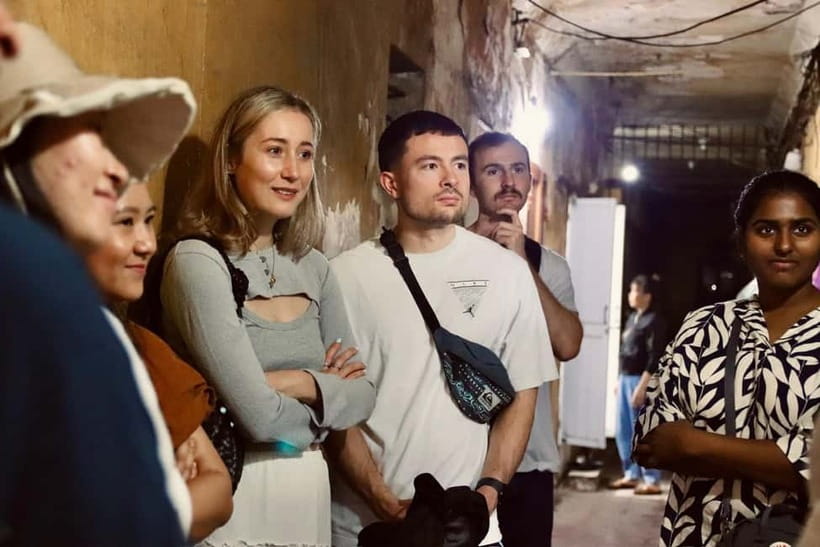
- Guides Kien and Dung: English-speaking guides bring personal and family connections to the subject, with room for questions and discussion.
- Coffee and Train Street: End with coffee or tea near a quieter section of the railway, with the chance to see a train pass.
- Good value at $29: The price includes the guide, refreshments, stories, and a short taxi ride, with 20 percent of profit donated to two local causes.
Why this Hanoi history walk feels different
Many Hanoi history tours concentrate on famous buildings, military museums, and the official story. This one takes another route. It asks you to look at markets, apartment blocks, narrow lanes, and memorial spaces, then consider how national events affected people at street level.
That approach is the tour’s main strength. You are not simply moving from one photo stop to another. You are walking through places where the past is mixed into ordinary city life. A market may still function as a market, but the guide uses it to discuss trade, shortages, the black market, and the way families managed daily life under a planned economy.
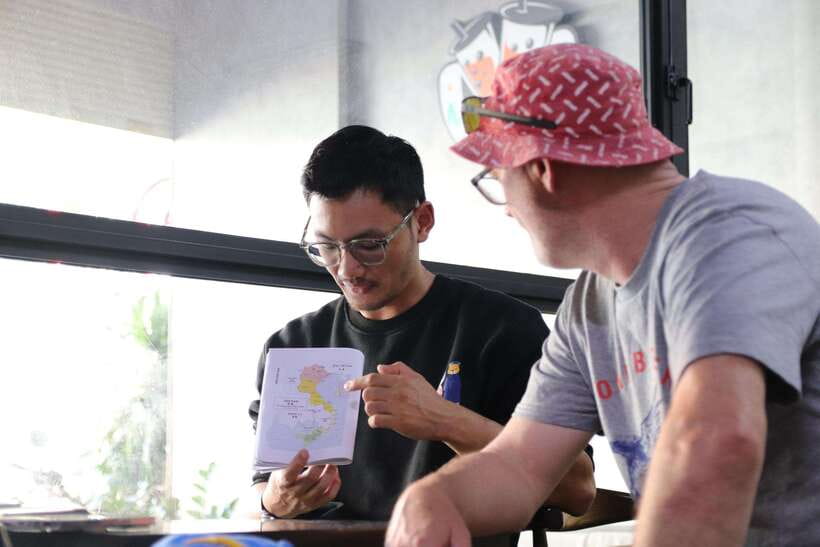
Kien is especially well suited to visitors who want a detailed explanation. His English is described as excellent, and he has lived in the United States and Ireland. That background helps him explain Vietnam to an international audience without turning every subject into a simple good-versus-bad story.
The tour also allows for humor and conversation. You can ask about politics, family experiences, current life, or the meaning of places you pass. That makes the three hours feel less like a classroom and more like a long talk with a well-prepared local guide.
More History Walking Tours in Vietnam:
- Hoi An: Ancient Town Guided Walking Tour
★ 4.9 · 766 reviews - Hoi An Ancient Town – Walking Tour with Local Guide
★ 4.9 · 385 reviews - Hue Imperial Ancient City Walking Tour
★ 4.8 · 308 reviews
Starting at Chua Vua Street
The meeting point is at 24B Chua Vua Street, around 2.5 kilometers from Hoan Kiem Lake and roughly 3.5 kilometers from Hanoi’s Old Quarter. Look for the secondary school called Trường Trung học cơ sở Đoàn Kết. A coffee shop and several second-hand bicycle shops are nearby.
This is useful to know because the starting area is not one of Hanoi’s obvious tourist landmarks. Give yourself time to find it, especially if you are walking from the Old Quarter. The tour listing places the start outside the school, so checking the map before leaving your hotel is sensible.
The group then begins on foot. The route includes a short taxi ride partway through, so you are not walking continuously for all three hours. That break matters in Hanoi’s heat, though the walk still calls for comfortable shoes and light clothing.
The experience operates in rain or shine. Check the forecast the day before and carry an umbrella or raincoat if needed. Hanoi’s weather can turn a pleasant walk into a sticky one quickly, and this tour does not shift indoors simply because the sky looks threatening.
Cho Gioi and Nguyen Cong Tru Market
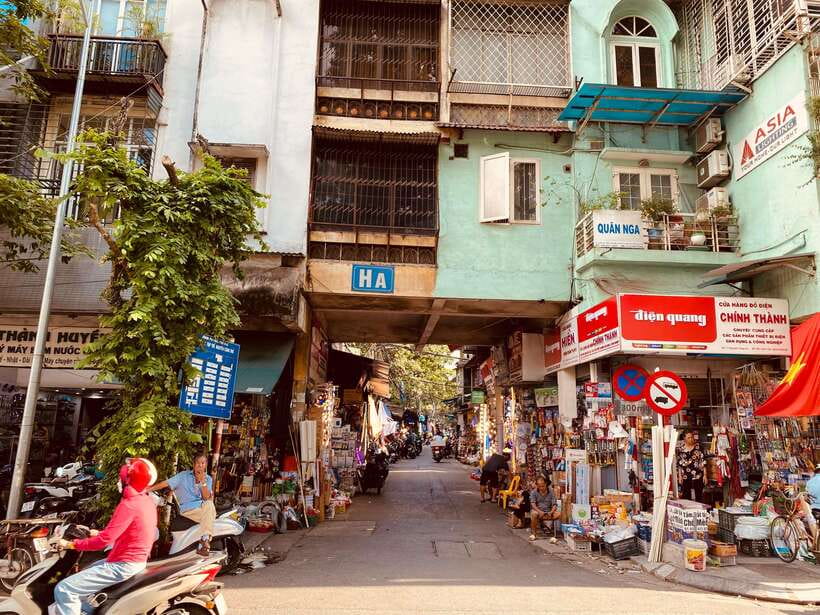
The early part of the route focuses on Cho Gioi, an area associated with the black market, and Nguyen Cong Tru Market. This is where the experience moves furthest from the usual visitor circuit.
Expect a mix of sightseeing, walking, and explanation rather than a formal market demonstration. Your guide uses the surroundings to talk about how local people lived when Vietnam was divided and how planned economics affected access to goods, work, housing, and family decisions.
The market setting gives those subjects a practical frame. Instead of hearing only dates and political labels, you can connect the past with streets where people bought, sold, repaired, and reused everyday items. The route also includes areas of communist-era housing, giving you a chance to consider how city life changed under government planning.
The main market section lasts about two hours, according to the itinerary. That is a substantial portion of the outing, so book this walk because you want context and conversation, not because you are looking for a rapid checklist of monuments.
A guide may also point out local snacks or drinks along the way. One account of the experience included sampling some of Hanoi’s food and beverages, but these extras are not listed as guaranteed inclusions. Treat them as possible additions rather than part of the promised package.
Life on both sides of a divided Vietnam
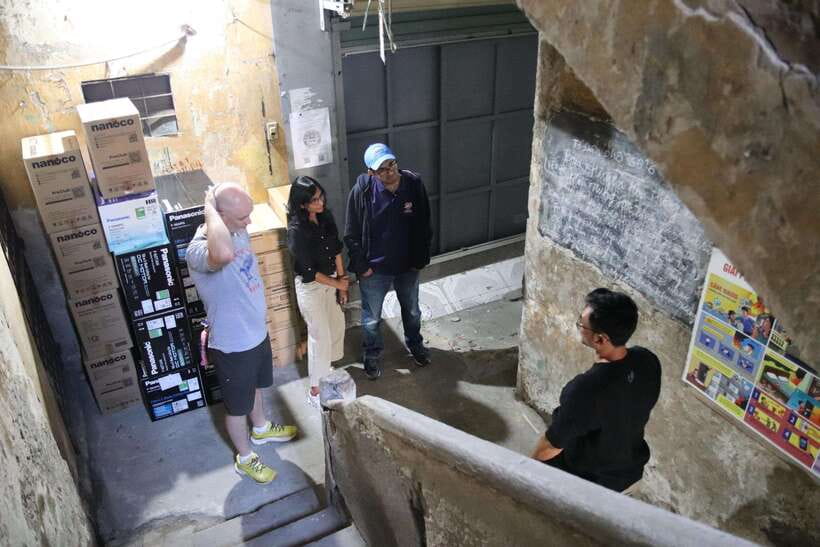
The tour’s subject is not limited to military action. It looks at the people who lived through division, including those connected to both North and South Vietnam. You will hear about unification and the way the Cold War affected the country.
That wider scope is valuable because Vietnam’s war period cannot be understood through battlefield stories alone. Families faced political pressure, separation, economic limits, and difficult choices. The guide’s job is to connect those large events with personal experience.
The tone is intended to be relaxed and open. Several guide descriptions emphasize discussion, humor, and time for questions. If you want to ask how national changes affected ordinary households, this format gives you more room than a standard museum audio guide.
The personal element can be strong. Kien and Dung are both praised for presenting the subject with energy and care, and one family with a 10-year-old child found the tour engaging. That does not mean every child will enjoy three hours of war history, but the conversational delivery can help younger listeners stay involved.
This is also a useful walk for anyone who wants to understand why some parts of modern Hanoi look and function as they do. The route connects past policies with current culture rather than treating history as something sealed away in a museum.
More Walking Tours in Vietnam:
- Ho Chi Minh City Street Food Tour & Sightseeing By Motorbike
★ 5.0 · 9,413 reviews - Private Street Food Evening Walking Tour in Ho Chi Minh City
★ 5.0 · 3,175 reviews - [HOT] Hanoi Old Quarter Walking Street Food – Small Group Tour
★ 5.0 · 2,163 reviews - Super Niche Walking Street Food Tour in Ho Chi Minh City
★ 5.0 · 1,636 reviews
The Kham Thien B52 memorial
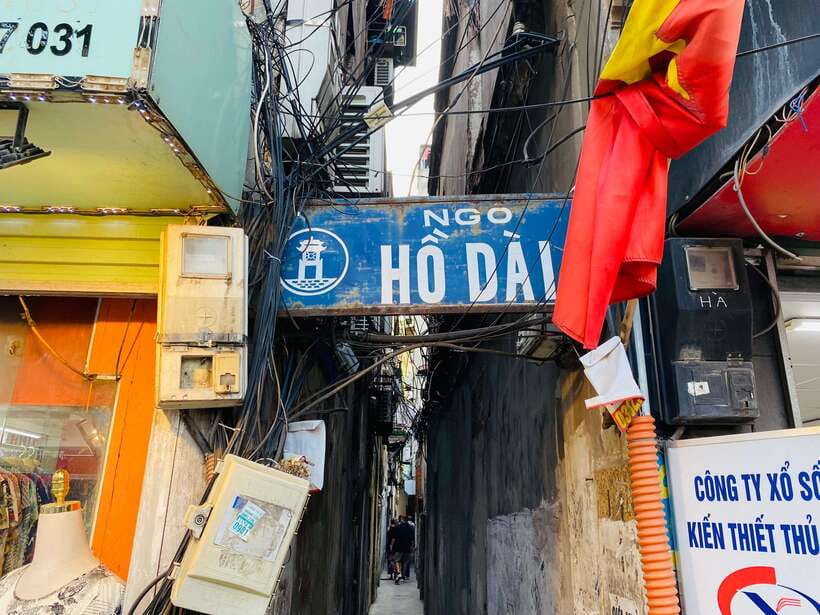
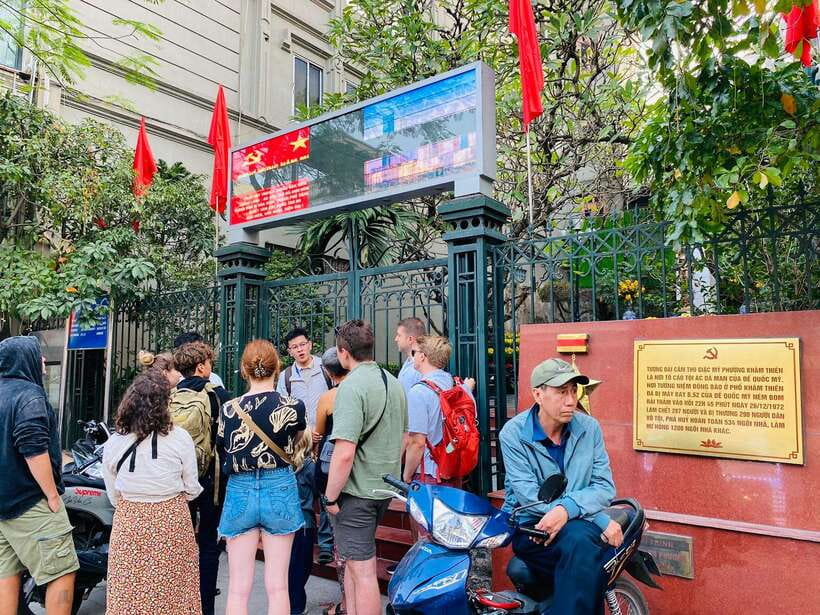
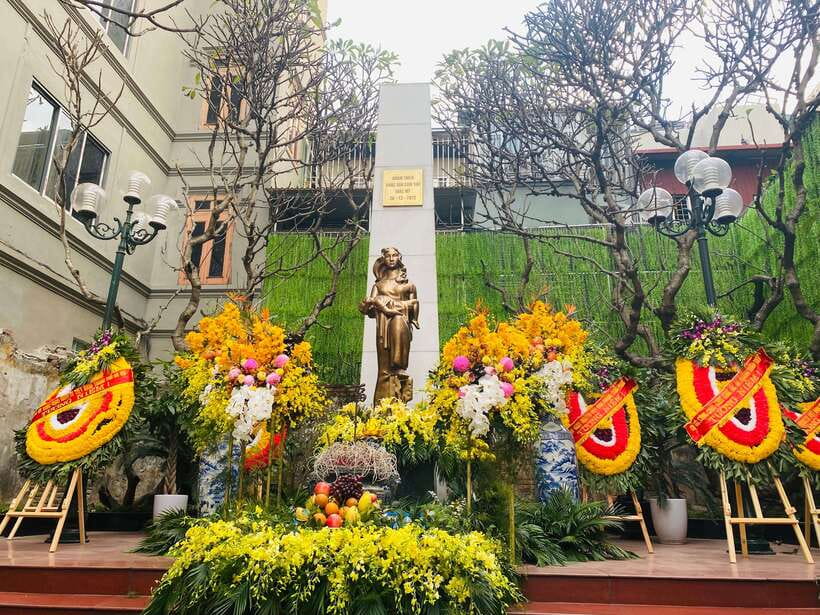
The Kham Thien memorial is the most direct war-related stop. It commemorates the December bombing of Kham Thien, often associated with the Christmas bombing campaign, and focuses attention on civilian loss in Hanoi.
This is a brief but serious part of the route. Do not expect a large museum complex or a full collection of aircraft and weapons. The power of the stop comes from its setting and the story attached to it. Your guide provides the background, then helps you understand what the memorial means locally.
One useful point to keep in mind is that the tour does not present the memorial as an isolated event. It is part of a larger discussion about how war affected neighborhoods, families, and the city’s sense of identity. That context makes the visit more meaningful than simply stopping for a photograph.
If your main goal is to examine military hardware, battle maps, or archival displays, you may want to add a dedicated museum visit elsewhere in Hanoi. This walk offers history through places and stories, not a large collection of objects.
A coffee break near Hanoi Train Street
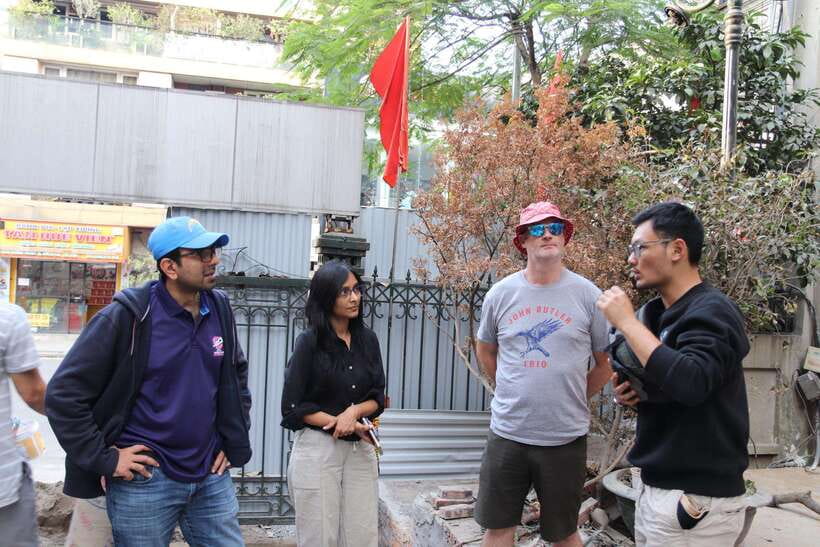
After the walking sections and taxi ride, the route ends near 65 Railway Coffee, listed as 65 coffee. Coffee or tea is included, giving you a chance to sit down and continue the conversation.
The Train Street portion offers a change of pace. Instead of arriving at the busiest, most photographed stretch, the tour is described as using a quieter section. You may have the chance to watch a train pass while sitting with a drink, though train timing is not specified and should not be treated as guaranteed.
This stop also brings the past and present together. Hanoi’s railway is a working part of the city, yet it has become a major photo subject. A guide can help you see it as more than a social-media backdrop, especially after spending the day discussing how residents have adapted to change.
The itinerary says the finish is at 65 Railway Coffee. Another section of the tour details says the activity ends back at the meeting point. Because those details differ, confirm the exact end location when booking or with the guide at the start. Either way, plan your onward transport with a little flexibility.
How much value do you get for $29?
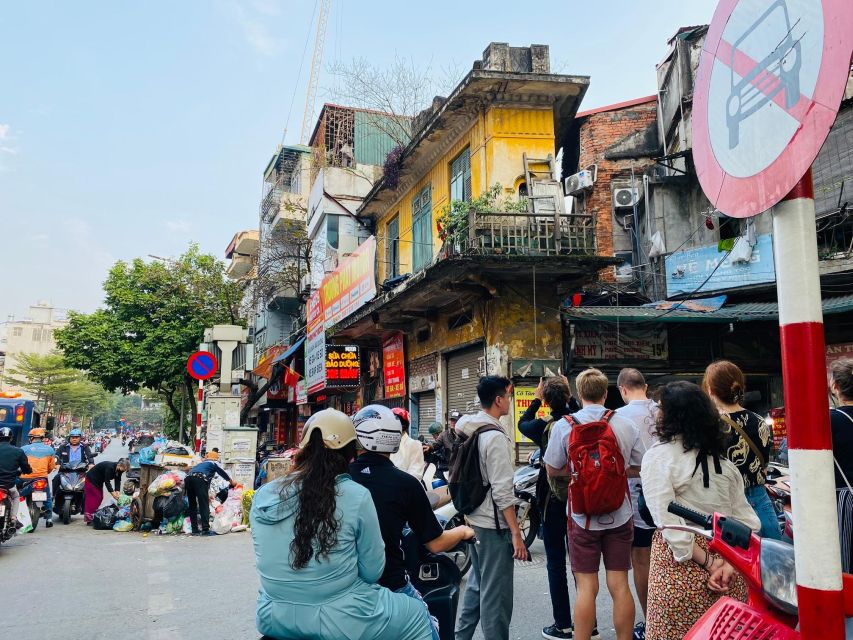
At $29 per person, this is a fair price for a three-hour guided experience in Hanoi. You receive an English-speaking guide, local historical interpretation, coffee or tea, and a short taxi ride. The route also reaches places you would be unlikely to understand fully by wandering alone.
The value depends on how you like to sightsee. If you want major monuments, a fixed schedule, and many formal entrances, this may feel light on physical attractions. If you want someone to explain the city while you walk through ordinary neighborhoods, the price makes more sense.
The strongest value comes from access to interpretation. You could pass through Cho Gioi or Nguyen Cong Tru Market on your own, but you would not automatically know how to connect those streets with planned economics, wartime life, and unification. A good guide turns an everyday scene into a useful piece of the city’s story.
Twenty percent of the profit is donated to the Vietnam Association for Victims of Agent Orange/Dioxin and the Blue Dragon Children’s Foundation in Hanoi. That does not replace careful judgment about the tour itself, but it adds a worthwhile social element to the purchase.
Free cancellation is available up to 24 hours before the experience for a full refund, and you can reserve now and pay later. Those terms are useful if your Hanoi schedule is still shifting.
Who should book this experience?
I would choose this tour if you want Hanoi beyond the Old Quarter and prefer local explanation over a conventional sightseeing circuit. It suits history fans, curious first-time visitors, solo participants, and anyone who wants to ask questions rather than follow a one-way lecture.
It is also a good choice early in your Hanoi stay. The guide can give you useful context for later visits to places such as Maison Centrale, the former prison, which one participant suggested visiting after the walk. That museum is a short distance from the tour’s finish area if the final stop is Train Street, though the exact route should be checked on the day.
Families can consider it, especially with older children who can follow a discussion about war, division, and daily life. The route is not described as difficult, but you should still expect city walking, heat, traffic, and uneven urban surfaces.
You may want a different experience if your priority is a formal military tour. One useful caution is that the itinerary contains only a small number of explicitly war-related sites. The walk spends much of its time on neighborhoods, markets, and social history. That is the point, but it may not match an expectation of constant battlefield content.
Practical details before you go
The experience lasts about three hours, with starting times shown according to availability. It is conducted in English, and guides named in the information include Kien and Dung.
Wear comfortable shoes and breathable clothing. Carry water, though coffee or tea is included later in the route. Take rain protection when the forecast calls for it, since the walk operates in all weather.
The start is outside the Đoàn Kết secondary school at 24B Chua Vua Street. Nearby coffee and second-hand bicycle shops provide useful landmarks. Since the area is away from the Old Quarter, allow extra time for the journey.
The group size is not specified. If you want the most conversational experience, ask about the group size when you reserve. Smaller groups generally make it easier to discuss personal and political subjects, though that point is not guaranteed here.
Should you book the Cho Gioi history walk?
Book it if you want a thoughtful look at Hanoi through markets, housing, memorials, and local stories. Kien and Dung bring strong English and a lively, personal way of explaining Vietnam’s past, while the route gives you places and subjects that ordinary sightseeing often skips.
Do not book it expecting a full military museum visit or a parade of war monuments. The tour’s strength is its connection between history and daily life. At $29, with refreshments, a taxi ride, and a charitable contribution included, it offers good value for an open-minded visitor who wants to understand Hanoi rather than simply photograph it.
FAQ
How long does the Hanoi Cho Gioi Vietnam War History Walking Tour last?
The experience lasts about three hours, including a short taxi ride partway through.
What language is the tour conducted in?
The tour is conducted in English with a live guide.
Where does the tour start?
The meeting point is at 24B Chua Vua Street, in front of Trường Trung học cơ sở Đoàn Kết.
How far is the starting point from Hoan Kiem Lake?
The starting point is approximately 2.5 kilometers from Hoan Kiem Lake and about 3.5 kilometers from Hanoi’s Old Quarter.
Which places are visited?
The route includes the Cho Gioi area, Nguyen Cong Tru Market, the Kham Thien B52 memorial, and Hanoi Train Street.
Is transportation included?
A short taxi ride is included during the walk.
Are drinks included?
Coffee or tea is included.
What should I wear?
Wear comfortable shoes and breathable clothing suitable for walking.
Does the tour operate in bad weather?
Yes. The experience operates rain or shine. You should check the forecast and bring an umbrella or raincoat if needed.
Can I cancel for a refund?
You can cancel up to 24 hours in advance for a full refund. You can also reserve now and pay later.
New routes in Vietnam
- Ho Chi Minh City: Super Niche Walking Street Food Tour★ 5.0 · 438 reviews
- Hanoi: Street Food Walking Tour & Water Puppet Show★ 4.8 · 205 reviews
- Saigon: Private Backstreets Walking Food Tour★ 4.9 · 83 reviews
- Ninh Binh Sunset Tour And Visit Hoa Lu Walking Town At Night★ 4.4 · 94 reviews
- Hue Imperial Ancient City Walking Tour★ 4.8 · 308 reviews
- Hue Imperial City Walking Tour: Citadel & Forbidden City★ 4.8 · 245 reviews
- Hoi An/Da Nang: Private Photoshoot & Guided Walking Tour★ 5.0 · 160 reviews
- Hoi An Ancient Town – Walking Tour with Local Guide★ 4.9 · 385 reviews
Hanoi Walking Tours, compared.

[HOT] Hanoi Old Quarter Walking Street Food – Small Group Tour
Read our review →
Private Hanoi Street Food Walking Tour With Real Foodie
Read our review →
Tasting 8 Different Street Foods + Local Drink at Evening Time by Walking
Read our review →
Browse the lists this tour appears in