
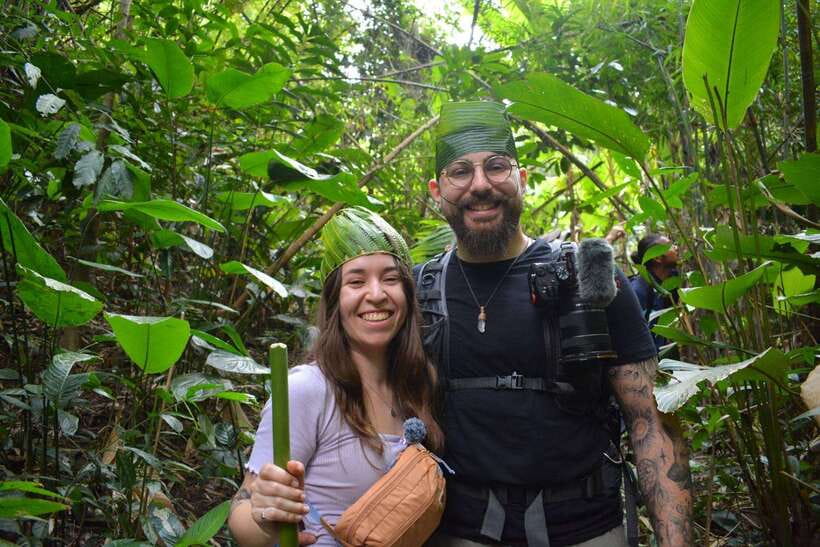
Review · 1-DAY
1 Day Trekking in Chiang Rai forest (walk only)
Chiang Rai’s best moments here happen on foot: a rough forest path, a waterfall swim, a bamboo tube turned into a cooking pot, and a warm welcome in Lahu and Akha communities. The day feels active and hands-on rather than like a string of roadside photo stops. Bamboo cooking and the Huai Kaew waterfall are the two strongest parts for me.
I also like the guides’ personal touch. Thor makes bamboo toys while walking, Addy shares practical forest skills, and June combines warm care with clear explanations. The main caution is the terrain: you walk about five hours, with steep, rocky, and slippery stretches. The hot springs may also be less appealing than the description suggests.
Key points to know before you book
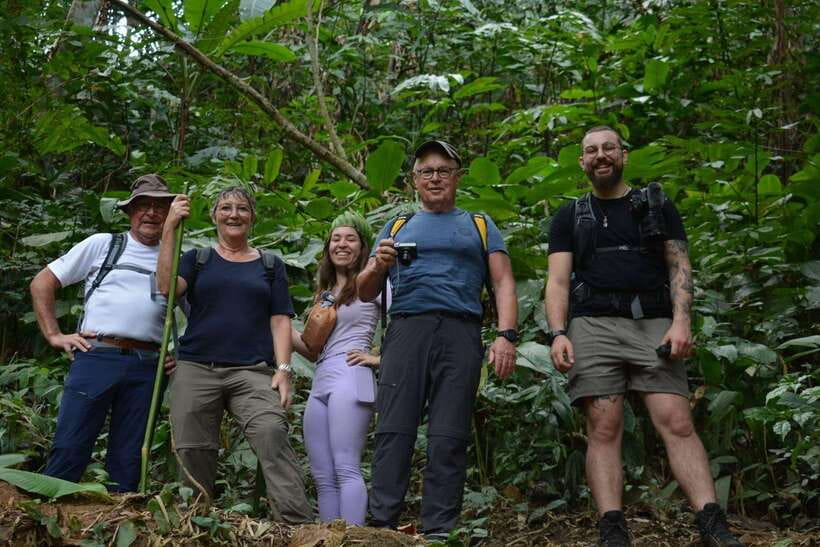
- Bamboo becomes your kitchen: Help prepare lunch in handmade bamboo containers over an open fire.
- The walk has real hills: Expect roughly five hours on foot, including steep and slippery sections.
- Huai Kaew Waterfall is the main nature stop: Bring swimwear so you can cool off and relax in the water.
- Village visits are part of the walk: You pass through Lahu and Akha communities rather than simply viewing them from a vehicle.
- Guides make a big difference: Thor, Addy, June, and Chai are praised for humor, plant knowledge, bamboo skills, and careful pacing.
- The hot springs are modest: Conditions can include a small cement basin or a facility under construction, so treat this as a minor stop.
A forest day with more doing than sightseeing

This is a full-day outing from Mueang Chiang Rai District, built around walking rather than riding from one attraction to another. A jeep or SUV takes you roughly 40 minutes from town to the trail area, then the day unfolds through forest, farmland, villages, waterfalls, and tea country before the ride back.
I would choose this trip if you want to understand the countryside through simple activities. You do not just look at bamboo. You learn how it can hold water, become a cooking vessel, or turn into a small toy. You do not just pass a village. You walk through Lahu and Akha communities and see how local life connects with the surrounding farms.
The day costs $57 per person. That is a fair price if your priorities are a full day of transport, a guide, a long walk, lunch preparation, water, and several different settings. It is less attractive if you want an easy nature outing with little exertion. The value rests heavily on the guide and on your willingness to take part.
More Day-Long Outings in Thailand:
- Madrid: 6-Hour Day Trip to Toledo with Guided Walking Tour
★ 4.0 · 1,029 reviews - Nara Half Day Trip Walking Tour (Private Option Available)
★ 5.0 · 937 reviews - Madrid: Day Trip to Toledo with Walking Tour & Small Group
★ 4.2 · 111 reviews
The 40-minute ride into Chiang Rai’s countryside
Pickup is offered from hotels in Chiang Rai city, with airport pickup also listed. The exact pickup area matters, since the regular service is limited to Mueang Chiang Rai District. Transport is by jeep or SUV, and the drive to the trail area takes about 40 minutes.
That short ride gives you a useful change of scene. The town falls away, and the day moves toward bamboo forest and community farmland. You will want to settle your breakfast and bring water, even though water is included, because the walking portion is long and active.
The vehicle is practical rather than part of the attraction. I would not book this for a scenic drive. The real experience begins once you leave the road and start walking.
From hot springs to bamboo forest
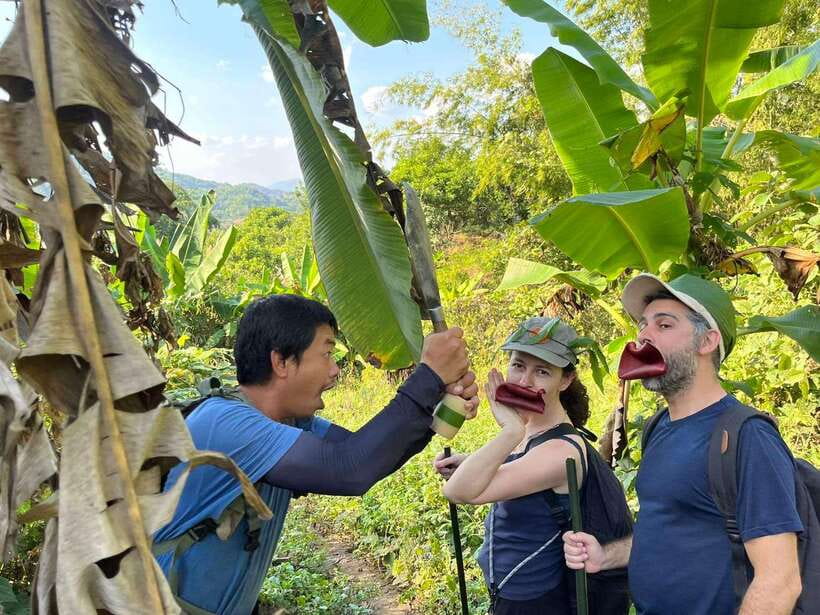
The walk starts around the hot springs and continues through bamboo forest and community farmland. This opening section sets the tone: the path is natural, the ground can be uneven, and the guide becomes your eyes for details you might otherwise miss.
The first two hours can feel like the hardest part. Expect uphill and downhill walking, rocky ground, and sections that become slippery. You do not need to be an athlete, but you should be comfortable walking for several hours and placing your feet carefully. People of average fitness have managed the route, while anyone with movement problems may struggle.
The pauses are useful. Guides such as Thor and Chai explain plants, fruit, berries, trees, and ways of finding water in bamboo. Addy is praised for showing practical forest skills and sharing how plants fit into daily life. These small lessons make the trail more than a physical test.
Bring proper hiking shoes, not smooth-soled sneakers. The trip asks for agility as much as stamina. A walking stick could be useful, though one is not listed among the included items, so ask the operator rather than assuming it will be supplied.
Lahu and Akha villages along the route
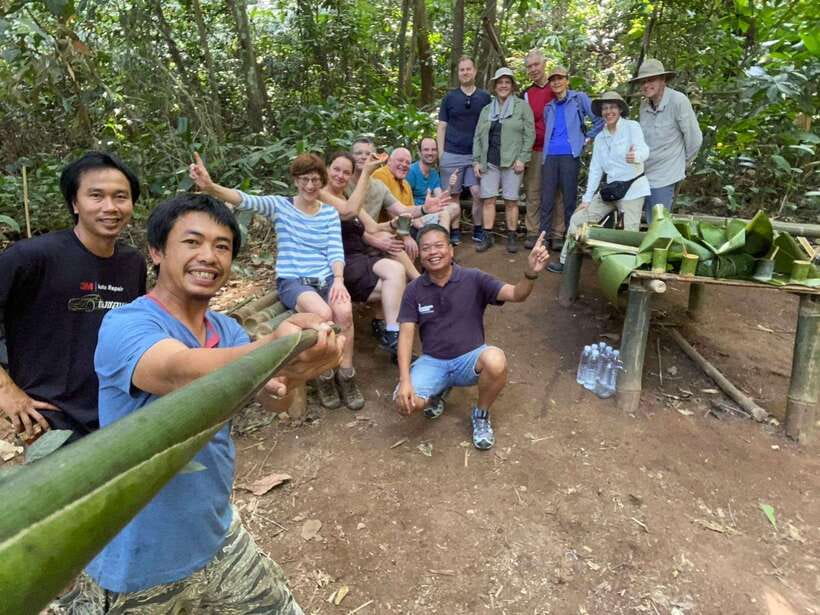
The trek continues to Lahu and Akha hill-tribe villages, where you see farming areas and local homes as part of a living community. This is not presented as a formal museum visit. The value comes from walking with a local guide who can explain the setting and help you approach people respectfully.
Several guides have strong links with the local communities. June is praised for making contact feel comfortable, while Thor is described as having friendly relationships along the route. You may find that these personal connections make the village stops feel less staged, but you should still follow your guide’s lead about where to walk, what to photograph, and how to interact.
The farmland adds useful context. Rice and tea are not abstract products here. You see cultivation alongside the paths, then later reach tea plantations and a Chinese village. The route connects work, food, and landscape in a way that a quick viewpoint stop cannot.
More Walking Tours in Thailand:
- Bangkok: City Highlights Temple and Market Walking Tour
★ 4.5 · 3,990 reviews - Bangkok: Grand Palace and Wat Phra Kaew Guided Walking Tour
★ 4.4 · 2,417 reviews - Bangkok: Wat Pho and Wat Arun Guided Walking Tour
★ 4.6 · 1,720 reviews - Chiang Mai: 3 Hour Old City and Temples Guided Walking Tour
★ 4.6 · 1,568 reviews
Huai Kaew Waterfall and time in the water
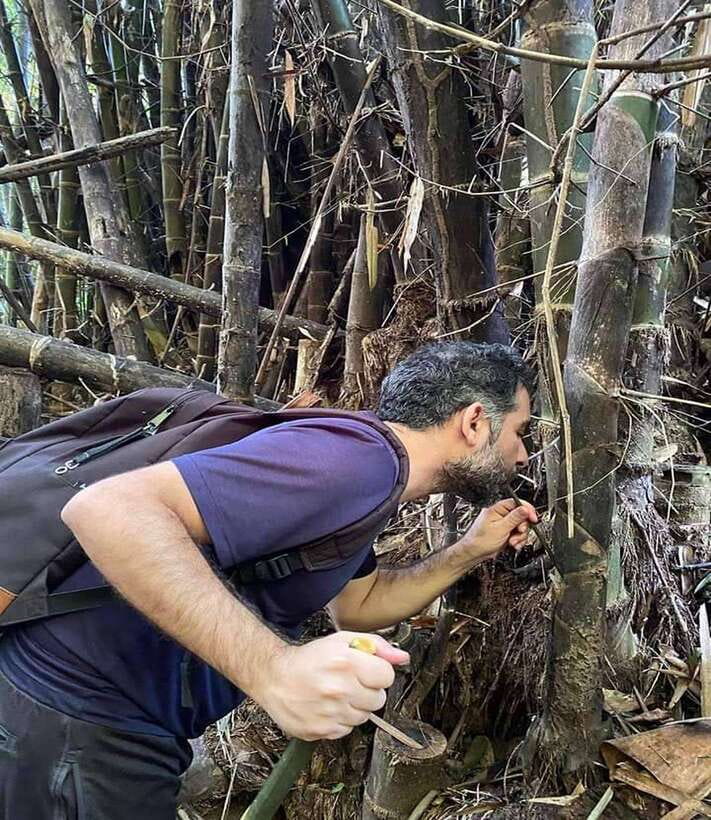
The route leads to Huai Kaew Waterfall, described as the second largest waterfall in Chiang Rai Province. It is the day’s clearest chance to stop, cool down, and enjoy nature without rushing straight to the next vehicle.
Bring swimwear. You can swim and relax after the walk, which makes the waterfall more than a photo stop. The timing is especially welcome after the hotter and steeper sections. Still, water conditions can vary, and you should listen to the guide before entering.
The waterfall is one reason this trip works well as a full-day outing. You get physical effort, then a proper break, followed by a meal activity. The order gives the day a natural rhythm. I would not expect a huge cascade or a developed resort setting, though. The appeal is the forest setting and the chance to spend time at the water.
The bamboo lunch is the heart of the day
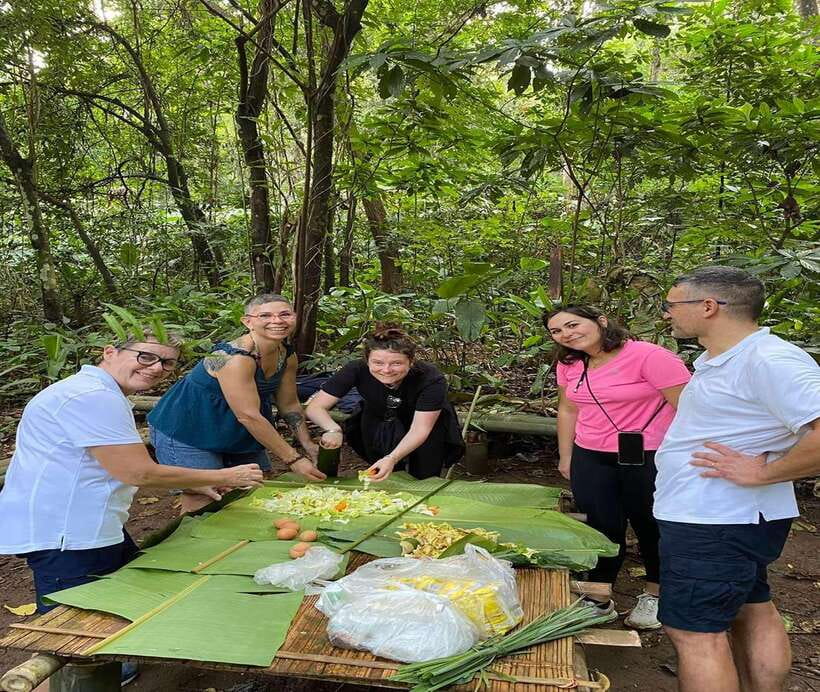
After the waterfall, you help prepare lunch using bamboo. Handmade bamboo containers are used for cooking, and the meal is prepared over an open fire. This is the part I would remember longest because you are involved in the process instead of simply receiving a prepared meal.
The food has earned especially strong praise. Expect a substantial meal that may include pork roasted on a spit, soup, and an egg dish, based on the meals described by the operator’s guests. The exact menu can change, so do not treat those dishes as a guarantee.
Thor and Addy add plenty of energy to this part of the day. They also make items from bamboo while walking, including toys and small useful objects. Chai explains how bamboo can hold water and become part of everyday forest survival. You get a practical lesson, a meal, and a bit of entertainment without a polished cooking-school setup.
The open-fire setting also means the activity is basic by design. If you expect restaurant comfort, this is not the right comparison. If you like seeing how food is made with local materials, the $57 price begins to look quite reasonable.
Tea plantations and the Chinese village
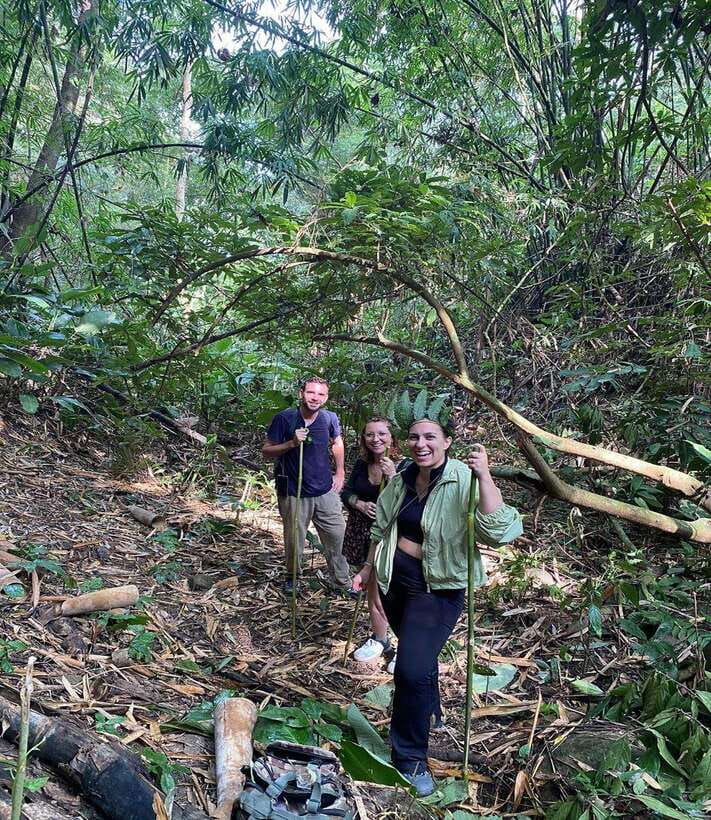
After lunch and the waterfall, the route reaches a Chinese village and tea plantations. These stops broaden the day beyond a single forest walk. You see how the surrounding hills support different communities and crops, and you get another view of rural life before returning to town.
The tea plantations are especially useful for anyone who has already visited Chiang Rai’s temples and city sights but wants a closer look at the province outside town. The route links tea, rice, forest plants, and village life instead of treating each as an isolated attraction.
There is no promise of a formal tea tasting, so book this for the walk and the setting rather than for a dedicated tea tour. The Chinese village is also part of the trekking route, not a standalone cultural performance. That distinction helps set the right expectation.
What the guides add to the experience
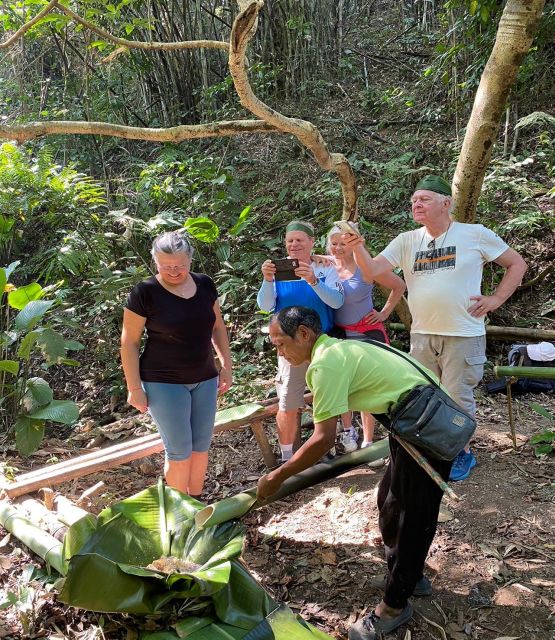
The guide can shape the entire day. Thor is described as funny, energetic, and constantly occupied with bamboo crafts. Addy brings forest skills, plant knowledge, and careful attention when someone feels unwell. June is praised for her driving, warmth, and understanding of the surrounding area. Chai is noted for explaining plants, berries, trees, and forest water.
You cannot select a particular guide unless the operator confirms it, but these names give you a sense of the guiding style to expect: active, social, practical, and involved. The guides do more than point out scenery. They keep the pace moving, stop for explanations, and help turn lunch into an activity.
That matters on a demanding route. A quiet guide might leave you feeling you simply walked through trees. Here, the forest becomes a lesson in food, water, plants, and craft. The humor also helps during hot or tiring stretches.
How difficult is the five-hour walk?
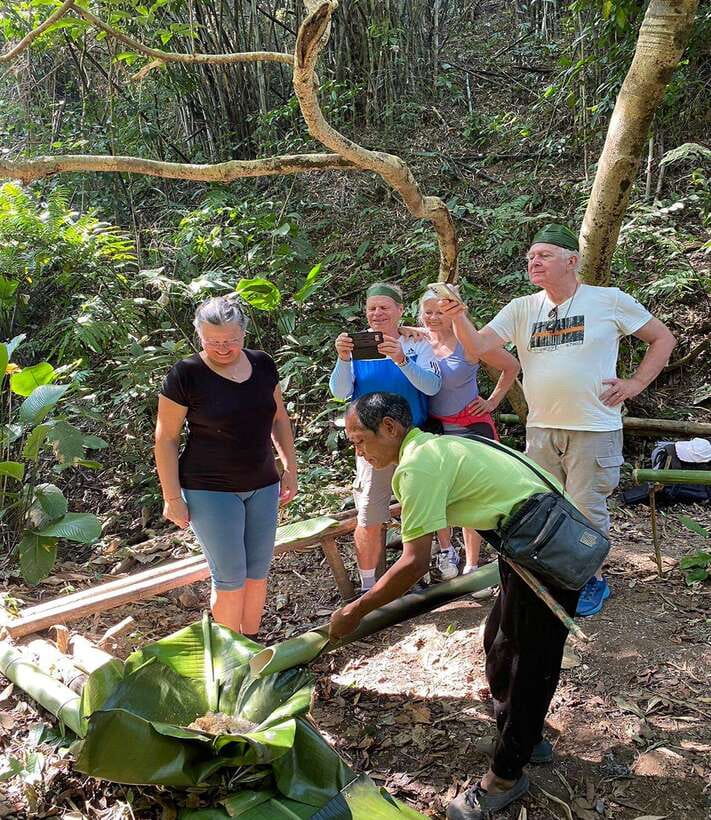
The total walking time is about five hours. That figure is important because this is not a gentle stroll with a few short walks between attractions. You will spend much of the central day on trails, with slopes and uneven ground.
The route suits you if you have moderate fitness and can manage steep sections without rushing. Several rest stops help, and the pace is described as manageable for people in their late 40s with average fitness. Still, the path can be slippery and rocky, especially where the ground rises or drops.
I would not recommend it if you have serious mobility problems, motion problems, or little tolerance for uneven trails. The activity is not suitable for babies under one year or people over 95, and baby carriages and electric wheelchairs are not allowed.
Wear hiking shoes and light clothing suited to heat. Bring swimwear, and pack biodegradable insect repellent because mosquito repellent is not included. Energy drinks are also not included, so carry your preferred snack or drink if you depend on one during long walks.
The hot spring stop needs realistic expectations
Hot springs are part of the advertised route, but this should not be your main reason to book. The stop may be a small cement basin rather than a natural pool, and recent conditions have included construction that limited use to dipping feet.
That does not ruin the day, since the waterfall, villages, forest, and bamboo meal carry most of the experience. Still, I would ask about current conditions before booking if the hot spring is important to you. The description gives it a prominent place, while the actual stop may feel brief or underwhelming.
Think of it as a possible warm-water pause at the beginning or end of the route, not as a spa visit. The waterfall is the better place to plan for a proper break.
Who gets the most from this Chiang Rai trek?
You will probably like this tour if you enjoy active cultural outings, practical demonstrations, and local food prepared in a simple setting. It is a good match for couples, friends, and families with older children who can handle a long walk and uneven trails.
I would also recommend it to anyone who has already seen Chiang Rai’s temples and wants a day outside town. The combination of Lahu and Akha villages, forest skills, bamboo cooking, tea plantations, and a waterfall gives you plenty of variety.
You may want a different tour if you want a short walk, a luxury meal, a guaranteed natural hot pool, or a tightly scheduled sightseeing circuit. The day is shaped by the trail, weather, water conditions, and the guide’s pacing. That flexibility is part of its charm, but it also means the experience is not highly polished or predictable at every stop.
Free cancellation up to 24 hours before the activity and the reserve-now, pay-later option make planning easier. Languages are English and Thai. Insurance, transport, a guide, bamboo cooking, and water are included, while insect repellent and energy drinks are your responsibility.
Should you book it?
Book this trek if you want to do something in Chiang Rai: walk through working countryside, learn forest skills, meet communities along the trail, swim at Huai Kaew Waterfall, and cook lunch in bamboo. The guides are a major strength, and their humor and practical demonstrations help carry you through the tougher sections.
Skip it if five hours on uneven ground sounds tiring rather than fun, or if you mainly want a hot-spring soak. At $57, it offers good value for an active full day, but only if you are ready for real walking and willing to treat the hot springs as a minor bonus.
FAQ
How long does the trekking last?
The total walking time is approximately five hours, spread across the full-day activity.
Where does pickup take place?
Pickup is available from hotels in Mueang Chiang Rai District. Airport pickup is also listed as available.
How long is the drive to the trail?
The jeep or SUV ride to the trekking area takes about 40 minutes.
What villages does the route visit?
The walk goes to Lahu and Akha hill-tribe villages, where you can see local ways of life and community farmland.
Can I swim during the tour?
Yes. The route reaches Huai Kaew Waterfall, where you can swim and relax. Bring swimwear.
What is bamboo cooking?
You help prepare lunch using handmade bamboo containers and an open fire. The activity shows how bamboo can serve as a practical cooking material.
What food is served?
The menu can vary, but meals described for this experience include pork roasted on a spit, soup, and an egg dish.
Is the trek difficult?
It requires moderate fitness. Some sections are steep, rocky, and slippery, while rest stops help keep the pace manageable.
What should I bring?
Bring swimwear, hiking shoes, and biodegradable insect repellent. Energy drinks and mosquito repellent are not included.
What languages do the guides speak?
The live guides speak English and Thai.
New routes in Thailand
- Local Life, Culture & Food Walking Tour at Chinatown★ 4.7 · 119 reviews
- Khao Lak: Full-Day Khao Sok Jungle Walk and Canoeing Tour★ 4.7 · 149 reviews
- Chiang Mai: Temple And City Walking Tour Part I★ 4.7 · 244 reviews
- Chiang Mai: Historic Temples and City Guided Walking Tour★ 4.7 · 650 reviews
- Chiang Mai Untouched Elephant: Nature Walk & Waterfall Trek★ 4.7 · 77 reviews
- Chiang Mai: Local Food and Markets Guided Walking Tour★ 4.3 · 175 reviews
- Bangkok: City Highlights and Landmarks Private Walking Tour★ 4.3 · 142 reviews
- Bangkok: Chinatown by Night Walking Tour★ 4.5 · 162 reviews
1-Day Tours, compared.

6-Hour Day Trip to Toledo with Guided Walking Tour
Read our review →
Nara Half Day Trip Walking Tour (Private Option Available)
Read our review →
Day Trip to Toledo with Walking Tour & Small Group
Read our review →
Samarkand One Day Tour: one day walking & group tour
Read our review →Browse the lists this tour appears in