
Review · PARIS
Historic Paris Walking Tour in English
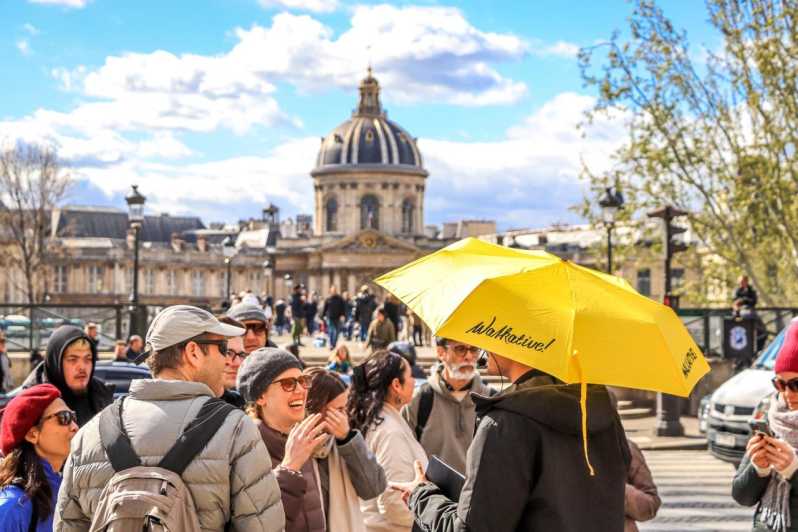
Paris makes an excellent classroom, and this 150-minute walking tour gives you a lively first lesson. You move from Hôtel de Ville toward Notre-Dame, the Louvre, Pont des Arts, and the Tuileries Gardens while your guide connects buildings to revolution, royal power, art theft, war, and daily Parisian life.
I like the wide historical sweep, from the ancient Parisii and Roman rule to Napoleon and the modern city. I also like the storytelling approach, especially the tales of Quasimodo, the Mona Lisa theft, and Parisian revolts. The one drawback is simple: you cover a lot of ground in two and a half hours, so this is an introduction, not a slow visit inside the major monuments.
Key points before you book
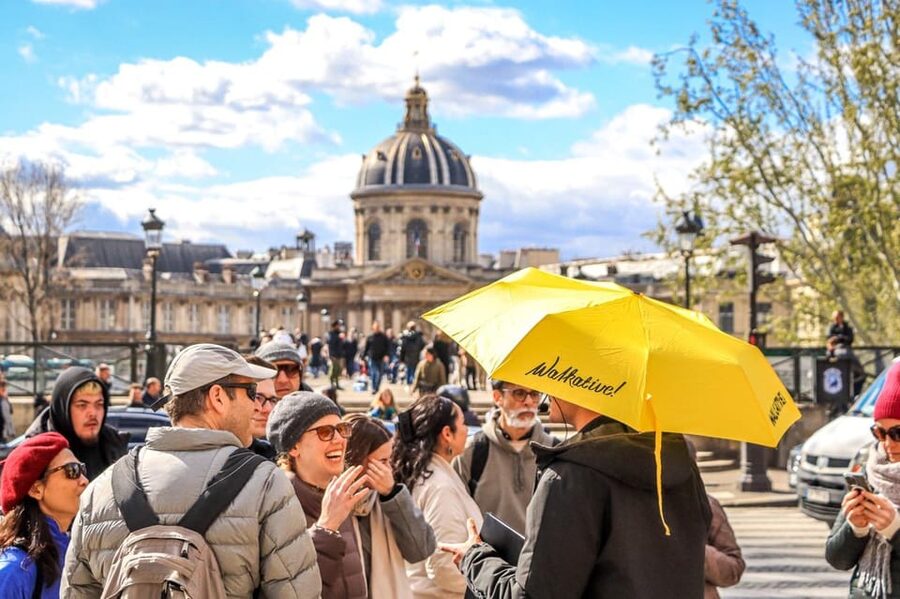
- A strong first-day orientation: Start at Hôtel de Ville and get a useful map of central Paris before exploring on your own.
- Big sights, mostly from the outside: See Notre-Dame, Sainte-Chapelle, the Louvre, Pont des Arts, the Tuileries Gardens, bridges, and grand boulevards.
- Story-led history: Expect tales of revolution, Napoleon, Hitler, Quasimodo, love, revenge, and the Mona Lisa.
- English-speaking local guide: Guides including Tom, Harry, Thomas, Yazid, Francesca, and others have led this walk.
- Good value at $31: The price covers the reservation and guide payment, rather than requiring you to decide on a separate tip.
- Easy to fit into a day: The route lasts 150 minutes, begins outside Hôtel de Ville Metro exit 5, and does not include hotel pickup.
Why this walk works as your first Paris activity
Paris can feel confusing at first. The Seine, islands, palaces, churches, museums, and grand avenues form a huge story, but the connections are not always obvious when you are looking at them one by one. This walk gives you a framework.
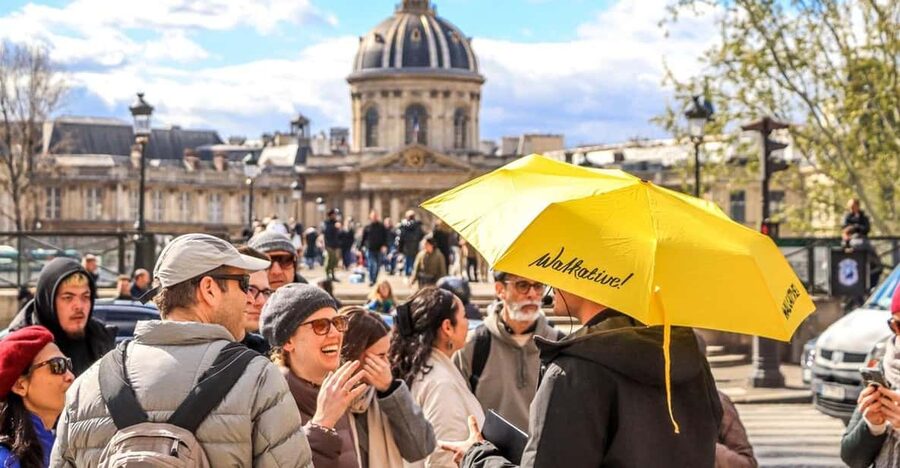
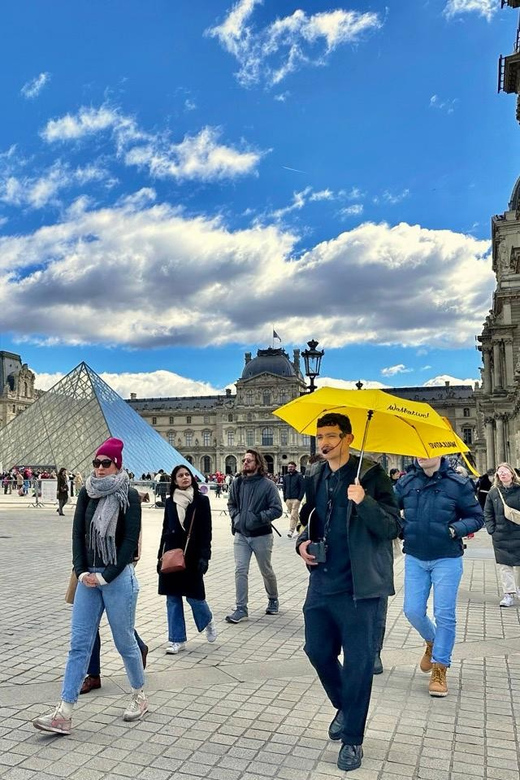
You meet outside Hôtel de Ville, at Metro exit 5, where you look for a yellow umbrella. Arrive 10 minutes early. That small buffer matters because a central Paris meeting point can be busy, and you do not want to begin the tour by searching the square.
The route is designed around central Paris, so you spend the time walking between major sights rather than sitting on a bus. That means you see the changing scale of the city for yourself. Medieval religious buildings give way to royal architecture, museum courtyards, formal gardens, bridges, and the broad avenues shaped by 19th-century rebuilding.
I especially like this format for a first visit. You learn where the Louvre sits in relation to the Seine, how the historic heart of Paris connects with the Right Bank, and why the river remains such a useful guide through the city.
More History Walking Tours in France
- Paris: Dark History and Ghostly Guided Walking Tour
★ 4.7 · 1,000 reviews - Paris City of Fashion History Private Guided Walking Tour
★ 5.0 · 221 reviews - Paris: Le Marais & Montmartre Jewish History Walking Tour
★ 4.8 · 170 reviews
From Hôtel de Ville to the medieval heart
Hôtel de Ville is a practical starting place because it puts you close to the Seine and the oldest part of Paris. From here, the guide can explain how the city grew around the river and how the early Parisii settled on marshy ground near the water.
That opening helps correct a common mistake. Paris was not simply created as a polished royal capital. It developed through layers of settlement, conquest, religion, commerce, political power, revolt, and rebuilding. The city became a Frankish capital in the 6th century, and by the medieval period it had grown into one of Europe’s largest cities.
The historical story also reaches beyond kings and monuments. The city became a religious and intellectual centre, with the Sorbonne helping make Paris important in European education. Later, poverty and inequality helped fuel the French Revolution, which brought down the monarchy and led to the execution of the king and queen.
Your guide’s job is to make these changes understandable while you walk. Past guides such as Thomas, Tom, Harry, and Yazid have been praised for clear explanations, humour, and an ability to keep the group involved. The exact guide can vary, but the tour clearly depends on personality as much as dates.
Notre-Dame and the stories of medieval Paris
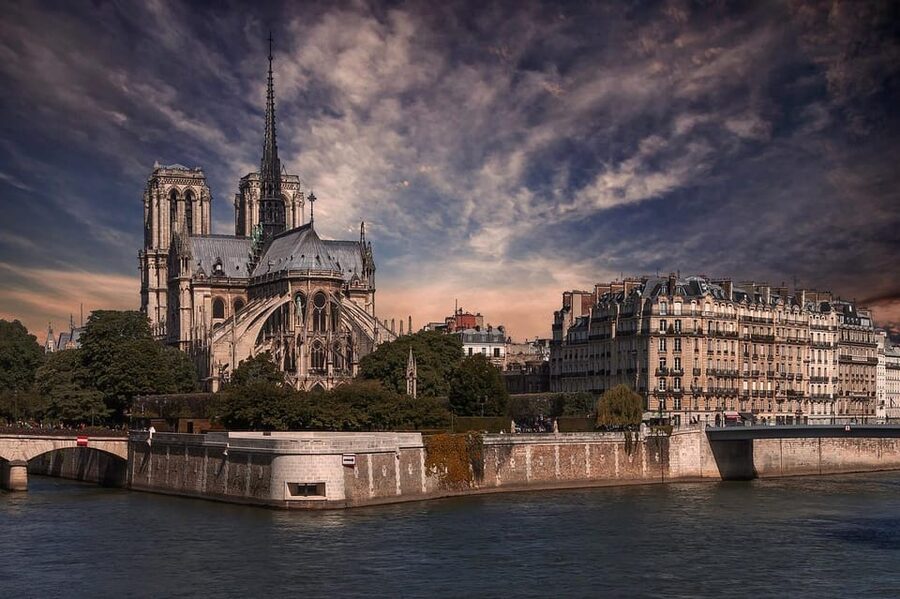
Notre-Dame Cathedral is one of the walk’s central sights. Even if the tour does not include an interior visit, seeing the cathedral in its setting gives you a better sense of its importance than a quick photograph alone.
The cathedral represents the religious power of medieval Paris, but it also carries the more popular story of Quasimodo. That combination is useful. You get the formal history of a major church alongside the literary image that shaped how millions of people imagine the building.
The guide also places Notre-Dame within the wider growth of the city. Medieval Paris was crowded, powerful, and often unstable. Religious conflict, external wars, royal ambition, and internal violence all left their mark.
You should not expect a quiet, detailed architectural study of every sculpted figure. The route has many subjects to cover, and the cathedral is one chapter in a larger narrative. If Notre-Dame is your main reason for coming, plan extra time before or after the walk for a closer look at the island and the cathedral area.
Sainte-Chapelle is also included among the sights mentioned for the route. Its delicate medieval design and famous stained glass offer a sharp contrast to the heavier scale of Notre-Dame. Again, treat the stop as an introduction unless your booking specifically confirms an interior visit.
The Louvre, from royal palace to art powerhouse
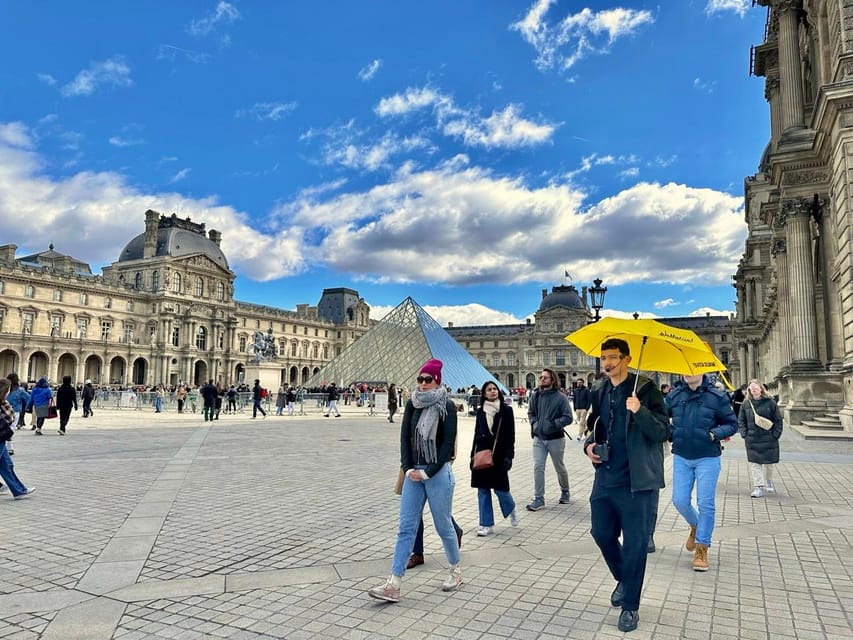
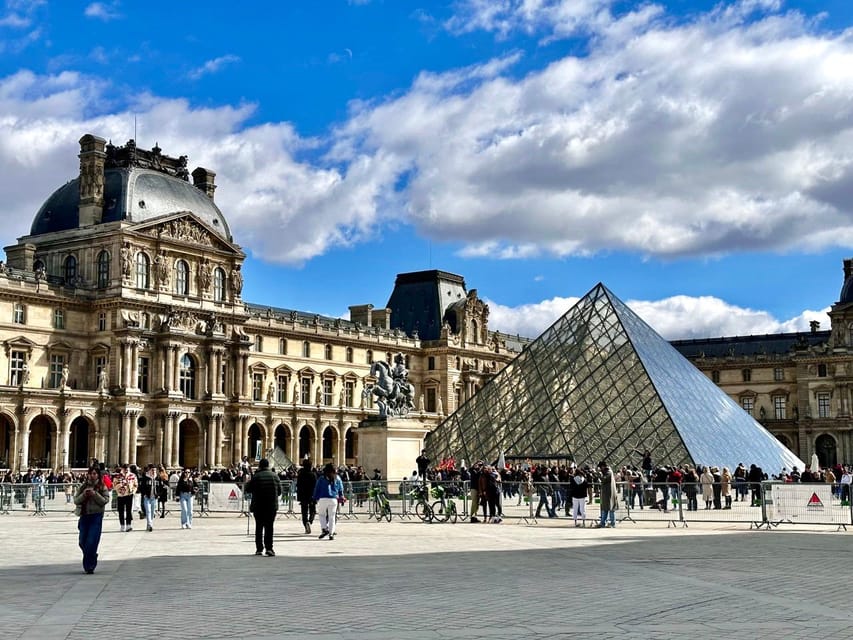
The Louvre is not just a museum stop. It began as a fortress, became a royal palace, and later developed into one of the world’s great art museums. That change is one of the clearest examples of Paris turning old power into public culture.
Outside the Louvre, you can appreciate its size and the way its courtyards and wings grew over time. The guide’s explanation helps you see why this is more than a giant building full of paintings. It was tied to kings, court life, state power, and the changing idea of who should have access to art.
The Mona Lisa story adds a more playful note. The tour covers one of history’s most daring art thefts, giving you a reminder that the museum’s fame has not always been about exhibitions and scholarship. The theft helped turn Leonardo’s painting into a worldwide celebrity.
Do not confuse this walking tour with a Louvre museum tour. The listed experience focuses on the palace and museum’s history from the streets. Admission to the museum is not included in the information provided, so you should arrange a separate visit if you want to see the collections inside.
That separation is actually useful. A Louvre visit can consume half a day or more, while this walk lets you understand the building without using your entire museum schedule. You can then decide if you want to return with a timed entry.
More History Walking Tours in Paris:
- History and Hauntings of Salem Guided Walking Tour
★ 5.0 · 14,564 reviews - Lisbon: History, Stories and Lifestyle Walking Tour
★ 4.8 · 10,902 reviews - Boston: Freedom Trail History Small Group Walking Tour
★ 5.0 · 6,450 reviews - Historic Charleston Guided Sightseeing Walking Tour
★ 5.0 · 6,216 reviews
Pont des Arts and the Seine-side view
Pont des Arts gives the walk a welcome change of pace. Bridges are among the best places in Paris to understand the relationship between the river and the city. From here, you can look along the Seine, see the alignment of historic buildings, and appreciate why the river has shaped Parisian life for centuries.
The bridge also connects the cultural world of the Louvre with the Left Bank. That makes it a natural point for talking about art, writers, students, romance, and the city’s long reputation for ideas and beauty.
This is one of the tour’s better photo stops, but the value is not only visual. You learn how bridges link districts that can otherwise feel separate. The Seine is not merely scenery. It is the line that helps you read the city.
Because the tour is on foot, you may be standing on the bridge while the guide explains the view. Keep your attention on the group and the guide, since bridges and river approaches can be busy. Comfortable shoes will make the whole experience easier.
The Tuileries Gardens and Parisian grand design
The Tuileries Gardens provide a calmer section of the walk. Formal paths, open space, and carefully ordered views show how Parisian gardens were designed to express control and elegance.
The gardens also help explain the relationship between the Louvre and the wider city. They form a grand approach westward, linking the palace area with the major avenues beyond. After several hours of medieval churches and dense urban streets, the open space gives you room to understand the scale of the royal plan.
This is a good place to connect architecture with politics. Paris was repeatedly reshaped by rulers who wanted to display order and authority. Later, the city was rebuilt with broad boulevards, parks, aqueducts, and sewers. These changes improved movement and public health, but they also made street barricades harder to build during revolts.
That is one of the more interesting themes of the tour: Paris was modernized not only for beauty and comfort, but also because governments wanted a city that was easier to control. The wide boulevards you admire today had a political purpose as well as a practical one.
Revolution, Napoleon, and the city that keeps fighting back
The historical narrative moves quickly, but it covers an impressive range. You hear how extreme inequality helped drive the French Revolution, how the monarchy fell, and how Napoleon later seized power.
Napoleon is especially useful as a connecting figure. He belongs to the revolutionary aftermath, but he also revived imperial ambition and projected French power far beyond Paris. His story helps you understand why monuments, avenues, and political symbols matter so much in the city.
The tour also includes stories connected with Hitler. The supplied details do not specify the exact stop or story, so expect this to be part of the guide’s wider account of Paris during periods of conflict rather than a dedicated wartime tour.
Guides who use humour and drama can make this stretch memorable. Thomas was praised for combining military history with art history, while Tank was described as especially dramatic and emphatic. Those qualities suit Paris because the city’s past is full of sudden reversals, theatrical personalities, and public anger.
Still, the amount of material means you should not expect every era to receive equal time. If your main interest is the Revolution, Napoleon, or the occupation years, use the tour as a starting point and seek out a more focused museum or site afterward.
What the guide adds to the experience
The quality of this walk depends heavily on the person holding the yellow umbrella. The strongest feedback centres on guides who explain clearly, tell stories well, answer questions, and keep different ages interested.
Tom has been praised for making a first visit comfortable and for finishing on time. Harry is described as a strong storyteller who can make the past feel close. Yazid brings an art-history background, while Thomas combines detail with humour. Francesca has been praised for showing lesser-known corners and creating a fun atmosphere.
Those names do not guarantee who will lead your departure. They do show the style to expect: a live English-speaking guide, not an audio recording or a script read without pause. The tour includes a prepared narrative, but the guide can also respond to questions.
The group is not necessarily tiny. One participant estimated fewer than 20 people, though that may vary. The useful point is that the walk can still feel manageable rather than like a large, slow-moving crowd.
Price, pace, and practical value
At $31 per person, this is a sensible purchase if you want context before paying for major museum entries. The price covers the booking and the guide’s payment. It is not simply a small reservation charge followed by an expected tip.
The walk lasts 150 minutes, which is long enough to cover the main historic centre but short enough to fit around lunch, a museum booking, or an evening plan. It is described as good exercise without being strenuous, though you should still wear shoes suited to city streets.
Hotel pickup and drop-off are not included. You make your own way to Hôtel de Ville Metro exit 5, then continue on foot for the tour. That keeps the price down and gives you more control, but it means you need to plan the connection yourself.
Cancellation is flexible: you can cancel up to 24 hours before the activity for a full refund. You can also reserve now and pay later, which helps if your Paris schedule is still changing.
Who should book this Paris walk?
I would choose this tour for a first visit, a solo trip, or a short stay when you want a clear orientation without committing to a full-day excursion. It also suits companions with different interests because the material moves between art, architecture, religion, revolution, military history, food, and city life.
It works particularly well for people who like stories more than dense lectures. The guides aim to keep the mood light while still offering plenty of detail. You can ask questions, take notes, and return later to the sights that catch your attention.
I would be more cautious if you want long interior visits, a specialist art tour, or a slow architectural study. The route presents many landmarks from the outside, and its broad subject range means some topics receive only a short explanation.
Should you book the Historic Paris Walking Tour?
Book it if you want to get your bearings fast and understand how Paris’s churches, palaces, bridges, gardens, revolutions, and museums fit together. The combination of central sights and strong storytelling makes the $31 price fair, especially early in your stay.
Skip it if your schedule cannot handle two and a half hours on foot or if you want an in-depth visit inside the Louvre or Notre-Dame. For most first-time visitors, though, this is a useful foundation. Take it early, note the places you want to revisit, and then spend the rest of your Paris stay following your own interests.
FAQ
How long does the Historic Paris Walking Tour last?
The tour lasts 150 minutes, or two and a half hours.
What language is the tour in?
The live tour guide leads the experience in English.
Where does the tour meet?
Meet outside Hôtel de Ville Metro station at exit 5. Look for a yellow umbrella.
How early should I arrive?
You should arrive 10 minutes before the activity begins.
Is hotel pickup included?
No. Hotel pickup and drop-off are not included.
What sights are covered?
The experience includes information about the Louvre and Notre-Dame Cathedral, along with Pont des Arts and the Tuileries Gardens. The route also mentions Sainte-Chapelle, the Eiffel Tower, elegant boulevards, and bridges.
Can I cancel the booking?
Yes. You can cancel up to 24 hours before the activity for a full refund. You can also reserve now and pay later.
New routes in Paris
- The Official Emily in Paris Locations Walking Tour★ 4.9 · 383 reviews
- Paris: Montmartre Food Tasting Walking Tour with Secret Dish★ 4.8 · 107 reviews
- Paris: Emily Inspired Walking Tour★ 4.9 · 312 reviews
- Saint-Germain: Gourmet Chocolate & Pastry Walking Food Tour★ 4.8 · 495 reviews
- Paris: Walking Tour with Notre Dame or Ste-Chapelle Access★ 4.4 · 198 reviews
- Paris Uncovered: Unique Guided Walking Tours with a Twist★ 4.8 · 582 reviews
- Paris Top Sights Half Day Walking Tour with a Fun Guide★ 4.9 · 92 reviews
- Paris: Ghosts, Legends & Mysteries Evening Walking Tour★ 4.5 · 241 reviews
Paris Walking Tours, compared.

Authentic Parisian Gourmet Food Tour with 10 Local Dishes & Wines
Read our review →
Paris Top Sights Half Day Walking Tour with a Fun Guide
Read our review →
Montmartre Hidden Gems and Scenic Highlights Walking Tour
Read our review →
Montmartre Hill French Gourmet Food and Wine Tasting Walking Tour
Read our review →
Montmartre Highlights Walking Tour with a Local Guide
Read our review →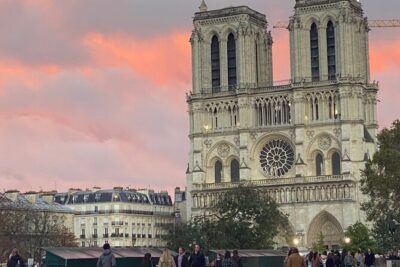
Paris Île de la Cité and Notre-Dame Walking Tour With Crypt
Read our review →
Montmartre Cheese, Wine & Pastry Guided Walking Tour
Read our review →
Paris in a Day: Louvre or Orsay, Eiffel Tower, City Walk & Cruise
Read our review →Browse the lists this tour appears in