
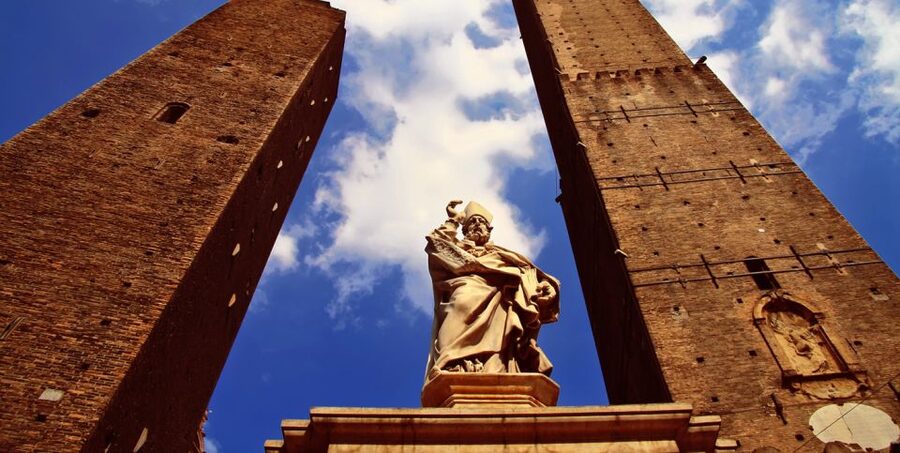
Review · BOLOGNA
Bologna: Guided Walking Tour
Bologna’s best sights are close together, but the city makes more sense when someone connects the dots. This private three-hour walk takes you from Piazza Maggiore through medieval towers, porticoes, churches, the old university, and the food market, with plenty of local history along the way.
I like the small-group format, which keeps the tour personal for up to five people. I also like the mix of major monuments and less obvious details, including the medieval Torre Galluzzi, the Court Isolani passageway, and the unusual anatomical theater at the Archiginnasio. The main consideration is that the theater costs an extra €3.50 per person and must be booked ahead.
I also like that the route works in poor weather better than many open-air city tours, since Bologna’s porticoes provide shelter. Still, you should wear good shoes and dress properly for church visits, with covered shoulders and no shorts.
Key points at a glance
- Piazza Maggiore sets the scene: Begin beside the Fountain of Neptune and the grand medieval palaces at the heart of Bologna.
- The Archiginnasio adds real depth: Visit the old university building and, if prebooked, its striking anatomical theater.
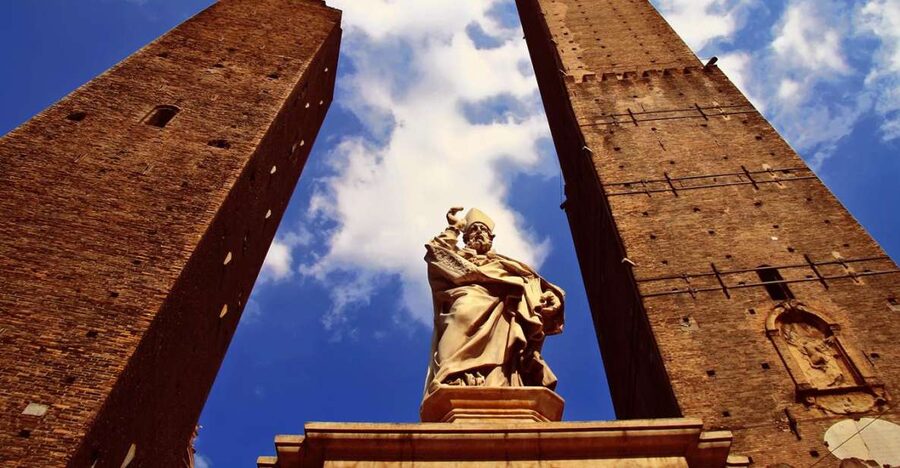
- Two leaning towers bring medieval Bologna to life: See the city’s famous towers and learn why they lean.
- Porticoes make the walk weather-friendly: Follow the covered arcades toward Santo Stefano and along Via Farini.
- Food is part of the city’s identity: Walk through Mercato di Mezzo and connect Bologna’s cuisine with its history.
- Private guiding is the main value: At $118.95 for up to five people, the cost works best when shared by a family or small group.
Starting in Piazza Maggiore
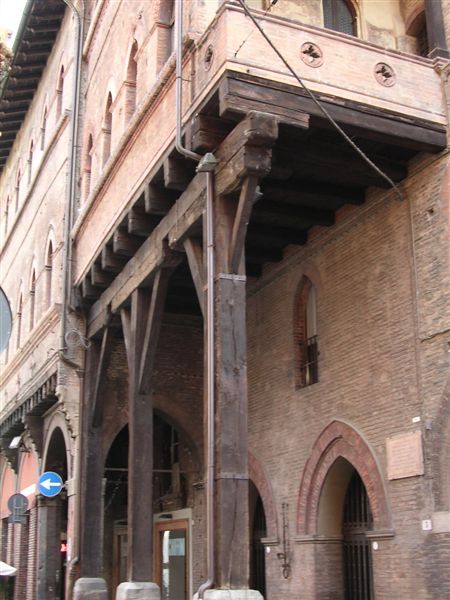
The tour begins at Piazza del Podestà, beside Piazza Maggiore and close to the entrance of the Bologna Welcome tourist office. This is a practical meeting place because you are already in the middle of Bologna’s historic center, surrounded by the city’s main civic and religious buildings.
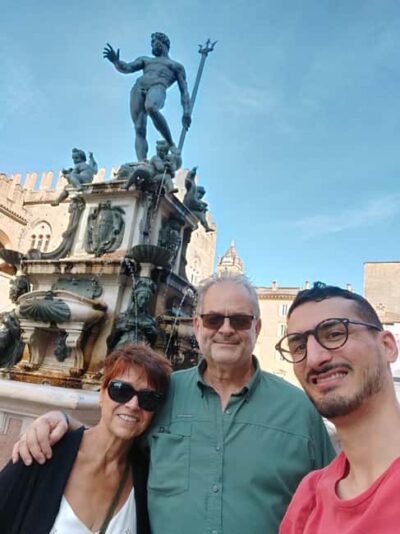
Piazza Maggiore is the right place to begin. It gives you a quick lesson in Bologna’s power, politics, and public life without requiring a long walk first. Your guide points out the Fountain of Neptune and the Palazzo del Podestà, then explains the buildings around the square.
You will also hear about Bologna’s three familiar nicknames: La Dotta, the learned city; La Grassa, the fat city; and La Rossa, the red city. Each name points to a different part of Bologna’s character. The first refers to its university tradition, the second to its food, and the third to its red-toned buildings and political identity.
I find this kind of introduction useful because it gives the rest of the tour a clear framework. The city is not just a collection of attractive buildings. Its university, food, and brick architecture are tied together, and the guide keeps returning to those themes as you walk.
More Guided Walks in Italy:
- Milan: Guided Walking Tour & Last Supper Visit with Ticket
★ 4.7 · 5,409 reviews - Naples: Street Food Walking Tour with Local Guide
★ 4.9 · 4,976 reviews - Florence: Highlights Walking Tour with Expert Guide
★ 4.6 · 4,662 reviews
San Petronio and Bologna’s remarkable sundial
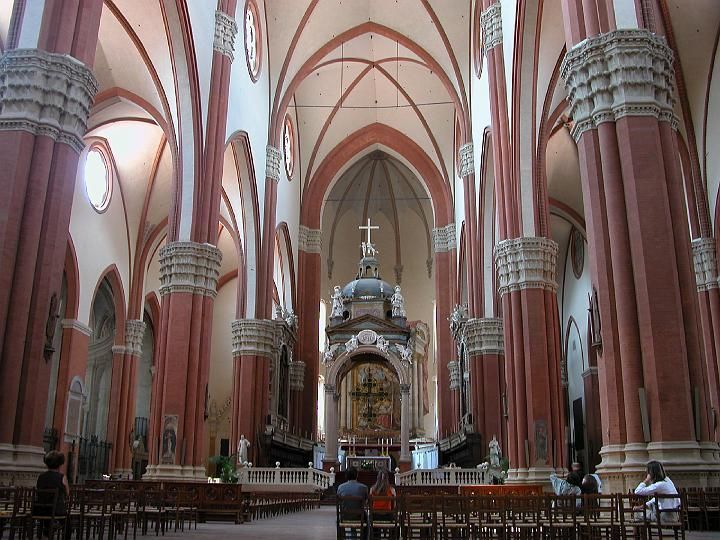
The Basilica of San Petronio dominates Piazza Maggiore. Its large scale makes it hard to miss, but the most unusual detail inside is not simply its size or facade. The basilica contains a very long sundial, a scientific instrument built into the floor.
The sundial gives your visit a more memorable angle than a standard church stop. You are not only looking at religious art and architecture. You are also seeing how Bologna’s scholars used the basilica as a place for scientific observation.
Church access comes with a dress rule. Your shoulders must be covered, and shorts are not allowed. This applies even in warm weather, so plan your clothing before the walk. The tour information does not promise an extended interior visit to every church, and the exact amount of time inside can depend on opening conditions and the guide’s route.
That is worth keeping in mind if you want a full museum-style visit. This is a city walk, not a church tour. You get context and selected highlights rather than a slow examination of every chapel.
Towers, alleys, and medieval Bologna
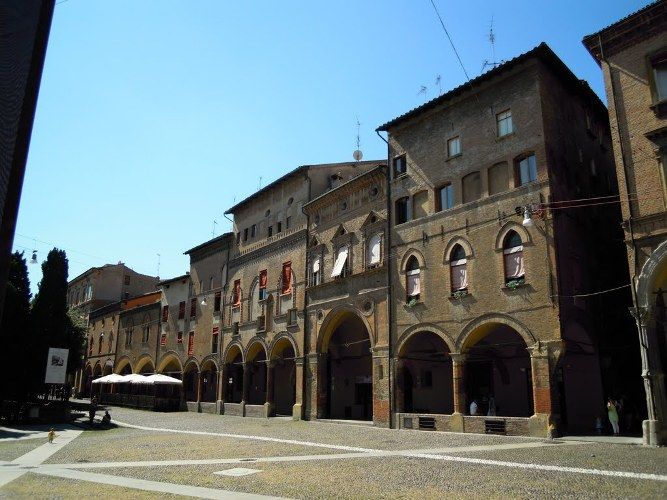
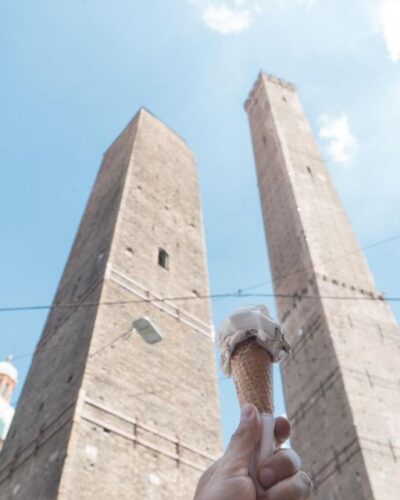
Bologna’s two leaning towers are among the city’s most recognizable sights. Their tilt gives the medieval center a slightly crooked, storybook feel, but the towers also show how difficult it was to build tall structures on uncertain ground.
The walk includes the two leaning towers and the medieval Torre Galluzzi. These stops help you see Bologna as a city of rival families, narrow passages, fortified homes, and civic competition. The towers were not built simply as decoration. They formed part of the urban world of powerful medieval families.
Torre Galluzzi is especially useful because it is less famous than the main pair. A guide can point out details you might pass without noticing on your own. The route does not treat Bologna as a string of postcard views. It uses smaller structures to explain how the center developed.
The historic center is compact, but the paving can be uneven in places. The tour is listed as wheelchair accessible, though anyone with mobility concerns should still check the precise route and current access conditions before booking. Comfortable shoes are essential for everyone.
The old university and the Archiginnasio
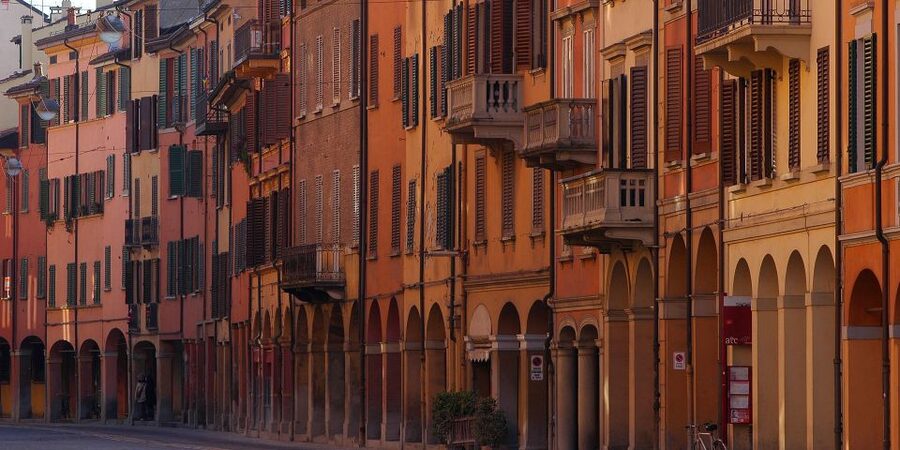
Bologna is home to one of Europe’s oldest universities, and the university is central to the city’s identity. The tour brings you to the Archiginnasio, one of the most important reminders that Bologna has long been a place of study, debate, and medical teaching.
The highlight here is the anatomical theater, a richly decorated room designed for anatomy lessons. It is a fascinating contrast to the public squares and market streets outside. Inside, the setting shows how medicine was taught in earlier centuries, when students gathered around demonstrations rather than learning from modern classrooms and screens.
Entrance to the anatomical theater is not included. It costs €3.50 per person and must be booked in advance. That small extra charge is easy to overlook, so arrange it before the tour if this room matters to you.
I would make the theater a priority for first-time visitors interested in science, medicine, or university history. If your group mainly wants outdoor sights, you may prefer to save the money and keep moving. The guide can still explain the Archiginnasio and its place in Bologna even if you do not enter the theater.
This stop also gives the nickname La Dotta more meaning. The university is not an abstract label. You see how education shaped the city’s buildings, local pride, and public life.
More Walking Tours in Italy:
- Venice: Doge’s Palace and St Mark’s Basilica Walking Tour
★ 4.4 · 6,291 reviews - Venice: San Marco to Rialto Walk & Spritz Like a Local
★ 4.2 · 3,651 reviews - Uffizi & Accademia Timed Entry: Small Group Duomo Walking Tour
★ 4.5 · 3,630 reviews - Venice Walking Tour and Gondola Ride
★ 3.5 · 3,630 reviews
Porticoes from Via Farini to Santo Stefano
Bologna’s porticoes are one of its defining features. These covered walkways let you move through the city with protection from sun and rain, while still remaining part of the street scene.
The route continues along Via Farini toward the porticoes of Piazza Santo Stefano. This section is one of the tour’s most enjoyable stretches because the architecture keeps changing as you walk. The porticoes frame the streets, create long lines of shadow, and make the city feel connected even when the weather turns unpleasant.
A rainy day does not ruin the walk in the way it might in another Italian city. You still need a coat or umbrella for uncovered sections, but the arcades provide welcome cover. One guide kept the group moving through heavy rain and worked to keep everyone as dry as possible, which tells you something practical about the route: the porticoes are not just pretty. They are useful.
Piazza Santo Stefano brings a different mood from Piazza Maggiore. Its church complex and surrounding arcades create a quieter, more enclosed setting. The tour focuses on the magnificent porticoes and the Basilica of Santo Stefano, often called the Seven Churches because of its unusual group of connected religious spaces.
As with San Petronio, remember the church dress code. Covered shoulders and no shorts are required. The walk is more enjoyable if you do not have to worry about finding a cover-up at the last minute.
Court Isolani and the route to Strada Maggiore
On the way to Via Strada Maggiore, the tour passes through the covered passageway of the Court Isolani. This is a good example of Bologna’s habit of hiding architectural surprises just off the main street.
Court Isolani helps break up the broad piazzas and formal buildings with a more intimate passage. You move through a covered route rather than simply walking along a normal street, and the guide can explain how these connected spaces fit into Bologna’s old urban fabric.
The route then reaches Via Strada Maggiore, one of the city’s important historic roads. This section is less about checking off a single famous monument and more about seeing how Bologna’s streets connect. The porticoes, lanes, towers, churches, and old university buildings are all part of one walkable center.
That is where a guide adds real value. You can find Piazza Maggiore and the towers yourself, but it is harder to understand why the route moves through Court Isolani or how the university district relates to the religious and commercial parts of town.
Mercato di Mezzo and Bologna’s food culture
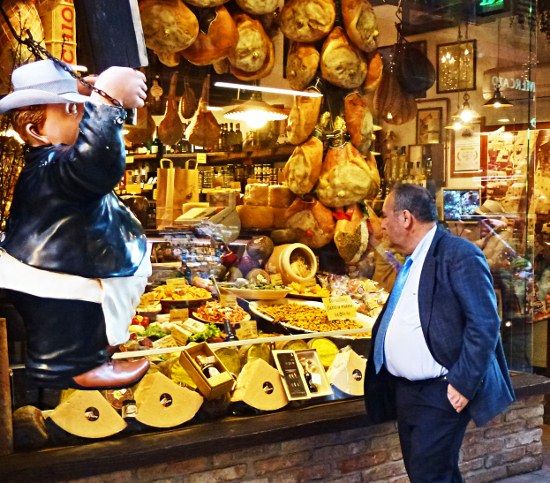
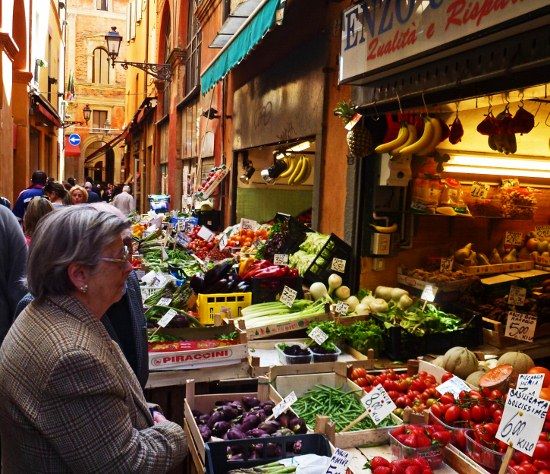
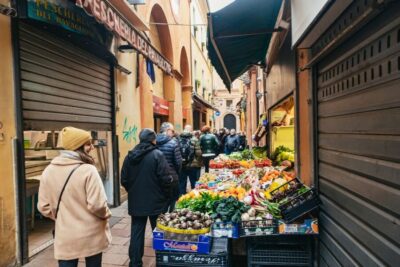
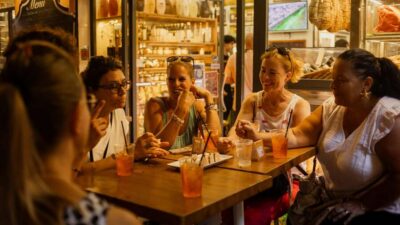
The Mercato di Mezzo brings La Grassa into the tour. Bologna’s food reputation is not treated as a separate subject from its history. The market gives you a place to connect local eating habits with the city’s identity.
Your guide discusses why food matters so much in Bologna while you walk among the market stalls and food businesses. The tour does not include a meal or tasting, so do not book it expecting a food tour. Instead, you get useful orientation for deciding where and what to eat later.
I like this approach because food is often one of the easiest ways to understand an Italian city. Here it is part of the city story, not just a list of famous dishes. You can ask questions and use the market stop to plan your own meal after the walk.
The market can also add a welcome change of pace after the churches, towers, and university buildings. Bologna is not only a museum center. It is a working city where people shop, eat, and meet in the same streets that tourists come to see.
What the three-hour format gives you
Three hours is long enough to cover Bologna’s main historic center without turning the outing into an all-day commitment. You see the major squares, towers, university sights, porticoes, churches, passageways, and market area in one connected route.
The pace will likely feel active because there is a lot packed into the walk. You should expect regular standing, walking, and listening rather than long stops at each monument. Wear shoes that can handle three hours on city streets.
A private group makes the time more flexible than a large shared tour. The group can ask questions, and the guide can spend more time on subjects that interest you, such as university history, architecture, food, or Bologna’s medieval families. The listed maximum is five people, so the price becomes more appealing when divided among a family or a small group of friends.
At $118.95 for the whole group, this is not the cheapest way to see Bologna if you are traveling alone. For five people, it works out to about $23.79 each before the optional anatomical theater fee. For two people, the per-person cost is higher, but the private format may still suit you if you want a focused introduction without a large group.
The tour is offered in English, Italian, Spanish, and German. The listed provider is Manuela Roversi, and guides named in the tour feedback include Manuela and Giulia. Manuela is repeatedly described as warm, attentive, and strongly connected to Bologna, with a style that combines historical detail and personal pride in the city.
Who should book this Bologna walk
I would choose this tour if you are visiting Bologna for the first time and want a strong orientation before exploring alone. It is also a good fit if you have only one day in the city and want to see the main center without spending hours planning your own route.
Families and small groups should pay close attention to the private pricing. Up to five people can share the $118.95 fee, which gives the tour a much better value than the headline price suggests. You can also ask questions that may not get much time on a large group outing.
The tour suits history fans, architecture fans, and people who want food culture included without booking a separate food experience. It is less suitable if you want extensive interior visits, a tasting menu, or a slow museum tour.
Book the anatomical theater in advance if it is important to you. Bring comfortable shoes, cover your shoulders, avoid shorts, and allow a little flexibility for church access and weather.
Should you book it?
Book this walking tour if you want a well-rounded first look at Bologna with a private guide and a route that joins the city’s major themes: university life, medieval towers, porticoes, churches, and food.
The strongest reasons to choose it are the small group size, the central route, and the chance to ask questions along the way. The main limitation is that three hours can only offer selected visits, and the anatomical theater costs extra.
For a group of three to five, the price is reasonable for a private introduction. For solo visitors or couples, compare it with a shared tour. If personal attention matters more than the lowest possible price, this is a sensible way to get your bearings and see why Bologna rewards a closer look.
FAQ
Where does the Bologna walking tour begin?
It begins at Piazza del Podestà, Piazza Maggiore 1/e, close to the entrance door of the Bologna Welcome tourist office.
Where does the tour end?
The activity ends back at the meeting point.
How long does the tour last?
The walking tour lasts three hours.
What languages are available?
The live guide is available in English, Italian, Spanish, and German.
Is this a private tour?
Yes. It is a private group experience for up to five people.
What is included in the price?
The price includes the three-hour walking tour and a guide.
Is the Archiginnasio anatomical theater included?
No. Entrance costs €3.50 per person and must be booked in advance.
What sights are included?
The route includes Piazza Maggiore, the Fountain of Neptune, the Palazzo del Podestà, Bologna’s two leaning towers, Torre Galluzzi, the Archiginnasio, the porticoes of Piazza Santo Stefano, Court Isolani, Via Strada Maggiore, and Mercato di Mezzo.
Is the tour wheelchair accessible?
Yes, the activity is listed as wheelchair accessible.
What should I wear?
Wear comfortable shoes. For church visits, your shoulders must be covered and shorts are not allowed.
Can I cancel the tour?
You can cancel up to 24 hours in advance for a full refund.
Do I have to pay when I book?
The reserve now and pay later option lets you book your spot without paying anything at the time of booking.
New routes in Italy
- Private St. Francis Basilica of Assisi and City Walking Tour★ 5.0 · 114 reviews
- Assisi Private Walking Tour including St. Francis Basilica★ 5.0 · 124 reviews
- Milan: City Highlights Walking Tour with The Last Supper★ 4.9 · 195 reviews
- Florence: Heart of Florence Guided Walking Tour★ 4.0 · 81 reviews
- Milan: Private or Shared Essential Walking Tour★ 4.7 · 84 reviews
- Taormina: Shared or Private Food & Wine Walking Tour★ 4.6 · 167 reviews
- Syracuse: Ortigia Private Walking Tour★ 4.8 · 181 reviews
- Syracuse: Ortigia and Neapolis Guided Walking Tour★ 4.7 · 205 reviews
Bologna Walking Tours, compared.

Bologna Food & Market Tour with 6 Tastings, Pasta, Wines & More
Read our review →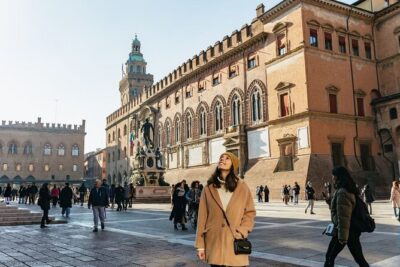
Browse the lists this tour appears in