
Review · ITALY
Genoa: 2-Hour Guided Walking Tour of the Historical Center
Genoa’s Old Town is easiest to understand from street level, where narrow caruggi twist between grand palaces, churches, small squares, and traces of the city’s trading past. This two-hour walk gives you a useful first look without trying to cover the whole city.
I like the way the tour links the grand Palazzi dei Rolli with less obvious corners of the medieval center. I also like the included museum access, which lets you return on your own to see paintings and sculpture at a slower pace.
The main consideration is the bilingual format. Your guide explains everything in English and Italian, so the walk may take longer than a single-language tour and you may spend part of the time waiting for the second explanation.
Key points
- Genoa’s caruggi: Follow the tight, twisting lanes that are difficult to understand from a map.
- Palazzi dei Rolli: See the aristocratic residences on Via Garibaldi, a UNESCO World Heritage Site.
- San Matteo Square: Learn how the Doria family shaped Genoa’s political power.
- San Lorenzo Cathedral: See the Gothic church associated with important religious objects, including relics connected with St. John the Baptist.
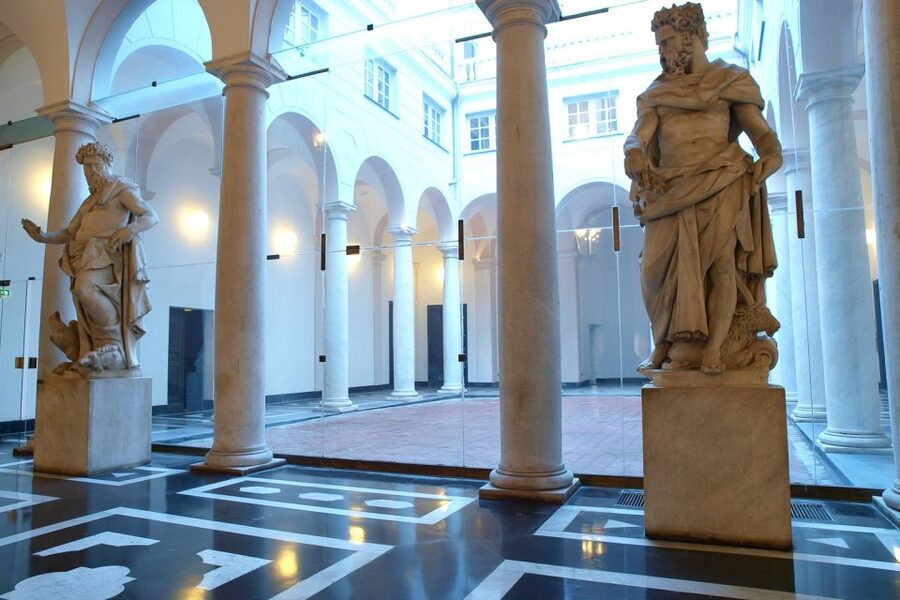
- Two museums included: Visit the Strada Nuova Museums and Sant’Agostino Museum independently on the same day.
- Bilingual guiding: The guide speaks English and Italian, with past guides including Barbara, Anna, Paola, Irene, Roberta, and Daniel.
Genoa’s old lanes make the best introduction
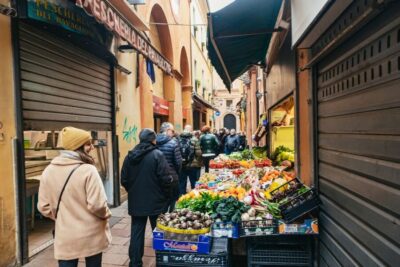
Genoa can feel confusing at first. The port, modern streets, grand commercial buildings, and medieval lanes all sit close together, but they do not always explain themselves. The Old Town’s caruggi are especially easy to misread. A lane that looks like a dead end may open into a tiny square, while a plain doorway may lead to a church or a palace courtyard.
That is where this walk earns its modest price. You are not simply ticking off famous buildings. You are learning how Genoa is put together, with the guide pointing out the relationship between the narrow medieval streets and the grand residences built by wealthy families.
The city’s history reaches back to its role as a Roman port and later as a major trading center. The tour also touches on Genoa’s medieval power, its banking traditions, its links with the Crusades, and figures connected with the city, including Christopher Columbus and Marco Polo.
You will not see every part of Genoa in two hours. That is not the point. Think of this as a first orientation, one that helps you decide where to return for a longer look.
More Old Town Walking Tours in Italy:
- Rome Food Tour in the Historic Centre with 8+ Food Tastings
★ 5.0 · 1,000 reviews - Cagliari: Walking Tour of the Old City
★ 4.8 · 560 reviews - Naples: Old Town Guided Walking Tour
★ 4.8 · 553 reviews
Via Garibaldi and the Palazzi dei Rolli
The meeting point is the Tourist Information Center at Via Garibaldi 12 red. This puts you beside one of Genoa’s most impressive streets, the former Strada Nuova.
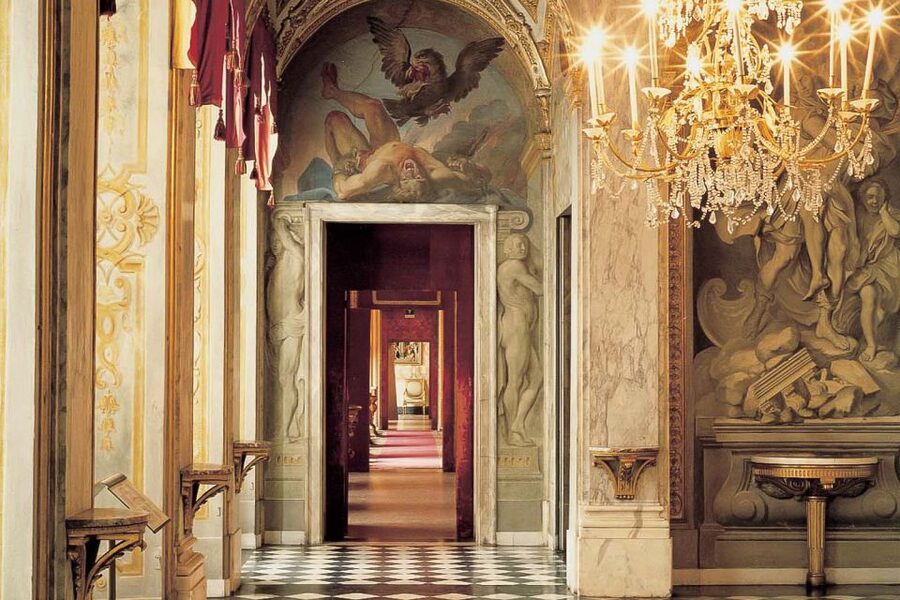
Via Garibaldi is lined with grand residences built in the 16th and 17th centuries. These are the Palazzi dei Rolli, homes of Genoa’s leading families. The Rolli system identified aristocratic palaces that could host visiting dignitaries on behalf of the republic. In other words, these were private homes with a public duty.
That detail makes the street more interesting than a simple parade of elegant facades. Behind the stonework was a system of political influence, family status, and civic obligation. Your guide can help you read the buildings as signs of Genoa’s former wealth and power.
The street is also a good reminder that Genoa’s grandest architecture does not always sit in a broad ceremonial setting. The city’s streets can feel tight and vertical, with palaces rising above you. Look up often, but also watch your footing on the older paving.
The tour highlights the Strada Nuova area during the walk, then introduces the museums there at the end. You do not remain with the guide for the museum visit. Instead, you use the included admission for your own visit later that day.
San Matteo Square and the Doria family
San Matteo Square is one of the tour’s most useful stops because it puts Genoa’s political story into a small, enclosed space. The square is closely linked with the Doria family, one of the most powerful families in Genoese history.
Here, the scale changes. Instead of seeing the city as a broad collection of palaces and lanes, you get a focused look at how one family marked its place in Genoa. The square helps explain why family identity mattered so much in the medieval and early modern city.
I would pay close attention to the guide’s explanation here, since the details are easy to miss when you walk through alone. The square is not only a photogenic stop. It gives you a clearer sense of the rivalry, wealth, and civic power that shaped the old republic.
The tour also brings in related stories from Genoa’s past, including the first Banco di San Giorgio and Marco Polo’s imprisonment. Some of these subjects are brief rather than full historical lectures, but they add useful context to the streets around you.
San Lorenzo Cathedral and Genoa’s religious treasures
San Lorenzo Cathedral is one of the main landmarks on the route. Its Gothic design gives the walk a strong architectural anchor after the tighter lanes and family palaces.
The cathedral also connects Genoa’s commercial power with its religious importance. The city’s ships and trading networks brought people, goods, and sacred objects from far beyond Liguria. The tour refers to relics associated with St. John the Baptist, which are among the religious treasures connected with the cathedral.
You should expect an exterior-focused stop rather than a long, formal cathedral visit. The stated itinerary includes seeing San Lorenzo, but it does not promise a separate guided interior tour. If the cathedral is a major priority for you, set aside additional time after the walk and confirm opening arrangements locally.
This is a useful pattern throughout the tour. The guide introduces the major sights and gives them meaning, but two hours is not enough for a detailed visit inside every church, museum, and palace.
More History Walking Tours in Italy:
- Venice: City Center Historical Guided Walking Tour
★ 4.2 · 1,873 reviews - Palermo: Street Food and History Walking Tour
★ 4.9 · 1,486 reviews - Verona: History and Hidden Gems Guided Walking Tour
★ 5.0 · 1,379 reviews - Rome: Forbidden History Walking Tour & Pub Crawl with Drinks
★ 4.9 · 688 reviews
Doge Palace, Opera House, and the changing city
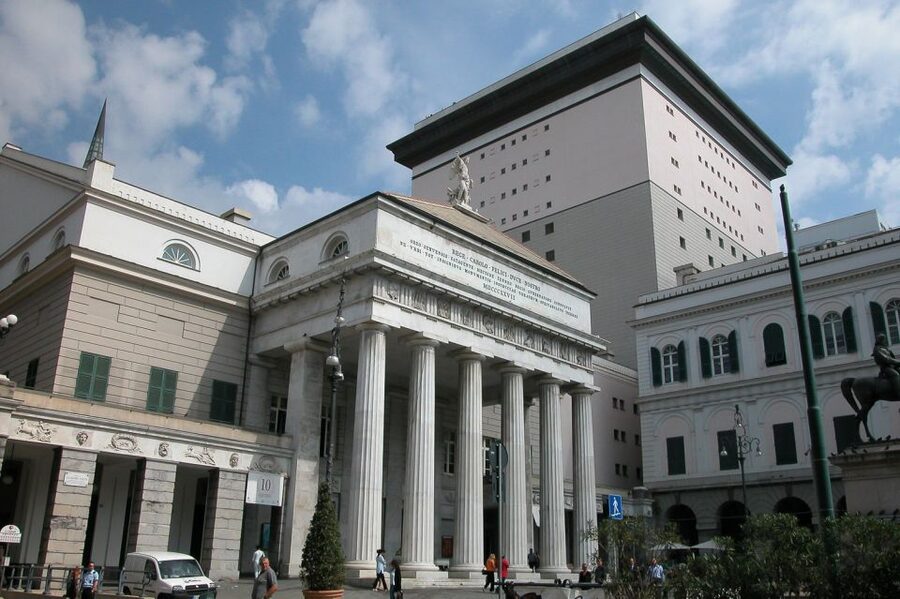
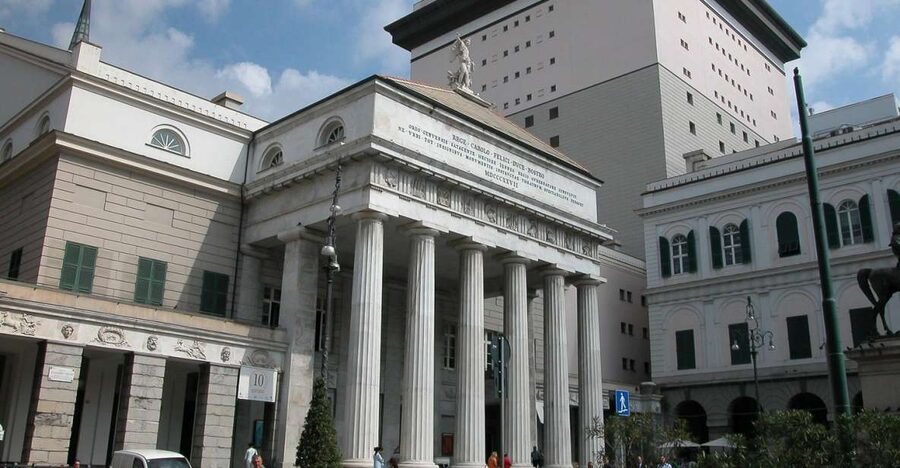
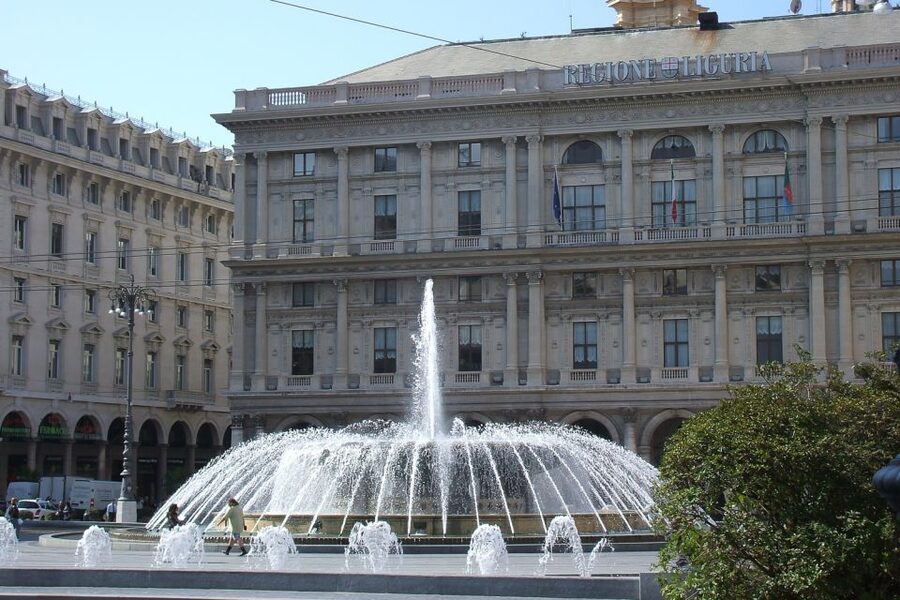
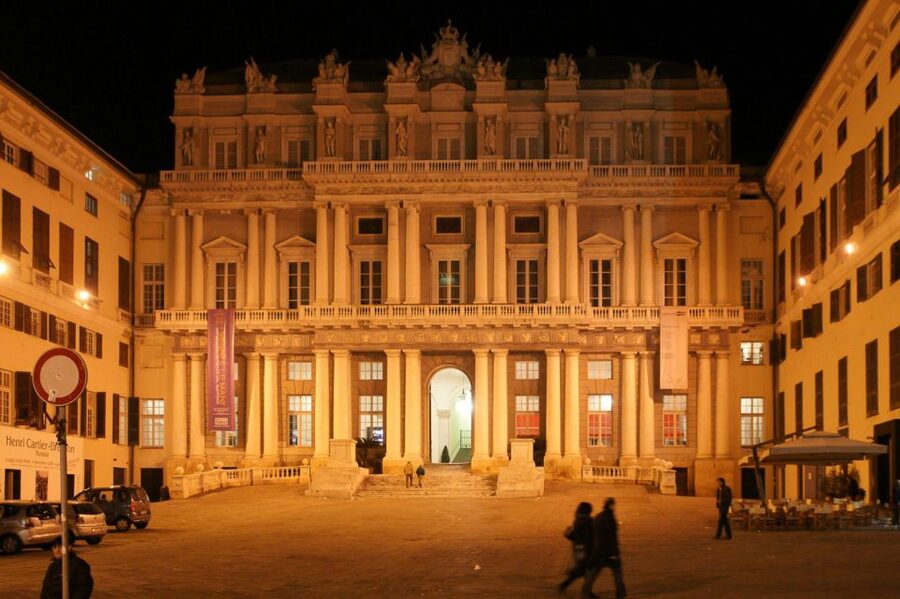
The route also includes the Doge Palace and the Opera House. These stops help connect medieval Genoa with its later civic and cultural life.
The Doge Palace represents the city’s republican government and political authority. The Opera House points toward a different side of Genoa, where public culture and performance became part of urban life. Seeing both on one walk helps you follow the city’s changes rather than treating the Old Town as a preserved medieval set.
The walk may not cover a large distance. That is a benefit in Genoa, where the important details often sit close together and the narrow streets slow you down. One past participant described learning a great deal despite covering little ground, which is a fair way to understand the experience.
You should still expect uneven surfaces, stairs or changes in level, and a fair amount of standing. The pace has generally been described as manageable, including for people with some physical limitations, but the tour is still a walking tour through an old city center.
The two included museums are part of the value
The museum admission is one of the strongest reasons to choose this tour over a basic orientation walk. At the end, the guide introduces the Strada Nuova Museums, then you continue independently.
The Strada Nuova Museums occupy palaces along Via Garibaldi and display works by Italian and foreign artists from the 15th through the 19th centuries. The collection includes notable Genoese and Flemish works. After hearing about the palaces outside, you can step inside and see how the families who built them lived and presented their wealth.
Sant’Agostino Museum offers a different setting. It uses the spaces of a triangular cloister and the largest preserved Gothic church in Genoa. Its displays focus on significant medieval art from Genoa.
The two museums are not guided in detail as part of the walking tour. That is both a plus and a drawback. You can move at your own speed, pause for paintings that interest you, or leave when your attention fades. But if you want expert interpretation inside each museum, you will need to read the information or arrange another guide.
Plan these visits for the same day as the walking tour. The included access is tied to that timing, so do not assume you can save the museum visit for a later day.
What the bilingual format feels like
The guide speaks in English and Italian, and the tour takes place in both languages. The exact balance depends on the group and the guide, but you should expect each main explanation to be repeated.
This arrangement has worked well with guides such as Barbara and Anna, who were praised for giving both language groups equal attention. Past guides also included Paola, Marina, Irene, Roberta, and Daniel. The guide assigned to your departure may be different, so treat those names as examples rather than a promise.
The bilingual format can add time. One past participant found the pauses slightly irritating, while others used them to take photographs or look more closely at the buildings. If you understand some Italian, you may enjoy hearing the explanations twice. If you speak only English, you may need to wait through the Italian section before moving on.
Group size can vary. Past departures ranged from very small groups, including only two or three people, to groups of around 15 or 16. Larger groups may make it harder to hear in the narrow streets, especially when the guide turns toward a building. A few people suggested that a microphone or listening device would help, though others appreciated the quieter approach.
How much value do you get for $16?
At $16 per person, this is good value if you plan to visit the museums. You receive two hours with a live guide plus admission to the Strada Nuova Museums and Sant’Agostino Museum. The museum access gives the tour more substance than a standard stroll that ends when the guide says goodbye.
The value is also practical for a first day in Genoa. You get a basic map in your head: Via Garibaldi for the Rolli palaces, San Matteo Square for the Doria story, San Lorenzo for the cathedral, and the caruggi for the medieval center.
I would not book it expecting an intimate private tour every time. The group may be small, but that is not guaranteed. Nor should you expect a full museum lecture, a long interior visit at every landmark, or a tour conducted only in English.
Still, the price compares well with the amount of orientation you receive. Past participants often described the tour as a good way to choose which places to revisit on their own. That is exactly how I would use it.
Best timing for a cruise stop or first day
The meeting point on Via Garibaldi is a walk from the port area. One past cruise passenger reached the office in about 20 minutes on foot, though the exact time depends on your ship, walking speed, and whether you have children or luggage.
The tour can work well on a cruise day if your arrival time leaves enough margin. Do not cut it close. A delayed ship once caused participants to miss the scheduled start, although the office helped them catch up with the group. That was a fortunate solution, not something to count on.
For a longer stay, I would book this near the beginning of your visit. You can then return to the museums, cathedral, palaces, or lanes that caught your attention.
After the walk, you may also want time for food and independent exploring. Guides have sometimes offered local suggestions for chocolate, ice cream, focaccia, and places to eat. These recommendations vary by guide, but they can help you turn the orientation into a fuller afternoon.
Who should book this walk?
I would recommend it to a first-time visitor who wants a clear introduction to Genoa without paying for a long private tour. It suits people who enjoy architecture, urban history, and the small details that are easy to miss in a maze of streets.
It also works well for cruise passengers, couples, solo visitors, and families who want a manageable introduction before exploring alone. The two-hour length is long enough to be useful but short enough to leave room for lunch, the museums, or another Genoa sight.
You may want a different option if you strongly dislike bilingual tours or need a fully guided museum visit. You may also prefer a private tour if your group has a very specific interest, such as Jewish heritage, food, or the detailed history of Genoa’s maritime republic. The standard walk gives a broad introduction, not a specialist study.
Book with comfortable shoes and keep your schedule flexible after the finish. The route can sometimes run a little beyond two hours, especially when the guide is answering questions or taking care to explain both languages.
Should you book the Genoa Old Town tour?
Yes, if you want a low-cost introduction to Genoa’s central sights and plan to use the museum admission the same day. The strongest parts are the walk through the caruggi, the Palazzi dei Rolli on Via Garibaldi, and the way San Matteo Square and San Lorenzo Cathedral fit into the city’s story.
The bilingual format is the one real compromise. You may wait through explanations in the other language, and larger groups may make hearing harder in the narrow streets. For $16, though, the combination of a live guide and two museum admissions makes this a sensible first step into Genoa.
FAQ
How long does the Genoa walking tour last?
The walking tour lasts two hours, although past departures have sometimes continued slightly longer.
How much does the tour cost?
The listed price is $16 per person.
Where does the tour start?
The meeting point is the Tourist Information Center at Via Garibaldi 12 red.
Which languages are available?
The live guide speaks English and Italian. The tour takes place in both languages with a bilingual guide.
Which sights are included on the walking route?
The route includes the Palazzi dei Rolli, San Matteo Square, San Lorenzo Cathedral, the Doge Palace, the Opera House, Via Garibaldi, and the narrow caruggi of Genoa’s Old Town.
Are museum admissions included?
Yes. Admission to the Strada Nuova Museums and Sant’Agostino Museum is included.
Is the museum visit guided?
No. At the end of the walking route, the guide introduces the Strada Nuova Museums, and you then visit the museums independently.
When should I visit the museums?
You should visit both the Strada Nuova Museums and Sant’Agostino Museum on the same day as the walking tour.
Can I cancel the booking?
You can cancel up to 24 hours in advance for a full refund. A reserve-now, pay-later option is also available.
More Two-Hour Walks in Italy
- Lucca: 2-Hour City Center Walking Tour
★ 4.7 · 1,314 reviews - Milan by Night 2-Hour Walking Tour
★ 4.4 · 286 reviews - Florence: Dan Brown’s Inferno 2-Hour Walking Tour
★ 4.5 · 187 reviews - Pisa: 2-Hour Walking Tour
★ 4.8 · 147 reviews
New routes in Italy
- Private St. Francis Basilica of Assisi and City Walking Tour★ 5.0 · 114 reviews
- Assisi Private Walking Tour including St. Francis Basilica★ 5.0 · 124 reviews
- Milan: City Highlights Walking Tour with The Last Supper★ 4.9 · 195 reviews
- Florence: Heart of Florence Guided Walking Tour★ 4.0 · 81 reviews
- Milan: Private or Shared Essential Walking Tour★ 4.7 · 84 reviews
- Taormina: Shared or Private Food & Wine Walking Tour★ 4.6 · 167 reviews
- Syracuse: Ortigia Private Walking Tour★ 4.8 · 181 reviews
- Syracuse: Ortigia and Neapolis Guided Walking Tour★ 4.7 · 205 reviews
Italy Walking Tours, compared.
Doge’s Palace and St Mark’s Basilica Walking Tour
Read our review →
Guided Walking Tour & Last Supper Visit with Ticket
Read our review →
San Marco to Rialto Walk & Spritz Like a Local
Read our review →
Uffizi & Accademia Timed Entry: Small Group Duomo Walking Tour
Read our review →
Browse the lists this tour appears in