
Review · LGBTQ-FRIENDLY
Florence: LGBTQ Renaissance Walking Tour with Mila
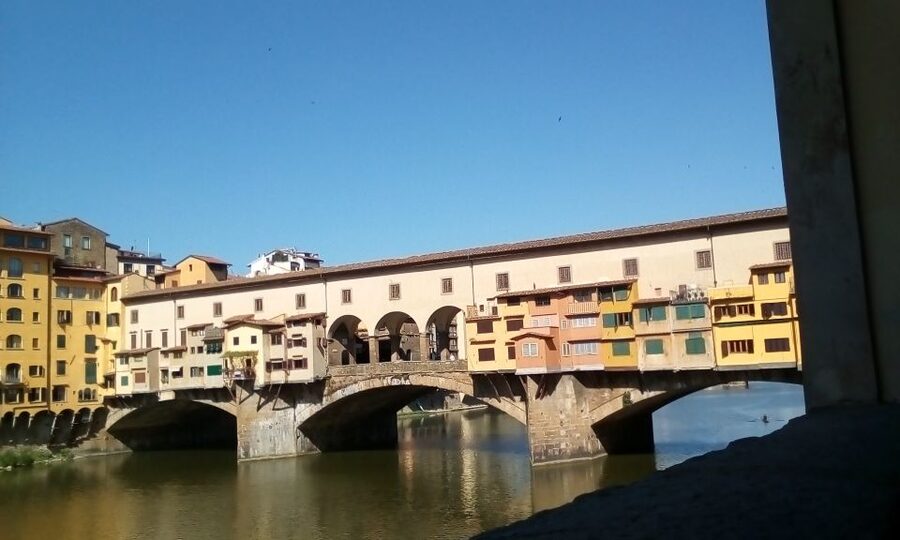
Florence’s grand squares and bridges take on a different meaning on this LGBTQ Renaissance walking tour. With Mila, you connect familiar sights such as Ponte Vecchio, Pitti Palace, and Piazza della Signoria to the lives, laws, punishments, and private worlds of queer Florentines. I like that the tour does not stay in a classroom. You learn while standing in the places where these stories unfolded.
I especially like two things here: Mila’s personal storytelling and the way the route doubles as a useful first look at central Florence. Past guests describe her as warm, funny, careful with difficult subjects, and willing to explain the sources behind her stories. The main consideration is that the historical record focuses mostly on men, so the tour offers less material about lesbians and women.
Key points at a glance
- Meet Mila in Piazza della Repubblica: Find her beside the Hard Rock Café, under the Loggia, holding a sign.
- Walk through Florence’s old gay district: Learn how public spaces near Piazza della Signoria were linked to queer life in the Middle Ages and Renaissance.
- See famous sights through a new lens: The route includes Santa Trinita Bridge, Pitti Palace Square, Ponte Vecchio, Cellini’s Perseus, and Orsanmichele Church.
- Hear about laws and punishments: Mila explains fines, public penalties, and changing attitudes toward the crime of sodomy.
- Benefit from a focused two-hour route: You cover a lot of central Florence without spending half a day on your feet.
- Plan for outdoor conditions: The tour runs rain or shine, and no attraction entrance fees are included.
Why this tour adds something new to Florence
Many Florence walks concentrate on painters, churches, palaces, and the Medici family. This one includes those subjects, but it asks a different question: how did queer people live, meet, hide, and get punished in a city famous for art and power?
That change in viewpoint matters. The Renaissance is often presented as a clean parade of genius and beauty. Mila’s route brings in the awkward parts too: surveillance, public shame, social rules, and the danger of being accused of same-sex relations. You get a more human picture of the city, one that includes people who rarely appear in standard sightseeing stories.
The tour is not only for LGBTQ visitors. If you are curious about Florence’s social history, you will find plenty to think about. It also works well for couples, solo visitors, and families with older children. One parent specifically found the subject suitable for a 15-year-old, though some material about punishment and sexual behavior may require a mature audience.
The two-hour length is well judged. You get a clear theme and several major sights, but you are not signing up for an all-day lecture. The tour also returns to Piazza della Repubblica, which makes it easy to continue with dinner, shopping, or another central Florence sight afterward.
More LGBTQ-Friendly Walks in Florence:
- Berlin: Gay Berlin Out in Schöneberg Walking Tour
★ 4.8 · 281 reviews - San Francisco: Castro LGBTQ Walking Tour
★ 5.0 · 90 reviews - Pride Tours NYC’s LGBTQ Historical Walking Tour
★ 5.0 · 89 reviews
Starting at Piazza della Repubblica
Meet Mila in Piazza della Repubblica, next to the Hard Rock Café and beneath the Loggia. She will have a sign, so the meeting point should be easy to identify in this busy central square.
This is a practical starting place. Piazza della Repubblica sits close to many of Florence’s main sights, and the tour begins with the city’s changing legal and social climate. You hear about the fines and punishments imposed on people judged guilty of sodomy, along with the ways those laws shifted as Florence and Italy changed politically.
The subject is serious, but the tone is not grim from start to finish. Mila’s strength, according to the many detailed comments about her guiding, is knowing when to be direct and when to use humor. That balance matters because the route includes discrimination and public punishment, not just entertaining stories about famous men.
Bring your questions. Mila has been praised for answering them carefully and for linking historic events to modern life. She also explains where her information comes from, which is useful when dealing with stories that have often been repeated without much context.
Santa Trinita Bridge and Pitti Palace Square
The walk crosses Santa Trinita Bridge and continues toward Pitti Palace Square. From the bridge, you get one of Florence’s classic river views, but the guide’s attention turns to the people and power networks behind the scenery.
Pitti Palace Square provides the setting for a closer look at the Medici family. This is not a standard list of Medici achievements. Mila focuses on Gian Gastone, the last male member of the main line, and explains why his private life and public role made him such a controversial figure in European history.
That stop shows one of the tour’s best qualities. Famous names are not treated as flat historical characters. You are asked to consider how wealth and political importance affected personal freedom, reputation, and the way later generations judged a person.
The route involves walking across bridges and through central streets. The tour is listed as wheelchair accessible, and Mila has also been praised for taking care with a participant who had limited movement. Still, Florence’s historic center can be demanding under the summer sun, so wear comfortable shoes and bring water.
Ponte Vecchio and the city’s cruising past
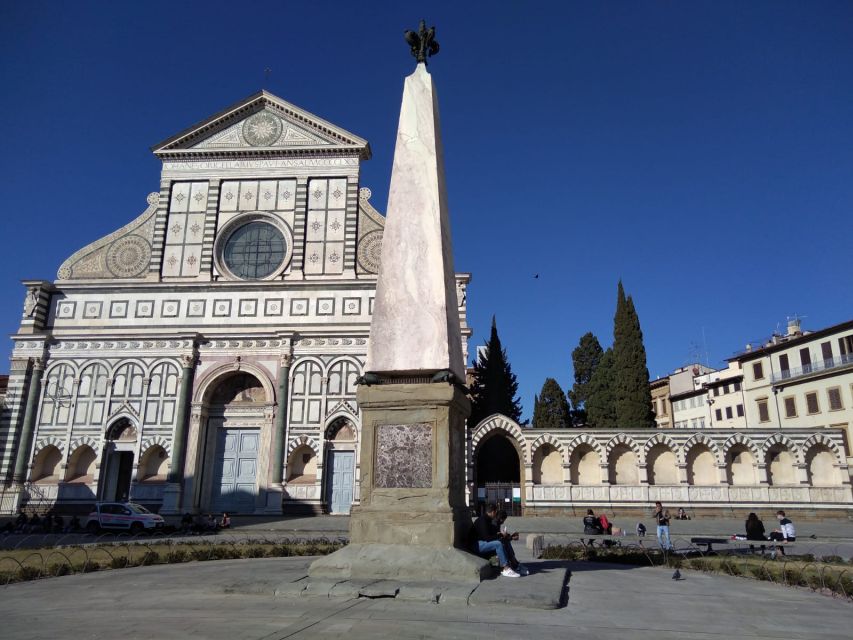
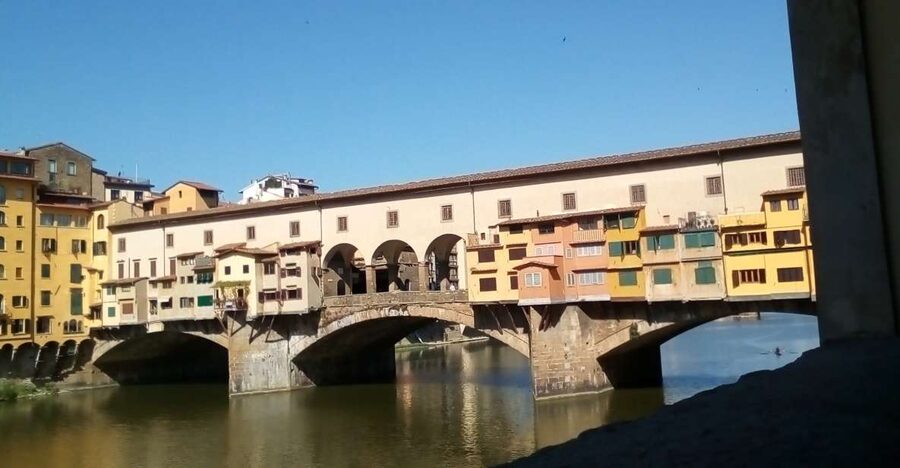
From Pitti Palace Square, the route continues to Ponte Vecchio. You may already know it for its jewelry shops and postcard views over the Arno. Here, you hear about its earlier connection with queer life and its reputation as a place where men could look for sexual encounters in the medieval and Renaissance periods.
This is one of the most memorable contrasts on the walk. A landmark now treated as a polished symbol of Florence once had a less respectable and more private social role. The bridge becomes more than a photo stop. It becomes evidence that public spaces can carry several identities at once.
Mila handles this material with a mix of education and lightness. That is helpful because the subject can easily become either too vague or too sensational. The useful point is not simply that cruising happened there. It is how people used crowded public places, coded behavior, and fleeting encounters when open relationships were dangerous.
Do not expect an extended stop inside any building. This is an outdoor walking route, and the value comes from hearing the story in the place itself. The tour includes a headset, which helps you follow Mila in city noise, but you should still stay near the group.
More Walking Tours in Florence:
- Florence: Highlights Walking Tour with Expert Guide
★ 4.6 · 4,662 reviews - Uffizi & Accademia Timed Entry: Small Group Duomo Walking Tour
★ 4.5 · 3,630 reviews - Florence: Duomo Complex with Tickets & City Walk Guided Tour
★ 4.7 · 2,057 reviews - Florence: Guided Walking Tour
★ 4.6 · 1,602 reviews
Piazza della Signoria and Cellini’s Perseus
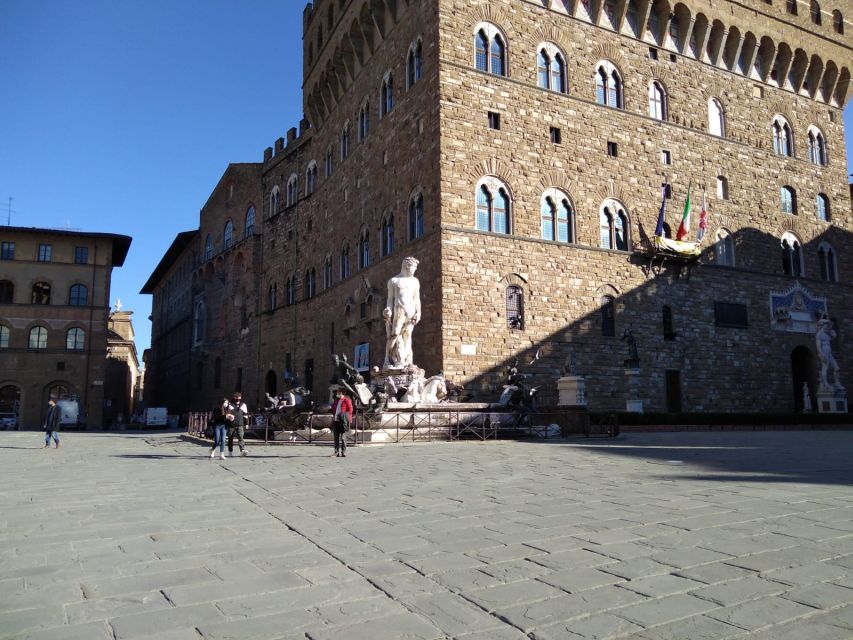
The route heads toward Piazza della Signoria, one of Florence’s most dramatic public spaces. Here you see a copy of Michelangelo’s David and Benvenuto Cellini’s Perseus with the Head of Medusa.
The Cellini sculpture is particularly useful for this tour because it connects art, power, masculinity, and public display. Mila uses the works around the square as starting points for stories about Florentine society and the people who held influence within it.
You are not buying an entrance ticket to a museum, and the tour does not include interior visits. That keeps the price low and the pace moving. It also means you should treat this as a contextual art and history walk, not a replacement for the Uffizi Gallery or the Accademia.
Still, seeing these works while hearing about the city’s social rules adds something that a standard photo stop misses. You begin to notice how public art presents bodies, authority, violence, and desire. Even if you know David from countless guidebooks, the surrounding conversation can make the square feel less familiar.
The old gay district near Piazza dei Signori
Near Piazza dei Signori, Mila points out the ancient gay district of Florence. This is one of the tour’s central sections, since it places queer history in a real urban setting rather than reducing it to biographies of wealthy rulers.
The stories focus mainly on gay men. That reflects the surviving records and the way patriarchal societies documented public life, but it is still a limitation worth knowing before you book. Mila does make room for the circumstances of women and lesbians, though this part is less developed than the history of men.
The old district also helps explain how queer life could be both visible and vulnerable. Men might find one another in known locations, yet those same places could attract police attention, informants, or public condemnation. The gap between social practice and official law is a major theme of the walk.
If you are looking for a modern LGBTQ nightlife tour, this is not that. The focus is historical, and the experience is more about stories, public spaces, and changing laws than current bars or clubs.
Orsanmichele Church and public denunciation
The walk continues to Orsanmichele Church, where Mila explains how special boxes were used to denounce members of the LGBTQ community, especially gay men. This is among the more unsettling stops because it shows how accusations could become part of everyday civic and religious life.
The church itself is an important reminder that religion, government, and public morality were closely connected. You are not simply hearing about private prejudice. You are learning how institutions could encourage people to report one another and how legal punishment shaped daily behavior.
This section benefits from Mila’s measured approach. The material calls for seriousness, but a two-hour walk would become exhausting if every stop were presented in the same heavy tone. Her mix of warmth, humor, and clear explanation helps the difficult parts remain understandable rather than overwhelming.
The tour then returns to Piazza della Repubblica. By that point, the square where you began should feel different. You have heard how Florence’s laws changed over time, how public spaces served private purposes, and how the city’s famous families and artists fit into a less polished story.
Mila’s guiding style
Mila is the main reason to choose this particular tour rather than simply reading about queer Florence on your own. Her style is personable and energetic, with plenty of anecdotes about Florence, the Medici, and other powerful families.
She also seems comfortable with a mixed audience. The tour has suited couples, solo visitors, older children, and people who arrived with many questions. A solo visitor who felt isolated while traveling found the group connection especially welcome, which points to another benefit: this can be an easy way to meet other queer people while exploring the city.
Her habit of identifying the sources behind her stories is a real plus. Historical LGBTQ subjects are sometimes handled with too much certainty, especially when evidence is thin. Mila’s approach gives you a better sense of what is documented and what requires careful interpretation.
Several visitors also valued her practical suggestions beyond the tour, including ideas for places to see and a well-received gelato recommendation. That makes it smart to take the walk near the beginning of your Florence stay, when you can still use her local tips.
Price, pace, and practical value
At $29 per person, the tour is reasonably priced for a two-hour guided walk with an English-speaking local guide and headset. You are paying for a focused subject, not just a route between famous monuments. The price is particularly fair if you were already planning a general Florence walk, since this covers many of the same central sights while adding material you are unlikely to hear elsewhere.
No hotel pickup or drop-off is included, but that is not much of a drawback in central Florence. You meet in Piazza della Repubblica and walk from there. Entrance fees are also not included, though the listed route is built around outdoor sights, so you are not expected to add major admission costs to complete it.
The tour runs for two hours and is offered in English. It is wheelchair accessible, though you should still contact the provider if you have specific mobility needs. The walk takes place rain or shine, so check the forecast and bring suitable clothing. In hot weather, water and sun protection will make the experience more comfortable.
Free cancellation is available up to 24 hours before the start, and you can reserve now and pay later. Those policies are useful if your Florence plans are still shifting.
Who should book this Florence walk?
Book it if you want a fresh way to see Florence’s best-known sights and you care about LGBTQ history, social history, or overlooked personal stories. It is also a strong choice for anyone who has already seen the Duomo and major museums and wants a more specialized experience.
You should also book it if you value a guide who can handle sensitive topics without becoming stiff or sensational. Mila’s warmth, humor, care, and willingness to answer questions receive repeated praise, and those qualities matter as much as the route itself.
Think twice if you want a tour focused on women’s history, modern LGBTQ Florence, or long visits inside museums and churches. The material centers mostly on gay men, medieval and Renaissance Florence, and outdoor storytelling. You will see important landmarks, but the tour is not designed to provide detailed art criticism or current nightlife advice.
Should you book it?
I would book this tour early in a Florence visit, especially if you want context that a standard sightseeing walk will skip. For $29, you get a compact route through major landmarks and a thoughtful look at laws, power, public space, and queer life.
The best reason to go is not simply to find an unusual tour topic. It is to see familiar Florence with more of its people included. If that sounds worthwhile, Mila’s two-hour walk is a smart and approachable choice.
FAQ
How long does the LGBTQ Renaissance walking tour last?
The tour lasts two hours.
Where does the tour meet?
Meet Mila in Piazza della Repubblica, next to the Hard Rock Café under the Loggia. She will be holding a sign.
What language is the tour conducted in?
The tour is conducted in English with a live guide.
Which Florence sights are included?
The route includes Piazza della Repubblica, Santa Trinita Bridge, Pitti Palace Square, Ponte Vecchio, Piazza della Signoria, Cellini’s Perseus with the Head of Medusa, the copy of Michelangelo’s David, and Orsanmichele Church.
Does the tour enter museums or include admission tickets?
No. Entrance fees are not included, and the experience is a walking tour focused on outdoor sights and guided interpretation.
Is the tour wheelchair accessible?
Yes, the tour is listed as wheelchair accessible.
What happens if it rains?
The tour takes place rain or shine, so bring clothing suited to the weather.
New routes in Florence
- Florence: Heart of Florence Guided Walking Tour★ 4.0 · 81 reviews
- Florence: Walking Tour with David, Duomo & Uffizi Gallery★ 4.7 · 414 reviews
- Florence: The Medici Family Guided Walking Tour★ 4.7 · 129 reviews
- Florence Walking Tour & Skip-the-Line David at Accademia★ 4.7 · 159 reviews
- Florence: Tuscan Food and Wine Guided Walking Tour★ 4.8 · 72 reviews
- Florence Street Food Walking Tour with Wine in Duomo Area★ 4.9 · 76 reviews
- Florence: Medici Family Guided Walking Tour★ 4.5 · 193 reviews
- Florence: Private Walking Tour with a Local★ 4.6 · 126 reviews
LGBTQ-Friendly, compared.
Browse the lists this tour appears in