
Review · CHINA
Shanghai Highlights Walking Tour With A Real Local
Shanghai makes far more sense when someone who grew up here explains what you are seeing. This 2.5-hour walk links the grand Bund, old lanes, Yuyuan Bazaar, Nanjing Road, and People’s Park, with local guide Bill often adding family stories and sharp observations about how the city has changed.
I like the personal stories and the useful food advice, especially the chance to try Shanghai fried dumplings along the way. I also like the relaxed pace, with photo stops and shade when possible. The one drawback is that this is a city walk, not a deep visit inside major buildings, and the route can feel hot or crowded in Shanghai’s warmer months.
Key points to know before booking
- The Bund is explained as a working financial district: You hear why Shanghai was called the Wall Street of Asia in the 1930s, not just take waterfront photos.
- Old Town brings the tour down to street level: Ancient garden architecture, old lanes, local food, and the Yuyuan Bazaar follow the grand riverfront.
- Bill adds first-hand local context: His stories cover family life, city change, food, and everyday Shanghai in clear English.
- People’s Park offers an unusual final stop: On weekends, you may see the famous marriage market.
- The route covers a lot in 2.5 hours: Expect steady walking between several central sights, with no hotel pickup or meal included.
- The value is strongest on a first visit: For $34, you get a useful orientation and practical ideas for the rest of your stay.
Why a local voice changes the Bund
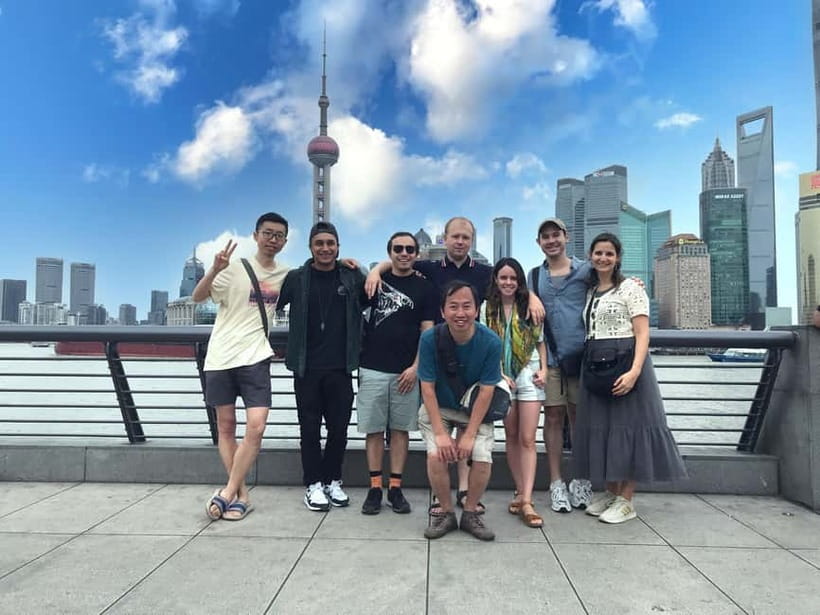
The Bund is easy to visit on your own. You walk beside the Huangpu River, look toward Pudong’s towers, and take the required skyline photograph. What is harder to do alone is understand why the historic buildings look European, why the waterfront mattered so much, and how Shanghai became a major center of finance and trade.
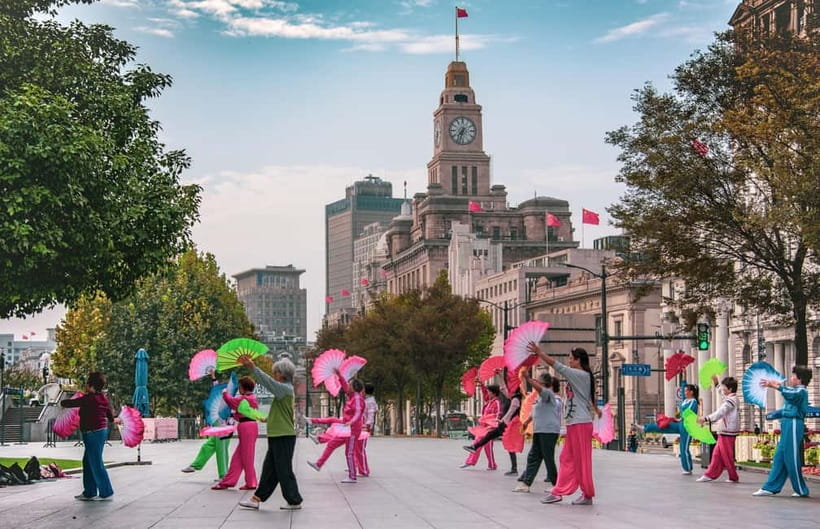
That is where this tour earns its price. The guide explains the Bund as the old Wall Street of Asia, with attention to Shanghai in the 1930s and the banks, customs offices, hotels, and commercial firms that shaped the riverfront. You see landmarks such as the former HSBC Building, the Customs House with its Big Ben-style clock tower, and the Peace Hotel.
The value is not in entering every building. The experience is about reading the façades and connecting them to the city’s past. You get the broader picture while standing in the place where that story unfolded.
The Bund can be crowded, especially around the best photo points. Keep your group together and expect pauses for pictures rather than a quiet promenade. The riverfront is open and exposed, so sunscreen, water, and a hat make the walk more pleasant in hot weather.
More City Highlights Walking Tours in the world:
- Ho Chi Minh City Street Food Tour & Sightseeing By Motorbike
★ 5.0 · 9,413 reviews - Historic Charleston Guided Sightseeing Walking Tour
★ 5.0 · 6,216 reviews - Dublin Highlights and Hidden Gems Guided Walking Tour
★ 5.0 · 6,020 reviews
Starting at East Nanjing Road
The meeting point is Exit 1 of East Nanjing Road Metro Station, near the Tissot store and opposite the Swatch store. This is a practical place to begin because the station is served by Lines 2 and 10, and the tour starts close to Nanjing Road Pedestrian Street.
You should allow a few extra minutes to find the correct exit. A guest who arrived late reported being able to contact the guide through WhatsApp, but it is still wiser to arrive early. Luggage storage is available near the meeting point, which can help if you are between hotels or arriving with bags.
From here, the group moves through central Shanghai rather than relying on a bus or private vehicle. That matters. You get the changing rhythm of the city at street level, including the shift from major shopping avenues to older residential lanes and food streets.
The route is listed as wheelchair accessible in the activity details, but the same information also says the tour is not suitable for people with mobility impairments or wheelchair users. That conflict should be clarified with the provider before booking. The walk is also not a good fit if you need frequent sitting breaks or find uneven, crowded streets difficult.
Nanjing Road, lane houses, and modern Shanghai
Nanjing Road Pedestrian Street gives you a quick look at Shanghai’s commercial side. It is broad, busy, brightly signed, and full of shops. The tour uses it as part of the city’s larger story rather than treating shopping as the main event.
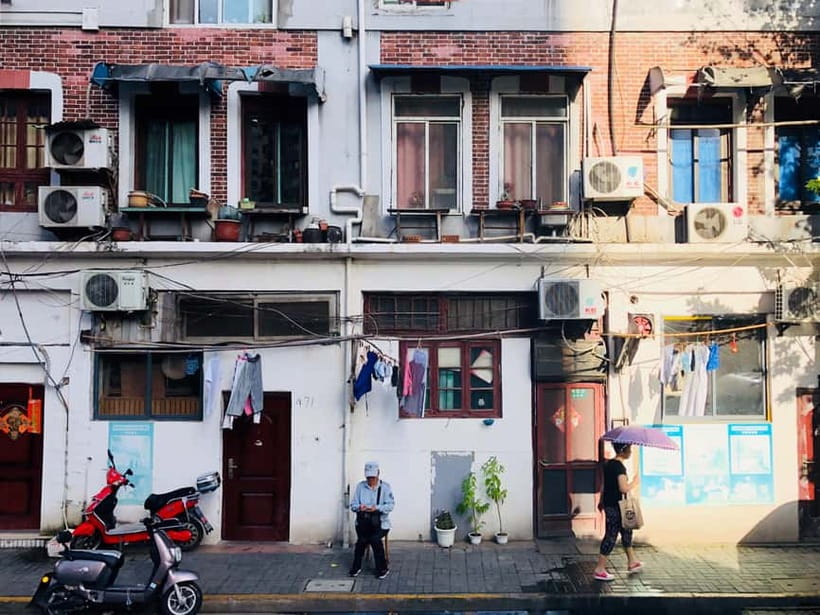
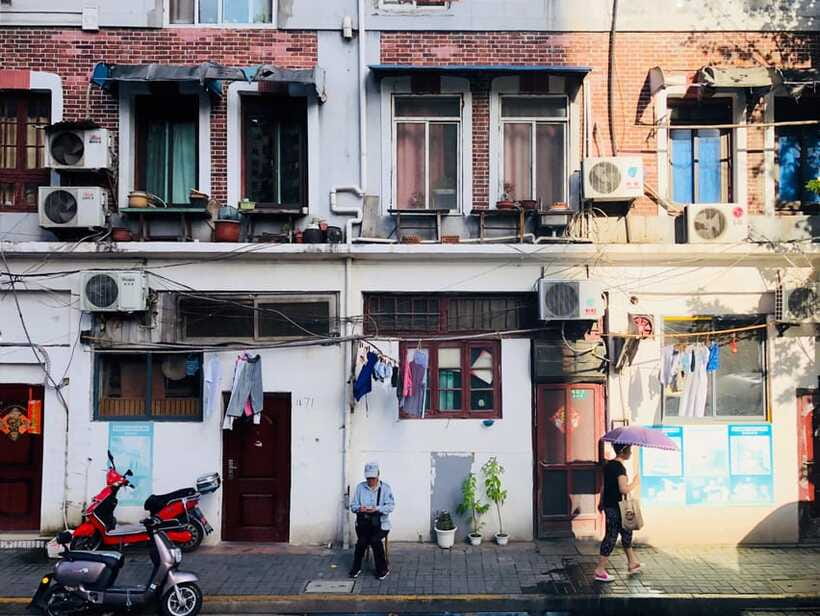
You also see Shanghai lane houses, a useful contrast to the grand historic buildings on the Bund. These older residential forms help explain how ordinary people lived as the city expanded. I like this change of scale: one moment you are looking at banks and hotels built for international business, and soon after you are considering the more private spaces of city life.
The guide also points out the City Hall and People’s Square area. This gives you a sense of the civic center, where public institutions, parks, museums, and major roads meet. The route does not promise long interior visits, so think of these stops as guided orientation points.
That distinction is important. If you want long museum visits or detailed architectural study, you need a separate plan. If you want a clear map of central Shanghai and enough context to explore on your own later, this format works well.
Old Town and the 400-year-old Yuyuan area
After the Bund, the walk turns toward Old Town and the area around Yuyuan Garden. The garden itself is described as about 400 years old, while the surrounding bazaar offers a more crowded, commercial setting with traditional-style buildings, decorated roofs, and Chinese pavilions.
The contrast is one of the strongest parts of the route. Shanghai is often presented through glass towers and colonial-era avenues, but Old Town shows another side of the city. You see older architectural forms and narrow urban spaces that feel very different from the open riverfront.
The Yuyuan Bazaar can be busy, and the traditional appearance does not mean the area is untouched or museum-like. Shops and food stalls are part of the experience. Your guide helps separate the visual decoration from the older elements that give the area its character.
You should also check what your booking includes before assuming you will enter Yuyuan Garden. The activity promises a visit to the Old Town and Yuyuan Bazaar, but it does not list a garden admission ticket or a full garden tour. The focus is on walking, explanation, and the surrounding area.
More Walking Tours in the world:
- Magical London: Harry Potter Guided Walking Tour
★ 4.7 · 22,044 reviews - Reykjavik Food Walk – Local Foodie Adventure in Iceland
★ 5.0 · 18,952 reviews - History and Hauntings of Salem Guided Walking Tour
★ 5.0 · 14,564 reviews - New Orleans Premier Ghost, Voodoo and Vampire Walking Tour
★ 4.5 · 12,856 reviews
A practical food stop with Shanghai fried dumplings
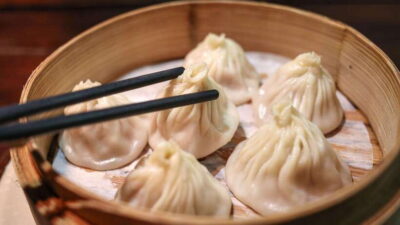
The food portion is informal and useful. The route passes a popular local food street, where you may be able to buy Shanghai fried dumplings. Meals and drinks are not included, so carry cash or a suitable payment method and treat any tasting as an optional purchase.
Shanghai fried dumplings are a good introduction to local food because they are quick, inexpensive, and tied to everyday eating. The guide can also suggest places for meals, tea, and shopping after the walk. Several comments describe this advice as one of the most useful parts of the experience.
Do not book this tour expecting a formal food tour. There is no set meal, tasting menu, or guaranteed serving included in the $34 price. Instead, you get a local introduction and a chance to decide what you want to try.
Bill’s food suggestions seem especially helpful because they connect dishes with places to eat, rather than simply listing famous restaurants. One guest who missed the scheduled walk later received a private tour and was taken to an authentic local restaurant. That was an unusual arrangement, not something you should assume is included, but it shows the guide’s willingness to offer practical help.
People’s Park and the unusual marriage market
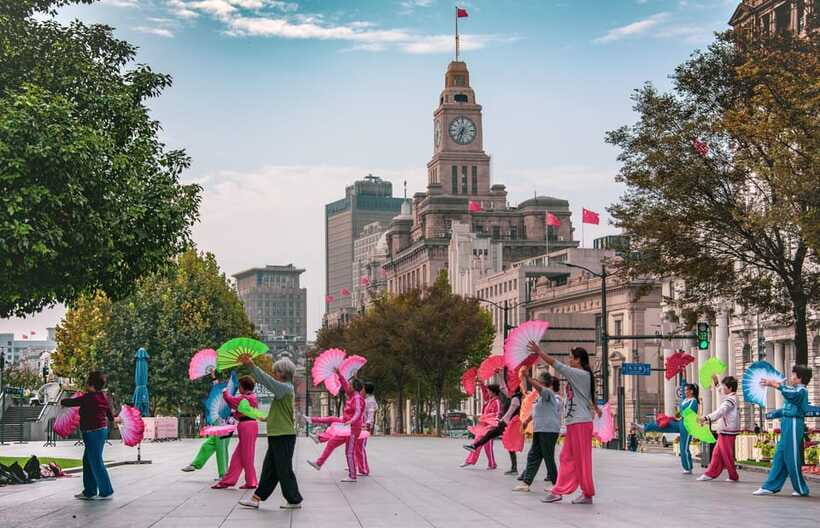
The walk ends around People’s Park and People’s Square, near the former French Concession. People’s Park is more than a green pause in the center of town. On weekends, it is known for a marriage market, where families share information about unmarried sons and daughters in hopes of finding suitable matches.
This is one of the route’s most unusual details. It gives you a glimpse of social customs that are easy to miss if you only visit monuments and shopping streets. The guide can explain what you are seeing and place it in the context of family life in modern China.
The marriage market is specifically associated with weekends, so do not count on seeing it on another day. People’s Park itself remains part of the route, but the weekend feature may not be present.
Ending at People’s Square Metro Station is convenient. You can continue sightseeing, return to your hotel by subway, or use the guide’s suggestions for food and shopping. Since there is no hotel drop-off, plan your onward route before the walk ends.
What guide Bill adds to the walk
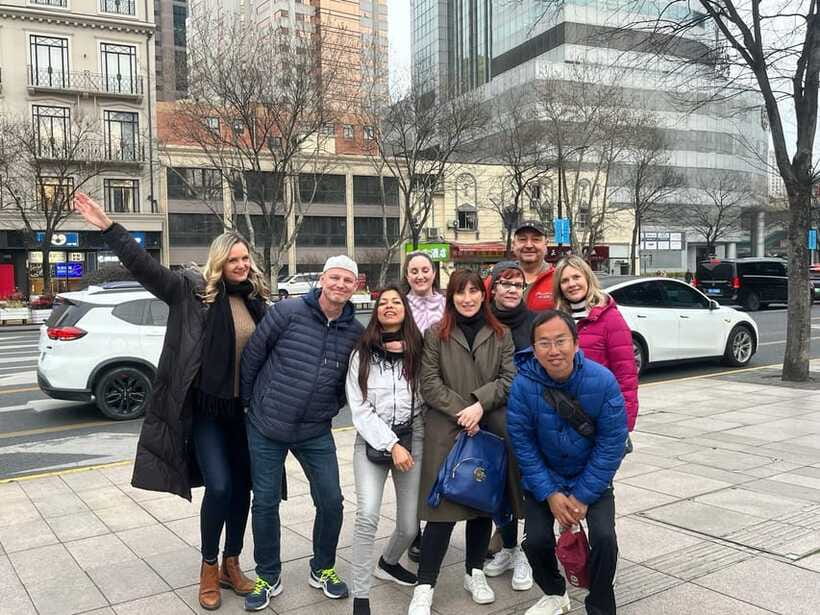
The strongest theme in the feedback is the guide’s communication. Bill is repeatedly described as clear in English, easy to talk to, funny, and willing to answer questions. He has led these walks for much of a decade and presents himself as a lifelong Shanghainese.
That local connection matters most when the subject turns from monuments to change. The walk covers how Shanghai has developed, but Bill also shares personal and family memories connected with the city’s recent decades. This gives you a sense of time that a standard script often misses.
He also adjusts his delivery to the group. One family noted that he slowed down when children were present. Others appreciated the moderate pace, shade stops, photo opportunities, and his skill at avoiding the worst crowds.
Guide assignments may vary. The supplied information names Bill most often, while some comments refer to Miranda or Will. If having a particular guide matters to you, confirm the name before booking rather than assuming Bill will lead every departure.
Pace, weather, and what to bring
The advertised duration is 2.5 hours, and the route covers a lot of central Shanghai in that time. You should expect steady walking, but not a race. The guide usually stops to explain key points and leaves time for photographs.
Comfortable shoes are essential. The walk includes major streets, old neighborhoods, markets, and busy public areas. Bring water, sunscreen, and a camera. Shade is available along parts of the route, but not every stop will be shaded.
Hot weather can make the walk tiring. Several guests appreciated the pace and the effort to stop in cooler or shaded places, but that does not remove the basic challenge of walking through Shanghai in summer. Spring, autumn, or a cooler morning may feel easier.
The tour is a good first-day activity because it gives you a mental map. Afterward, you will know where the Bund sits in relation to Old Town, Nanjing Road, People’s Square, and the subway. You can then return to the places that caught your interest.
Is $34 a fair price?
At $34 per person, this is a solid value if you want a guided introduction rather than a private car tour or a ticket-heavy sightseeing package. The fee covers the live English-speaking guide and the guided walk through several central districts. It does not cover food, drinks, attraction admissions, hotel pickup, or tips.
The price works because the route packs several different sides of Shanghai into one morning or afternoon. You get the Bund’s finance and colonial-era story, Nanjing Road’s commercial center, Old Town’s traditional architecture, a local food stop, and People’s Park’s social customs.
The value is weaker if you only want photographs. You can visit the Bund and Nanjing Road on your own for free. You are paying for explanation, local stories, route planning, and answers to questions.
Free cancellation up to 24 hours before the start and a reserve-now, pay-later option make the booking flexible. Last-minute booking is also available until the tour begins, subject to space. These policies help if your Shanghai schedule is uncertain, but they do not change the physical demands of the walk.
Who should book this Shanghai walking tour?
I would choose this tour for a first visit, especially if you have limited time and want a useful overview before exploring alone. It also suits solo visitors who would like company, families who want history explained in a lively way, and anyone more interested in daily life than in ticking off indoor attractions.
It is particularly good for people who value questions and conversation. Bill’s approach appears strongest when he can connect a landmark to a personal memory, explain a local custom, or recommend a dish for later.
I would think twice if you dislike crowds, hot weather, or flexible food stops. I would also choose another arrangement if you need a fully accessible route, since the accessibility details conflict and the walk covers several busy urban areas.
Should you book it?
Book this tour if you want Shanghai explained by a local voice and you are happy to walk between a wide range of sights. The best reasons are the Bund context, the Old Town transition, the People’s Park marriage market on weekends, and the practical food advice.
Skip it if your priority is a long visit inside Yuyuan Garden, a formal food tour, or private transport. For most first-time visitors, though, $34 buys a useful city orientation with enough local detail to shape the rest of your stay.
FAQ
How long does the Shanghai Highlights Walking Tour last?
The tour lasts 2.5 hours.
What language is the tour conducted in?
The live tour guide speaks English.
Where does the tour start?
The meeting point is Exit 1 at East Nanjing Road Metro Station, near the Tissot store and opposite the Swatch store.
Where does the tour finish?
The tour finishes at People’s Square, near People’s Square Metro Station.
Which major sights are included?
The route includes People’s Square, People’s Park, Nanjing Road Pedestrian Street, Shanghai lane houses, the Peace Hotel, the Customs House, the Bund, the former HSBC Building, Old Town, and Yuyuan Bazaar.
Is food included in the price?
No. Meals and drinks are not included. You may have the chance to buy Shanghai fried dumplings or other food during the walk.
Does the tour include hotel pickup and drop-off?
No. Hotel pickup and drop-off are not included.
Is a tip for the guide included?
No. Tips are not included.
Can I book at the last minute?
Yes. Last-minute booking is available until the tour starts, subject to availability.
Can I cancel for a full refund?
Yes. You can cancel up to 24 hours in advance for a full refund.
Is luggage storage available?
Yes. Luggage storage is available near the meeting point.
Is the tour suitable for wheelchair users?
The activity details give conflicting information, listing wheelchair accessibility while also saying it is not suitable for wheelchair users or people with mobility impairments. Contact the provider before booking to confirm whether the current route meets your needs.
New routes in the world
- Baltimore Walking Foodie Tour in Fells Point★ 5.0 · 182 reviews
- Baku Oil Heritage & Old Town Walking Tour★ 5.0 · 232 reviews
- Baku Walking Tour (Old City)★ 5.0 · 127 reviews
- The Madam’s Curse Walking Ghost Tour★ 4.5 · 103 reviews
- Austin Small Group Morning Walk★ 5.0 · 412 reviews
- Austin Haunted Pub Crawl Walking Tour★ 4.5 · 232 reviews
- Austin Downtown Private Walking Food Tour With Secret Food Tours★ 5.0 · 71 reviews
- Austin Murder Walk★ 5.0 · 310 reviews
China Walking Tours, compared.

Forbidden City Tour(Group/Private)-Tickets Included
Read our review →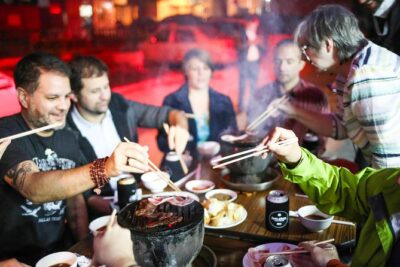
Beijing Hutong Walking Food and Beer Tour at Hidden Restaurants
Read our review →
Forbidden City and Tian’anmen Square Waking Tour
Read our review →
Private Beijing Walking Tour of the Forbidden City with 7 Options
Read our review →
Browse the lists this tour appears in