
Review · 2-HOUR EXPERIENCES
Sao Paulo: Downtown-Center Walking Tour | 2 Hours – English
São Paulo’s center changes character block by block. In two hours, you move from the sweeping curves of the Copan Building to old churches, bank halls, Japanese-Brazilian Liberdade, and streets shaped by Italians, Japanese, Syrian-Lebanese communities, and many others. I like the way this tour connects grand buildings with the people who made the city what it is. I also like its small size, with no more than 10 people, which leaves room for questions and useful local tips.
The main drawback is the pace. You cover a lot of ground, and several stops last only 10 or 15 minutes. The route is described as wheelchair accessible, but the activity is also marked as unsuitable for people with mobility impairments, so you should confirm the walking conditions before booking. Bring sunscreen and an umbrella: São Paulo weather can change quickly.
Key points at a glance
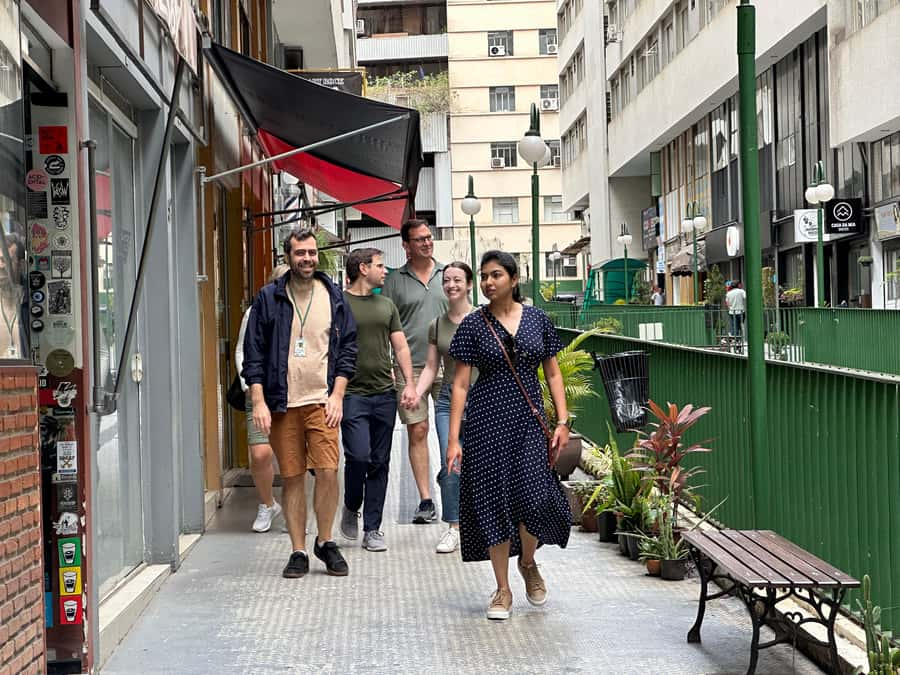
- Start beneath Edifício Itália: Meet your guide at Av. Ipiranga, 336, at the entrance of one of central São Paulo’s best-known skyscrapers.
- See early high-rise São Paulo: Copan and the surrounding center show how the city grew upward during the 20th century.
- Follow several layers of the city: The route links Indigenous pathways, Jesuit foundations, churches, banks, immigrant communities, and modern city life.
- Finish in Liberdade: The walk ends in São Paulo’s Japanese-Brazilian district, a fitting place to discuss migration and cultural exchange.
- Ask for practical ideas: Giuliano is known for answering questions and offering suggestions, including vegetarian food spots.
- Keep your morning or afternoon free: This is a brisk two-hour introduction, not a slow architectural study.
Why this short walk works as a first look at São Paulo
São Paulo can be difficult to understand from a car window. Its scale is enormous, its center mixes grand civic buildings with ordinary street life, and its story is spread across many neighborhoods and communities. A walking tour gives you a basic map in your head, then helps you decide where to return on your own.
The route covers both the newer central district and the older historic core. That contrast is the real point of the experience. You see the city’s rise as an economic powerhouse, then step into places linked to religious orders, colonial expansion, migration, banking, music, and public culture.
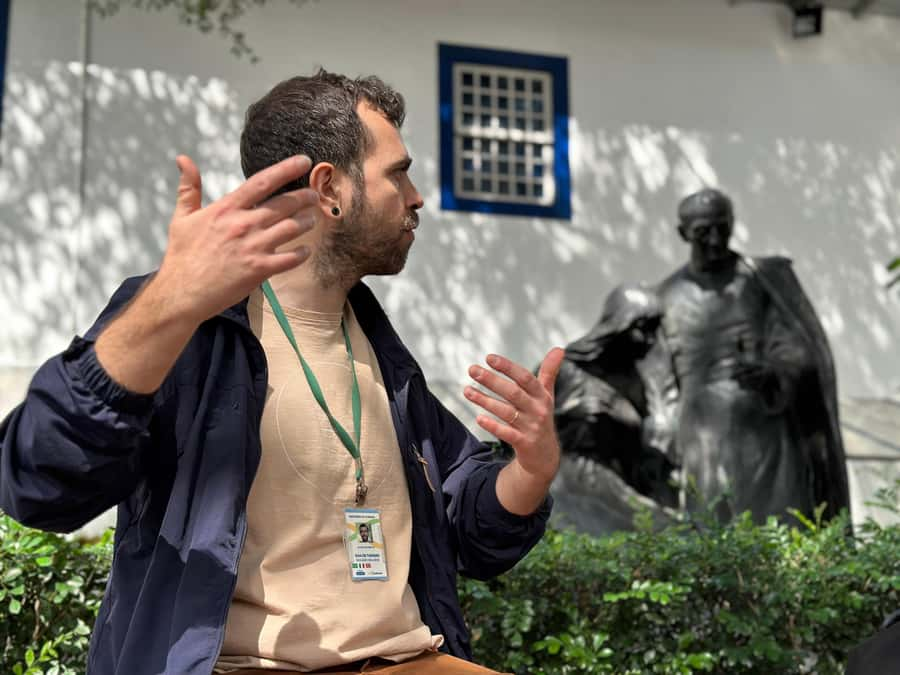
Guide Giuliano has drawn especially strong praise for explaining architecture alongside its social setting. That matters in São Paulo. A building is not just a photo stop here. Its shape, age, owner, and location can tell you something about the city’s growth and the people who lived and worked around it.
The tour is conducted in English, although Giuliano also speaks Spanish, Portuguese, and Italian. The stated tour language is English, so do not book expecting a multilingual walk. One past group included people from several countries, and the guide adjusted explanations while keeping the group moving, but English remains the official language for this experience.
More Two-Hour Walks in the world:
- Berlin’s Best: 2 Hour Walking Tour Third Reich and the Cold War
★ 5.0 · 5,486 reviews - Budapest City Landmarks Walking Tour in 2 Hours
★ 5.0 · 2,048 reviews - Leipzig: 2-Hour Guided Walking Tour in German
★ 4.8 · 1,612 reviews
From Edifício Itália to Copan’s curved facade
Your meeting point is Edifício Itália at Av. Ipiranga, 336. The guide waits at the entrance, and the tour begins strictly on time. Allow extra time to reach the address, especially if you are unfamiliar with central São Paulo. Once the walk starts, the guide does not keep checking the phone, and late arrivals may not be able to join.
The first major stop is the Copan Building, with about 10 minutes set aside to see it. Its broad, wave-like facade is one of the most recognizable sights in São Paulo’s center. Here, the focus is not only on the building itself but on the arrival of large-scale high-rise construction in Latin America.
This is a quick introduction rather than a long architectural lecture. You should have time to look, take photos, and hear why skyscrapers matter to São Paulo’s identity. If you enjoy buildings, ask questions early. The walk moves on quickly, and the guide’s strength is explaining how architecture reflects the city’s social changes.
Galeria Metrópole and the city’s working center
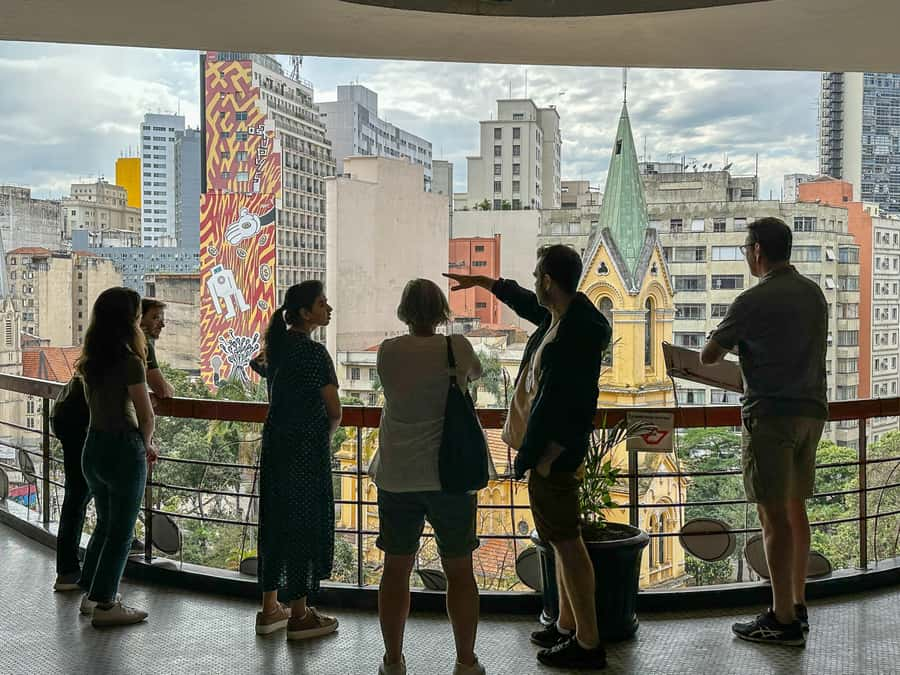
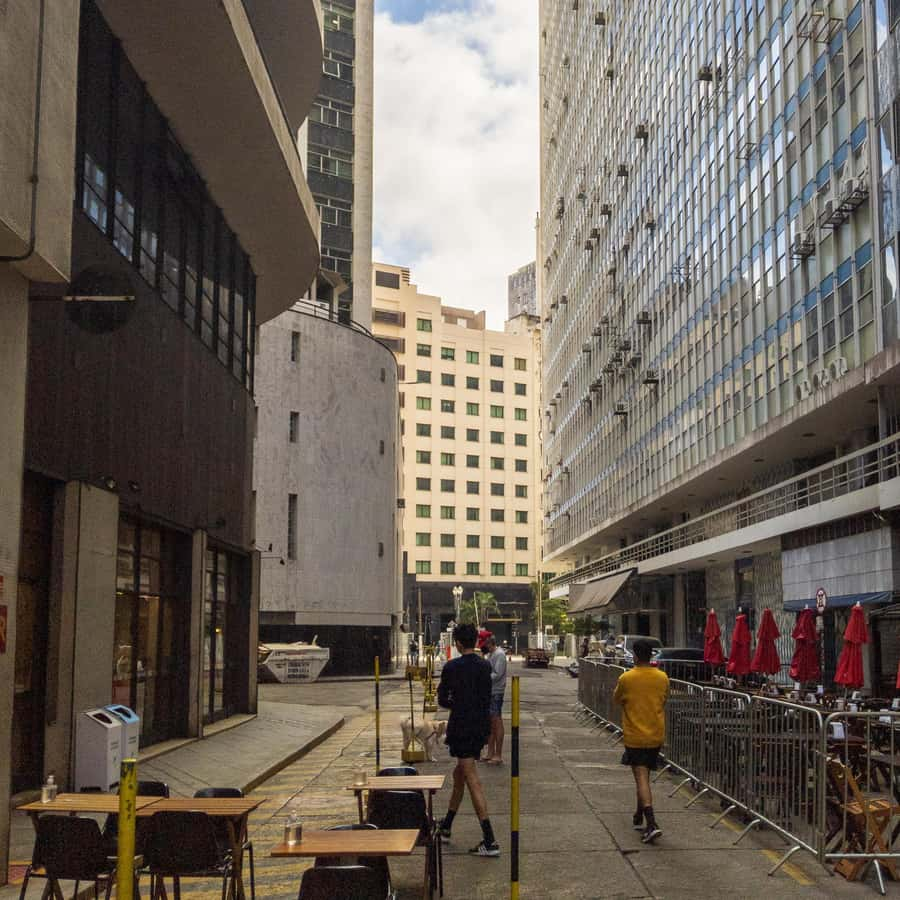
Galeria Metrópole receives about 10 minutes. The route uses this stop to show a different side of central São Paulo, away from the grand religious buildings and monumental facades. The word gallery here refers to a city complex with shops and daily activity, not a quiet museum visit.
This short pause helps you see how the center functions as a lived-in district. The tour is not built around a list of famous monuments alone. It also points toward ordinary urban life, where commercial spaces, offices, old buildings, and passing residents share the same streets.
If you want polished sightseeing with long indoor visits, this may feel too brief. If you want a quick reading of how the center works, the stop earns its place.
Galeria do Rock and São Paulo’s creative side
The 20-minute visit to Galeria do Rock is one of the longer stops. That gives you time to see why this place matters to the city’s cultural life. Its name suggests music, but the importance goes beyond a simple shopping stop. It represents youth culture, fashion, music, and alternative style in central São Paulo.
This is a useful counterpoint to the churches and banks later in the route. You get a sense of the city as a place that keeps changing, with older buildings taking on new roles. The guide can help put that change into context rather than leaving you with another quick photo opportunity.
The gallery can be visually busy, so keep track of the group. The tour is limited to 10 people, which should make regrouping easier than on a large coach excursion, but the center itself can still feel crowded and fast-moving.
More Walking Tours in the world:
- Magical London: Harry Potter Guided Walking Tour
★ 4.7 · 22,044 reviews - Reykjavik Food Walk – Local Foodie Adventure in Iceland
★ 5.0 · 18,952 reviews - History and Hauntings of Salem Guided Walking Tour
★ 5.0 · 14,564 reviews - New Orleans Premier Ghost, Voodoo and Vampire Walking Tour
★ 4.5 · 12,856 reviews
The Municipal Theatre and São Francisco Church
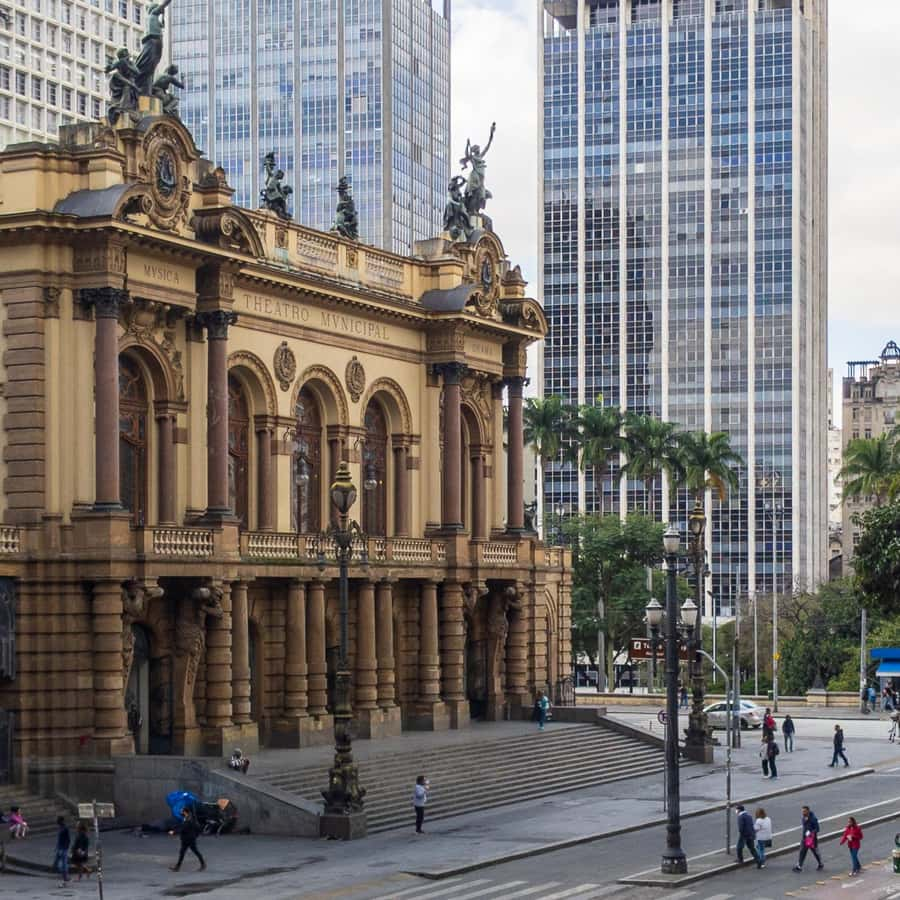
The Municipal Theatre of São Paulo is scheduled for a 10-minute visit. This is a compact stop, but it adds an important cultural landmark to the route. The building helps show the ambitions of a city that grew rapidly and wanted public institutions to match its economic power.
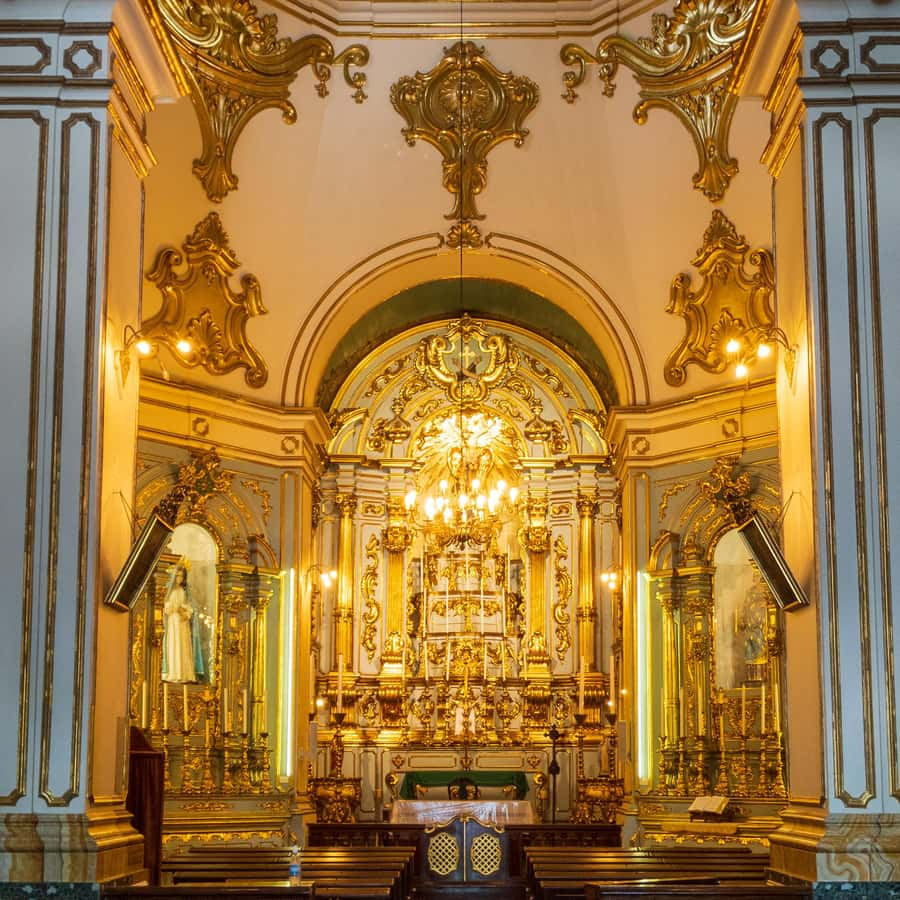
Next comes Paróquia São Francisco de Assis, with about 20 minutes. The longer pause gives the guide room to discuss the role of religious orders and churches in the formation of the historic center. The experience connects São Paulo’s present-day scale with earlier institutions that shaped its streets and public life.
The tour’s wider story begins before skyscrapers and banks. It includes the Tupi nation that lived in the region and the old South American pathways that crossed these lands. It also addresses Jesuits and conquerors. That broader frame keeps the walk from treating São Paulo as a city that appeared suddenly in the 20th century.
You will not get an exhaustive history course in 20 minutes. You will get a chain of useful reference points, enough to understand why different parts of the center look and feel so unlike one another.
São Bento and the Bank of Brazil Cultural Center
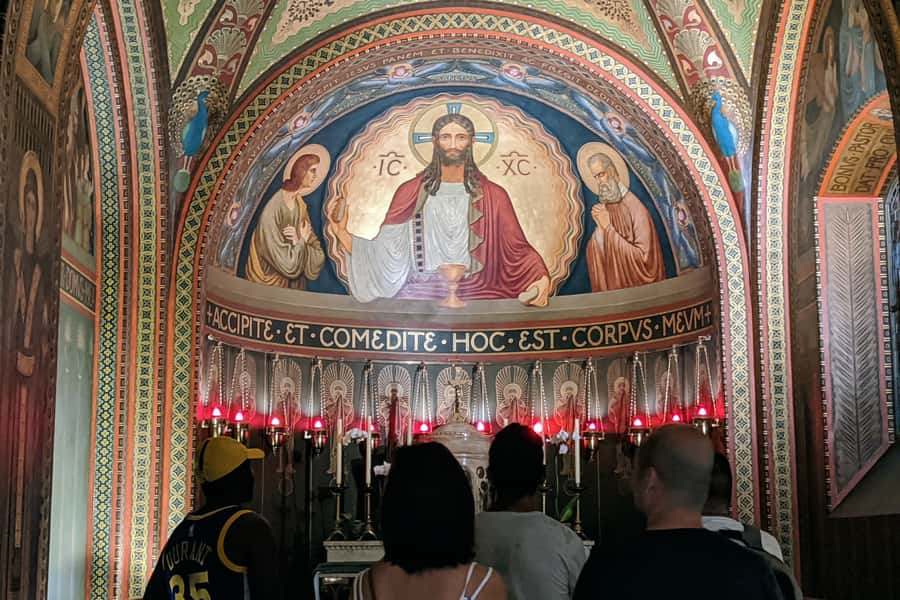
The Mosteiro de São Bento receives about 15 minutes. Churches and monasteries can blur together on a short city walk, but this stop helps explain how faith and public life were tied to the older center. Pay attention to the contrast between the quiet religious setting and the traffic and commercial activity outside.
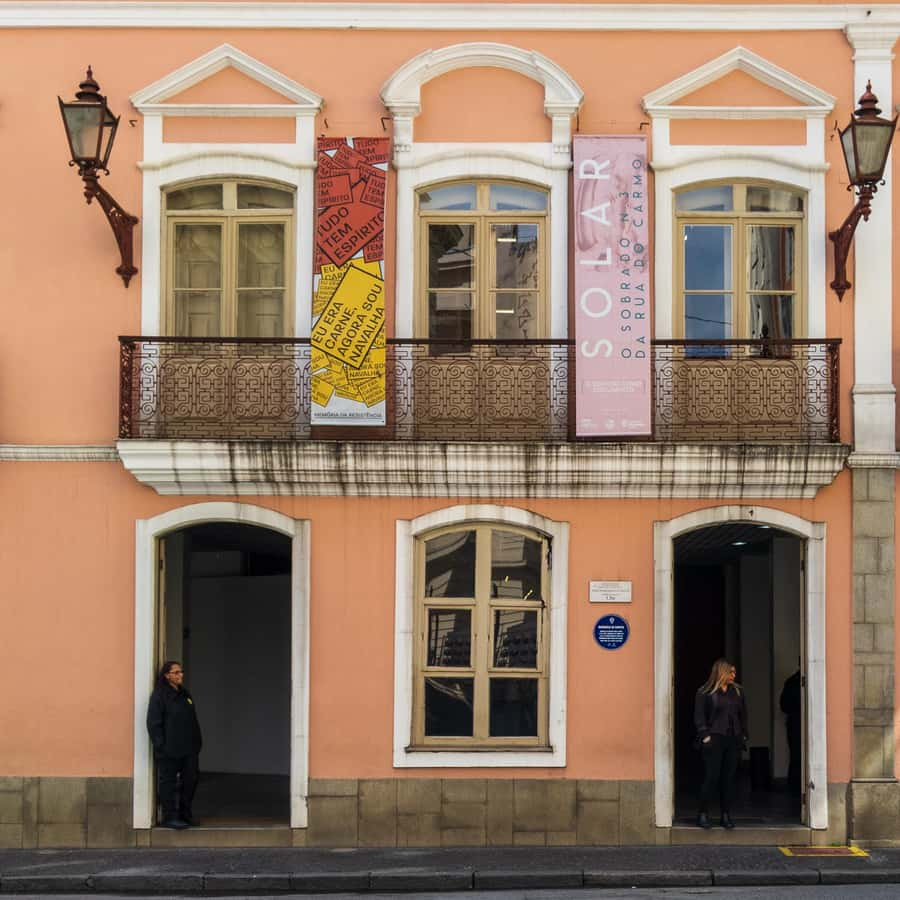
The Bank of Brazil Cultural Center follows, also with about 15 minutes. This stop shifts the subject from religion to finance and culture. Banks helped express the city’s growing importance, while cultural centers show how older urban buildings can continue serving the public.
Together, these two stops make one of the route’s best pairings. You move from a religious institution to a major cultural and financial setting, seeing how São Paulo’s center has changed function over time. The walk does not present the past as something sealed away. It shows old structures continuing to take part in present-day city life.
Pateo do Collegio and São Paulo Cathedral
College Pateo, or Pateo do Collegio, is allotted about 20 minutes. This is one of the most important historical points on the walk because it connects the city’s foundation story with the Jesuits and the early settlement. The guide also places that story beside the older Tupi presence and regional pathways, giving you a less narrow account of São Paulo’s origins.
This stop is especially valuable if you want context rather than a parade of buildings. The city’s story includes religious work, colonial expansion, Indigenous communities, migration, and later economic growth. You see how those layers overlap instead of receiving a single founding date and moving on.
São Paulo Cathedral receives about 15 minutes. The cathedral provides a grand closing look at the older center before the route heads toward Liberdade. Its scale makes a sharp contrast with the more intimate church stops, and the setting helps you see how the center combines religious, civic, and commercial uses within a small area.
Because the tour is only two hours, interior access and time inside each site may vary. Think of these visits as guided orientation stops, not extended museum appointments. You will learn what to notice and can return later if one place catches your interest.
Ending in Liberdade and meeting São Paulo’s communities
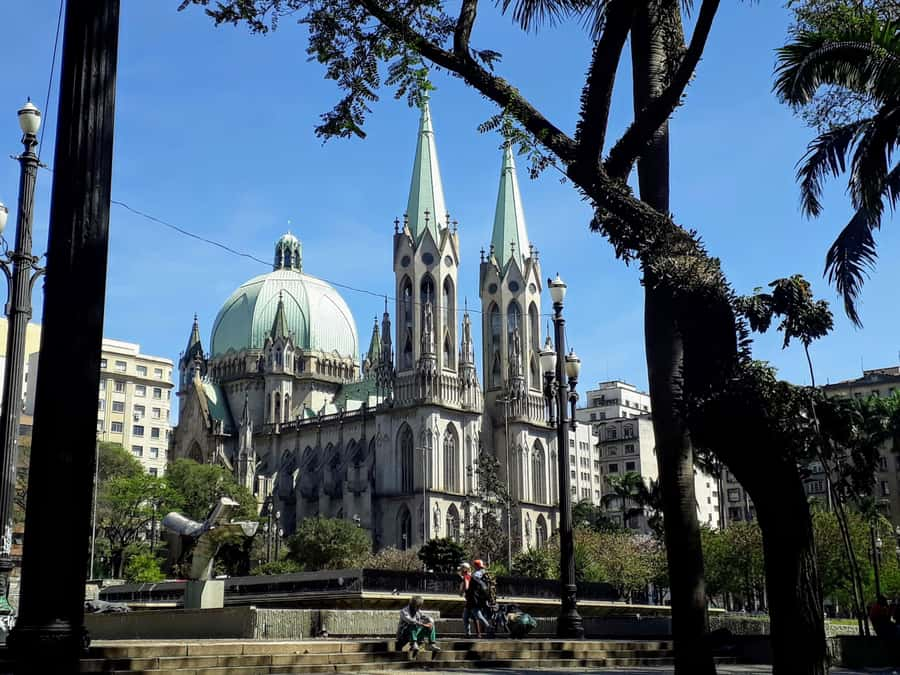
The walk finishes at Praça da Liberdade in Liberdade. Ending here is smart because the district gives the tour a human and cultural conclusion. São Paulo is home to major Italian, Japanese, Syrian-Lebanese, and other immigrant communities, and Liberdade offers a clear place to discuss how migration shaped the city.
The route begins with skyscrapers and civic architecture, then finishes among the cultural identities that helped make São Paulo what it is. That structure keeps the tour from being only about old stone buildings. It brings the subject back to people, food, languages, shops, and everyday life.
The guide can also offer suggestions for further exploring the city. One particularly useful detail from the tour experience is advice about vegetarian food in São Paulo. Ask Giuliano for current recommendations if that matters to you, since practical local guidance can be more useful than another monument on a short first visit.
Pace, group size, and walking comfort
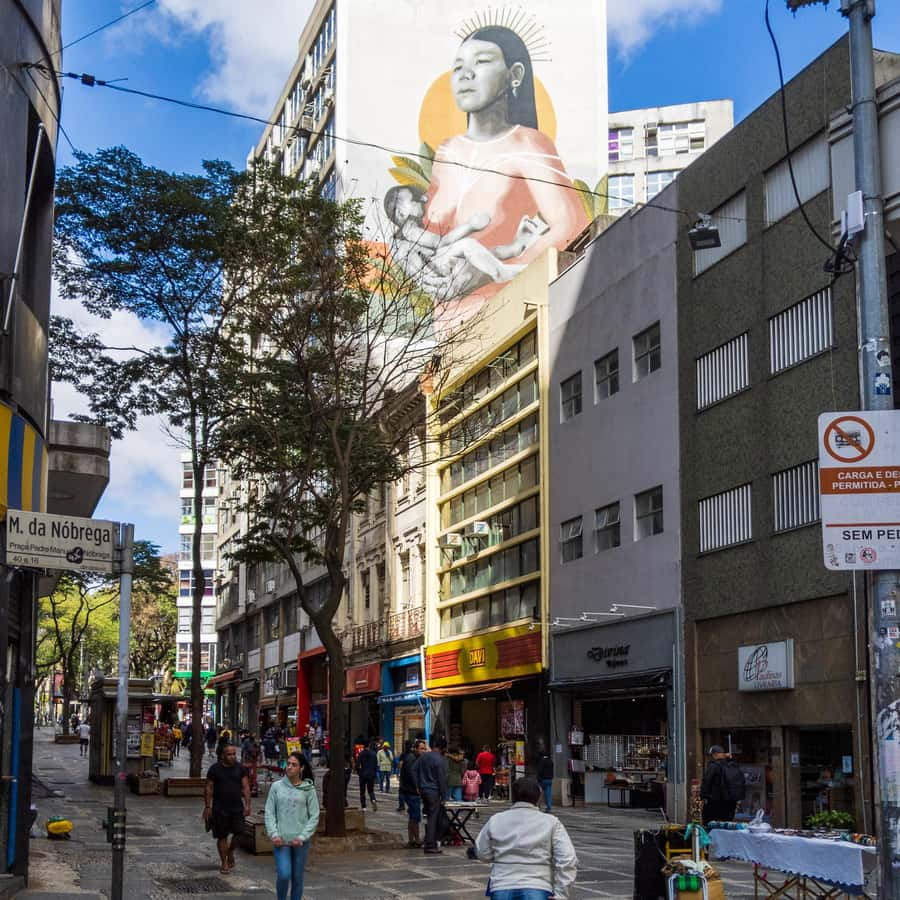
The advertised duration is two hours, and the group is limited to 10 participants. That is a good balance for a central-city orientation. A small group makes it easier to hear the guide, ask questions, and keep moving through busy streets without waiting for a large crowd.
The route includes many stops, with listed visit times ranging from 10 to 20 minutes. Those times do not include all the walking between locations, so the pace is likely to feel purposeful. Wear comfortable shoes and treat the tour as continuous city walking rather than a sequence of leisurely indoor visits.
The supplied information gives two different signals about mobility. The activity is marked wheelchair accessible, but it is also marked unsuitable for people with mobility impairments. Since no detailed information is provided about pavement, stairs, building access, or restroom facilities, contact the provider before booking if you use a wheelchair, walker, or have difficulty walking.
São Paulo weather adds another practical concern. Carry sunscreen and an umbrella. A wet day does not necessarily ruin the experience, and the guide has adjusted the route to find shelter during rain, but weather can affect comfort and the time available outdoors.
What $37 means for the value
At $37 per person, this is not the cheapest way to spend two hours in São Paulo. You are paying for a licensed English-speaking guide, a small group, and a route that links several parts of the center without transportation costs.
The value is strongest if this is your first or second day in the city. You get a broad orientation, historical context, architectural clues, and ideas for places to return to later. The guide’s local suggestions can also save time when you are deciding where to eat or what district to explore next.
The value is weaker if you already know central São Paulo well or want lengthy access to interiors. Several stops are short, and the walk emphasizes explanation and connections rather than extended sightseeing at each location. You are buying a guided introduction, not a full-day historical tour.
The provider allows cancellation up to 24 hours before the start for a full refund and offers reserve-now, pay-later booking. Those policies help if your schedule is still changing, but the strict start time means you should not cut your arrival close.
Who will get the most from this tour
I would choose this walk if you want a quick, organized introduction before exploring São Paulo on your own. It suits first-time visitors who want to understand the center, architecture fans who like social context, and curious walkers who prefer local explanation to a bus ride.
It also works well for people who enjoy asking questions. The group size creates a more personal setting, and Giuliano has been praised for answering questions clearly and adapting examples to the people in the group. His advice about vegetarian food is a useful bonus for anyone planning meals around dietary needs.
You should think twice if you dislike brisk walking, need long breaks, or want a highly detailed visit inside every building. The route packs a lot into two hours. The reward is range, but range means some stops remain short.
Should you book this São Paulo walking tour?
Book it if you want to get your bearings quickly and understand how Indigenous roots, Jesuit foundations, immigration, churches, finance, culture, and high-rise growth fit into one city story. The route from Edifício Itália to Liberdade is well chosen, and the small group keeps the experience personal.
Skip it if you want a relaxed pace or a specialist architecture tour with long interior visits. For most first-time visitors, though, $37 is fair for a focused two-hour introduction, especially when you use the final stop in Liberdade as a starting point for your own further exploration.
FAQ
Where does the São Paulo walking tour start?
It starts at the entrance of Edifício Itália at Av. Ipiranga, 336.
Where does the tour finish?
The walk finishes at Praça da Liberdade in the Liberdade district of São Paulo.
How long does the tour last?
The tour lasts two hours.
What language is the tour conducted in?
The tour is conducted in English. The guide also speaks Spanish, Portuguese, and Italian, but the advertised tour language is English only.
How much does the tour cost?
The listed price is $37 per person.
How large is the group?
The tour is limited to 10 participants.
Is transportation included?
No. This is a walking tour, and no transportation is expected or included.
Are food and drinks included?
No. Food and drinks are not included.
What happens if I arrive late?
The tour starts strictly on time. Once it has begun, you may not be able to join, so plan your route to Edifício Itália in advance.
Is the tour suitable for people with mobility impairments?
The activity information marks the tour as wheelchair accessible but also says it is not suitable for people with mobility impairments. If this applies to you, contact the provider before booking to confirm the route and access conditions.
Can I cancel for a refund?
You can cancel up to 24 hours in advance for a full refund. You can also reserve now and pay later.
New routes in the world
- Baltimore Walking Foodie Tour in Fells Point★ 5.0 · 182 reviews
- Baku Oil Heritage & Old Town Walking Tour★ 5.0 · 232 reviews
- Baku Walking Tour (Old City)★ 5.0 · 127 reviews
- The Madam’s Curse Walking Ghost Tour★ 4.5 · 103 reviews
- Austin Small Group Morning Walk★ 5.0 · 412 reviews
- Austin Haunted Pub Crawl Walking Tour★ 4.5 · 232 reviews
- Austin Downtown Private Walking Food Tour With Secret Food Tours★ 5.0 · 71 reviews
- Austin Murder Walk★ 5.0 · 310 reviews
2-Hour Experiences, compared.

Berlin’s Best: 2 Hour Walking Tour Third Reich and the Cold War
Read our review →
Budapest City Landmarks Walking Tour in 2 Hours
Read our review →
Leipzig: 2-Hour Guided Walking Tour in German
Read our review →
Kyoto Gion: 2-Hour Geisha Culture & History Walking Tour
Read our review →
Browse the lists this tour appears in