
Review · OLD TOWN
Santiago: Guided Walking Tour of the Historical Old Town
Santiago’s old center makes the most sense when someone connects its grand buildings, political history, neighborhood life, and food scene. This tour does that on foot, starting at Palacio de la Moneda and ending at Patio Bellavista, with a lot of the city between those two points.
I like the small groups of up to 10 and the route’s variety. You get major landmarks, a hilltop view, art districts, and a practical finish near restaurants. I also like the guide Eugenio’s approach: he answers questions, adjusts the pace, looks for shade on hot days, and can explain things in English, Spanish, or Portuguese.
The main drawback is the pace. Three hours covers a large stretch of central Santiago, so some stops receive a short explanation rather than a long visit. You should also expect real walking, uneven city conditions, and a hill climb at Santa Lucia.
Key points to know before booking
- Starts at Palacio de La Moneda: The route opens with Santiago’s political center before moving into the historic streets.
- Includes the 1748 Cathedral: Plaza de Armas gives you the clearest look at the city’s colonial and civic core.
- Covers several districts in one walk: Bellas Artes, Lastarria, Forest Park, and Bellavista each have a different feel.
- Santa Lucia Hill adds a city view: Entrance is free Tuesday through Sunday, subject to the site’s opening conditions.
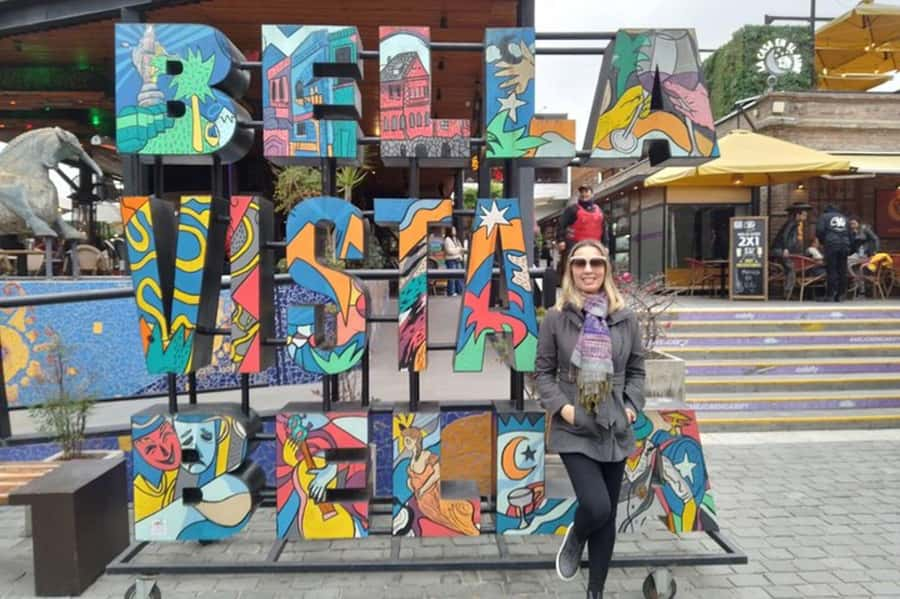
- Ends at Patio Bellavista: You finish near food, drinks, and further sightseeing rather than being dropped in an isolated area.
- A strong first-day tour: The route helps you choose which museums, restaurants, and neighborhoods deserve a return visit.
From La Moneda to Santiago’s civic center
The tour begins at Palacio de La Moneda, Chile’s presidential palace and one of the city’s best-known public buildings. Starting here gives the walk a clear theme: Santiago is not only about old churches and colonial squares. Its streets also carry the country’s political and commercial story.
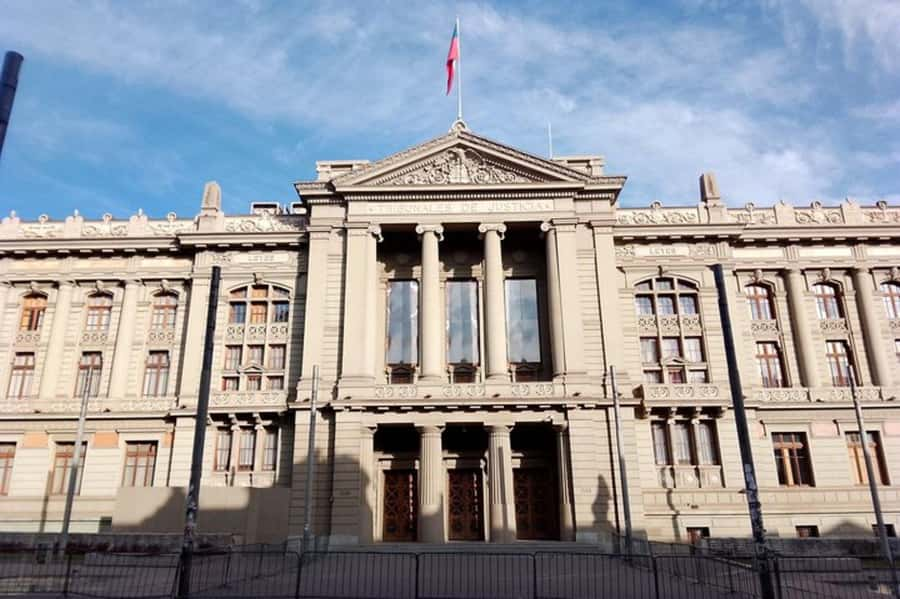
From La Moneda, you move toward the Stock Exchange Building, Bandera Avenue, and the Courts of Justice. These stops help you read the center as a working city rather than a collection of monuments. The streets have offices, public institutions, shops, and daily foot traffic, so you see how Santiago’s historic core functions now.
This opening section is especially useful if you are new to Chilean history. Eugenio is often praised for explaining political events, architecture, and present-day Chile in the same conversation. He also makes an effort to keep English and Spanish speakers involved when both are in the group.
The route does not treat every building as a quick photo stop. The guide links places together, explaining why a court building, a financial institution, and a government palace sit within the same central district. That context is one reason the tour offers good value at $25.
More Old Town Walking Tours in the world:
- Underground Vaults Walking Tour in Edinburgh Old Town
★ 4.5 · 8,506 reviews - Prague: 3-Hour Walking Tour of Old Town & Prague Castle
★ 4.7 · 5,696 reviews - Dubrovnik: Old Town Walking Tour
★ 4.8 · 5,174 reviews
Ex Congress National and the route toward Plaza de Armas
The next section takes you past the former National Congress and deeper into the historic center. You will see how public power shifted through Santiago’s past, with the buildings providing a setting for the explanation.
The walk then reaches Plaza de Armas, the city’s main historic square. This is the place where Santiago’s religious, civic, and social life come together. You can expect a lively public space, surrounded by important buildings and regular city activity rather than a preserved museum setting.
The square is also a good point to pause and get oriented. If you return on your own, you will have an easier time finding nearby streets and landmarks after seeing them with a guide. Several people who took the tour with limited time in Santiago found this broad overview useful because it helped them decide what to revisit later.
The guide’s storytelling matters here. A list of dates would make the square feel flat. Eugenio is praised for bringing buildings and Chilean people into the story, while also leaving room for questions about politics, culture, and food.
The Cathedral of Santiago and the heart of the old town
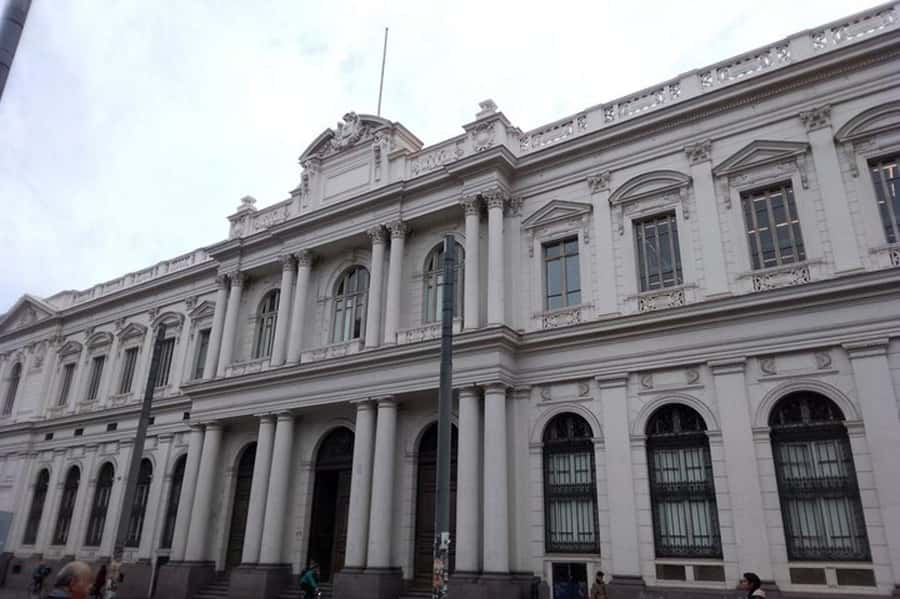
At Plaza de Armas, the grand Cathedral of Santiago is the main architectural highlight. The present cathedral dates to 1748, giving you a direct connection to the city’s colonial era.
You should expect an exterior and city-history stop rather than a dedicated cathedral tour with a long interior visit. The schedule has many more places ahead, so the guide needs to keep the group moving. Still, the cathedral anchors the whole old-town section, and it is one of the tour’s most worthwhile landmarks.
This is also where the tour’s mix of history and daily life works well. Santiago’s central square is not sealed off from modern use. People pass through, offices operate nearby, and the city carries on around the historic buildings. That contrast gives you a more useful picture than a polished monument alone.
If religious interiors are your main interest, you may want extra time at the cathedral on another visit. If you want a first look at Santiago’s central institutions, the stop fits the tour well.
City Hall, Bellas Artes, and a shift in mood
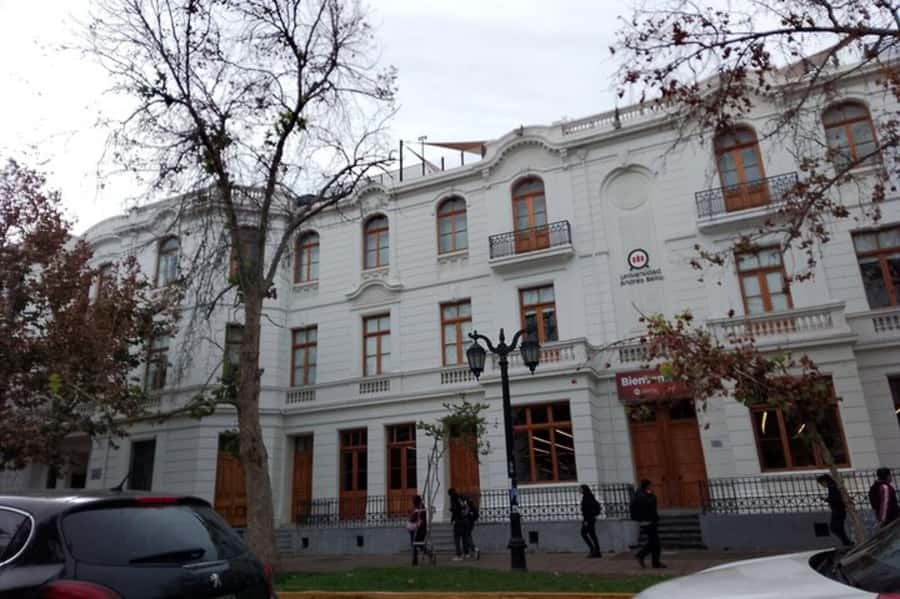
After Plaza de Armas, the route continues to Santiago City Hall and then toward the Bellas Artes neighborhood. The change is noticeable. The route moves from civic and colonial buildings into an area linked with art, cafés, museums, and urban culture.
The Bellas Artes Museum is a major reason to pay attention here. The tour introduces the museum and the surrounding neighborhood, but the museum visit itself should not be treated as a full guided gallery tour unless your booking details say otherwise. The listed inclusions cover the walking tour, guide, and bottled water, not a separate museum admission.
This part is valuable because it shows Santiago’s different eras within a short walk. You begin with government buildings and historic squares, then reach streets where art and neighborhood life take a larger role. The guide helps you understand that these areas are connected, even though they feel different.
I would not book this tour solely for extended museum time. I would book it if you want a useful introduction to the district and plan to return later for a slower look at the museum or nearby streets.
More History Walking Tours in the world:
- History and Hauntings of Salem Guided Walking Tour
★ 5.0 · 14,564 reviews - Lisbon: History, Stories and Lifestyle Walking Tour
★ 4.8 · 10,902 reviews - Boston: Freedom Trail History Small Group Walking Tour
★ 5.0 · 6,450 reviews - Historic Charleston Guided Sightseeing Walking Tour
★ 5.0 · 6,216 reviews
Santa Lucia Hill and the best pause for views
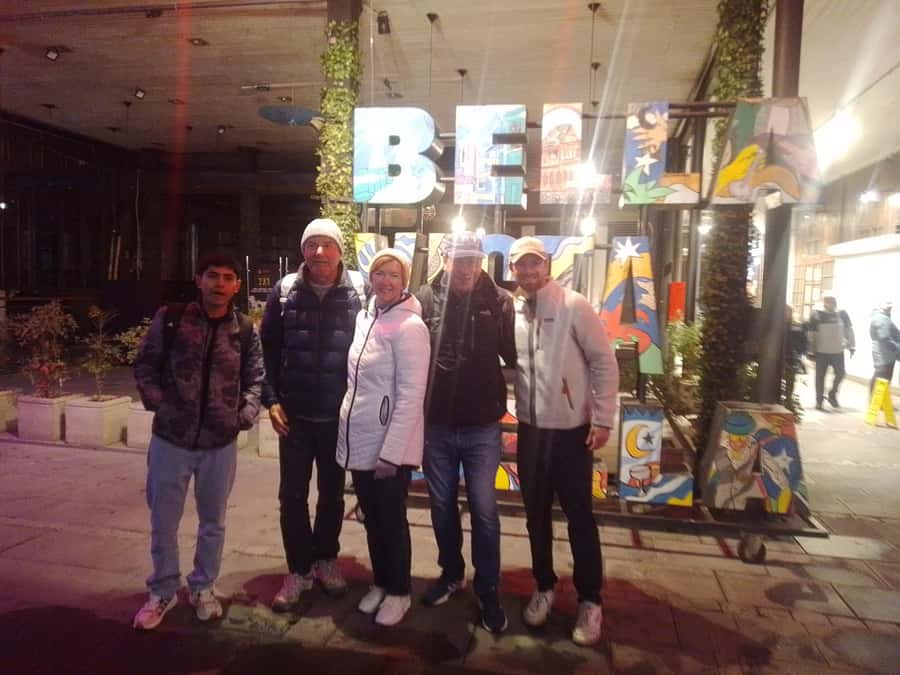
Santa Lucia Hill gives the tour its clearest change in elevation and one of its most attractive viewpoints. From the hill, you can look across central Santiago and understand the city’s scale in a way that street-level walking cannot provide.
Entrance is free from Tuesday through Sunday. The visit still involves climbing, so comfortable shoes are important. The hill is not a major mountain outing, but it is more demanding than a flat plaza stop, and the hot summer sun can make the climb feel harder.
Guides on this route have been praised for giving explanations in shaded spots and checking the group’s comfort. That is a small detail, but it matters in Santiago’s warmer months. You are walking for three hours, and thoughtful pauses make the route easier to manage.
The view can depend on weather and air conditions. Do not treat it as a guaranteed mountain panorama. Even so, Santa Lucia gives you a strong visual break and helps explain how the historic center fits into the wider city.
Lastarria and Forest Park at a slower rhythm

From Santa Lucia, the route moves through Lastarria and Forest Park. This stretch feels less formal than the government center and less crowded with major civic landmarks. It is a good place to notice how Santiago’s cultural districts connect to public green space.
Lastarria is a practical neighborhood to know for later meals, cafés, and further wandering, though the tour does not include lunch. Forest Park gives the walk a calmer section before the final move toward Bellavista.
The route is not just a parade of famous buildings. That is one of its strengths. You get a sense of how the city changes from official center to arts district to residential and dining areas. If you have only one day in Santiago, this variety helps you decide where to spend your free hours.
At the same time, the many neighborhood transitions mean you should not expect a detailed examination of every district. You will get an introduction, not a full tour of Lastarria or Bellas Artes.
Bellavista and the useful finish at Patio Bellavista
The final neighborhood is Bellavista, one of Santiago’s best-known areas for restaurants, bars, and local food. The tour ends at Patio Bellavista, which is a practical finish because you can stop for a meal or continue exploring from a central location.
Ending here is better than finishing at a random street corner. You can sit down, find food, or use the location as a base for your next plan. The tour does not include lunch, so budget separately for whatever you choose to eat.
Bellavista is also a fitting final stop. After the formal center, cathedral, museum district, and hill viewpoint, you end in a social area where Santiago’s contemporary side is easier to feel. The guide can answer questions about local dishes and restaurant areas, and several bookings included helpful suggestions for places to eat or visit next.
Do not confuse this experience with a dedicated food tour. Culinary information is part of the neighborhood introduction, but you are not promised tastings or a meal.
Why the guide makes a difference
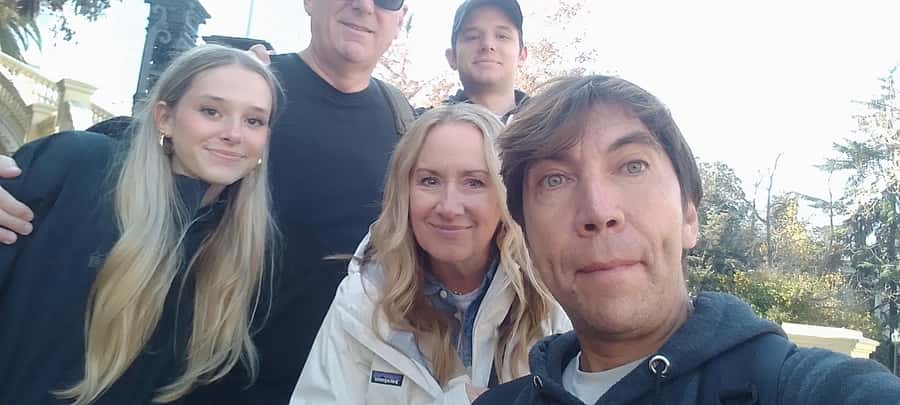
The route covers a lot, but the guide determines how much you take away. Eugenio is the guide most often identified with this experience, and his strengths are clear: strong English, friendly conversation, solid knowledge of Santiago and Chile, and a willingness to answer small questions.
He also appears comfortable with mixed-language groups. The tour is offered in English, Spanish, and Portuguese, and the group may include people who speak different languages. Explanations can take longer when information must be repeated, but the small group helps keep that manageable.
The pace is generally described as comfortable rather than rushed. One useful detail is that Eugenio may allow the tour to run beyond the stated time when questions or delays require it, although you should not build a later reservation around that possibility.
A coffee stop has also been part of some outings, including a chance to use a restroom and buy a drink or ice cream. It is not listed as a guaranteed inclusion, so consider it a pleasant possibility rather than a promised feature.
What the $25 price really buys you
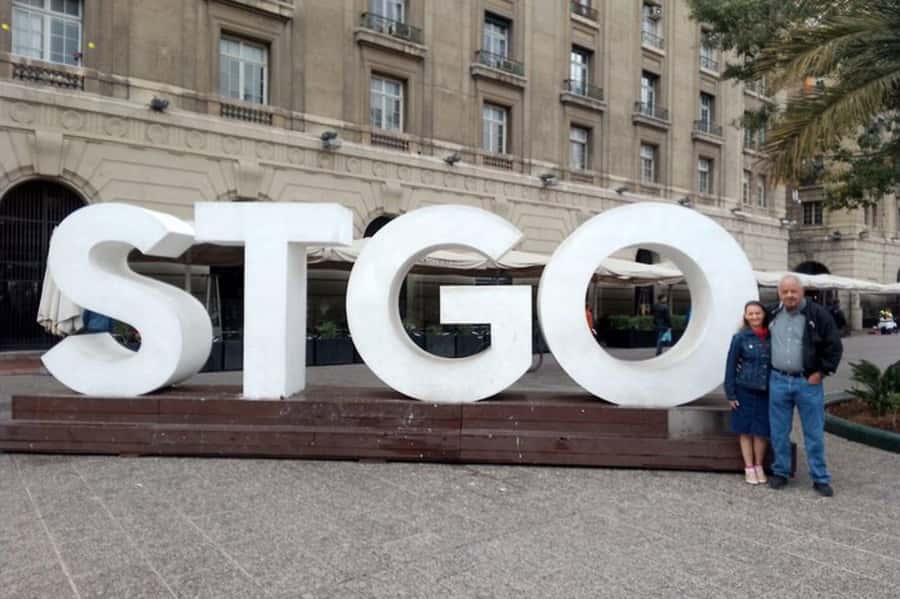
At $25 per person, this is a good-value orientation walk if you want structure and context. You are paying for three hours of guiding across a wide part of central Santiago, not for transport, lunch, or a series of paid museum entries.
The value is strongest for first-time visitors. A guide can help you understand the order of the city, point out places you might miss, and give you ideas for later visits. The route also ends near restaurants, which saves you the trouble of planning your next stop from scratch.
The price is less compelling if you already know Santiago well or prefer to spend an hour inside one museum. You will see many places, but most stops are introductory. Think of it as a city orientation with history, not a specialist architecture tour or a formal museum program.
Bottled water is included. Lunch is not, and neither Pablo Neruda’s house nor San Cristobal Hill is part of the route. If those are priorities, you will need separate plans.
Walking conditions, weather, and who should book
Wear comfortable shoes and bring protection from the sun. The route involves several hours on foot, with the Santa Lucia climb adding extra effort. The tour is not recommended for pregnant people or anyone with heart problems or other serious medical conditions.
The experience requires good weather. If poor weather cancels the outing, you can be offered another date or a full refund. The same applies if the minimum number of participants is not reached.
The tour is not designed for very young children. The stated restrictions include babies and children under the early-childhood age range, with the booking information specifically listing children under 2, 3, and 4 in different places. Check the age rule shown at booking if you are traveling with a young child.
I would choose this walk for a solo visitor, a couple, or a small family group with older children who wants a broad first look at Santiago. It also works well during a short stay or a daytime layover. Several three-hour visits have provided enough orientation for people with limited time to plan the rest of their city visit.
Should you book this Santiago walking tour?
Book it if you want to get your bearings quickly and prefer history explained while you walk. The route covers the city’s political center, old town, cathedral, arts districts, viewpoint, park, and dining quarter in one outing. That is a lot for $25, especially with a group capped at 10.
I would schedule it near the start of your stay. You can return to the Bellas Artes Museum, spend more time at the cathedral, eat in Bellavista, or explore Lastarria after learning how the areas connect.
Skip it if you dislike extended walking, need a wheelchair-friendly route, or want long visits inside individual attractions. For most first-time visitors who want a friendly introduction and practical next steps, this is a sensible and well-priced way to meet Santiago.
FAQ
How long is the Santiago historical walking tour?
The tour lasts three hours, though the guide may occasionally spend extra time answering questions or completing the route.
What languages are available?
The tour is offered in English, Spanish, and Portuguese.
Where does the tour start?
The walk begins at Palacio de La Moneda.
Where does the tour end?
The tour ends at Patio Bellavista, near restaurants and other places to continue exploring.
Is lunch included?
No. Lunch is not included, so plan to buy your own meal, particularly if you want to eat in Bellavista at the end.
Is entrance to Santa Lucia Hill included?
Entrance to Santa Lucia Hill is free from Tuesday through Sunday. The tour information does not list separate paid attraction tickets as included.
What is not included in the tour?
Pablo Neruda’s house, San Cristobal Hill, and lunch are not included. Bottled water, a guide, and the walking tour are included.
New routes in the world
- Baltimore Walking Foodie Tour in Fells Point★ 5.0 · 182 reviews
- Baku Walking Tour (Old City)★ 5.0 · 127 reviews
- Baku Oil Heritage & Old Town Walking Tour★ 5.0 · 232 reviews
- The Madam’s Curse Walking Ghost Tour★ 4.5 · 103 reviews
- Austin Small Group Morning Walk★ 5.0 · 412 reviews
- Austin Haunted Pub Crawl Walking Tour★ 4.5 · 232 reviews
- Austin Downtown Private Walking Food Tour With Secret Food Tours★ 5.0 · 71 reviews
- Austin Murder Walk★ 5.0 · 310 reviews
Old Town Walking Tours, compared.
Underground Vaults Walking Tour in Edinburgh Old Town
Read our review →
3-Hour Walking Tour of Old Town & Prague Castle
Read our review →
Old Town and Jewish Quarter Guided Walking Tour
Read our review →
Cartagena: Historic Center and Getsemaní Shared Walking Tour
Read our review →
Prague Ghost and Legend of Old Town Walking Tour
Read our review →
Browse the lists this tour appears in