
Review · ROME
Rome: Dark Past Walking Tour with Capuchin Crypt Ticket
Rome’s darkest stop comes first: the Capuchin Crypt, where the bones of past Capuchin friars are arranged in startling decorative patterns. It is eerie, solemn, and far more memorable than a standard sightseeing stop. From there, the tour turns Rome into a storybook of legends, ghosts, executions, and curious details.
I like the way this route pairs famous sights with less obvious tales, and I like the small-group format, which lets guides such as Sarah, Fabienne, Gabriella, and Giuseppe keep the walk personal. The main drawback is the brisk two-hour schedule. You see many places, but each stop receives only about 15 to 20 minutes after the crypt.
Key points
- The Capuchin Crypt comes first: Spend about 30 minutes among the skeletal remains of Capuchin friars, with no photography or video allowed.
- Famous Rome, told from an unusual angle: See Trevi Fountain, the Pantheon, Piazza Navona, and Campo de’ Fiori through stories of death, ghosts, myths, and local curiosities.
- A compact walking route: The tour begins near Piazza Barberini and ends at Santa Maria dell’Orazione e della Morte.
- Small groups make a difference: Private and small-group options are available, and past guides including Sarah, Fabienne, and Gabriella have been praised for warmth and lively storytelling.
- Dress and mobility matter: No shorts, short skirts, sleeveless shirts, large bags, or luggage are allowed, and the walk is not suitable for wheelchair users or people with limited mobility.
- Best for adults and older teenagers: Children under 12 cannot join, and the crypt’s subject matter may be too grim for younger children.
Why the Capuchin Crypt is the real centerpiece
The Capuchin Crypt is not a quick decorative stop. You spend about 30 minutes inside an underground setting lined with the skeletal remains of former Capuchin friars. The sight is unsettling, but the purpose is not simply to shock. The crypt also reflects the Capuchin relationship with mortality and religious devotion.
You cannot take photographs or videos inside. That rule may disappoint anyone hoping for a dramatic souvenir, but it also keeps the visit quiet and respectful. You look carefully, listen to the guide, and leave with your own memory of the place rather than a phone full of images.
The crypt is especially effective because it comes at the beginning. You do not spend the first hour waiting for the dark part of the tour. The mood is set immediately, then the guide carries that theme into Rome’s streets, churches, squares, and monuments.
This is the stop that has made the strongest impression on many people who took the walk. One person described it as the highlight of an entire Rome visit, while another noted that online photographs do not prepare you for seeing it in person. That is a fair warning: the crypt may be fascinating, but it is not light entertainment.
More Entry Tickets on the Route in Rome:
- Rome: Guided Walking Tour and Pantheon Priority Entry Ticket
★ 4.3 · 317 reviews - Edinburgh Castle: Guided Walking Tour with Entry Ticket
★ 4.7 · 11,699 reviews - Beijing: Forbidden City Tour(Group/Private)-Tickets Included
★ 4.8 · 7,974 reviews
Meeting at Piazza Barberini

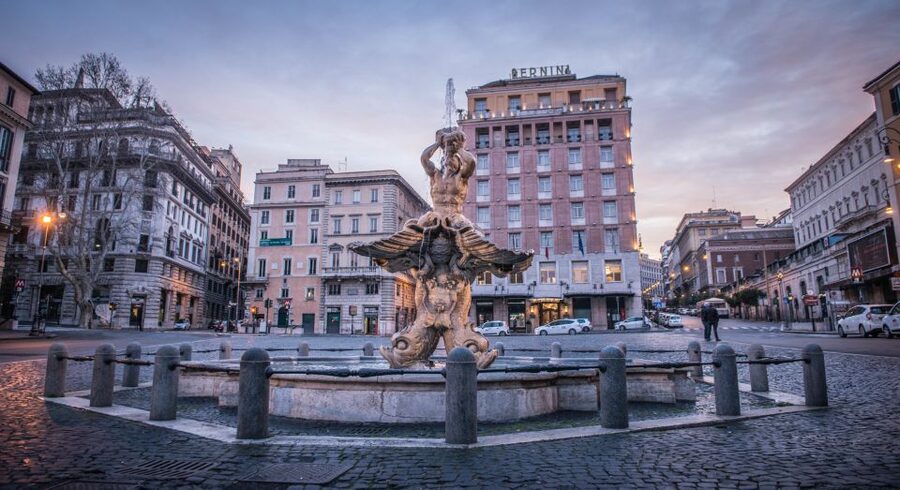
The meeting point is at the corner of Piazza Barberini, 21, and Via di S. Nicola da Tolentino, next to the Hotel Bernini. Look for the guide near that corner rather than simply waiting somewhere in the broad piazza.
Finding the guide can be slightly awkward if the area is busy. One person had trouble locating the group and suggested that a banner or flag would help. I would allow extra time and keep your phone handy in case the operator sends a location message or contact details.
Arrive early. If you are late, you will not be allowed to join the tour. That rule matters here because the crypt visit and the walking route are arranged as one continuous experience.
The starting point is convenient for reaching central Rome, but hotel pickup and drop-off are not included. You make your own way to Piazza Barberini, then walk for the rest of the tour.
Trevi Fountain after the crypt
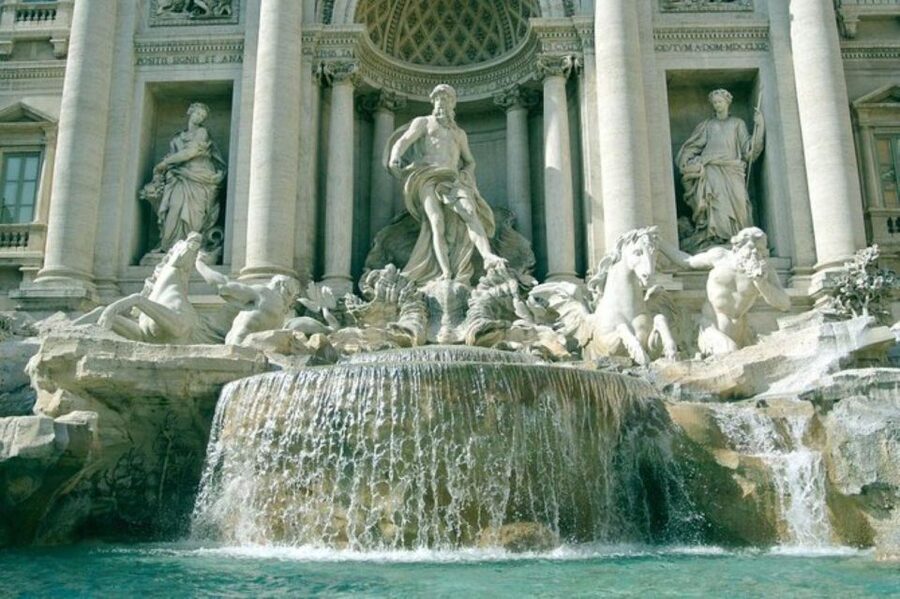
After the crypt, the group heads to the Trevi Fountain. This is a sharp change of mood. You move from bones and underground chambers to one of Rome’s most famous Baroque fountains, usually surrounded by people and full of energy.
The guide explains the fountain’s stories and customs, including the familiar coin toss. You can toss a coin to encourage a return to Rome, though the tour does not include any special arrangement for doing so.
The stop lasts about 20 minutes. That is enough time for the guide to explain the main details, point out the best features, and help you take in the setting. It is not enough for a long, unhurried photo session, especially when the fountain area is crowded.
This is where a small group helps. A guide can keep people together and help you move through the busy space with less confusion. Sarah was specifically praised for navigating the Trevi area in a way that made the stop more enjoyable. That practical skill matters more here than a long lecture.
Do not expect the tour to give you a quiet view of the fountain. It cannot control the crowd. What it can do is help you understand what you are seeing and keep the visit from becoming a quick glance followed by aimless wandering.
The Pantheon and Rome’s old myths
The next stop is the Pantheon, with about 15 minutes of guided time. The building is one of Rome’s great landmarks, but this tour approaches it through the meeting point between ancient myths and later stories.
Because the visit is short, the guide focuses on selected facts and legends rather than trying to explain every period of the building’s past. That suits the theme. You get a compact introduction, then continue through the streets instead of spending the afternoon inside one monument.
The Pantheon stop works best if you have already seen it during a longer daytime visit or plan to return later. This walk gives you context and a story-led look. It does not replace a dedicated architectural visit.
That distinction is important when judging the $76 price. You are paying for a guide-led experience that connects several places, not for long admission visits to each landmark. The included ticket is for the Capuchin Crypt. The other stops are visited from the outside or as brief guided points along the route.
More Walking Tours in Rome:
- Rome: Guided Food Walking Tour with Wine in Trastevere
★ 4.9 · 3,105 reviews - Rome: Trastevere & Campo de Fiori Street Food Walking Tour
★ 4.9 · 2,768 reviews - Rome: Paranormal Night Walking Tour & Secret Backstreets
★ 4.9 · 1,921 reviews - Rome: Trastevere Street Food Walking Tour with Local Expert
★ 4.8 · 1,784 reviews
Piazza Navona and its spectral stories
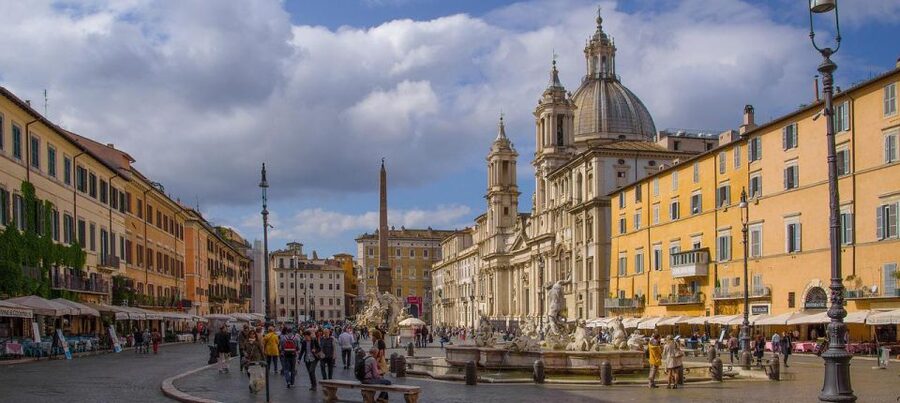
Piazza Navona receives about 15 minutes. Its grand Baroque setting is a perfect match for this tour because the guide discusses spectral presences linked to the palaces facing the square.
The appeal here is not just the square itself. Piazza Navona is already one of Rome’s essential sights, but a tale about what may linger around its palaces gives you a different way to read the buildings. You look beyond fountains and facades and start asking what stories the city has kept alive.
The guide’s delivery matters more at this stop than the physical route. This is storytelling rather than a formal museum explanation. Past guides have been praised for animated stories, a relaxed manner, and a mix of scary and funny material. That tone keeps the walk from becoming relentlessly grim.
Still, expectations should stay realistic. Legends are presented as legends, and the tour is designed to entertain as well as inform. If you want only strictly documented Roman history, some of the ghost stories may feel loose. If you enjoy folklore and local curiosities, this is likely one of the most enjoyable sections.
Campo de’ Fiori and the story of Giordano Bruno
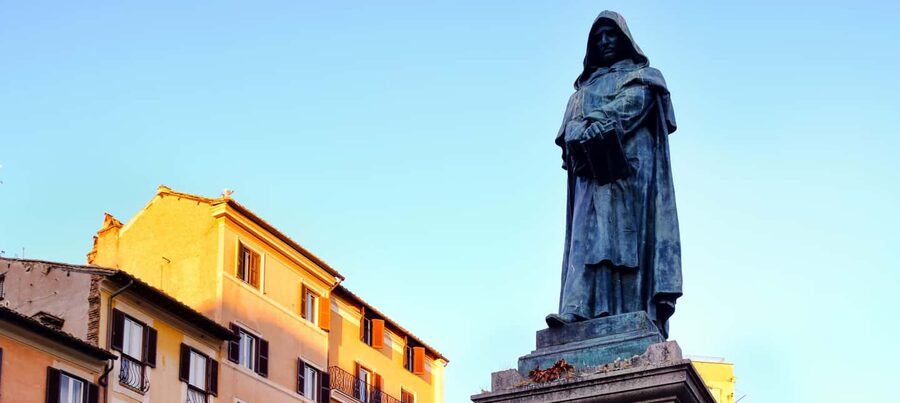
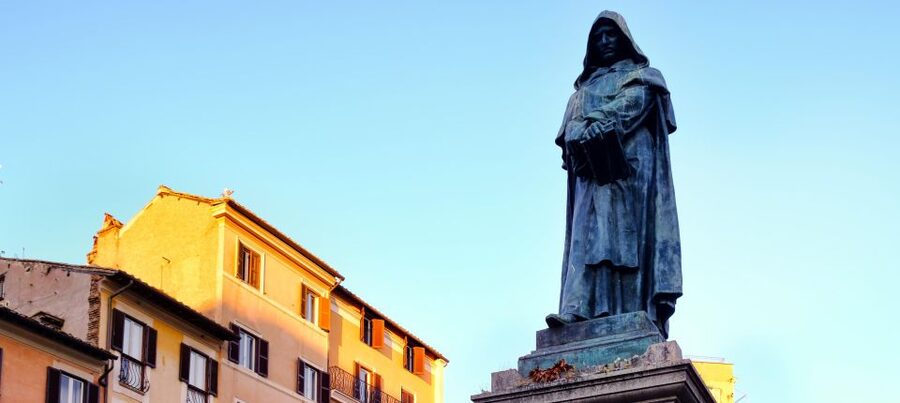
At Campo de’ Fiori, the guide turns to the sad history of Giordano Bruno. The square is often treated as a lively central meeting place, but its connection with Bruno gives it a much heavier meaning.
This is one of the tour’s strongest choices because it shows how Rome’s public spaces can carry several layers at once. You see a familiar square, then learn about a serious and painful episode connected with it. The story adds weight without requiring another ticket or a long museum visit.
The scheduled stop is about 15 minutes. That is enough for an introduction, but not for an extended historical lecture. If the subject catches your interest, write down the name and explore it later. The guide gives you a starting point and a reason to look more closely at the square.
The walking sections between stops are part of the experience. You pass through cobbled streets and smaller lanes rather than moving from one attraction to another by vehicle. Comfortable shoes are essential, especially if you have already spent the day walking around Rome.
The final church, Santa Maria dell’Orazione e della Morte
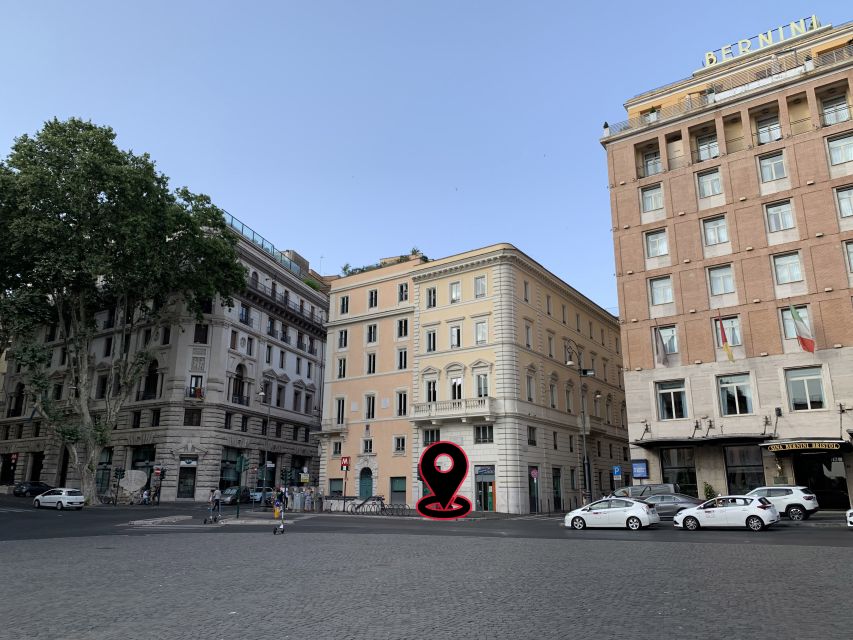
The tour ends at the Church of Santa Maria dell’Orazione e della Morte, translated as St. Mary of the Oration and Death. Its name alone explains why it belongs on a dark-history route.
Here, the guide shares the mysterious stories connected with the church and its sacred setting. The ending is quieter than the Trevi Fountain and less instantly familiar than the Pantheon, which gives the walk a fitting final note.
Do not assume the tour returns you to Piazza Barberini. The listed finish is at the church, so plan your evening from there. No onward transport is included.
The ending also leaves you with a useful choice. You can continue exploring central Rome on your own, find dinner, or use the guide’s recommendations. One person specifically appreciated receiving a dinner suggestion during the experience. That kind of local advice can be useful on a first Rome visit, though it depends on the guide and the conversation.
The guides shape the experience
The route is fixed, but the guide can change the feel of the evening. Sarah has been praised for her animated stories and ability to manage the crowded Trevi Fountain area. Fabienne was described as bringing energy and depth to each location, while Gabriella received praise for warmth, practical suggestions, and enthusiasm even in hot weather.
Other guides, including Célia, Camilla, Giuseppe, Marinelly, and Go, have also been praised for a personal approach and strong storytelling. You cannot assume you will receive a particular guide unless the booking process allows you to request one, but these names give you a sense of the style the company has offered.
The best guides on this kind of walk do more than recite dates. They change pace, explain why a place matters, and make room for questions. Several people appreciated that the guides shared restaurant ideas and suggestions for other sights. That extra help is especially valuable early in a Rome stay.
There is one useful caution. One person felt the stories could have been delivered with more drama and noted that the guide had forgotten photographs normally used during the explanation. That shows the experience can depend on preparation and presentation. The subject is naturally engaging, but a quiet or less theatrical guide may make the darker tales feel flatter.
You receive a headset, which helps when the streets are noisy or the group is spread out. In a small group, this is less important than in a large one, but it still makes it easier to hear while standing near busy landmarks.
Group size, pace, and the $76 price
The price is $76 per person for two hours. That is not a bargain if you judge it only by the number of sights. Most stops are short, and only the Capuchin Crypt entrance is included.
The value improves if you want a guide to connect the places for you. You get the crypt ticket, a live guide, a headset, and a planned route through several central sights. You also avoid spending time figuring out how the crypt fits with Trevi Fountain, the Pantheon, Piazza Navona, Campo de’ Fiori, and the final church.
Small-group and private options are available. A private booking can be worthwhile if you want to ask many questions or prefer your own pace. Small groups offer much of the same personal feel at a lower cost than a fully private experience, although the exact group size is not specified.
The schedule is tight. The listed guided times total about 110 minutes, leaving roughly 10 minutes for movement between stops within the two-hour duration. You should expect a steady walk, brief explanations, and limited time to linger.
Past experiences have sometimes turned into very small private outings when few people booked. That can be a pleasant surprise, but it is not something to count on. The operator may also shorten the walk if the group agrees, but I would not assume the full route will be shortened or extended. If seeing every listed stop matters to you, say so clearly before accepting a change.
Dress rules and practical limits
The crypt and religious sites require conservative clothing. Do not wear shorts, short skirts, or sleeveless shirts. Large bags and luggage are not allowed, so this is not a good activity to schedule while carrying suitcases.
Bring a passport or ID card, comfortable shoes, and an umbrella. The identification requirement is worth taking seriously, especially because the crypt entrance is part of the booked experience.
This tour is not suitable for wheelchair users or people with limited mobility. The crypt, cobbled streets, and continuous walking make the route a poor choice if stairs, uneven surfaces, or a brisk pace are difficult for you.
Children under 12 cannot join. Older teenagers may enjoy the stories, though parents should consider how comfortable they are with skeletons, death, executions, and ghost tales. The tour is aimed more at adults and mature teens than at young families.
You can cancel up to 24 hours before the start for a full refund, and a reserve-now, pay-later option is available. Those policies are useful if your Rome schedule is still shifting, but they do not change the strict rule about arriving late.
Who should book this Rome night walk?
I would choose this tour if you have already seen, or plan to see, Rome’s major sights in a conventional way and want a different layer of the city. It is also a good first-evening activity if you enjoy being led through central streets while someone explains the legends and sad episodes you would probably miss alone.
The tour suits adults, older teenagers, solo visitors, couples, and small groups who enjoy macabre subjects without needing a full horror show. The guide mixes fact, legend, humor, and local curiosity, so the mood is more theatrical history than pure ghost hunting.
I would skip it if you dislike skeletons, want long visits inside major monuments, or need a slow and fully accessible route. I would also avoid booking it immediately after a long day of sightseeing if you are already tired. Two hours on cobbled streets can feel longer when your feet are worn out.
FAQ
How long does the Dark Past Walking Tour last?
The tour lasts two hours, including the Capuchin Crypt visit and the walking route through central Rome.
Where does the tour begin?
Meet at the corner of Piazza Barberini, 21, and Via di S. Nicola da Tolentino, next to the Hotel Bernini.
Where does the tour finish?
The tour ends at the Church of St. Mary of the Oration and Death, also called Santa Maria dell’Orazione e della Morte.
Is the Capuchin Crypt entrance included?
Yes. The Capuchin Crypt entrance ticket, a guide, and a headset are included.
Can I take photographs inside the Capuchin Crypt?
No. Photography and video are not allowed inside the crypt.
What languages are available?
The tour is available in English, Italian, Portuguese, Russian, Spanish, and French.
Can children join the tour?
Children under 12 cannot join. The tour is also not recommended for young children because of its dark subject matter.
What should I wear and bring?
Wear comfortable shoes and conservative clothing. Shorts, short skirts, sleeveless shirts, large bags, and luggage are not allowed. Bring a passport or ID card and an umbrella.
Should you book it?
Book this tour if the Capuchin Crypt is high on your Rome list and you want its visit tied to unusual stories at famous city sights. The crypt ticket and small-group setting make the $76 easier to justify, especially when you value a guide’s local stories and practical advice.
Skip it if you want an in-depth visit to the Pantheon or Trevi Fountain, since those stops are brief and mainly guided from the outside. For the right audience, though, this is a memorable way to see Rome’s familiar streets through a darker, stranger, and more personal lens.
New routes in Rome
- Rome: Colosseum and Ancient Rome Guided Walking Tour★ 4.5 · 95 reviews
- Rome Walking Tour: Pantheon, Trevi, Navona & Hidden Gems★ 4.8 · 501 reviews
- Rome: Guided Walking Tour and Pantheon Priority Entry Ticket★ 4.3 · 317 reviews
- Rome: Trastevere Food Walking Tour with Beer and Wine★ 4.9 · 71 reviews
- Rome: Trevi Fountain, Spanish Steps & Pantheon Walking Tour★ 4.6 · 336 reviews
- Rome: Underground Trastevere Guided Walking Tour★ 4.8 · 87 reviews
- Rome Trastevere Walking Food Tour★ 4.8 · 97 reviews
- Rome: Relics from the Passion of the Christ Walking Tour★ 4.9 · 84 reviews
Rome Walking Tours, compared.
Guided Food Walking Tour with Wine in Trastevere
Read our review →
Trastevere & Campo de Fiori Street Food Walking Tour
Read our review →
Paranormal Night Walking Tour & Secret Backstreets
Read our review →
Colosseum Arena, Roman Forum & Palatine Hill Tour
Read our review →
Trastevere Street Food Walking Tour with Local Expert
Read our review →
Rome by Night Walking Tour – Legends & Criminal Stories
Read our review →
Rome Food Tour in the Historic Centre with 8+ Food Tastings
Read our review →Browse the lists this tour appears in