
Review · HISTORY
Rio de Janeiro: Little Africa Heritage Walking Tour
Rio’s Little Africa Heritage Walking Tour puts Afro-Brazilian history at the center of your visit to Rio. From the rooftop of the Rio Art Museum to the stone steps of Pedra do Sal and the former Valongo wharf, you follow a route that connects slavery, freedom, food, music, dance, and modern racial identity.
I like the tour’s clear route and its human scale. You get a rooftop view of Mauá Square and Guanabara Bay, then move through places that are easy to miss on a general city tour. I also like the guides’ personal approach. Luana, Nathalia, Larissa, Marina, Ryane, Eddie, Raquel, and others have been praised for making difficult subjects understandable and for answering sensitive questions with care.
The main drawback is simple: this is 150 minutes on foot, often in heat, and the tour runs rain or shine. It is also offered only in English according to the activity information, so arrive ready to listen closely and wear proper walking shoes.
Key points to know before you book
- Start at the Rio Art Museum: Begin with colonial Brazil and a rooftop view across Mauá Square and Guanabara Bay.
- Follow the roots of samba: Pedra do Sal is presented as the place where samba was born.
- Learn through real places: Largo da Prainha, the Hanging Garden of Valongo, and Cais do Valongo give the history a physical setting.
- Expect serious conversation: The route covers slavery, racism, freedom, gender, and present-day Afro-Brazilian identity.
- Allow for heat and rain: Bring water, sunscreen, comfortable clothes, and shoes that can handle uneven streets.
- Best for curious adults: Children under five are not suitable, and the tour works best for people who want history rather than a quick sightseeing loop.
Why Little Africa belongs on your Rio itinerary
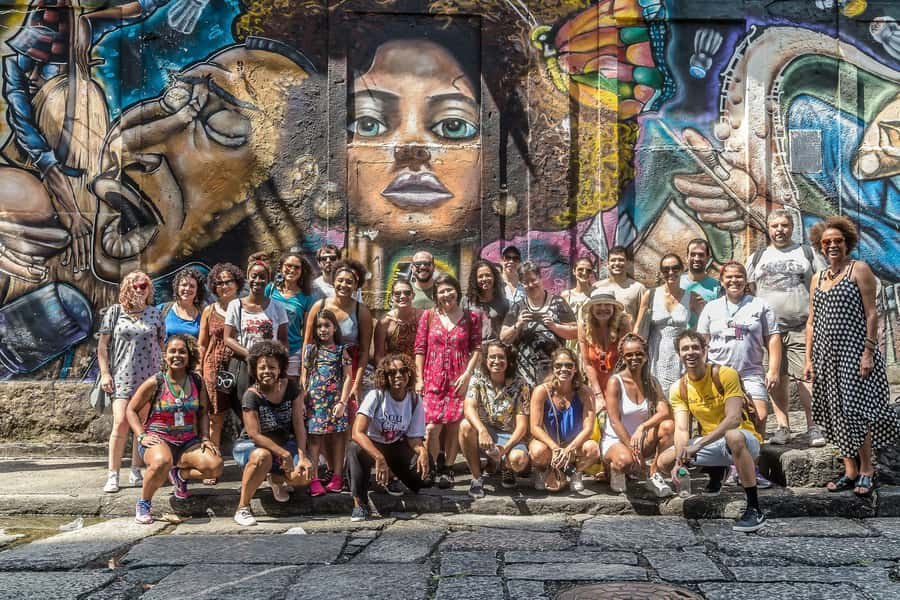
Rio is often sold through beaches, viewpoints, football, and carnival. Those are real parts of the city, but they do not explain how Brazil was shaped by African people and their descendants. This walk takes you into the port district, where that story is visible in monuments, streets, food traditions, music, dance, and public memory.
The area became known as Little Africa around the turn of the 20th century. After Brazil ended the slave trade, freed people remained in the port district and worked there. The tour also places the formal end of slavery in context. Brazil abolished slavery in 1888, a date close enough to the present to challenge the idea that this is only distant colonial history.
I find that timing important. You are not simply hearing names and dates. You are being asked to connect forced labor and emancipation with the culture Rio celebrates today. Samba, Afro-Brazilian cooking, dance, religion, and community life all carry part of that story.
This is why I would take the tour early in a Rio visit. One person who joined the walk said it helped make sense of Brazil before visiting Bahia. That is good advice. The tour gives you background that can make later encounters with Brazilian music, food, art, and race relations easier to understand.
More History Walking Tours in the world:
- History and Hauntings of Salem Guided Walking Tour
★ 5.0 · 14,564 reviews - Lisbon: History, Stories and Lifestyle Walking Tour
★ 4.8 · 10,902 reviews - Boston: Freedom Trail History Small Group Walking Tour
★ 5.0 · 6,450 reviews
Starting at the Rio Art Museum and Mauá Square
Meet your guide in front of the Museu de Arte do Rio, usually called MAR. Arrive five minutes early. The guide can wait only 15 minutes for late arrivals, so build in extra time for traffic and the large size of Rio.
The first stop is not a rushed photo opportunity. Your guide starts with Brazil during the colonial period. That opening matters because the rest of the route depends on understanding how Portuguese colonization, the slave trade, and the growth of Rio’s port shaped the city.
You also get a 10-minute break at the museum area and a rooftop view of Mauá Square and Guanabara Bay. This gives you a useful orientation. Look out across the port and consider how much activity passed through this part of Rio. The view is broad, but the subject is not light. Your guide uses it to set up the story of the people who were brought to Brazil, those who survived slavery, and those who built communities after emancipation.
The rooftop is also one of the tour’s most pleasant pauses. You are outside for much of the walk, so this early stop gives you a chance to take in the city before the route becomes more concentrated.
Morro da Conceição and the shape of the old port
From the museum, the walk continues toward Morro da Conceição. The guided section here lasts about 20 minutes.
This is where the tour begins to feel less like a lecture and more like a reading of the city. The port neighborhoods are not just a backdrop. Their streets and slopes show how people lived, worked, gathered, and stayed close to the waterfront.
Your guide may point out details you would pass without context. The supplied experience describes the walk as a way to understand Little Africa through its neighborhoods, not only through major monuments. That is one of its strongest features. You are moving through an inhabited part of Rio, not a sealed museum display.
The route is not presented as a polished story with all the rough edges removed. Guides have discussed structural racism, sexism, slavery, and current racial dynamics. For me, that makes the walk more useful than a tour that stops at colorful murals and samba references without explaining the forces behind them.
Guides also vary. Nathalia has been praised for bringing current examples into the discussion and inviting questions. Marina has drawn strong praise for combining formal study with family connections to Rio. Eddie has been described as especially good at connecting Little Africa to the wider African diaspora. The exact guide is not guaranteed, but the experience is clearly designed around a guide who can talk rather than simply point.
Largo da Prainha and Afro-Brazilian food
The next main stop is Largo de São Francisco da Prainha, often called Largo da Prainha. You spend about 20 minutes here with the guide.
This square is used to explain African influence on Brazilian gastronomy. That subject is easy to underestimate. Food gives you a direct way to understand cultural survival. Ingredients, cooking methods, and dishes can carry memory across generations, even when political and social systems try to erase the people who created them.
Do not expect a full meal to be included. Food is discussed rather than provided as part of the $40 tour. Several guides have suggested places to eat afterward, and some participants continued to lunch in the area. One group enjoyed shrimp stew and other local dishes after the walk, while another person wished the formal tour included lunch at the square.
That feedback points to a practical plan: finish the walk with time for a meal. You pay for the tour itself, not lunch, but the neighborhood gives you a chance to continue the subject with food. Ask your guide for a recommendation if you want to stay nearby.
Largo da Prainha is also a good place to slow down. The tour covers difficult material, and the square offers a more social setting where you can connect the historical discussion with present-day local life.
More Walking Tours in the world:
- Magical London: Harry Potter Guided Walking Tour
★ 4.7 · 22,044 reviews - Reykjavik Food Walk – Local Foodie Adventure in Iceland
★ 5.0 · 18,952 reviews - New Orleans Premier Ghost, Voodoo and Vampire Walking Tour
★ 4.5 · 12,856 reviews - Amsterdam Anne Frank: Small-Group Walking Tour & Local Guide
★ 4.8 · 12,789 reviews
Mercedes Baptista and the place of Afro dance
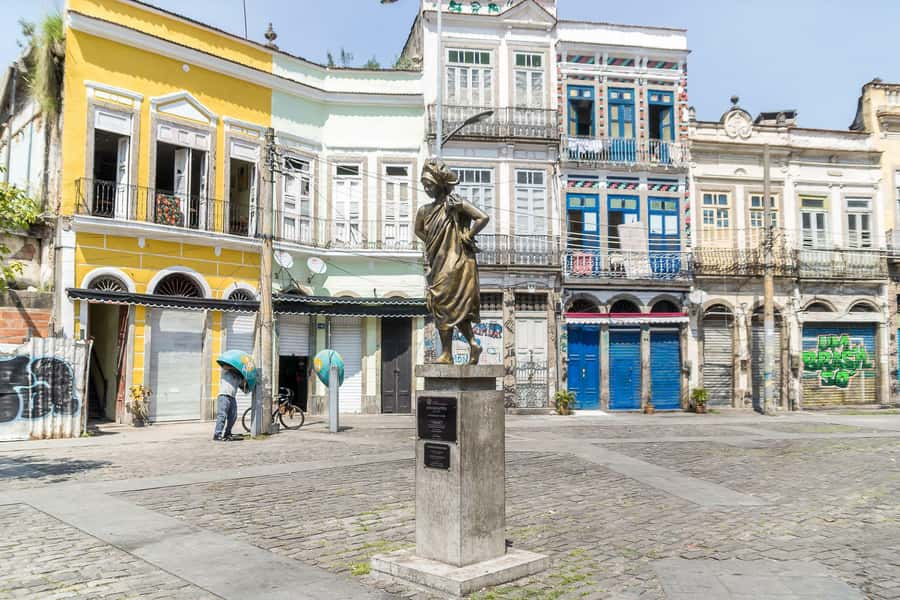
The route includes a statue honoring Mercedes Baptista. She was a pioneer of Afro dance in Brazil and the first Black dancer at Rio’s Municipal Theater.
This stop broadens the story beyond the port and beyond samba. It shows how Black artists pushed into institutions that had long excluded them. The statue gives the guide a specific person through whom to explain ambition, barriers, achievement, and cultural influence.
I appreciate stops like this because they keep the walk from reducing Afro-Brazilian history to suffering alone. Slavery and racism are essential parts of the discussion, but so are creativity, discipline, artistic leadership, and public recognition.
Listen for the way your guide handles the balance. The strongest guides on this activity have been described as warm and energetic while still treating the subject with care. Some use performance, facial expression, and storytelling to make historical figures easier to picture. That style will suit you if you prefer an active guide rather than a quiet stream of dates.
Pedra do Sal and the roots of samba
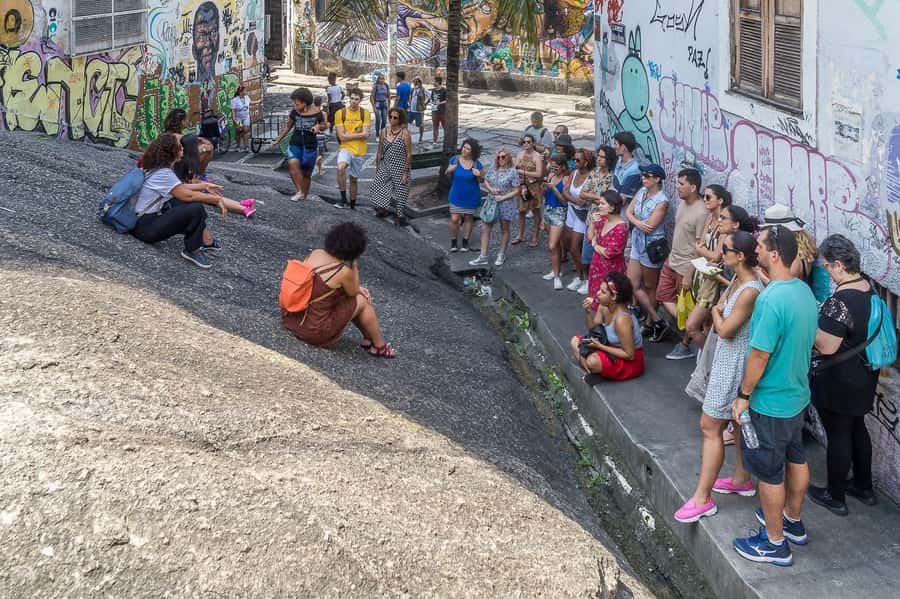
Pedra do Sal is the emotional center of the walk for many people. The tour presents it as the place where samba was born and identifies it as the oldest continuously inhabited Black neighborhood in the country.
The stop lasts about 20 minutes. Your guide explains how the site connects to music and community life. You may also hear about the people and events that helped shape Rio’s Afro-Brazilian culture.
Pedra do Sal can look modest if you arrive without context. Its importance is not based only on a grand building or a dramatic view. The meaning comes from the people who gathered there, the cultural practices that took root, and the way samba moved from community life into one of Brazil’s best-known symbols.
That is why the guide matters so much here. A quick visit alone may give you a photograph of stone steps. A good explanation turns the place into part of a much larger story about migration, work, celebration, discrimination, and artistic survival.
If you love samba, this stop gives you a useful starting point. If you know little about it, the guide can help you see that samba is not just a performance for visitors. It is tied to Afro-Brazilian community life and to a long struggle for space and recognition.
The Hanging Garden of Valongo
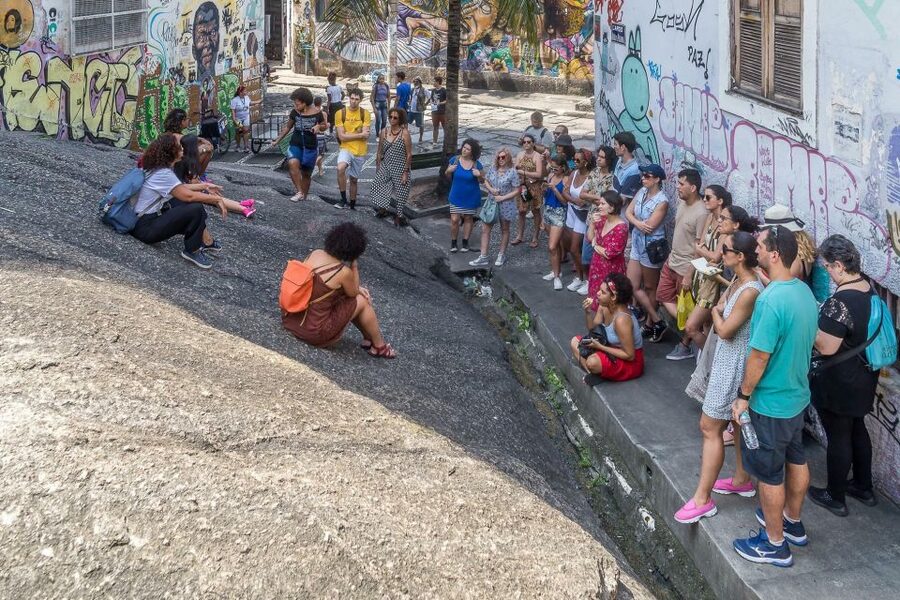
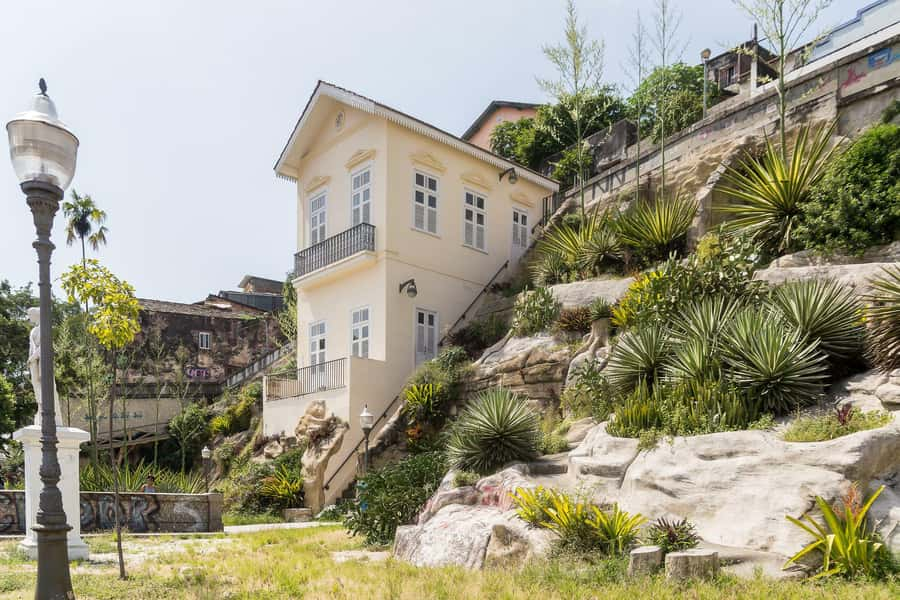
The walk then reaches the Jardim Suspenso do Valongo, or Hanging Garden of Valongo. The guided visit is scheduled for about 20 minutes.
This site adds another layer to the port district. The garden is linked to Valongo and helps you understand how the city later reshaped and presented places connected to the slave trade. Your guide explains the historical setting rather than treating the garden as a decorative stop.
This is a good point to pay attention to how public memory works. Cities often build, cover, rename, or beautify places without fully explaining what happened there. The tour asks you to notice those changes and consider whose story is made visible.
The garden also gives you a change of pace. After the crowded ideas of the earlier stops, a landscaped site can make room for questions. Do not feel you need to rush to take pictures. The value is in hearing how Valongo fits into the larger story of Rio’s port and Black communities.
Cais do Valongo, the hardest stop
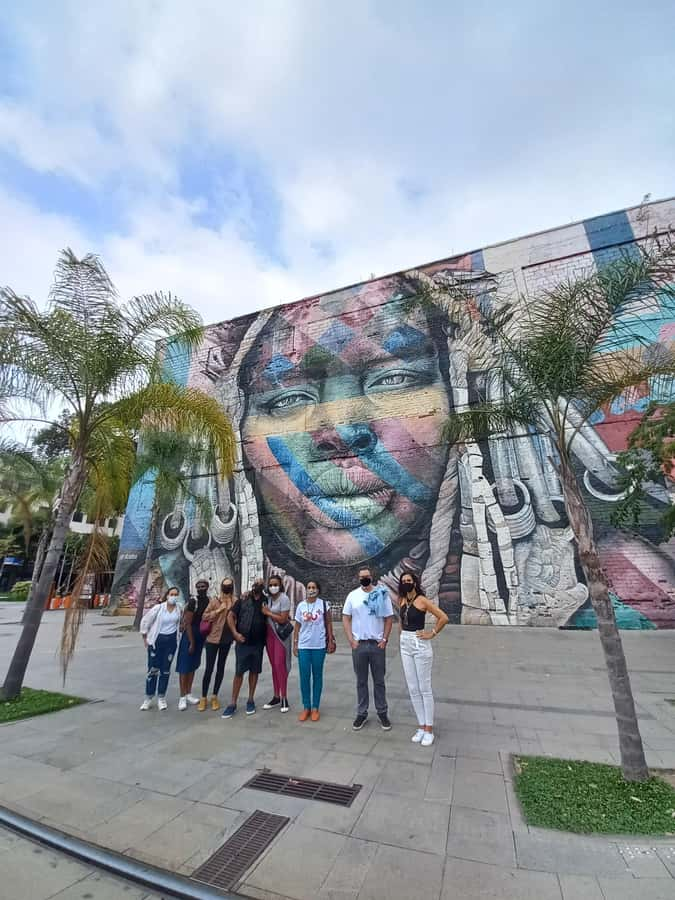
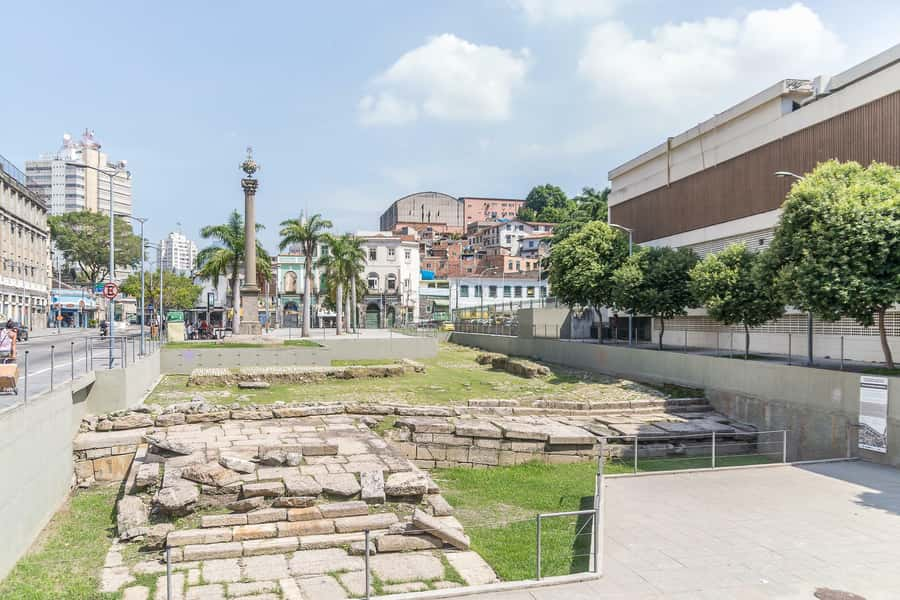
The final historical stop is Cais do Valongo. You spend about 20 minutes here before returning to the museum.
This is the place where the tour’s themes come together most directly. The waterfront was tied to the arrival of enslaved Africans in Brazil, and the site carries the weight of that past. The experience does not present Little Africa as a charming district detached from violence. It connects the area’s later cultural life with the brutal system that brought so many people to the country.
Give yourself emotional space here. The subject can be upsetting, and the tour deals with slavery and racial inequality plainly. The guides are not simply reciting information. People such as Larissa have been praised for explaining the period from slavery through present-day racial dynamics, while other guides have handled difficult questions about race and identity with patience.
The route then returns to the Museu de Arte do Rio. The stated stop times add up to a fairly steady walk, but the full activity lasts 150 minutes. Expect time for movement, explanations, questions, and the museum-area break.
What the $40 price gets you
At $40 per person, this is not the cheapest way to spend two and a half hours in Rio. You are paying for a guide-led interpretation of places you could technically visit on your own.
The value lies in the connections. Without a guide, you might see Mauá Square, Pedra do Sal, and Valongo as separate points on a map. With the route, they become parts of one story. You also get explanations of Afro-Brazilian food, dance, samba, and racial history that a general city walk may only mention briefly.
The tour includes an English-speaking guide. The information also mentions English or Portuguese in the included section, but the practical instructions say the activity is offered only in English. If language is important to you, confirm the current arrangement when booking.
Hotel pickup and drop-off are not included. You need to reach the museum yourself and arrange your own way back. The tour offers free cancellation up to 24 hours before departure and a reserve-now, pay-later option, which helps if your Rio schedule is still shifting.
Heat, rain, and practical preparation
Bring water, sunscreen, comfortable clothes, and walking shoes. This is an outdoor walk, not a museum tour with air-conditioned rooms between stops.
The activity runs in rain or sunshine. Bring rain protection if the forecast looks uncertain, but do not assume bad weather will cancel the tour. One guide continued the walk during heavy rain, and another checked that a participant reached transport safely afterward. That kind of care is useful, but you should still dress for conditions.
You also need to keep the 15-minute late-arrival limit in mind. Meeting in front of the museum is simple, but Rio traffic can be slow. Arrive early rather than trying to cut it close.
The tour is not suitable for children under five. For older children and teenagers, the decision depends on their interest in serious history and their ability to walk outdoors for 150 minutes. The activity is best for adults, students, history fans, and anyone who wants a more honest picture of Rio.
Who should book this Little Africa walk?
I would book it if you want to understand Rio beyond its postcard attractions. It is especially useful if you are interested in the African diaspora, samba, Brazilian food, public memory, or the way slavery still shapes modern society.
It is also a good choice for people who prefer a guide with a strong personal voice. The guide may be Luana, Nathalia, Larissa, Marina, Ryane, Eddie, Raquel, or another member of the team. Past guide strengths include clear English, humor, patience, personal family connections, academic study, and a willingness to discuss difficult questions.
I would skip it if you want a light sightseeing walk with little discussion. I would also think twice if you dislike heat, uneven walking, serious historical subjects, or tours that ask you to reflect rather than simply take photographs.
Should you book it?
Book the Little Africa Heritage Walking Tour if you want a grounded introduction to Afro-Brazilian history and culture. The rooftop view is pleasant, but the real value comes from the route between the stops and the explanations that connect colonial Brazil, emancipation, food, dance, samba, and Valongo.
Schedule it near the start of your Rio stay, wear practical clothes, and leave room afterward for lunch in the port area. At $40, it is worthwhile for you if a thoughtful guide-led history walk matters more than checking off a long list of attractions.
FAQ
Where does the Little Africa Heritage Walking Tour begin?
The tour begins in front of the Museu de Arte do Rio. You should arrive five minutes before the scheduled start time.
How long does the tour last?
The activity lasts 150 minutes, or two and a half hours.
Which places are visited?
The route includes the Rio Art Museum area, Morro da Conceição, Largo de São Francisco da Prainha, Pedra do Sal, the Hanging Garden of Valongo, and Cais do Valongo. It returns to the Rio Art Museum.
Is the tour offered in English?
The activity information says the tour is offered only in English. It also lists an English or Portuguese-speaking guide in the included section, so confirm the language arrangement when booking if this matters to you.
What should I bring?
Bring comfortable shoes, sunscreen, water, and comfortable clothes. The tour runs outdoors and takes place rain or shine.
Is hotel pickup included?
No. Hotel pickup and drop-off are not included, so you need to make your own way to the museum and arrange your return.
New routes in the world
- Baltimore Walking Foodie Tour in Fells Point★ 5.0 · 182 reviews
- Baku Oil Heritage & Old Town Walking Tour★ 5.0 · 232 reviews
- Baku Walking Tour (Old City)★ 5.0 · 127 reviews
- The Madam’s Curse Walking Ghost Tour★ 4.5 · 103 reviews
- Austin Small Group Morning Walk★ 5.0 · 412 reviews
- Austin Haunted Pub Crawl Walking Tour★ 4.5 · 232 reviews
- Austin Downtown Private Walking Food Tour With Secret Food Tours★ 5.0 · 71 reviews
- Austin Murder Walk★ 5.0 · 310 reviews
History Walking Tours, compared.
History and Hauntings of Salem Guided Walking Tour
Read our review →
Freedom Trail History Small Group Walking Tour
Read our review →
Historic Charleston Guided Sightseeing Walking Tour
Read our review →
Tapas Walking Tour with Food, Wine, and History
Read our review →
Savannah History and Haunts Candlelit Ghost Walking Tour
Read our review →
A History of Terror – Belfast City Centre Walking Tour
Read our review →Browse the lists this tour appears in