

Review · FRANCE
Marseille: Essential Guided Walking Tour of the City
Marseille’s long story comes alive on foot, from its 2,600-year-old Greek and Roman roots to the lively waterfront of the Vieux Port. Local guide Charles leads this 5-kilometer route through old lanes, grand monuments, street art, and seaside viewpoints, adding maps, photographs, humor, and personal knowledge along the way.
I like two things in particular: the small groups of no more than eight make it easy to ask questions, and the route gives you both famous sights and less obvious corners of Le Panier. The main consideration is the distance. Five kilometers over 150 minutes, including hills and uneven streets, calls for comfortable shoes and a reasonable level of mobility.
- Meet Charles at La Major Cathedral, where the tour begins beneath one of Marseille’s most striking buildings.
- Explore Le Panier on foot, with murals, old lanes, the Vieille Charité, the Church of Accoules, and Windmill Hill.
- Follow Marseille’s story from Greek settlement to Roman port and World War II, with visual aids that make the past easier to understand.
- See the Vieux Port and Canebière, the city’s best-known waterfront and central shopping street.
- Pause at Saint-Victor’s Abbey and Le Pharo for architecture, sea views, and a look across the harbor.
- Finish with useful local advice, including suggestions for restaurants, museums, and places to continue exploring.
Why This Marseille Walk Works So Well
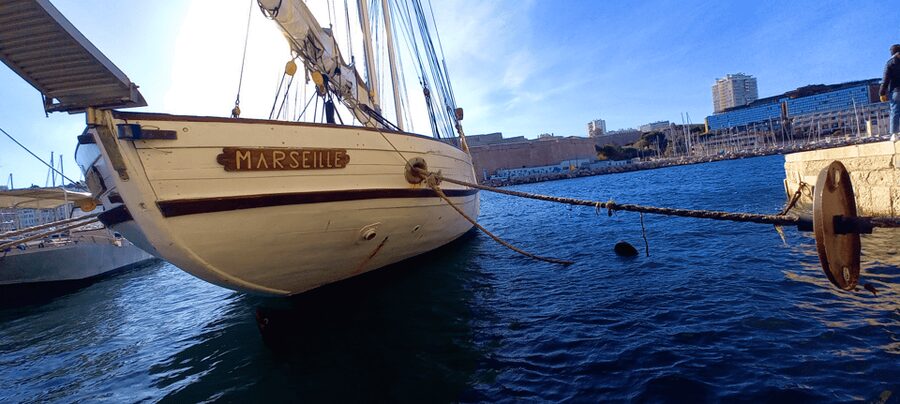
A first visit to Marseille can feel scattered. The city spreads from the cathedral and old port into steep neighborhoods, broad avenues, and waterfront promenades. This tour gives those pieces a clear order.
You start at La Major, move through Le Panier, descend toward the harbor, cross the central streets, and then head along the coast toward Saint-Victor and Le Pharo. That means you see Marseille’s old core, maritime center, and grand 19th-century monuments in one continuous walk.
The route is not just a parade of façades. Charles connects places to the forces that shaped the city: Greek settlement, Roman rule, trade, religious power, wartime destruction, and modern preservation. He uses old photographs and maps during the walk, which is especially useful in places that have changed greatly over time.
The group limit matters. With eight people or fewer, you can hear clearly and stop to ask about food, museums, architecture, or local customs. Several people who took the tour alone also found it easy to feel included rather than lost in a crowd.
Starting Beneath La Major Cathedral
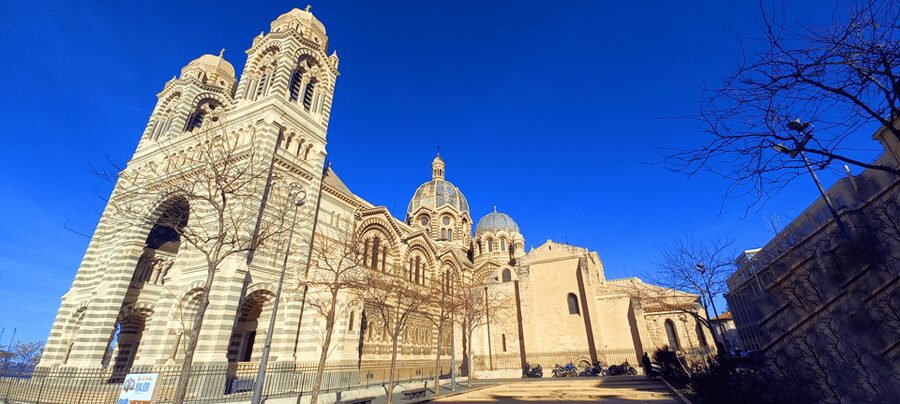
Meet your guide in front of the Cathédrale Basilique Sainte-Marie-Majeure, usually called La Major. Look for Charles wearing a white cap.
The cathedral’s Neo-Byzantine and Romanesque design makes a strong opening. Its striped stone, domes, and imposing scale immediately show that Marseille is not simply an old fishing port. It is a city that has repeatedly rebuilt itself and expressed its ambitions through architecture.
The first ten minutes set the tone. You get an introduction to the cathedral and the city’s long past before heading into the lanes of Le Panier. Since the tour begins outdoors, check the weather before leaving your hotel and bring water, sunglasses, and suitable clothing.
More Guided Walks in France:
- Paris Top Sights Half Day Walking Tour with a Fun Guide
★ 5.0 · 2,893 reviews - Paris: Montmartre Highlights Walking Tour with a Local Guide
★ 4.9 · 2,318 reviews - Paris: Montmartre Cheese, Wine & Pastry Guided Walking Tour
★ 4.8 · 2,255 reviews
Le Panier: Marseille’s Old Lanes and Street Art
Le Panier is one of the oldest parts of Marseille, rising on the hillside above the Vieux Port. Its narrow streets and stairways feel different from the broad avenues closer to the water.
This is the most atmospheric section of the walk. Charles points out street-art murals, small architectural details, and places that are easy to pass without understanding. The neighborhood has an artistic, slightly bohemian feel, but the route also explains its harder chapters.
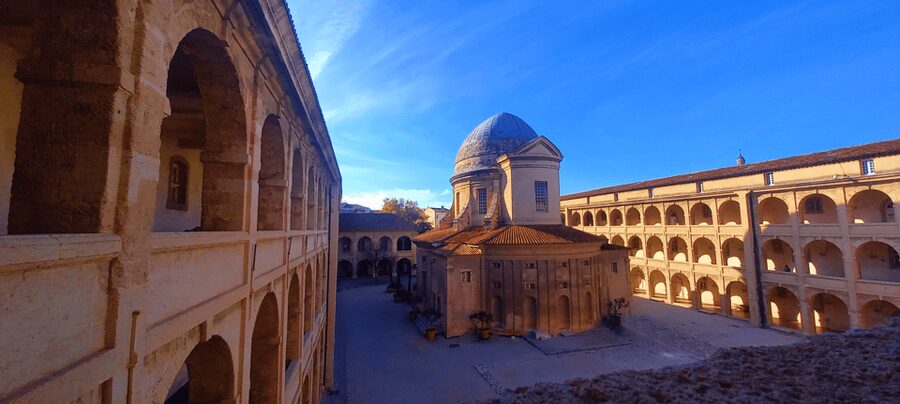
The Vieille Charité is one of the key stops. This former hospital complex is now a major cultural site, and its enclosed architecture gives you a sense of how Marseille once cared for people who had no home or resources. The calm Windmill Hill offers a quieter contrast to the crowded waterfront.
You should expect some uphill walking here. The streets can be uneven, and the route is not suitable for wheelchair users. If you have knee problems or find hills difficult, ask yourself if a five-kilometer walking tour is the right way to see Marseille.
Church of Accoules and the Route Toward the Water
The Church of Accoules adds another layer to Le Panier. Its history helps show how religious buildings shaped daily life in the old city, while the surrounding streets reveal how tightly packed the historic center once was.
From here, the walk heads toward Rue de la République. This change in scenery is useful. You move from older lanes into a more formal urban setting, seeing how later planners reshaped Marseille with wider streets and grander buildings.
I appreciate this contrast because it prevents the tour from presenting Marseille as a single historic postcard. The city is a mixture of old neighborhoods, 19th-century redevelopment, working port life, and modern cultural spaces. Charles keeps the transitions connected rather than treating each stop as an isolated sight.
Ancient Marseille at the Docks
The harbor area is where the city’s ancient beginnings make the most sense. Marseille was founded by Greek settlers, and its position on the Mediterranean made it a natural point for trade, travel, and contact with other cultures.
The Roman period also receives attention. You learn how Roman influence affected the port and the city’s development, then move toward more recent events, including Marseille’s tragic wartime history during World War II.
This combination is one of the tour’s strongest features. Ancient history can seem abstract when it is presented only through dates. Here, it is tied to streets, docks, defenses, and the city’s continuing role beside the sea. The wartime section also adds a sober note, showing that Marseille’s past includes loss and disruption as well as commerce and cultural exchange.
More Walking Tours in France:
- Authentic Parisian Gourmet Food Tour with 10 Local Dishes & Wines
★ 5.0 · 4,754 reviews - Montmartre Hidden Gems and Scenic Highlights Walking Tour
★ 5.0 · 2,684 reviews - Montmartre Hill French Gourmet Food and Wine Tasting Walking Tour
★ 5.0 · 2,588 reviews - Paris Île de la Cité and Notre-Dame Walking Tour With Crypt
★ 5.0 · 2,272 reviews
The Vieux Port and Marseille’s Maritime Heart
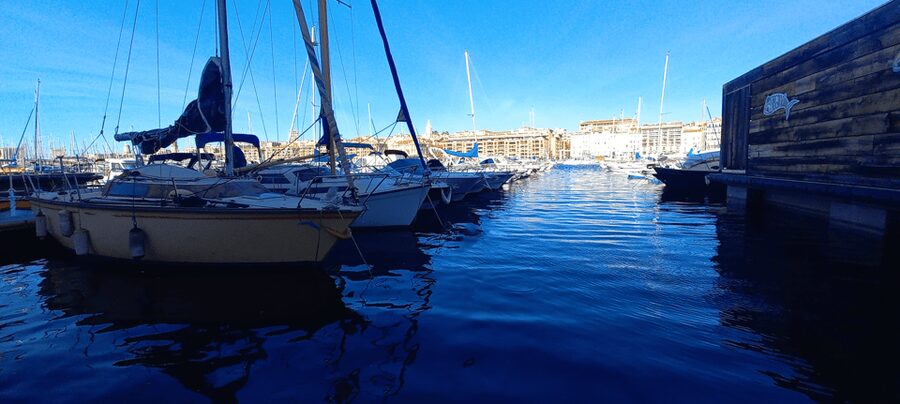
The Vieux Port is the natural center of Marseille. Boats and yachts sit in the harbor, while the Forts Saint-Jean and Saint-Nicolas guard the entrance from opposite sides.
You get time to look at the port and understand why this spot has mattered for so long. It remains a place for daily movement, sightseeing, restaurants, and waterfront walks, but the tour keeps the focus on how the port shaped Marseille over the centuries.
This is a good place to pause for photographs, though it can also be one of the more active parts of the route. Stay close enough to hear Charles, especially if there is noise around the harbor.
The route then reaches Cours Honoré d’Estienne d’Orves. This square connects the old waterfront with restaurants, cafés, and pedestrian areas. It is also a practical place to remember for later, since you may want to return for a meal or an evening walk.
Canebière and the City’s Grand Avenue
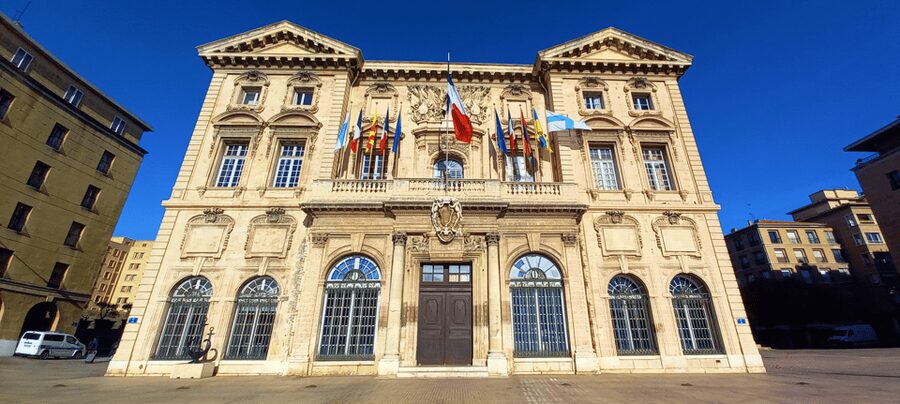
Canebière is Marseille’s best-known central street. The walk takes you past galleries, workshops, boutiques, cafés, bistros, and restaurants.
This section gives you a look at the city beyond its oldest quarter. You can see how Marseille’s commercial and social life stretches away from the harbor, and you get a sense of the avenue’s role as a link between the port and the city center.
It is not a long stop, about ten minutes, so do not expect time to browse shops or settle into a café during the tour. Instead, use Charles’s advice to mark places you might return to later. Several people who took the walk found his restaurant and museum suggestions useful for the rest of their stay.
Saint-Victor’s Abbey and a Quiet Break
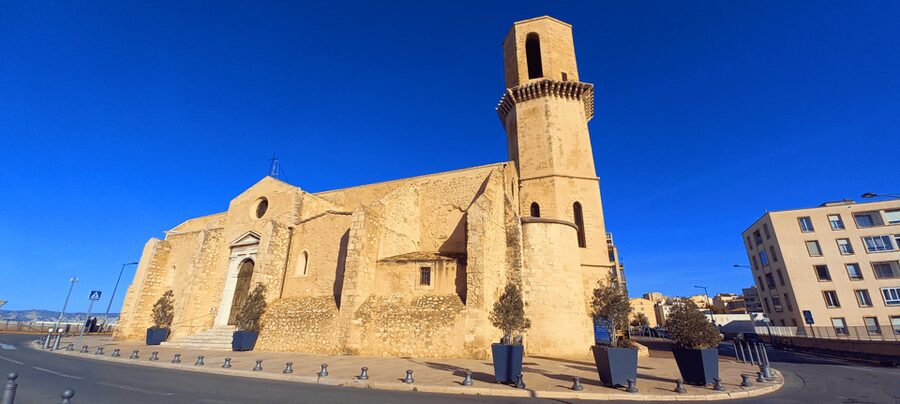
The next major sight is the Abbaye Saint-Victor, one of Marseille’s important religious monuments. Its Roman architecture provides a sharp contrast with the decorative style of La Major and the dense lanes of Le Panier.
The abbey also helps explain Marseille’s Christian past and the way religious institutions shaped the city. The stop lasts about 15 minutes, followed by a 20-minute break with scenic views along the way.
That break is welcome. Two and a half hours on city streets can feel longer in summer, especially when the sun is strong. Bring water and a snack if you need one, since food and drinks are not included. The tour information specifically recommends bringing your own supplies.
Charles has also shown care with the pace and conditions. In hot weather, he has chosen shaded stopping points when possible, but you should still bring a hat, sunglasses, and weather-appropriate clothing.
Le Pharo and the Best Wide View
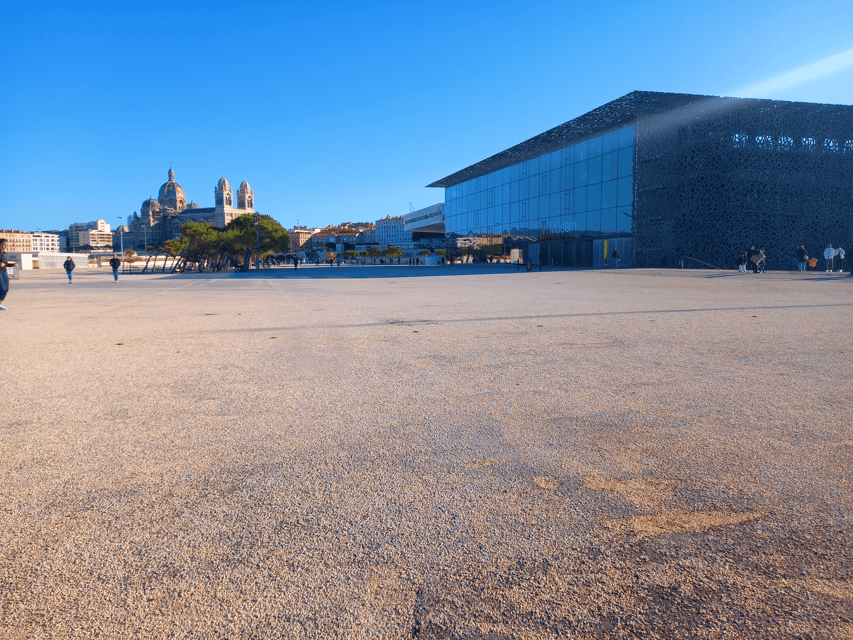
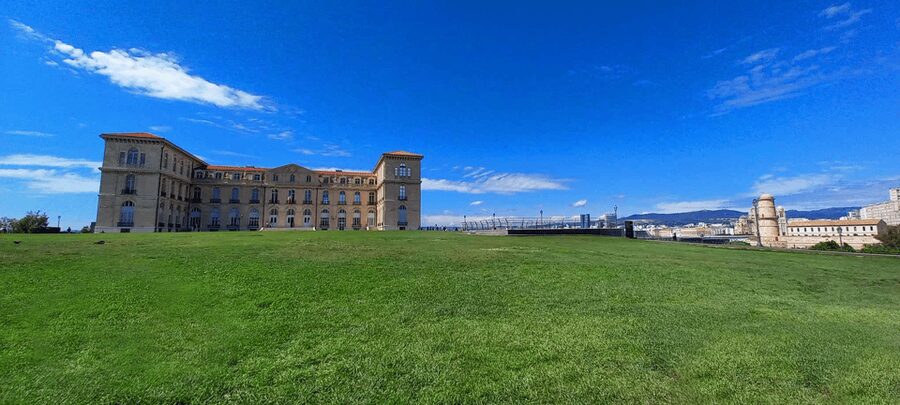
The final major section leads to Le Pharo, where the route opens toward the sea. The Palais du Pharo was built in the mid-19th century by Emperor Napoleon III for Empress Eugénie. Its grand setting and terraces make a fitting end to a tour that has moved through so many periods of Marseille’s history.
The palace itself is worth seeing for its ornate façade and sweeping outlook. Here, you get a wider view of the harbor and the Mediterranean rather than the close-up details of the old neighborhoods.
This is one of the tour’s best rewards because it puts the route into perspective. From Le Pharo, you can think back to La Major, Le Panier, the port, and Saint-Victor as parts of one connected city.
The tour can finish at either the Vieux Port or Palais du Pharo. That flexibility is useful if you want to continue along the waterfront, return to central Marseille, or stay near the palace for more views.
Charles as Your Guide
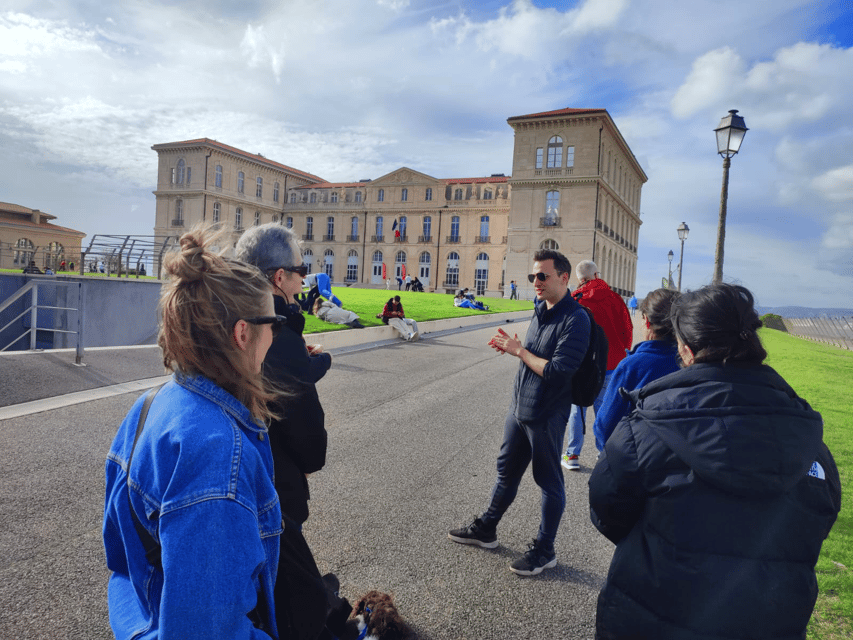
Charles is a local, bilingual guide who leads in English or French. His approach combines facts with anecdotes, humor, maps, and old photographs.
The strongest praise for him centers on his ability to make history easy to follow without turning the walk into a lecture. He also takes time to learn what interests each person in the group, then adjusts his explanations and recommendations.
That personal touch is especially valuable in a group capped at eight. Solo participants can ask questions without feeling awkward, while couples and small groups still get direct attention.
His recommendations are a useful extra. He can point you toward museums, restaurants, cafés, and other things to see after the walk. One person received advice that led to a memorable bouillabaisse at Chez Fonfon, though restaurant choices remain your own decision.
Charles speaks English clearly, and the tour can work well for people who do not speak French. If you prefer a guide who tells stories, welcomes questions, and brings visual material rather than simply reciting dates, this is a good match.
Price, Pace, and Physical Effort
At $41 per person, the tour is fairly priced for a 150-minute guided walk with a small group. You are paying for more than access to sights, since the route itself does not include entrance tickets or food. The value comes from the structure, local interpretation, and time saved figuring out the city alone.
The walk covers about five kilometers. That is a substantial distance, but the pace is designed to include frequent stops for history, views, and questions. You will still spend much of the time on your feet.
The biggest practical issue is comfort. Wear shoes made for walking, not fashion shoes with thin soles. The tour is not suitable for wheelchair users, and the slopes, steps, and uneven surfaces of Le Panier may trouble anyone with limited mobility.
You can cancel up to 24 hours in advance for a full refund, and the reserve-now, pay-later option keeps your plans flexible. Starting times vary, so check availability for the date you want.
Who Should Book This Marseille Tour
I would choose this tour early in a Marseille stay. It gives you a useful map of the city and leaves you with ideas for museums, meals, and neighborhoods to revisit.
It suits first-time visitors, cruise passengers with several hours in port, solo visitors, couples, and small groups who want a personal introduction. It is also a good choice if you care about history but prefer stories and local context to a formal museum tour.
You may want a different plan if you dislike walking, have difficulty with hills, or want to spend most of your time inside monuments. Food is not included, and the tour does not replace a full visit to the Vieille Charité, Saint-Victor’s Abbey, or other museums.
The route also gives only a short look at each major place. That is useful for orientation, but you will need to return on your own if you want a detailed interior visit.
Should You Book It?
Book this tour if you want a friendly, well-paced introduction to Marseille that connects Greek and Roman origins, wartime events, religious architecture, port life, and modern neighborhoods.
I especially recommend it for a first morning or afternoon in the city. Charles’s local advice can help shape the rest of your visit, while the small group keeps the experience personal.
Skip it only if five kilometers of walking feels like too much or if you prefer independent sightseeing with no fixed route. For most visitors who want to understand why Marseille feels both ancient and constantly changing, this is a strong value at $41.
FAQ
Where does the Marseille walking tour begin?
The tour begins in front of La Major Cathedral, officially the Cathédrale Basilique Sainte-Marie-Majeure. Your guide wears a white cap.
How long does the tour last?
The scheduled duration is 150 minutes, or two and a half hours.
How far do you walk?
The route covers about five kilometers through Marseille.
Which languages are available?
The live guide provides the tour in English or French.
How large is the group?
The tour is limited to eight participants.
Is food or drink included?
No. Food and drinks are not included, so bring water and anything else you may need during the walk.
Is the tour suitable for wheelchair users?
No. The tour is not suitable for wheelchair users, and the route includes hills and uneven streets.
New routes in France
- Avignon Walking Tour including Pope’s Palace★ 4.5 · 158 reviews
- The Official Emily in Paris Locations Walking Tour★ 4.9 · 383 reviews
- Strasbourg: Historic Center Walking Tour★ 4.7 · 88 reviews
- Strasbourg: Private Walking Tour of the Historical Center★ 4.2 · 107 reviews
- Strasbourg: Guided Walking Tour★ 4.7 · 127 reviews
- Strasbourg : European District Walking Tour★ 5.0 · 95 reviews
- Paris: Montmartre Food Tasting Walking Tour with Secret Dish★ 4.8 · 107 reviews
- Paris: Emily Inspired Walking Tour★ 4.9 · 312 reviews
France Walking Tours, compared.

Authentic Parisian Gourmet Food Tour with 10 Local Dishes & Wines
Read our review →
Paris Top Sights Half Day Walking Tour with a Fun Guide
Read our review →
Montmartre Hidden Gems and Scenic Highlights Walking Tour
Read our review →
Montmartre Hill French Gourmet Food and Wine Tasting Walking Tour
Read our review →
Montmartre Highlights Walking Tour with a Local Guide
Read our review →
Paris Île de la Cité and Notre-Dame Walking Tour With Crypt
Read our review →
Montmartre Cheese, Wine & Pastry Guided Walking Tour
Read our review →
Paris in a Day: Louvre or Orsay, Eiffel Tower, City Walk & Cruise
Read our review →Browse the lists this tour appears in