
Review · MADRID
Madrid: Welcome to Madrid Guided Walking Tour in English
Madrid’s story is packed into this 2.5-hour walk: an Islamic water settlement becomes a royal capital, then a modern European city shaped by Habsburg and Bourbon rulers. You move from the Royal Palace and Almudena Cathedral through Madrid’s oldest squares, along Gran Vía, and toward the Congress of Deputies.
I like the route for two reasons. First, it gives you a useful city map on foot, with major sights linked by a clear historical thread. Second, the guides bring personality to the material. Daniel, Esme, Adam, Joaquin, Dina, and Sebastian are all praised for humor, strong English, and lively storytelling. The main consideration is pace: this is a long city walk, and you may need to move quickly for photographs.
Key points to know before you book
- Madrid’s story unfolds in order: You follow the city from its Arabic beginnings through the Habsburg and Bourbon eras.
- The route covers major central sights: Expect the Royal Palace, Almudena Cathedral, Plaza de la Villa, Plaza Mayor, Puerta del Sol, Gran Vía, the Prado area, and Congress of Deputies.
- The guides make the history accessible: Daniel, Esme, Adam, Joaquin, Dina, and Sebastian are noted for humor, clear English, and good answers to questions.
- The meeting point is simple: Meet outside Teatro Real at Ópera Metro station and look for the yellow umbrella.
- You see the sights from outside: This is a walking orientation tour, not an admission tour for the palace, cathedral, or Prado Museum.
- The $31 price covers the guide and reservation: The tour uses a pay-as-you-wish format, but here your payment covers both the booking fee and the guide’s payment.
Starting at Ópera with Madrid’s royal story
The tour begins outside Teatro Real, beside Ópera Metro station. Look for the yellow umbrella. This is a practical meeting point in central Madrid, and the location is easy to reach if you are staying near the old center.
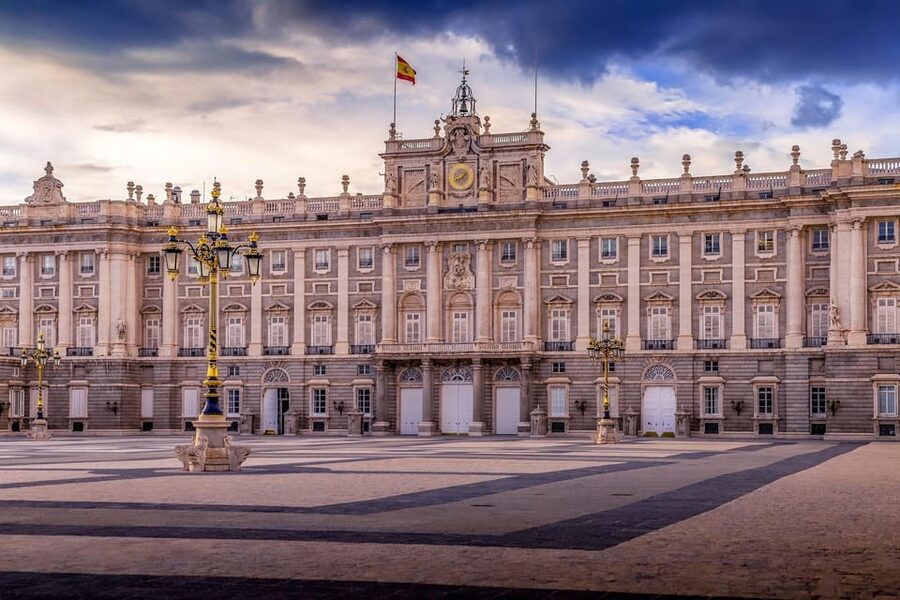
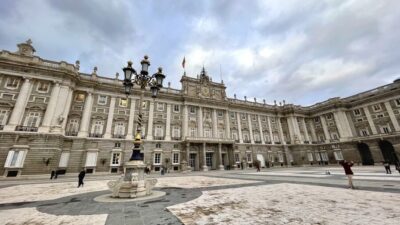
From here, the route moves toward the Royal Palace, one of the clearest symbols of Madrid’s royal past. You should expect an exterior introduction rather than a palace visit, so book a separate palace ticket if you want to see the grand rooms inside.
The opening history is one of the tour’s strongest features. Madrid began as the Arabic settlement of Mayrit, a name linked to abundant water. That starting point helps explain why Madrid became a city at all. You are not simply looking at royal buildings. You are seeing how a settlement grew into the political center of a large empire.
This approach suits you if you like knowing why a city developed in a certain place. It also gives the rest of the walk a useful frame. Madrid is not just a collection of handsome squares and monumental buildings. Its shape reflects military origins, royal power, religious change, and later urban planning.
More Guided Walks in Madrid:
- Madrid: Tapas & Wine Tasting Tour with Local Guide
★ 4.8 · 2,171 reviews - Madrid: Royal Palace Skip-the-Line Guided Tour
★ 4.5 · 2,140 reviews - Madrid: Welcome to Madrid Guided Walking Tour
★ 4.9 · 1,738 reviews
Almudena Cathedral and the city’s changing styles
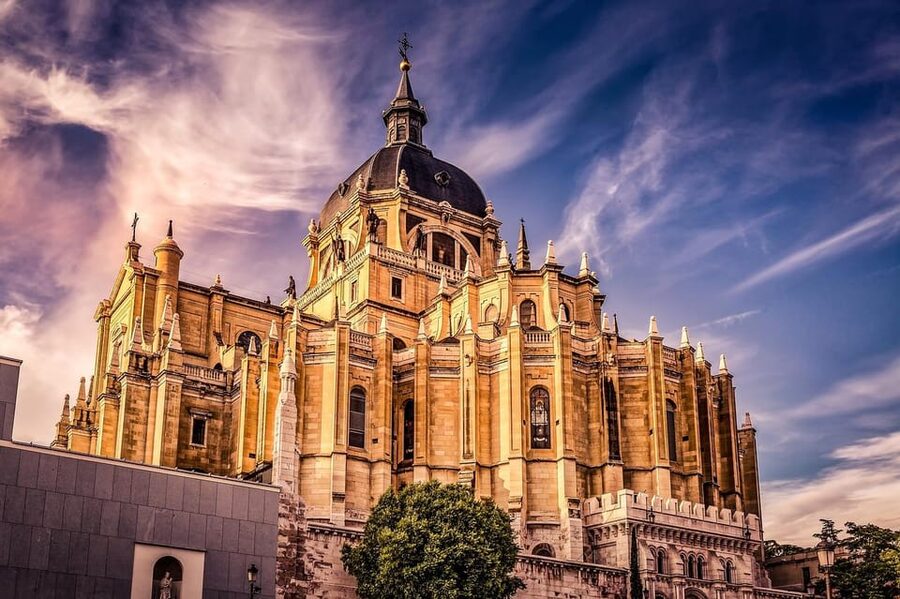
The next major stop is Almudena Cathedral, located close to the palace. Its appearance is unusual because several architectural styles appear together, reflecting the long process of its construction and later changes.
The guide uses the cathedral to explain Madrid’s religious and royal identity. You will learn about the Catholic dynasties that shaped the city after the earlier Islamic period, while also seeing how newer architectural ideas were added over time.
I like this stop because it prevents the tour from presenting Madrid as a city built in one neat period. The cathedral’s mixed appearance makes that point easy to see. If you enjoy architecture, pay attention to the way the exterior differs from the older buildings farther along the route.
The tour does not include entry, and the schedule is built around several outdoor stops. That keeps the walk moving, but it also means you should not expect detailed interior commentary on each site.
Plaza de la Villa and three centuries of Madrid
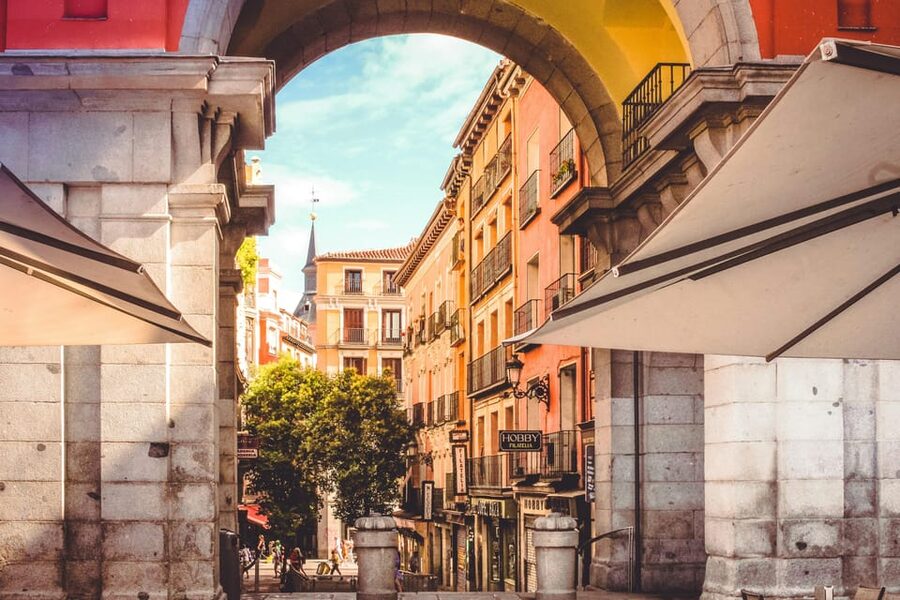
At Plaza de la Villa, the guide points out buildings that represent roughly three centuries of architectural change. It is a smaller and more intimate stop than Plaza Mayor, which makes it easier to focus on the details and the way old Madrid was arranged.
This is where a good guide matters. The buildings are attractive, but without context they can look like another historic square. Guides such as Joaquin and Esme have been praised for adding unusual facts and personal energy to these stops, while Daniel is frequently credited with making Spanish history easy to follow.
You will likely hear about the city’s growth, its public institutions, and the role of Madrid as the seat of power. The tour is strongest when it connects a building to a larger idea rather than simply naming dates and styles.
For photographs, keep your camera ready before the guide begins speaking. The walk covers a lot of ground, and one useful tip from the experience is to get your pictures quickly so you can keep up with the group.
Plaza Mayor, public spectacle, and royal ceremony
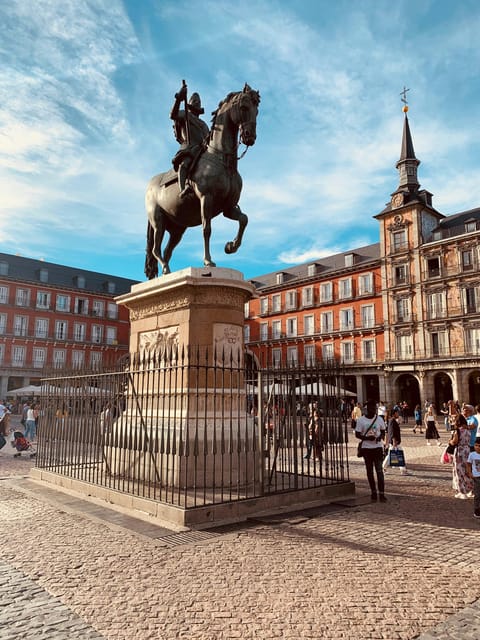
The route continues to Plaza Mayor, Madrid’s best-known historic square. Its present-day cafés and open space can make it seem relaxed, but the square has also hosted much darker and more formal events.
The guide explains its use for Inquisition trials, royal celebrations, and other public gatherings. That contrast is valuable. Plaza Mayor was not designed only for strolling and dining. It was a stage where power was displayed before large crowds.
This is one of the stops where storytelling can turn a familiar view into a more memorable one. The architecture is easy to photograph, but the historical use of the square gives it weight. You will also get a clearer sense of how old Madrid gathered around public spaces.
The square can be crowded, and the tour does not promise a quiet visit. Listen closely when the guide stops, since surrounding noise and movement may make it harder to catch every detail.
More Walking Tours in Madrid:
- Madrid Tapas & Wine Tasting Walking Tour – Small Group Local Bars
★ 5.0 · 3,644 reviews - Toledo Tour & Vineyard Walk with Wine Tasting from Madrid
★ 5.0 · 2,546 reviews - Madrid Walking Tour from Puerta del Sol to Retiro Park
★ 5.0 · 2,285 reviews - Madrid by Night Small Group Tour: Stories, Sights and Tapas Bites
★ 5.0 · 1,956 reviews
Puerta del Sol, Madrid’s busy center
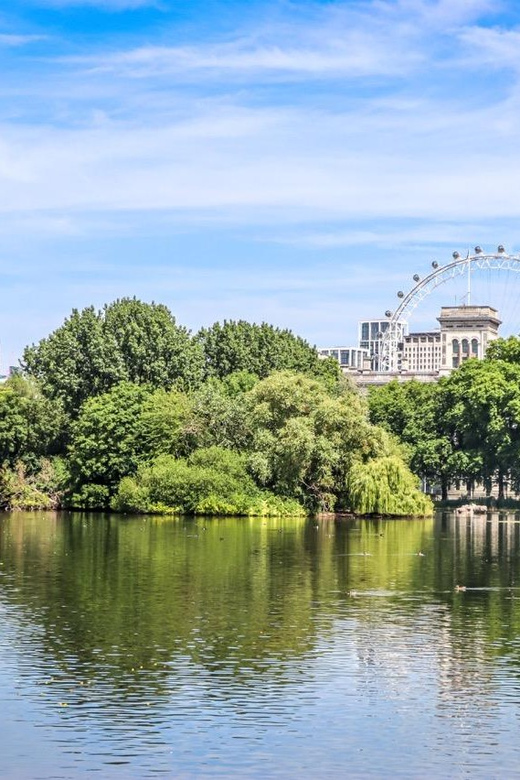
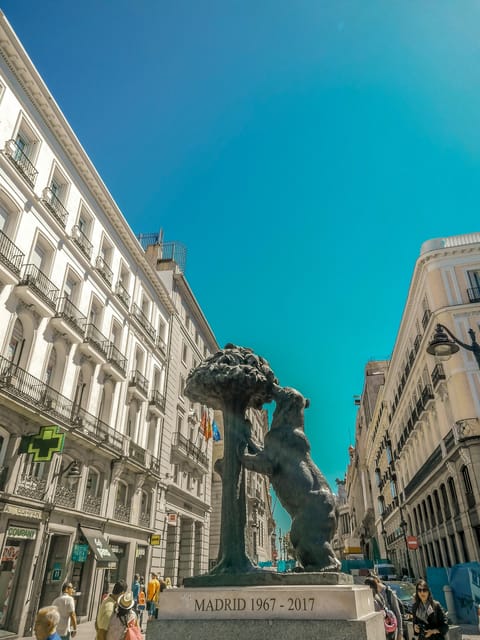
From Plaza Mayor, the walk reaches Puerta del Sol, the central meeting place of modern Madrid. It is a useful point for understanding how the old city connects with the newer commercial center.
The guide discusses the square’s role in city life and helps you place Madrid’s main districts in relation to one another. This is practical information for the rest of your stay. After the tour, you can use Sol as a reference point when planning visits, meals, or further walks.
The stop also marks a change in mood. Earlier sections focus more on royal buildings and old streets. Sol feels more like the working center of the city, with people crossing in every direction and transport connections nearby.
You will not spend the whole tour at each landmark. The value comes from the sequence. One site explains the next, and you gradually build a mental map instead of seeing disconnected attractions.
Goya, the arts, and the road to Gran Vía
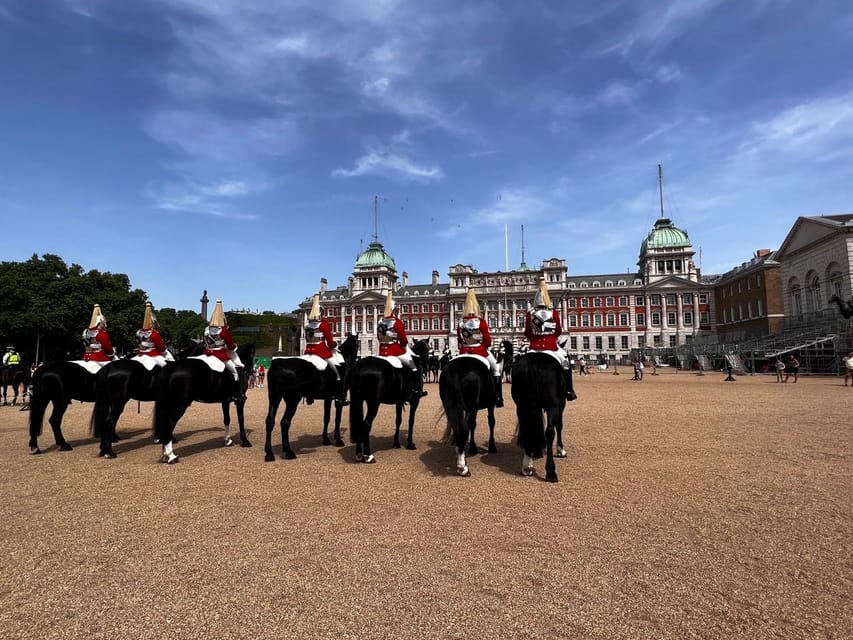
The route passes the Royal Academy of Fine Arts, associated with artists including Francisco Goya. This brings art into the story before the walk reaches the Prado area.
Madrid is well known for its museums, but this tour does not take you inside the Prado or the academy. Instead, the guide explains their place in the city and points out how Madrid became an important center for art and culture.
If you are planning museum visits, this outdoor introduction can help you choose how to use your time. You may want to return to the Prado with several hours free, since a quick exterior stop cannot replace a visit to the collections.
The guide’s role is especially important here. A dry list of artists and institutions would be easy to forget. The strongest guides on this tour use stories, jokes, and social or political context to make the subject easier to remember. Several guides are praised for keeping the information entertaining without losing the historical detail.
Gran Vía and nineteenth-century modernization
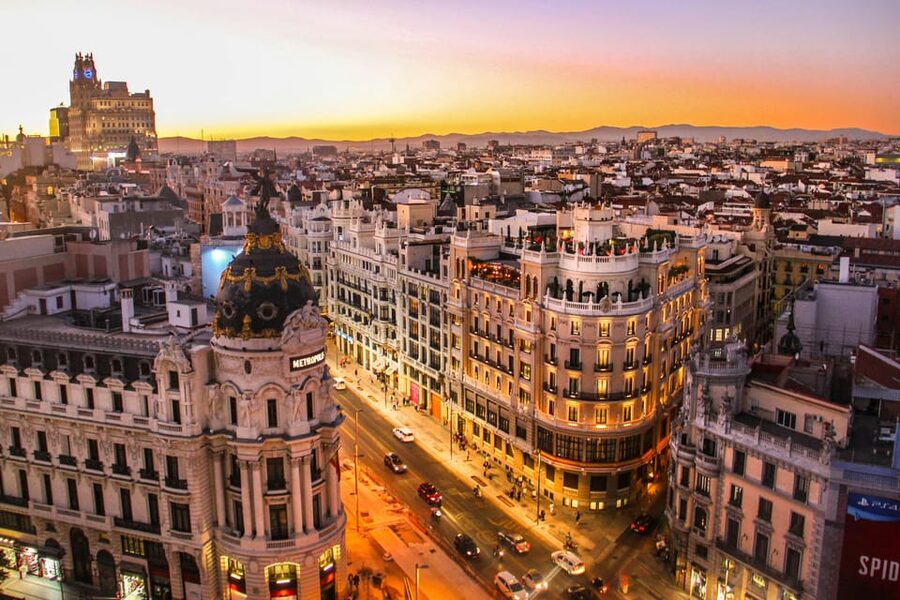
One of the route’s major highlights is Gran Vía, the grand avenue associated with Madrid’s nineteenth-century modernization. Its scale and architecture show a city trying to change its image and compete with other major European capitals.
The guide explains how Madrid expanded and modernized during this period. You will see a clear contrast between the older streets around the palace and squares and the broad, showy avenue that came later.
Gran Vía is also a good reminder that Madrid is not frozen in its royal past. The city grew, rebuilt, and adapted. This part of the tour connects architecture with urban planning, commerce, and the ambitions of modern Madrid.
The avenue is a busy urban setting, so this is another place where you need to stay alert and close to the group. The reward is a strong visual change in the route. After old squares and royal buildings, Gran Vía feels large, open, and confident.
The Prado area without a museum admission
The tour includes a stop near the Prado Museum, one of Madrid’s major cultural landmarks. You will learn about its role in the city, but the walking tour does not include museum entry.
That arrangement can be good value if you are visiting Madrid for the first time and want orientation before committing several hours to a museum. The guide can help you understand where the Prado fits within Madrid’s wider art scene and city center.
I would not treat this stop as a substitute for seeing the collection. If Velázquez, Goya, El Greco, or Spanish painting are high on your list, plan a separate visit and allow enough time. The walking tour gives you location and context, not an art-museum experience.
Still, placing the Prado on the route makes sense. The tour begins with Madrid’s political and religious power, then moves through its public squares, artistic institutions, and modern avenues. The Prado helps complete that picture.
Finishing at Congress of Deputies
The final listed stop is the Congress of Deputies, where Spain’s democratic system was once tested. The guide uses the building to discuss modern political history and the changes Madrid has seen beyond the age of kings.
Ending here gives the tour a useful final turn. It begins with royal authority and finishes with representative government. That broad arc helps you understand Madrid as a living capital, not just an old city center.
The Congress is another exterior stop, so you will not get an inside visit as part of the tour. The value lies in the explanation and the position of the building within Spain’s political life.
This ending may also help you decide what to explore next. Several guides, including Dina, Adam, Joaquin, and Esme, are praised for offering restaurant suggestions and ideas for later sightseeing. Use the final minutes to ask practical questions about the rest of your stay.
How the guide affects the experience
The tour is sold with a live English-speaking guide, and the guide seems to be the main reason it works so well. Different departures may be led by Daniel, Esme or Esmeralda, Adam, Joaquin, Dina, Sebastian, or another member of the team.
The most consistent strengths are clear English, humor, and strong command of Madrid’s past. Guides are also praised for answering questions, sharing local details, and keeping the walk lively over two and a half hours.
The delivery is not identical from one guide to another. That is normal for a general city walk. Still, the recurring qualities are useful: Daniel is noted for a good balance of information and humor, Esme for storytelling and enthusiasm, Joaquin for quirky details and local knowledge, and Dina for energy and practical recommendations.
One guide was especially considerate of an older participant who walked more slowly, checking in while keeping the rest of the group involved. That suggests a thoughtful approach, though this remains a walking tour and you should be comfortable spending 2.5 hours on your feet.
Is $31 a fair price?
At $31 per person, the price is reasonable if you want a guided introduction to central Madrid rather than a self-guided walk. You cover many important sights, get the historical links between them, and can ask questions along the way.
The payment structure needs a quick explanation. This is presented as a general pay-as-you-wish tour, but in this booking your amount covers the reservation fee and the guide’s payment. It is not simply a free walk where you decide afterward how much to give.
The price does not include hotel pickup, museum admission, or cathedral admission. That keeps the cost lower, but you should budget separately for any interiors you want to visit.
You can reserve now and pay later, and cancellation is available up to 24 hours before the start for a full refund. Those terms help if your Madrid plans are still changing.
Who should book this Madrid walk?
I would recommend it most strongly for a first visit to Madrid. The route covers the central sights in a logical order, and the historical background helps you decide where to return later.
It also suits you if you enjoy social, story-driven sightseeing. The guides use humor and personal observations, and the material goes beyond dates to include art, politics, architecture, religion, and city growth.
You may want a different option if your main goal is entering the Royal Palace, Prado Museum, or Almudena Cathedral. This is an outdoor orientation tour, not an admissions package.
It may also be tiring if you prefer a slow stroll with long photo stops. The walk is substantial, and one useful piece of advice is to take quick pictures and then rejoin the explanation. Comfortable shoes and a willingness to keep moving will improve the experience.
Should you book it?
Book this tour if you want Madrid’s major central sights tied together by one clear story. For $31, you get a useful first look at the city, strong historical context, and the chance to ask an English-speaking guide what to see and eat next.
I would especially choose it early in a Madrid visit. Start at Ópera, learn how the center fits together, then return to the Royal Palace, Prado, or any favorite square with a better sense of place.
Skip it if you want a museum tour, palace entry, or a private, slow-paced walk. For most first-time visitors who can handle a brisk 2.5-hour route, though, this is a practical and entertaining way to get oriented.
FAQ
Where does the walking tour begin?
Meet outside Teatro Real at Ópera Metro station. Look for the yellow umbrella.
How long does the tour last?
The scheduled duration is 2.5 hours.
What language is the tour conducted in?
The live tour guide speaks English.
What sights are included on the route?
The route includes the Royal Palace, Almudena Cathedral, Plaza de la Villa, Plaza Mayor, Puerta del Sol, the Royal Academy of Fine Arts, Gran Vía, the Prado Museum area, Congress of Deputies, and additional central sights.
Does the tour include entry to the Royal Palace?
No. The experience is a walking tour with a guide, and palace admission is not listed as included.
Does the tour include entry to the Prado Museum?
No. The route includes the Prado area, but museum admission is not included.
Is hotel pickup and drop-off included?
No. You must make your own way to the meeting point, and hotel pickup and drop-off are not included.
Who operates the tour?
The experience is operated by Walkative Tours.
What does the $31 price cover?
The payment covers the reservation fee and the guide’s payment within the general pay-as-you-wish tour format.
Can I cancel the booking?
Yes. You can cancel up to 24 hours in advance for a full refund.
Can I reserve now and pay later?
Yes. The booking option lets you reserve your place and pay later.
New routes in Madrid
- Madrid: Street Food Walking Tour in the Plaza Mayor Area★ 5.0 · 119 reviews
- Madrid: Visit to the Royal Palace & Walking Tour of the City★ 4.4 · 288 reviews
- Madrid: Private Walking Tour with a Local★ 4.4 · 161 reviews
- Madrid: Old Town & Poets District Guided Walking Tour★ 4.6 · 188 reviews
- Madrid: Enchanted Evening Walking Tour in Spanish★ 4.4 · 120 reviews
- Madrid: Old Madrid Walking Food and Wine Tour★ 4.9 · 111 reviews
- Madrid: Day Trip to Toledo with Walking Tour & Small Group★ 4.2 · 111 reviews
- Madrid: City Highlights Guided Walking Tour★ 4.8 · 347 reviews
Madrid Walking Tours, compared.
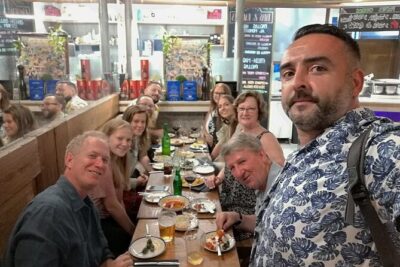
Madrid Tapas & Wine Tasting Walking Tour – Small Group Local Bars
Read our review →
Toledo Tour & Vineyard Walk with Wine Tasting from Madrid
Read our review →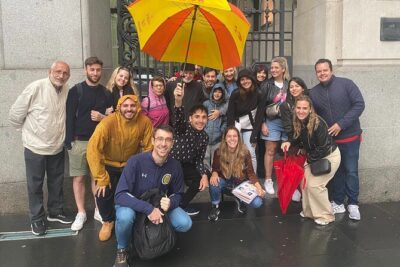
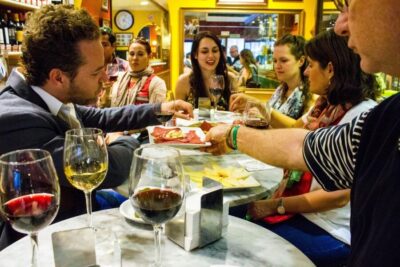

Madrid by Night Small Group Tour: Stories, Sights and Tapas Bites
Read our review →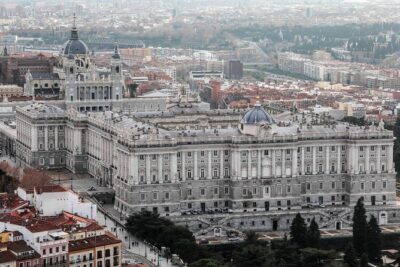
Madrid Old Town & Royal Palace Walking Tour Skip the Line Ticket
Read our review →
Browse the lists this tour appears in