
Review · BELGIUM
Ghent: Guided Walking Tour and Canal Boat Trip
Ghent’s best sights fit neatly into this walking tour and canal cruise, with the famous three towers, medieval quays, guild stories, and Castle of the Counts all tied together by a local guide. The boat ride then gives you a calmer look at the city from the Leie and Lieve waterways.
I like the way the tour joins major sights with smaller details, from the symbols in the Van Eyck altarpiece to the old guild trades around Herb and Grain Quay. I also like the sensible split between walking and sitting on a boat, especially after two hours on cobbled streets. The main drawback is the pace: 150 minutes is enough for an excellent introduction, but not enough for long interior visits or independent exploration at each stop.
Key points at a glance
- Three towers in one compact route: See the Belfry, St. Bavo’s Cathedral, and St. Nicholas’ Church as the defining trio of Ghent’s skyline.
- The Van Eyck painting gets context: Your guide explains the symbols in The Adoration of the Mystic Lamb rather than leaving you to guess at its meaning.
- Medieval trade comes alive: Graslei, the old markets, and the guild quarters show how work and commerce shaped the city.
- A useful break after the walk: The 30-minute canal trip lets you rest while taking in both banks of the Leie and Lieve.
- Good value at $32: You receive a guided walk, a professional English-speaking guide, and the boat trip in one booking.
- Plan for wet weather: Comfortable shoes are essential, and rain can affect the walking portion.
Ghent’s three towers set the scene
Meet outside the Belfort Tower at Sint-Baafsplein 12. Look for the guide holding a large black umbrella, a useful marker in a busy square. The tour begins in the city center, so you start among Ghent’s biggest sights rather than spending time getting from the edge of town to the historic core.
The Belfry of Ghent is the first major stop. Your guide allows about 15 minutes here, enough to explain the tower’s role as a lookout and bell tower. It is one of the city’s tallest structures, and its civic purpose helps you understand that Ghent’s skyline was built not only for beauty but also for warning, pride, and public life.
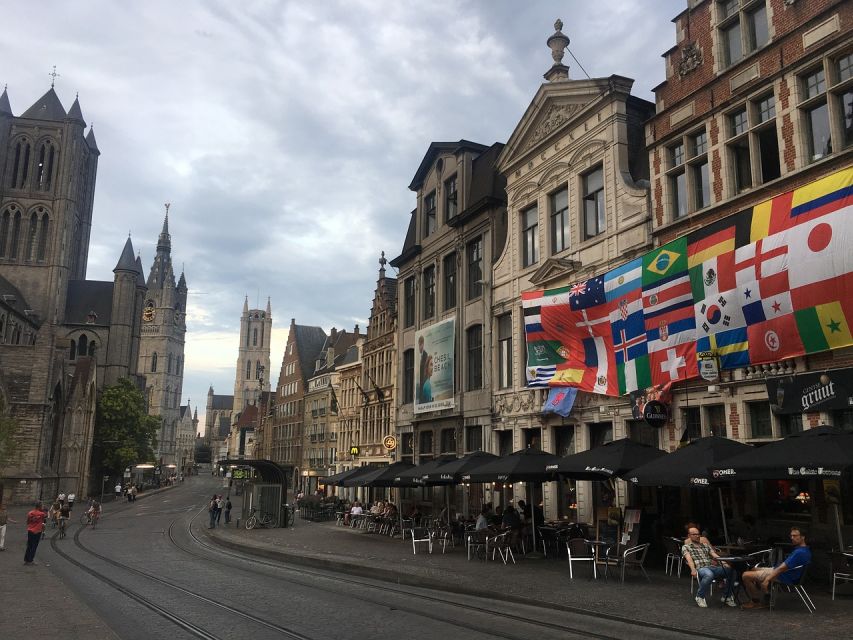
The three-tower view is one of the tour’s best visual lessons. The Belfry, St. Bavo’s Cathedral, and St. Nicholas’ Church rise close together, yet each belonged to a different part of medieval society. You will see the towers repeatedly as you walk, and the guide helps connect what you are looking at with the city’s past.
You should not expect time to climb every tower or pause for long photographs. This is a moving introduction, not a full architectural study. Still, the opening sequence gives you a clear mental map of central Ghent before the route turns to art and trade.
More Guided Walks in Belgium:
- Bruges: Small Group Boat Cruise and Guided Walking Tour
★ 4.8 · 4,102 reviews - Brussels: Guided Walking Tour
★ 4.6 · 3,560 reviews - Guided boat trip and walk
★ 4.5 · 703 reviews
St. Bavo’s Cathedral and the Van Eyck masterpiece
The next stop is Saint Bavo’s Cathedral, with about 15 minutes of guided explanation. The cathedral matters for its architecture, but the major draw is The Adoration of the Mystic Lamb, painted by the Van Eyck brothers.
A guide is especially useful here because the painting’s symbols can feel dense at first glance. The tour explains the imagery in plain terms, helping you notice details that might otherwise blur together. You will not get a long, quiet museum session during this walking route, but you will receive the background needed to return later and look more carefully.
That is one of the tour’s practical strengths. A short explanation can change the way you see a major artwork, and the guide’s comments give you a starting point for a later independent visit. Check the time available if the painting is your chief reason for coming, since this experience is designed to cover many parts of Ghent rather than focus on one interior.
Town Hall and St. Nicholas’ Church

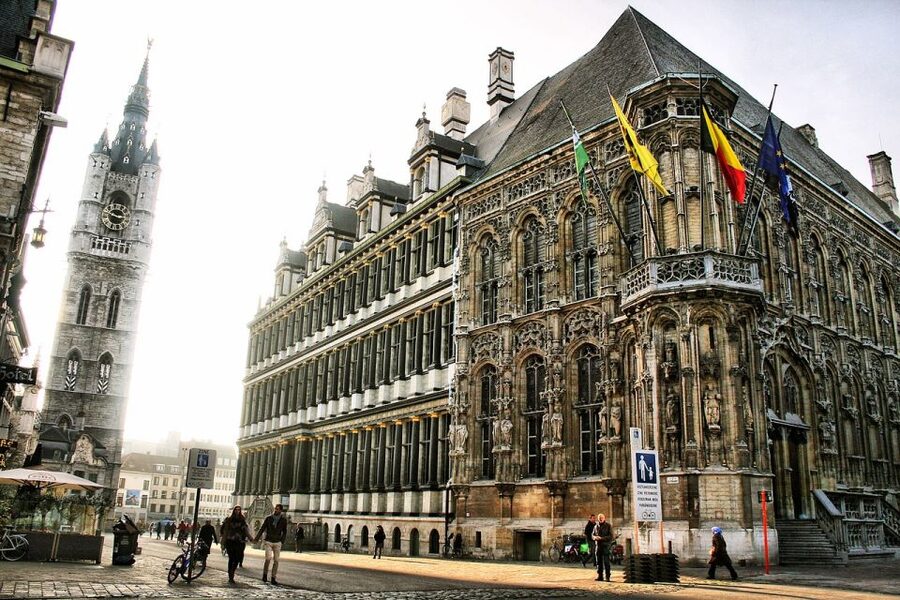
Ghent Town Hall follows, with another short stop devoted to its setting and civic role. The building adds a useful contrast to the religious power represented by the cathedral. You get a sense of how city government, trade, and public life occupied the same compact center.
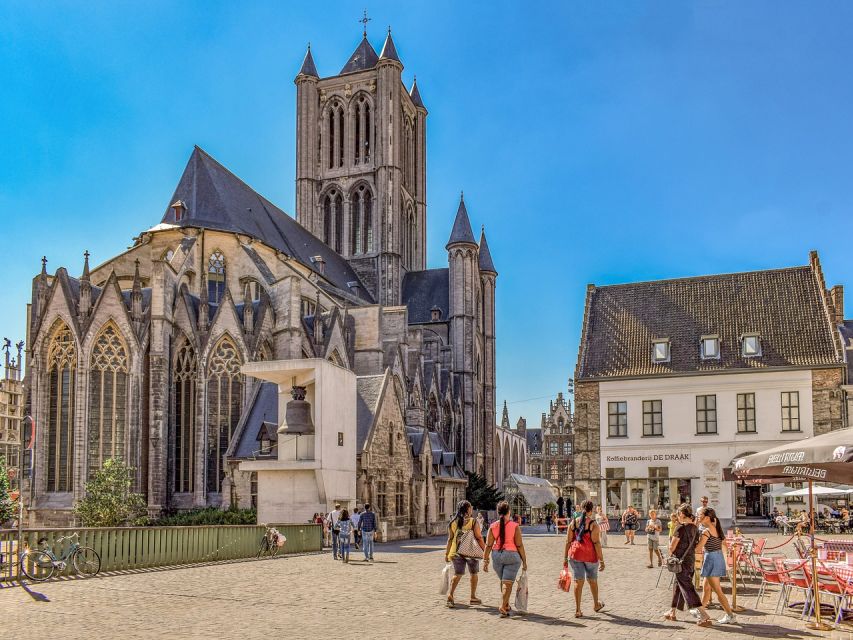
At St. Nicholas’ Church, the focus returns to architecture and the skyline. Its tower is one part of Ghent’s famous trio, and seeing the church in relation to the Belfry and St. Bavo’s Cathedral makes the city’s layout easier to understand.
I like having both churches on the route because they prevent the walk from becoming a simple list of postcard views. You move between sacred and civic buildings, then toward the commercial quarters where daily work once drove the city. The 15-minute format keeps things brisk, though anyone wanting detailed interior time should plan a separate visit.
Graslei and the old trading waterfront
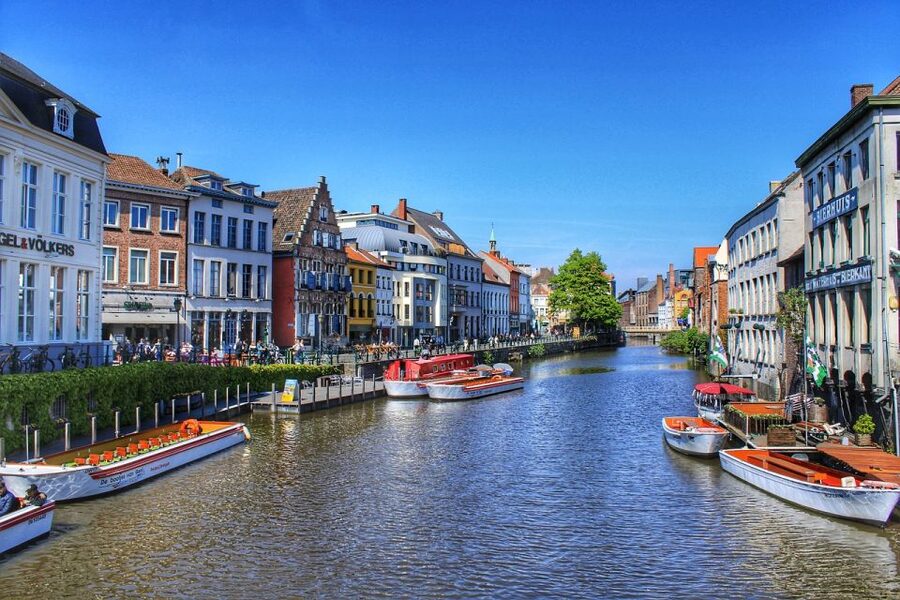
From the central monuments, the route reaches Graslei, one of Ghent’s most atmospheric stretches. The guide uses the waterfront to explain the city’s trading past and the old guild occupations connected with the Herb and Grain Quay.
This is where Ghent becomes easier to picture as a working city. The quays were not built only for scenic walks and photographs. They were tied to goods, boats, storage, and the guilds that regulated trades. Your guide’s job here is to turn attractive façades into evidence of how the city functioned.
Give yourself a moment to look across the water as well as at the buildings. The canal-side view is one of the prettiest parts of the walk, but the explanation adds value because it tells you why this particular stretch mattered.
The route does not include food or drinks, so this is not a tasting experience. If you want lunch, you can use the transition between the walking portion and the boat trip as a break. One past participant found this arrangement especially useful, taking lunch before walking to the boat departure point identified during the tour.
More Walking Tours in Belgium:
- Bruges: Walking Tour, Canal Boat Trip w/Beer Tasting Option
★ 4.4 · 2,759 reviews - Historical Walking Tour: Legends of Bruges
★ 5.0 · 2,541 reviews - Historical Walking Tour: Legends of Antwerp
★ 5.0 · 1,837 reviews - Historical Walking Tour: Legends of Gent
★ 5.0 · 1,761 reviews
Markets that fed and funded Ghent
The Old Fish Market and the Meat Market represent the practical side of medieval urban life. The guide explains why these markets were so important to the city’s growth and why they worked as something like the era’s supermarket.
That comparison is simple but helpful. Markets were not just places to buy dinner. They brought people together, controlled the movement of goods, supported trades, and helped keep a large city supplied. The fish and meat stops add everyday detail after the grand churches and civic buildings.
This section may be more interesting if you enjoy social history rather than only monuments. You will not spend long browsing stalls or sampling products, since food and drinks are not included. Instead, you get the story of how markets shaped the city you are seeing.
Patershol and the road to Gravensteen
The walk continues through Patershol, also known as the weavers’ quarter. This neighborhood gives you a change of scale, with a more intimate setting after the broad quays and formal squares.
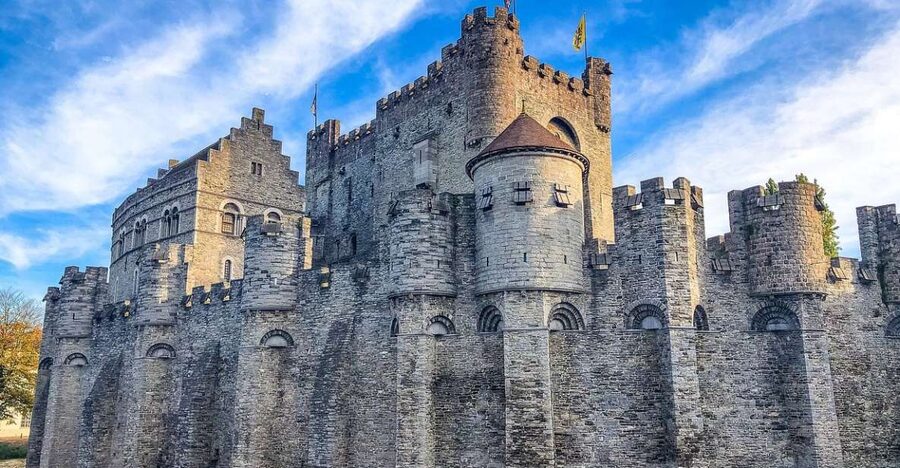
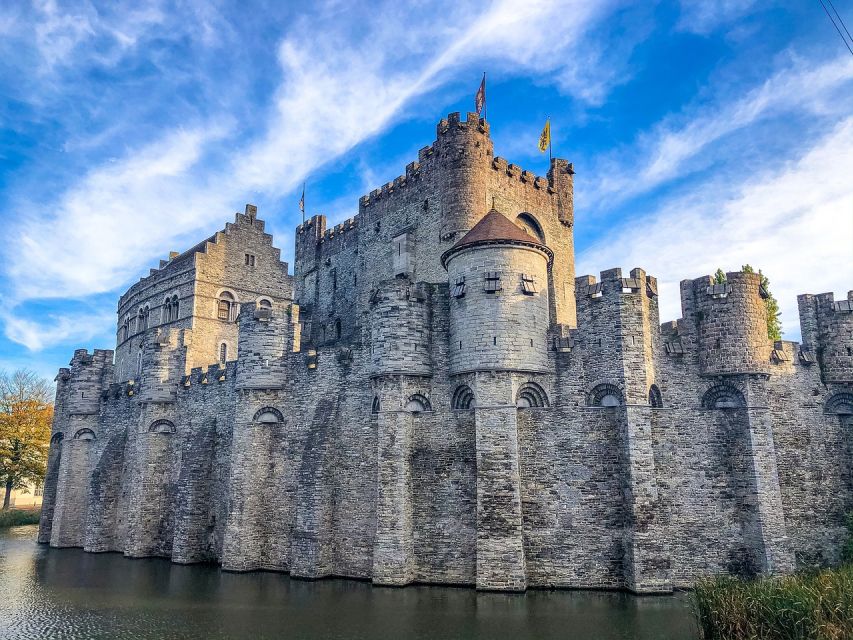
The guide then leads you toward Gravensteen, the Castle of the Counts of Flanders. Its legends and unusual stories provide a lively finish to the walking portion. The castle is an important sight, but this experience treats it as a guided exterior stop and historical landmark, not as a full castle visit with extended time inside.
That distinction matters. If you want to explore Gravensteen room by room, you will need to return on your own. The benefit here is that you learn why the castle matters before deciding how much extra time to give it.
The walk includes roughly eight guided stops at around 15 minutes each. That gives the tour a clear rhythm, but it also means you should arrive ready to keep moving. Wear comfortable shoes, since cobbled streets and a long city walk are part of the experience.
Guides who make the history easier to follow
The quality of a city walk depends heavily on the person holding the umbrella. The tour has used guides including Ariel, Peter, Juliana, and Eros, with strong comments about their clear English, humor, warmth, and ability to make the past easier to follow.
Peter was described as bringing history to life while keeping the mood light. Ariel received praise for a crisp overview of central Ghent, and Juliana was noted for her warmth and obvious affection for the city. Eros also made a strong impression through his presentation and command of the subject.
You should not book on the assumption that one particular guide will lead your departure. Guide assignments can change. Still, the pattern is encouraging: the best part of this experience is not a memorized list of dates, but a guide who can connect buildings, trade, art, and local stories in a natural way.
Some participants used small radio receivers, which made it easier to hear the guide while walking. That can matter in a group setting, especially near busy squares. One caution is worth keeping in mind: a past participant questioned the accuracy of a few historical details. I would treat colorful stories as enjoyable context and verify anything that matters to your academic or research interests.
The canal boat brings a different view
After the walk, the second part takes place on a boat operated by Gent Watertoerist. The 30-minute cruise follows the Leie and Lieve canals, giving you a broad view of both banks and the city’s life along the water.
This change of pace is well judged. After a concentrated walk through monuments and old streets, you can sit down, watch the façades pass, and let the city settle into place. The waterways also show angles you cannot get from the main streets, making the cruise more than a rest stop.
The boat portion includes an audio guide with illustrated translations. A past boat guide reportedly presented information in four languages, but the activity itself is listed as English, so you should expect the walking guide to speak English and use the boat’s audio system for added language support.
The boat trip is not a private cruise, and the information provided does not specify boat size, seating arrangements, or shelter. Rain is worth considering, since one participant had wet weather for about an hour during the overall experience. Bring weather-appropriate clothing, even though the boat offers a welcome chance to sit.
Is $32 a fair price?
At $32 per person, this is a good-value introduction to Ghent if you want both a guided walk and a canal trip. You are paying for a professional guide, roughly two hours of city interpretation, and a 30-minute boat cruise. Buying those elements separately could take more planning and may not give you the same connected story.
The value is strongest for a first visit. In one short outing, you see the main skyline, major religious buildings, civic landmarks, medieval trade areas, Patershol, and Gravensteen. You also receive recommendations for places to visit later, which helps you make better use of the rest of your time in town.
The price is less attractive if you want long stops inside the cathedral or castle, extensive free time for photographs, or a private guide. The tour gives breadth rather than depth. Think of it as a well-organized orientation with a scenic boat finish.
The booking terms also make it easier to fit into a changing schedule. You can reserve now and pay later, and cancellation is free up to 24 hours before the start. If you cancel inside that window, arrive late, or do not show up, there is no refund.
Who should book this Ghent experience?
I would choose this tour if you have one day in Ghent, are visiting independently, or want a quick explanation of what you are seeing before exploring further. It suits first-time visitors who want the major sights without arranging a separate walking guide and boat ride.
It also works well for people who like a mix of art, architecture, trade, and local stories. The Van Eyck painting receives useful context, while the markets and guild quarters show how ordinary work shaped the city.
Families and mixed-age groups may appreciate the change from walking to boating, though everyone should be comfortable with a 150-minute outing and cobbled streets. Comfortable shoes are a must.
I would hesitate if your priority is a slow museum visit, a private experience, or a detailed study of Gravensteen. You will get recommendations for further sightseeing, but the tour itself moves on after each short stop.
Should you book the walking tour and canal trip?
Book it if you want an efficient first look at Ghent for $32, especially if you value a lively English-speaking guide and like ending a walking tour on the water. The strongest reasons are the clear route through the three towers, the Van Eyck context, the trade stories around Graslei and the markets, and the useful rest provided by the canal cruise.
Skip it if you already know central Ghent well or want to spend most of your time inside the cathedral and castle. For everyone else, it offers a sensible mix of famous sights, lesser-noticed city details, and practical orientation without taking up a full day.
FAQ
Where does the Ghent tour start?
Meet outside the Belfort Tower at Sint-Baafsplein 12. Your guide will hold a large black umbrella.
Where does the experience finish?
The experience finishes at Gent Watertoerist after the canal boat trip.
How long does the tour last?
The full experience lasts 150 minutes, or two and a half hours.
Is the tour offered in English?
Yes. The live tour guide language is English.
What does the walking portion include?
The walk includes guided stops at the Belfry of Ghent, Saint Bavo’s Cathedral, Ghent Town Hall, Saint Nicholas’ Church, Graslei, the Old Fish Market, Patershol, and Gravensteen.
Does the experience include the Van Eyck painting?
The route includes Saint Bavo’s Cathedral, which houses The Adoration of the Mystic Lamb by the Van Eyck brothers. The guide explains its symbols.
How long is the canal boat trip?
The boat cruise lasts 30 minutes.
Which waterways does the boat use?
The cruise travels along the Leie and Lieve canals.
Are food and drinks included?
No. Food and drinks are not included.
What should I bring?
Bring comfortable shoes. You should also prepare for rain, since the experience includes outdoor walking and weather can affect the route.
New routes in Belgium
- Walking Tour: Highlights of Antwerp★ 5.0 · 98 reviews
- Historical Walking Tour in Antwerp Old City★ 5.0 · 277 reviews
- Private Historical Tour: Legends of Antwerp★ 5.0 · 125 reviews
- Evening Walking Tour: The Dark Side of Antwerp★ 5.0 · 193 reviews
- Brussels: Private 3-Hour Sightseeing Walking Tour★ 4.6 · 112 reviews
- Historical Walking Tour: The Story of Bruges – by Legends★ 4.7 · 483 reviews
- Antwerp: Historical Walking Tour in the Old City★ 4.8 · 373 reviews
- Ghent: Belgian Chocolate Walking Tour with Tastings★ 4.9 · 259 reviews
Belgium Walking Tours, compared.
Small Group Boat Cruise and Guided Walking Tour
Read our review →
Walking Tour, Canal Boat Trip w/Beer Tasting Option
Read our review →
Historical Walking Tour with Chocolate & Waffle Tasting
Read our review →
Brussels Walking and Tasting Tour (Beers,Chocolates&Fries/Waffle)
Read our review →
Browse the lists this tour appears in