

Review · FLORENCE
Florence: Accademia, Uffizi, and City Center Walking Tour
Seeing Michelangelo’s David and Botticelli’s paintings in one morning gives you Florence’s greatest artistic hits without spending your day on museum planning. The tour begins at the Uffizi, continues through central Florence, and finishes at the Accademia, where you get some extra time to look around after the guided portion.
I like the early Uffizi access, which can save precious time, and I like the walk between the galleries because it turns the gap into a short lesson in Florentine history. The main caution is pace: four hours is efficient, but it is not enough for a careful look at every room in both museums.
Key points at a glance
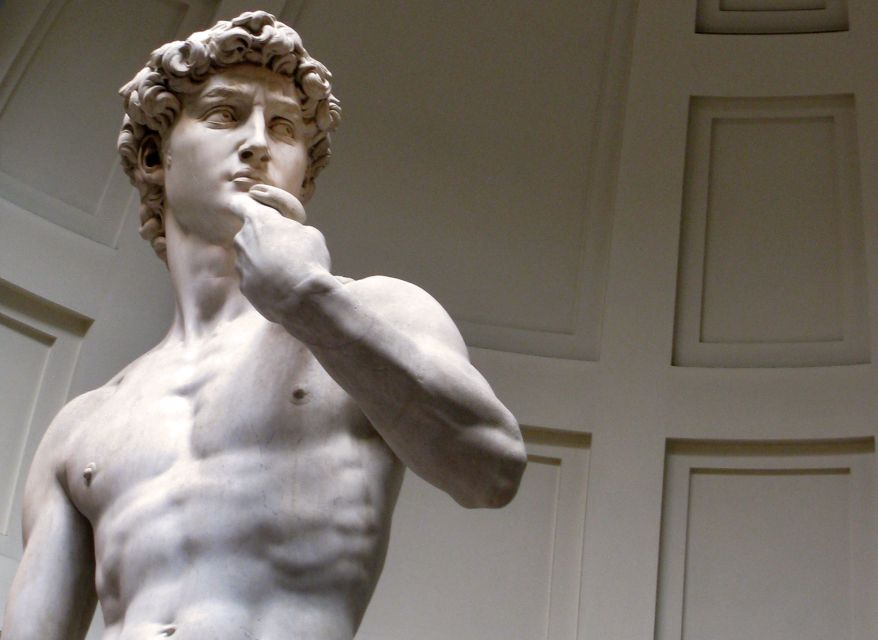
- Uffizi first: Start with Botticelli, Leonardo da Vinci, and other major Renaissance works while the day is still young.
- David at the Accademia: See Michelangelo’s famous marble in person, along with other works and musical instruments.
- Florence between museums: Use the walk through the center to connect the art with the streets, buildings, and stories around you.
- Fast-track admission: Enter more quickly than visitors using the regular ticket process, a major help during busy periods.
- Focused half-day plan: Cover two major museums and central Florence in about 3.5 to 4 hours.
- Guide quality matters: Guides named Giana, Christiano, Alessandra, and Martina have led past tours, though your guide is assigned by availability.
Why this tour works for a first day in Florence
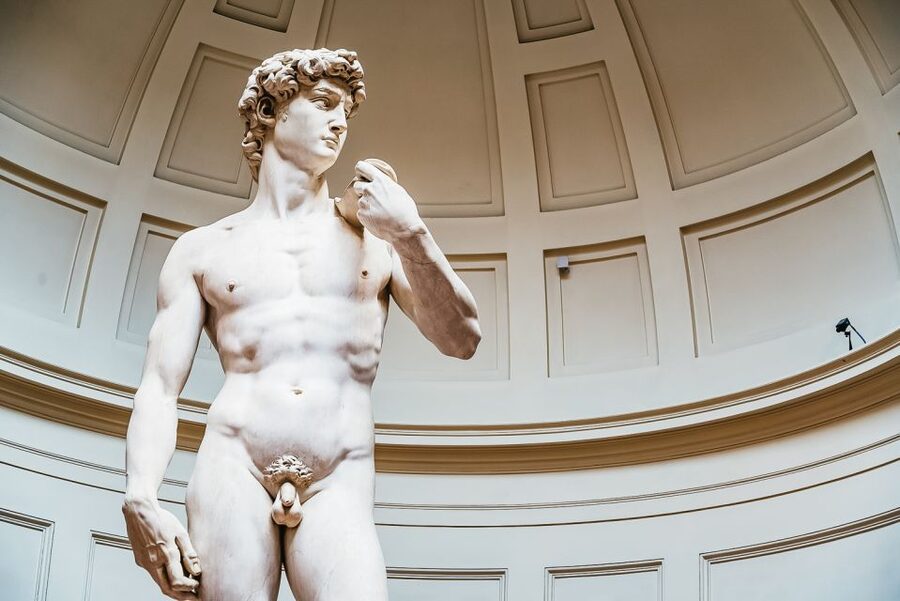
Florence is small enough to explore on foot, but its museums can be hard to tackle without a plan. The Uffizi and Accademia are not far apart, yet each can swallow several hours if you try to make sense of it alone. This tour gives you a clear route through both.
The arrangement is sensible: Uffizi first, city walk in the middle, Accademia last. You begin with a guided look at one of Europe’s great painting collections, then step outside for streets and landmarks, and finish with the single work most first-time visitors have come to see.
I especially like the order because it avoids treating Florence as two sealed museum boxes. Your guide can connect the paintings to the city that produced them, then place Michelangelo’s David in a wider setting rather than presenting it as one isolated marble statue.
The tour lasts 3.5 to 4 hours. That makes it a useful morning or early afternoon plan, but you should arrive ready to keep moving. You will get explanations of the important works, not a full scholarly survey of every gallery.
More Walking Tours in Florence:
- Florence: Highlights Walking Tour with Expert Guide
★ 4.6 · 4,662 reviews - Uffizi & Accademia Timed Entry: Small Group Duomo Walking Tour
★ 4.5 · 3,630 reviews - Florence: Duomo Complex with Tickets & City Walk Guided Tour
★ 4.7 · 2,057 reviews
Starting with the Uffizi’s greatest paintings
The Uffizi portion is a guided walking tour through the gallery, with early morning access included in the experience. The museum is famous for Renaissance painting, and the tour focuses on major names such as Botticelli and Leonardo da Vinci.
Botticelli’s works are among the essential stops. His paintings reward more than a quick photograph because the figures, gestures, and mythological subjects carry layers of meaning. A guide can point out what to look at first, which is useful when you are facing a famous painting surrounded by other famous paintings.
Leonardo’s works offer a different experience. His paintings are often unfinished or small in number compared with the Uffizi’s wider collection, so it helps to have someone explain why they matter and how his approach changed painting.
The museum also contains far more than these headline names. You might find yourself wanting to stay longer with other rooms once the guided route ends, but this tour is designed to show you the major works efficiently. If you already know you want several hours at the Uffizi, book a separate visit instead of expecting this combined tour to cover everything.
The early start is useful for two reasons. First, it gets one major museum done before the rest of your day fills up. Second, entering with a faster access arrangement can spare you from spending a large part of your morning working through the regular ticket line.
Fast-track does not mean you have the building to yourself. You still need to follow museum entry rules, and busy conditions can affect the flow. Still, the time saved is valuable in Florence, where a delayed museum entry can upset a whole day of plans.
The walk through Florence between the galleries
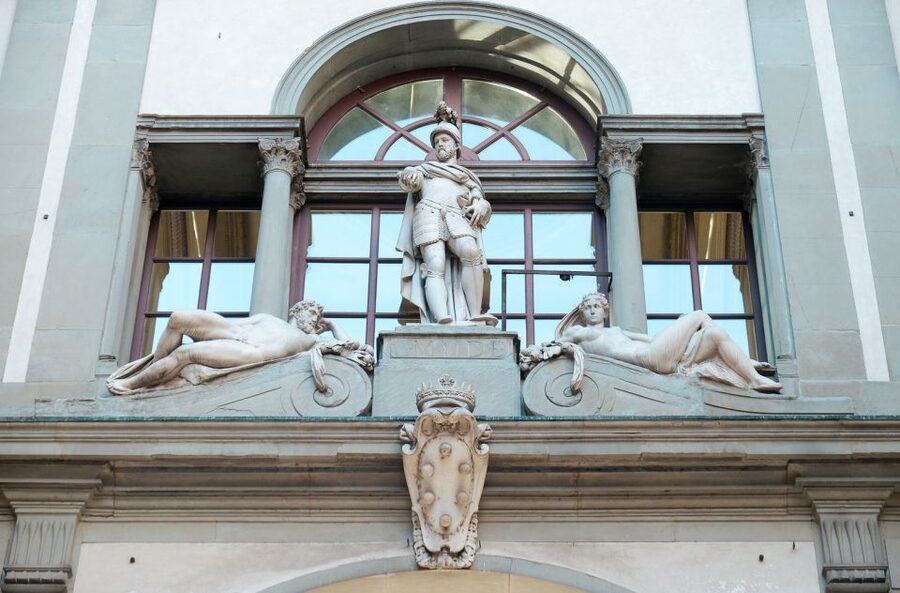
The walk between the Uffizi and Accademia is not filler. Your guide uses this time to discuss central Florence, point out important sights, and add stories about the city.
This is one of the best parts of the format for a first visit. Inside a museum, it is easy to lose your sense of place. Outside, you can see how the city’s churches, squares, streets, and public buildings relate to the art you have just viewed.
Expect commentary rather than a full stand-alone city tour. The information is meant to connect the two museum visits, so the walk is a bridge between them rather than a long route through every major sight in Florence.
That also means you should wear comfortable shoes. The tour includes walking and standing inside two museums, and the total experience can feel demanding if you have foot or mobility problems. One past guide, Ana’s guide, arranged a wheelchair when a participant needed one, which shows that it is worth raising access needs before the tour begins. The supplied information does not promise wheelchair service, so do not assume it is automatically available.
The walk also gives your mind a reset. Two museums back to back can become a blur of saints, mythological figures, portraits, and marble. A few streets outdoors help you process what you have seen before entering the Accademia.
Michelangelo’s David at the Accademia
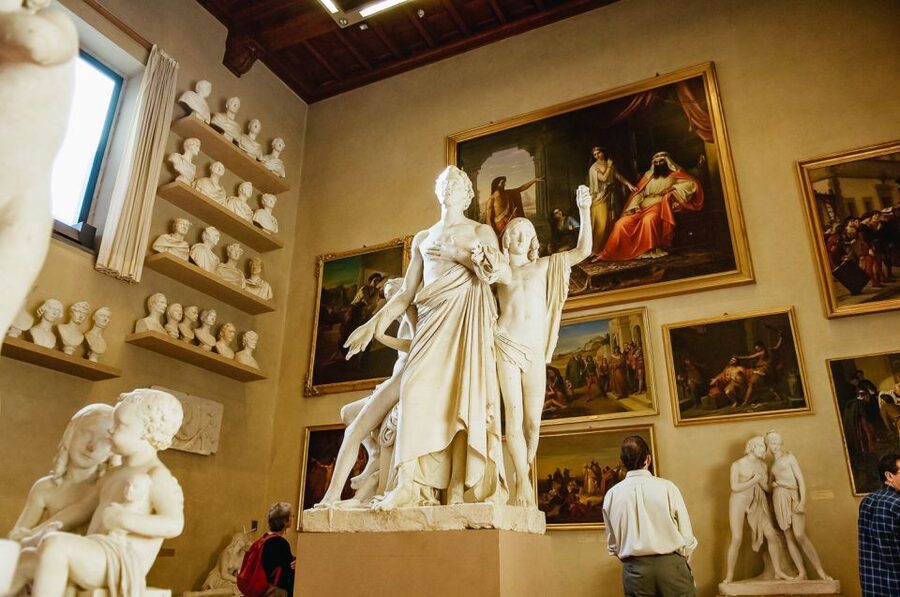
The Accademia is the emotional high point for many people. Michelangelo’s David is not a small statue tucked into a corner. It dominates the experience, and seeing the original in person gives you a better sense of its scale, surface, and physical presence than any photograph can provide.
Your guide explains the work and its place in Florence’s story, then gives you additional free time inside the Accademia after the guided section. That extra time is important. It lets you return to David, study details at your own pace, or see parts of the collection that the group route does not cover.
The Accademia is smaller than the Uffizi, but smaller does not mean simple. David draws most of the attention, yet the museum also includes other sculptures, paintings, and musical instruments. The tour highlights an original Stradivarius from 1690 and the first modern piano, invented in Florence.
Those instruments add welcome variety after hours of looking at paintings and sculpture. They also remind you that Florence’s artistic story is not limited to visual art. The city’s creative life included music, design, craft, and technical invention.
The extra time is a real benefit, but it comes with a limit. You should not expect to see every room in depth after the guided portion, especially if your group has spent longer at David or the major works. One practical suggestion is to decide before entering what you most want to see beyond the main statue.
Same streets, a different guide:
- Michelangelo’s David, Accademia & Uffizi Small Group Tour
★ 4.5 · 1,986 reviews - David & Accademia Guided Tour with Time Entry Ticket
★ 4.5 · 1,705 reviews - Florence: Guided Walking Tour
★ 4.6 · 1,602 reviews - Florence: Renaissance and Medici Tales Guided Walking Tour
★ 4.8 · 1,549 reviews
What the guide adds to the museums
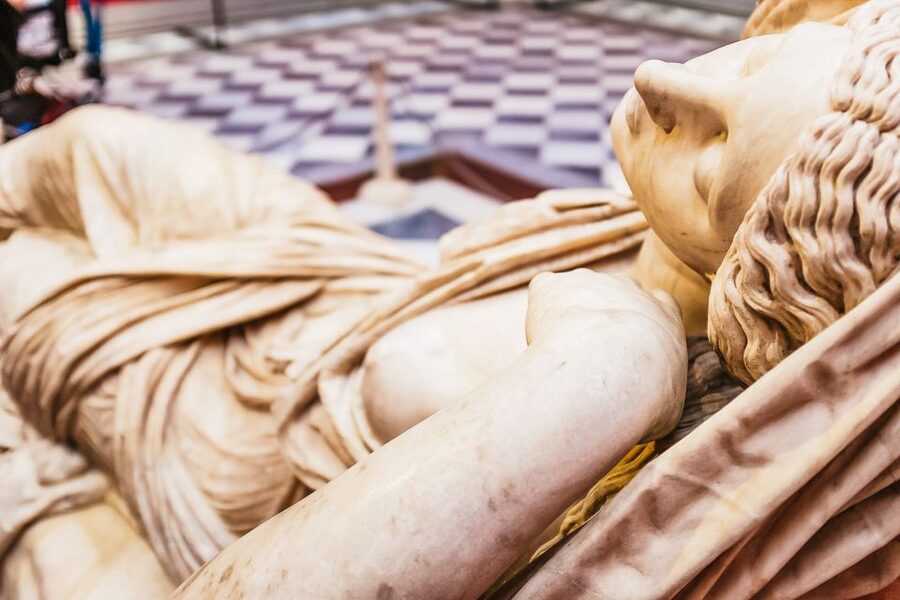
A strong guide is central to this experience. The most useful explanations are not lists of dates and names. They show you where to look, explain why a work changed art, and give you enough context to remember what you saw later.
Guides who have led this experience include Giana, Christiano, Alessandra, and Martina. Guide assignments can change, so do not book on the assumption that one particular person will lead your group. The important point is that the tour depends heavily on the guide’s ability to keep the art clear and focused.
Past guides have been praised for passion, flexibility, and good judgment about how long to spend at each work. That last skill matters. A guide who tries to explain every object can exhaust you before David. A guide who only points out the famous names can leave you with little sense of how the collection fits together.
The small-group option is worth considering if it is available for your date. A smaller group usually makes it easier to hear commentary and ask a question without interrupting the whole route. The activity information confirms that a small group is available, but group size can depend on the option you book.
The tour is offered in English and Italian. Check your chosen option carefully so you select the language you want.
Is the half-day format good value?
No price is provided here, so I cannot give you a precise cost comparison. The value comes from combining several services in one booking: museum admission, faster access, a live guide at the Uffizi, a guided Accademia visit, a city-center walk, and free time at the end of the Accademia visit.
That package can be a good use of money if you want structure. You are paying not only to enter two museums, but also to avoid building your own route, researching the important works, and handling the transition between venues.
It is less compelling if you already have a strong art background and prefer to linger alone. In that case, separate tickets may give you more control over the pace. One sensible alternative is to visit the museums separately, with a time break between them, so you can spend longer in the Uffizi and return to the Accademia without a group schedule.
The combined format is strongest for a first Florence visit, a short stay, or a day when you want the main art sites handled in one block. It is also useful if you are traveling with people who might otherwise disagree about which museum to visit first.
Timing, tickets, and practical preparation
Bring a passport or identity card. The activity information specifically asks for identification, so keep it accessible rather than buried in a large bag.
Wear comfortable shoes. You will walk through the city and spend time on your feet in both museums. Florence’s central streets are easy to explore on foot, but comfort makes a clear difference by the end of the tour.
Large bags and luggage are not allowed, and pets and smoking are also prohibited. Do not arrive with your daypack stuffed for a full day of sightseeing. The rules are especially important if you are going straight to a train or airport afterward.
The meeting point can vary by the option booked. Check the exact meeting details before leaving your hotel, since the listed coordinates alone are not enough to plan your arrival.
The first Sunday of each month requires special care. Museum entrance is free on that day, but tickets cannot be reserved ahead of time, and entry is not guaranteed. If seeing both museums is important to your schedule, do not rely on the free-entry system.
Cancellation is allowed up to 24 hours in advance for a full refund, and the reserve-now, pay-later option keeps your plans flexible. These policies are useful if your Florence schedule is still shifting, but always confirm the terms attached to the exact option you select.
Who should book this Florence art tour?
I would choose this tour if you want the main works explained by a live guide and would rather not spend half a day sorting out tickets and routes. It suits first-time visitors, short-stay visitors, and anyone who wants to see David and the Uffizi in one organized morning.
It also works well for families or mixed-interest groups. The city walk breaks up the museum time, and the guide can keep the focus on the most important works instead of forcing everyone through every room.
Art specialists may want a slower plan. The Uffizi alone can reward a long visit, and the combined schedule will not let you study every painting. If you are most interested in a particular artist or period, book that museum on its own and give it more time.
People with mobility concerns should ask about arrangements before booking. The tour requires city walking and museum standing, but one past guide was able to arrange a wheelchair when needed. That is encouraging, though it is not a guarantee of available equipment or a step-free route.
Should you book it?
Book this experience if you want a focused introduction to Florence’s major art, with David, Botticelli, and Leonardo covered by a guide rather than a phone app. The city walk adds useful context, and fast-track admission can protect your limited sightseeing time.
Skip it if your priority is maximum freedom inside the Uffizi or a slow, detailed study of both museums. For most first-time visitors, though, the combination is practical and well judged. You see the essential works, learn how they connect to Florence, and still finish with some time to explore the Accademia on your own.
FAQ
How long does the Florence Accademia and Uffizi tour last?
The tour lasts approximately 3.5 to 4 hours.
Which museums are included?
The experience includes the Uffizi Gallery and the Accademia Gallery, along with a guided walking tour through central Florence.
Does the tour include Michelangelo’s David?
Yes. The Accademia portion includes Michelangelo’s David.
Is fast-track admission included?
Yes. The tour includes tickets that provide faster access than the regular visitor entry process.
What languages are available?
Live guided tours are available in English and Italian.
Can I stay at the Accademia after the guided tour?
Yes. You can remain at the Accademia longer after the guided portion if you want to see more.
What should I bring?
Bring a passport or identity card and wear comfortable shoes.
Are there restrictions on what I can bring?
Pets, smoking, luggage, and large bags are not allowed.
New routes in Florence
- Florence: Heart of Florence Guided Walking Tour★ 4.0 · 81 reviews
- Florence: Walking Tour with David, Duomo & Uffizi Gallery★ 4.7 · 414 reviews
- Florence: The Medici Family Guided Walking Tour★ 4.7 · 129 reviews
- Florence Walking Tour & Skip-the-Line David at Accademia★ 4.7 · 159 reviews
- Florence Street Food Walking Tour with Wine in Duomo Area★ 4.9 · 76 reviews
- Florence: Tuscan Food and Wine Guided Walking Tour★ 4.8 · 72 reviews
- Florence: Small Group Guided Walking Tour★ 4.7 · 176 reviews
- Florence: Medici Family Guided Walking Tour★ 4.5 · 193 reviews
Florence Walking Tours, compared.
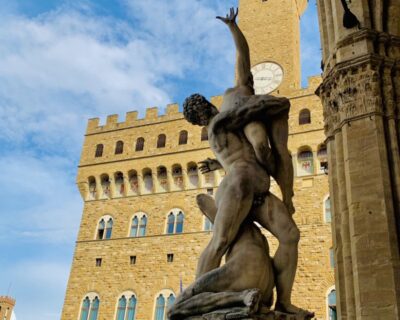
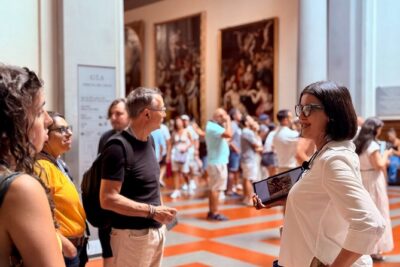
Uffizi & Accademia Timed Entry: Small Group Duomo Walking Tour
Read our review →
Duomo Complex with Tickets & City Walk Guided Tour
Read our review →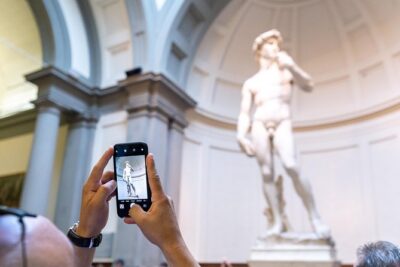
Michelangelo’s David, Accademia & Uffizi Small Group Tour
Read our review →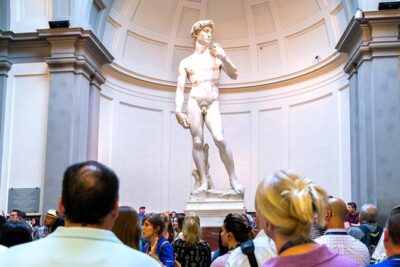
David & Accademia Guided Tour with Time Entry Ticket
Read our review →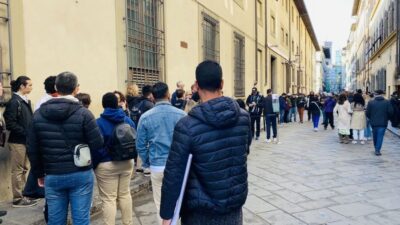
Renaissance and Medici Tales Guided Walking Tour
Read our review →
Skip-the-Line Florence Highlights and David Walking Tour
Read our review →Browse the lists this tour appears in