
Review · OLD TOWN
Dubai: Private Old Town, Heritage & Souks Walking Tour
Old Dubai makes more sense when you see it at walking pace. This private tour leads you from the courtyard houses and narrow lanes of Al Fahidi to Dubai Creek, then across by abra, the small wooden boat that still carries people between Bur Dubai and Deira. You finish among the spice and gold shops, with Dubai’s leap from desert trading port to global city tied together along the way.
I like two things especially: the guide can adjust the pace and explanation for your family, and the tour includes practical souk advice rather than leaving you alone with a salesman. Pri, Ricky, Francesca, and Dana are among the guides named by guests as warm, clear, and good with children. The main caution is time. Two hours passes quickly, and the route is not suited to wheelchair users or anyone who finds uneven streets and heat difficult.
Key points at a glance
- Al Fahidi begins the story: Explore courtyard houses, Dar Al Nadwa, XVA House, and the narrow lanes of the Bastakiya district.
- The abra is part of daily Dubai: Cross Dubai Creek by traditional boat instead of viewing the water only from shore.
- Three souks, three different moods: Compare the textile, spice, and gold markets, from small souvenirs to diamond jewelry.
- Private guiding makes a difference: Your guide can slow down for children, explain customs, and answer questions about modern Dubai.
- Shopping help is built in: You can learn how to bargain and get advice on spices, souvenirs, and gold purchases.
- The finish is useful: The tour ends near the Gold Souk, a convenient point for continuing your own Deira visit.
Why Old Dubai is the right place to start
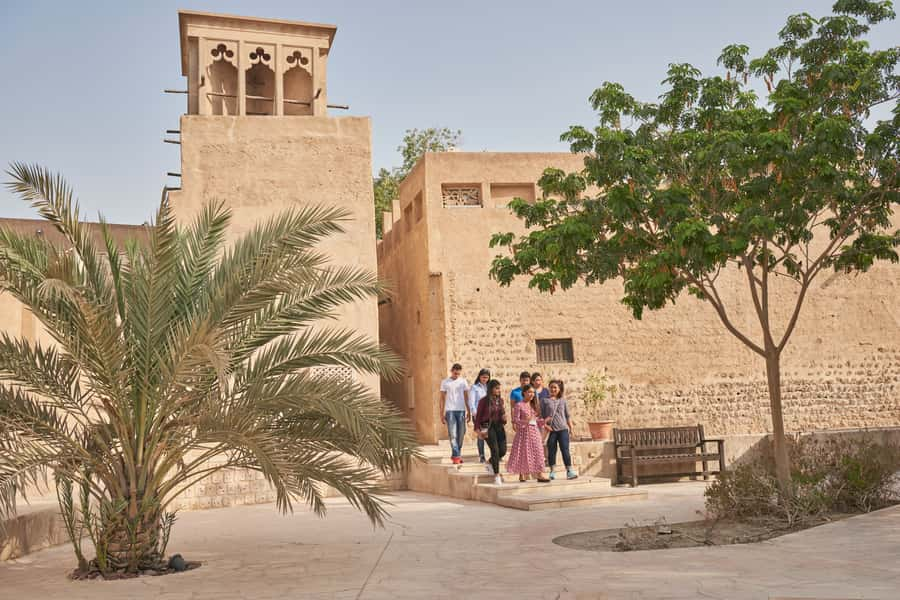
Dubai’s skyscrapers are easy to admire, but they do not explain how the city began. In Al Fahidi, you get a more grounded introduction: shaded courtyards, compact homes, historic lanes, and the creek that linked local trade with the wider region.
The tour starts outside Arabian Tea House Restaurant & Cafe in the Al Fahidi Historic Neighbourhood. That is a practical meeting point in an area made for walking, though you should arrive in comfortable shoes and bring sunscreen. There is no hotel pickup or drop-off, so plan your way to the neighborhood separately.
A private guide changes the feel of this visit. You are not simply following a flag through old streets. You can ask why homes were built around courtyards, how trade shaped the area, or how local life changed as Dubai developed. Guides such as Pri have been praised for making history accessible to children, while Francesca and Ricky are noted for clear explanations of customs and culture.
More Old Town Walking Tours in the world:
- Underground Vaults Walking Tour in Edinburgh Old Town
★ 4.5 · 8,506 reviews - Prague: 3-Hour Walking Tour of Old Town & Prague Castle
★ 4.7 · 5,696 reviews - Dubrovnik: Old Town Walking Tour
★ 4.8 · 5,174 reviews
Al Fahidi courtyards and Bastakiya lanes
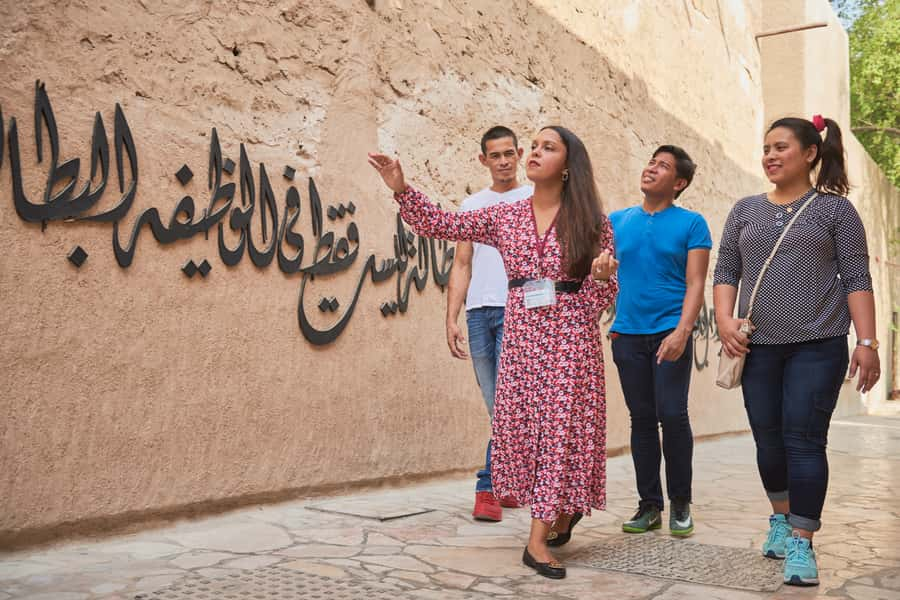
The first major portion, about 40 minutes, takes place around Al Bastakiya, also known as the Bastakiya district. The route includes old Al Fahidi courtyard houses, Dar Al Nadwa, XVA House, and the sikkas, or narrow passageways, that connect the buildings.
This is where the tour earns its historical value. The houses give you a sense of how early residents lived in a hot desert setting, with inward-facing courtyards and shaded spaces. Instead of treating the neighborhood as a collection of pretty walls, the guide links its architecture to daily life and Dubai’s role as a trading settlement.
You may also hear about the older economy built around pearl diving, coastal trade, and movement through the Gulf. That context helps explain the contrast you will see later, when the route reaches stores filled with gold jewelry and polished modern merchandise.
XVA House adds an art and design angle, while Dar Al Nadwa provides another look at the district’s historic buildings. The supplied route includes entrances to heritage houses, so you are not limited to viewing the neighborhood from the street.
The lanes are a highlight for photographs, but keep expectations sensible. This is not a large museum complex with hours of exhibits. It is a compact historic quarter, and the guide’s explanation is what turns the buildings into a story.
From the textile market to Dubai Creek
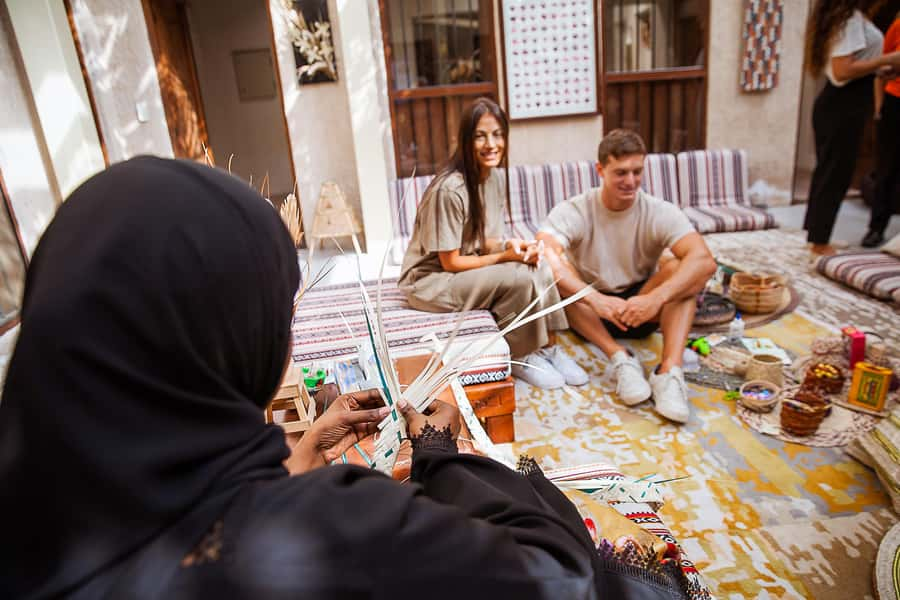
After the historic quarter, the walk heads toward the Old Textile Market and Dubai Creek. The textile stop is listed as about 15 minutes, enough to look at fabrics, colors, clothing, and small gifts without turning the tour into a long shopping session.
This part can feel more commercial than Al Fahidi, which is worth knowing in advance. Shopkeepers may invite you to look, and bargaining is part of the experience. Your guide can help you understand the difference between browsing and buying, and several guides are specifically praised for helping visitors negotiate sensible prices.
Then the route reaches Dubai Creek, where you have about 15 minutes for a visit, a short walk, and views across the water. The creek is not just scenery. It explains why this part of Dubai developed as a trading center and why the two sides of the city remain closely tied to waterborne transport.
A 10-minute dhow or creek stop is also included in the outline before the abra crossing. The exact pace can depend on the group and the flow of the market streets, but the point is clear: the water is part of the city’s story, not a decorative backdrop.
The abra crossing to Deira
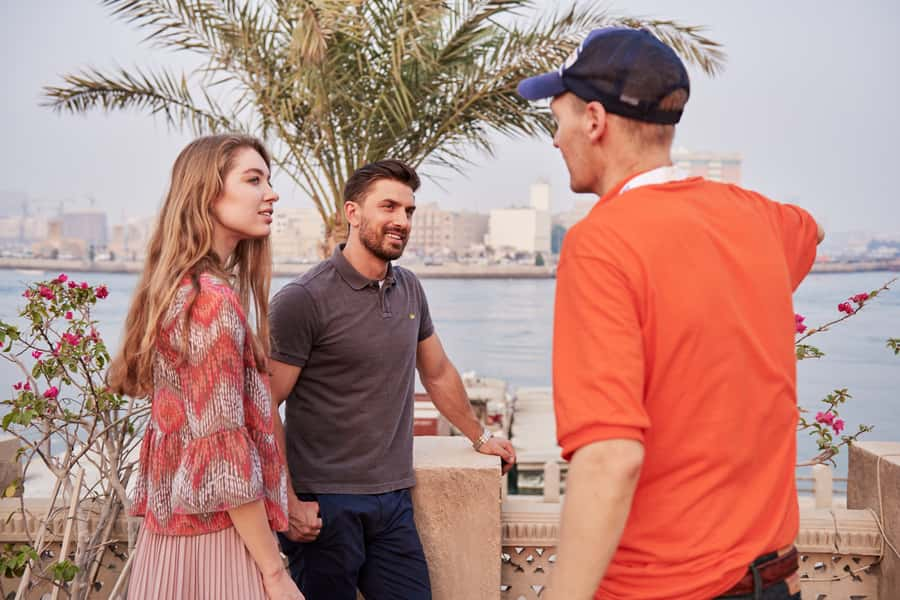
The abra ride is the tour’s simplest and most memorable transport link. You board a traditional boat and cross to the Deira side of Dubai, with open views of the creek and the older waterfront.
Do not expect a long cruise. The ride is short, but that is part of its charm. You are using a working form of local transport rather than taking a separate sightseeing excursion. Boats, water, old buildings, and commercial traffic give you a brief look at Dubai from a different angle.
The experience is also a useful break from walking. In a two-hour tour packed with several districts and markets, ten minutes on the creek gives your feet a rest and resets your attention before the souks.
The route involves boarding a boat and moving through historic streets, so it is not suitable for wheelchair users. Anyone with limited mobility should consider this carefully before booking. For everyone else, wear shoes that can handle uneven pavement and expect some exposure to sun and heat.
More History Walking Tours in the world:
- History and Hauntings of Salem Guided Walking Tour
★ 5.0 · 14,564 reviews - Lisbon: History, Stories and Lifestyle Walking Tour
★ 4.8 · 10,902 reviews - Boston: Freedom Trail History Small Group Walking Tour
★ 5.0 · 6,450 reviews - Historic Charleston Guided Sightseeing Walking Tour
★ 5.0 · 6,216 reviews
Spices, scents, and shopping advice
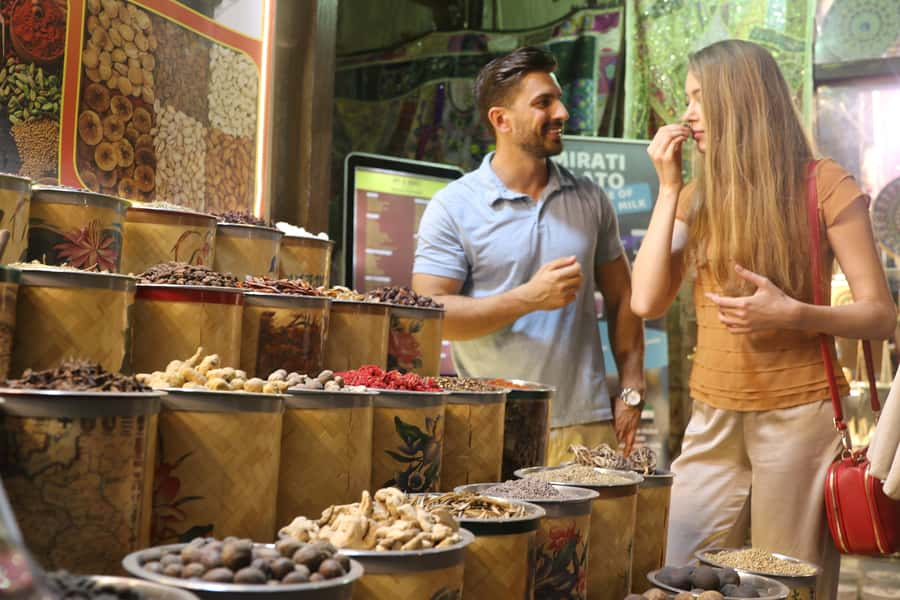
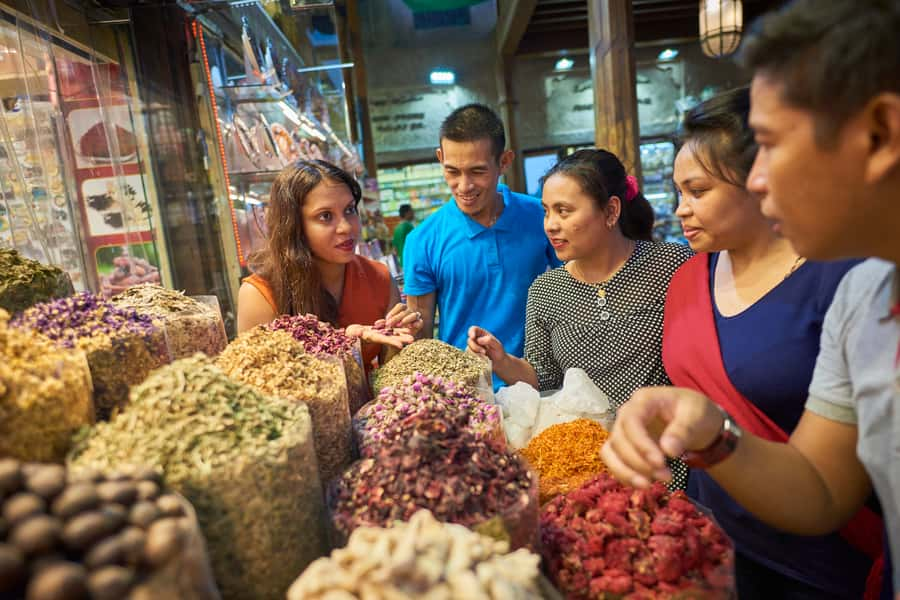
On the Deira side, the tour takes you through the Spice Souk, with about 15 minutes for a guided visit, shopping, and tastings. This is one of the most sensory parts of the route. You might find sacks, jars, dried goods, and spice blends arranged for browsing, along with small food samples included in the tour.
The tasting element gives the stop more purpose than simply walking past shop displays. Your guide can explain what you are looking at and help you decide what is worth buying. The tour also includes a souvenir gift, though the details of that gift are not specified.
The Spice Souk is a place to practice friendly bargaining. You do not need to buy anything, but if you plan to bring saffron, spice mixes, tea, or small gifts home, ask questions before committing. Prices can vary, and a guide who knows the area can point out practical choices.
Several named guides, including Pri and Dana, are praised for giving direct shopping help. Dana is described as showing visitors stores with good deals, while Pri has helped families bargain for souvenirs and spices. That kind of assistance is valuable if you are uneasy about negotiating or worry about paying too much.
Keep the time limit in mind. Fifteen minutes is enough for an introduction and a few purchases, but not for a leisurely inspection of every lane. If shopping is your main goal, plan to return after the guided tour.
Gold Souk and the finish in Deira

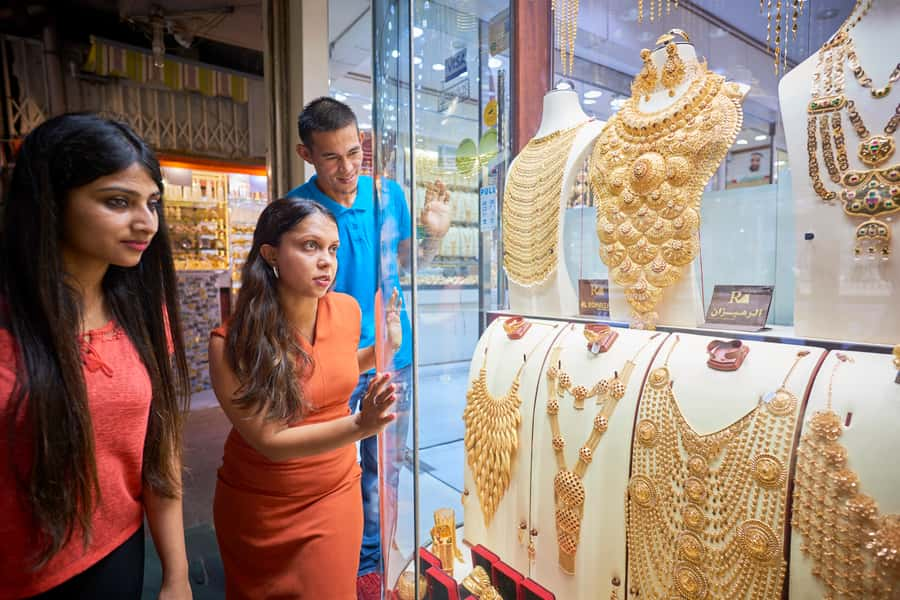
The tour ends near Dubai Gold Souk, after the route through the spice market and other Deira shopping streets. You may see everything from inexpensive knickknacks to diamond necklaces, with the Gold Souk providing the grandest display of the day.
Even if you have no interest in buying jewelry, the stop is worth understanding as part of Dubai’s commercial identity. The bright displays and heavy gold pieces show how trade, wealth, and retail have become central to the city’s image.
If you are shopping for gold, use the guide for general advice about bargaining and comparing stores, but make your own decisions about quality, design, certification, and price. The tour provides orientation, not an independent jewelry valuation.
Finishing here is convenient if you want to continue exploring Deira on your own. It is also a useful point for arranging a taxi or ride-hailing pickup. Several people have found the end location practical for catching an Uber to their next stop.
How the private format affects the experience
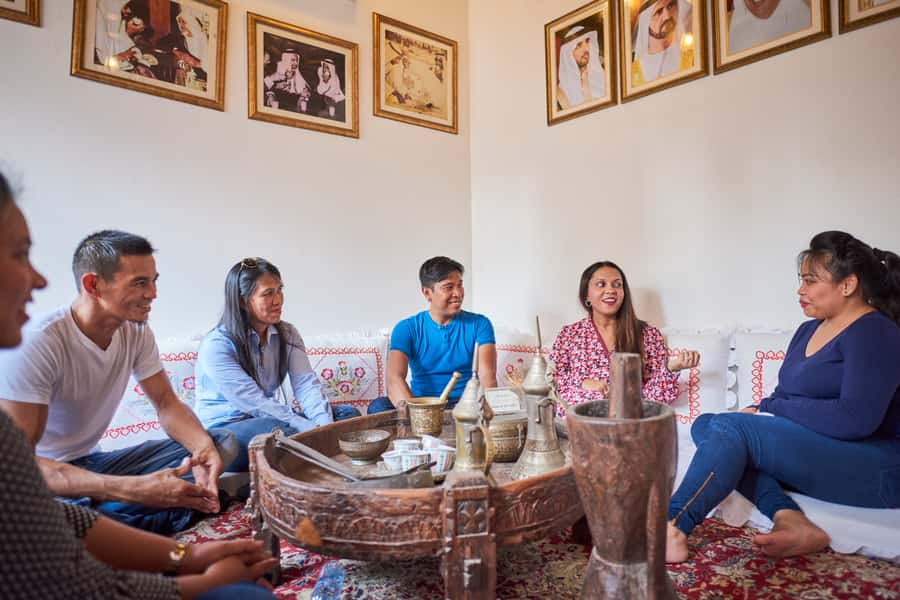
The private-group setup is the strongest reason to choose this tour over a cheaper group walk. Your guide can adapt the storytelling to your interests, pause for questions, and adjust the pace for children.
That flexibility matters for families. Pri has been praised for keeping both young children and teenagers involved, while other guides adapted explanations for a six-year-old or made the route engaging for a ten-year-old. If your group includes children, tell the guide at the start what holds their attention.
It also helps if English is not your first language. One guide was specifically praised for speaking slowly and clearly for visitors who were not confident in English. English and Hindi are offered, and a private setting gives you more room to ask for repetition.
The tour has also been used by corporate groups, university groups, and professional visitors, according to the provider. That does not make it more suitable for every traveler, but it suggests the format is designed to combine cultural background with an efficient route through the old city.
Is $98 a fair price?
At $98 per person, this is not the cheapest way to see Old Dubai. You could walk through parts of Al Fahidi and the souks independently, pay separately for local transport, and spend less overall.
The value comes from combining several moving parts in only two hours. The price includes a private guide, heritage-house entrances, the abra ride, spice tastings, and a souvenir. You also receive help with the layout of the markets and the social side of bargaining, which can be useful if this is your first visit to the region.
I think the price makes the most sense for first-time visitors, families, and couples who want an efficient introduction without spending half a day planning the route. It is less compelling for experienced Dubai visitors who already know Al Fahidi, understand the souks, and are happy to explore independently.
Because the tour is short, you should see it as an orientation rather than a full-day cultural program. It gives you the framework. You can then return to the places that caught your interest.
Timing, clothing, and practical details
The tour lasts two hours, with starting times based on availability. Since much of the route is outdoors, a cooler part of the day may feel more comfortable, though the exact weather conditions and start times are not provided.
Wear comfortable shoes and use sunscreen. Dress respectfully for the historic neighborhoods and markets, and carry water for the walking portions. The streets can be busy, and the souks are active commercial areas rather than quiet museum galleries.
There is no pickup or drop-off. Meet outside Arabian Tea House Restaurant & Cafe in Bastakiya, within the Al Fahidi Historic Neighbourhood. The tour finishes at Gold Souk, so allow extra time if you want to browse, eat, or travel elsewhere afterward.
Free cancellation is available up to 24 hours before the tour for a full refund. You can also reserve now and pay later, which is helpful if your Dubai plans may shift.
Who should book this Old Dubai walk?
I would choose this tour if you are visiting Dubai for the first time and want the city’s older story before spending more time around skyscrapers and malls. It is also a good fit for families, since the private guide can change the pace and keep younger members involved.
Book it if you want a short introduction to Al Fahidi, a traditional creek crossing, and a guided look at three types of souk. The named guides, including Pri, Ricky, Francesca, and Dana, are repeatedly praised for warmth, clear explanations, family-friendly pacing, and useful shopping guidance.
I would skip it if your main goal is a long shopping session, a luxury food experience, or a fully accessible route. The tour covers a lot in two hours, but it cannot give every market the time it deserves.
FAQ
Where does the tour start?
It starts outside Arabian Tea House Restaurant & Cafe in Bastakiya, within the Al Fahidi Historic Neighbourhood.
Where does the tour finish?
The tour finishes in the Gold Souk neighborhood in Deira.
How long does the experience last?
The walking tour lasts two hours.
Is the tour private?
Yes. It is offered as a private-group experience.
Which languages are available?
Live guiding is available in English and Hindi.
Is the abra ride included?
Yes. The traditional abra ride across Dubai Creek is included.
Are heritage-house entrances included?
Yes. Entrances to the heritage houses are included in the price.
Is the tour suitable for wheelchair users?
No. The activity is listed as not suitable for wheelchair users.
Should you book it?
Book this tour if you want a well-paced first look at Dubai’s older neighborhoods, especially if you value a private guide who can explain customs, answer questions, and help you handle the souks. The abra crossing, heritage houses, spice tastings, and Gold Souk finish give you a useful slice of the city in a short period.
At $98, you are paying for guidance and convenience rather than transport alone. For a first visit, that can be money well spent. Just bring comfortable shoes, leave room in your schedule to shop after the tour, and remember that the real reward is understanding how the creek, markets, and old houses shaped the Dubai you see today.
More Private Walking Tours in the world
- Beijing: Forbidden City Tour(Group/Private)-Tickets Included
★ 4.8 · 7,974 reviews - Private Walking Grand Tour of Copenhagen
★ 5.0 · 3,953 reviews - Private 3 hrs Venice Tour: St Mark’s, Walking tour & Boat tour
★ 4.0 · 3,372 reviews - Private Street Food Evening Walking Tour in Ho Chi Minh City
★ 5.0 · 3,175 reviews
New routes in the world
- Baltimore Walking Foodie Tour in Fells Point★ 5.0 · 182 reviews
- Baku Oil Heritage & Old Town Walking Tour★ 5.0 · 232 reviews
- Baku Walking Tour (Old City)★ 5.0 · 127 reviews
- The Madam’s Curse Walking Ghost Tour★ 4.5 · 103 reviews
- Austin Small Group Morning Walk★ 5.0 · 412 reviews
- Austin Haunted Pub Crawl Walking Tour★ 4.5 · 232 reviews
- Austin Downtown Private Walking Food Tour With Secret Food Tours★ 5.0 · 71 reviews
- Austin Murder Walk★ 5.0 · 310 reviews
Old Town Walking Tours, compared.
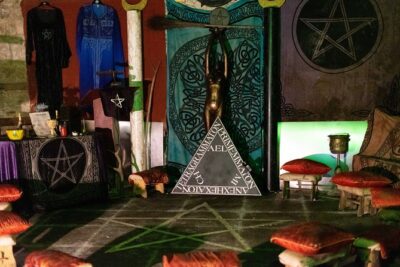
Underground Vaults Walking Tour in Edinburgh Old Town
Read our review →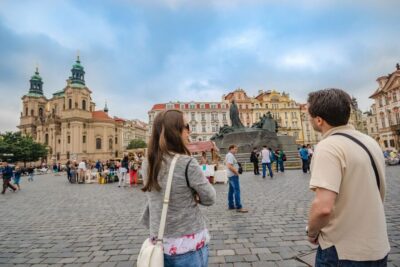
3-Hour Walking Tour of Old Town & Prague Castle
Read our review →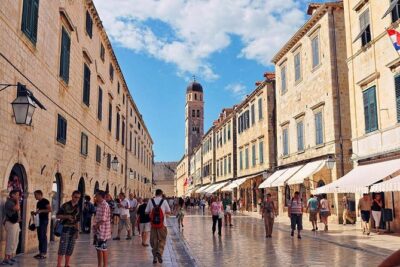
Old Town and Jewish Quarter Guided Walking Tour
Read our review →
Cartagena: Historic Center and Getsemaní Shared Walking Tour
Read our review →
Prague Ghost and Legend of Old Town Walking Tour
Read our review →
Browse the lists this tour appears in