
Review · ROMANIA
City Tour Sighisoara Legends & Landmarks A Walk Through Time
Sighișoara’s medieval citadel is small enough to cross on foot, but its stories run from Saxon guilds and Gothic churches to Vlad the Impaler, the real figure behind Dracula. This two-hour walking tour gives you the setting and the backstory without leaving you to guess what all those towers and painted houses once meant.
I like two things right away: the route includes both the famous sights and quieter places such as the German Cemetery, and the guides bring in everyday life, architecture, Romanian history, and local traditions. Guides named Peter, Charles, Carol, Andrea, and Jacob have led this experience at different times, with Peter and Charles receiving especially warm praise for their patient, detailed explanations. The main drawback is physical: the citadel has cobbles, slopes, and 164 steps to the hilltop church, so it is not suitable for people with mobility impairments.
Key points to know before you book
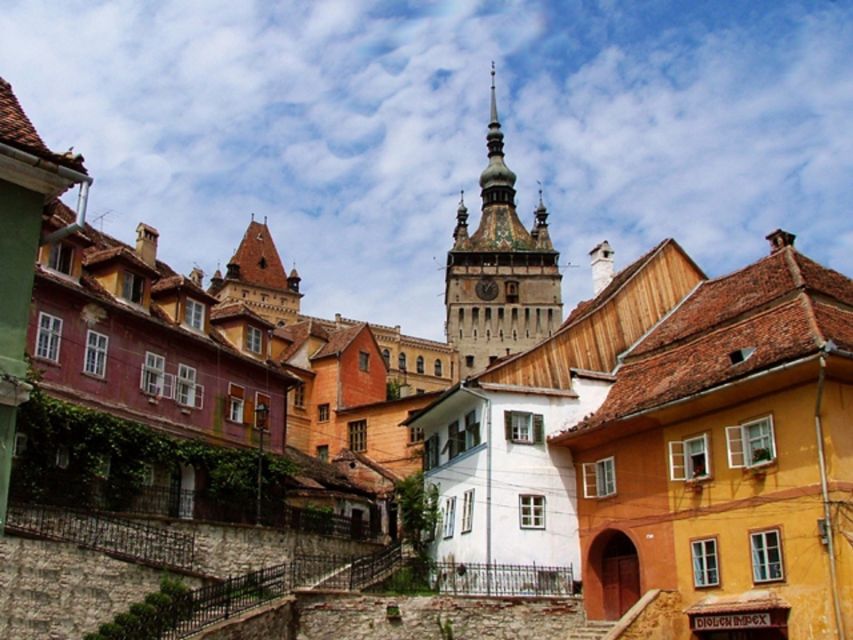
- The Clock Tower anchors the route: You see Sighișoara’s best-known landmark and learn how its clock and defensive role shaped the town.
- Vlad the Impaler gets a fuller story: His birthplace is part of the walk, but the tour puts the Dracula connection into Romanian history rather than treating it as a gimmick.
- The covered staircase is a real climb: Its 164 wooden steps lead toward School Hill and the Church on the Hill.
- The cemetery adds human detail: German family graves help explain the town’s former Saxon character and social structure.
- Guild towers tell a practical story: Butchers, tailors, furriers, and tin moulders each had a place in the citadel’s defenses.
- The tour is good value for first-time visitors: At $45 per person, it costs more than a self-guided walk, but the guide connects scattered sights into one clear story.
Starting at Piața Muzeului at 11:00
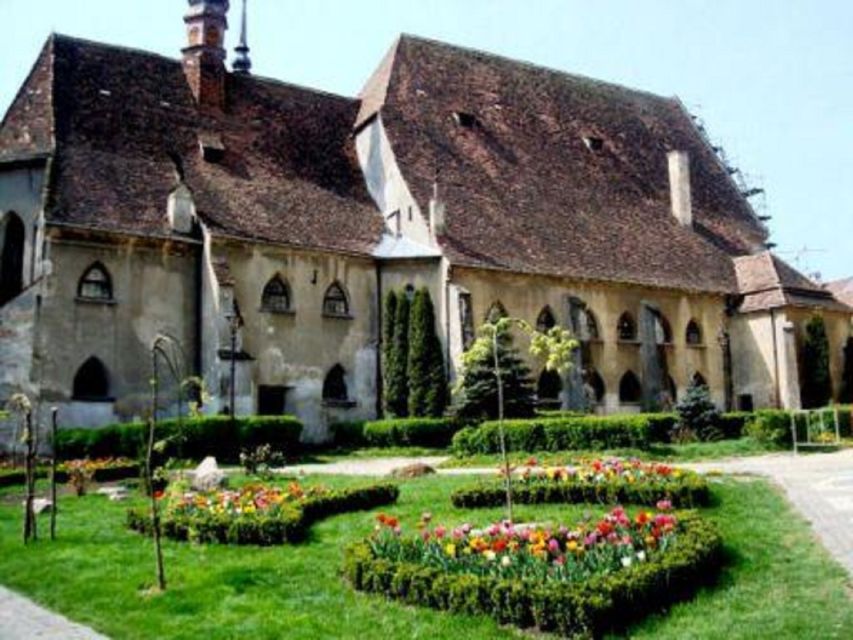
The meeting point is Piața Muzeului 5, in front of the Monastery Church. The activity information also lists Piața Muzeului 6 as an alternative starting point, so check your booking details carefully and arrive with the exact address on hand.
The 11:00 departure is sensible for a short city visit. It gives you time to reach the citadel in the morning, then leaves the rest of the day free for lunch, museum visits, or a slower return to the sights that catch your eye.
You meet an English-speaking guide and set off on foot. The group size is not specified, so you should not assume a private experience. A private tour costs an additional EUR 20 per person. On quieter dates, the group can be very small, and the guide may have more room to answer questions or adjust the pace.
Bring a passport or ID card. Large bags and oversize luggage are not allowed, which makes sense on narrow medieval lanes and wooden stairways. Food, drinks, entrance fees, and souvenir photos are separate costs, so budget for those if you want to enter paid sites or buy a keepsake.
More Crime and Mystery Walking Tours in the world:
- Prague: Ghost Walking Tour Where Legends Come To Life
★ 4.4 · 5,253 reviews - Edinburgh Darkside Walking Tour: Mysteries, Murder and Legends
★ 5.0 · 3,862 reviews - Historical Walking Tour: Legends of Bruges
★ 5.0 · 2,541 reviews
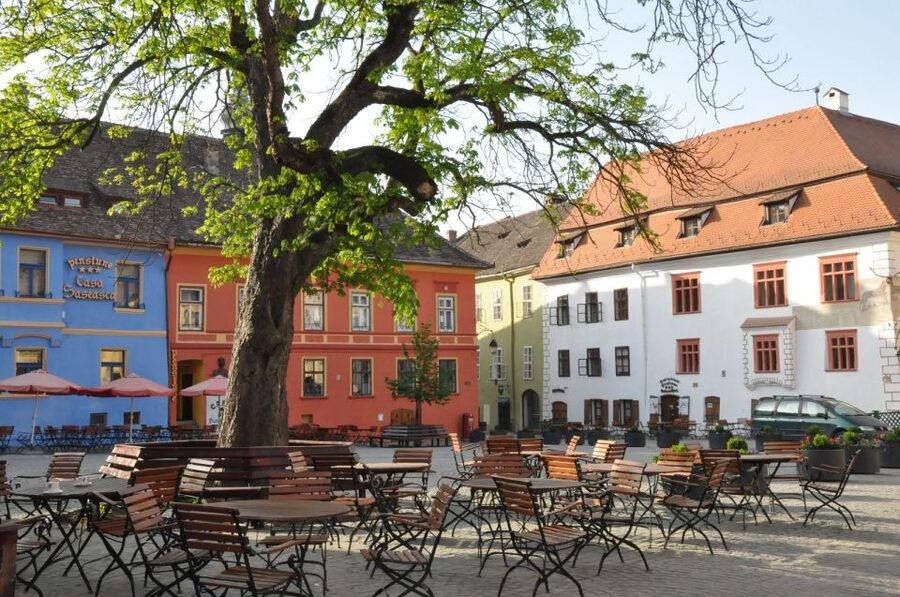
The Citadel’s Market Place and painted burgher houses
The tour begins in the heart of the old citadel, where the Market Place is framed by colorful historic houses. This is an ideal place to start because Sighișoara can look like a pretty collection of facades until someone explains how the buildings, trades, and defensive walls worked together.
Your guide can help you read the architecture. The houses belonged to townspeople, merchants, and craft families, not to a royal court. That distinction matters. Sighișoara’s character grew from a fortified trading town and guild community, and the old streets still make more sense once you understand who lived and worked there.
I would pay attention to the details above street level. The colors and doorways are easy to photograph, but the guide’s explanation of the town’s layout gives the scene more weight. This is also where you can ask practical questions about Romania, Transylvania, or other places to visit in the region. Several guides on this route are praised for treating questions seriously instead of rushing through a memorized speech.
Dracula’s birthplace, with the myth kept in proportion
One of the most famous stops is the house associated with Vlad the Impaler, the historical figure who helped inspire Dracula. The building now operates as a restaurant and a museum connected with Sighișoara’s past.
This stop works best when you want context, not a theatrical horror show. The Dracula link is real as a piece of popular culture, but Vlad the Impaler’s life and reputation are larger and more complicated than the fictional count. A good guide can separate the historical man from the later legend, and this tour makes that distinction part of the story.
Entrance fees are not included. If you want to go inside, ask your guide about the current cost and what is open that day. You can still understand the exterior and its place in the town’s story without paying for every indoor attraction.
The 64-meter Clock Tower
The Clock Tower is Sighișoara’s main landmark and one of the clearest visual markers in the citadel. At 64 meters high, it once served a serious defensive purpose, while its clock gave the town a shared sense of time.
Inside, you can find the clock mechanism and historical objects, though admission is separate. The tour explains why the tower mattered before modern streets, phones, and public services made such structures less central to daily life.
The tower is also linked to the best-known views over the town. If you pay to go up, you gain a different perspective on the citadel’s roofs, towers, and surrounding area. If you skip the entrance, you still get an important lesson in how Sighișoara’s defenses were organized.
This is a useful point to think about value. A self-guided visit can show you the tower, but a guide explains why it dominates the skyline and how it fits the town’s military and civic story. That added context is one reason the $45 price can make sense for a first visit.
More City Highlights Walking Tours in the world:
- Ho Chi Minh City Street Food Tour & Sightseeing By Motorbike
★ 5.0 · 9,413 reviews - Historic Charleston Guided Sightseeing Walking Tour
★ 5.0 · 6,216 reviews - Dublin Highlights and Hidden Gems Guided Walking Tour
★ 5.0 · 6,020 reviews - Vienna: Guided Walking Tour of City Center Highlights
★ 4.7 · 4,989 reviews
The 164-step Covered Staircase
The Covered Staircase leads from the lower part of the citadel toward School Hill. It has 164 wooden steps and was built in the 17th century to protect schoolchildren from harsh weather.
This is one of the tour’s most memorable physical sections, but it is also the part that demands the most from you. The steps are not a flat stroll, and anyone with knee, balance, or mobility problems should think carefully before booking.
Take your time. The structure is interesting because it shows how ordinary needs shaped medieval town design. It was not built as a tourist attraction. It was a practical passage for students facing cold, snow, and rain on their way to school.
The staircase also changes the rhythm of the tour. You move from market streets and defensive towers into a quieter, more elevated part of the citadel. If the weather is wet, the steps and surrounding stones may feel more difficult, so sensible shoes are important.
School Hill and the Church on the Hill
At the top, the Church on the Hill rewards the climb with Gothic architecture, medieval frescoes, and a more solemn atmosphere than the market area below. This is the mysterious church mentioned in the tour title, though its appeal comes less from mystery than from age, setting, and the layers of worship and community life connected with it.
The church interior contains medieval decoration, and the guide helps you notice more than the broad shape of the building. You may hear how the church fits into Sighișoara’s German-Saxon past and why the hill remained an important part of the citadel.
The climb gives this stop extra meaning. You do not simply arrive at a church after stepping off a bus. You follow the old route upward, just as generations of residents did. That physical connection is a strong part of the experience.
The tour is advertised as two hours, but the exact pace can vary. Guides have shown flexibility for different physical abilities and interests. One guide began earlier and adapted the route for a visitor who needed to catch a train, while another spent longer than planned during a rainy visit. Do not count on overtime, but it is worth telling the guide at the start if you have a firm departure time.
The German Cemetery and Sighișoara’s changing population
The German Cemetery is one of the most useful stops for understanding the people behind the buildings. Graves connected with influential local families provide clues about the town’s German-Saxon population, social structure, and long relationship with Central European culture.
This section may appeal most to history-minded visitors, but it also gives the tour emotional balance. Medieval walls and colorful houses can make Sighișoara feel like a preserved stage set. The cemetery reminds you that this was a living community, shaped by families, work, faith, illness, and death.
I especially like this kind of stop because it moves beyond the usual postcard view. You get a better sense of who had influence in town and how the community changed over time. The guide’s explanations here can turn names and stones into a readable part of Sighișoara’s past.
Butchers’ Bastion, guild towers, and the town’s defense
Sighișoara’s towers are not decorative extras. They were tied to the guilds that helped defend the citadel. The Butchers’ Bastion and Tower introduce the role of craft workers in protecting the town, while the Tailors’ Tower, Furriers’ Tower, and Tin Moulders’ Tower add more examples.
This is where the route becomes especially practical. Instead of hearing only about kings and famous men, you learn how a medieval town organized responsibility. Different trades had duties, equipment, and sections of the walls to defend.
The Tailors’ Tower is a strong example of the citadel’s defensive character. The Furriers’ Tower and Tin Moulders’ Tower show how closely daily work and military duty were linked. Your guide may also point out how the towers differ in shape, position, or surviving features.
Do not expect every tower to be open for an interior visit. The tour focuses on seeing them as part of the fortifications and understanding their roles. Entrance fees are not included, and access can depend on the site’s operating arrangements.
Venetian House and the House with the Deer Antler
The Venetian House adds a graceful Renaissance note to the walk. Its design and unusual story contrast with the heavier defensive towers nearby. This change of style is useful because it shows that Sighișoara was not frozen in one medieval moment. Buildings continued to change as tastes, wealth, and connections shifted.
The final stop is the House with the Deer Antler, recognized by the antlers mounted on its facade. It is an odd and memorable ending, the sort of detail you might pass without understanding if you explored alone.
These two buildings also give you good photo opportunities without requiring another steep climb. By this point, you have seen the citadel as a market town, a military stronghold, a religious center, and a place of family life. The route ends back near Piața Muzeului 5 or 6, so you are well placed to continue exploring on your own.
What the $45 price delivers
At $45 per person, this is not the cheapest way to walk around Sighișoara. The citadel is compact, and you can see many exterior sights without paying anything.
The value comes from the explanation. A guide links the Clock Tower to the defenses, the covered staircase to school life, the cemetery to population changes, and the towers to the guild system. That turns a pleasant walk into a coherent lesson in how the town worked.
The price includes an English-speaking specialist guide, but not food, drinks, entrance fees, or souvenir photos. If you plan to enter the Clock Tower or other paid attractions, add those costs. You should also compare the price with your own interests: a casual photographer may be happy walking alone, while a first-time visitor who wants Romanian and Transylvanian context will gain more from the guided route.
The experience has a 4.9 rating from 83 reviews, and the most consistent praise is for patient explanations, strong English, local knowledge, humor, and flexibility. Guides such as Peter, Charles, Carol, and Andrea are repeatedly singled out by name. That does not mean every departure will feel identical, but the pattern suggests that the guide is the central strength of this activity.
Who should book this walking tour?
I would choose it on your first day in Sighișoara. It helps you get your bearings, understand what you are seeing, and decide where to return later. It also suits history fans, architecture lovers, families with older children, and anyone who wants more than a Dracula photo.
It is less suitable if you want a completely flat route, dislike scheduled departures, or prefer to explore silently at your own pace. The tour includes uneven medieval streets and a long staircase, and the two-hour format means you will be moving rather than lingering at every site.
The experience is in English only. Bring identification, wear comfortable shoes, and leave large luggage elsewhere. You can cancel up to 24 hours ahead for a full refund, and the reserve-now, pay-later option keeps your plans flexible.
Should you book City Tour Sighișoara?
Book it if you want the citadel explained by a local guide rather than simply photographed. The strongest parts are the connected story of the guild towers, the climb through the covered staircase, the Church on the Hill, and the careful handling of Vlad the Impaler’s connection to Dracula.
Skip it if you already know Sighișoara well or want only a quick independent stroll. For most first-time visitors, though, $45 is fair for a patient, detailed two-hour introduction, especially if your guide is Peter, Charles, Carol, Andrea, or another guide with the same thoughtful approach.
FAQ
Where does the Sighișoara walking tour start?
The main meeting point is Piața Muzeului 5, in front of the Monastery Church. Piața Muzeului 6 is also listed as a possible starting point, so check your booking details.
What time does the tour depart?
The listed departure time is 11:00. Availability should be checked when booking.
How long does the tour last?
The scheduled duration is two hours.
What language is the tour conducted in?
The tour is conducted in English with a live English-speaking guide.
What is included in the price?
The price includes an English-speaking specialized guide.
Are entrance fees included?
No. Entrance fees for attractions such as the Clock Tower are not included.
Is food included?
No. Food and drinks are not included in the $45 price.
Is the tour suitable for people with mobility impairments?
No. The tour is not suitable for people with mobility impairments. The route includes uneven streets, slopes, and the 164-step Covered Staircase.
What should I bring?
Bring a passport or ID card. Comfortable footwear is also sensible for the walking route and stairs.
Can I bring large luggage?
No. Oversize luggage and large bags are not allowed.
Is a private tour available?
Yes. A private tour is available for a supplement of EUR 20 per person.
Can I cancel for a refund?
You can cancel up to 24 hours in advance for a full refund. You can also reserve now and pay later.
New routes in the world
- Baltimore Walking Foodie Tour in Fells Point★ 5.0 · 182 reviews
- Baku Oil Heritage & Old Town Walking Tour★ 5.0 · 232 reviews
- Baku Walking Tour (Old City)★ 5.0 · 127 reviews
- The Madam’s Curse Walking Ghost Tour★ 4.5 · 103 reviews
- Austin Small Group Morning Walk★ 5.0 · 412 reviews
- Austin Haunted Pub Crawl Walking Tour★ 4.5 · 232 reviews
- Austin Downtown Private Walking Food Tour With Secret Food Tours★ 5.0 · 71 reviews
- Austin Murder Walk★ 5.0 · 310 reviews
Romania Walking Tours, compared.

Bucharest: City Highlights Guided Walking Tour
Read our review →
Bucharest: Hidden Markets Walking Tour with Tastings
Read our review →

Bucharest: Ghost Stories & Romanian Mythology Walking Tour
Read our review →
Bucharest: Guided Walking Tour with Romanian Snack
Read our review →

Browse the lists this tour appears in