
Review · HISTORY
Bridgetown: A Guided Walking Tour of The History of a City
Bridgetown’s story comes alive through its streets, bridges, waterfront, and old commercial buildings. This two-hour walking tour links the city’s name, rum making, Parliament, slavery, Jewish heritage, and independence into one clear route rather than treating each sight as a separate photo stop.
I like the audio headsets, which help you follow the guide even when town noise gets in the way. I also like the practical extras: water, a light snack, and enough time for questions and pictures. The main drawback is the heat. You are outside for most of the tour, and shade is not guaranteed at every stop.
Key points to know before you book
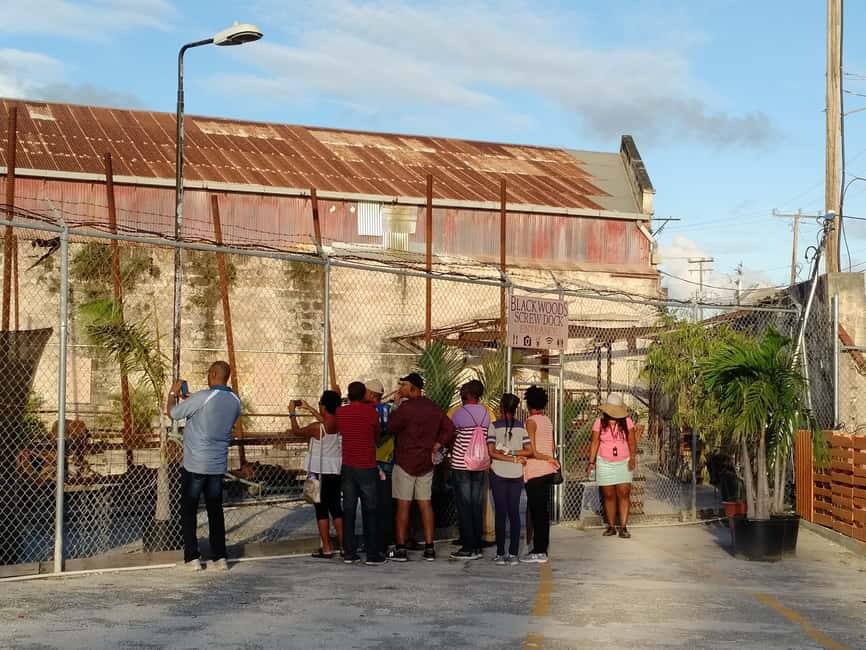
- The Blackwood Screw Dock: See one of the world’s last surviving screw docks of its type and learn how Bridgetown’s waterfront once worked.
- A full city story: The route begins with the origins of Bridgetown and reaches Barbados’ independence 50 years ago.
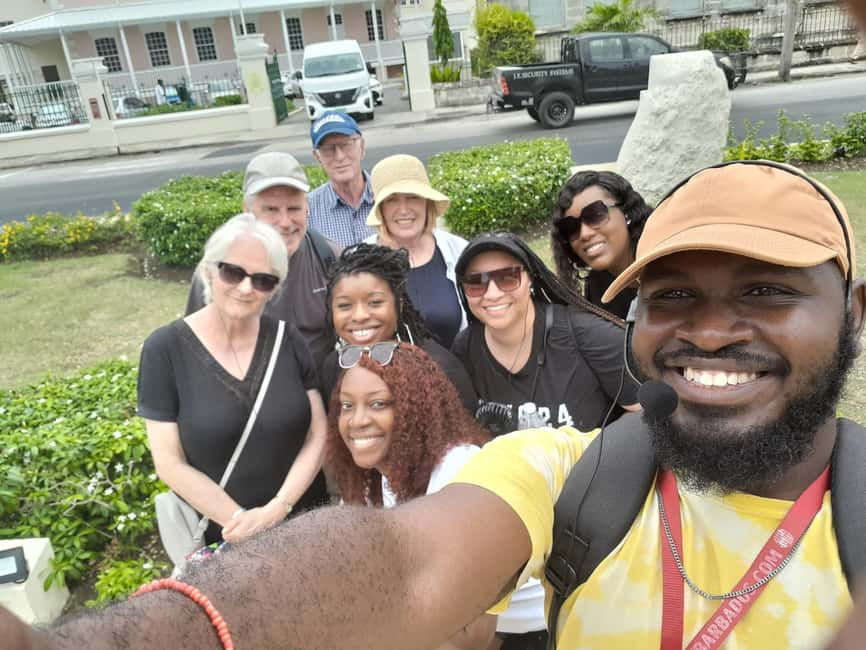
- Strong local guiding: Evan, Zachary, Deborah, Christian, and other English-speaking guides have led this walk, with praise for their clear explanations and friendly manner.
- Useful audio equipment: Headsets make it easier to hear beside busy streets and open public spaces.
- Good value at $25: The price includes the guide, audio equipment, water, and a light snack containing nut products.
- An easy city orientation: The pace is manageable, and one review notes that parents in their 80s completed it with ease.
Why this walk gives Bridgetown a proper introduction
Bridgetown can seem easy to skim. You see the water, the old buildings, the shopping streets, and the bridges, then move on. This tour asks you to slow down and connect the pieces.
The route explains how the city got its name, how trade shaped its streets, how rum became part of Barbados’ identity, and how the city moved from colonial rule to independence. That wider frame is the real value. You are not just looking at an old building. You are learning why it is there and what it meant to the people who used it.
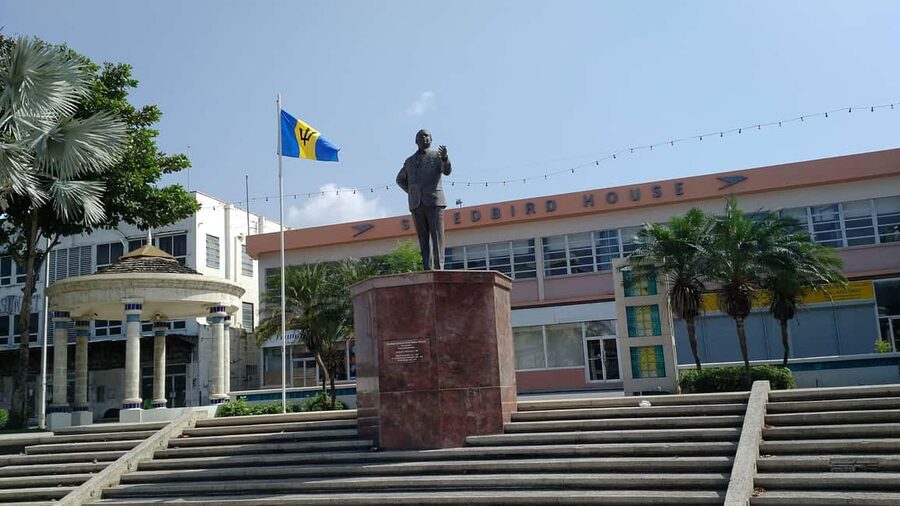
The tour begins at the Errol Barrow Statue in Independence Square. This is a useful meeting point because the square itself becomes part of the first chapter. Before the walk gets into landmarks, the guide paints a picture of the space and sets up the city’s changing role.
From there, the route deals with difficult parts of Barbados’ past, including the unceremonious burial ground associated with enslaved people arriving on the island. This is important context, and the subject is handled as part of the city’s story rather than pushed aside in favor of lighter sightseeing.
You should expect a history walk, not a sightseeing bus tour with quick commentary. The guide explains, you walk, and you have chances to ask questions. The pace is relaxed enough for photographs and conversation.
More History Walking Tours in the world:
- History and Hauntings of Salem Guided Walking Tour
★ 5.0 · 14,564 reviews - Lisbon: History, Stories and Lifestyle Walking Tour
★ 4.8 · 10,902 reviews - Boston: Freedom Trail History Small Group Walking Tour
★ 5.0 · 6,450 reviews
The Blackwood Screw Dock and Bridgetown’s working waterfront
The Blackwood Screw Dock is one of the most distinctive stops. It is described as the only remaining screw dock of its kind in the world, making it far more than an old piece of harbor machinery.
A screw dock allowed a ship to be raised out of the water for repair. That simple function tells you a great deal about Bridgetown. The city was not only a colonial administrative center. It was also a working port where ships, cargo, repairs, and commerce shaped everyday life.
This stop should appeal to you if you like practical history. Instead of hearing only about governors and grand buildings, you see the machinery connected to the city’s trade. It also gives the walk a strong sense of place, since the harbor remains central to Bridgetown.
The waterfront can be sunny and exposed, so bring comfortable shoes and prepare for heat. Water is supplied, but you may still want sun protection. Smoking is not allowed on the tour.
Bridges, fountains, and the public life of the city
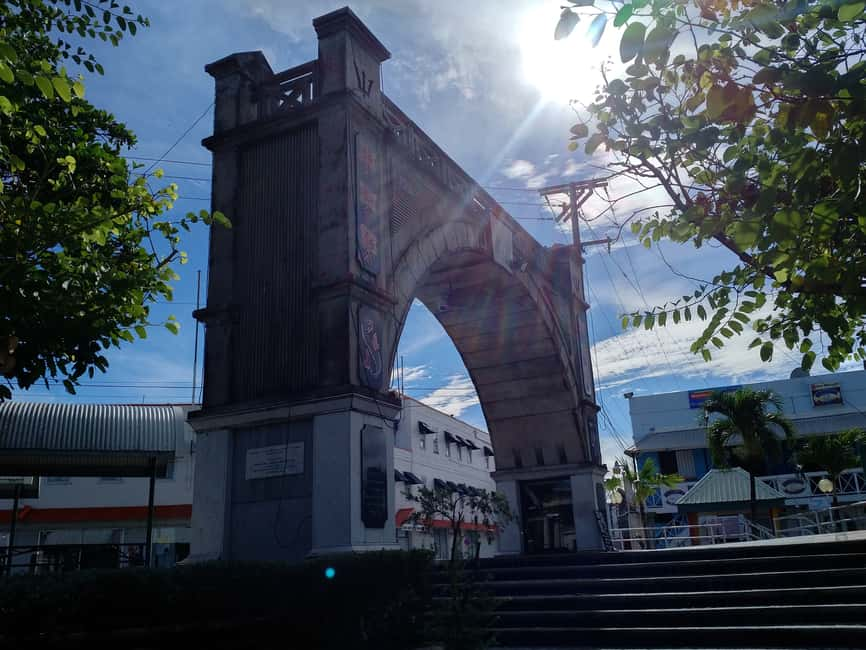
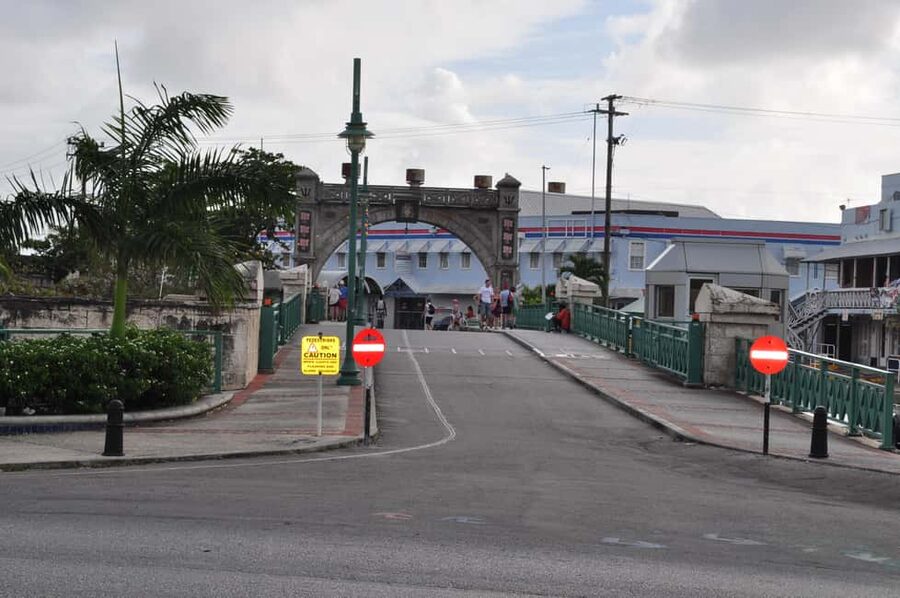
Bridgetown’s name is tied to its bridges, and the walk visits one of the city’s two bridges. This is where the name becomes easier to understand. Rather than treating the title as a dry fact, the guide places it in the physical setting that gave the city its identity.
The route also includes the fountain, connected with the achievement of bringing running water into the city. That may sound like a small civic detail, but it helps you picture Bridgetown as a lived-in town. Public water changed daily routines, public health, and the way the city functioned.
The Cenotaph shifts the mood again. Here, the tour recognizes the men and women connected with the two world wars. It is a short stop with a wider point: Bridgetown’s story is not limited to the seventeenth or eighteenth centuries. Its people were also shaped by global conflicts and the responsibilities of the modern Commonwealth.
I like this mix of grand and ordinary subjects. The route includes political buildings and major events, but it also explains public improvements and memorials. That gives you a more grounded understanding of the city.
Parliament Buildings and the story of rum
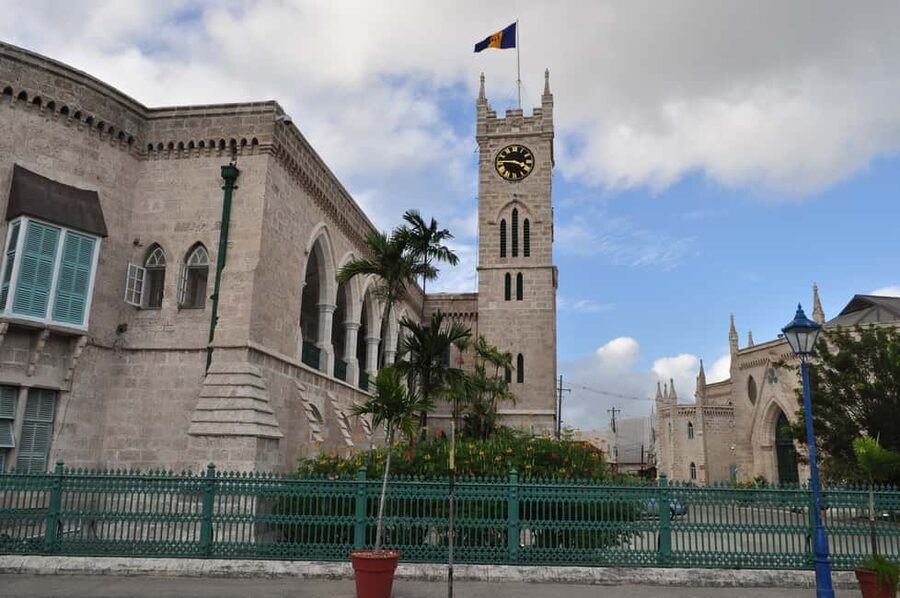
The Parliament Buildings are among the tour’s headline sights. The guide explains the history of one of the oldest continuing Parliaments in the Commonwealth, housed in the stately buildings across the bridge.
This stop is useful for understanding Barbados as a country with long political institutions. You get more than an exterior view. The building becomes part of a story about government, public life, and the island’s changing relationship with Britain.
The rum section follows, and it is one of the more memorable parts of the walk. Barbados is closely associated with the birth of rum, and the tour explains how that drink came into being. You do not need to be a rum enthusiast to enjoy this stop. It connects agriculture, trade, production, and social life in a way that makes the subject easy to remember.
The guide may also be able to answer broader questions about Barbados at this point. Evan, Zachary, Deborah, and other guides have been praised for welcoming questions and adding local context beyond the basic script. That is a good reason to come prepared with one or two things you want to ask.
More Guided Walks in the world:
- Magical London: Harry Potter Guided Walking Tour
★ 4.7 · 22,044 reviews - Amsterdam Anne Frank: Small-Group Walking Tour & Local Guide
★ 4.8 · 12,789 reviews - Edinburgh: Harry Potter Magical Guided Walking Tour
★ 4.8 · 11,944 reviews - Edinburgh Castle: Guided Walking Tour with Entry Ticket
★ 4.7 · 11,699 reviews
Jewish heritage, Swan Street, and old Bridgetown commerce
The route recognizes the Jewish ancestors who helped shape Barbados. This is a valuable inclusion because a short city walk can easily focus only on British colonial structures and overlook other communities.
The Jewish heritage stop widens the picture of Bridgetown as a port city. People arrived, settled, worshipped, traded, and helped build the commercial life of the island. The tour does not present history as one straight line. It shows how different groups contributed to the city’s development.
Swan Street brings you into the commercial heart of the walk. It is described as the oldest street in Bridgetown, and the guide explains its importance as you move through the area. Here, the city feels less like a museum and more like a place where business and daily life continue.
That contrast is one of the tour’s strengths. You move between formal monuments and working streets. You see how the city’s past remains mixed into its present, rather than sealed off behind a ticket desk.
The oldest church, Town Hall, and the Mutual Building
The oldest church in Bridgetown is another stop, followed by the Town Hall. These buildings help explain how worship and civic government organized the city.
The value here comes from the guide’s interpretation. On your own, you might notice age, stonework, or a prominent location. With the story attached, you understand why the building mattered and how it fitted into Bridgetown’s public life.
The Mutual Building receives special attention later in the route. The description gives it an almost character-like role, and that suits a structure with plenty of stories attached to it. The building represents another side of Bridgetown’s commercial and financial development.
If you enjoy architecture, keep your eyes up. The point is not just to collect formal landmarks. Look at the way older buildings sit beside active streets and businesses. Your guide can help you see the city as a place of continuity, where old institutions and modern activity share the same blocks.
From the wharf to the Spirit Bond
The tour then turns toward another commercially important street before reaching the wharf and the Spirit Bond. These names point to Bridgetown’s trading past, when storage, shipping, and imported goods played a central role in the city.
The Spirit Bond adds another layer to the rum and waterfront story. A bond was linked to goods held under customs control, so the stop helps connect the drink’s history with the practical machinery of trade.
This part of the walk should be especially useful if you want to understand why Bridgetown developed where it did. The harbor was not a backdrop. It was the reason the city mattered.
The guide’s audio equipment is helpful here. Town streets can be noisy, and several people specifically appreciated being able to hear the commentary clearly. You can stay focused on the building or waterfront instead of leaning toward the guide every few minutes.
The boardwalk and the final story of independence
The walk ends with a stroll along the boardwalk back toward the starting area. This gives the tour a pleasant change of pace after the streets and buildings.
The final subject is independence, reached 50 years ago according to the tour’s framing. Ending with this chapter gives the route a clear arc. You begin with the origins of Bridgetown and finish with Barbados as an independent nation.
That structure works well for first-time visitors. You leave with a basic timeline, a sense of the city’s geography, and several landmarks to revisit. You may also leave with ideas for where to eat or what to see next. Evan, in particular, has offered lunch suggestions and directions for continuing the day.
Do not expect a long scenic boardwalk outing. It is part of the return route and the closing story, not a separate waterfront attraction. Still, it is a fitting way to end a history walk.
What the guide and equipment add
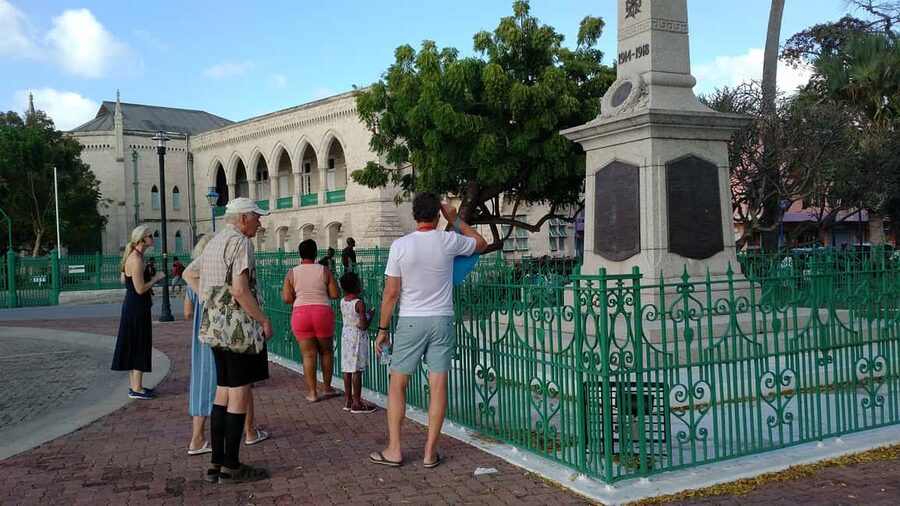
The tour is conducted in English with a live guide and audio equipment. The guide names reported for different departures include Evan, Zachary, Deborah, Christian, and Christine. The exact guide depends on the date, but the experience places clear emphasis on personal explanation rather than recorded narration alone.
The audio gear is a practical advantage. Bridgetown has open spaces and active streets, and a small group can spread out while looking at a landmark. Headsets let you keep walking naturally while still hearing the explanation.
The strongest guide qualities are clear speech, patience, friendliness, and an ability to answer questions. Evan is often singled out for his calm manner and detailed explanations. Zachary has provided water and snack bags and is described as attentive and easy to talk with. Deborah has been noted for finding shaded spots when the weather was hot.
Those details matter because a history tour succeeds or fails on delivery. Dates and names are useful, but you also need a guide who can explain why they matter. The evidence here suggests a warm, conversational style rather than a stiff lecture.
Price, pace, and practical value
At $25 per person, this is a strong value if you want historical context during a short stay in Bridgetown. The price includes the guide, audio equipment, and a light snack. Water has also been provided, sometimes in a small souvenir drawstring bag with snacks and mints.
The snack includes nut products, so take that seriously if you have an allergy. You should also wear comfortable shoes. The tour lasts two hours, though one departure covered the route in about 90 minutes and continued through conversation, so the exact timing can vary.
The walk is described as manageable rather than strenuous. One group with parents in their 80s completed it easily, and other departures were praised for a relaxed pace. That does not remove the need to consider heat. The route is outdoors, and shade varies from stop to stop.
Transportation to the meeting point is not included. You need to reach the Errol Barrow Statue at Independence Square in Bridgetown, St Michael. The stated meeting coordinates are 13.0957448, -59.6134232.
The activity may be affected by bad weather, with rescheduling where possible. Free cancellation is available up to 24 hours before the start time, and you can reserve now and pay later. Check the available departure time when booking.
Who should book this Bridgetown walk?
I would choose this tour for a first visit to Barbados, especially if you want to understand Bridgetown before spending time shopping, eating, or exploring on your own.
It suits you if you enjoy:
- City history explained at the actual places where events unfolded
- A relaxed two-hour route instead of a full-day excursion
- Local questions and conversation
- Architecture, public buildings, trade, and waterfront history
- A clear introduction before exploring the city independently
It may be less suitable if you want a beach outing, rum tasting, museum admission, or a tour with transport from your hotel. None of those are included.
It is also worth thinking about the weather. If you dislike walking in strong sun, choose a cooler departure if one is available, bring water beyond the supplied bottle, and use sun protection. The pace is gentle, but the heat can still affect your enjoyment.
Should you book it?
Book this tour if you want Bridgetown to make sense, not just look attractive. For $25, you get a well-paced city walk, local guiding, clear audio, water, a snack, and a route that covers slavery, trade, rum, Parliament, Jewish heritage, civic life, and independence.
I especially recommend it early in your Barbados stay. The stories about Swan Street, the bridges, the waterfront, and the old public buildings will give you more to notice when you walk around later.
Skip it only if you have little interest in history or already know Bridgetown well. For most first-time visitors, this is an efficient and fairly priced way to get your bearings while meeting a guide who can answer questions that a map cannot.
FAQ
How long does the Bridgetown walking tour last?
The stated duration is two hours. The exact pace can vary, and one departure lasted around 90 minutes before continuing with extra conversation.
How much does the tour cost?
The price is $25 per person.
Where does the tour meet?
It meets at the Errol Barrow Statue in Independence Square, Bridgetown, St Michael. The listed coordinates are 13.0957448, -59.6134232.
What language is the tour offered in?
The live tour guide speaks English, and the included audio guide is also in English.
Is transportation included?
No. Transportation to and from the assembly point is not included.
What is included in the price?
The price includes the guide, audio equipment, and a light snack. Water has also been provided on departures, sometimes with snacks in a small drawstring bag.
Does the snack contain nuts?
Yes. The light snack includes nut products.
What should I bring?
Bring comfortable shoes. Sun protection and extra water may also be useful because the walk takes place outdoors, though only comfortable shoes are specifically required.
Can the tour be canceled for a refund?
Yes. You can cancel up to 24 hours in advance for a full refund.
Can I reserve the tour and pay later?
Yes. The reserve-now, pay-later option lets you book without paying at the time of reservation.
What happens if the weather is bad?
Inclement weather may affect the tour. Rescheduling is offered where possible.
Are there any restrictions during the tour?
Smoking is not allowed.
New routes in the world
- Baltimore Walking Foodie Tour in Fells Point★ 5.0 · 182 reviews
- Baku Oil Heritage & Old Town Walking Tour★ 5.0 · 232 reviews
- Baku Walking Tour (Old City)★ 5.0 · 127 reviews
- The Madam’s Curse Walking Ghost Tour★ 4.5 · 103 reviews
- Austin Small Group Morning Walk★ 5.0 · 412 reviews
- Austin Haunted Pub Crawl Walking Tour★ 4.5 · 232 reviews
- Austin Downtown Private Walking Food Tour With Secret Food Tours★ 5.0 · 71 reviews
- Austin Murder Walk★ 5.0 · 310 reviews
History Walking Tours, compared.
History and Hauntings of Salem Guided Walking Tour
Read our review →
Freedom Trail History Small Group Walking Tour
Read our review →
Historic Charleston Guided Sightseeing Walking Tour
Read our review →
Tapas Walking Tour with Food, Wine, and History
Read our review →
Savannah History and Haunts Candlelit Ghost Walking Tour
Read our review →
A History of Terror – Belfast City Centre Walking Tour
Read our review →Browse the lists this tour appears in