
Review · BORDEAUX
Bordeaux: Guided Walking Tour
Bordeaux reveals itself best on foot, where grand 18th-century squares give way to narrow lanes and small shops in just a few minutes. This tour connects those very different sides of the city, from Place des Quinconces, one of Europe’s largest squares, to the polished reflecting pool at Place de la Bourse and the bridges over the Garonne.
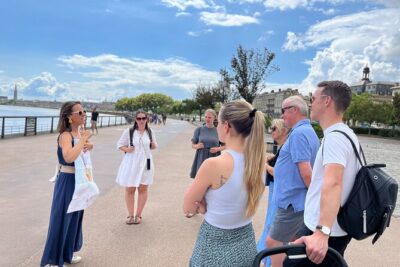
I like the tour’s clear historical thread and its easy pace. Guides such as Bruno, Alcide, Christine, and Véronique are praised for making the city personal, adding food and wine suggestions instead of reciting dates. The main consideration is the bilingual format: when French and English are combined, you hear each explanation twice, so an English-only tour would cover more material in the same two hours.
Key points to know before you book
- A broad introduction to Bordeaux: See the grand avenues, the old center, major squares, architecture, and riverfront in one outing.
- Place des Quinconces sets the scale: This enormous public square helps explain Bordeaux’s grand urban design and later civic history.
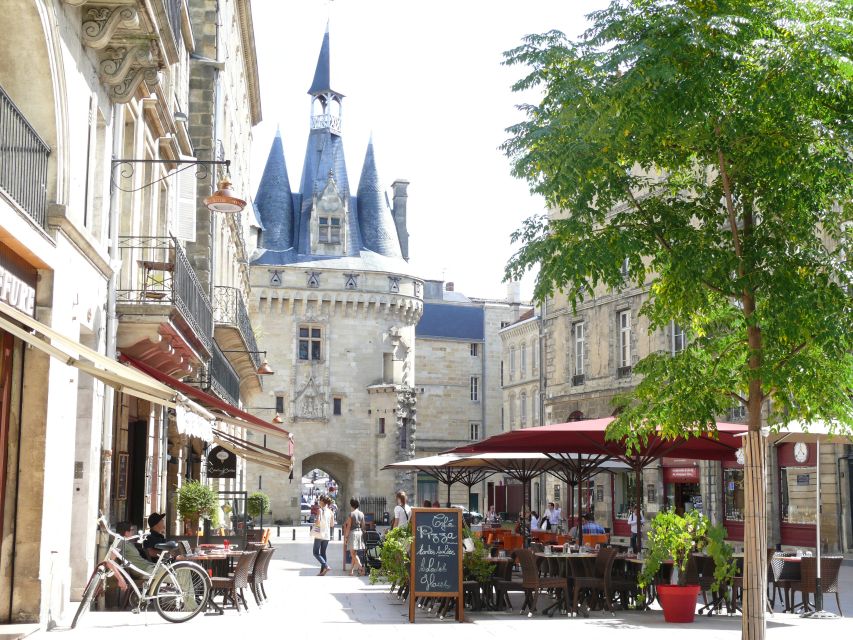
- The Old Town supplies the atmosphere: Saint-Pierre brings narrow paved lanes, small shops, and a more intimate feel after the wide boulevards.
- The language schedule matters: Morning departures are bilingual in French and English, while Saturday afternoon tours are French only.
- Expect history more than sightseeing stops: The guide explains urban planning, architecture, Enlightenment ideas, wine, and local life while you walk.
- The price is modest: At $17 per person, the tour is useful for a first look, especially if you are staying only a short time.
A useful first look at Bordeaux for $17
At $17, this is an unusually affordable way to get your bearings in Bordeaux. You are not paying for tastings, museum admissions, or transport. You are paying for a live guide who turns the city’s streets and façades into a connected story.
That distinction matters. Bordeaux is easy enough to wander through on your own, but it is harder to understand why the city changes so sharply from one block to the next. The tour explains the shift from wide neoclassical avenues to medieval lanes, and from private mansions to public squares and riverfront projects.
The walk lasts from 105 minutes to two hours, depending on the departure and pace. That is long enough to see the central sights without taking over your whole day. I would use it early in a short stay, then return to the places that caught your eye.
You meet outside the Bordeaux Tourist Office on Cours du 30 Juillet. Arrive 10 minutes early with the downloaded or printed ticket ready for each person. Leave large bags and luggage behind, and wear comfortable shoes. Bordeaux’s center is made for walking, but paved streets can still be tiring if you are in unsuitable footwear.
More Guided Walks in France:
- Paris Top Sights Half Day Walking Tour with a Fun Guide
★ 5.0 · 2,893 reviews - Paris: Montmartre Highlights Walking Tour with a Local Guide
★ 4.9 · 2,318 reviews - Paris: Montmartre Cheese, Wine & Pastry Guided Walking Tour
★ 4.8 · 2,255 reviews
Starting at Place des Quinconces
The tour begins with a useful lesson in scale at Place des Quinconces. This is one of Europe’s largest squares, a huge open space bordered by trees and monumental features. It feels quite different from the compact lanes you will see later.
A guide can make a place like this easier to read. Instead of treating the square as a large patch of pavement, you learn how Bordeaux’s public spaces relate to its expansion, civic ambitions, and architectural style. The surrounding avenues lead toward some of the city’s grandest buildings and help frame Bordeaux as a carefully planned port city.
The open setting also affects the tour itself. On a busy or sunny day, the group may spread out, and it can be harder to hear without the audio equipment. On a rainy day, there is little shelter. Bring weather protection, since the experience continues outdoors.
The square is also a good early photo stop, but the real value is the context. Once you understand the scale of Quinconces, the smaller spaces later in the walk feel more deliberate.
Grand boulevards, theaters, and private mansions
From Quinconces, the route moves through the grander side of central Bordeaux. The tour passes theaters, town halls, fountains, parks, and private mansions. These buildings are not presented as isolated façades. The guide explains how they fit into the city’s design and how Bordeaux developed an urban identity shaped by wealth, trade, and the Enlightenment.
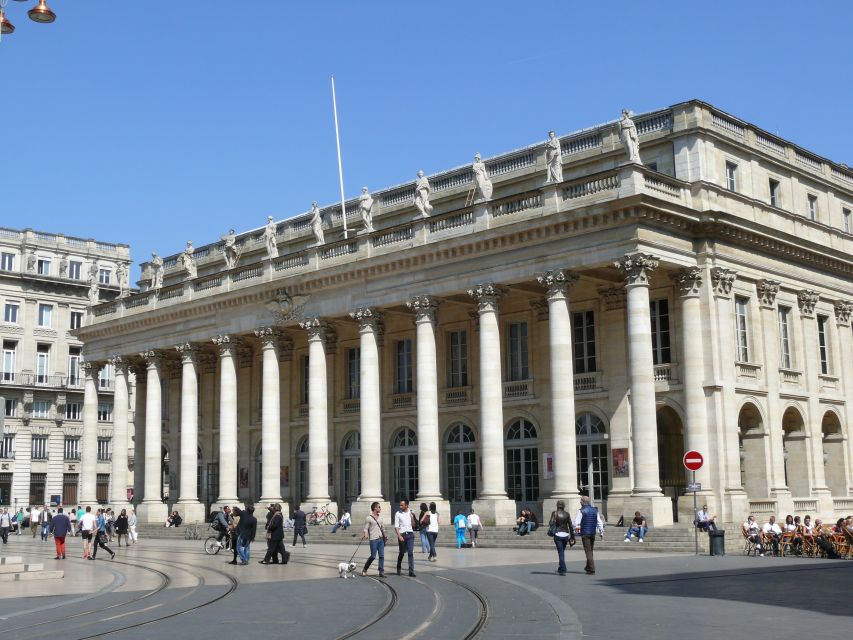
The Grand Théâtre is one of the major architectural highlights along the way. The point is not simply to stop, take a picture, and move on. You get a sense of how Bordeaux’s public buildings were intended to impress, and how theaters and squares helped create a civic center.
Look closely at the details above street level. Past guides have explained the different balcony designs, the figures around windows, and the symbols worked into the stone. Those small features are easy to miss when you explore alone, especially if you are focused on finding a restaurant or crossing the next square.
This portion suits you if you enjoy architecture and city planning. It is less suited to anyone expecting a tour built around entering several monuments. The focus remains outside, with interpretation provided in the street.
Saint-Pierre and the narrow streets of the Old Town
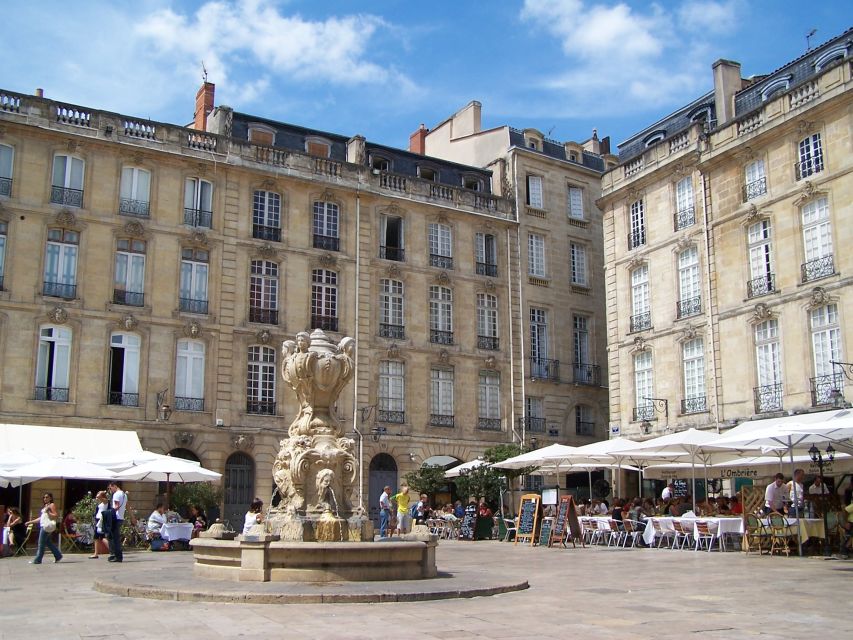
The change into the Saint-Pierre neighborhood is one of the most enjoyable parts of the route. Wide avenues give way to narrow paved streets, smaller buildings, and little shops. Bordeaux suddenly feels less formal and more local.
This is where the tour’s range pays off. You see that Bordeaux is not only a city of monumental façades and wine addresses. Its center also has tight lanes and modest corners that make the city easier to explore at your own pace later.
The guide uses the Old Town to explain more than dates and rulers. You learn how the historic center developed, how different parts of Bordeaux relate to each other, and how the city’s architectural character changes from one neighborhood to the next. The strongest guides make this feel like a conversation rather than a lecture.
The route does not spend much time inside churches or other buildings. That is good news if you prefer moving through streets and squares, but it may disappoint you if interiors are your main interest. One of the tour’s strengths is the amount of ground covered outdoors, though the actual walking can feel modest because the group frequently stops for explanations.
More Walking Tours in France:
- Authentic Parisian Gourmet Food Tour with 10 Local Dishes & Wines
★ 5.0 · 4,754 reviews - Montmartre Hidden Gems and Scenic Highlights Walking Tour
★ 5.0 · 2,684 reviews - Montmartre Hill French Gourmet Food and Wine Tasting Walking Tour
★ 5.0 · 2,588 reviews - Paris Île de la Cité and Notre-Dame Walking Tour With Crypt
★ 5.0 · 2,272 reviews
Place de la Bourse and the reflecting pool
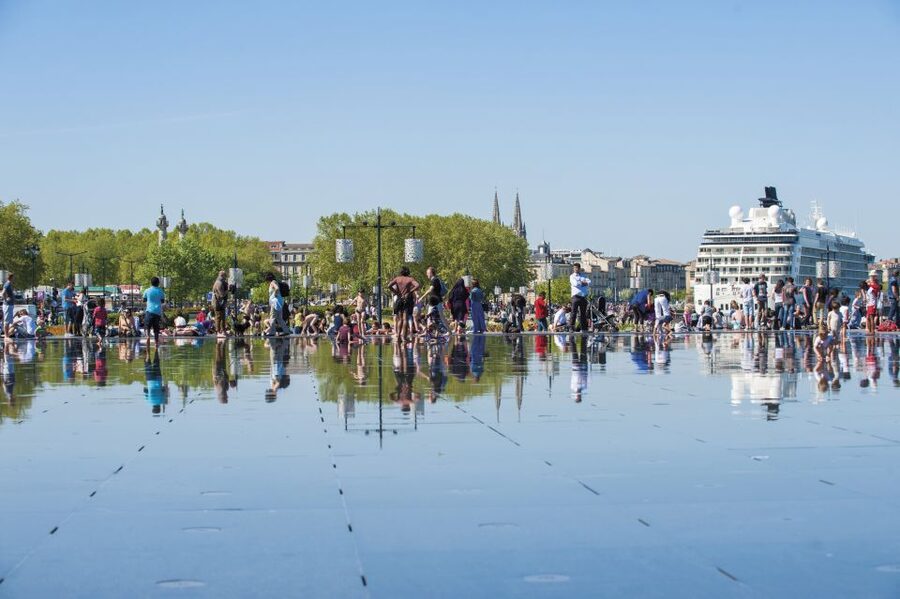
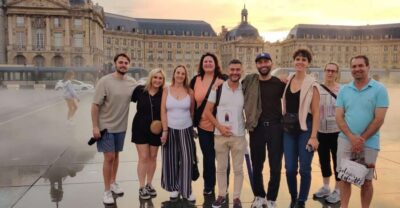
Place de la Bourse is the visual centerpiece for many people. Its elegant façades face the reflecting pool, the Miroir d’eau, which gives the square a second image on the ground when conditions are right.
The stop works well late in the route because you have already seen the city’s older lanes and grander avenues. The square then feels like part of a larger story about Bordeaux’s public spaces, rather than just a famous photo background.
Expect a pause for explanation and photographs, not a timed water attraction or separate admission. The reflecting pool is an outdoor feature, so its appearance depends on weather and operation. Even without a perfect reflection, the broad relationship between the square, the water, and the riverfront is worth seeing.
This is also a place where groups can become spread out. Stay close to the guide and pay attention when the group moves on. The tour is not designed for long independent stops at each sight.
The Garonne and Bordeaux’s romantic bridges
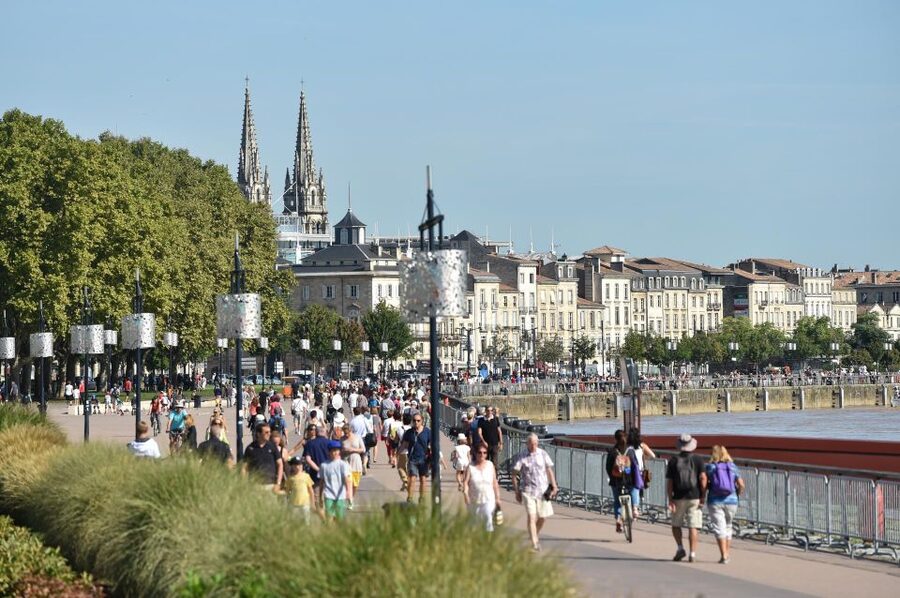
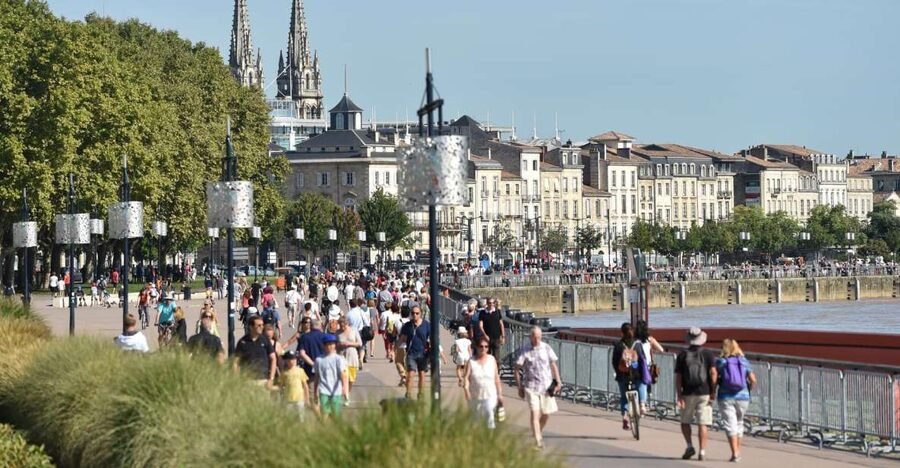
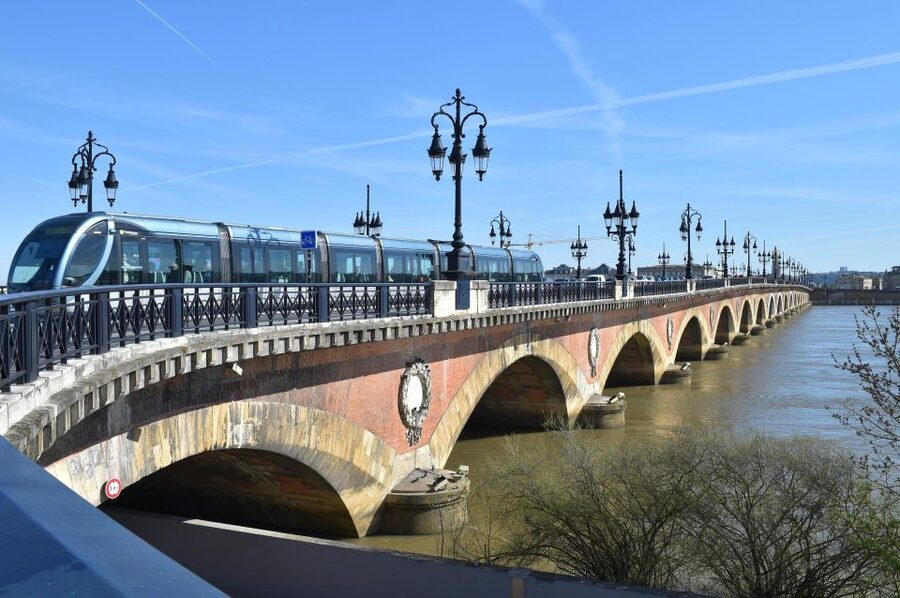
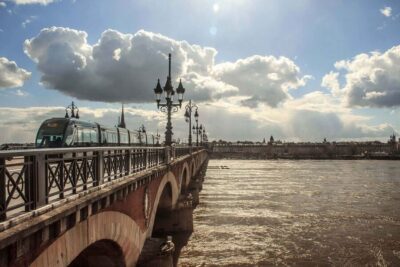
The walk also reaches views connected with the Garonne River and its bridges. These crossings give Bordeaux a softer, more romantic side after the stone-heavy streets of the center.
You will not spend the entire tour beside the water, but the river helps explain the city’s position and its long relationship with trade. The bridges also make useful orientation points. From the center, you can begin to understand how Bordeaux is arranged around the river rather than treating the historic core as a collection of unrelated attractions.
The waterfront section may be especially welcome after time in the narrow Saint-Pierre streets. It opens the view and gives you a chance to take in the city from a little distance. On a clear day, this can be one of the most pleasant parts of the walk.
The exact feeling depends on the route and pace of the day. This is a city tour with river views, not a dedicated bridge or waterfront excursion. If you want a long riverside walk, save time for that after the tour.
The history behind the architecture
The tour’s strongest subject is Bordeaux’s urban story. The guide discusses the Enlightenment philosophers who influenced the city’s planning and explains how the historic center became an example of European urban design.
That context helps you read the city. Grand squares, straight avenues, façades, fountains, and private mansions begin to look like parts of a plan. In the Old Town, the tighter streets show a different layer of development, and the contrast becomes more meaningful.
The guides bring their own personalities to this material. Bruno is praised for his storytelling and for sharing practical suggestions. Alcide is known for adding wine and food recommendations to the history. Christine has led fully English tours and is noted for looking after the group. Véronique, a local born and living in Bordeaux, has been especially good at pointing out small details and local connections.
Names and guide assignments can change, of course. The important point is that the experience depends partly on who leads it. A strong guide turns the same route into a lively introduction. A larger group or a quieter guide can make the information harder to catch.
French and English: the choice that affects the pace
Morning tours are bilingual in French and English. On Saturday afternoon, the tour is French only. Check the departure details carefully before booking, especially if you do not speak French.
Bilingual tours can work well when the guide handles both languages fluently. English speakers have praised guides who switch quickly and keep both groups included. You may also enjoy hearing some French as part of the experience, even if you understand only the English portion.
The tradeoff is time. Each explanation takes longer when repeated in two languages. Some English-speaking participants have felt that the French sections reduced the amount of information they received. A few people have also found it harder to hear when the group was large, the rain was heavy, or the guide spoke too quickly.
An audio link is sometimes used to help the group hear the guide. It has worked well for some departures, but there have also been occasional reports of the Bluetooth system cutting in and out. Stay near the guide when possible, and speak up promptly if you cannot hear.
If English is your priority, ask about an English-only departure when you arrive at the tourist office. The supplied schedule specifically identifies bilingual morning tours and French-only Saturday afternoon tours, so do not assume every departure uses both languages.
Group size, weather, and walking comfort
The tour is not a private stroll. Group size can vary, and some departures have included a large French-speaking majority with only a few English speakers. That can make the experience feel less personal and can complicate the language balance.
The route is not described as difficult, but you are outside for close to two hours. Comfortable shoes are essential. There are paved streets, repeated stops, and enough standing to make poor footwear a nuisance.
Weather has a real effect. Rain can make it harder to hear and less pleasant to stand in open squares. Heat can also be tiring, though one guide adjusted the route toward shady spots and checked that the group was comfortable. A small umbrella, water, and weather-appropriate clothing will help, even though only comfortable shoes are specifically required.
The pace is generally manageable. Some people describe it as leisurely, while others feel the tour includes more explanation than walking. That is useful to know: choose this if you want an outdoor history lesson with movement, not a fast circuit that checks off every sight.
What the tour adds to the rest of your day
A good city walk should leave you with ideas for later, and this one often does. Guides have suggested places to eat, drink, and continue exploring. Wine recommendations are a natural part of a Bordeaux introduction, and past departures have included a voucher for a wine bar.
Treat the voucher as a bonus rather than the reason to book. The main value is the guided context. Still, it can be handy after the walk, when you are ready to sit down and test the city’s wine culture for yourself.
I would schedule this tour near the beginning of your stay. Use the first two hours to learn the shape of the center, then return to Place de la Bourse, Saint-Pierre, the Grand Théâtre, or the riverfront with more confidence. If you have only one day in Bordeaux, the walk helps you choose what deserves extra time.
The experience also works well for a first afternoon in town if you want orientation without committing to a museum or a long excursion. It gives you practical suggestions and a broad sense of place before you make your own plans.
Who should book this Bordeaux walk?
This tour suits you if you want:
- A low-cost introduction to Bordeaux’s historic center
- Architecture, urban planning, and local history explained in person
- A mix of major squares and smaller Old Town streets
- Food and wine suggestions from a local guide
- A tour short enough to fit into a busy itinerary
- A bilingual experience and some flexibility with language
It is less suitable if you want a private group, a fast-paced sightseeing circuit, extensive monument interiors, or a tour conducted only in English at every departure. The French and English format is a practical compromise, but it limits the amount of material covered in two hours.
At $17, the balance is favorable. Even if you later explore the same streets alone, the guide can point out architectural details and historical connections you would likely miss. The free cancellation option up to two days before departure also gives you some planning flexibility.
Should you book the Bordeaux Guided Walking Tour?
Yes, if you want an affordable first look at Bordeaux and you enjoy understanding how a city was shaped. The route gives you the right mix: Place des Quinconces for scale, the Grand Théâtre and grand avenues for architecture, Saint-Pierre for atmosphere, Place de la Bourse for the city’s most famous modern water feature, and the Garonne for open views.
Book with care if English is important to you. Choose a bilingual morning departure when possible, arrive early, stay close to the guide, and confirm the language before setting out. If you accept the slower pace of a French and English tour, this is a practical and personable way to start exploring Bordeaux.
FAQ
Where does the Bordeaux walking tour begin?
The meeting point is by the Bordeaux Tourist Office on Cours du 30 Juillet.
How long does the tour last?
The stated duration is between 105 minutes and two hours.
Which languages are available?
Live tours are offered in English and French. Morning tours are bilingual in French and English. Saturday afternoon tours are French only.
What sights are included?
The route includes Place des Quinconces, the Grand Théâtre area, the Saint-Pierre Old Town, Place de la Bourse and its reflecting pool, and views connected with the Garonne River and its bridges.
What should I bring?
Wear comfortable shoes. You must also bring the downloaded or printed e-ticket for each person and arrive 10 minutes before departure.
Can I bring luggage or a large bag?
No. Luggage and large bags are not allowed on the tour.
New routes in France
- The Official Emily in Paris Locations Walking Tour★ 4.9 · 383 reviews
- Strasbourg: Historic Center Walking Tour★ 4.7 · 88 reviews
- Strasbourg: Private Walking Tour of the Historical Center★ 4.2 · 107 reviews
- Strasbourg: Guided Walking Tour★ 4.7 · 127 reviews
- Strasbourg : European District Walking Tour★ 5.0 · 95 reviews
- Paris: Montmartre Food Tasting Walking Tour with Secret Dish★ 4.8 · 107 reviews
- Paris: Emily Inspired Walking Tour★ 4.9 · 312 reviews
- Saint-Germain: Gourmet Chocolate & Pastry Walking Food Tour★ 4.8 · 495 reviews
Bordeaux Walking Tours, compared.
Private – Best of Bordeaux Walking Tour + Glass of Bordeaux Wine
Read our review →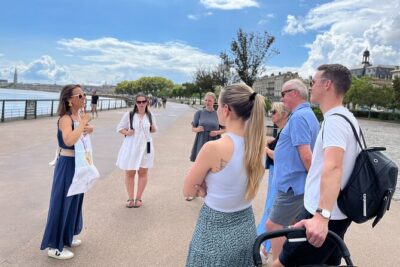
Professional – Bordeaux Wine and Cheese Tasting with a walking tour
Read our review →
Exclusive! Bordeaux: Nighttime Highlights Walking Tour
Read our review →Browse the lists this tour appears in