
Review · HISTORY
Bariloche: German Immigration and History Walking Tour
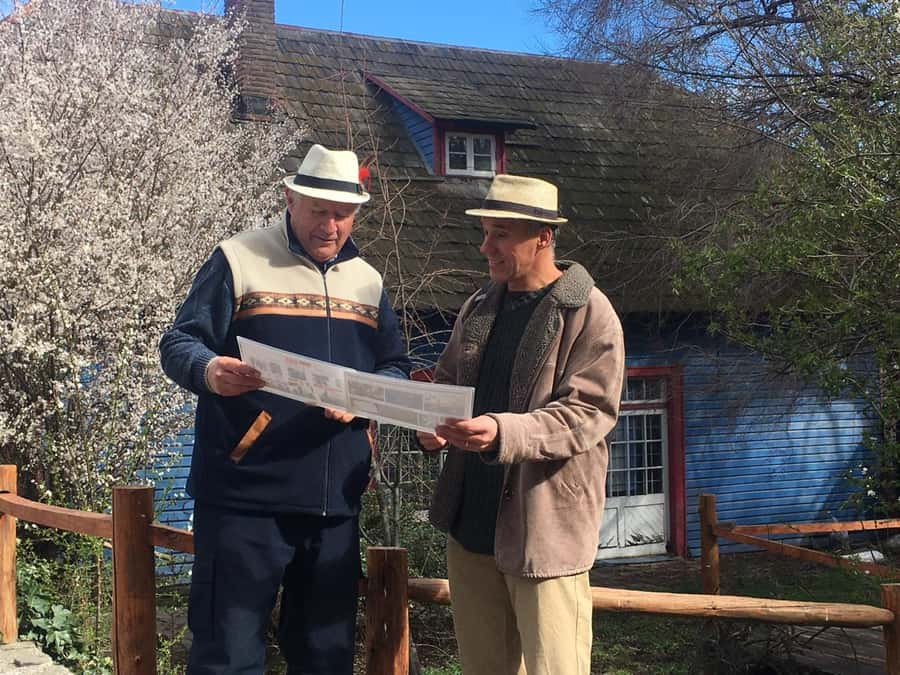
The most striking part of this walk is how quickly Bariloche’s postcard image gives way to a difficult story. In 90 minutes, you follow the town’s German connections from early immigration through the postwar arrival of Nazi fugitives, including a stop at the former home of Erich Priebke, the war criminal identified after an American journalist found him.
I like the way the tour links real buildings to larger events, rather than treating German influence as a matter of chalet-style architecture. I also like guide Diego’s approach: he uses photographs, asks for questions, and often leaves one part of the story hanging until the next stop. The main drawback is practical: the route is short but mostly uphill, and a bilingual tour can leave less time for questions.
Key points before you book
- Three waves of German immigration: The walk separates early settlers, later arrivals, and the postwar Nazi presence instead of lumping them into one vague story.
- A serious stop at Priebke’s former home: You see the house where Erich Priebke lived before his 1994 extradition.
- A clear starting point: Meet by the tourist information office door in Bariloche’s Civic Center square.
- A short route with hills: The walk covers about 1 kilometer, but the climb matters more than the distance.
- English and Spanish guiding: Diego is praised for fluent English, though both languages may be used in one departure.
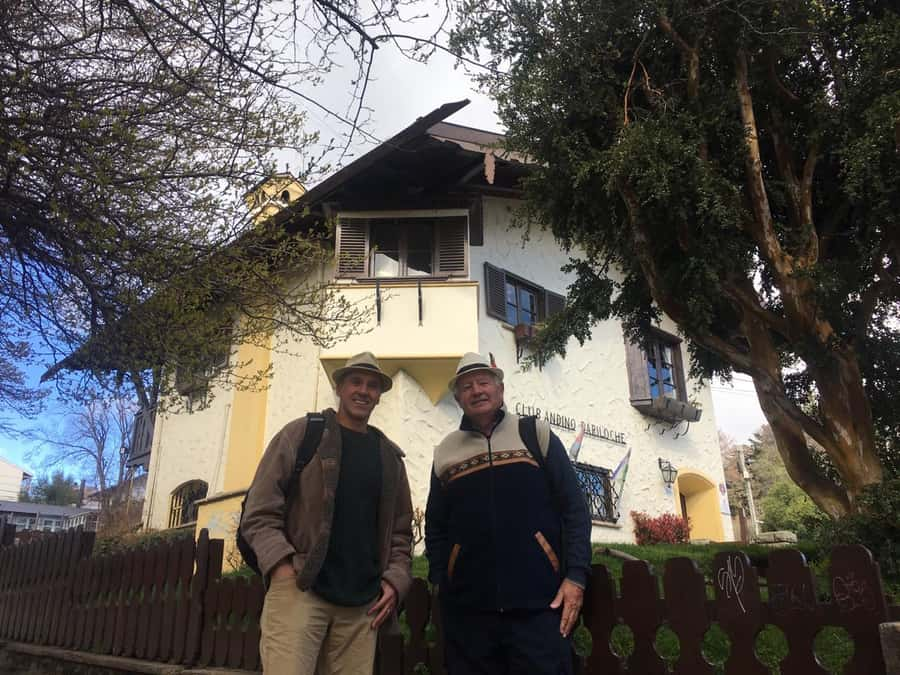
- Good use of visual material: Old photographs help connect present-day Bariloche with its earlier appearance.
Why Bariloche’s German story is more complicated than it looks
Bariloche is often presented through chocolate shops, wooden buildings, mountain sports, and Alpine-looking design. Those details are real, but they can make the town’s past seem simpler than it was. This tour asks you to separate cultural influence from political history, and normal migration from the arrival of men wanted for Nazi crimes.
I find that distinction useful. German immigration to Argentina did not begin with the Second World War, and the town’s European character cannot be explained only through Nazi fugitives. The walk lays out three major waves, showing how different groups arrived for different reasons and at different points in time.
The third wave is the one that draws most people in. It concerns Nazi officers and supporters who reached Argentina after the war, along with the local networks and false identities that helped some of them settle. The guide also discusses what is documented, what is disputed, and what has grown into local legend.
That balance matters in Patagonia, where stories about secret German colonies, hidden Nazi activity, and remote mountain bases have circulated for decades. You do not get a sensational tour built around every rumor. Instead, the final part looks at the theories and lets you consider how much evidence sits behind them.
More History Walking Tours in the world:
- History and Hauntings of Salem Guided Walking Tour
★ 5.0 · 14,564 reviews - Lisbon: History, Stories and Lifestyle Walking Tour
★ 4.8 · 10,902 reviews - Boston: Freedom Trail History Small Group Walking Tour
★ 5.0 · 6,450 reviews
Starting at the Civic Center
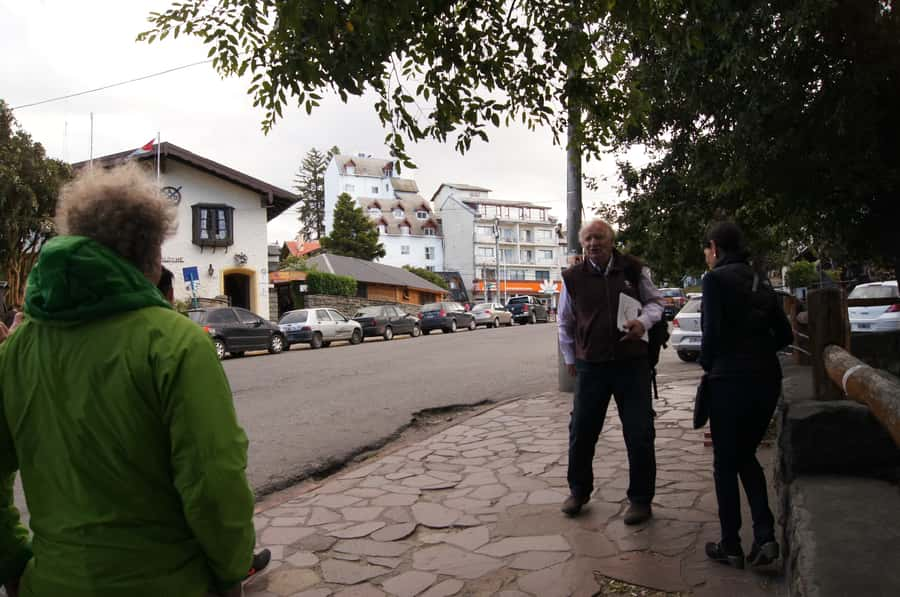
The meeting point is easy to identify: the square of the Bariloche Civic Center, beside the door of the tourist information office. This is a sensible place to begin because the Civic Center itself introduces the town’s planned European character and gives the guide a useful setting for explaining Bariloche’s development.
You should arrive ready to listen from the first few minutes. The tour does not use a bus or private transport. It is a guided walk, and the story unfolds as you move through central Bariloche toward the German neighborhood.
The opening section covers the town’s founding and the first German connections. That gives you a better base for the later stops. Without it, the Priebke story can take over the whole experience and leave you with the wrong impression that German history in Bariloche begins and ends with the Nazi period.
The Civic Center also helps you notice how the town presents itself. Its architecture and civic role are part of the visual language that the tour examines. I like this opening because you are not simply told that Bariloche has German influence. You start to see how public buildings, clubs, schools, and private homes each tell a different part of the story.
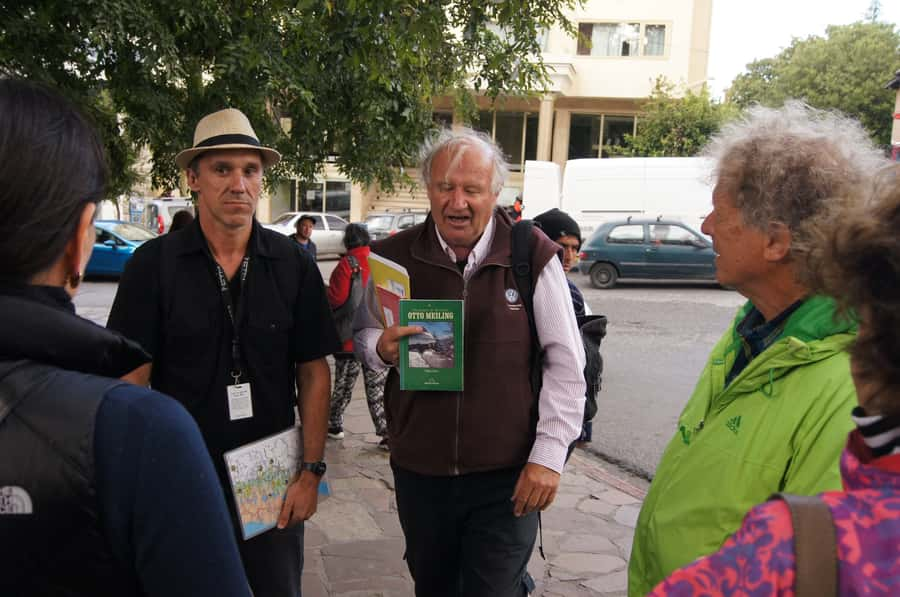
The Andean Club and National Park administration
From the Civic Center, the walk continues to the Bariloche Andean Club and the administration of Nahuel Huapi National Park. These stops broaden the story beyond immigration records and individual biographies.
The Andean Club points toward the role of mountaineering and outdoor culture in Bariloche’s identity. The National Park administration connects the town to the wider project of organizing and promoting the Nahuel Huapi area. Together, these sites show how German and Central European customs could blend with Argentina’s own institutions.
This is one of the stronger features of the route. You are not asked to view German influence only through private houses or family stories. You also see how clubs, parks, and civic organizations helped shape the public face of the town.
The route changes location often. That keeps the 90 minutes moving and prevents the experience from becoming a stationary lecture. At each stop, the guide explains a piece of the story, then carries you to the next place before the information begins to blur together.
Still, keep the format in mind. This is not a museum visit with long time inside each building. The sites work mainly as physical reference points. You may not get access to every interior, and the value comes from the explanation given on the street.
The German School and the first two waves
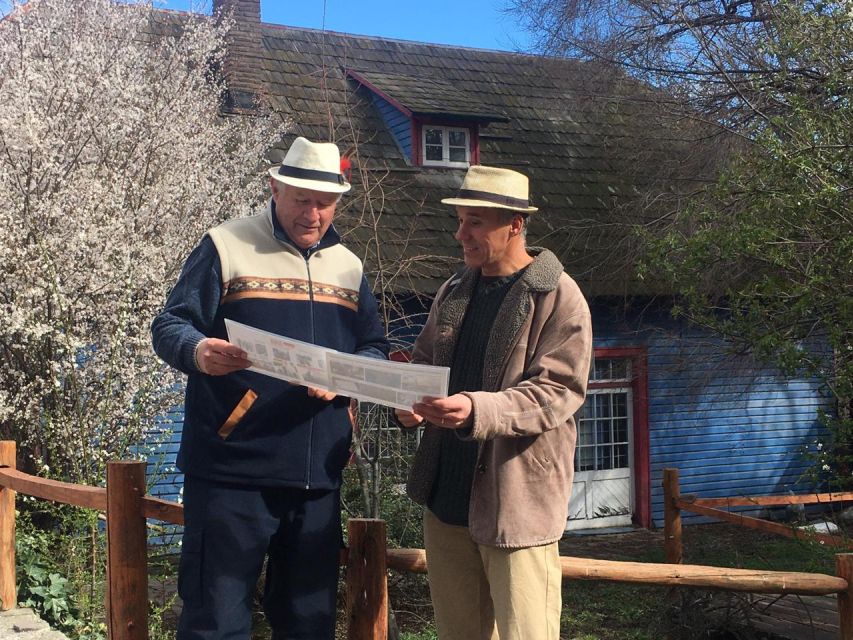
The German School is one of the most useful stops for understanding how a community preserves language, customs, and a sense of identity over time. It gives the subject a human scale. You are no longer dealing only with famous names or political events. You are looking at an institution connected to daily life and education.
The first two waves of German immigration are treated as distinct from the postwar arrivals. The guide explains how German-speaking immigrants reached Argentina and Bariloche before the Nazi era, then describes later movement into the region. That separation is essential because it avoids blaming an entire immigrant community for the crimes of a later group.
I particularly like this part for visitors who want to understand why Bariloche can feel culturally German even when the town’s history is not simply German. Architecture, schooling, clubs, outdoor pursuits, and family networks can all leave a mark. None of those things automatically point to Nazi activity.
The guide’s use of old photographs adds weight here. Seeing earlier versions of streets and buildings helps you compare the town you are walking through with the place described in the talk. It also makes the discussion less abstract. You can connect names and dates to actual streets rather than trying to remember a long list of facts.
More Walking Tours in the world:
- Magical London: Harry Potter Guided Walking Tour
★ 4.7 · 22,044 reviews - Reykjavik Food Walk – Local Foodie Adventure in Iceland
★ 5.0 · 18,952 reviews - New Orleans Premier Ghost, Voodoo and Vampire Walking Tour
★ 4.5 · 12,856 reviews - Amsterdam Anne Frank: Small-Group Walking Tour & Local Guide
★ 4.8 · 12,789 reviews
Belgrano Square and the changing character of the town
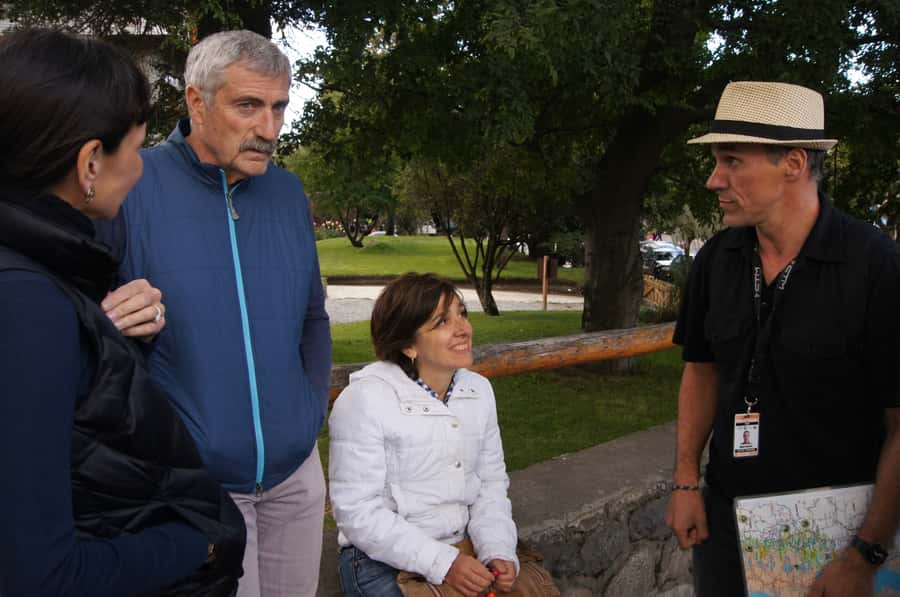
Belgrano Square provides another place to consider Bariloche’s urban development and its German-style design. The route through this part of town is not just a march between historic points. The buildings and street layout become evidence in the larger explanation.
You will hear about different styles of houses and the way European ideas were adapted to local conditions. The point is not that Bariloche is a piece of Germany transplanted to Argentina. It is a town shaped by several influences, with German immigration being one important strand.
This stop is also where the walking format pays off. A guide can point to a roofline, house, or square as the explanation is happening. That direct connection is harder to get from a general city tour that passes through quickly or focuses only on scenic highlights.
The walk is about 1 kilometer, so it is not a demanding hike in distance. But the route includes uphill sections. One part of the route is described as mostly uphill, and that is worth taking seriously if you have mobility concerns or simply want a relaxed afternoon after a full day outdoors.
Wear comfortable shoes and allow yourself enough time to arrive at the Civic Center without rushing. There is no need for special equipment, but this is still a walking tour, not a seated talk.
Erich Priebke’s house and the postwar Nazi story
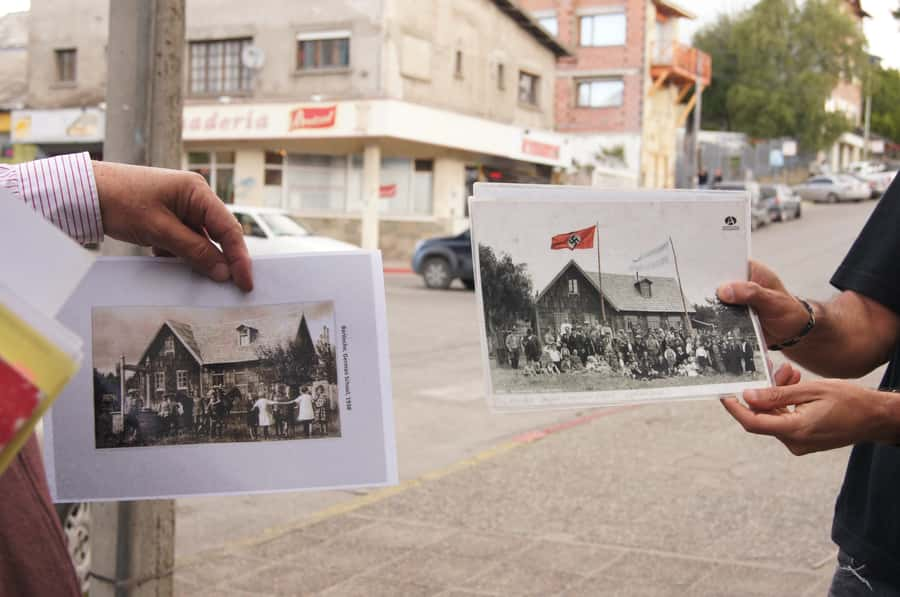
The most charged stop is the house where Erich Priebke lived before he was extradited in 1994. He had been living in Bariloche for decades, and his presence was exposed after an American journalist, Sam Donaldson, found him.
The nearby German School is also tied to the story because Priebke was intercepted there. This makes the subject unusually concrete. You are not hearing only about a distant figure from a history book. You are standing in the part of town where his life in Argentina became public.
The guide explains the arrest and extradition, placing Priebke within the third wave of German arrival rather than presenting him as proof of every rumor about Patagonia. That framing is important. The subject is serious, and a good tour needs to avoid turning a war criminal into a colorful local character.
This portion will appeal most to people interested in postwar justice, Nazi escape routes, and the way communities respond when a hidden past becomes visible. It may feel heavy compared with Bariloche’s usual outdoor attractions, but that is also why it is worth making time for. The town’s pleasant appearance should not erase the difficult questions beneath it.
If you are traveling with children, consider their interest and maturity before booking. The supplied information does not give an age recommendation, but the tour clearly deals with Nazi crimes, extradition, and the presence of war criminals after the Second World War.
Sorting fact from Patagonia’s enduring myths
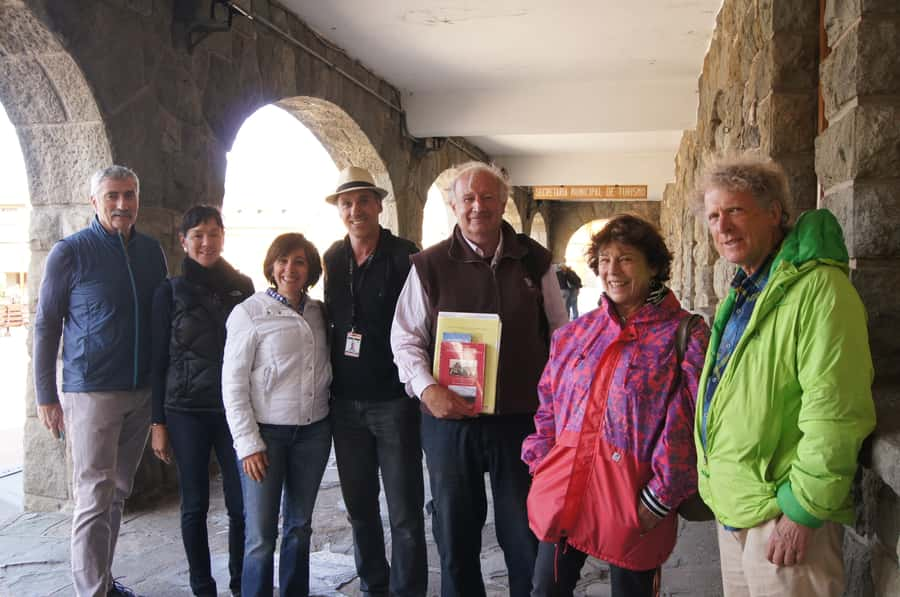
The walk closes with a discussion of theories about German activity in Patagonia. This is a smart ending because it gives you room to ask questions after seeing the documented sites.
Bariloche has long attracted stories about secret Nazi settlements, hidden bases, and other dramatic claims. Some stories may begin with real people and real postwar arrivals, then grow through repetition. The tour’s value lies in separating what can be supported from what belongs to local rumor or speculation.
I would not book this experience expecting a hunt for secret tunnels or a sensational conspiracy tale. Book it if you want an explanation of why such stories took root, what the known history tells us, and how the town’s German image has been interpreted over time.
The closing discussion can be especially useful if you plan to read more afterward. One previous booking note described the guide as using suspense and cliffhangers between stops, while another found that old photographs and follow-up questions made the subject easier to understand. That style suits a complicated topic, provided you are comfortable with a talk that mixes storytelling and historical analysis.
Guide style, languages, and pacing
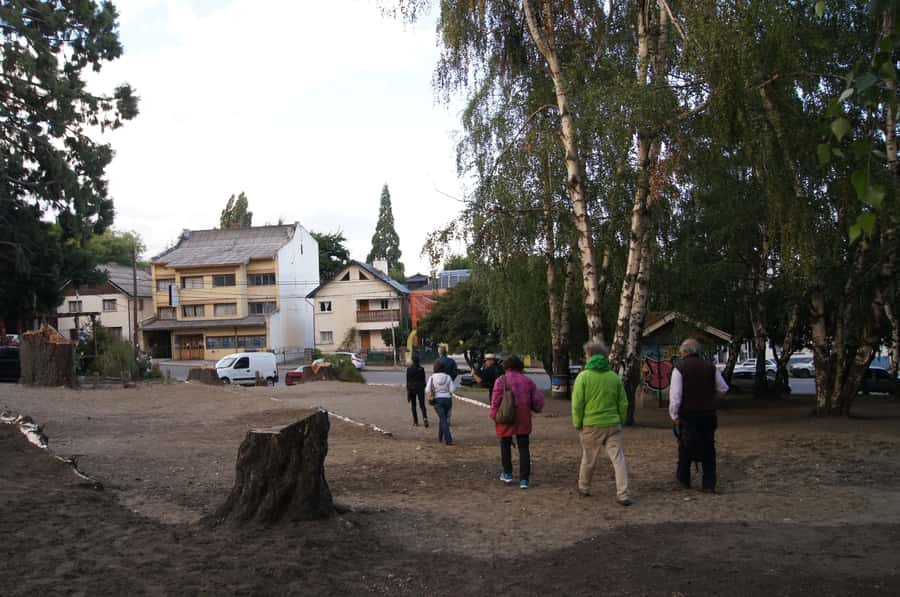
Guide Diego is the name most closely associated with this experience. He leads in English and Spanish and is repeatedly described as fluent in both. His strongest qualities are clear explanation, storytelling, and the ability to connect individual sites to the larger story.
You should know that a bilingual departure may not run as two fully separate tours. The guide may explain material in both languages, which can affect the time available for questions. One account found the tour still ran well beyond its scheduled length, while another wished for more question time because of the bilingual format.
That is not necessarily a flaw. If you need a strictly English-only history walk, confirm the language arrangement before booking. If you are happy with a bilingual group, the format can work well, especially when the guide keeps moving and uses visual material.
Group size can vary. Diego has handled larger groups while still making people feel included, but a larger departure may feel less personal than a small one. The walk is structured around frequent stops, so staying close enough to hear clearly is sensible.
Is $41 a fair price for 90 minutes?
At $41 per person, this is not the cheapest way to spend an hour and a half in Bariloche. You are paying for a specialist history walk rather than transport, food, museum admission, or a major attraction ticket.
I think the price is fair if German immigration and the Nazi-era story are central interests for you. The guide’s subject knowledge, visual material, bilingual ability, and the chance to visit specific sites make it more useful than a generic orientation walk.
The value is weaker if you only want a quick introduction to the city or if your main goal is architecture and photographs. You can see the Civic Center and central streets without booking a specialist tour. The price makes more sense when you want the difficult context, the three-wave framework, and the Priebke story explained in one coherent route.
The booking terms reduce some risk. You can cancel up to 24 hours before the start for a full refund, and you can reserve without paying at once. Check the available start times before planning the rest of your day.
Who should take this walk?
I would choose this tour if you enjoy social history, postwar Europe, immigration, journalism, or the way myths form around real events. It is also a good counterpoint to Bariloche’s outdoor activities. A morning spent on a lake or trail can be followed by a compact city walk that explains the place you are visiting.
You do not need prior knowledge of German or Argentine history. The tour begins with the town’s founding and immigration, then builds toward the more difficult material.
I would hesitate if uphill walking is a problem, if you dislike bilingual presentations, or if you want a purely lighthearted city tour. The subject is serious, and the route is short but not flat.
Should you book the German Immigration and History Walking Tour?
Book it if you want to understand why Bariloche looks and feels partly European, and if you are prepared to examine the uncomfortable Nazi chapter without letting it swallow the whole story. The strongest feature is the structure: three waves of immigration, specific buildings, old photographs, and a final look at fact versus rumor.
For the best experience, arrive at the Civic Center early, wear shoes suited to uphill streets, and keep questions in mind as you walk. I would especially recommend it during a longer stay in Bariloche, when you have time to place the town’s architecture, clubs, school, and postwar stories into a wider context.
At $41, it is a specialist tour, not a bargain city stroll. For history-minded visitors, the clear storytelling and real locations make it a worthwhile use of 90 minutes.
FAQ
Where does the tour start?
It starts in Bariloche Civic Center square, by the door of the tourist information office.
How long is the walking route?
The route covers about 1 kilometer and lasts 90 minutes.
Which places does the tour visit?
The route includes the Civic Center, the Bariloche Andean Club, the Nahuel Huapi National Park administration, the German School, Belgrano Square, and the house where Erich Priebke lived.
What languages are available?
The tour is offered in Spanish and English.
Who guides the tour?
Guide Diego is the main guide identified for this experience. One supplied account also names Pedro, so the guide may vary by departure.
Does the tour discuss Erich Priebke?
Yes. It covers the house where Priebke lived, his interception at the German School, and his extradition in 1994 after an American journalist discovered his presence.
Is the route uphill?
Yes. The route is described as mostly uphill in parts, despite covering only about 1 kilometer.
Can I cancel the booking?
You can cancel up to 24 hours in advance for a full refund. You can also reserve now and pay later.
New routes in the world
- Baltimore Walking Foodie Tour in Fells Point★ 5.0 · 182 reviews
- Baku Oil Heritage & Old Town Walking Tour★ 5.0 · 232 reviews
- Baku Walking Tour (Old City)★ 5.0 · 127 reviews
- The Madam’s Curse Walking Ghost Tour★ 4.5 · 103 reviews
- Austin Small Group Morning Walk★ 5.0 · 412 reviews
- Austin Haunted Pub Crawl Walking Tour★ 4.5 · 232 reviews
- Austin Downtown Private Walking Food Tour With Secret Food Tours★ 5.0 · 71 reviews
- Austin Murder Walk★ 5.0 · 310 reviews
History Walking Tours, compared.
History and Hauntings of Salem Guided Walking Tour
Read our review →
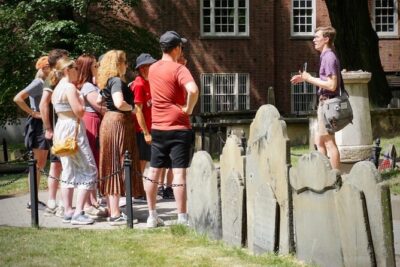
Freedom Trail History Small Group Walking Tour
Read our review →
Historic Charleston Guided Sightseeing Walking Tour
Read our review →
Tapas Walking Tour with Food, Wine, and History
Read our review →
Savannah History and Haunts Candlelit Ghost Walking Tour
Read our review →
A History of Terror – Belfast City Centre Walking Tour
Read our review →Browse the lists this tour appears in