
Review · BARCELONA
Barcelona: The Spanish Civil War Historical Walking Tour
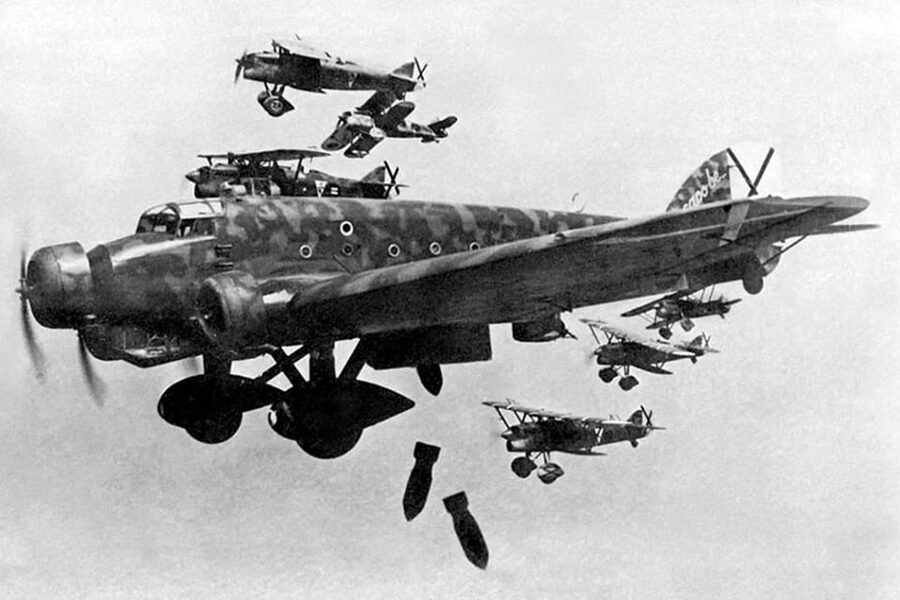
Barcelona’s old town holds a second story beneath its Gothic facades: the story of barricades, air raids, political violence, and a country split over its future. This Spanish Civil War walking tour brings that story into the streets where events unfolded, rather than leaving it sealed inside a textbook.
I like the way the tour makes the tangled factions understandable, and I like the use of photographs to connect today’s streets with the Barcelona of the 1930s. The main consideration is the subject matter. War, dictatorship, repression, religion, and political conflict are serious topics, and the tour is not designed as light sightseeing.
Key points
- Follow Orwell’s Barcelona: See places connected with Homage to Catalonia and the fighting George Orwell described.
- Sort out the factions: Learn how fascists, republicans, anarchists, trade unionists, communists, and other groups fit into the conflict.
- See the old town differently: Streets and buildings become evidence of bombing, political struggle, and social division.
- Connect war with dictatorship: The story continues through Franco’s 36-year rule and Spain’s modern debate over historical memory.
- Expect strong English guides: Javier, Yannis, Chrisa, Filipa, Henrieta, and others have led the tour, with clear explanations and room for questions.
- Plan for standing: The route is a gentle stroll, but you spend much of the 2.5 hours standing outdoors.
Why Barcelona’s Civil War story belongs on foot
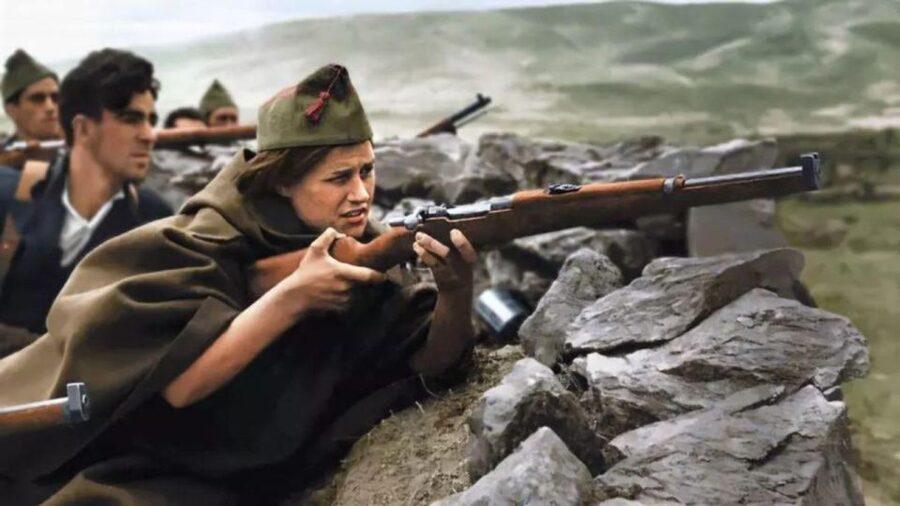
Barcelona is often presented through Gaudí, tapas, medieval lanes, and seaside light. Those things are real, but they leave out the city’s political heart. In the years before and during the Spanish Civil War, Barcelona became a place where competing visions of society collided in public.
That makes a walking tour useful. You are not simply listening to a timeline. You are standing in the old town while the guide explains how these streets became stages for strikes, demonstrations, barricades, shootings, and fascist bombing raids.
I like this approach because the city itself gives the history weight. A photograph held up beside a present-day street can show how much has changed, and how much has not. The buildings may look calm now, but the guide helps you picture the pressure and fear that once filled them.
The tour also avoids treating the Civil War as a simple battle between two neat camps. You will hear about the military rebels and their fascist allies, the republican government, anarchist groups, communists, labor movements, regional politics, and the people caught between them. That is a lot to absorb, but the guides are used to making the subject manageable.
More History Walking Tours in Barcelona
- Barcelona: Tapas Walking Tour with Food, Wine, and History
★ 4.8 · 4,261 reviews - Barcelona Tapas Walking Tour: Food, Wine & History
★ 4.5 · 1,928 reviews - Barcelona: Dark History Night Walking Tour
★ 4.8 · 344 reviews
Starting at Plaça de Catalunya
The meeting point is on the sidewalk in front of Foot Locker at Plaça de Catalunya. Look for the guide with a white umbrella. This is a busy central square, so allow enough time to find the correct side of the plaza and arrive before the start.
The opening section sets up the political and social conditions that led to war. You will hear about industrial Barcelona, class divisions, the growth of labor organizations, the Second Republic, political extremism, and the tensions between central authority and Catalan interests.
This background matters. Without it, the Civil War can sound like a sudden explosion caused by a few famous men. The tour explains how years of conflict over land, workers’ rights, religion, regional identity, monarchy, republican government, and military power created a country ready to break apart.
The starting point is also practical. Plaça de Catalunya is easy to reach, and the route then moves toward the old town. There is no hotel pickup, so you make your own way to the meeting point. Food and drinks are not included, which is hardly a problem in central Barcelona, but you should eat beforehand if you need steady energy for a long outdoor talk.
Walking into the factions and street fighting
The central challenge of this tour is sorting out who fought whom. The guide explains the difference between the republicans and the nationalist forces led by Francisco Franco, then adds the many groups that did not always agree with one another.
You will discuss anarchists, communists, fascists, socialists, labor unions, the International Brigades, and the Catholic Church. The guide also addresses the roles of Hitler and Mussolini, whose support helped Franco’s side, and the response of the Western Allies to the war and the dictatorship that followed.
This is where guides such as Javier, Yannis, Chrisa, Filipa, and Henrieta make a big difference. The best part of their approach is not simply the amount of information. It is the effort to explain motives. Why did different groups believe their version of Spain would produce a better future? Why did alliances shift? Why did a fight against fascism also become a struggle between rival left-wing movements?
The tour does not appear to require prior study, but a little preparation will help. One visitor found the material advanced at times, and that is fair. If you know the basic dates and names already, you can spend more time on the local details. If you know nothing, you can still follow the main story, though you may want to take notes and read more afterward.
Orwell’s Barcelona and the evidence around you
George Orwell’s Homage to Catalonia gives the tour a strong literary thread. The guide points out places connected with the events Orwell witnessed and explains how his experience shaped the book.
You should not expect a literary walking tour alone. Orwell is one part of a wider story, used to show what political conflict looked like at street level. His account helps you understand how quickly revolutionary excitement could turn into suspicion, armed confrontation, and fear.
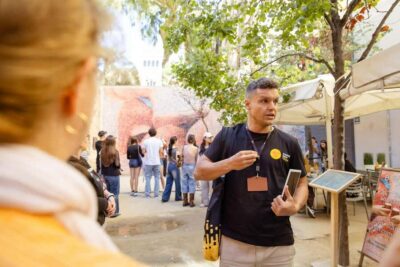
The old town is especially effective for this. Narrow streets make the scale of street fighting easier to picture. The guide uses photographs and other visual material to show the difference between the city then and now. This is one of the tour’s most useful features because the evidence is not always obvious from the pavement.
Some places may look completely ordinary. That is part of the point. Barcelona does not have a large set of official Civil War museums or memorials explaining every site. You need a guide to identify the scars and fill in the missing story.
The tradeoff is that this is not a tour of preserved battlefields. You will see streets, buildings, and public spaces rather than a neatly labeled museum collection. If you want original military objects or a large exhibition, this will not replace a museum visit. If you want to understand how political violence affected an ordinary urban setting, the route is much more rewarding.
Same streets, a different guide:
- Barcelona Tapas and Wine Experience Small-Group Walking Tour
★ 5.0 · 5,804 reviews - Barcelona: Food Walking Tour with Tapas and Wine
★ 4.9 · 2,180 reviews - Barcelona Helicopter, Sailboat & Old Town Private Walking Tour
★ 5.0 · 1,395 reviews - Barcelona: Old Town and Gothic Quarter Walking Tour
★ 4.8 · 1,393 reviews
Photographs, questions, and clear storytelling
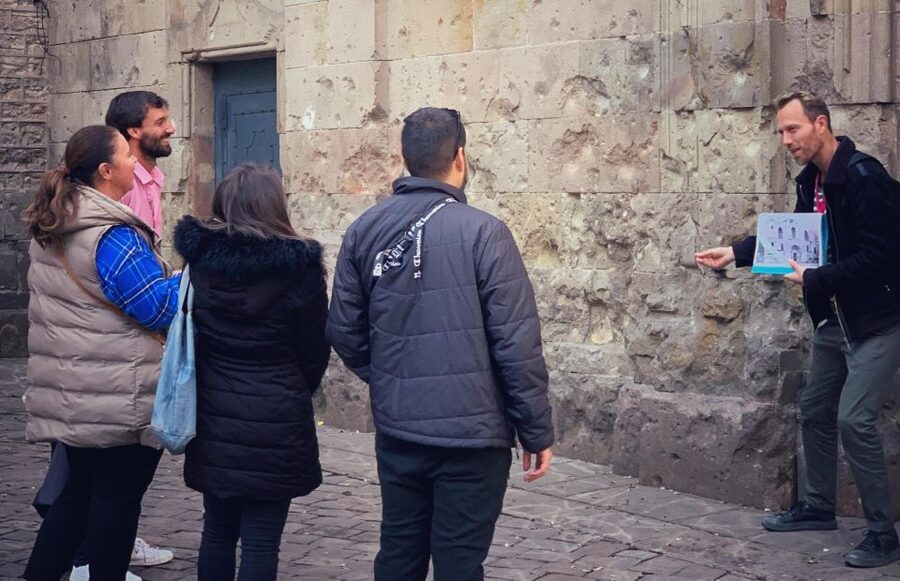
The guides use pictures to make the explanations concrete. This helps when a modern building or renovated street gives little visual clue about what happened there.
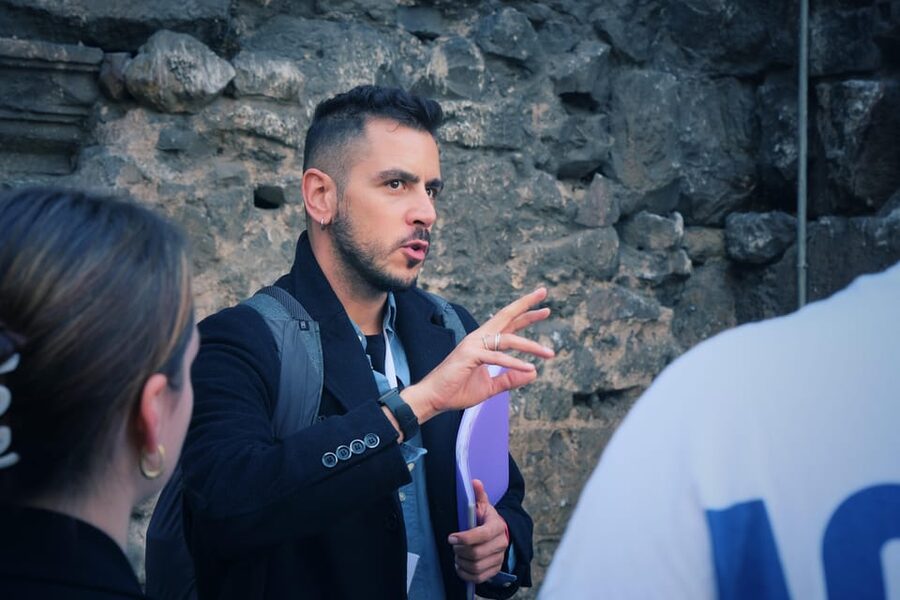
The strongest praise for this experience has focused on clarity. Chrisa has been especially effective at breaking down a difficult subject, while Javier is known for answering questions with a relaxed manner and dry humor. Yannis brings a strong command of the wider political story, and Filipa has connected the war with her academic work on Franco’s Spain.
Those differences matter because the guide is the main attraction. The route itself is valuable, but you are paying for someone who can explain the connections. A good guide will pause to check that the group is following the story, answer questions, and keep the many names from becoming a blur.
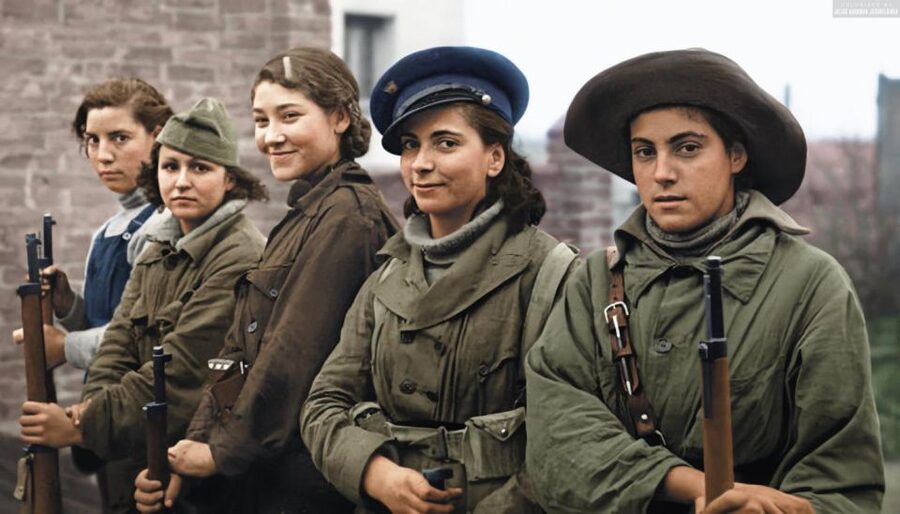
The tour also gives room for questions. That is important here because visitors often want to ask about the Catholic Church, international involvement, women’s political activity, anarchist organizations, or what happened after 1939. One particularly worthwhile topic is Mujeres Libres, the women’s anarchist organization and its place in the wider movement.
The tone is serious but not lifeless. Guides have used humor carefully, which helps during a long period of standing and listening. You should still expect a history lesson rather than entertainment built around jokes.
From the Civil War to Franco’s 36-year dictatorship
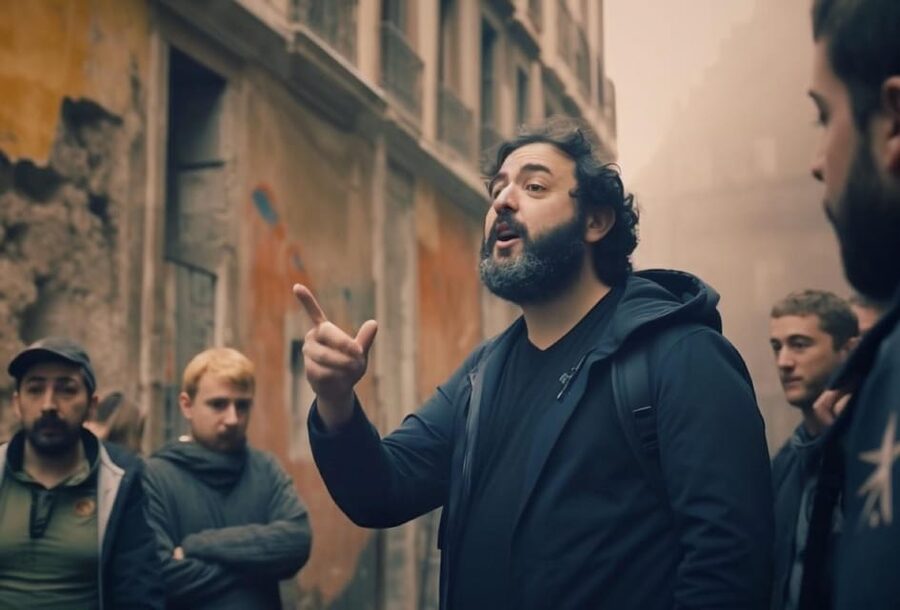
The tour does not stop when the fighting ends. It explains the military dictatorship that followed and the ways Franco’s rule shaped Spain for 36 years.
That longer view is one of the best reasons to book this experience. A short war story can make 1939 seem like a clean ending. It was not. Defeat brought repression, censorship, political silence, and a long period in which families and communities dealt with the past in private.
The guide also explains how the Western Allies responded to both the Civil War and Franco’s later rule. This places Barcelona’s experience within the wider history of Europe, rather than treating Spain as an isolated case.
You will hear about the role of the Catholic Church and how religious and political power were linked. You will also discuss the International Brigades and the foreign volunteers who came to fight. These details show why the Spanish Civil War became an international symbol, not simply a domestic conflict.
The discussion reaches into present-day Spain. Guides connect the period with current politics and the country’s ongoing arguments about historical memory. That does not turn the tour into a partisan political rally. Instead, it helps explain why old wounds, symbols, monuments, and family stories still matter.
A gentle stroll, with plenty of standing
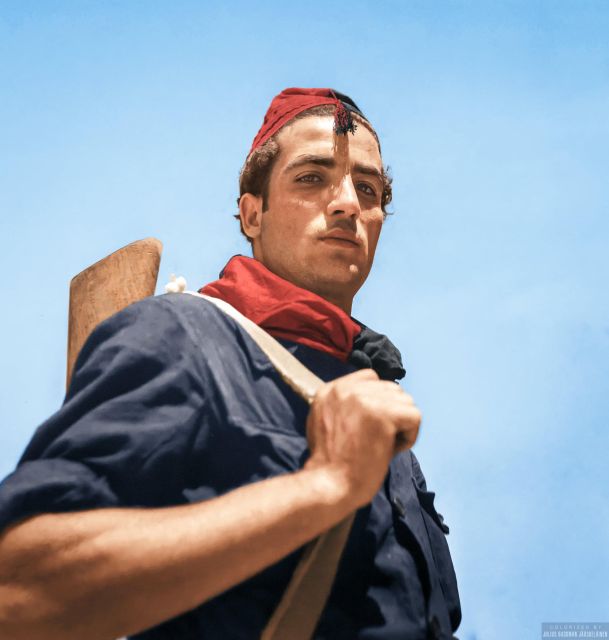
The tour lasts about 2.5 hours. You are not walking continuously for that whole time. The route is broken into short walks followed by talks at particular locations, so the physical demand is closer to a city stroll with extended standing.
That distinction is useful if you have limited stamina. The walking itself has been described as manageable, but comfortable shoes still make sense. The old town has hard surfaces, and you may be standing while the guide speaks.
Bring water and dress for the forecast. The tour runs rain or shine. On a cold day, you will want an extra layer because the guide may spend several minutes explaining a site before the group moves on. In wet weather, an umbrella or waterproof jacket will make the experience easier.
The tour is listed as wheelchair accessible. Since this is an outdoor old-town route, you should still check the exact conditions when booking if you have specific mobility needs.
Children are allowed, but the experience is not advised for young children because of the political violence, war, and dictatorship discussed. Older teenagers may appreciate it, especially if they already have an interest in history. One family found it suitable for teenagers, while other families may prefer a lighter Barcelona activity.
The €46 price and what it buys you
At $46 per person, the tour is not the cheapest way to spend a morning in Barcelona. There is no meal, hotel transfer, or entrance ticket included. You are paying for a specialist walking lesson led by an English-speaking guide.
For me, the price makes sense if you want more than a standard old-town tour. You receive 2.5 hours of context, visual material, local history, and a chance to ask questions. The guide can also change how you understand the other places you see during your stay.
The value depends on your interests. If you mainly want architecture, shopping, or food, the tour may feel too serious. If you have read Orwell, studied the Spanish Civil War, or want to understand the political background behind modern Spain, it offers something difficult to find through casual sightseeing.
Wireless guiding equipment is typically used, depending on the guide. There is an extra €1 charge per person at the start, payable by card or cash. That small cost can help you hear clearly in city streets, especially when the group is spread out.
Private groups are available. That option should appeal to families, school groups, or people who want more control over the pace and questions. The standard experience is conducted in English, with an optional English audio guide listed as available.
Who should book this Barcelona history tour
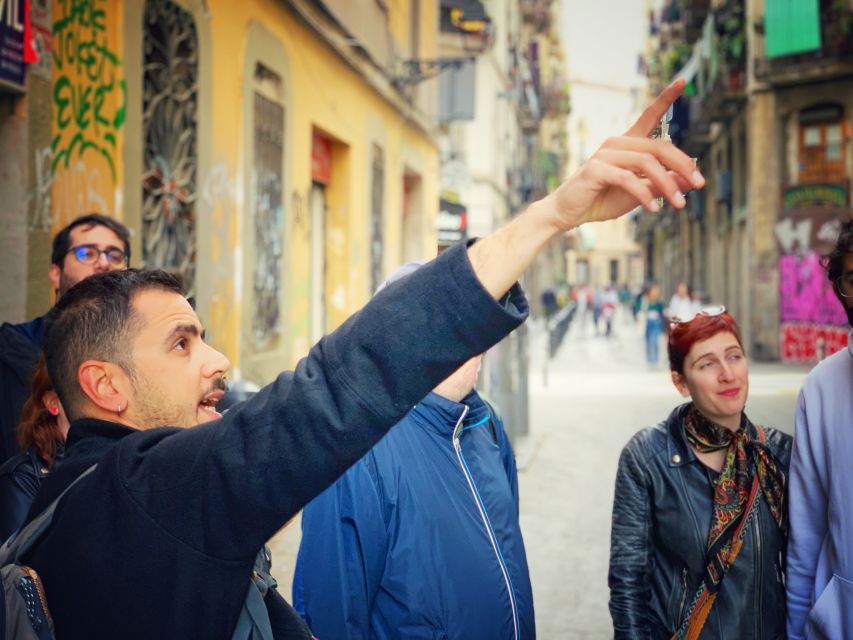
I would choose this tour early in a Barcelona visit if I wanted the city to make more sense. The information can color your later walks through the Gothic Quarter, churches, civic buildings, and public squares.
It is especially suited to:
- History enthusiasts who want local places, not just dates
- Readers of Orwell’s Homage to Catalonia
- Visitors curious about anarchism, fascism, labor politics, or the International Brigades
- Anyone trying to understand Franco’s dictatorship and Spain’s debate over the past
- Older teenagers and adults who are comfortable with serious subjects
- People who prefer guided explanation to wandering without context
I would be more cautious if you dislike political discussion, have no interest in modern European history, or need frequent seating breaks. The walking is not strenuous, but the standing and concentration can be tiring.
The guide’s ability matters greatly. Past tours have been led by Javier, Yannis, Chrisa, Filipa, Henrieta, Evan, and others. Each has a different style, but the strongest guides explain complex events in plain English, use images well, and leave time for questions.
Final decision: book it for context, not sightseeing
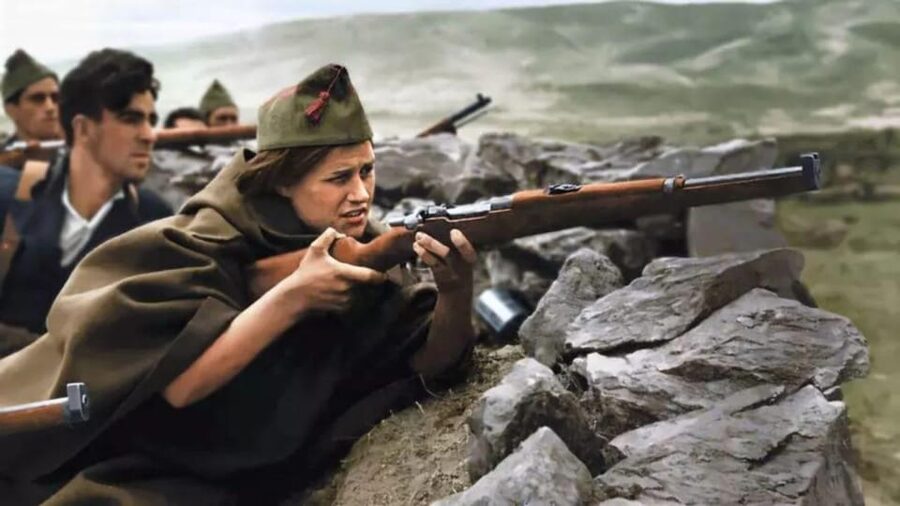
Book this tour if you want to see Barcelona beyond its polished facade. You will leave with a clearer sense of the city’s wartime divisions, Orwell’s experiences, foreign intervention, Franco’s dictatorship, and the unfinished work of remembering.
Skip it if you want a relaxed photo walk or a quick overview of Barcelona’s famous sights. This is a serious, discussion-led experience, and the emotional weight is part of its purpose.
For history-minded visitors, the $46 cost is fair because the tour gives you something the city cannot easily provide on its own: a guide to the absent memorials, the overlooked street corners, and the political story behind the stones.
FAQ
Where does the Spanish Civil War walking tour meet?
The meeting point is on the sidewalk in front of the Foot Locker at Plaça de Catalunya. The guide will be holding a white umbrella.
How long does the tour last?
The tour lasts about 2.5 hours and finishes in the middle of the Gothic Quarter near Barcelona city hall.
What language is the tour?
The live tour guide speaks English. An optional English audio guide may also be available.
Is the tour wheelchair accessible?
Yes, the activity is listed as wheelchair accessible.
Does the tour run in bad weather?
Yes. The tour takes place rain or shine, so dress for the forecast and bring suitable rain protection if needed.
Is the tour suitable for children?
Children are allowed to join, but the tour is not advised for children because it covers politics, war, dictatorship, and related violence.
Is hotel pickup included?
No. Hotel pickup and drop-off are not included. You must make your own way to Plaça de Catalunya.
Is there an extra charge for audio equipment?
Wireless tour guiding systems are typically used, depending on the guide. An additional €1 per person is charged at the beginning and can be paid by card or cash.
New routes in Barcelona
- Barcelona: “The Shadow of the Wind” Literary Walking Tour★ 4.5 · 176 reviews
- Picasso Museum and Walking Tour Plus Wine Tasting Upgrade★ 4.3 · 111 reviews
- From Barcelona: Montserrat Walking and Horseback Riding Tour★ 4.8 · 81 reviews
- Barcelona: Walking tour with Montjuic Castle & Cable Car★ 4.7 · 832 reviews
- Barcelona: Gothic Quarter Walking Tour w/ Montjuïc Cable Car★ 4.4 · 90 reviews
- Barcelona: Ramblas, Old Town & Gaudí Houses Walking Tour★ 4.9 · 239 reviews
- Barcelona Walk Like a Local: El Born & Gothic 15+ Sights★ 4.9 · 88 reviews
- Barcelona: Hidden Gems Walking Tour Including 10+ Sights★ 4.9 · 121 reviews
Barcelona Walking Tours, compared.
Barcelona Tapas and Wine Experience Small-Group Walking Tour
Read our review →
Tapas Walking Tour with Food, Wine, and History
Read our review →
Barcelona Helicopter, Sailboat & Old Town Private Walking Tour
Read our review →

Helicopter Flight, Boat Ride, and Walking Tour
Read our review →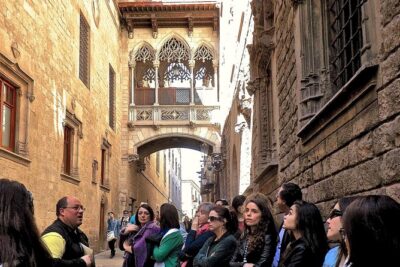
Barcelona Old Town & Gothic Quarter Small Group Tour
Read our review →
Barcelona Food Tour: Tapas, Paella, Sangria & 8+ Local Tastings
Read our review →Browse the lists this tour appears in